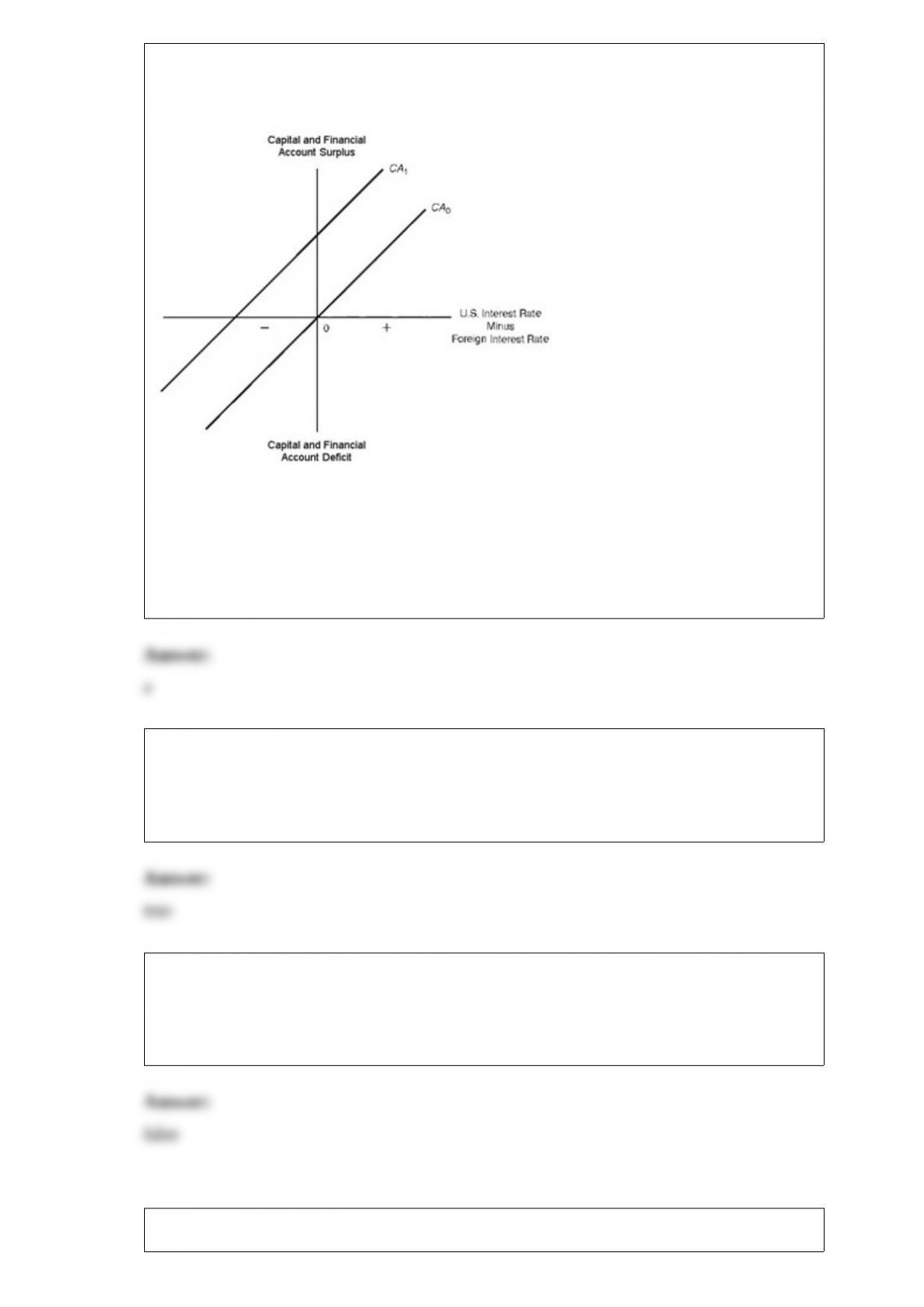
1) figure 13.1. u.s. capital and financial account
refer to figure 13.1. upward movements along u.s. capital and financial account
schedule ca0 would be caused by:
a.u.s. interest rates rising relative to foreign interest rates
b.u.s. interest rates falling relative to foreign interest rates
c.taxes placed on income earned by u.s. residents from their foreign investments
d.taxes placed on income earned by foreign residents from their u.s. investments
2) the purpose of currency revaluation is to cause an appreciation in a currency’s
exchange value.
a.true
b.false
3) according to u.s. trade law, the escape clause provides relief to u.s. firms due to
unfair foreign competition.
a.true
b.false
4) figure 13.3. u.s. capital and financial account under a fixed exchange rate
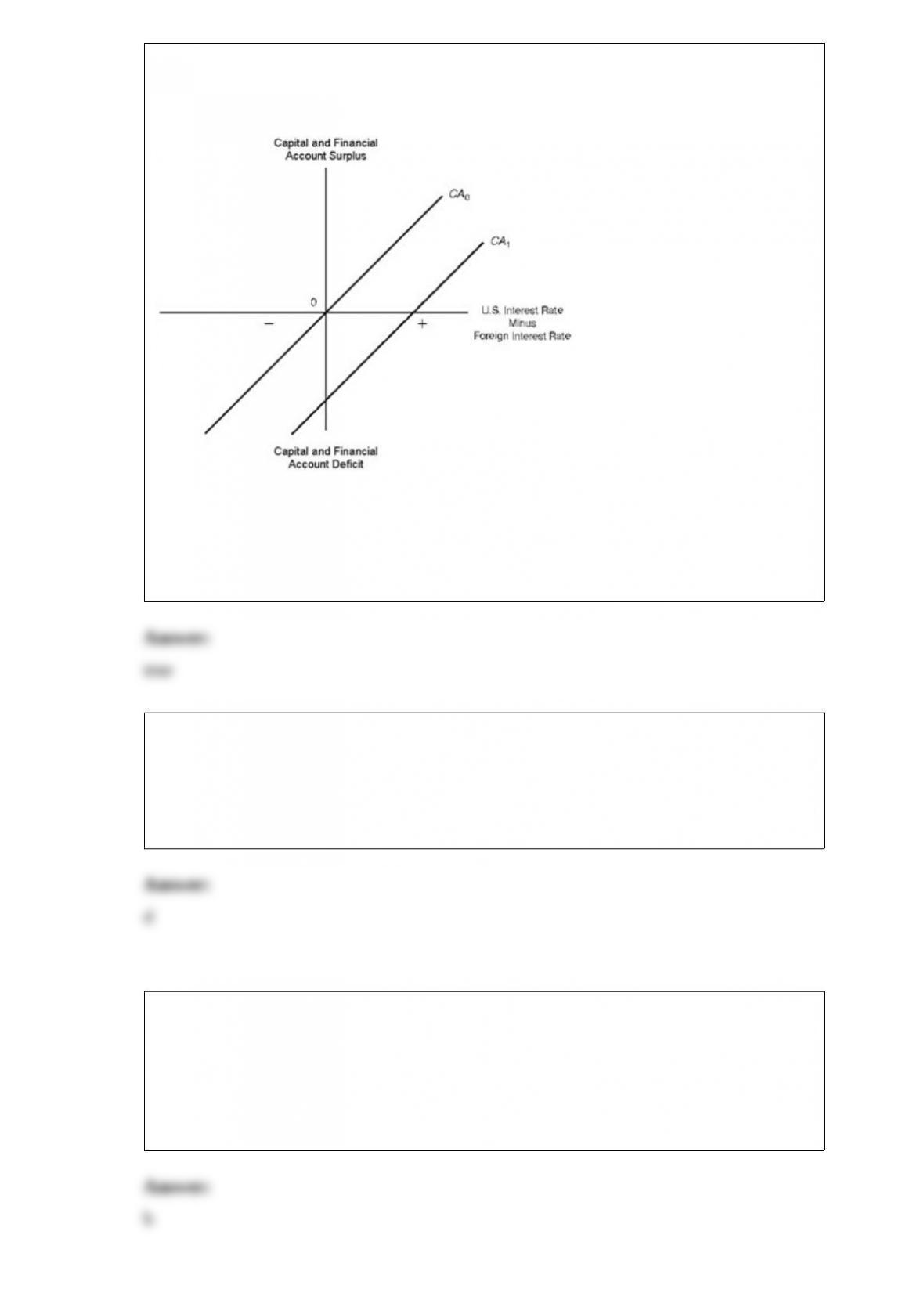
system
refer to figure 13.3. as the u.s. government decreases taxes on income earned by u.s.
residents from foreign investments, the u.s. capital and financial account schedule shifts
downward from ca0 to ca1 and the united states realizes net financial outflows.
a.true
b.false
5) most of the world’s population now lives in countries that are:
a.integrated into world markets
b.becoming integrated into world markets
c.near poverty
d.a and b
6) the heckscher-ohlin theory explains comparative advantage as the result of
differences in countries’:
a.economies of large-scale production
b.relative abundance of various resources
c.relative costs of labor
d.research and development
7) which policies are expenditure-changing policies?
a.currency devaluation and revaluation
b.import quotas and tariffs
c.monetary and fiscal policy
d.wage and price controls
8) modern trade theory recognizes that the pattern of world trade is governed by both
demand conditions and supply conditions.
a.true
b.false
9) industrial policies of the u.s. government have included subsidizing particular firms
to promote national champions, nationalizing basic industries, and encouraging
cartelization of industries.
a.true
b.false
10) ____ attempt to produce a fair and free-trading environment in which there exists a
level playing field.
a.trade-remedy laws
b.industrial policies
c.strategic trade policies
d.economic sanctions
11) assume boeing inc. (of the united states) and airbus industrie (of europe) rival for
monopoly profits in the canadian aircraft market. suppose the two firms face identical
cost and demand conditions, as seen in figure 6.1.
figure 6.1. strategic trade policy: boeing versus airbus
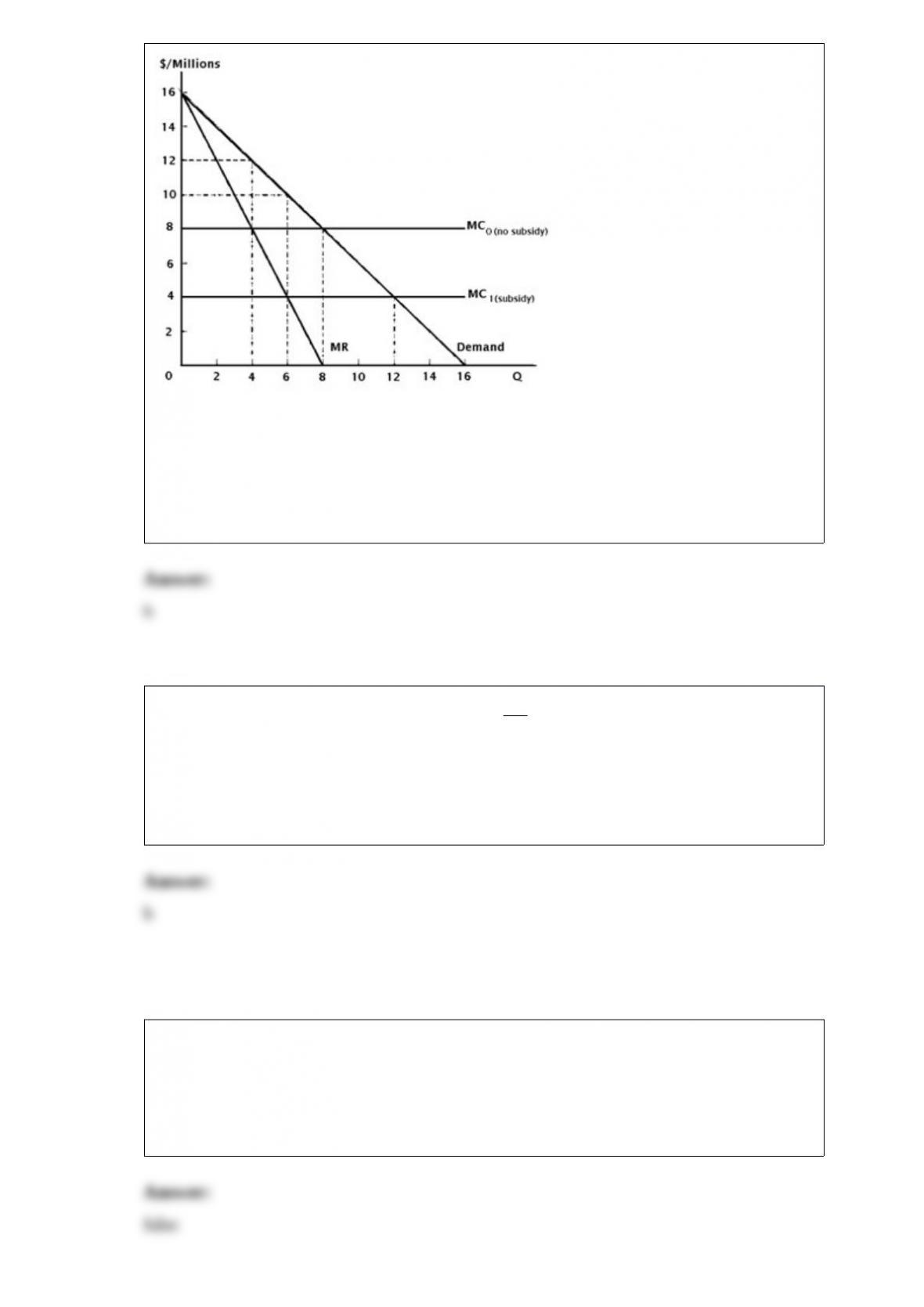
consider figure 6.1. at the monopoly price as established by boeing, canadian
consumers realize $____ of consumer surplus from the availability of aircraft.
a.$4 million
b.$8 million
c.$12 million
d.$16 million
12) when the production of a commodity does not utilize imported inputs, the effective
tariff rate on the commodity:
a.exceeds the nominal tariff rate on the commodity
b.equals the nominal tariff rate on the commodity
c.is less than the nominal tariff rate on the commodity
d.none of the above
13) according to the factor-endowment theory, international specialization and trade
cause a nation’s cheap resource to become cheaper and a nation’s expensive resource to
become more expensive.
a.true
b.false
14) although the united states has realized merchandise trade deficits since the early
1970s, its goods-and-services balance has always registered surplus.
a.true
b.false
15) the formation of the european monetary union is expected to entail benefits for
member countries which include all of the following except:
a.greater certainty for investors within the emu
b.lower costs of transactions within the emu
c.independent monetary policies run by the central bank of each member country
d.enhanced competition among companies in member countries
16) a potential disadvantage of freely floating exchange rates is that there would:
a.exist excessive amounts of hedging in the foreign exchange markets
b.be a lack of incentive to initiate exchange arbitrage
c.be excessive amounts of destabilizing speculation
d.exist a devaluation bias in the exchange markets
17) in the long run, competitiveness depends on an industry’s natural resources, its stock
of machinery and equipment, and the skill of its workers in creating goods that people
want to buy.
a.true
b.false
18) a nation may experience debt-servicing problems because of
a.pursuit of improper macroeconomic policies
b.inadequate borrowing
c.adverse economic events
d.both a and c