
If inflation is higher than expected, this helps borrowers (by reducing the real interest
rate they pay) and hurts lenders (by reducing the real interest rate they receive).
Stagflation occurs when short-run aggregate supply decreases.
A tariff is a numerical limit on the quantity of a good that can be imported.
To obtain real average hourly earnings, nominal average hourly earnings are multiplied
by the CPI.

An increase in quantity supplied is represented by a rightward shift of the supply curve.
All of the following are examples of public goods except
A) broadcast television with commercials.
B) clean water systems.
C) stock of knowledge in the public domain.
D) crime prevention.
Which of the following is not an appropriate policy for a central bank to follow if the
economy is plagued with deflation?
A) increasing the target interest rate on overnight loans
B) using expansionary monetary policy to drive down interest rates
C) consistently pursuing policy to promote the credibility of the central bank
D) explicitly and credibly targeting inflation

A statistical tool used to measure inequality is
A) the Lorenz curve.
B) the Gini coefficient.
C) the absolute poverty rate.
D) the relative poverty rate.
Which of the following summarizes the impact of population growth on the labor
market?
A) This will increase the labor supply, reduce the equilibrium wage and increase the
quantity of labor demanded.
B) There will be an increase in the demand for labor. As a result, the wage rate will rise
and the quantity of workers supplied will decrease.
C) There will be an increase in the demand for jobs. This will result in an increase in the
equilibrium wage rate and a movement along the labor supply curve.
D) There will be an increase in both the demand for labor and the supply of labor. As a
result, the equilibrium wage will not change.
If technological change increases the profitability of new investment for firms, then the
________ curve for loanable funds will shift to the ________ and the equilibrium real
interest rate will ________.
A) supply; right; fall
B) supply; left; rise
C) demand; right; rise
D) demand; left; fall
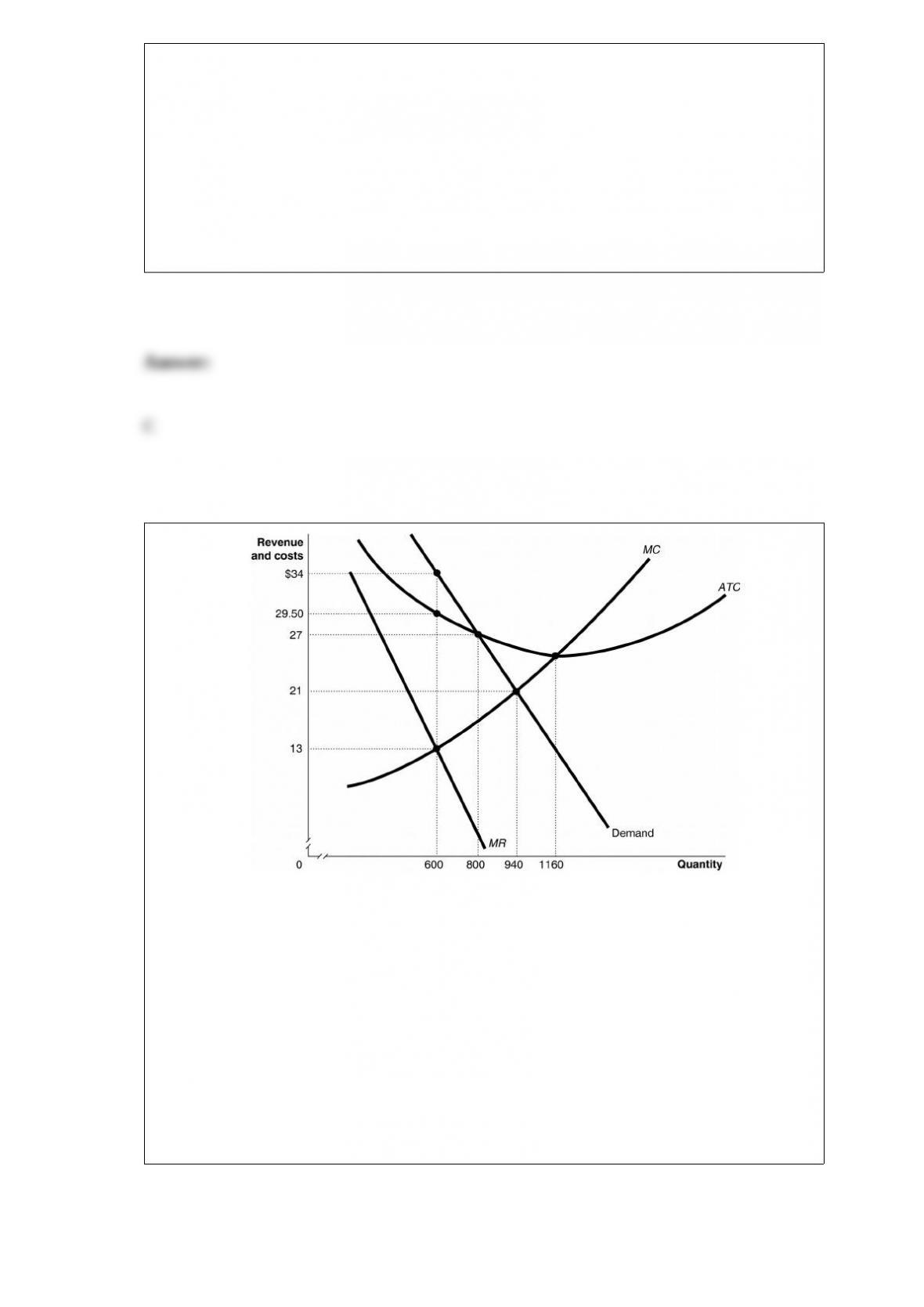
Figure 15-4 Figure
15-4 shows the demand and cost curves for a monopolist.
What is likely to happen to this monopoly in the long run?
A) New firms will enter the market to eliminate its profits.
B) It will expand its output to take advantage of economies of scale so as to further
increase its profit.
C) As long as there are entry barriers, this firm will continue to enjoy economic profits.
D) It will be regulated by the government because of its excess profits.
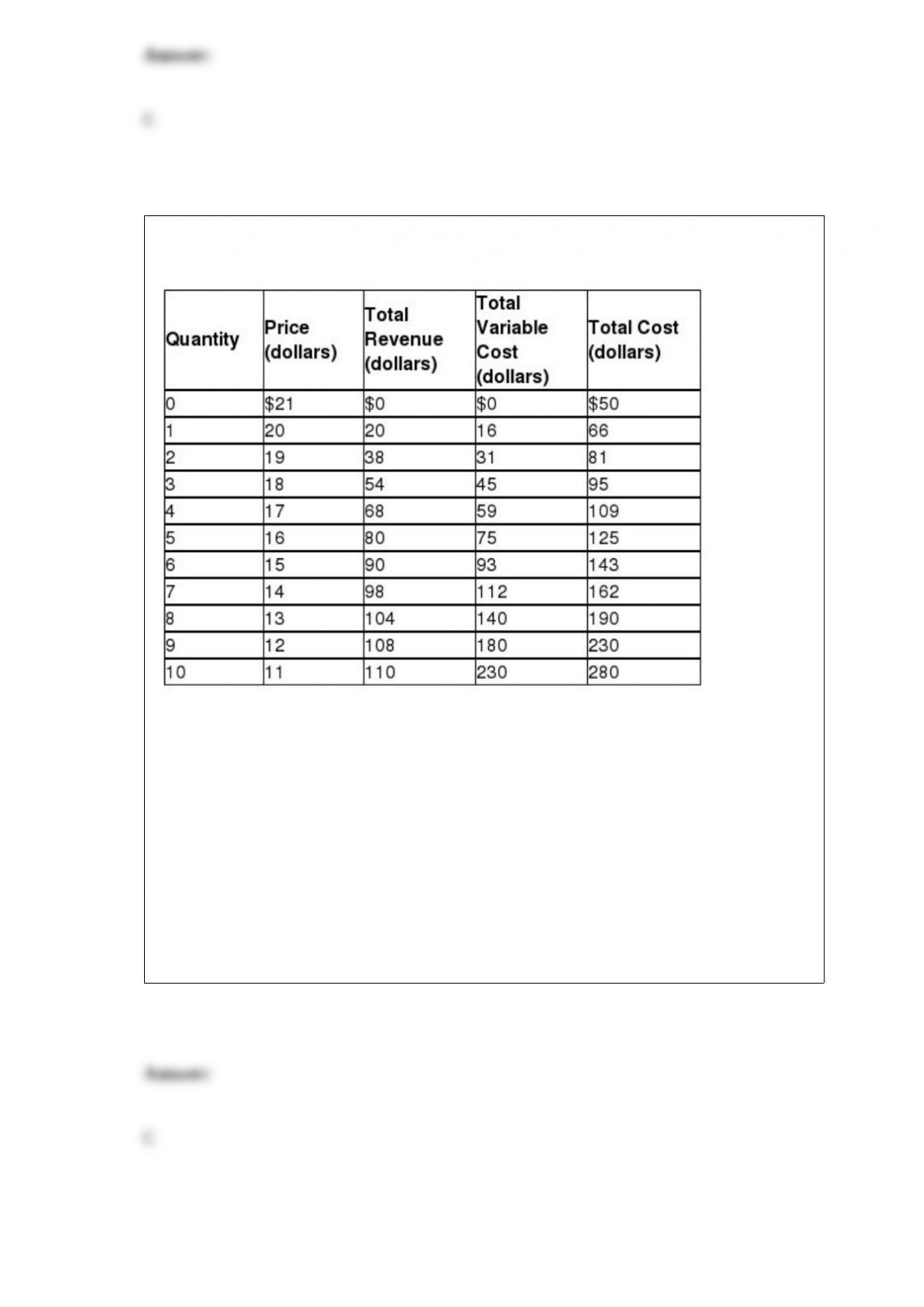
Table 13-3
Table 13-3 shows the demand and cost schedules for a monopolistically competitive
firm.
What is its average variable cost of production at its optimal output level?
A) $0 (because its optimal output = 0)
B) $15
C) $14.75
D) $29
Investment spending ________ during a recession, and ________ during an expansion.
A) declines; increases
B) increases; declines
C) increases; increases
D) declines; declines
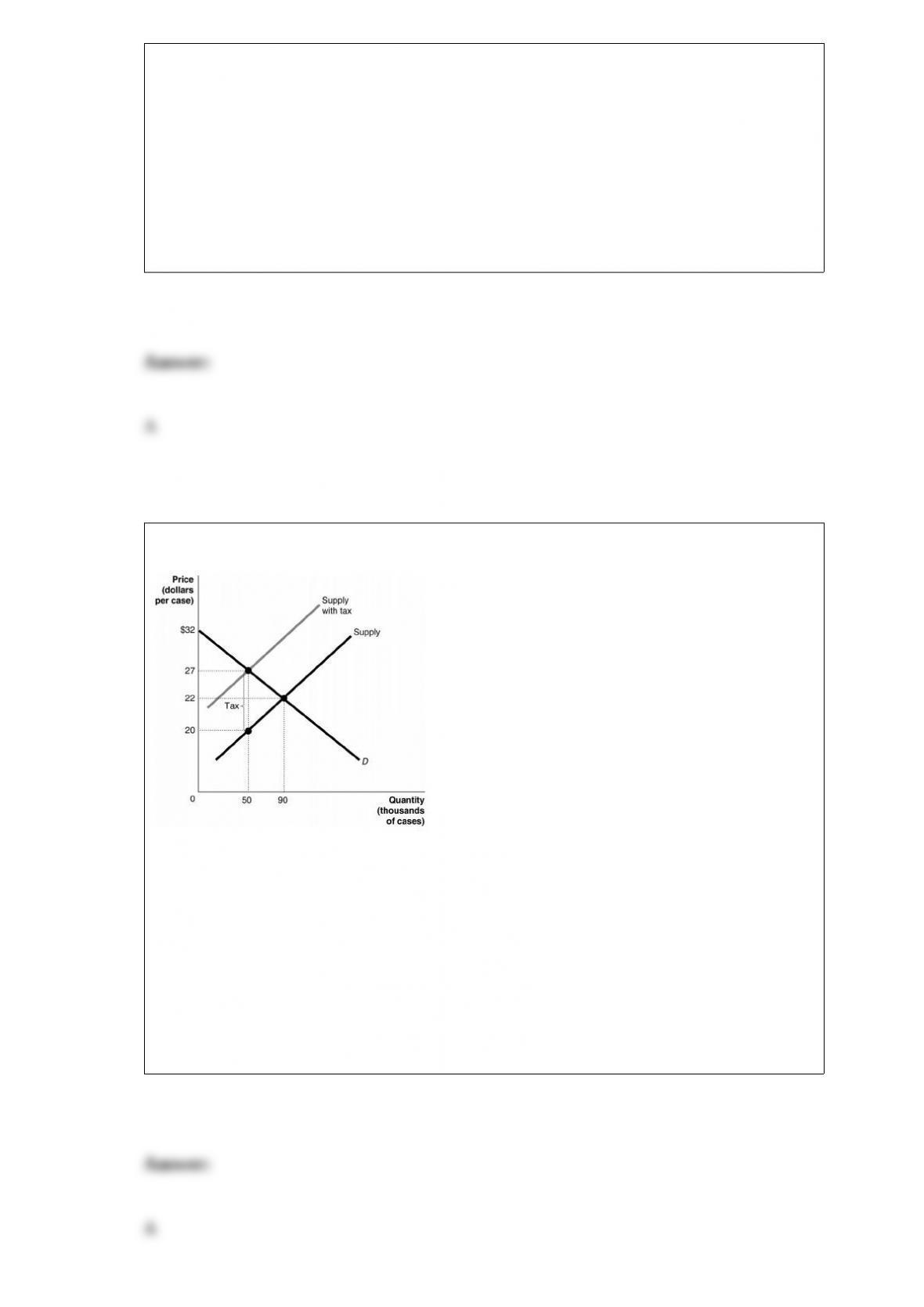
Figure 4-8
Figure 4-8 shows the market for beer. The
government plans to impose a unit tax in this market. How much of the tax is paid by
producers?
A) $2
B) $5
C) $7
D) $12
Which type of businesses earns the majority of profits in the United States?
A) corporations
B) partnerships
C) sole proprietorships
D) none of these
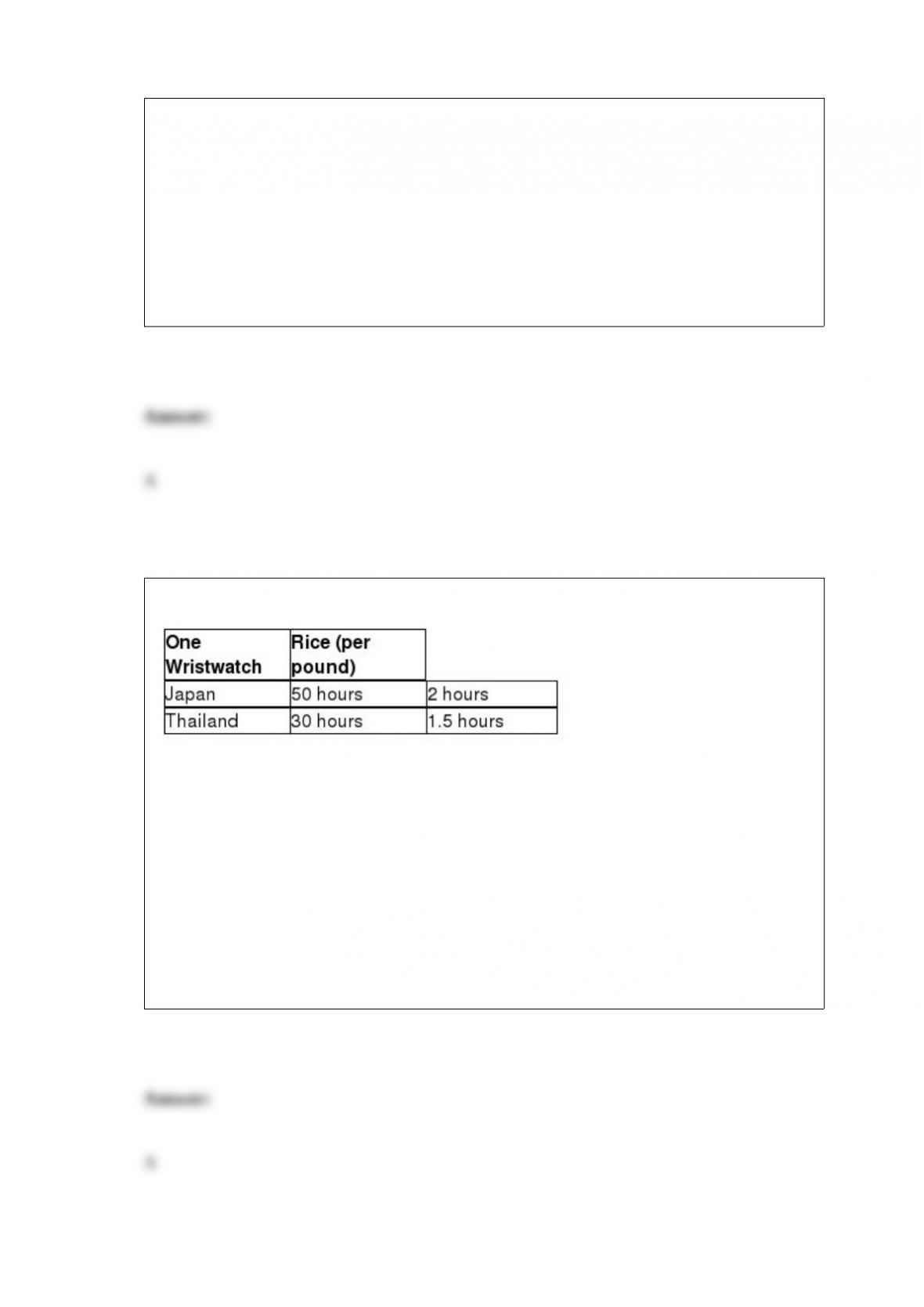
Table 2-9
Table 2-9 shows the number of labor hours required to produce a wristwatch and a
pound of rice in Japan and Thailand. Japan has a comparative advantage in the
production of
A) rice.
B) wristwatches.
C) both products.
D) neither product.
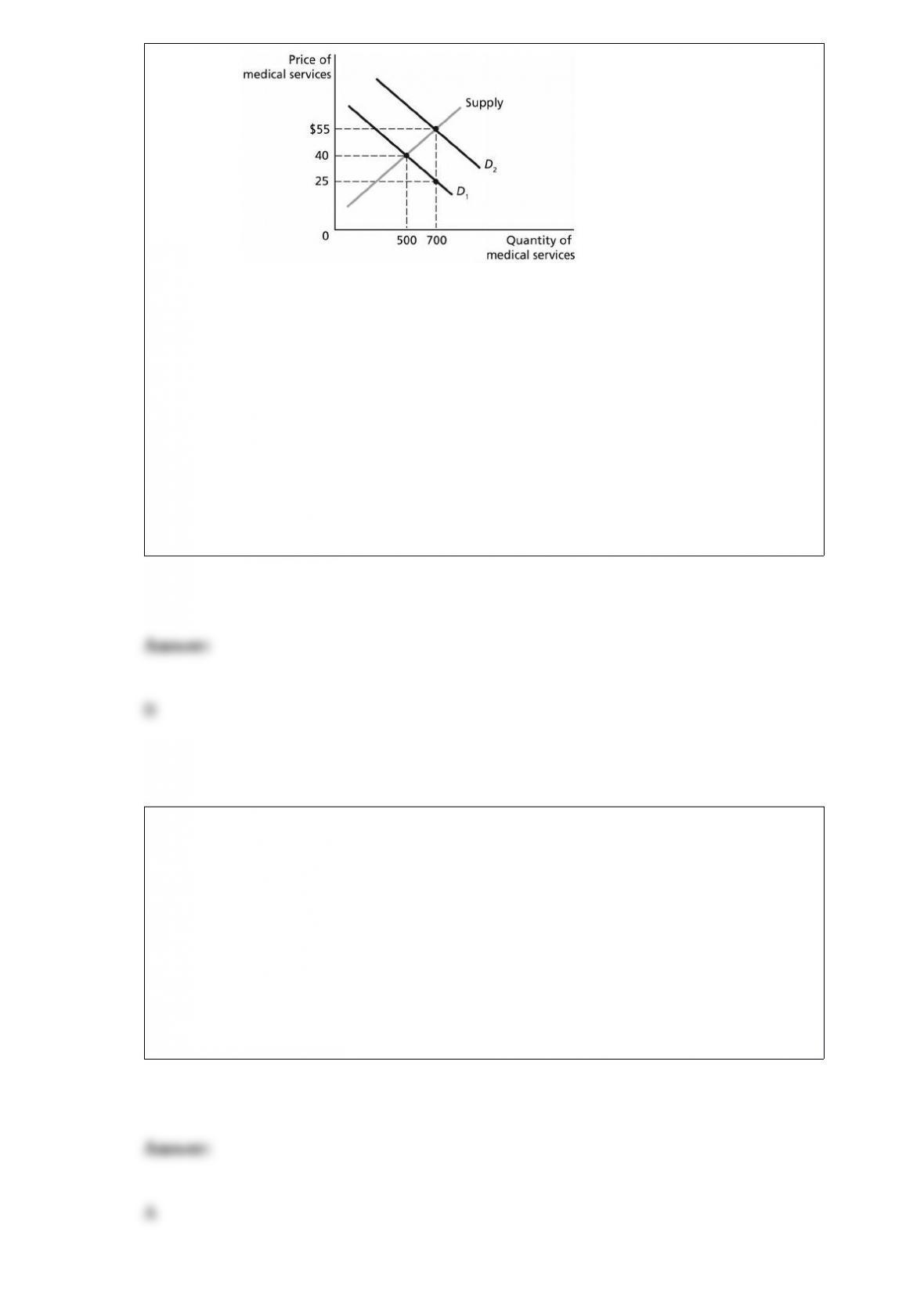
Figure 7-4 Figure 7-4 represents the
market for medical services with and without insurance, and the effect of a third-party
payer system on the demand for medical services.
The efficient quantity of medical services is
A) 200.
B) 500.
C) 700.
D) >700.
Paying a person a lower wage or excluding a person from an occupation on the basis of
an irrelevant characteristic such as race or gender
A) is economic discrimination.
B) violates federal comparable worth laws.
C) can be explained by negative feedback loops.
D) creates differences in wages that economists call “compensating differentials.”

The prices college students and faculty members pay for Apple computers are lower
than the prices Apple charges on its Website and in retail stores. Apple charges lower
prices to college students and faculty members because
A) college students and faculty members have a more elastic demand for computers
than the general public.
B) Apple can deduct from its federal taxes some of the costs of the computers it sells to
college students and faculty members.
C) college students and faculty members have a more inelastic demand for computers
than the general public.
D) college students and faculty members typically buy more supplies from Apple (print
cartridges, paper, etc.,) than the general public.
The substitution effect of an increase in the price of peaches is
A) the change in the quantity demanded that results from a change in the price of
peaches making peaches more expensive relative to other goods, holding constant the
effect of the price change on consumer purchasing power.
B) the change in the demand for nectarines (a substitute good) that results when
peaches become more expensive relative to nectarines, holding constant the effect of
the price change on consumer purchasing power.
C) the change in the quantity demanded of peaches that results from the effect of the
change in the price of peaches on the consumer’s purchasing power.
D) the change in the demand for peaches that results when the price of peaches
increases.

If four workers can produce 18 chairs a day and five can produce 20 chairs a day, the
marginal product of the fifth worker is
A) 2 chairs.
B) 3 chairs.
C) 4 chairs.
D) 38 chairs.
Assuming a fixed amount of taxes and a closed economy, calculate the value of the
government purchases multiplier, the tax multiplier, and the balanced budget multiplier
if the marginal propensity to consume equals 0.75.
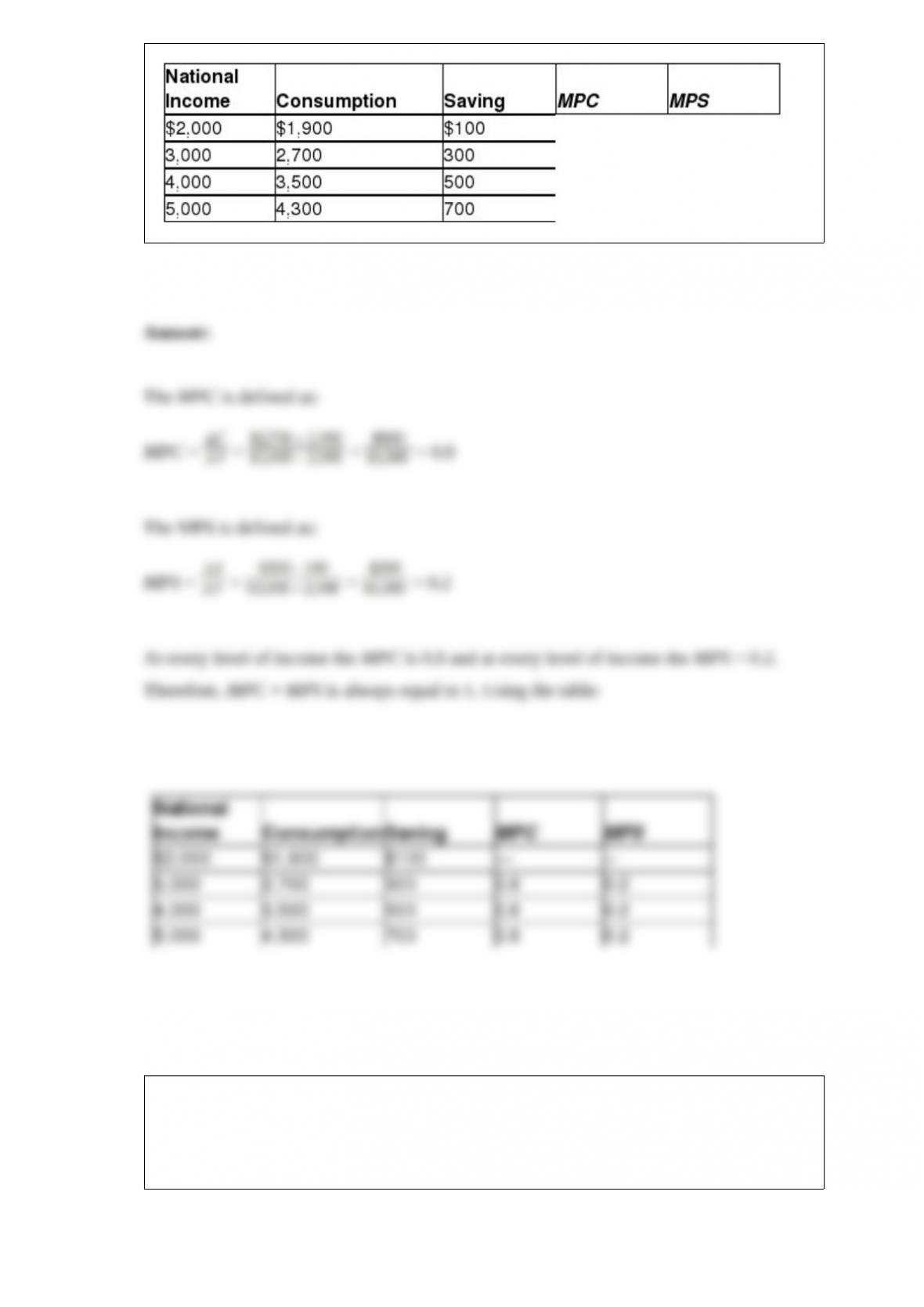
Given Table 23-9 below, fill in the values of the marginal propensity to save (MPS) and
the marginal propensity to consume (MPC). Show that MPC + MPS = 1. Table 23-9
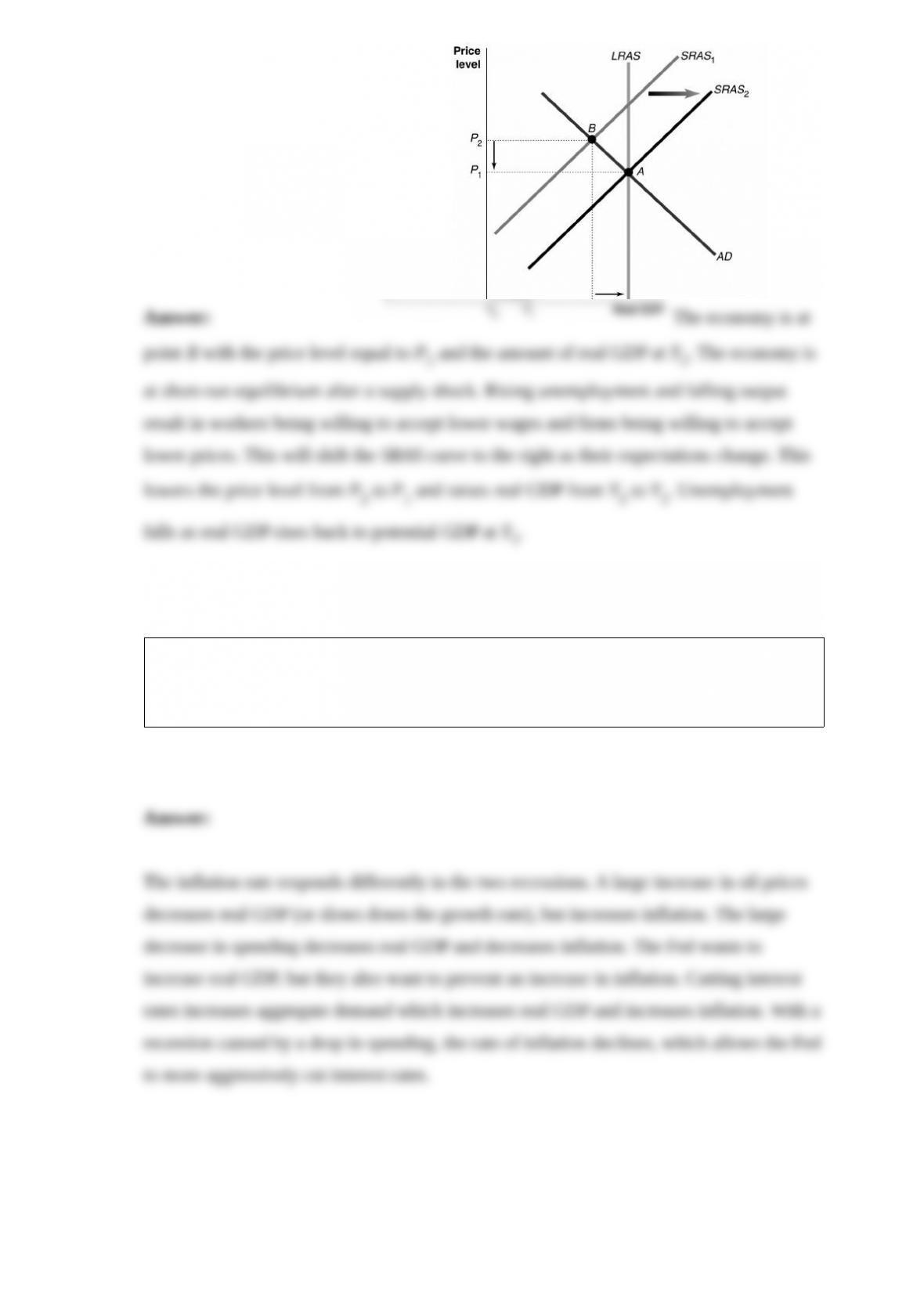
Using the aggregate supply and demand model, illustrate what happens in the long run
when the economy suffers a supply shock. Begin your analysis by assuming the
economy has suffered the supply shock in the short run, but has not yet adjusted to it in
the long run.
Would the Federal Reserve respond more aggressively with interest rate cuts in a
recession caused by a decrease in spending, as in the 2001 recession, than in a recession
caused by an increase in oil prices, as in the 1974-75 recession?

Briefly describe the Sarbanes-Oxley Act and explain why it was passed.
How can a corporation’s board of directors and its managers try to reduce the
principal-agent problem?
Briefly describe how the Bretton Woods system operated.

What are some of the reasons used to explain improvements in health, education,
democracy, and political stability in many low-income countries?
What do economists mean by an efficient tax?
Explain how market economies are generally better able to achieve technological
progress than are centrally planned economies.