1) (last word) which of the following is a source of data for the consumption component
of the u.s. gdp?
a.the census bureau’s retail trade survey
b.the census bureau’s survey of government finance
c.the conference board’s index of leading indicators
d.the bureau of labor statistics consumer price index
2)
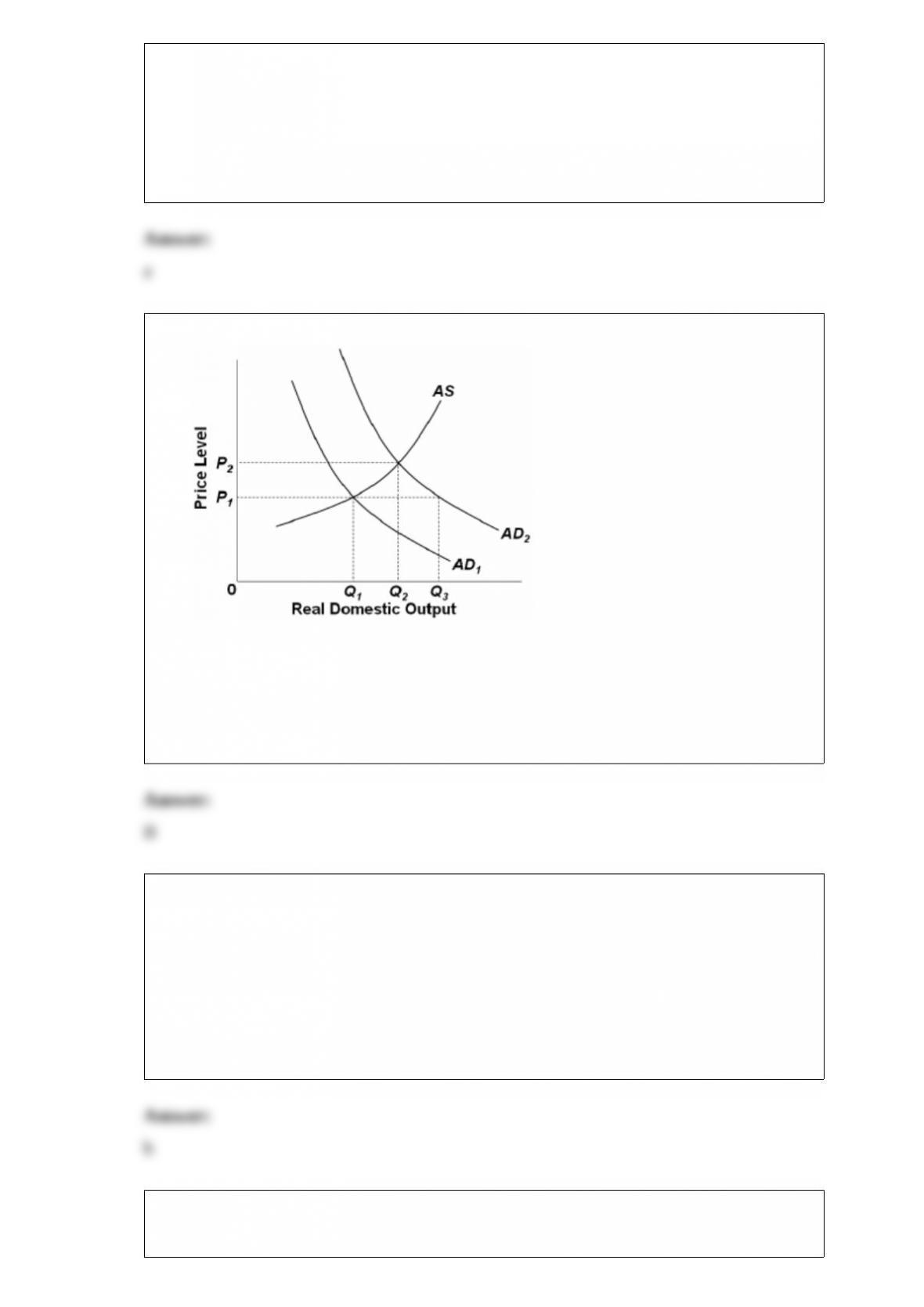
Refer to the above diagram. At the equilibrium price and quantity:
A.aggregate demand exceeds aggregate supply.
B.the amount of real output demanded and supplied are equal.
C.aggregate demand equals aggregate supply.
D.aggregate supply exceeds aggregate demand.
3) (consider this) unlike newspaper dispensing devices, soft drink dispensing machines
do not permit people to take more than one can or bottle with each payment. the reason
is that the:
a.opportunity cost of additional cans or bottles of a soft drink increase very rapidly.
b.marginal utility of extra soft drink cans or bottles declines slowly, particularly because
they are storable and can be consumed later.
c.marginal utility of extra soft drink cans or bottles declines quite rapidly.
d.opportunity cost of additional cans or bottles of soft drink increase very slowly.
4) If aggregate demand decreases, and as a result, real output and employment decline
but the price level remains unchanged, it is most likely that:
A.the money supply has declined.
B.the price level is inflexible downward and a recession has occurred.
C.cost-push inflation has occurred.
D. productivity has declined.
5)
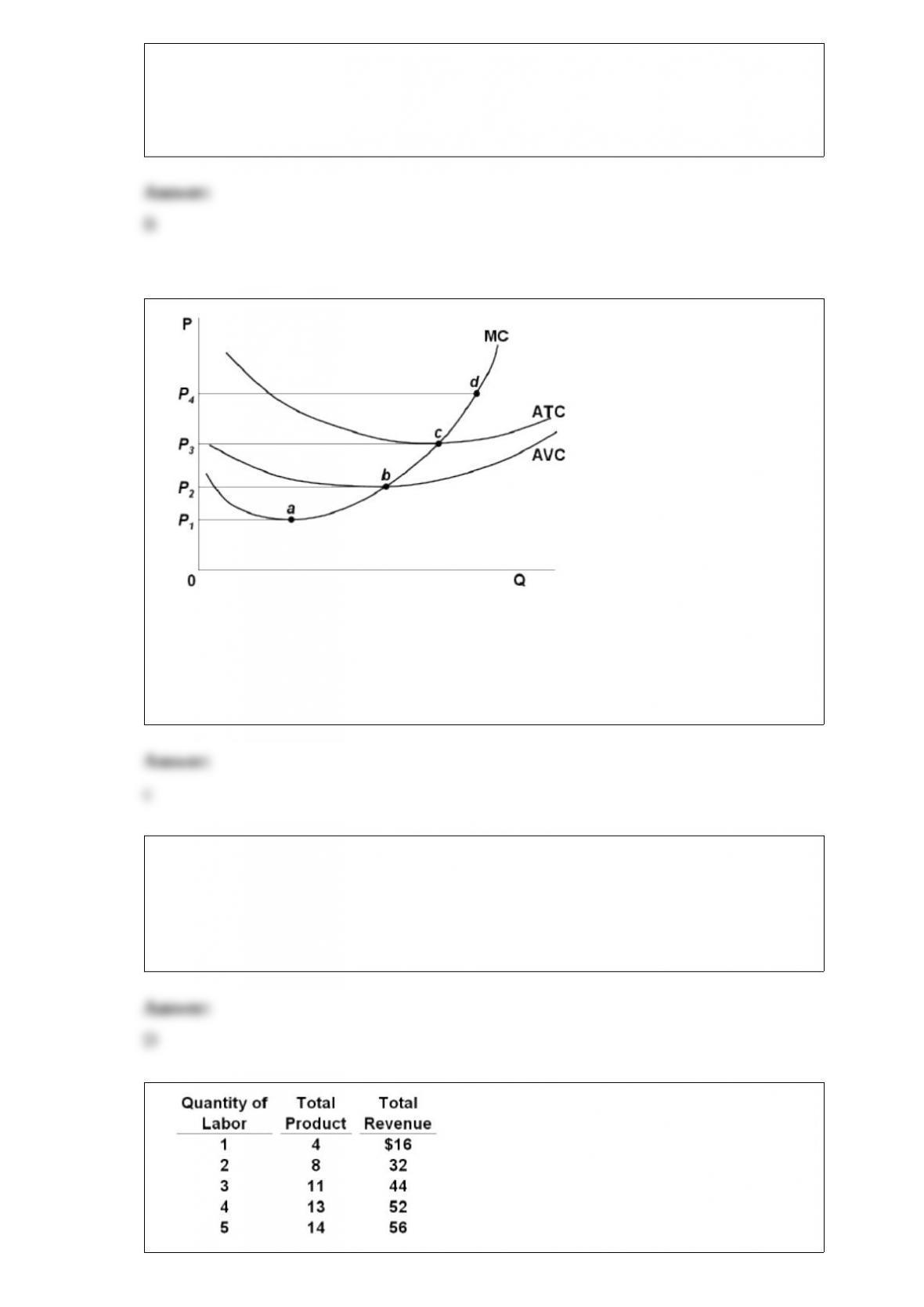
refer to the above diagram for a purely competitive producer. if product price is p3:
a.the firm will maximize profit at point d.
b.the firm will earn an economic profit.
c.economic profits will be zero.
d.new firms will enter this industry.
6) Annual budget deficits gave way to annual budget surpluses beginning in:
A.1982.
B.1989.
C.1993.
D.1998.
7)
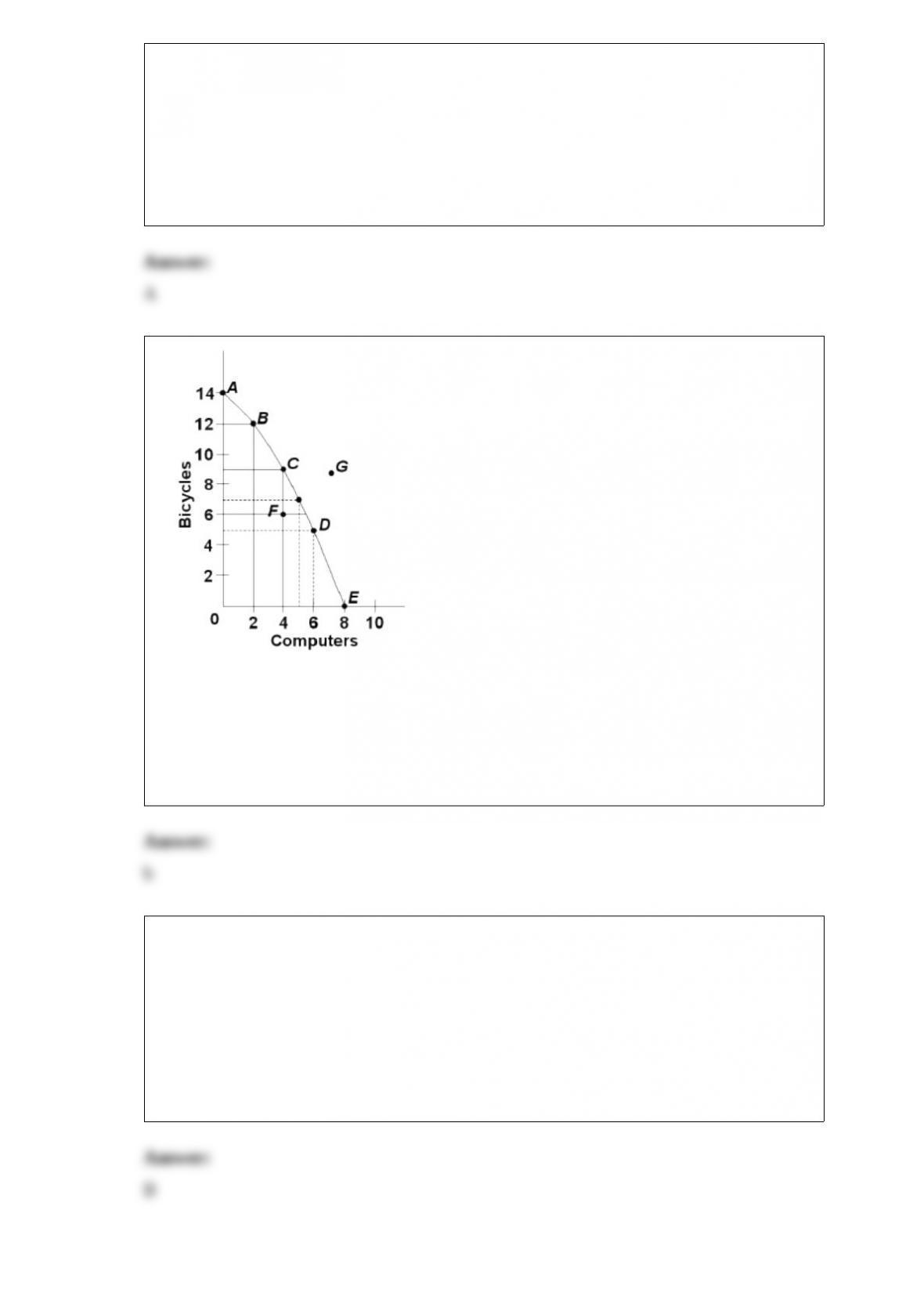
Refer to the above data. If the market wage rate is $8 and the firm hires its
profit-maximizing number of workers, the firm’s total revenue will exceed its total wage
payment by:
A.$20.
B.$16.
C.$12.
D.$8.
8)
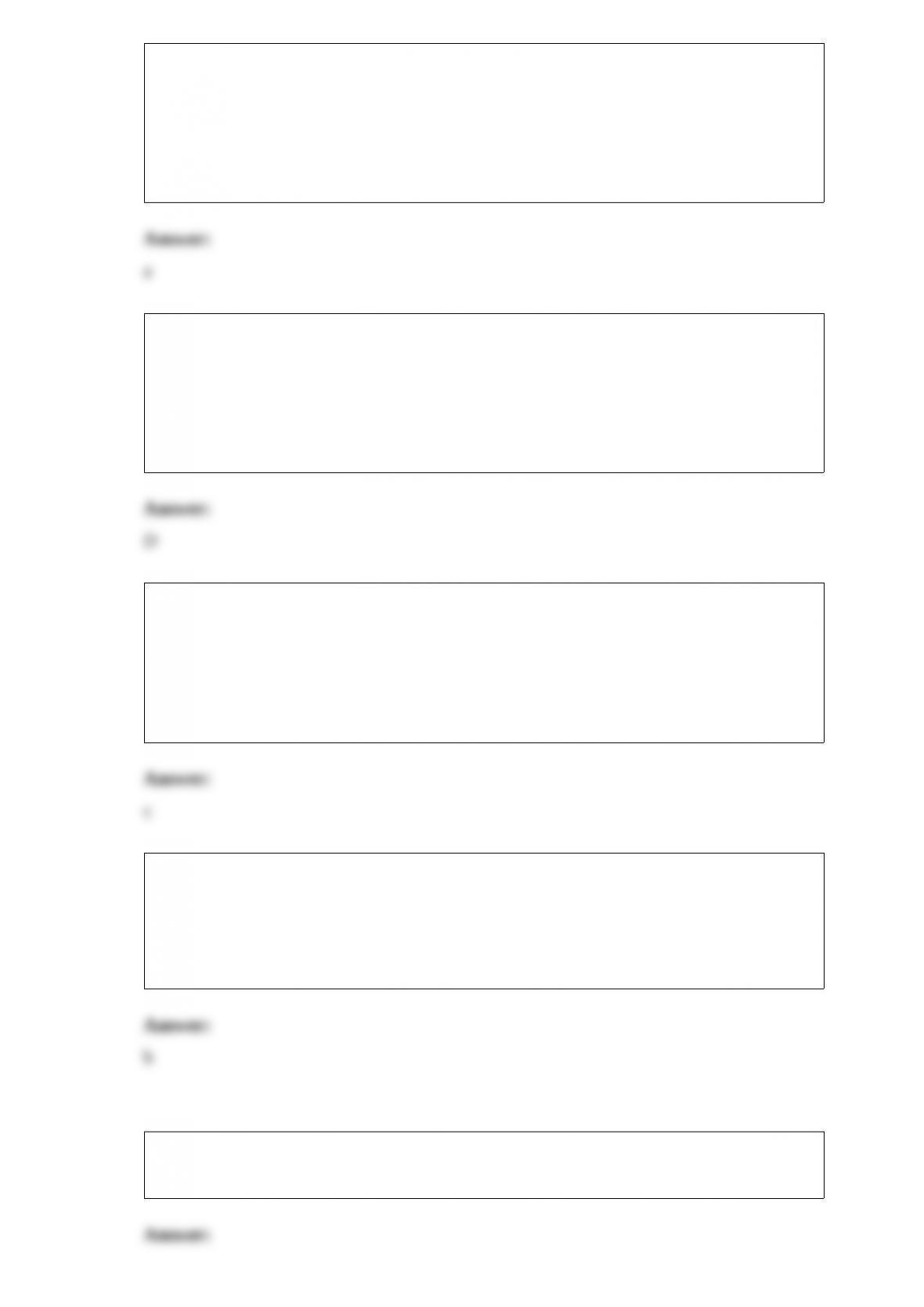
refer to the above diagram. the combination of computers and bicycles shown by point
f:
a.is unattainable, given currently available resources and technology.
b.is attainable, but implies that the economy is not using all its resources.
c.is irrelevant because it is inconsistent with consumer preferences.
d.suggests that opportunity costs are constant.
9) Which of the following statements best describes the demand for agricultural
commodities?
A.It takes a small decline in price to induce a large increase in the amount of
agricultural products demanded.
B.The marginal utility of additional units of agricultural output diminishes very rapidly.
C.Small increases in income cause demand to increase by a proportionately larger
amount.
D.When price declines, the resulting substitution effect is very large.
10) the coincidence-of-wants problem associated with barter refers to the fact that:
a.for exchange to occur each seller must have a product that some buyer wants.
b.money must be used as a medium of exchange or trade will never occur.
c.specialization is restricted by the size or scope of a market.
d.buyers in resource markets and sellers in product markets can never engage in
exchange.
11) Research studies indicate that:
A.U.S. producers gain more from tariffs than U.S. consumers lose.
B.the costs of trade restrictions are proportionately higher for high-income groups than
for low-income groups.
C.the revenue from tariffs equals the total cost that tariffs impose on consumers.
D.U.S. consumers lose more from tariffs than U.S. producers gain.
12) which of the following conditions is true for a purely competitive firm in long-run
equilibrium?
a.p > mc = minimum atc.
b.p > mc > minimum atc.
c.p = mc = minimum atc.
d.p < mc < minimum atc.
13) if a purely competitive firm is maximizing economic profit:
a.it is necessarily maximizing per-unit profit.
b.it may or may not be maximizing per unit profit.
c.then per-unit profit will be minimized.
d.it is necessarily overallocating resources to its product.
14) (Consider This) How did Arthur Laffer use Robin Hood and Sherwood Forest to
explain the advantage of supply-side economics?
15) Explain the equation of exchange.
16) Evaluate this argument for a trade barrier: The U.S. needs protection from cheap
foreign labor.
17) If the Phillips Curve exists in reality, what dilemma does this create for fiscal and
monetary policies? Explain.
18) Prepare a list of government tax or spending policy options that would tend to shift
the aggregate supply curve rightward.
19) What, if any, is the relationship between the mobility of a particular type of labor
and the supply of labor?
20) What is the major argument in the case for income equality?
21) Explain in nontechnical terms why oligopolistic prices may tend to be inflexible.
22) What have been the changes or modifications in thinking about monetary rules in
recent decades?
23) What are the basic sources of profit in a market economy?