1) A competitive firm‘s short-run supply curve is part of which of the following curves?
a.marginal revenue
b.average variable cost
c.average total cost
d.marginal cost
2) Suppose that policymakers are doing cost-benefit analysis on a proposal to add
traffic barriers to divide the flow of traffic in an effort to increase safety on a given
highway. Which of the following statements is correct?
a.The benefits are usually easier to measure than the costs.
b.Because human life is priceless, any measure to increase traffic safety would generate
benefits that outweigh the costs.
c.Estimating the value of a human life is difficult but necessary to evaluate the proposal.
d.Both a and b are correct.
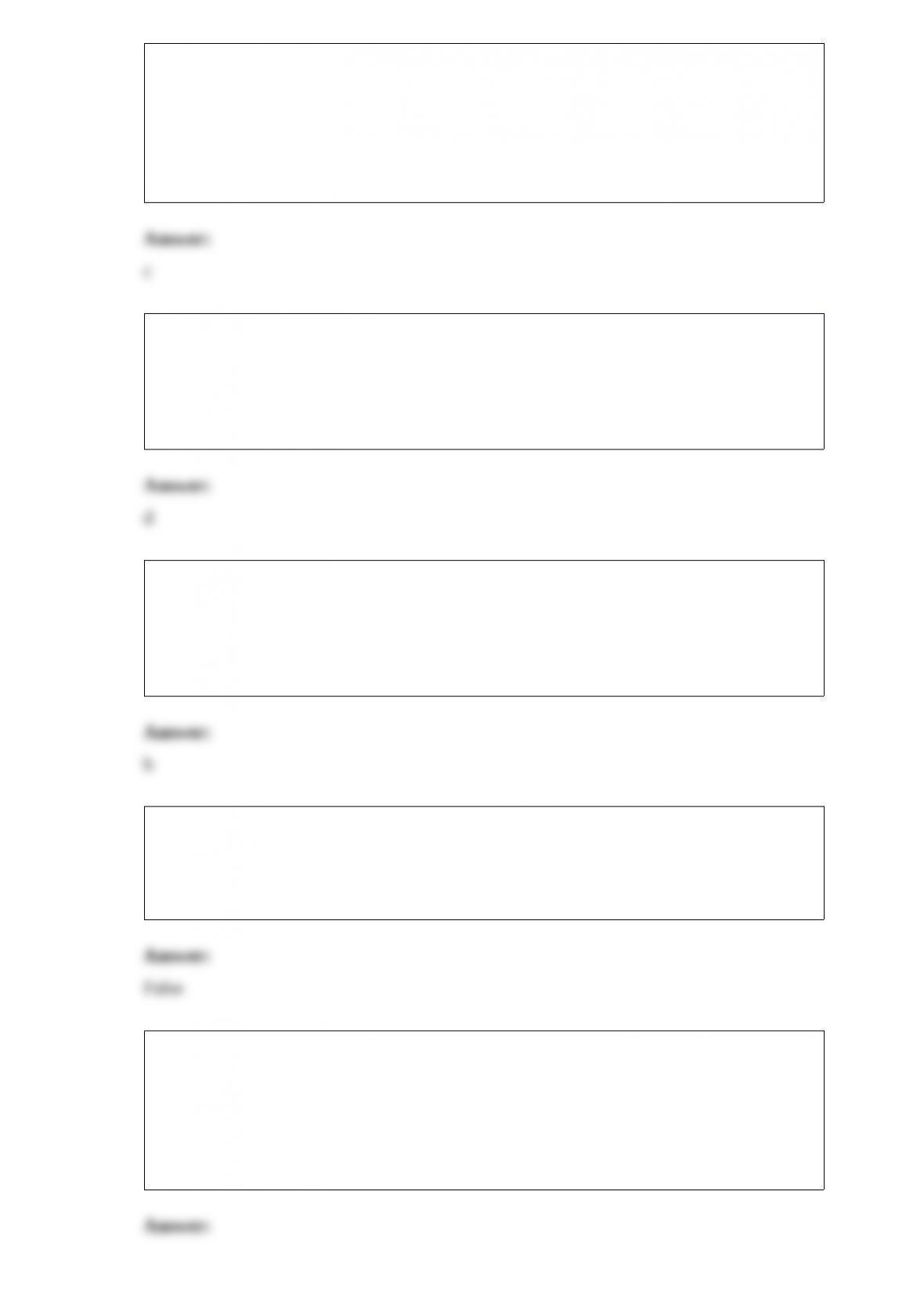
3) Assume that Japan and Korea can switch between producing cars and producing
airplanes at a constant rate.
We could use the information in the table to draw a production possibilities frontier for
Japan and a second production possibilities frontier for Korea. If we were to do this,
measuring airplanes along the horizontal axis, then
a.the slope of Japan’s production possibilities frontier would be 5 and the slope of
Korea’s production possibilities frontier would be -3.
b.the slope of Japan’s production possibilities frontier would be 0.2 and the slope of
Korea’s production possibilities frontier would be -0.33.
c.the slope of Japan’s production possibilities frontier would be 0.2 and the slope of
Korea’s production possibilities frontier would be 0.33.
d.the slope of Japan’s production possibilities frontier would be 5 and the slope of
Korea’s production possibilities frontier would be 3.
4) To maximize total surplus with a monopoly firm, a benevolent social planner would
choose the level of output where
a.MR = MC.
b.MR intersects the demand curve.
c.MC intersects the demand curve.
d.MR exceeds MC by the greatest amount.
5) Oligopolists may well be able to reach their preferred, cooperative outcome if
a.the number of oligopolists is large.
b.they learn that a Nash equilibrium is in their best long-term interests.
c.a sufficient number of firms can be persuaded to lower their prices.
d.the game they play is repeated a sufficient number of times.
6) Elephants are endangered, but cows are not because
a.cows are not as valuable as elephants.
b.elephants are a common resource, while cows are private goods.
c.cows are a common resource, while elephants are private goods.
d.it is legal to kill cows but not elephants.
7) For a firm operating in a perfectly competitive industry, total revenue, marginal
revenue, and average revenue are all equal.
a.True
b.False
8) Which of the following statements is true of both pollution permits and corrective
taxes?
a.Both policies internalize the externality of pollution.
b.Both policies require firms to pay for their pollution.
c.Both policies lead to the establishment of an equilibrium price of pollution.
d.All of the above are correct.
9) A safe driver would likely choose an auto insurance policy with a
a.low premium and a high deductible.
b.high premium and a high deductible.
c.high premium and a low deductible.
d.high premium and no deductible.
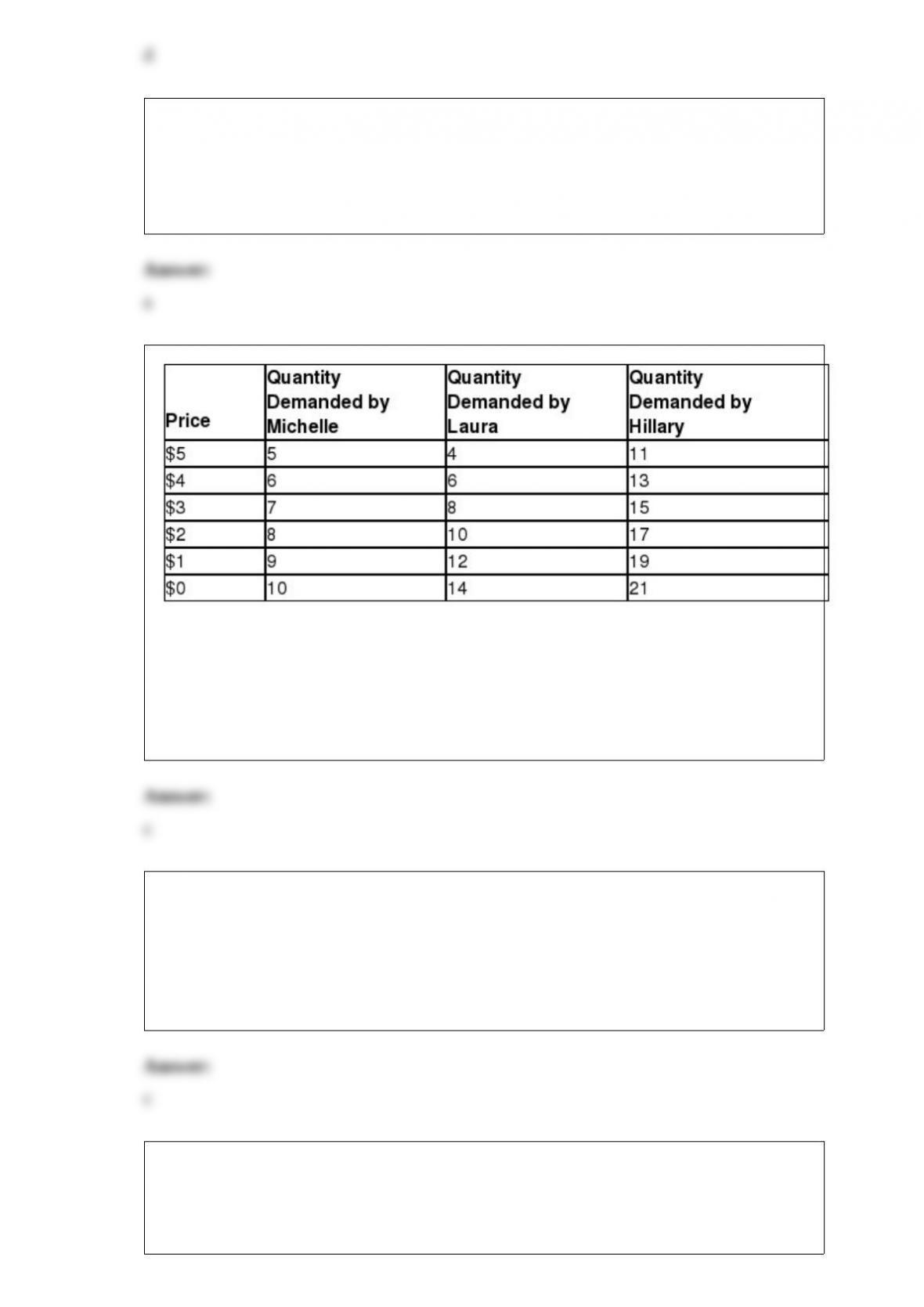
10) If the market consists of Laura and Hillary only and the price falls by $1, the
quantity demanded in the market increases by
a.2 units.
b.3 units.
c.4 units.
d.5 units.
11) Predatory pricing involves a firm
a.colluding with another firm to restrict output and raise prices.
b.selling two individual products together for a single price rather than selling each
product individually at separate prices.
c.temporarily cutting the price of its product to drive a competitor out of the market.
d.requiring that the firm reselling its product do so at a specified price.
12) When the United States trades with China,
a.both countries will likely benefit.
b.only United States will benefit.
c.only China will benefit.

d.neither country will benefit.
13) The goal of an economist who formulates new theories is to
a.provide an interesting framework of analysis, whether or not the framework turns out
to be of much use in understanding how the world works.
b.provoke stimulating debate in scientific journals.
c.contribute to an understanding of how the world works.
d.demonstrate that economists, like other scientists, can formulate testable theories.