
How can an increase in the minimum-wage affect the restaurant industry?
A) It can create a shortage of restaurant workers.
B) It can lead to an increase in prices for restaurant meals.
C) It can create a surplus of restaurant workers.
D) both B and C
If a firm in a perfectly competitive market tries to raise its price above the going market
price, then:
A) it will sell more output.
B) it will sell the same amount of output as before.
C) it will not be able to sell any output.
D) it will sell some output, but not as much as before.
In general, the market price in an oligopoly market is:
A) lower than in perfect competition.
B) higher than in perfect competition.

C) the same as in perfect competition.
D) The answer depends on the shape of the average cost curve.
For a company to convince consumers to use their products repeatedly, they must:
A) make the customers see the benefits of the product.
B) hire another celebrity endorser.
C) hire an independent company to evaluate the product.
D) run the celebrity ads repeatedly.
The market demand curve is:
A) negatively sloped.
B) upward sloping.
C) always vertical
D) always horizontal.

Which of the following is a question answered with normative economic reasoning?
A) If the college offers free textbooks for students, will more students read their
textbooks?
B) If the college provided less financial aid for out-of-state students, would more
in-state students benefit?
C) If the college increased its enrollment requirements, would class size decline?
D) Should the college increase tuition to fund its athletic programs?
Which of the following is NOT a characteristic of a monopolistically competitive
market?
A) Firms hold patents on their products.
B) The products that firms sell are slightly different.
C) Firms have some control over price.
D) There are no artificial barriers to entry.
The perfectly competitive firm’s short-run demand for labor is downward sloping
because:
A) the output price falls as the firm produces more output.
B) of diminishing marginal productivity.
C) the labor supply curve is upward sloping.
D) as more labor is hired, the firm has less money available per worker.
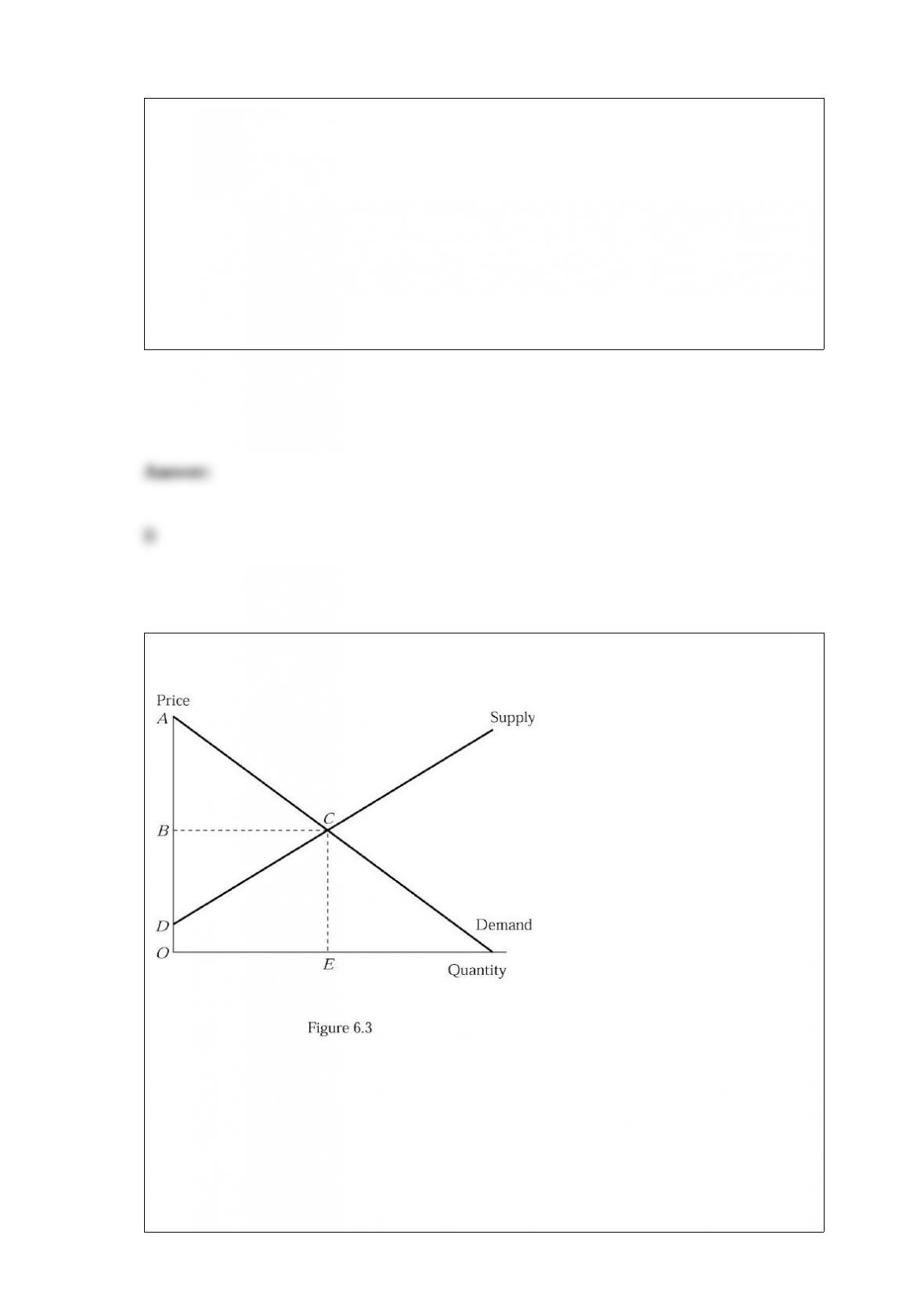
Refer to Figure 6.3. On this graph, area ACD is:
A) producer surplus.
B) total surplus.
C) consumer net benefit.
D) consumer surplus.
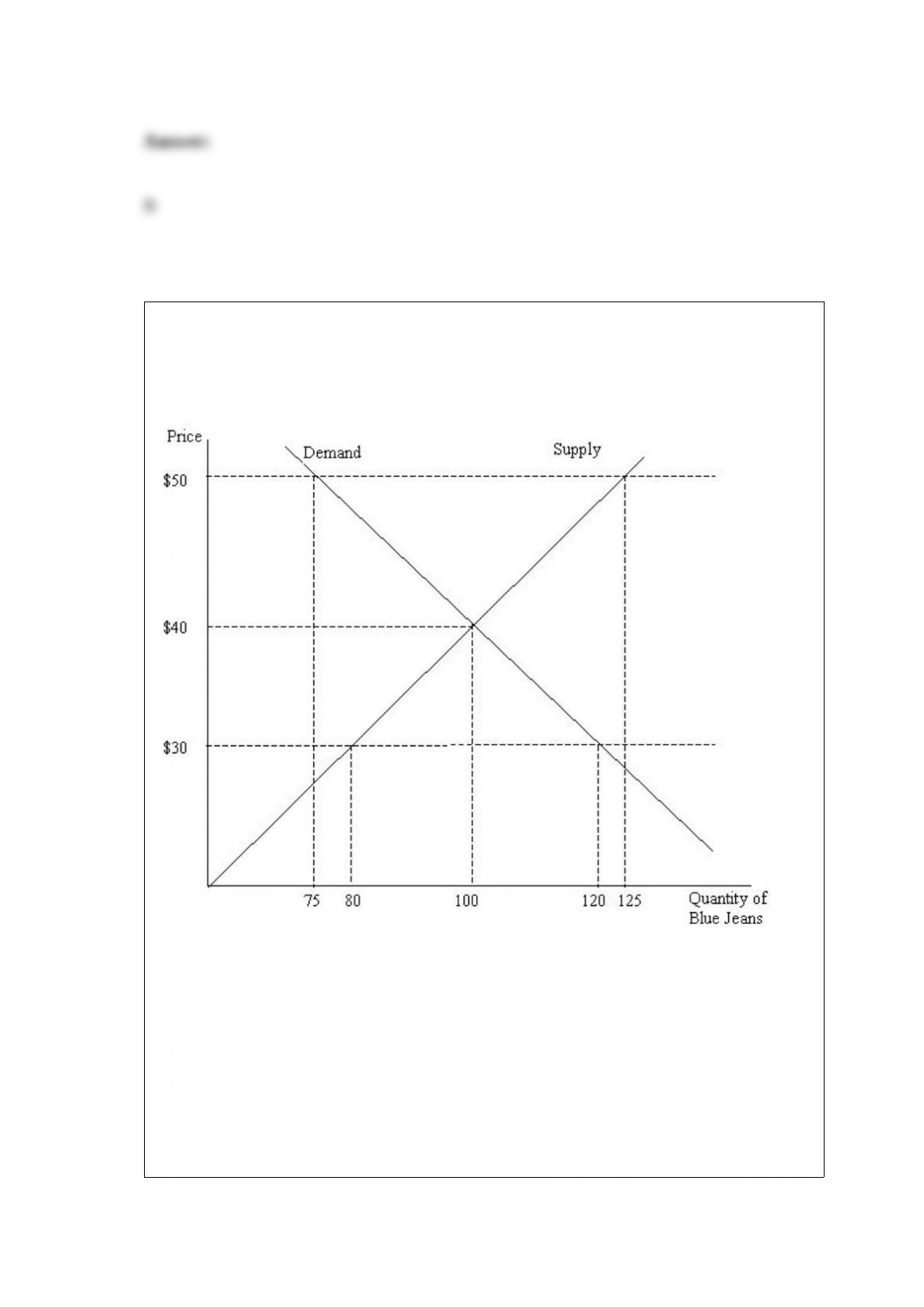
Figure 4.3 illustrates the supply and demand for blue jeans. If the actual price of blue
jeans is $30, we would expect the price of blue jeans to ________, the quantity
demanded of blue jeans to ________, and the quantity supplied of blue jeans ________.
Figure 4.3
A) increase; increase; increase
B) increase; decrease; increase
C) decrease; increase; decrease
D) decrease; decrease; increase

A price taker is a buyer or a seller who:
A) takes the market price as given.
B) buys or sells only at a price where profits can be made.
C) accepts whatever price that the government legislates as the price of the good or
service.
D) has the ability to influence the equilibrium price in the market.
The argument that calls for the trade protection of only newly developing industries is
known as the ________ argument.
A) learning by doing
B) predatory dumping
C) infant industry
D) developing nation
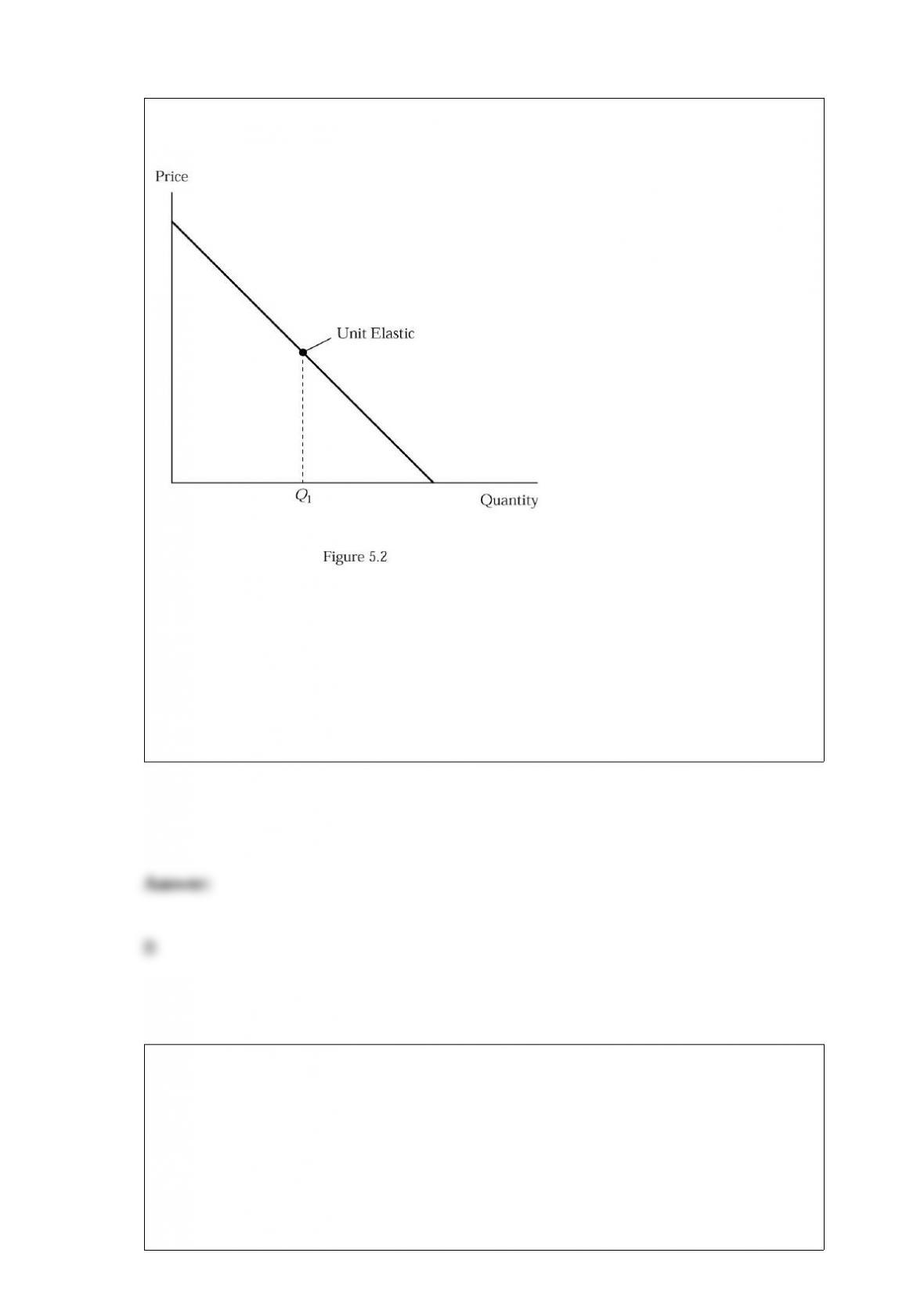
In Figure 5.2 at quantities larger than Q1:
A) total revenue is rising.
B) price elasticity is greater than 1.
C) price and total revenue are directly related.
D) all of the above
The firm’s short-run cost curves shows how ________ vary with the quantity produced
when at least one input is fixed.
A) technology
B) production costs
C) economy of scales

D) none of the above
Shows on broadcast TV, like ABC or NBC, are ________ and shows on cable TV, like
MTV or HBO, are ________.
A) nonexcludable; excludable
B) excludable; nonexcludable
C) rival; nonrival
D) nonrival; nonexcludable
If buyers believe that the percentage of high quality goods on the market is greater than
the actual percentage of high quality goods on the market:
A) buyers will be willing to pay a price that is higher than the price they would pay
with perfect information.
B) the most that buyers will be willing to pay is less than the price they would pay with
perfect information.
C) sellers of low quality goods will be driven from the market.
D) the market will be in a short run equilibrium.
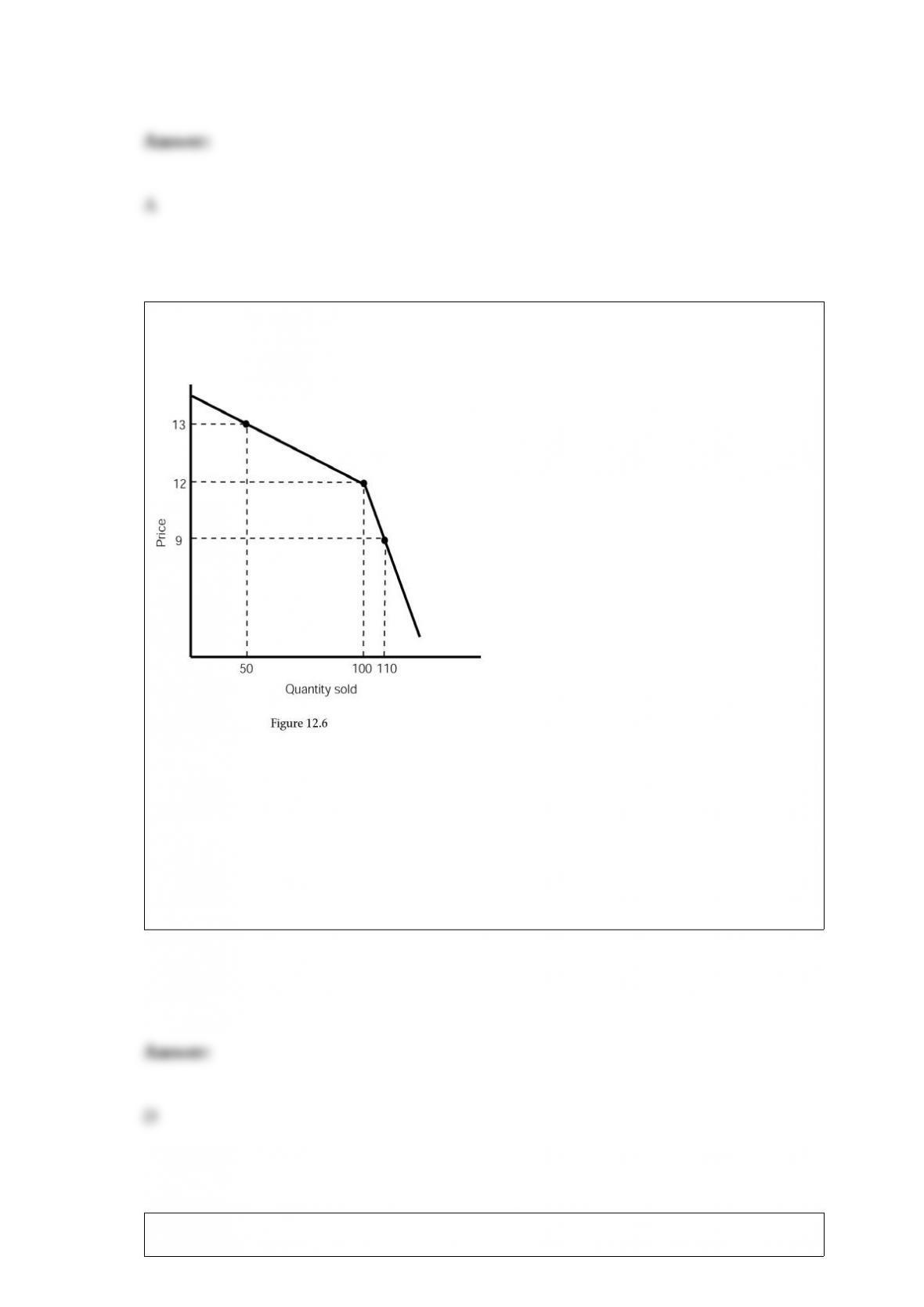
Refer to Figure 12.6. Assume the firm represented is selling its product at $12. It could
increase its revenue by:
A) raising its price.
B) by lowering its price.
C) by producing more.
D) None of these are correct.
If a natural monopoly is forced to follow a policy of average-cost pricing, the

monopolist will:
A) earn economic profits less than zero.
B) charge a higher price than if not regulated.
C) charge the same price as if it were not regulated.
D) increase output to an amount greater than what it would have produced if it were not
regulated.
The economic reason why some individuals choose keep their tuition money and not to
go to school is:
A) they believe the value of education is higher than the tuition costs.
B) the marginal cost of education is zero.
C) the marginal benefit of money is zero.
D) they believe the value of education is lower than the tuition costs.
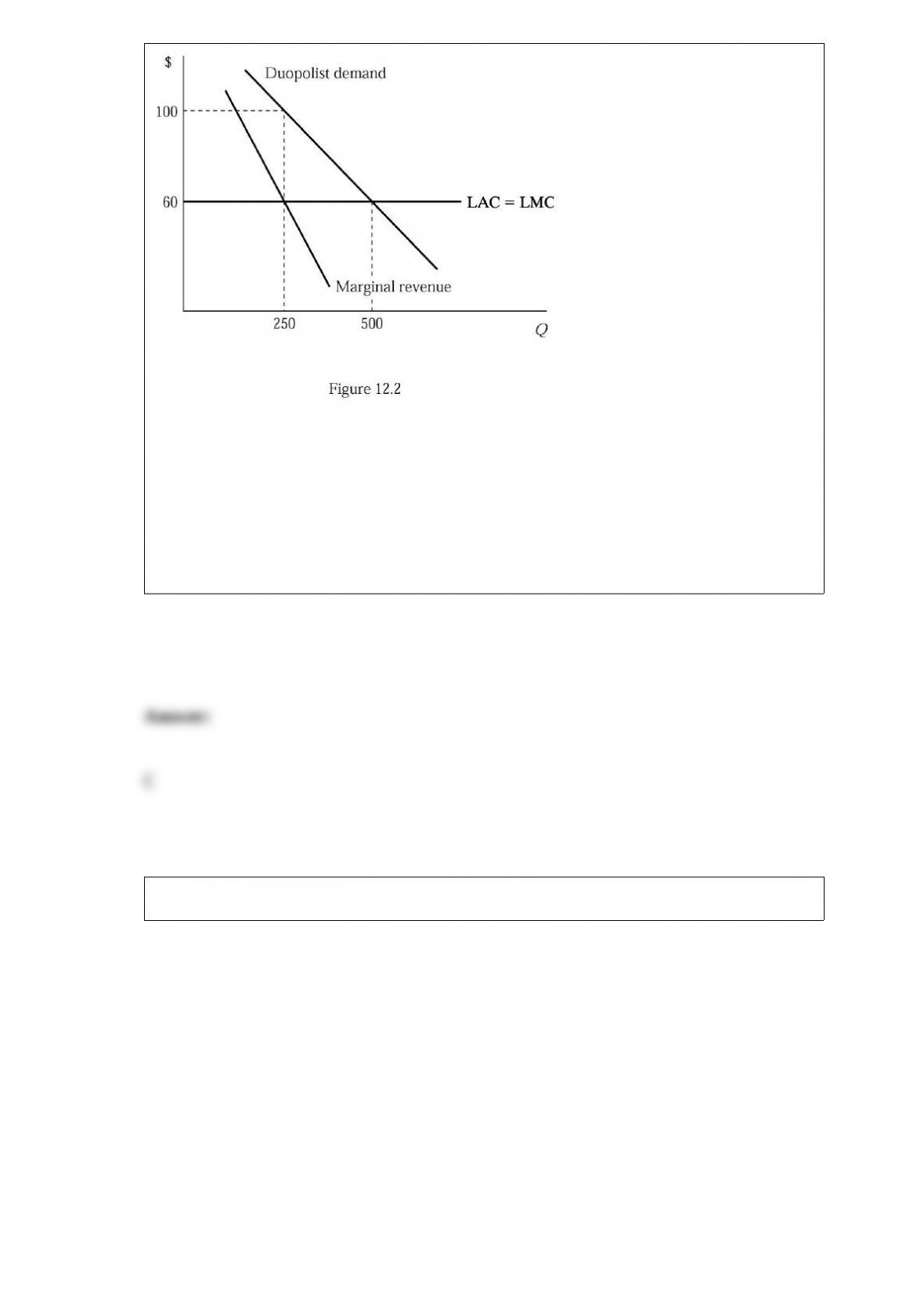
Figure 12.2 shows demand, marginal revenue, and costs of an individual duopolist. If
the two duopolists have the same costs and split the market equally, each profit
maximizing duopolist will produce and sell a quantity of ________.
A) 1,000 units
B) 500 units
C) 250 units
D) 125 units
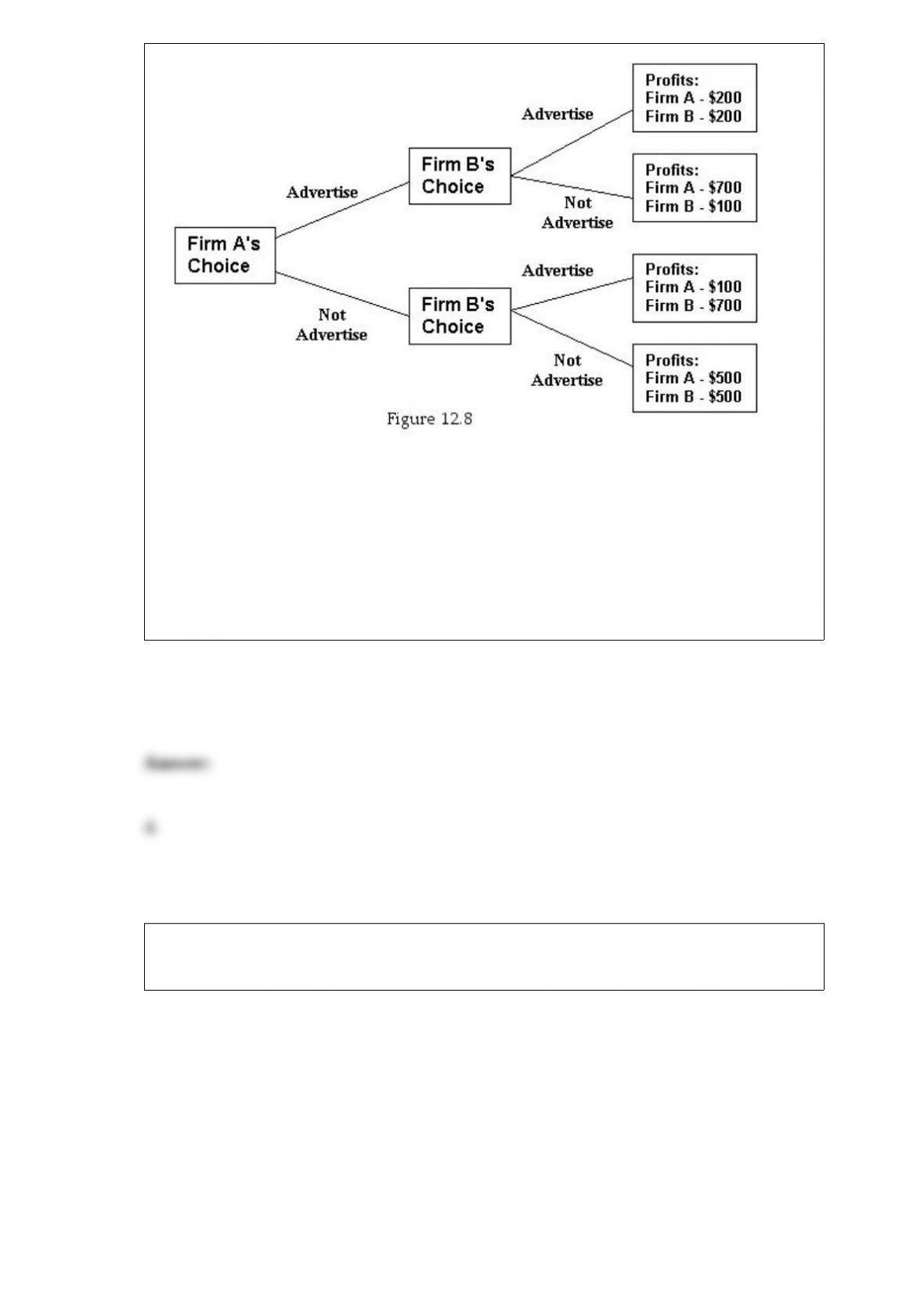
Refer to Figure 12.8. Which of the following would be a Nash equilibrium?
A) Both A and B advertise.
B) Both A and B do not advertise.
C) A advertises and B does not.
D) B advertises and A does not.
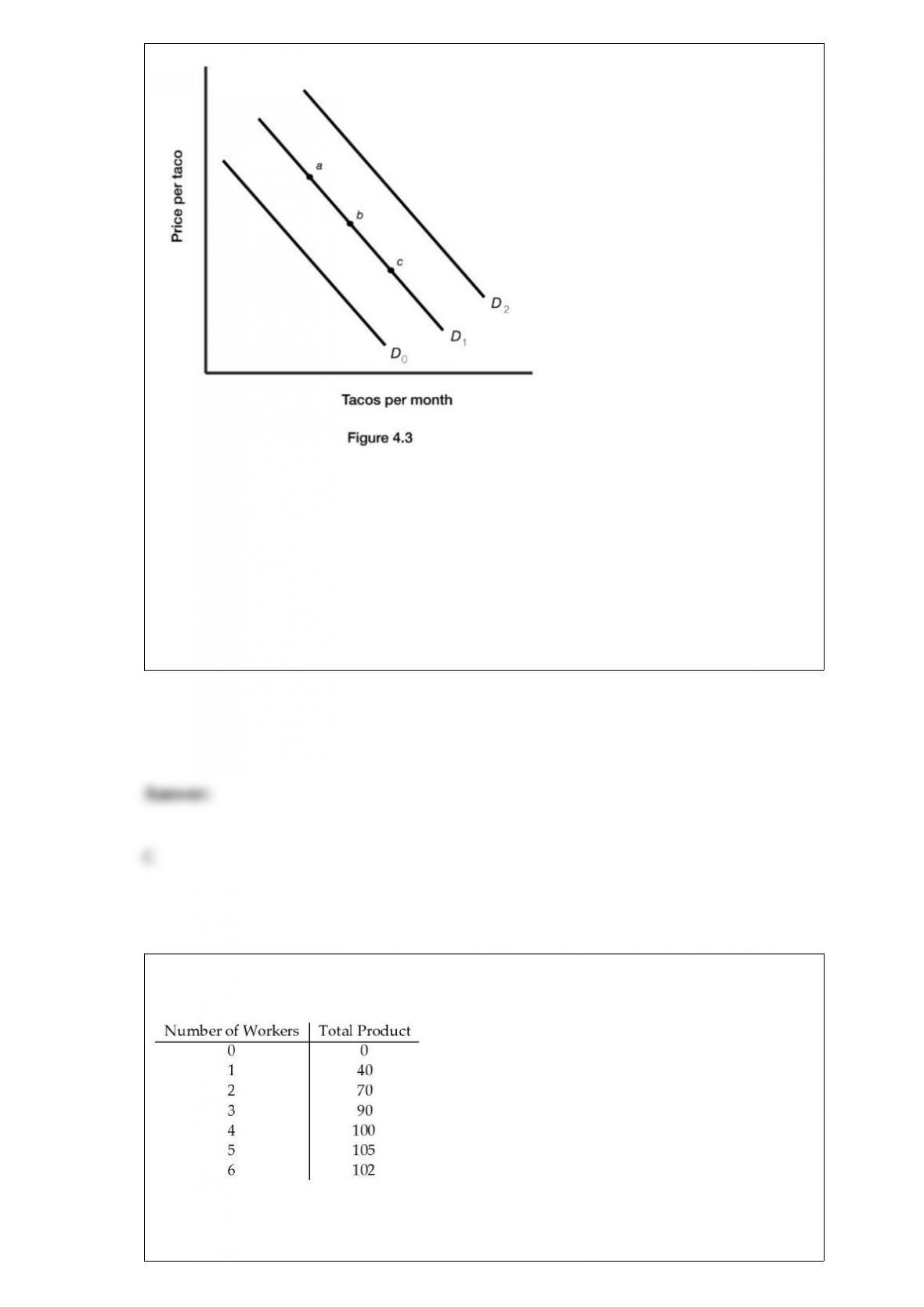
Figure 4.3 illustrates the demand for tacos. A decrease in the demand for tacos is
represented by the movement from:
A) point a to point b.
B) point c to point b.
C) D2 to D1.
D) D0 to D1.
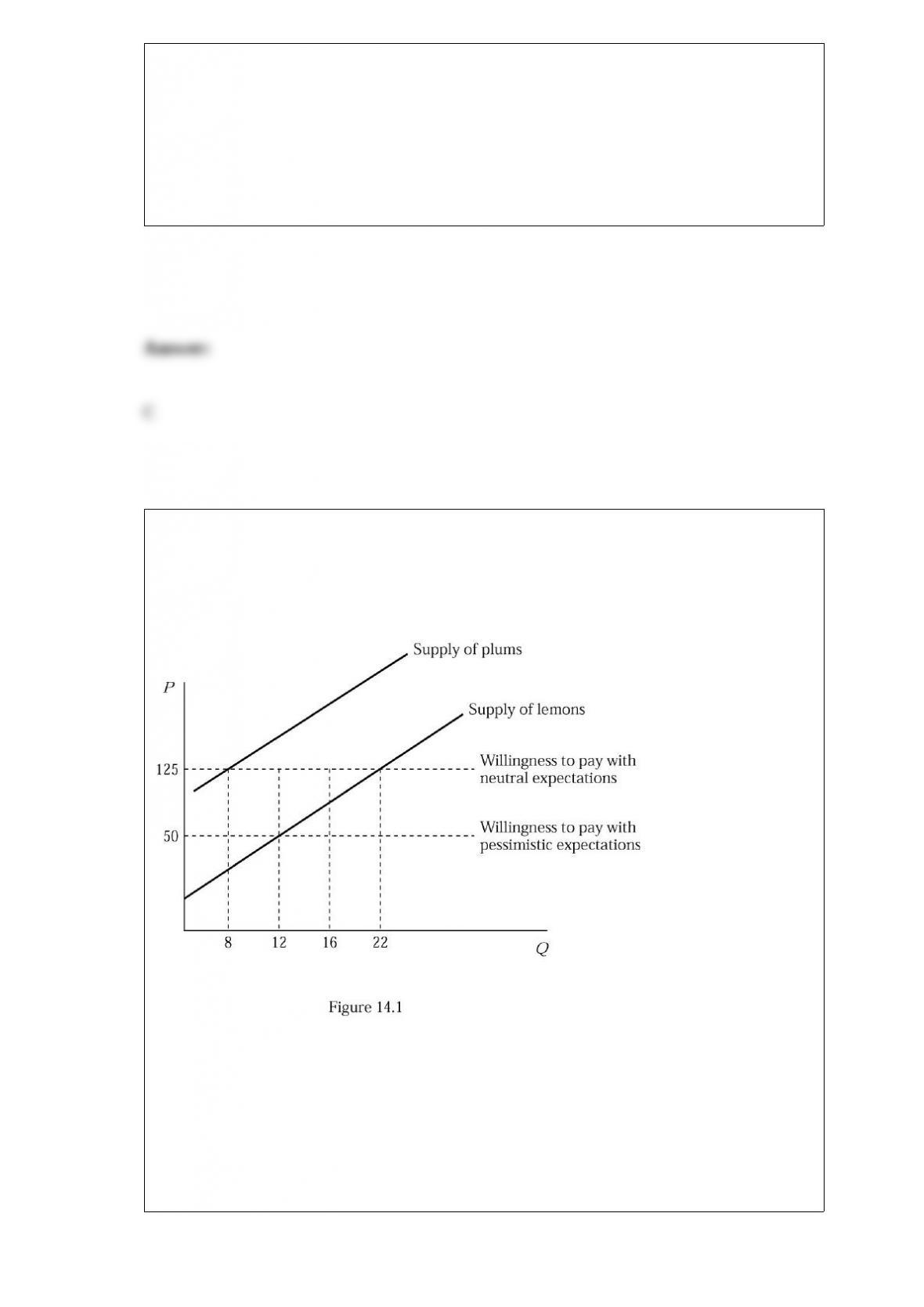
Refer to Table 17.3. If the market price of the product is $4 and the firm can hire as
many workers as it wants at a wage of $40, the firm should hire ________ workers.
Table 17.3
A) 2
B) 3
C) 4
D) 5
Figure 14.1 represents the market for used bikes. Suppose buyers are willing to pay
$200 for a plum (high-quality) used bike and $50 for a lemon (low-quality) used bike.
If buyers believe that 50% of used bikes are lemons (low quality), how many lemons
(low quality) will be supplied by sellers?
A) 8
B) 12
C) 16
D) 22

The labor market supply curve illustrates that as:
A) more workers are hired, a lower wage rate needs to be paid.
B) the wage rate increases, more workers seek to be employed.
C) the wage rate falls, more workers will seek to be employed.
D) the price of the product produced by the worker rises, more workers will be
employed.
A firm produces its product using both capital and labor. When it does not change its
capital usage, but doubles its labor input, its output increases by less than 50%. Which
of the following is the most likely explanation of this finding?
A) the principle of opportunity cost
B) the principle of diminishing returns
C) the marginal principle
D) the spillover principle
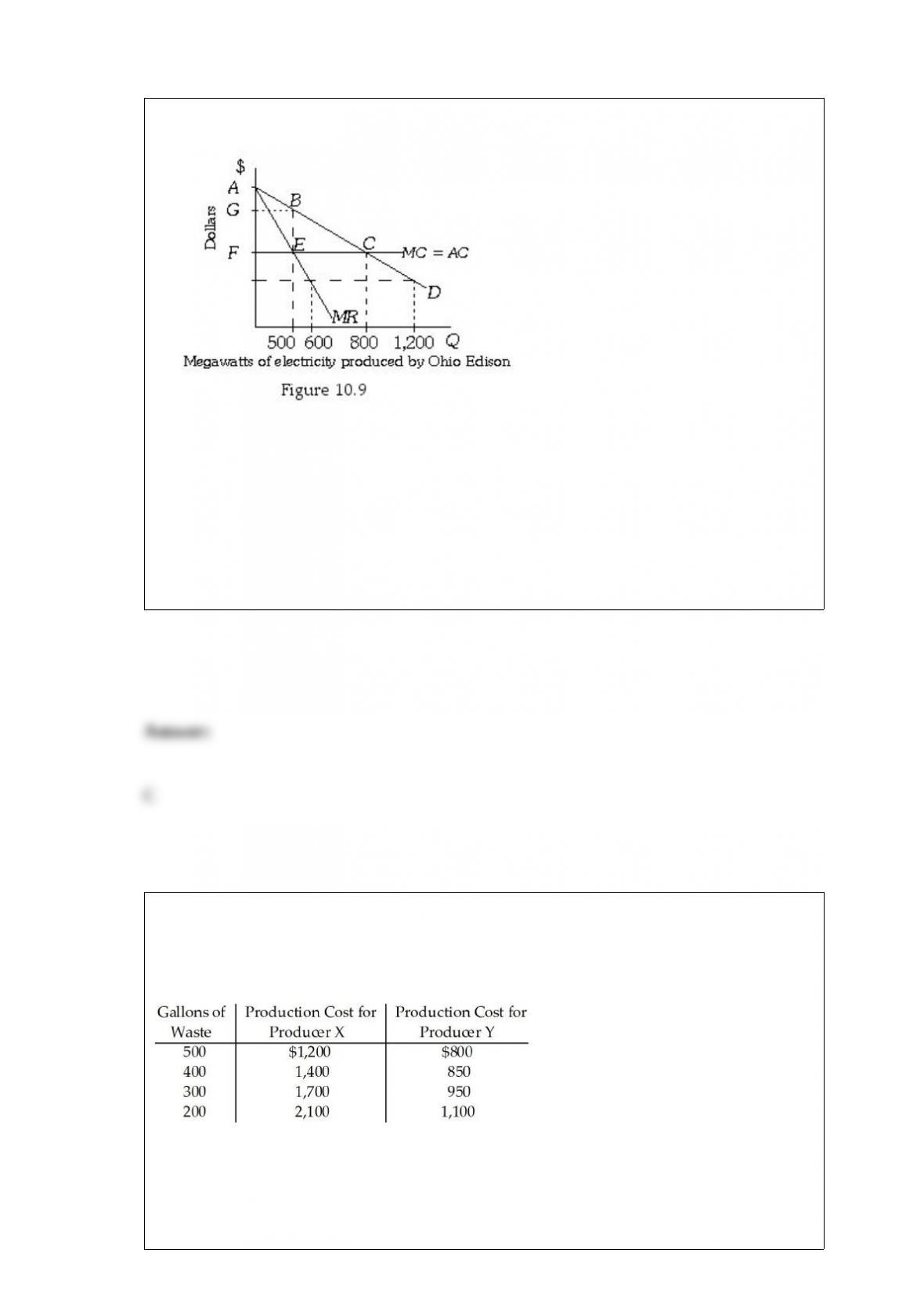
Refer to Figure 10.9. The deadweight loss of monopoly is:
A) ACF.
B) FGBC.
C) BEC.
D) FABE.
Producers X and Y dump waste into a local river. Table 16.1 shows the production costs
each firm faces at different levels of waste. The government in the area has created a set
of pollution permits. Each permit allows a producer to dump 100 gallons of waste. If
the government issues an equal number of pollution permits to each producer:
Table 16.1
A) neither producer will want to sell its permits at a price of $300.
B) Producer X will be more willing to sell its permits than will Producer Y.
C) both producers would be willing to sell all permits at a price of $50.
D) Producer Y will be more willing to sell its permits than will Producer X.
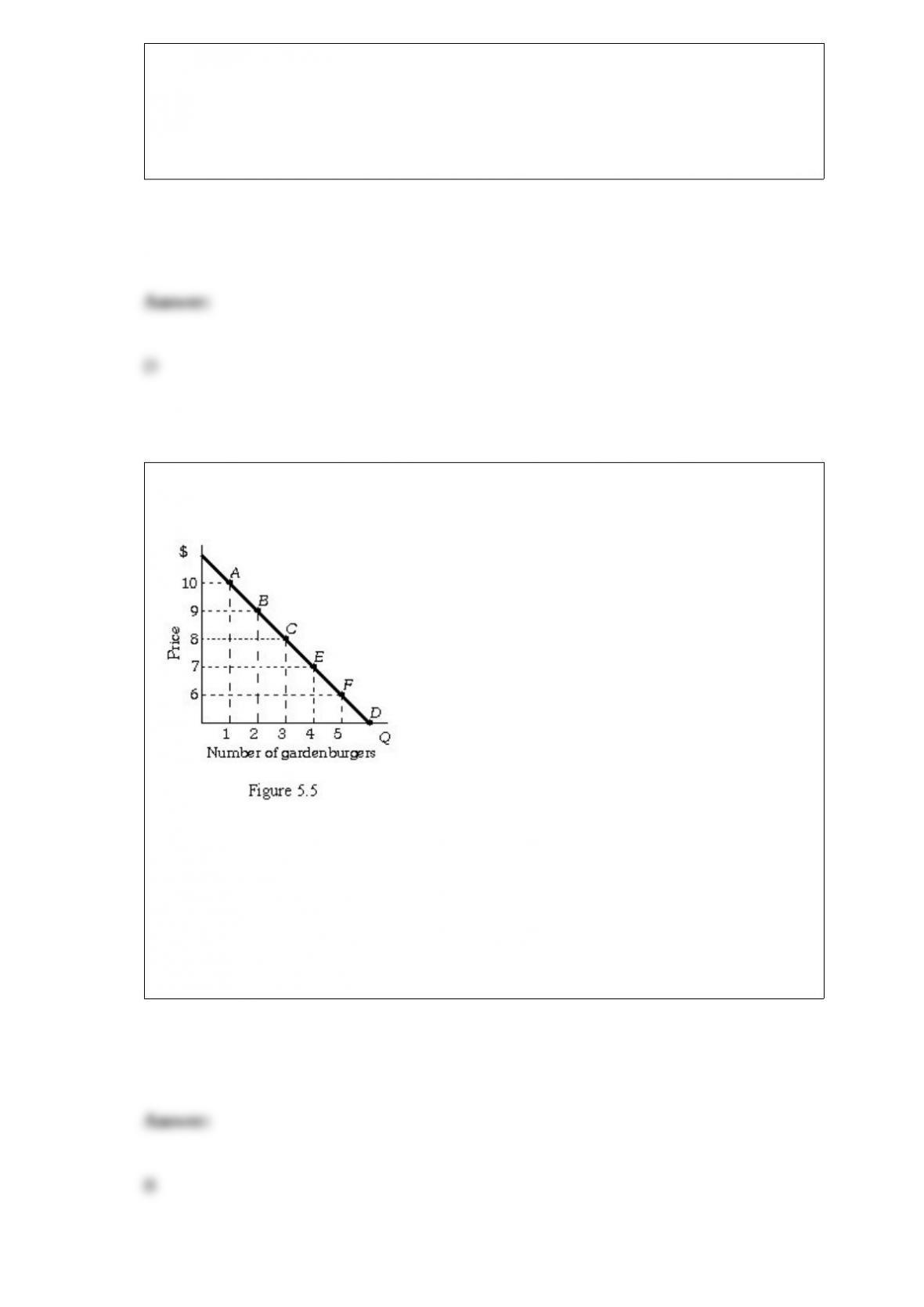
Refer to Figure 5.5. Using the midpoint method, if the price of a gardenburger is
increased from $6 to $8, the price elasticity of demand equals:
A) 0.024.
B) 1.75.
C) 1.9.
D) 2.0.

Refer to Table 17.2. The marginal revenue product of the ________ worker is $150.
Table 17.2
A) second
B) third
C) fourth
D) fifth
Consider a market with a downward sloping demand curve and an upward sloping
supply curve. A $50 tax levied on the producer of the good will cause the market price
to:
A) increase by $50.
B) decrease by $50.
C) increase by less than $50.
D) increase by more than $50.

A change in the quantity demanded of a product is the result of a change in:
A) the price of the product.
B) the price of related goods.
C) consumer income.
D) the cost of producing the product.
A local cable company has a monopoly on cable service. If it sells 20 of the services its
total revenue is $10000, and if it sells 21 services its total revenue is $10,600. When the
local cable company sells 21 programs, the price per service is closest to:
A) $600.
B) $500.
C) $505.
D) $50