
A demand schedule shows
a. the “market potential” for a product.
b. how much consumers are willing and able to buy at different prices.
c. possible combinations of output under different conditions.
d. how much producers would like to sell at different prices.
e. All of the above are correct.
The central idea of supply-side tax cuts is that certain types of tax cuts will increase
a. aggregate demand.
b. aggregate supply.
c. the supply of imports.
d. the supply of money.
The Federal Reserve has policy instruments that it can aim directly at a specific
category of asset price bubble.
a. True
b. False
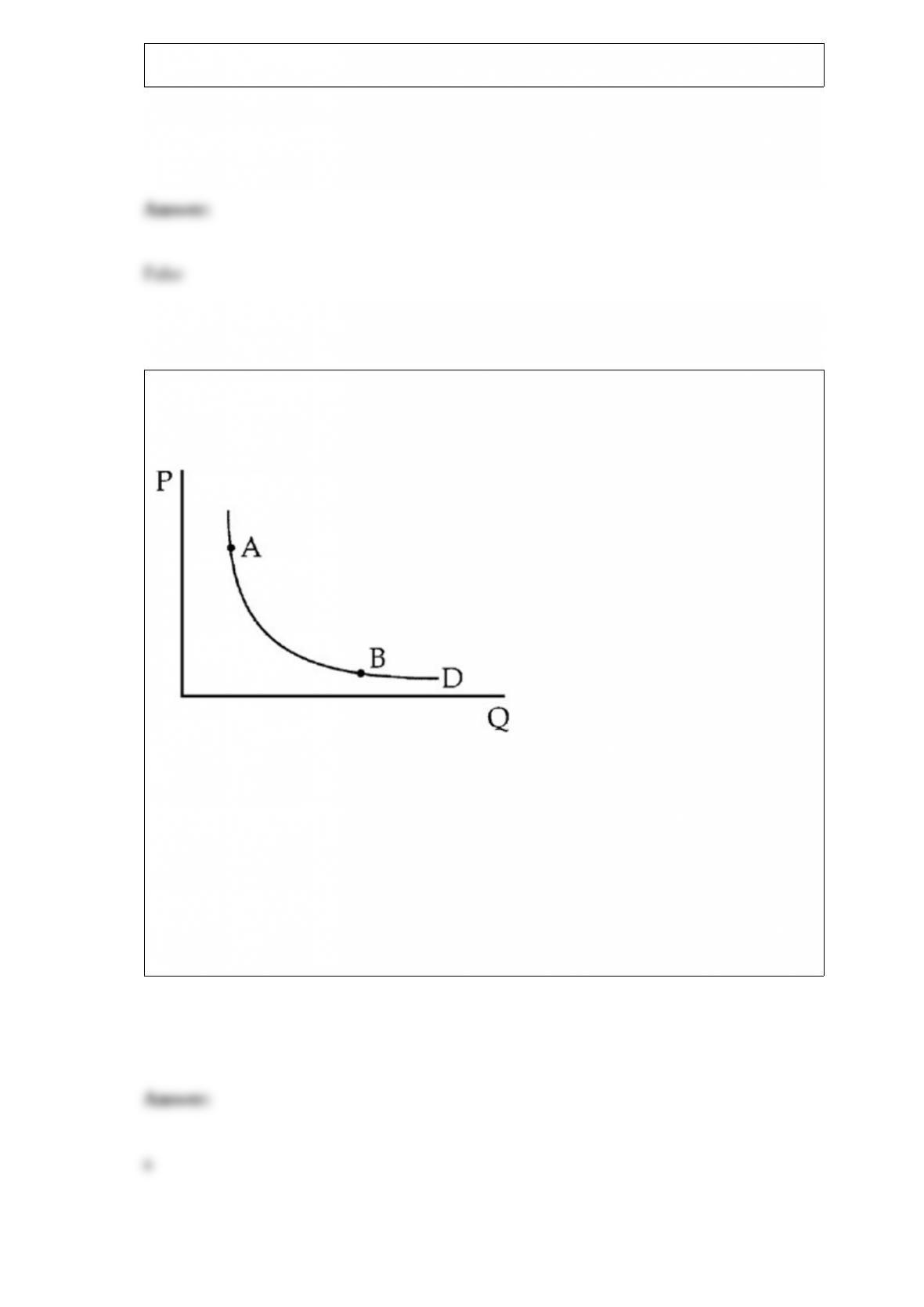
Figure 6-5
In Figure 6-5, if price falls from point A to point B along the unit-elastic demand curve,
a. total expenditure remains unchanged.
b. total expenditure increases.
c. total expenditure decreases.
d. total expenditure first increases and then declines.

If the demand for land shifts upward, rents will be
a. earned by some land that was formerly unprofitable.
b. lost to many landowners.
c. diminished for society as a whole.
d. taxed away to help pay the costs of government.
A decrease in disposable income causes a shift in the consumption function.
a. True
b. False
In 2013, about what percentage of goods and services sold in the United States was
imported?
a. 5%
b. 16%
c. 22%
d. 88%
With regard to investments in human capital, China has been
a. devoting resources to investment in education that could have been used for
consumer goods.
b. upgrading its school systems.
c. sending many Chinese students to universities in other countries.
d. all of the above
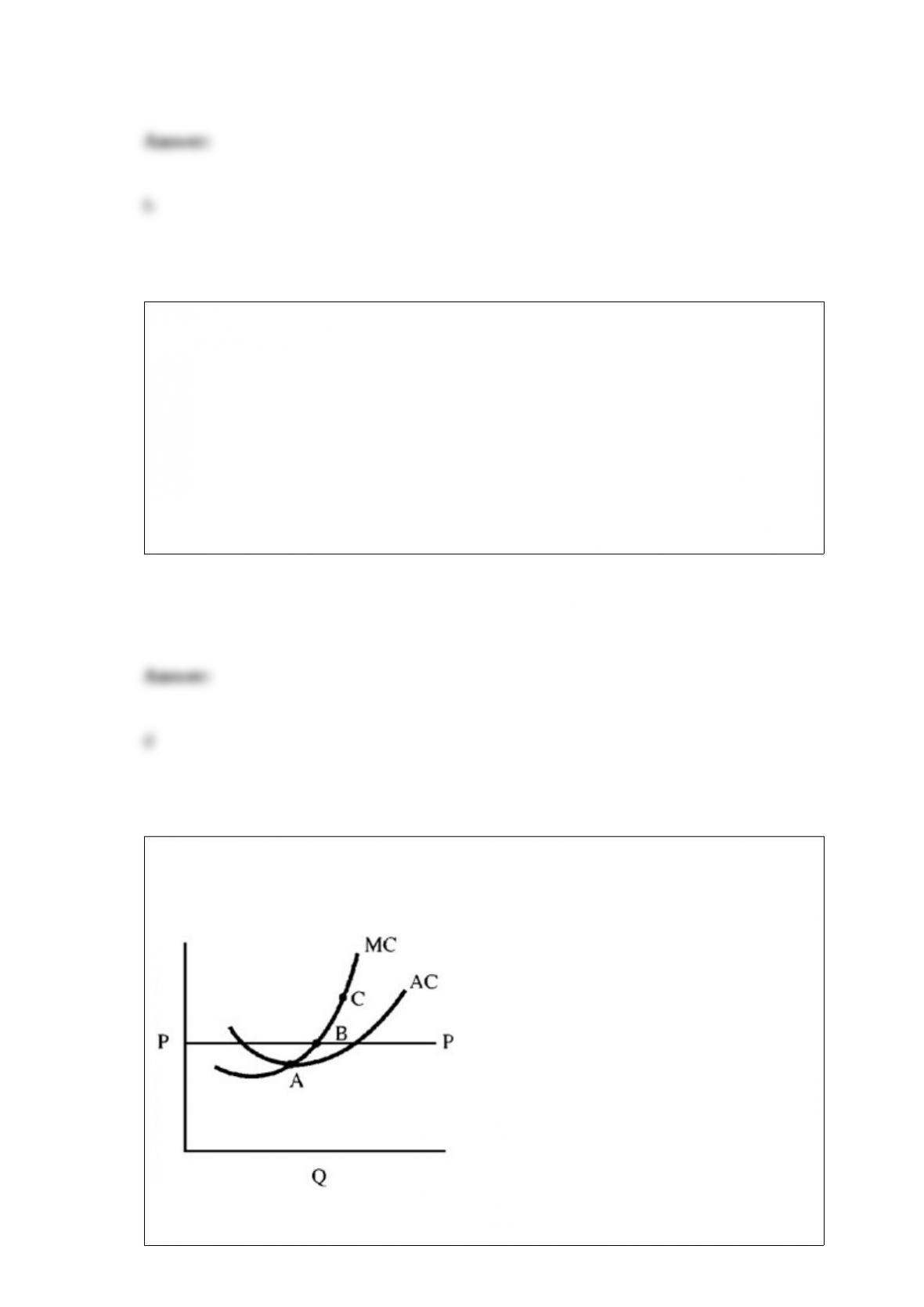
Figure 10-7
In Figure 10-7, output at which point represents short-run but not long-run equilibrium?

a. A only
b. B only
c. both A and B
d. both B and C
Advocates of fixed rules believe that politicians focus more on re-election than on
sound policy.
a. True
b. False
The majority of payments made by the federal government are for
a. transfer payments.
b. administrative expenses.
c. foreign aid.
d. defense purchases

Which nation listed below is successfully transitioning from a planned economy to a
hybrid market economy?
a. People’s Republic of China.
b. Japan.
c. United Kingdom.
d. United States.
Define the following terms and explain their importance to the study of
macroeconomics:
a. aggregation
b. recession
c. gross domestic product
d. final goods and services
e. stabilization policy

An open economy is one in which exports and imports constitute a large share of GDP.
a. True
b. False

Elasticity of demand is calculated using percentage changes in both price and quantity.
a. True
b. False
International trade under a floating exchange rate system
a. has been trouble-free owing to the stabilizing role of speculators in the currency
markets.
b. has suffered from so many problems that the volume of trade has declined
significantly.
c. exposes businesses to unavoidable risks when exchange rates change.
d. has been subject to wild runs on currencies that were on the verge of devaluation.
Poor countries often have difficulty investing in capital because
a. development assistance is designed in increase consumer goods.
b. multinational corporations do not bring technological advances into poor countries.
c. the population is living at subsistence level and cannot afford to save.

d. they suffer from the cost disease of personal services.
Money market mutual funds are accounts that are
a. usually offered by banks.
b. do not pay interest income.
c. insured by the federal government.
d. usually offered by brokerage and insurance firms.
Suppose the goal of a union is to maximize the total income of all workers it represents.
In this case it will probably aim for a wage at which the elasticity of demand for
workers is
a. 0.
b. infinite.
c. 1.
d. ranging from 2 to 5.

Scarcity is the fundamental problem of the economy.
a. True
b. False
A currency appreciation should
a. reduce net exports and therefore increase aggregate demand.
b. raise net exports and therefore decrease aggregate demand.
c. reduce net exports and therefore decrease aggregate demand.
d. raise net exports and therefore increase aggregate demand.
The distinguishing feature of the land market is that the

a. supply is highly inelastic.
b. supply is highly elastic.
c. demand is highly inelastic.
d. demand is highly elastic.
Some economists believe that technological progress could be increased if the federal
government
a. nationalized research facilities.
b. levied taxes on nominal capital gains.
c. levied taxes on real capital gains.
d. levied taxes on gross rather than net investment.
Any point on or outside the PPF is attainable.
a. True
b. False
Affirmative action programs are intended to combat
a. poverty.
b. economic inequality.
c. discriminatory practices by employers.
d. “comparable worth” systems of compensation.
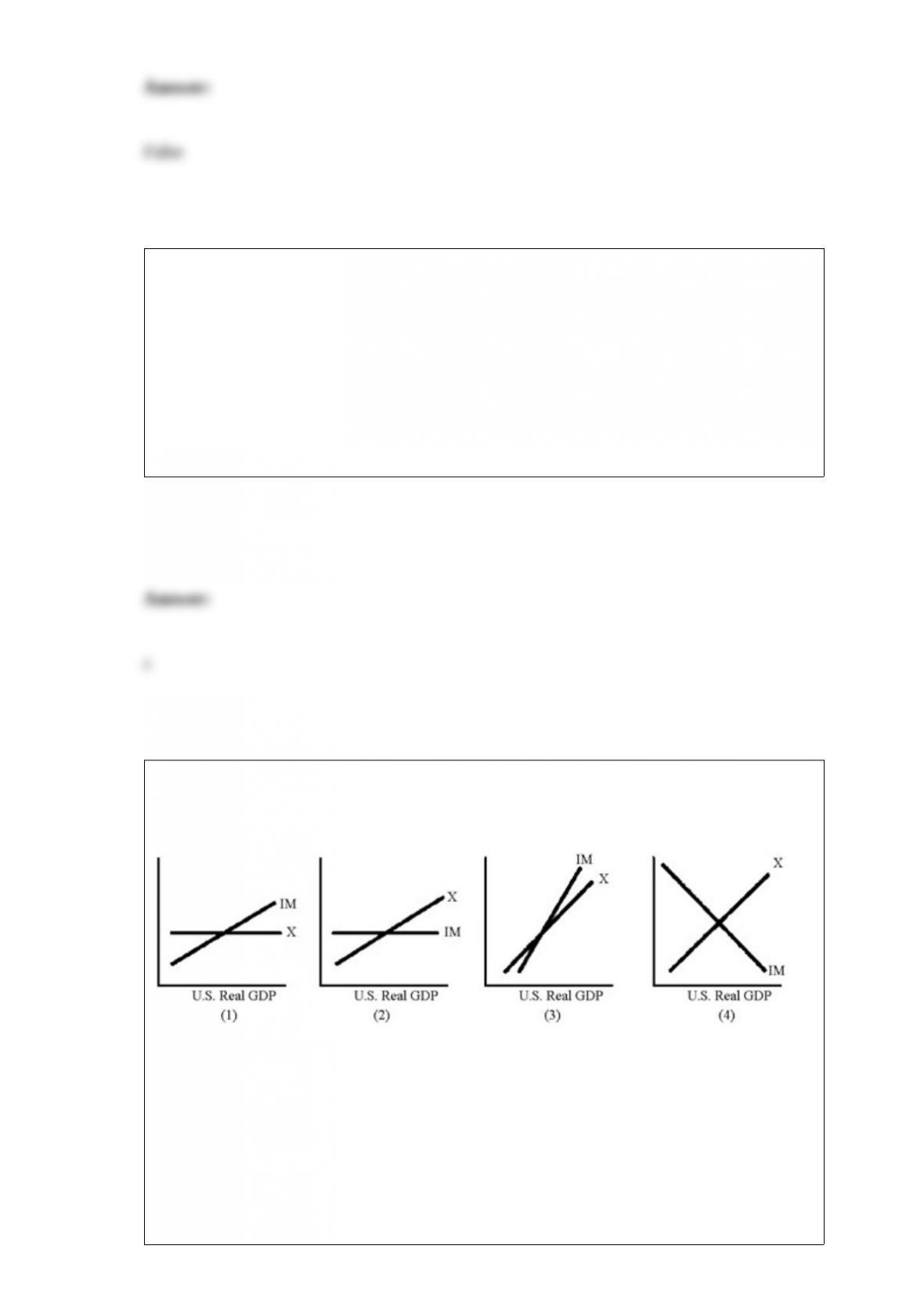
Figure 20-1
Which of the graphs in Figure 20-1 best illustrates the behavior of exports and imports
in relation to U.S. real GDP?
a. 1
b. 2
c. 3
d. 4
The question of whether the government should intervene at all in economic matters is
entirely political.
a. True
b. False
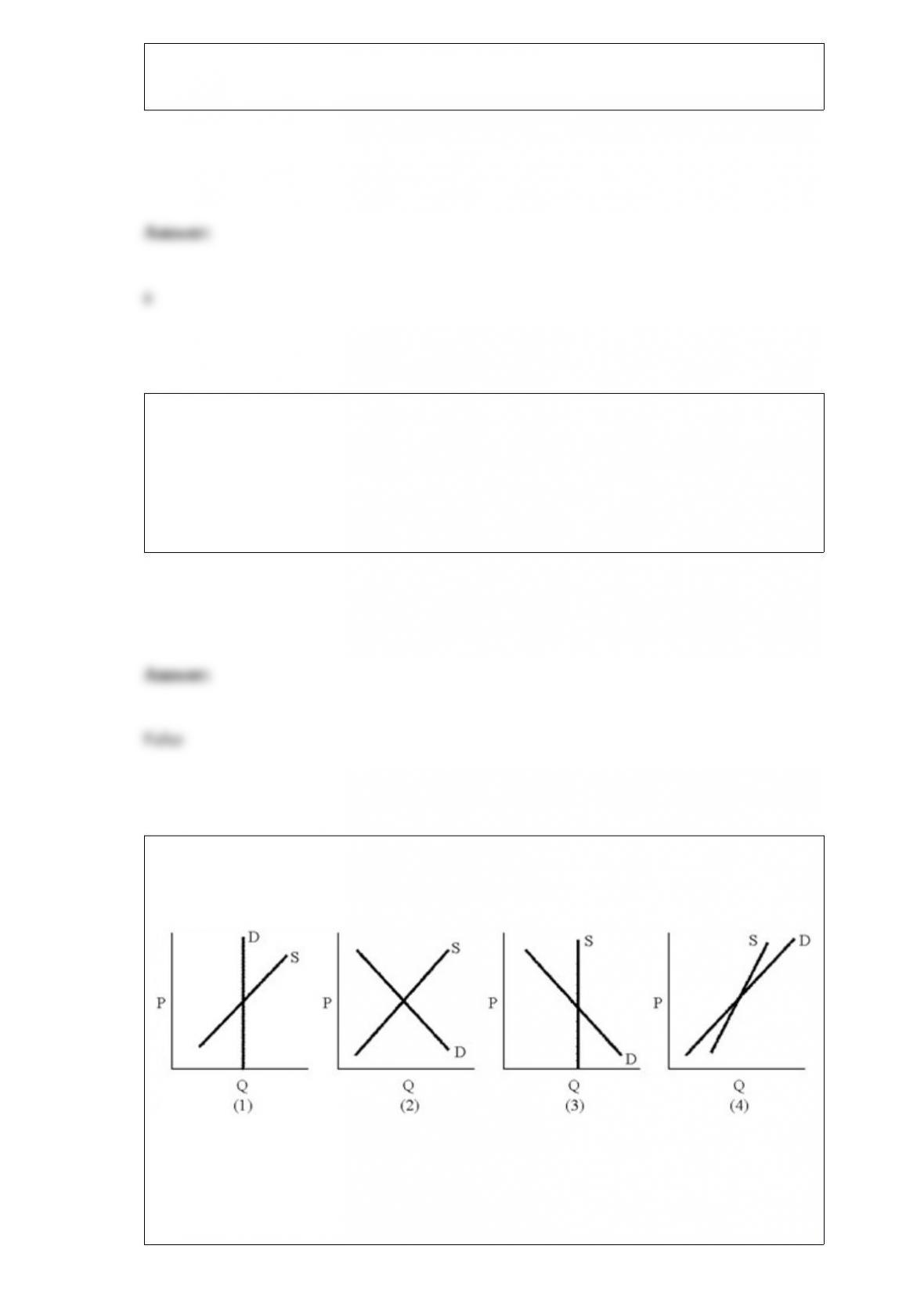
Figure 18-3
In which panel of Figure 18-3 would an excise tax be borne entirely by the supplier?
a. 1
b. 2
c. 3
d. 4
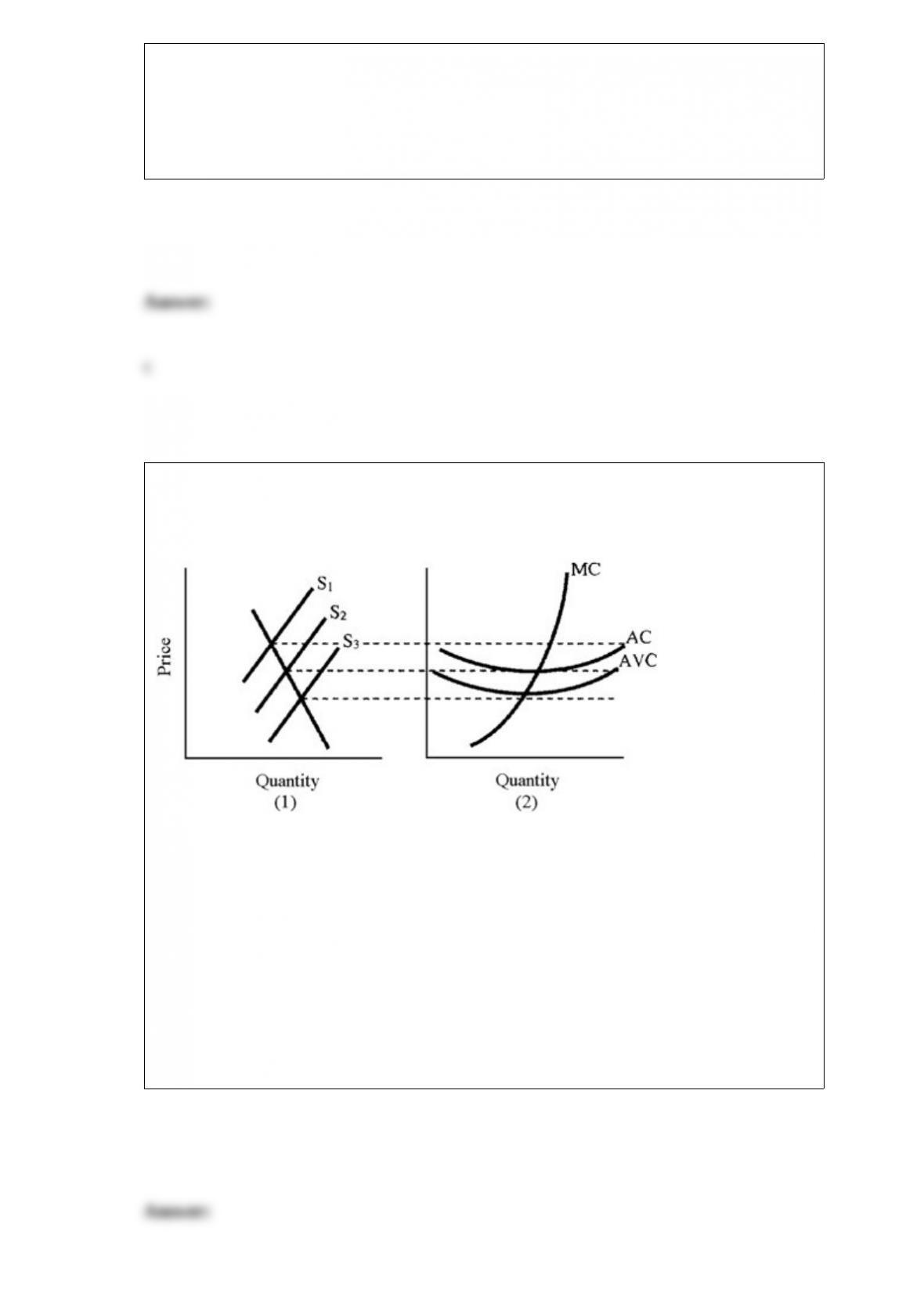
Figure 10-4
Figure 10-4 shows the industry’s supply and demand curves in panel (1) and the cost
curves of a firm in the industry in panel (2). At S3, the firm is
a. going to shut down.
b. incurring losses.
c. earning zero economic profits.
d. earning economic profit greater than zero.

To eliminate the trade deficits in the late 1990s would have required, in addition to the
reduction of the federal budget deficit, an increase in
a. investment spending.
b. the exchange value of the dollar.
c. the U.S. price level.
d. the saving rate.
The U.S. national debt at the end of 2014 was about $30 trillion.
a. True
b. False
One of the virtues of rising resource prices is they encourage innovation, especially the
discovery of other more abundant resources.
a. True

b. False
Firms operating in competitive markets have little choice but to innovate.
a. True
b. False