
If the quality of a good improves while its price remains the same, then the value of a
dollar
a. rises and the cost of living increases.
b. rises and the cost of living decreases.
c. falls and the cost of living increases.
d. falls and the cost of living decreases.
If the reserve ratio is 5 percent, then $2,500 of additional reserves can create up to
a. $62,500 of new money.
b. $50,000 of new money.
c. $45,600 of new money.
d. $37,500 of new money.
George lived in a home that was newly constructed in 2005 for which he paid $200,000.
In 2008 he sold the house for $225,000. Which of the following statements is correct
regarding the sale of the house?
a. The 2008 sale increased 2008 GDP by $225,000 and had no effect on 2005 GDP.

b. The 2008 sale increased 2008 GDP by $25,000 and had no effect on 2005 GDP.
c. The 2008 sale increased 2008 GDP by $225,000; furthermore, the 2008 sale caused
2005 GDP to be revised upward by $25,000.
d. The 2008 sale affected neither 2008 GDP nor 2005 GDP.
Which of the following tools help us evaluate how taxes affect economic well-being?
(i) consumer surplus
(ii) producer surplus
(iii) tax revenue
(iv) deadweight loss
a. (i) and (ii) only
b. (i), (ii), and (iii) only
c. (iii) and (iv) only
d. (i), (ii), (iii), and (iv)
Table 11-2
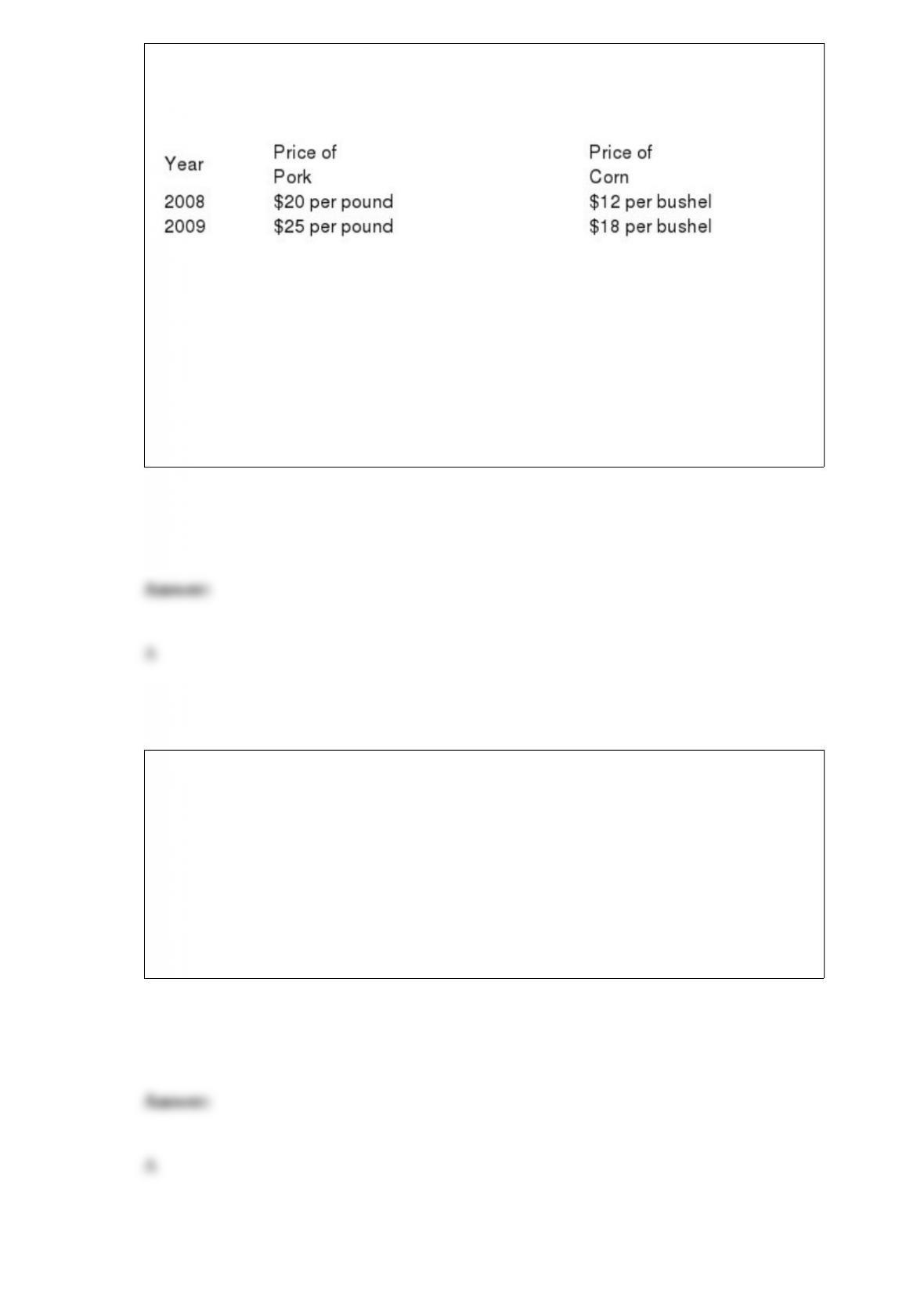
The table below pertains to Iowan, an economy in which the typical consumer’s basket
consists of 3 pounds of pork and 4 bushels of corn.
Refer to Table 11-2. If 2009 is the base year, then the CPI for 2008 was
a. 73.5.
b. 100.
c. 108.
d. 136.1.
Which of the following is correct?
a. NCO = NX
b. NCO + I = NX
c. NX + NCO = Y
d. Y = NCO – I

Which of the following is a financial-market transaction?
a. A saver buys shares in a mutual fund.
b. A saver deposits money into a credit union.
c. A saver buys a bond a corporation has just issued so it can purchase capital.
d. None of the above is correct.
In 2009, the imaginary nation of Florastan had a population of 8,300 and real GDP of
190,900. Florastan had 5% growth in real GDP per person. In 2010 it had a population
of 8,400. What was real GDP in Florastan in 2010?
a. 200,445
b. 202,860
c. 198,059
d. None of the above is correct.
Which of the following transactions adds to U.S. GDP for 2010?
a. In 2010, Marvin Windows manufactures 20 windows that will eventually be installed
in an office building in Minneapolis. The windows remain in Marvin’s inventory at the
end of 2010.

b. An Irish marketing consultant works in Boston during the summer of 2010 and earns
$50,000 during that time.
c. When Tim and Tina were both single, they lived in separate apartments and each paid
$750 in rent. Tim and Tina got married in 2010 and they bought a previously
unoccupied house that, according to reliable estimates, could be rented for $1,550 per
month.
d. All of the above transactions add to U.S. GDP for 2006.
Assume, for Canada, that the domestic price of wheat without international trade is
lower than the world price of wheat. This suggests that, in the production of wheat,
a. Canada has a comparative advantage over other countries and Canada will export
wheat.
b. Canada has a comparative advantage over other countries and Canada will import
wheat.
c. other countries have a comparative advantage over Canada and Canada will export
wheat.
d. other countries have a comparative advantage over Canada and Canada will import
wheat.
When studying how some event or policy affects a market, elasticity provides

information on the
a. government expenditures associated with the policy.
b. costs and benefits of the effect.
c. allocative efficiency of the effect.
d. direction and magnitude of the effect.
Holding all other forces constant, if decreasing the price of a good leads to a decrease in
total revenue, then the demand for the good must be
a. unit elastic.
b. inelastic.
c. elastic.
d. None of the above is correct because a price increase always leads to an increase in
total revenue.
Which of the following expressions is valid for the price elasticity of demand?
a. Price elasticity of demand = .
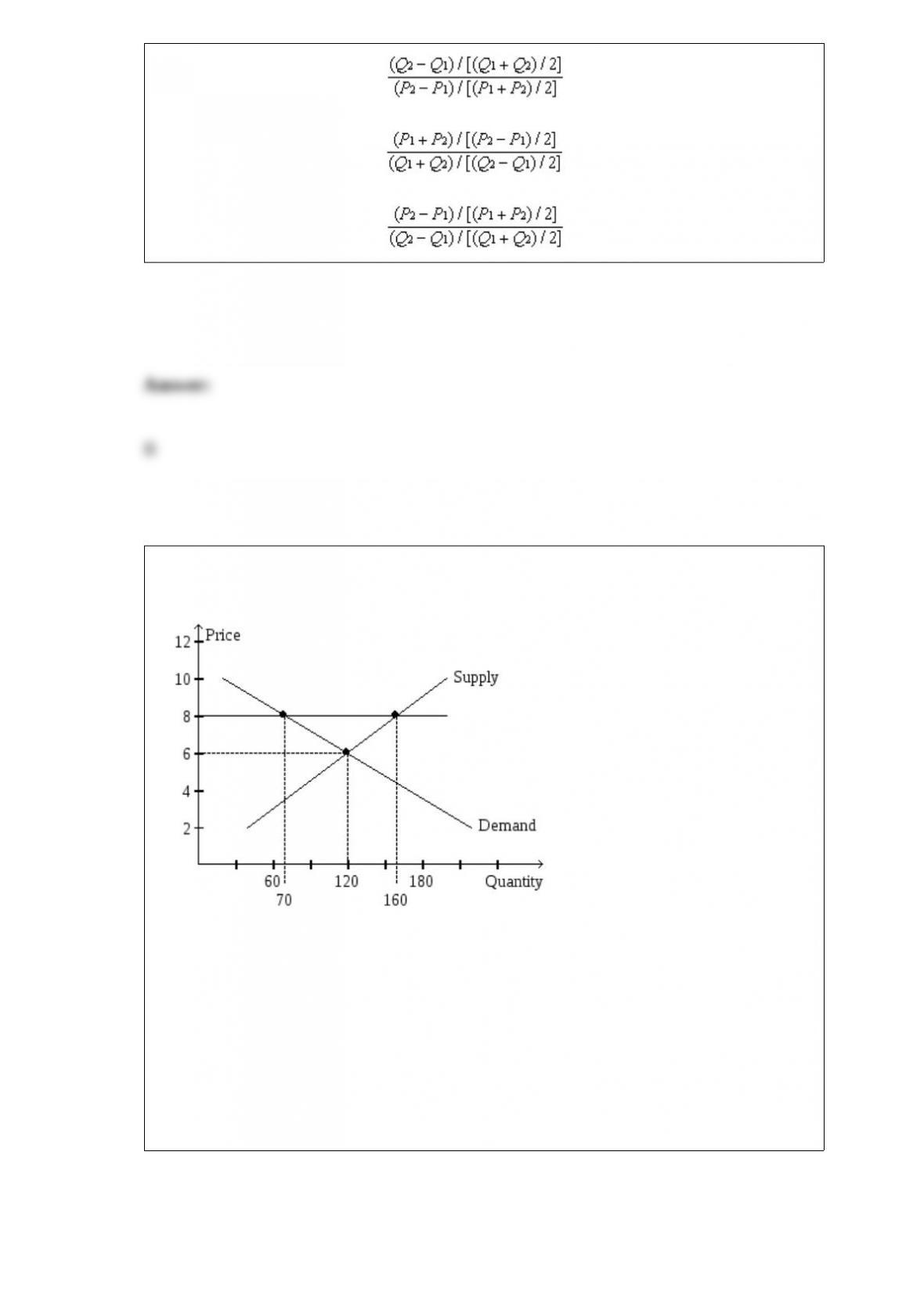
b. Price elasticity of demand = .
c. Price elasticity of demand = .
d. Price elasticity of demand = .
Figure 6-5
Refer to Figure 6-5. If the horizontal line on the graph represents a price ceiling, then
the price ceiling is
a. binding and creates a surplus of 40 units of the good.
b. binding and creates a surplus of 90 units of the good.
c. not binding but creates a surplus of 40 units of the good.
d. not binding, and there will be no surplus or shortage of the good.

When we move upward and to the left along a linear, downward-sloping demand curve,
price elasticity of demand
a. first becomes smaller, then larger.
b. always becomes larger.
c. always becomes smaller.
d. first becomes larger, then smaller.
In September 2009, President Obama imposed a 35 percent tariff on
a. tires imported from South Korea.
b. tires imported from China.
c. automobiles imported from South Korea.
d. beef imported from Canada.
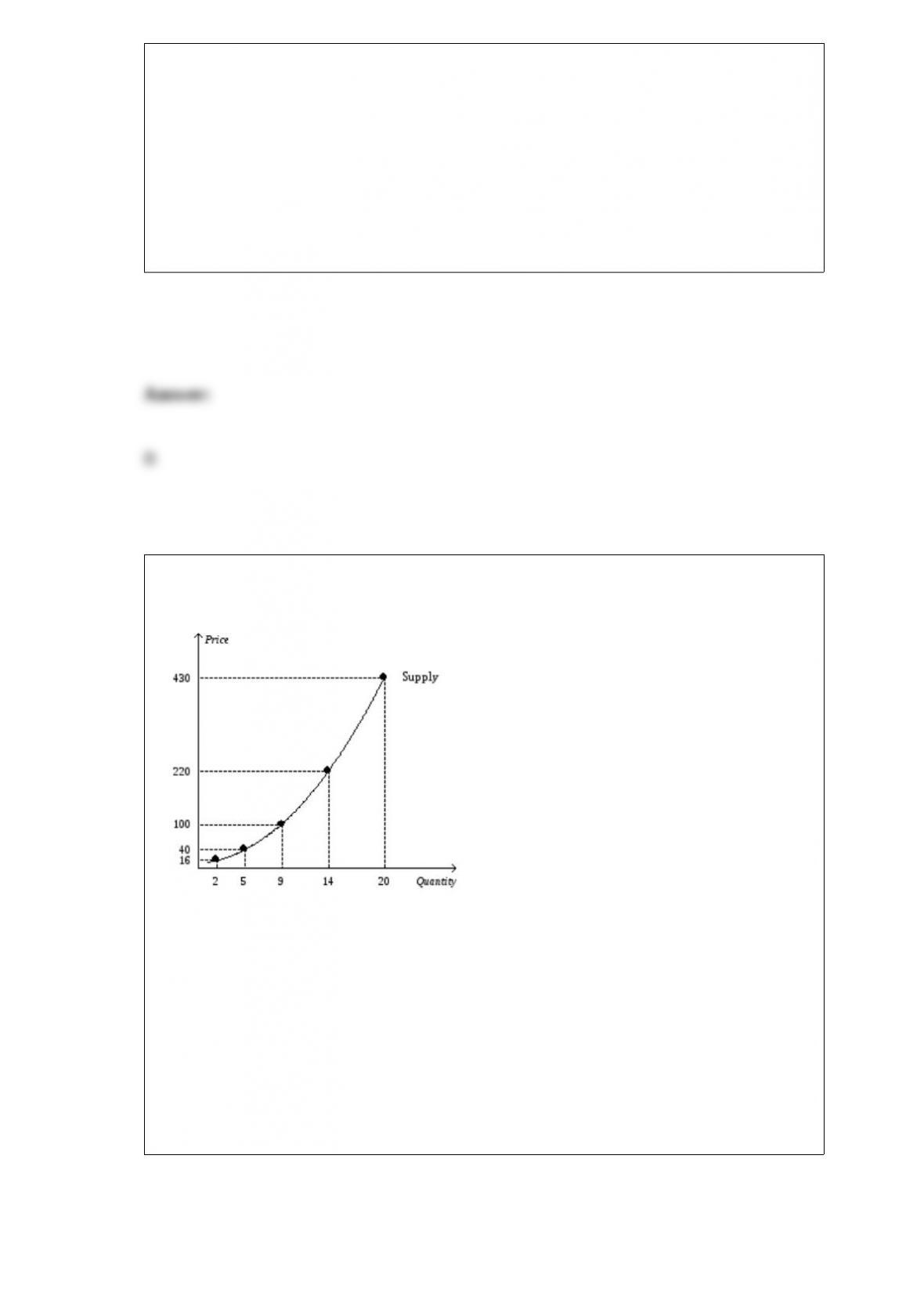
If the minimum wage exceeds the equilibrium wage, then
a. the quantity demanded of labor will exceed the quantity supplied.
b. the quantity supplied of labor will exceed the quantity demanded.
c. the minimum wage will not be binding.
d. there will be no unemployment.
Figure 5-13
Refer to Figure 5-13. Using the midpoint method, what is the price elasticity of supply
between $16 and $40?
a. 0.125
b. 0.86
c. 1.0
d. 2.5
Which of the following is likely to have the most price inelastic demand?
a. mint-flavored toothpaste
b. toothpaste
c. Colgate mint-flavored toothpaste
d. a generic mint-flavored toothpaste
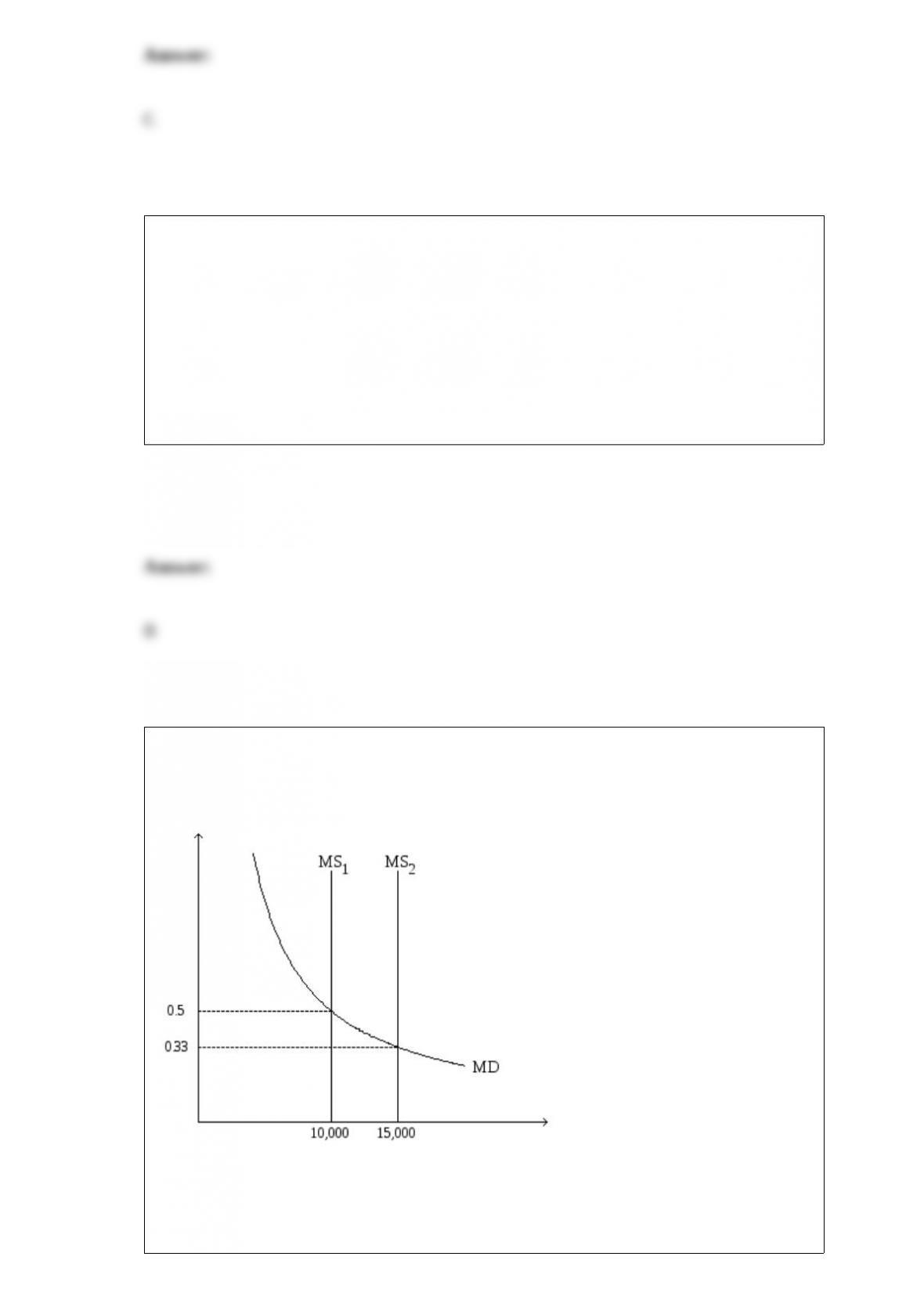
Figure 17-3. On the graph, MS represents the money supply and MD represents money
demand. The usual quantities are measured along the axes.
Refer to Figure 17-3. If the relevant money-supply curve is the one labeled MS2, then
a. when the money market is in equilibrium, one dollar purchases about one-third of a
basket of goods and services.
b. when the money market is in equilibrium, one unit of goods and services sells for 33
cents.
c. there is an excess demand for money if the value of money in terms of goods and
services is 0.5.
d. All of the above are correct.
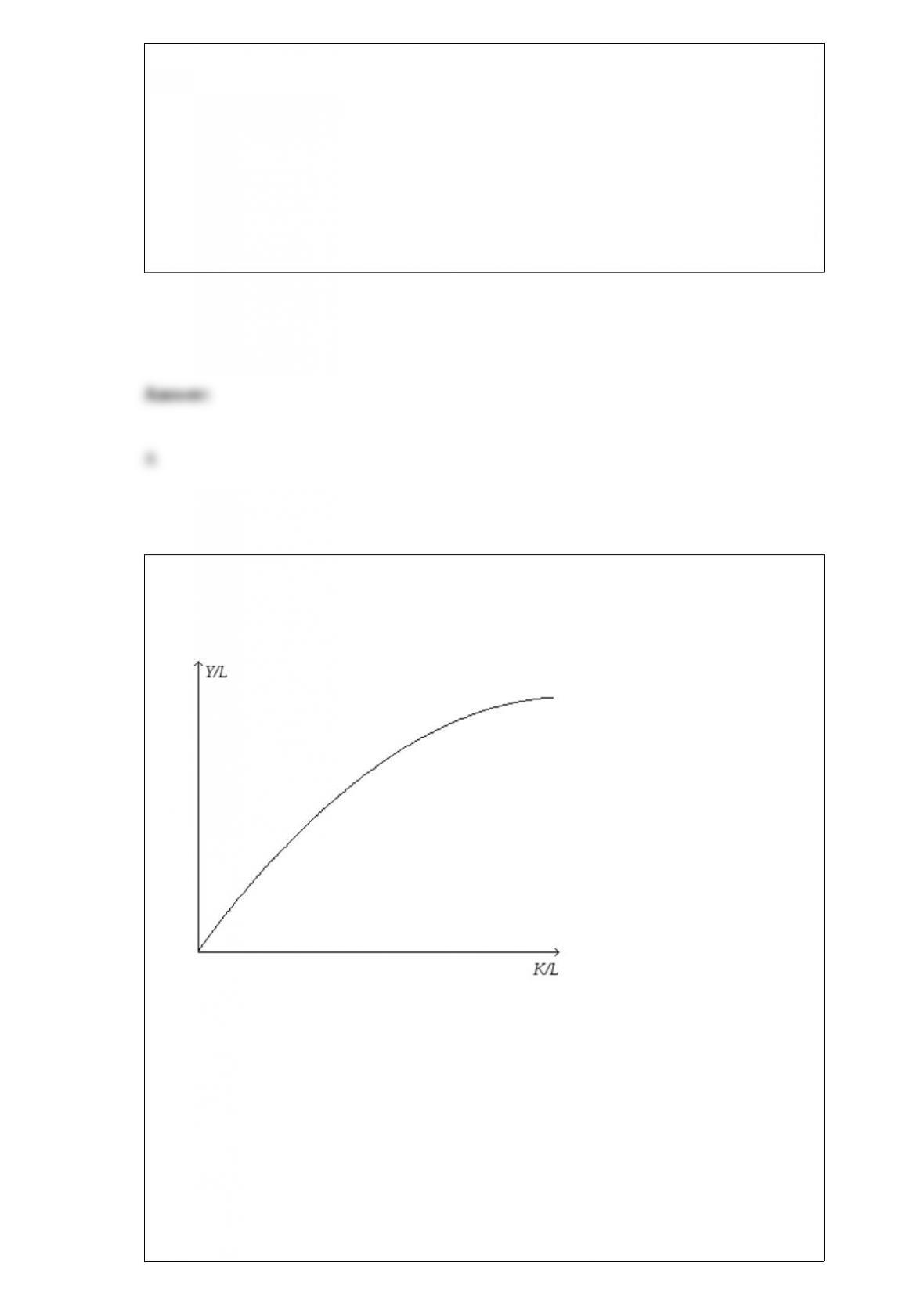
Figure 12-1. On the horizontal axis, K/L represents capital (K) per worker (L). On the
vertical axis, Y/L represents output (Y) per worker (L).
Refer to Figure 12-1. Choose a point anywhere on the curve and call it point A. If the
economy is at point A in 2011, then it will definitely remain at point A in 2012 if,
between 2011 and 2012,
a. the quantity of physical capital remains constant; the number of workers doubles; and
human capital, natural resources, and technology all double as well.
b. the quantity of physical capital doubles; human capital, natural resources, and
technology all double as well; and the number of workers remains constant.
c. the quantity of physical capital doubles; the number of workers doubles; and human

capital, natural resources, and technology all double as well.
d. the quantity of physical capital doubles; the number of workers doubles; and human
capital, natural resources, and technology remain constant.
Ed spends an hour studying instead of watching tv with his friends. The opportunity
cost to him of studying is
a. the improvement in his grades from studying for the hour.
b. the improvement in his grades from studying minus the enjoyment of watching tv.
c. the enjoyment he would have received if he had watched tv with his friends.
d. zero. Since Ed chose to study rather than to watch tv, the value of studying must have
been greater than the value of watching tv.
Reserve requirements are regulations concerning
a. the amount banks are allowed to borrow from the Fed.
b. the amount of reserves banks must hold against deposits.
c. reserves banks must hold based on the number and type of loans they make.
d. the interest rate at which banks can borrow from the Fed.

Shawn puts money into an account. One year later he sees that he has 5 percent more
dollars and that his money will buy 6 percent more goods.
a. The nominal interest rate was 11 percent and the inflation rate was 5 percent.
b. The nominal interest rate was 6 percent and the inflation rate was 5 percent.
c. The nominal interest rate was 5 percent and the inflation rate was -1 percent.
d. None of the above is correct.
The multiplier for changes in government spending is calculated as
a. 1/MPC.
b. 1/(1 – MPC).
c. MPC/(1 – MPC).
d. (1 – MPC)/MPC.

If a 15% increase in price for a good results in a 20% decrease in quantity demanded,
the price elasticity of demand is
a. 0.75.
b. 1.25.
c. 1.33.
d. 1.60.
When demand is unit elastic, price elasticity of demand equals
a. 1, and total revenue and price move in the same direction.
b. 1, and total revenue and price move in opposite directions.
c. 1, and total revenue does not change when price changes.
d. 0, and total revenue does not change when price changes.
Other things the same, when the price level falls, interest rates
a. rise, so firms increase investment.
b. rise, so firms decrease investment.
c. fall, so firms increase investment.
d. fall, so firms decrease investment.
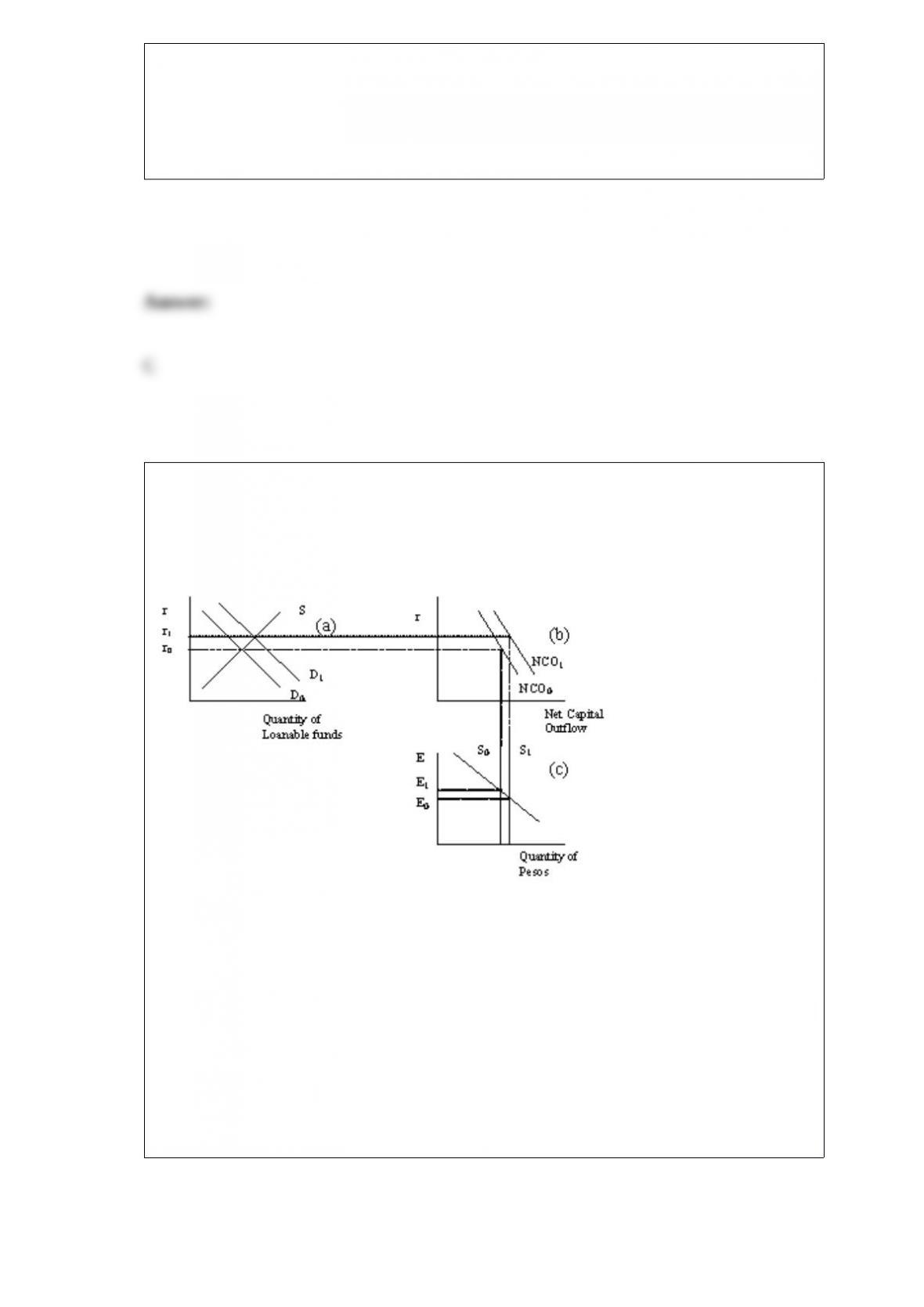
The diagram below represents the market for loanable funds and the market for
foreign-currency exchange in Mexico. Use the diagram to answer the following
questions.
Figure 19-7
Refer to Figure 19-7. Which of the following is consistent with capital flight from
Mexico?
a. The real exchange rate of the peso appreciates from E0 to E1.
b. The real exchange rate of the peso depreciates from E0 to E1.
c. The real exchange rate of the peso appreciates from E1 to E0.
d. The real exchange rate of the peso depreciates from E1 to E0.

While a television news reporter might state that “Today the Fed lowered the federal
funds rate from 5 percent to 5.25 percent,” a more precise account of the Fed’s action
would be as follows:
a. “Today the Fed told its bond traders to conduct open-market operations in such a way
that the equilibrium federal funds rate would decrease to 25 percent.”
b. “Today the Fed lowered the discount rate by a quarter of a percentage point, and this
action will force the federal funds rate to drop by the same amount.”
c. “Today the Fed took steps to decrease the money supply by an amount that is
sufficient to decrease the federal funds rate to 5.25 percent.”
d. “Today the Fed took a step toward contracting aggregate demand, and this was done
by lowering the federal funds rate to 5.25 percent.”
If the Fed increases the reserve ratio from 4 percent to 10 percent, then the money
multiplier
a. decreases from 25 to 10.
b. decreases from 20 to 10.
c. increases from 10 to 25.
d. increases from 10 to 20.

Which of the following would both make a country’s real exchange rate rise?
a. its budget deficit increases and bonds issued in the country become riskier
b. bonds issued in that country become riskier and it imposes an import quota
c. it imposes an import quota and the budget deficit increases
d. None of the above are correct.
Most of the change from 1991 to 2000 in U.S. net capital outflow as a percent of GDP
was due to a(n)
a. decrease in U.S. investment.
b. decrease in U.S. national saving.
c. increase in U.S. investment.
d. increase in U.S. national saving.

Buyers of a good bear the larger share of the tax burden when the
(i) supply is more elastic than the demand for the product.
(ii) demand in more elastic than the supply for the product.
(iii) tax is placed on the sellers of the product.
(iv) tax is placed on the buyers of the product.
a. (i) only
b. (ii) only
c. (i) and (iii) only
d. (i) and (iv) only