
If a country’s saving rate increases, then in the long run
a. productivity is higher but real GDP per person is not higher.
b. real GDP per person is higher but productivity is not higher.
c. productivity and real GDP per person are both higher.
d. neither productivity nor real GDP per person is higher.
Suppose some country had an adult population of about 25 million, a labor-force
participation rate of 60 percent, and an unemployment rate of 6 percent. How many
people were unemployed?
a. 0.846 million
b. 0.9 million
c. 1.5 million
d. 6 million
GDP is not a perfect measure of well-being; for example,
a. GDP excludes the value of volunteer work.
b. GDP does not address the distribution of income.

c. GDP does not address environmental quality.
d. All of the above are correct.
If the U.S. imposed an import quota on corn, then in the U.S.
a. exports and imports would rise.
b. exports and imports would fall.
c. exports would rise and imports would fall.
d. exports would fall and imports would rise.
When a country that imports a particular good imposes a tariff on that good,
a. producer surplus increases and total surplus increases in the market for that good.
b. producer surplus increases and total surplus decreases in the market for that good.
c. producer surplus decreases and total surplus increases in the market for that good.
d. producer surplus decreases and total surplus decreases in the market for that good.
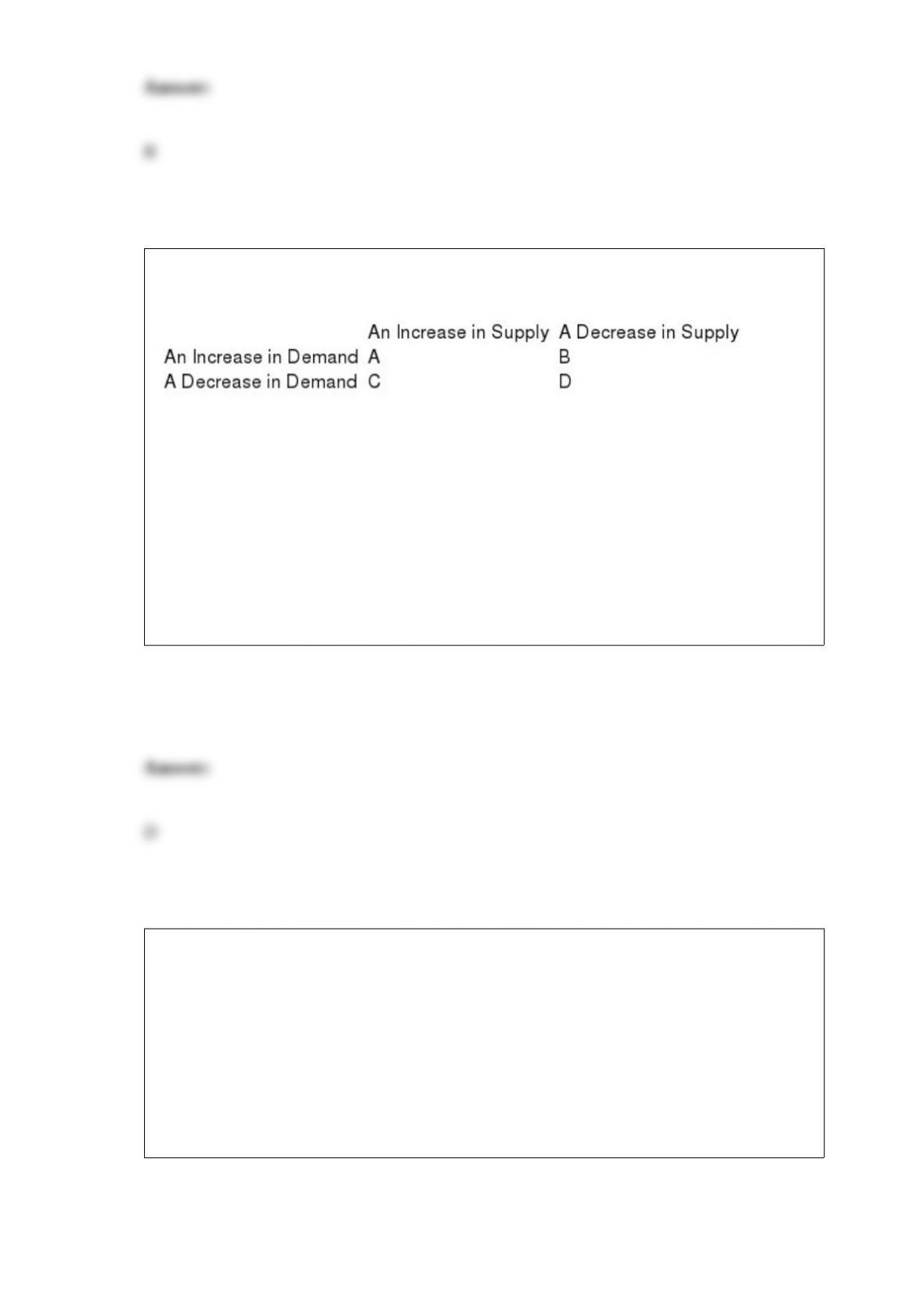
Table 4-6
Refer to Table 4-6. Which combination would produce a decrease in equilibrium
quantity and an indeterminate change in equilibrium price?
a. A
b. B
c. C
d. D
Which of the following will cause an increase in producer surplus?
a. the imposition of a binding price ceiling in the market
b. buyers expect the price of the good to be lower next month
c. the price of a substitute increases
d. income increases and buyers consider the good to be inferior

Consumers decide to ride bikes more and drive cars less. Bicycle companies expand
production while automobile companies fire workers. This is an example of
a. frictional unemployment created by sectoral shifts.
b. frictional unemployment created by efficiency wages.
c. structural unemployment created by efficiency wages.
d. structural unemployment created by sectoral shifts.
Other things the same, in the long run a country that reduces the minimum wage from
very high levels will have
a. higher unemployment and lower inflation
b. lower unemployment and higher inflation
c. higher unemployment and the same level of inflation
d. lower unemployment and the same level of inflation

Suppose your own demand curve for tomatoes slopes downward. Suppose also that, for
the last tomato you bought this week, you paid a price exactly equal to your willingness
to pay. Then
a. you should buy more tomatoes before the end of the week.
b. you already have bought too many tomatoes this week.
c. your consumer surplus on the last tomato you bought is zero.
d. your consumer surplus on all of the tomatoes you have bought this week is zero.
When, in our analysis of the gains and losses from international trade, we assume that a
country is small, we are in effect assuming that the country
a. cannot experience significant gains or losses by trading with other countries.
b. cannot have a significant comparative advantage over other countries.
c. cannot affect world prices by trading with other countries.
d. All of the above are correct.
People who provide you with goods and services
a. are acting out of generosity.

b. do so because they get something in return.
c. have chosen not to become interdependent.
d. are required to do so by the government.
Rita puts $10,000 into each of two different assets. The first asset pays 10 percent
interest and the second pays 5 percent. According to the rule of 70, what is the
approximate difference in the value of the two assets after 14 years?
a. $12,000
b. $14,000
c. $15,500
d. $20,000
Scenario 13-2. Assume the following information for an imaginary, closed
economy.
GDP = $200,000; consumption = $120,000;
government purchases = $35,000; and taxes = $25,000.
Refer to Scenario 13-2. For this economy, private saving is equal to

a. $40,000.
b. $50,000.
c. $55,000.
d. $60,000.
The problem of moral hazard arises because
a. life is full of all sorts of risks.
b. after people buy insurance, they have less incentive to be careful about their risky
behavior.
c. a high-risk person is more likely to apply for insurance than is a low-risk person.
d. insurance companies go to great effort to avoid paying claims to their policy holders.
When we express Babe Ruth’s 1931 salary in today’s dollars and compare his salary to
those of current New York Yankee players, we find that the current median salary of
today’s Yankees is
a. about three quarters of Ruth’s salary.
b. about the same as Ruth’s salary.
c. about twice Ruth’s salary.
d. more than four times Ruth’s salary.
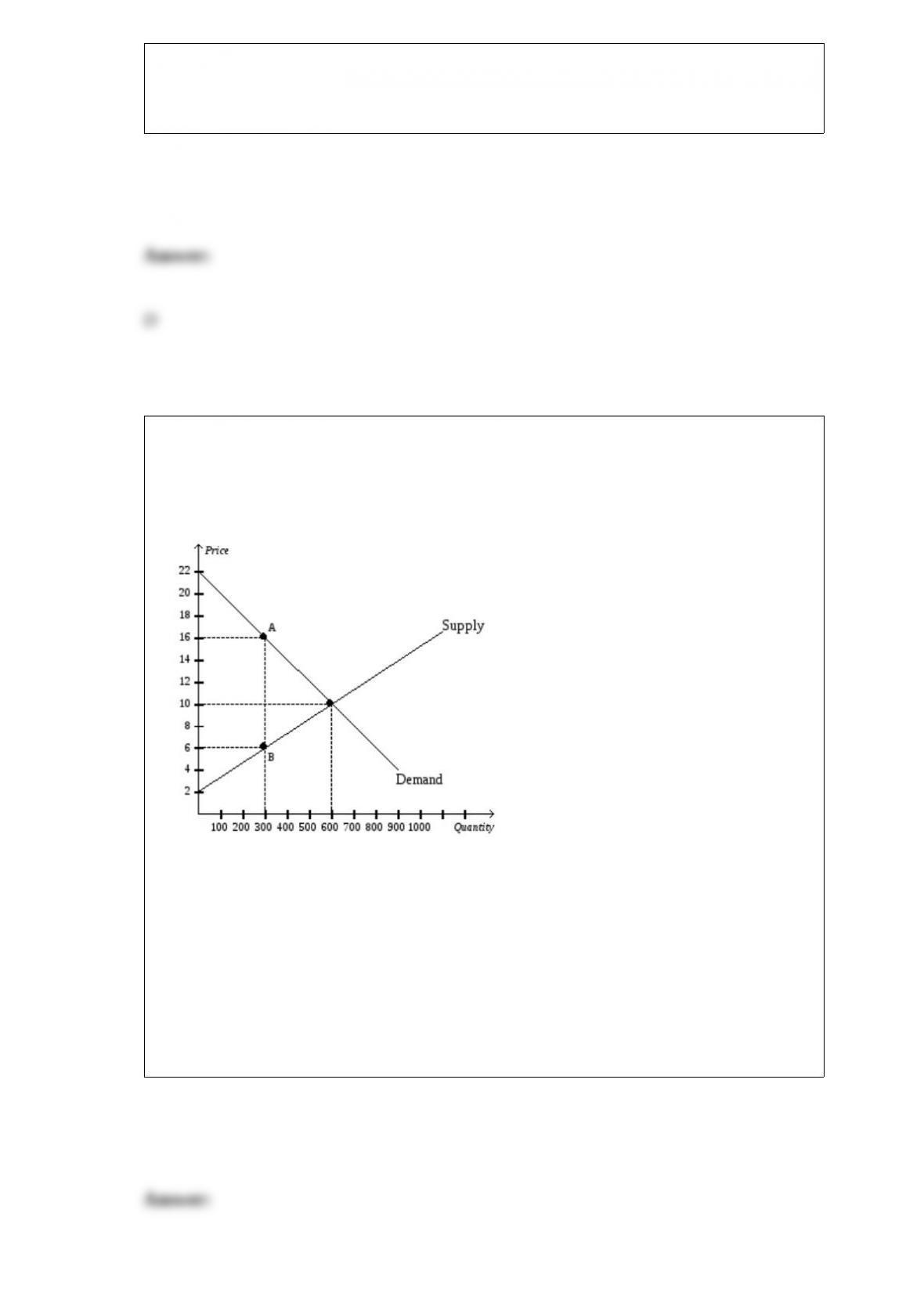
Figure 8-6
The vertical distance between points A and B represents a tax in the market.
Refer to Figure 8-6. When the tax is placed on this good, the quantity sold
a. is 600, and buyers effectively pay $10.
b. is 300, and buyers effectively pay $10.
c. is 600, and buyers effectively pay $16.
d. is 300, and buyers effectively pay $16.

Which of the following quantities decrease in response to a tax on a good?
a. the equilibrium quantity in the market for the good, the effective price of the good
paid by buyers, and consumer surplus
b. the equilibrium quantity in the market for the good, producer surplus, and the
well-being of buyers of the good
c. the effective price received by sellers of the good, the wedge between the effective
price paid by buyers and the effective price received by sellers, and consumer surplus
d. None of the above is necessarily correct unless we know whether the tax is levied on
buyers or on sellers.
With respect to the consumer price index, the substitution bias arises because
a. prices of goods and services do not change in the same proportion from year to year.
b. consumers are slow to adjust their buying patterns from year to year in response to
price changes.
c. consumers are eager to buy new products as they are introduced, despite their lack of
full information about the quality of those products until they buy and use them.
d. All of the above are correct.

If M = 3,000, P = 2, and Y = 6,000, what is velocity?
a. 1/2.
b. 1.
c. 4.
d. None of the above is correct.
Suppose that purchases of Irish assets by foreigners exceed Irish purchases of foreign
assets. Ireland has
a. positive net capital outflow and a trade surplus.
b. positive net capital outflow and a trade deficit.
c. negative net capital outflow and a trade surplus.
d. negative net capital outflow and a trade deficit.
How does the concept of elasticity allow us to improve upon our understanding of
supply and demand?
a. Elasticity allows us to analyze supply and demand with greater precision than would

be the case in the absence of the elasticity concept.
b. Elasticity provides us with a better rationale for statements such as “an increase in x
will lead to a decrease in y” than we would have in the absence of the elasticity concept.
c. Without elasticity, we would not be able to address the direction in which price is
likely to move in response to a surplus or a shortage.
d. Without elasticity, it is very difficult to assess the degree of competition within a
market.
Which of the following is correct?
a. Once adjustment is made for inflation, the prices of most natural resources have been
about steady or falling.
b. Technological progress has allowed us to substitute renewable resources for some
nonrenewable resources.
c. Technological progress has made once-crucial natural resources less necessary.
d. All of the above are correct.
Figure 6-9
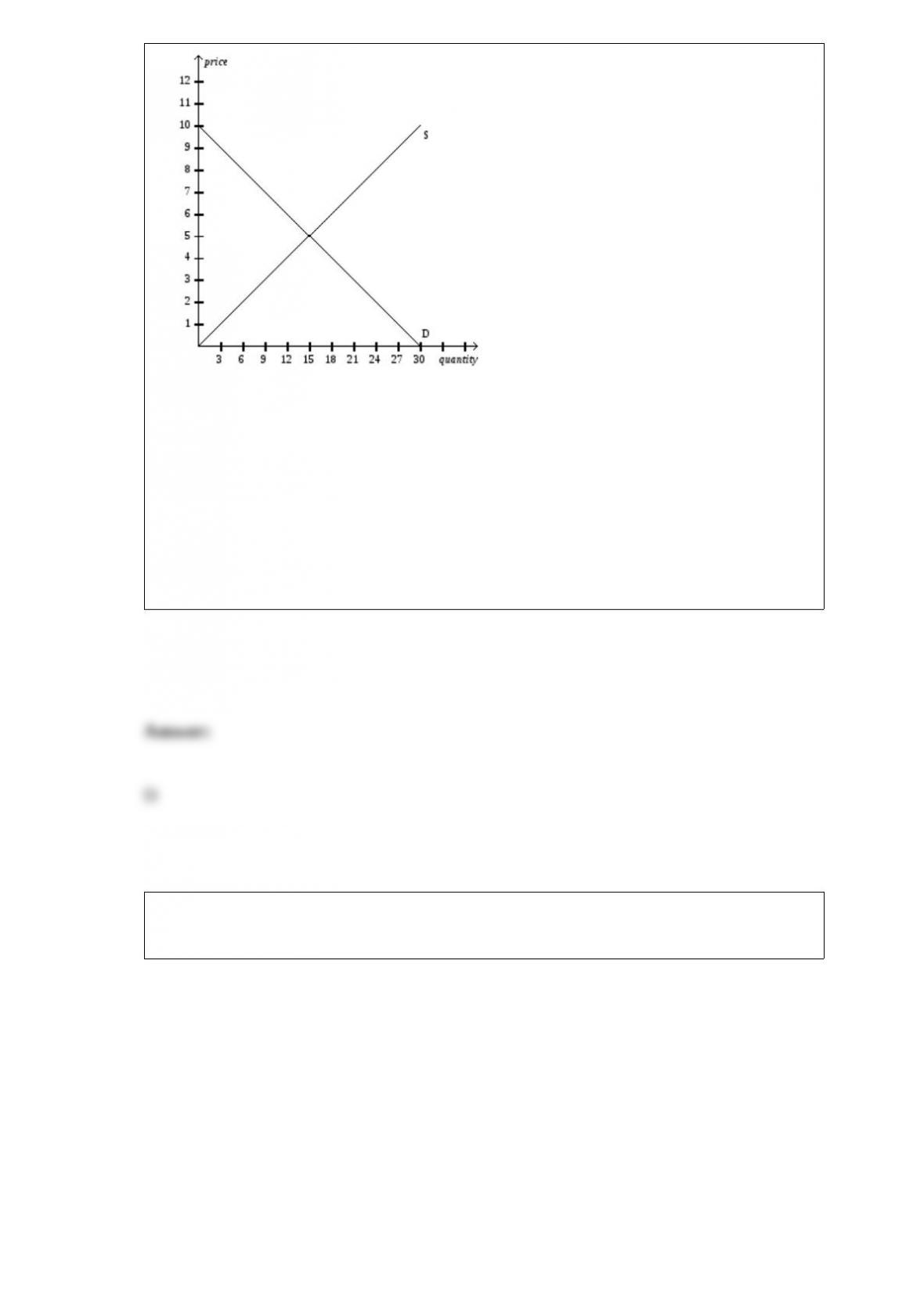
Refer to Figure 6-9. A price floor set at
a. $4 will be binding and will result in a shortage of 3 units.
b. $4 will be binding and will result in a shortage of 6 units.
c. $7 will be binding and will result in a surplus of 6 units.
d. $7 will be binding and will result in a surplus of 12 units.
Figure 6-9
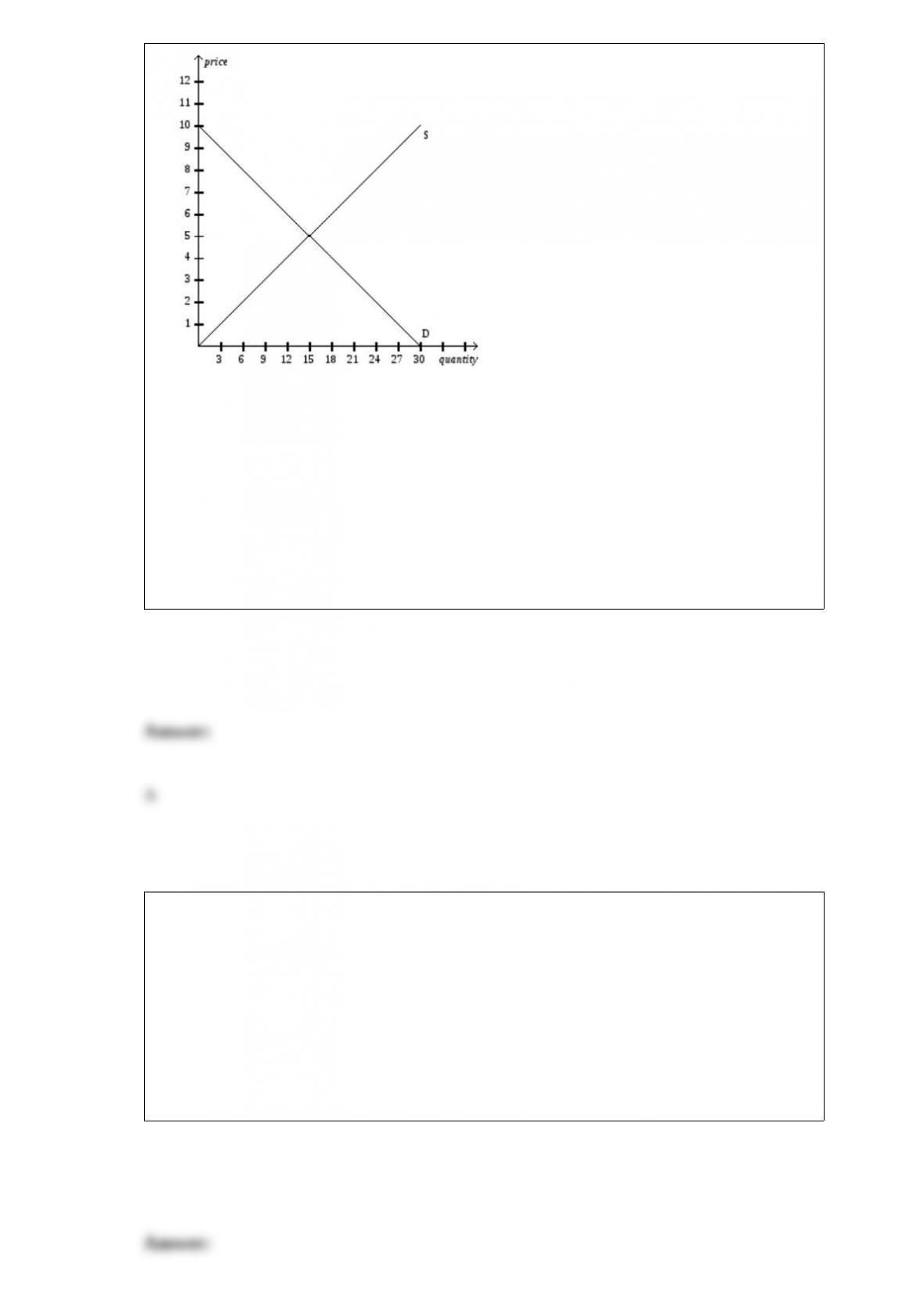
Refer to Figure 6-9. At which price would a price floor be binding?
a. $6
b. $5
c. $4
d. $3
Which of the following is both a store of value and a common medium of exchange?
a. corporate bonds
b. mutual funds
c. checking account balances
d. All of the above are correct.

Unions
a. raise the wages of unionized workers and raise unemployment.
b. raise the wages of unionized workers and reduce unemployment.
c. reduce the wages of unionized workers and raise unemployment.
d. reduce the wages of unionized workers and reduce unemployment.
Suppose the economy is in long-run equilibrium and the government decreases its
expenditures. Which of the following helps explain the logic of why the economy
moves back to long-run equilibrium?
a. as people revise their price-level expectations upward, firms and workers strike
bargains for higher nominal wages.
b. as people revise their price-level expectations upward, firms and workers strike
bargains for lower nominal wages.
c. as people revise their price-level expectations downward, firms and workers strike
bargains for higher nominal wages.
d. as people revise their price-level expectations downward, firms and workers strike
bargains for lower nominal wages.
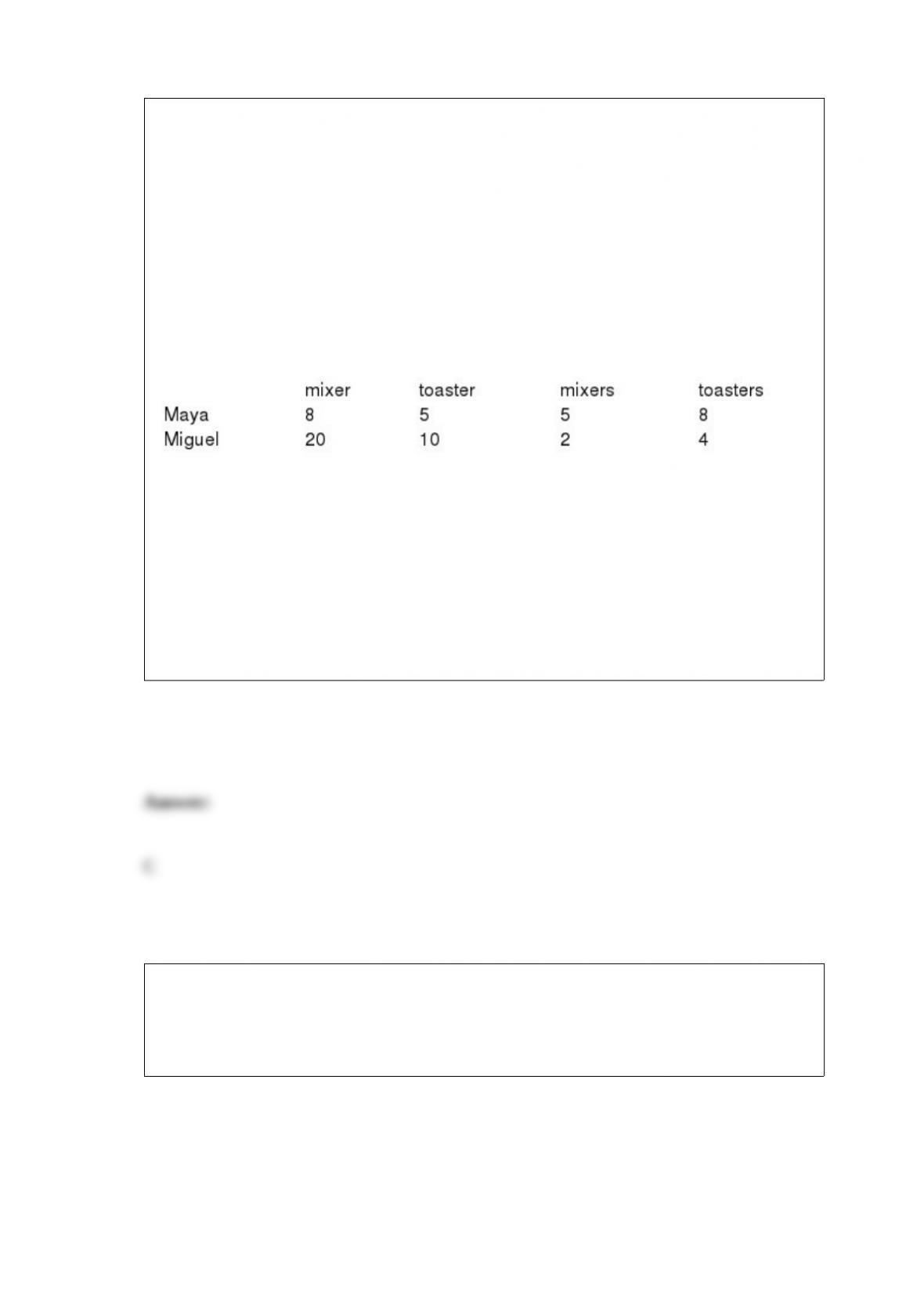
Table 3-6
Assume that Maya and Miguel can switch between producing mixers and producing
toasters at a constant rate.
Hours Needed
To Make 1 Amount Produced
in 40 Hours
Refer to Table 3-6. The opportunity cost of 1 mixer for Miguel is
a. 1/2 toaster.
b. 1/2 hour of labor.
c. 2 toasters.
d. 8 hours of labor.
Figure 9-20
The figure illustrates the market for rice in Vietnam.
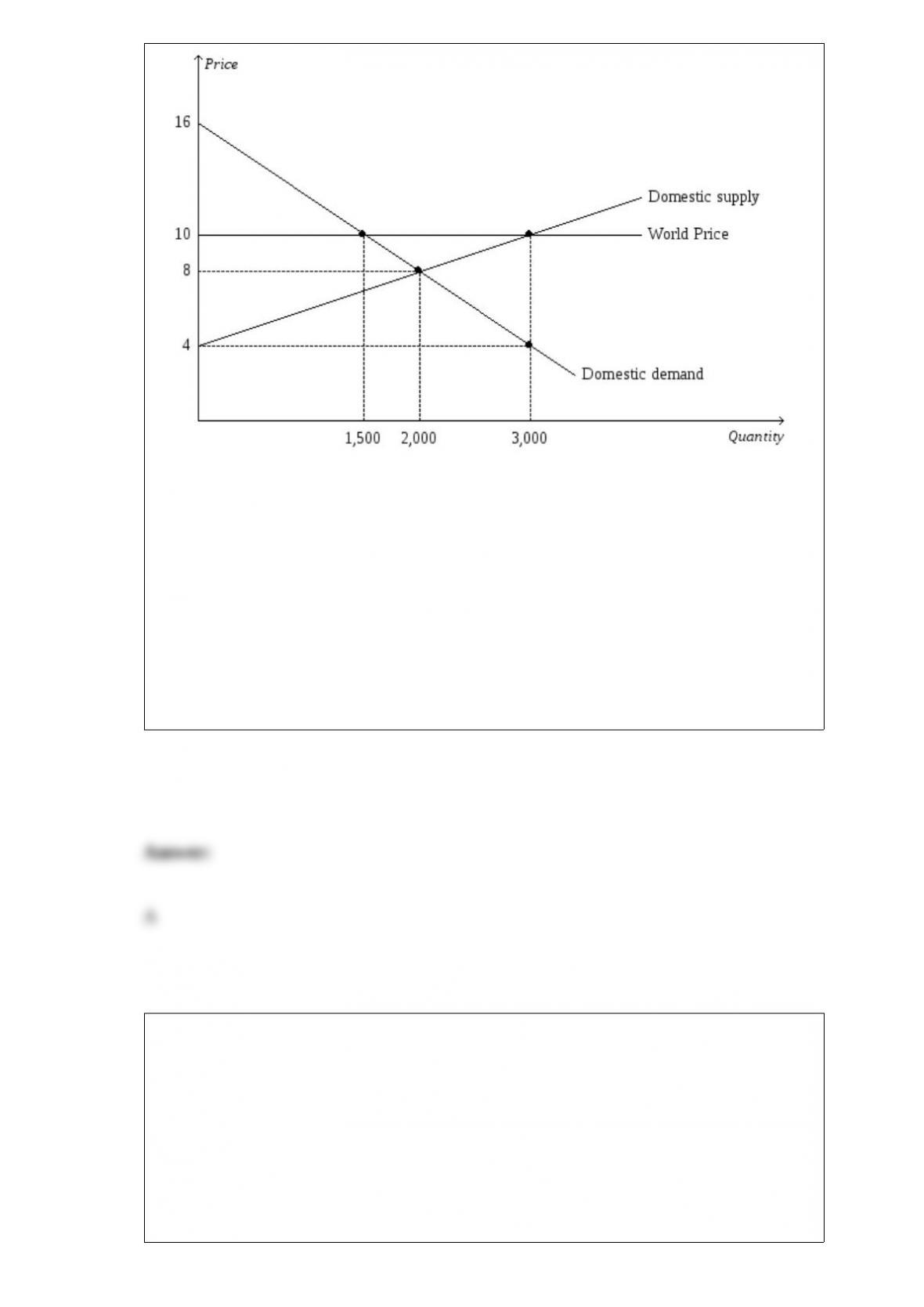
Refer to Figure 9-20. From the figure it is apparent that
a. Vietnam has a comparative advantage in producing rice, relative to the rest of the
world.
b. foreign countries have a comparative advantage in producing rice, relative to
Vietnam.
c. Vietnam has an absolute advantage in producing rice, relative to the rest of the world.
d. foreign countries have an absolute advantage in producing rice, relative to Vietnam.
If the central bank decreases the money supply, then in the short run prices
a. rise and unemployment falls.
b. fall and unemployment rises.
c. and unemployment rise.
d. and unemployment fall.

If purchasing power parity holds, the price level in the U.S. is 220, and the price level in
Japan is 200, which of the following is true?
a. the real exchange rate is 200/220
b. the real exchange rate is 220/200
c. the nominal exchange rate is 200/220
d. the nominal exchange rate is 220/200