1) which of the following statements is correct?
a.between 1953 and 2007, all growth in u.s. real gdp can be attributed to increases in
labor productivity.
b.between 1953 and 2007, increases in labor productivity account for more of the
growth in u.s. real gdp than do increases in the quantity of labor.
c.between 1953 and 2007, increases in the quantity of labor account for more of the
growth in u.s. real gdp than do increases in labor productivity.
d.between 1953 and 2007, all growth in u.s. real gdp can be attributed to increases in
the quantity of labor.
2) The impact of monetary policy on investment spending may be weakened:
A.because of the Treasury’s desire for high interest rates.
B.if the rate at which dollars are spent changes in the same direction as the money
supply.
C.if the investment-demand curve shifts to the right during inflation and to the left
during recession.
D.if the investment-demand curve is very flat.
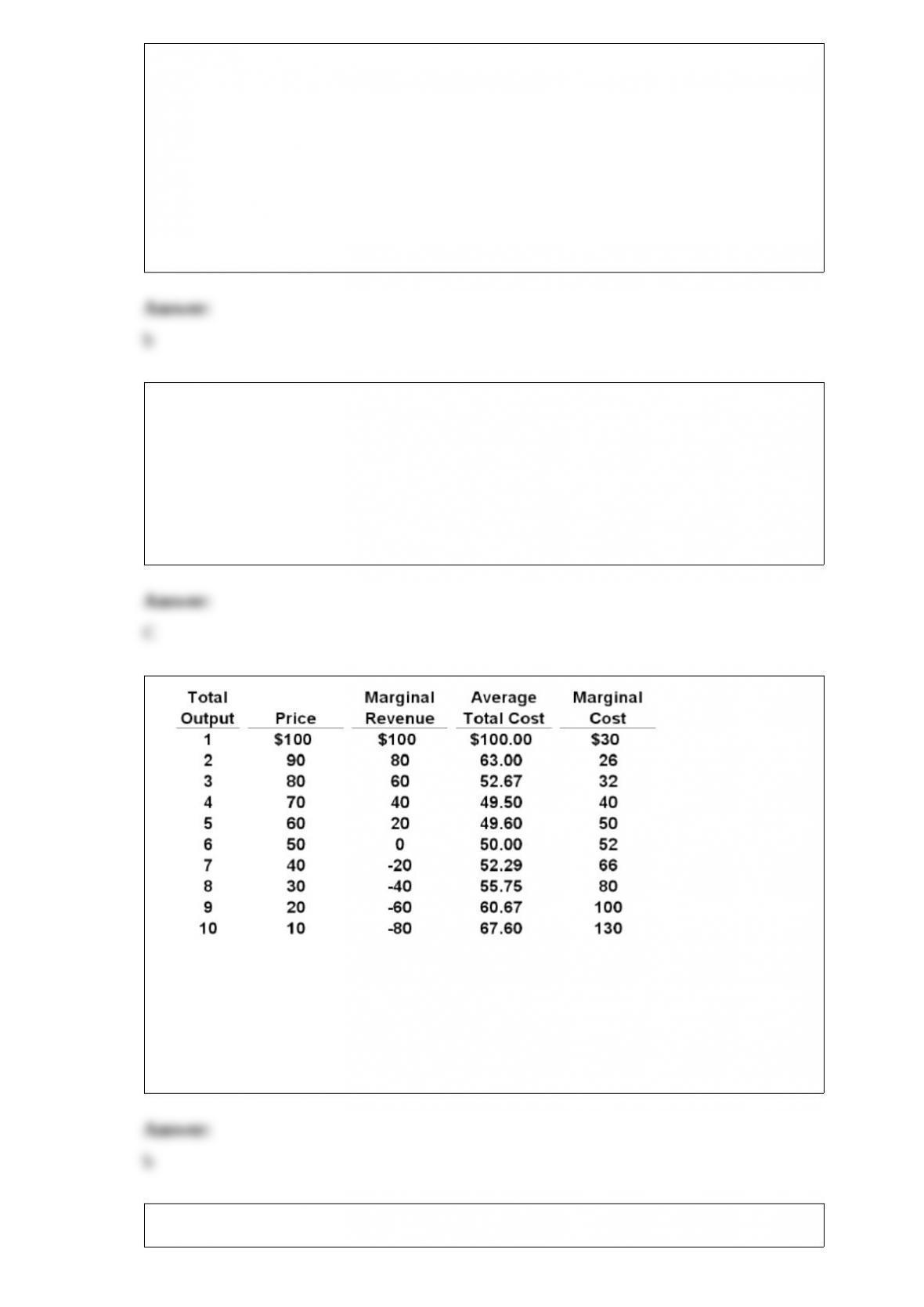
3)
refer to the above data for a nondiscriminating monopolist. this firm will maximize its
profit by producing:
a.3 units.
b.4 units.
c.5 units.
d.6 units.
4) environmental pollution is accounted for in:
a.gdp.
b.pi.
c.di.
d.none of these.
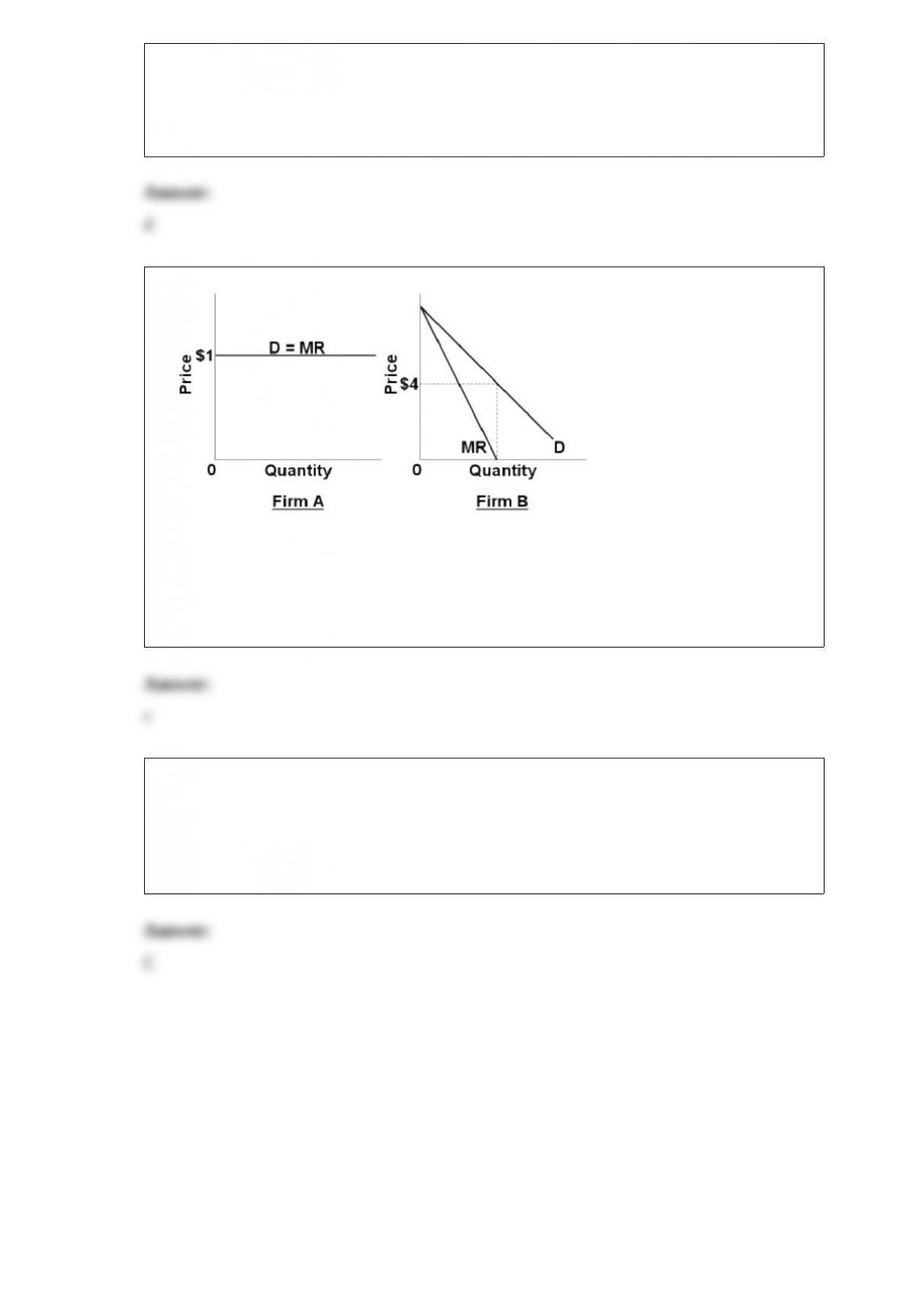
5)
refer to the above diagrams. the demand for firm b’s product is:
a.perfectly elastic over all ranges of output.
b.perfectly inelastic over all ranges of output.
c.elastic for prices above $4 and inelastic for prices below $4.
d.inelastic for prices above $4 and inelastic for prices below $4.
6) Firms engaged in international trade can reduce exchange-rate risk by:
A.paying for foreign goods only when they are delivered.
B.buying on credit.
C.hedging in the futures market.
D.dealing only with highly reputable firms.
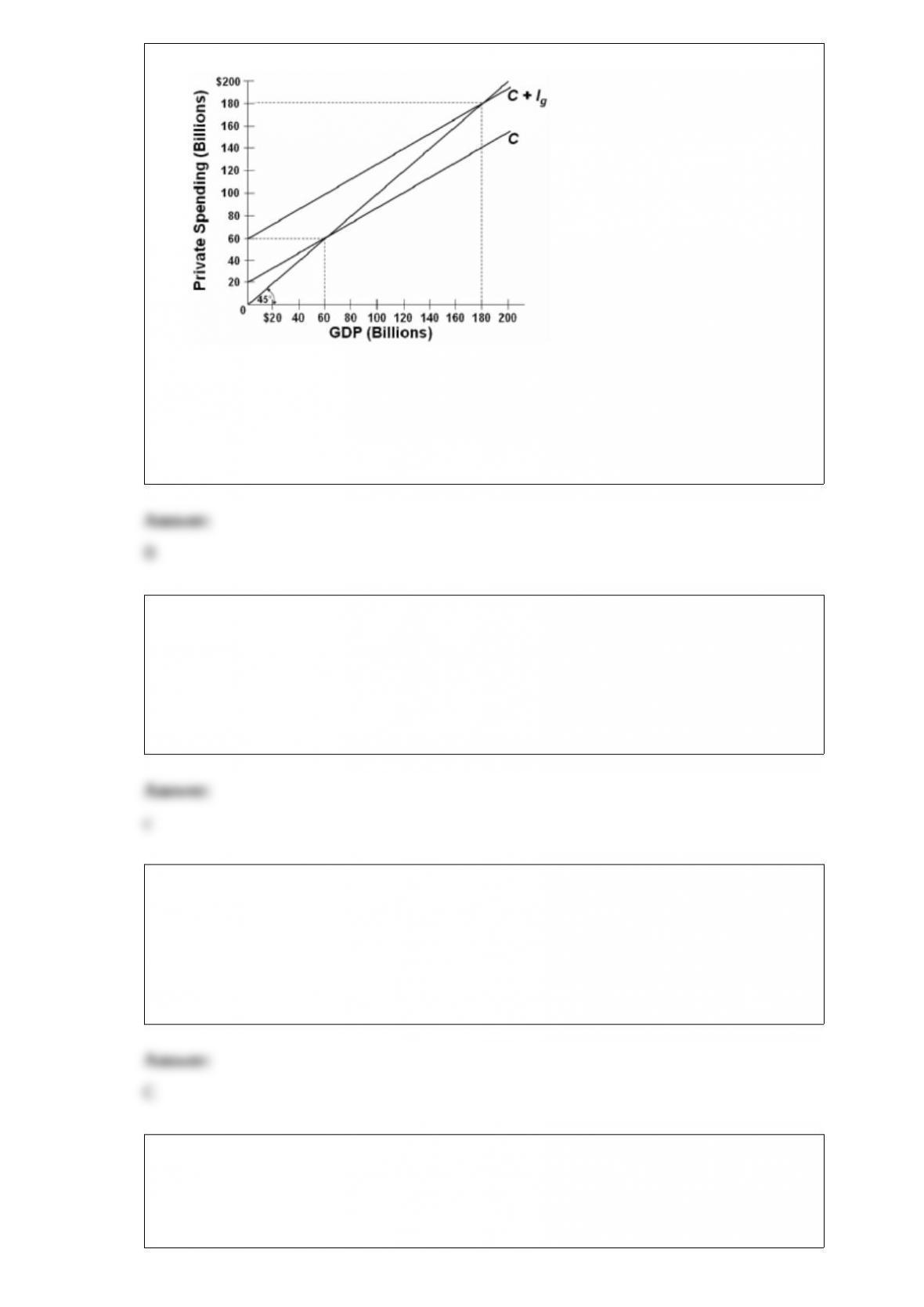
7)
Refer to the above diagram for a private closed economy. The equilibrium GDP is:
A.$60 billion.
B.$180 billion.
C.between $60 and $180 billion.
D.$60 billion at all levels of GDP.
8) approximately what percentage of u.s. health care spending is financed by public
insurance?
a.19 percent.
b.34 percent.
c.47 percent.
d.81 percent.
9) In 2005, the top 1 percent of all taxpayers in the United States paid what percent of
the Federal income tax?
A.11.2 percent.
B.26.7 percent.
C.38.8 percent.
D.60.7 percent.
10) if potential gdp is $400 billion and there is a negative gdp gap of $15 billion, real
gdp is:
a.$415 billion.
b.$385 billion.

c.$15 billion.
d.$785 billion.
11) A function of the Federal Trade Commission is to:
A.investigate instances of faulty and misleading advertising.
B.establish railway rates for interstate railroads.
C.ban or recall unsafe consumer products.
D.prevent insider trading in securities markets.
12) Economists consider governments to be “wasteful:”
A.whenever they over- or underallocate resources to a project.
B.only when they overallocate resources to a project.
C.only when they underallocate resources to a project.
D.whenever they attempt to correct a market failure.
13) which of the following would not be classified as an economic resource by
economists?
a.a professional soccer player
b.water in a town’s reservoir
c.money in a business checking account
d.the manager of the local hamburger restaurant
14) Use the diagram below to answer the questions.
(a)If the economys production possibilities curve is shown by curve AB, then draw in a
new curve which indicates positive economic growth.
(b)If the economy illustrated by production possibilities curve AB is producing at point
4, what economic problem does this represent for this economy?
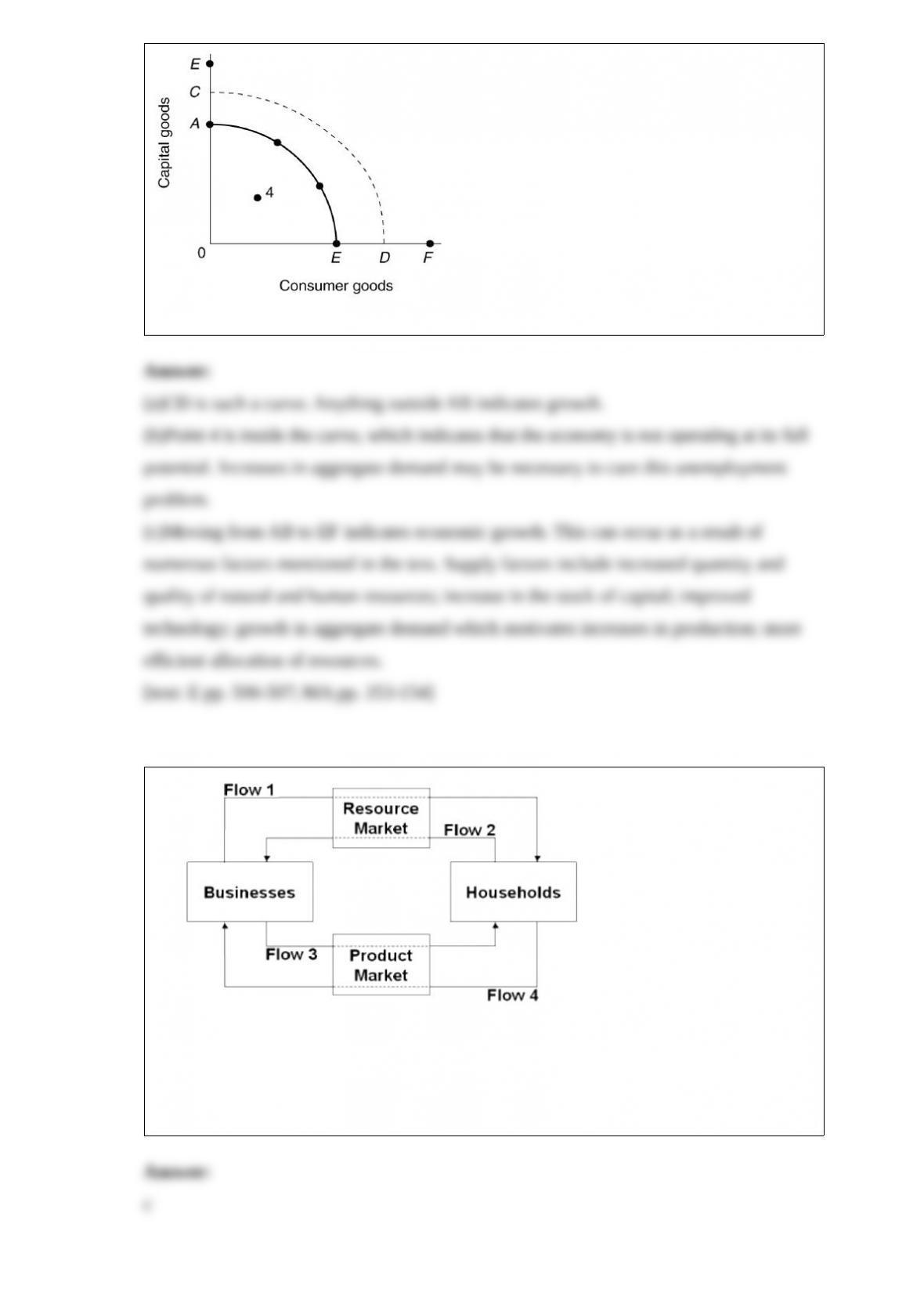
(c)What are some of the factors which could
cause a shift from AB to EF?
15)
refer to the above diagram. flow (3) represents:
a.wage, rent, interest, and profit income.
b.land, labor, capital, and entrepreneurial ability.
c.goods and services.
d.consumer expenditures.