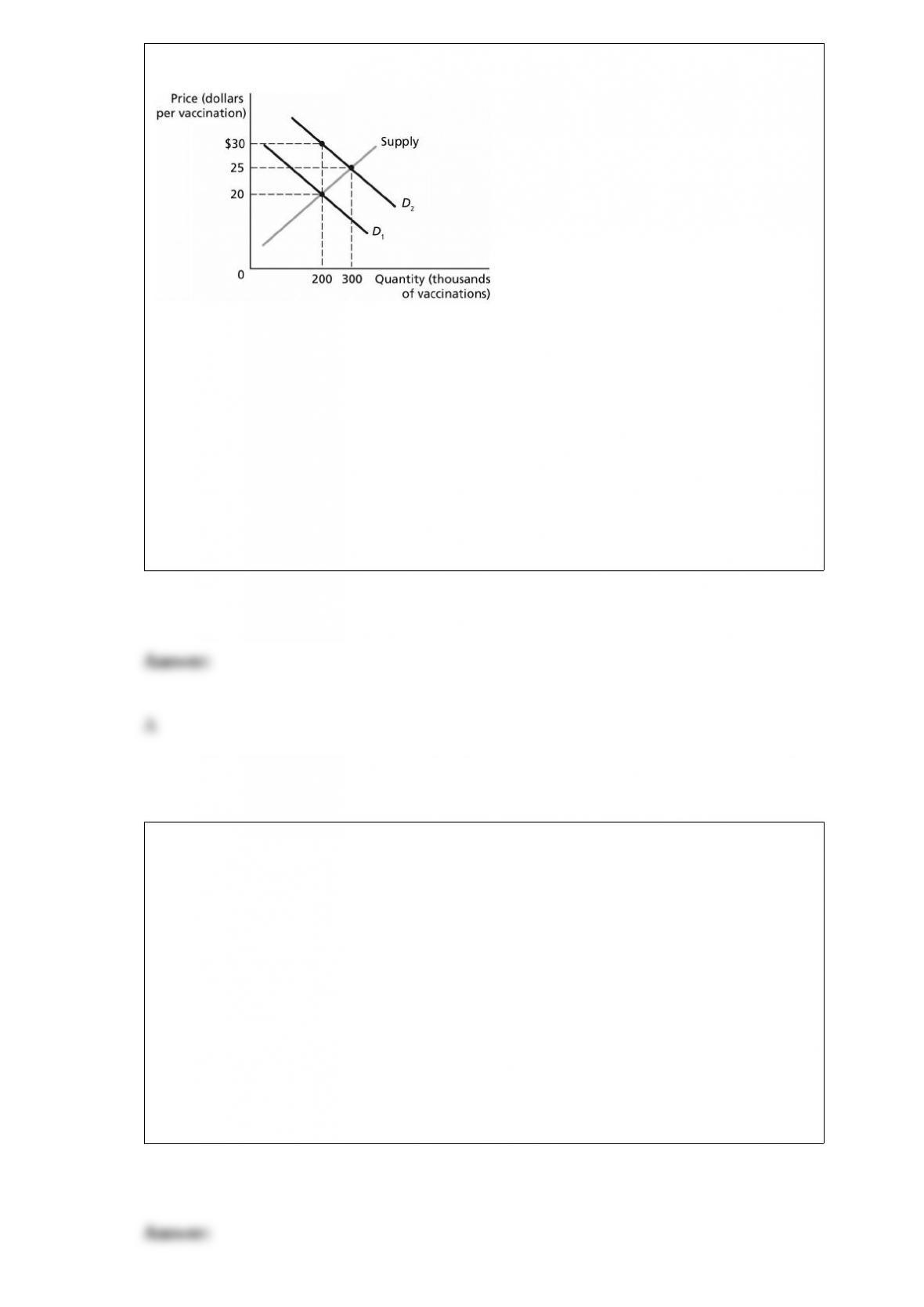
Figure 7-1
Figure 7-1 represents the market for
vaccinations. Vaccinations are considered a benefit to society, and the figure shows both
the marginal private benefit and the marginal social benefit from vaccinations. At the
efficient equilibrium
A) economic surplus is maximized.
B) economic surplus is minimized.
C) economic surplus is zero.
D) economic surplus is negative.
Assume that the market for barley is in equilibrium and the demand for barley is
inelastic. Predict what happens to the revenue of barley farmers if a prolonged drought
reduces the supply of barley. The drought will cause farm revenue to
A) rise because there will be a shortage of barley.
B) rise because the percentage decrease in quantity sold is less than the percentage
increase in price.
C) rise because the percentage increase in quantity sold is greater than the percentage
increase in price.
D) fall because of the decrease in the quantity of barley sold.
Health insurance plans which typically reimburse doctors mainly by paying a flat fee
per patient are known as
A) fee-for-service plans.
B) preferred provider organizations.
C) single-health-payer systems.
D) health maintenance organizations.
The federal government debt ________ when the federal government runs a deficit and
________ when the federal government runs a surplus.
A) increases; increases
B) decreases; increases
C) increases; decreases
D) decreases; decreases
Where does the short-run Phillips curve intersect the long-run Phillips curve?
A) at the point where the rate of inflation and the unemployment rate are equal
B) at the natural rate of inflation
C) at the point where actual inflation is equal to expected inflation
D) There is no intersection between the short-run and long-run Phillips curves.
The fraction of an industry’s sales that are accounted for by the largest firms is called
A) the four-firm competition ratio.
B) the four-firm concentration ratio.
C) the four-firm industry ratio.
D) the four-firm oligopoly ratio.
All of the following are examples of spending on goods and services in the circular
flow model except
A) Giovani buys a new cell phone to replace the one he flushed down the toilet.
B) Amir buys a new humidor for his cigar shop.
C) Isabella buys the sushi plate for lunch at the Turning Japanese Sushi Bar.
D) Vijay buys a new minivan for his family’s cross-country vacation.
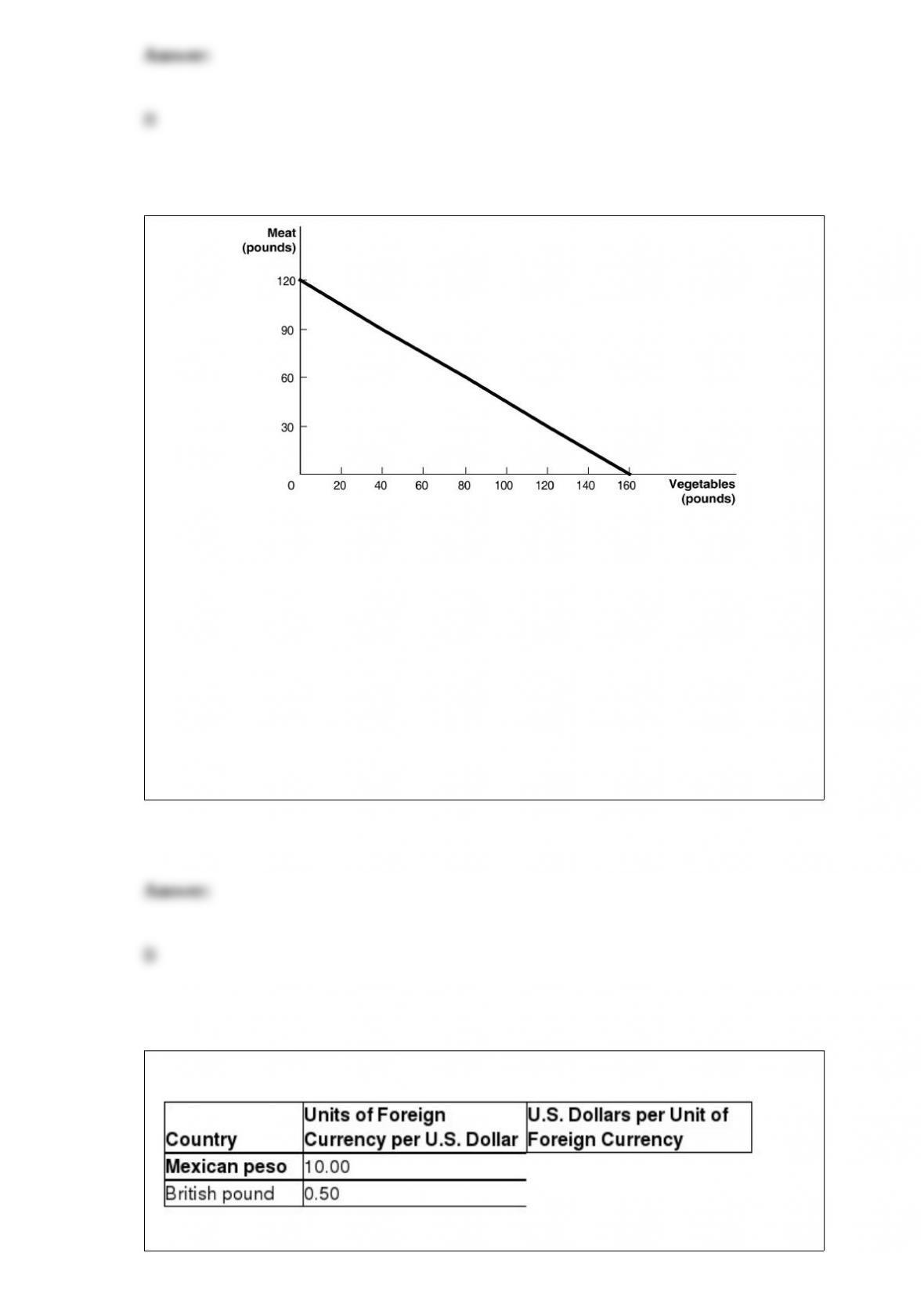
Figure 2-2 Figure
2-2 above shows the production possibilities frontier for Mendonca, an agrarian nation
that produces two goods, meat and vegetables. Suppose Mendonca is currently
producing 60 pounds of vegetables per period. How much meat is it also producing,
assuming that resources are fully utilized?
A) 45 pounds of meat
B) 75 pounds of meat
C) 80 pounds of meat
D) 100 pounds of meat
Table 18-2
Given the following exchange rates in the above table, what are the exchange rates
stated as U.S. dollars per Mexican peso and U.S. dollars per British pound respectively?
A) 0.10 dollars per peso and 2.00 dollars per pound
B) 1.00 dollars per peso and 20.00 dollars per pound
C) 0.01 dollars per peso and 0.20 dollars per pound
D) 0.10 dollars per peso and 5.00 dollars per pound
E) 0.01 dollars per peso and 0.50 dollars per pound
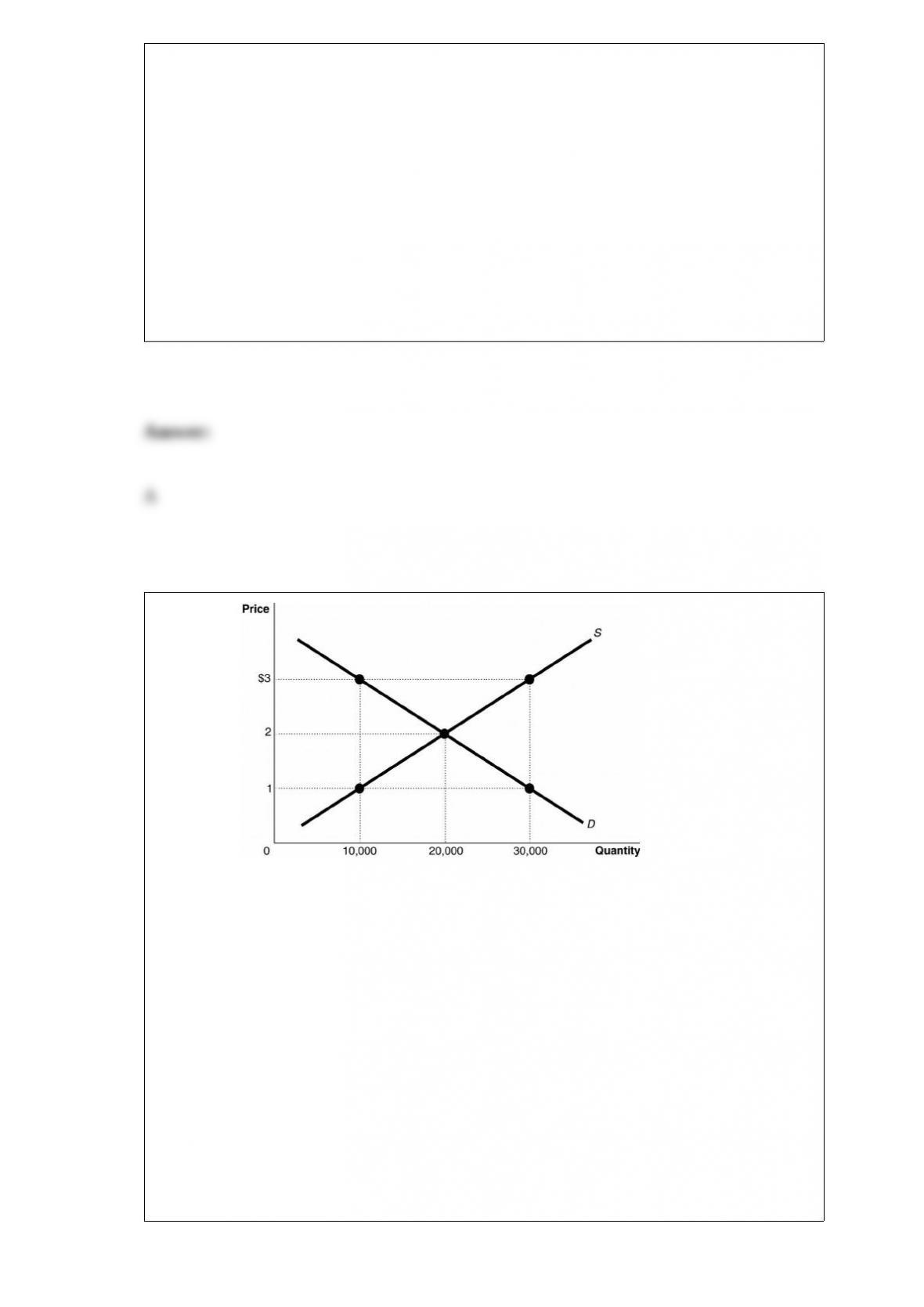
Figure 4-7
The figure above represents the market for iced tea. Assume that this is a competitive
market. At a price of $1,
A) the marginal cost of iced tea is greater than the marginal benefit; therefore, output is
inefficiently low.
B) producers should raise the price to $3 in order to sell the quantity demanded of
30,000.
C) the marginal benefit of iced tea is greater than the marginal cost; therefore, output is
inefficiently low.
D) the marginal benefit of iced tea is greater than the marginal cost; therefore, output is
inefficiently high.
According to census figures and the Congressional Budget Office, the number of people
aged 65 and older is projected to ________ and the number of uninsured people is
projected to ________ by the year 2020.
A) increase; increase
B) decrease; increase
C) increase; decrease
D) decrease; decrease
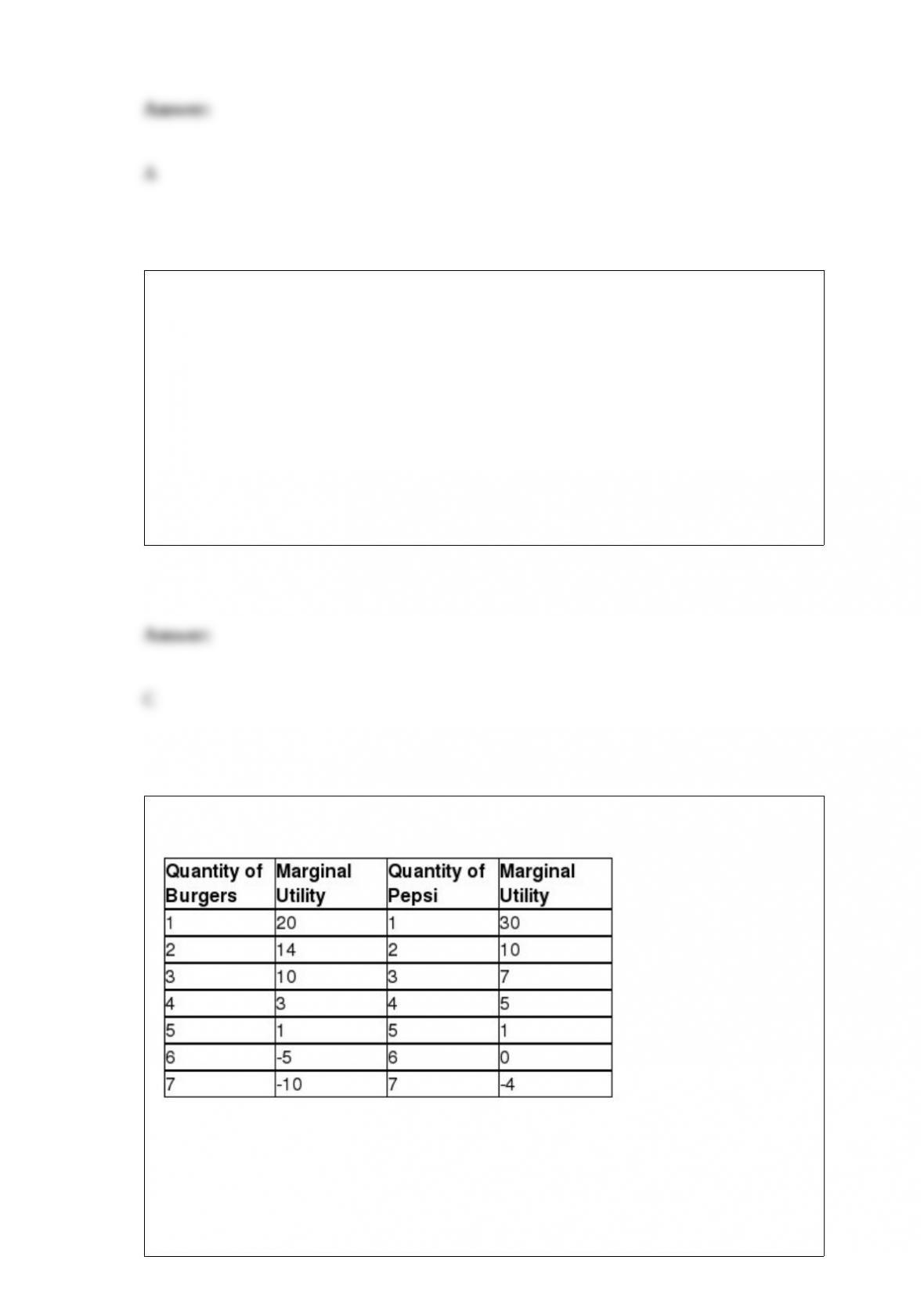
Table 10-6
Table 10-6 lists Jay’s marginal utilities for burgers and Pepsi. Jay has $7 to spend on
these two goods. The price of a burger is $2 and the price of a can of Pepsi is $1. What
is Jay’s optimal consumption bundle?
A) 1 burger and 2 Pepsis

B) 2 burgers and 3 Pepsis
C) 3 burgers and 1 Pepsi
D) 3 burgers and 2 Pepsis
An increase in the real interest rate will
A) cause consumers to spend more and save less.
B) most likely lower consumers’ purchases of durable goods.
C) most likely lower the reward to savings.
D) most likely lower the cost of borrowing.
Which of the following displays these two characteristics: nonrivalry and excludability?
A) a public good
B) a private good
C) a quasi-public goods
D) a common resource
There are two firms in the residential paint industry, Cool Shades (C) and Warm Hues
(W). They collude to share the market equally. They jointly set a monopoly price and
split the quantity demanded at that price. Here are their options:
i. They continue to collude (no cheating) and make $12 million each in profits.
ii. One firm cheats and the other does not. The firm that cheats makes a profit
of $14 million whereas the firm that doesn’t makes a profit of $9 million.
iii. They both cheat and each firm makes a profit of $7 million. a. Construct a payoff
matrix for these two firms.
b. How does this situation relate to the prisoner’s dilemma?
c. If each firm acted noncooperatively, how much profit would each make?
d. Are the firms better off colluding (with no cheating) or competing? Explain.
In the United States since 1900, life expectancy at birth has ________ and the death
rate has ________.
A) increased; increased
B) increased; decreased
C) decreased; increased
D) decreased; decreased
Price discrimination is a rational strategy for a profit-maximizing firm when
A) it is possible to engage in arbitrage across market segments.
B) it is not possible to segment consumers into identifiable markets.
C) there is no opportunity for arbitrage across market segments.
D) firms want to increase the amount of consumer surplus received by its customers.

If the economy experiences a negative supply shock, which of the following will be
true?
A) Inflation will rise, and real GDP will fall.
B) Inflation will rise, and real GDP will rise.
C) Inflation will fall, and real GDP will fall.
D) Inflation will fall, and real GDP will rise.