
If firms follow a low-price guarantee strategy, the price that will prevail in the market
will be closest to:
A) the price a monopolist will pick.
B) the price that a perfectly competitive firm would pick.
C) the duopoly price.
D) the price that would yield zero economic profits.
The short-run industry supply curve for a perfectly competitive industry is the:
A) horizontal sum of the individual firms’ marginal cost curves above short run average
variable cost.
B) vertical sum of the individual firms’ marginal cost curves above short run average
variable cost.
C) horizontal sum of the individual firms’ marginal cost curves above short run average
total cost.
D) vertical sum of the individual firms’ marginal cost curves above short run average
total cost.
Recall the application about store vs. online retailers, how do the sales strategies of
conventional store and online retailers differ?

A) Conventional stores use the neural activity in the NAcc. and down-regulate the
insula, and the online stores only use the neural activity for their sales strategies.
B) Conventional stores use the neural activity in the NAcc. and down-regulate the
insula, and the online stores only work with the insula for their sales strategies.
C) There are no significant differences between the online and conventional retailers.
D) Online stores focus on the NAcc activity, on the contrary conventional stores focus
only on the insula.
The merits of a patent system is:
A) the patent system gives firms strong incentives to take the risk of substantial
research and development costs.
B) the patent system may precipitate the development of new products.
C) granting monopoly power through a patent may be beneficial from society’s
perspective.
D) all of the above.
Refer to Figure 18.2. The opportunity cost of producing fishing poles in Macadamia is:
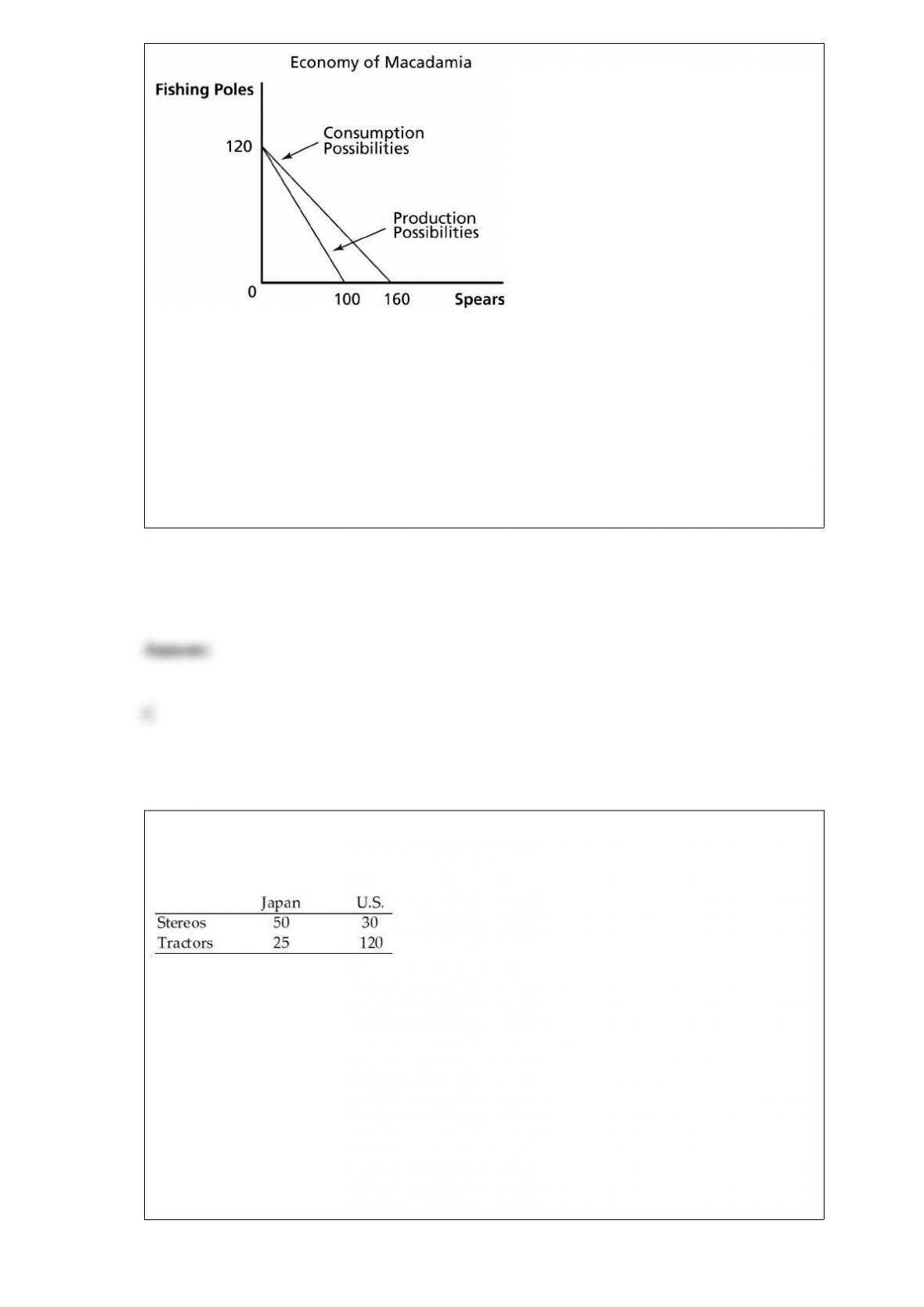
Figure 18.2
A) 3/4 of a spear.
B) 5/6 of a spear.
C) 6/5 spears.
D) 4/3 spears.
Daily Output of Japan and U.S.
Table 18.2
Refer to Table 18.2. The opportunity cost of tractors in Japan is:
A) 2 stereos.
B) 1/4 stereo.
C) 1/2 stereo.
D) 4 stereos.
If a firm engages in guaranteed price matching, that firm picks a:
A) high price but instantly switches to a low price if its competitors choose a low price.
B) low price but instantly switches to a high price if its competitors choose a low price.
C) high price but instantly switches to a low price if its competitors choose a high price.
D) low price no matter what the competition does.
Why does the medallion policy cause inefficiency?
A) It decreases the total surplus of the taxi market.
B) It prevents riders and drivers from doing mutually beneficial transactions.
C) It always decreases producer surplus only.
D) A and B are correct.
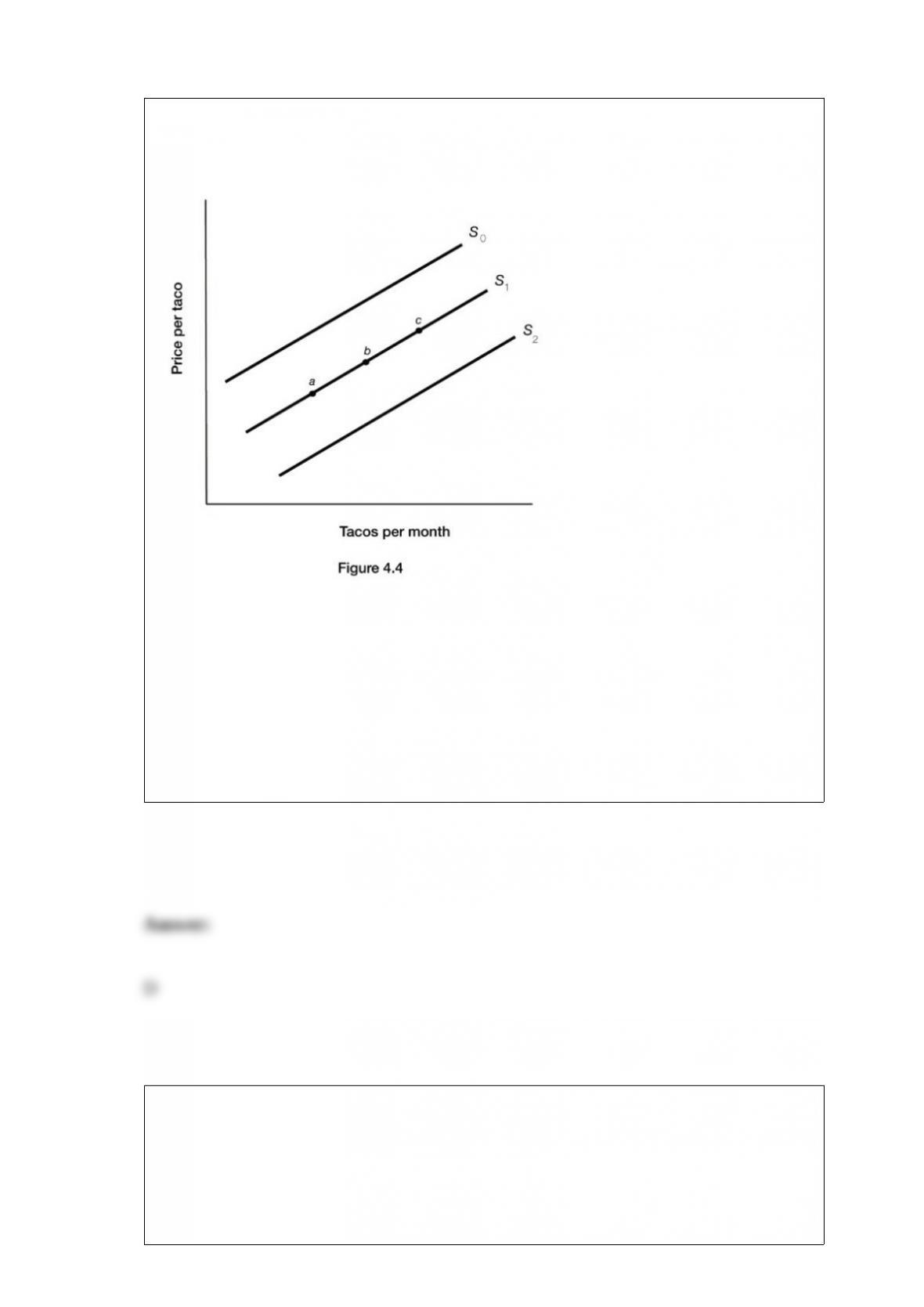
Figure 4.4 illustrates the supply of tacos. An increase in the number of Mexican food
producers would most likely cause a movement from:
A) point a to point c.
B) point c to point a.
C) S2 to S0.
D) S0 to S2.
Suppose that the percentage change in demand is 10%, the price elasticity of demand is
1, and the percentage change in the equilibrium price is 3.33%. What is the price
elasticity of supply?
A) 0
B) 1
C) 2
D) 3
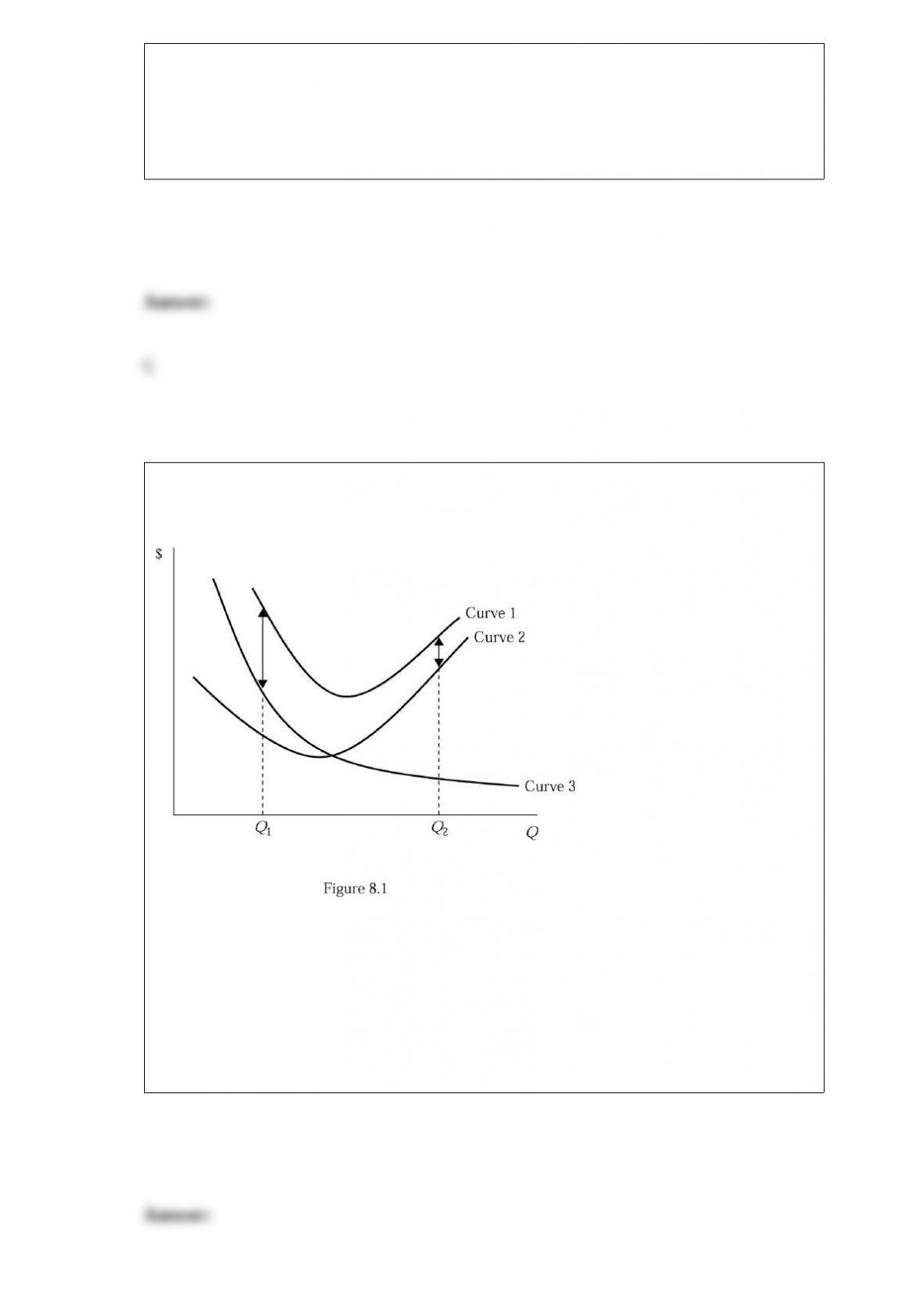
Refer to Figure 8.1, which shows a family of average cost curves. The average variable
cost at a given level of output is represented by:
A) the vertical distance between Curve 1 and Curve 3 at a given level of output.
B) the vertical distance between Curve 1 and Curve 2 at a given level of output.
C) the vertical sum of Curve 1 and Curve 3 at a given level of output.
D) the vertical sum of Curve 1 and Curve 2 at a given level of output.
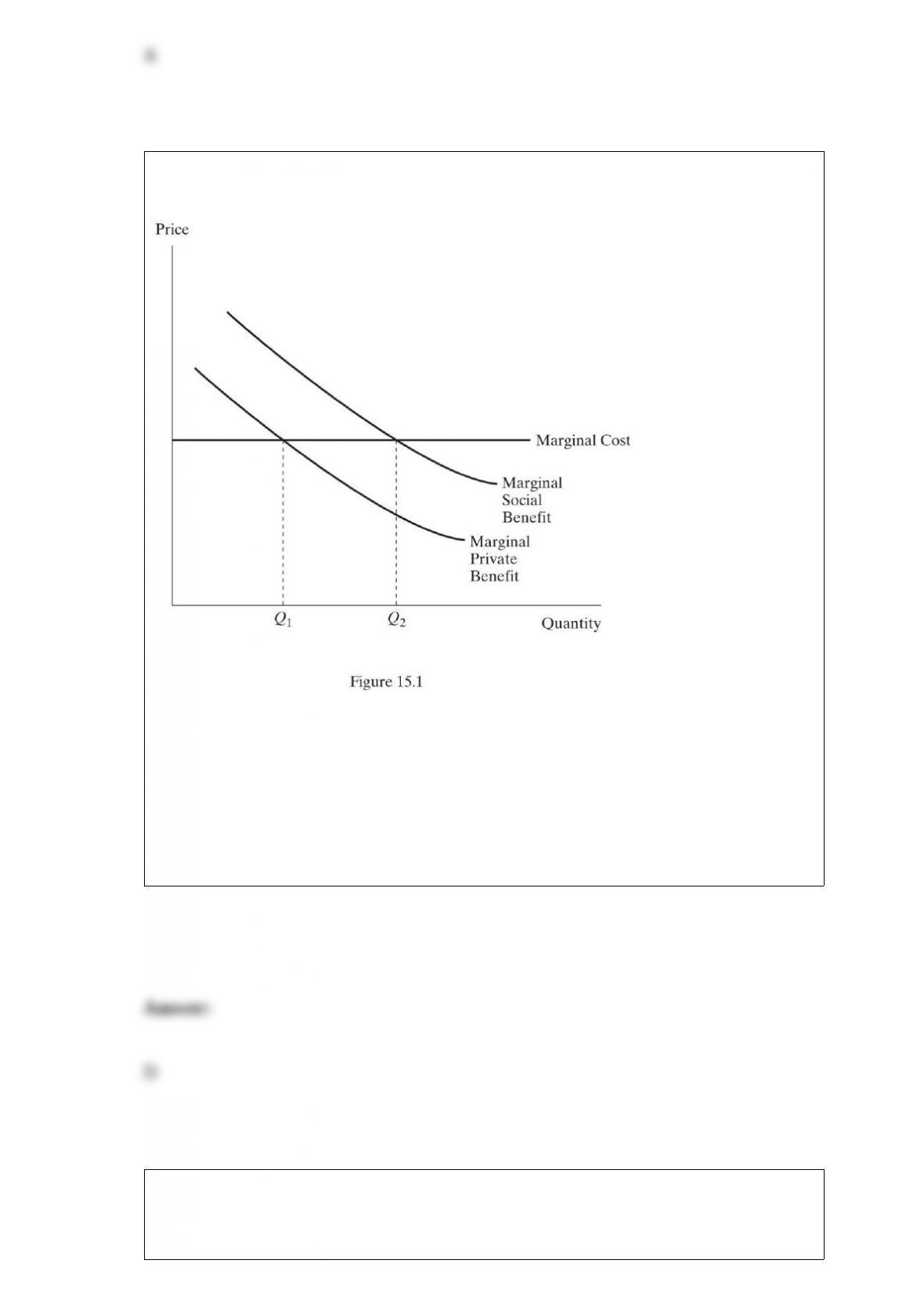
In the market in Figure 15.1:
A) social benefits are greater than private benefits.
B) the quantity provided by the market is inefficient.
C) the market produces less than the social optimum quantity.
D) all of the above
As price falls along a supply curve, ________ increase(s) while ________ decrease(s).
A) nothing; quantity supplied, producer surplus, and revenues

B) producer surplus and price; quantity supplied and revenues
C) quantity supplied and price; producer surplus and revenues
D) revenues, quantity supplied, and price; producer surplus
Exporting nations often agree to voluntary export restraints in an attempt to:
A) employ more workers in the importing nation.
B) avoid more restrictive trade policies.
C) increase global welfare.
D) decrease inflation.
The annual cost of collisions in the U.S. is approximately $300 billion. On average, the
driver who causes an accident incurs about ________ of the costs, leaving the rest as an
external cost imposed on others.
A) one-third
B) one-fourth
C) two-thirds
D) one-half
If demand is inelastic, and the government decides to raise the tax on water. Then the
price for water will increase by a ________ amount and water consumers will bear a
________ share of the tax.
A) large; large
B) large; small
C) small; large
D) small; small
Assume that local bread industry is perfectly competitive and faces constant returns to
scale. Draw a graph showing the output of bread ( and the price of bread ( ) in a
competitive market. Suppose that a monopolist buys all of the independent bread
companies in the local area. What will happen to the output of bread? Show this on
your graph. (Label it .) What will happen to the price of bread? Show this on your
graph. (Label it .)
Suppose that a price discriminating monopolist is able to divide its market into two
groups. If the firm sells its product for $25 to the group whose customers have the least
elastic demand, what price are they likely to charge to the group whose customers have
the most elastic demand?
A) $25
B) more than $25
C) less than $25
D) The answer depends on the marginal revenue for that group.

When a tax is levied on a good or service:
A) buyers and sellers generally share the burden of the tax.
B) buyers always bear the burden of the tax.
C) sellers always bear the burden of the tax.
D) sellers bear some of the burden of the tax only if supply is perfectly elastic.
When the government taxes a firm that generates an external cost, the profit
maximizing firm will produce:
A) more units of output than before the tax was imposed.
B) the same number of units of output as before the tax was imposed.
C) fewer units of output than before the tax was imposed.
D) either more or fewer units of output than before the tax was imposed.
Refer to Table 10.3. The profit maximizing monopolist will choose to produce
________ units of output.
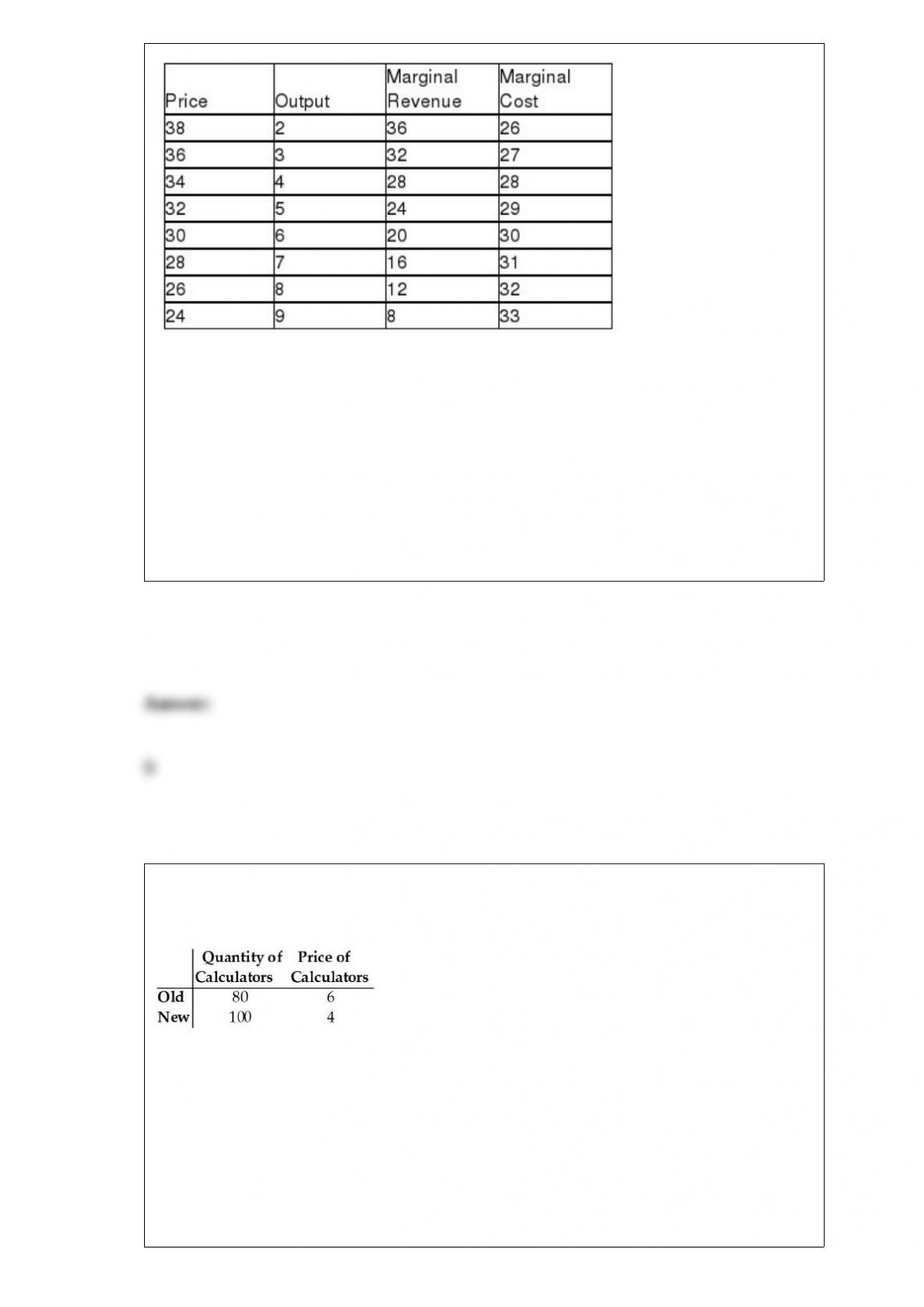
Table 10.3
A) 3
B) 4
C) 5
D) 6
Refer to Table 5.2. A change in the price of calculators caused the change in quantity
demanded shown in the table. The price elasticity of demand for calculators, using the
initial-value formula, is:
Table 5.2
A) 25.
B) 1.75.
C) 0.75.
D) 0.25.

The sacrifices made by societies in order to engage in military spending represent:
A) the nominal costs of military spending.
B) the real costs of military spending.
C) the opportunity costs of military spending.
D) the excessive costs of military spending.
Which of the following market changes would be expected to occur when a patent
expires?
A) an increase in the market price
B) an increase in generic products
C) a decrease in industry output
D) all of the above

Using supply and demand analysis, if the “colony collapse disorder (CCD)” of honey
bees caused a leftward shift of the supply curve for ice cream, then which of the
following must be true?
A) The equilibrium price of ice cream increased and the equilibrium quantity decreased.
B) The equilibrium price of ice cream decreased and the equilibrium quantity
decreased.
C) The equilibrium price of ice cream increased and the equilibrium quantity increased.
D) The equilibrium price of ice cream decreased and the equilibrium quantity increased.
A charity that used to make an appeal to peoples’ sense of civic or moral responsibility,
but no longer does, is likely to ________ the free-rider problem and lead to a ________
level of contribution to the public good.
A) reduce; smaller
B) reduce; larger
C) increase; smaller
D) increase; larger
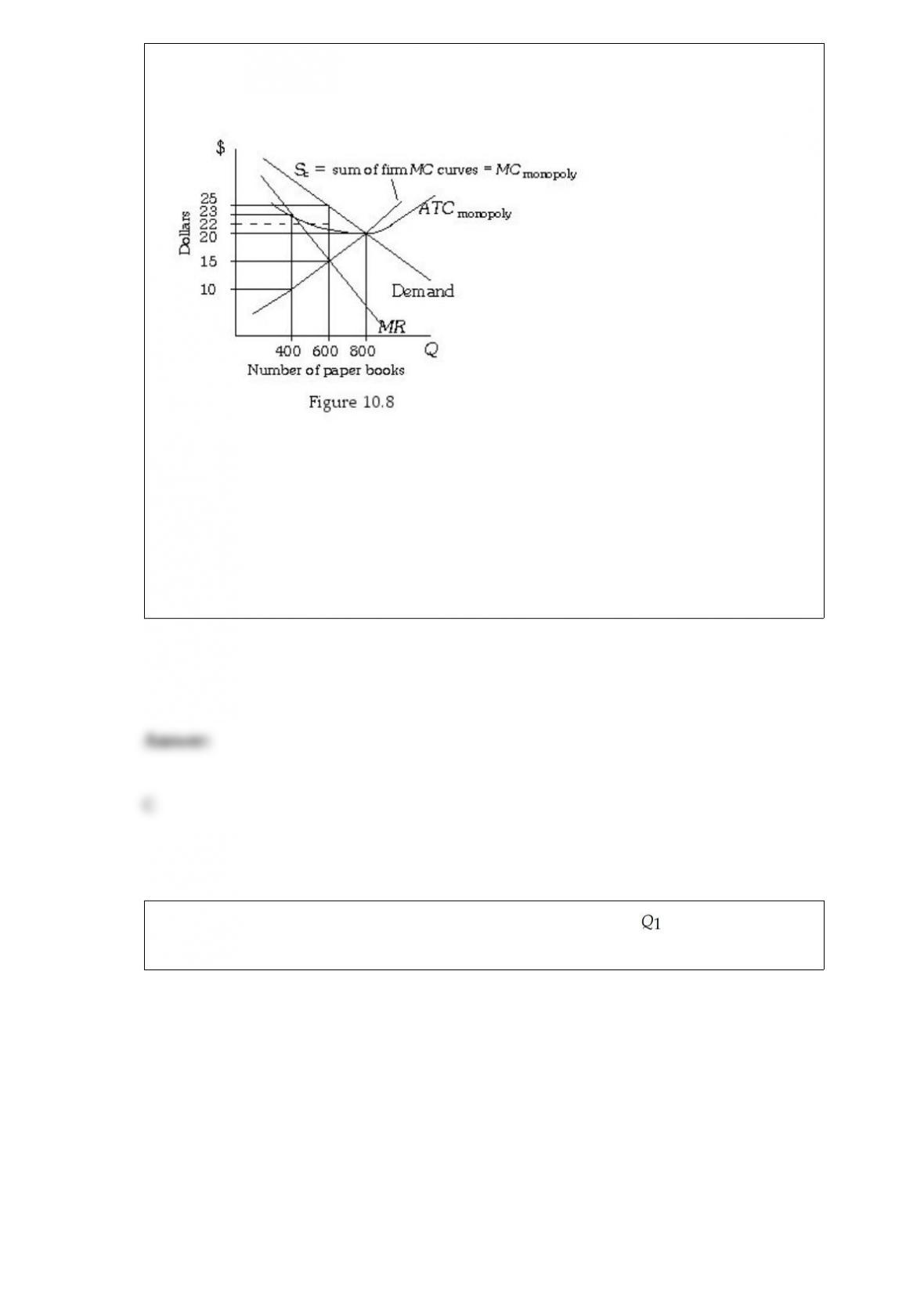
Refer to Figure 10.8. If the paper books industry is competitive, the market price will be
________ and the market output will be ________ units.
A) $25; 600
B) $10; 400
C) $20; 800
D) $15; 600
Refer to Figure 6.4. Suppose that the current price is set at A and units of a good are
traded. Which of the following statements is INCORRECT?
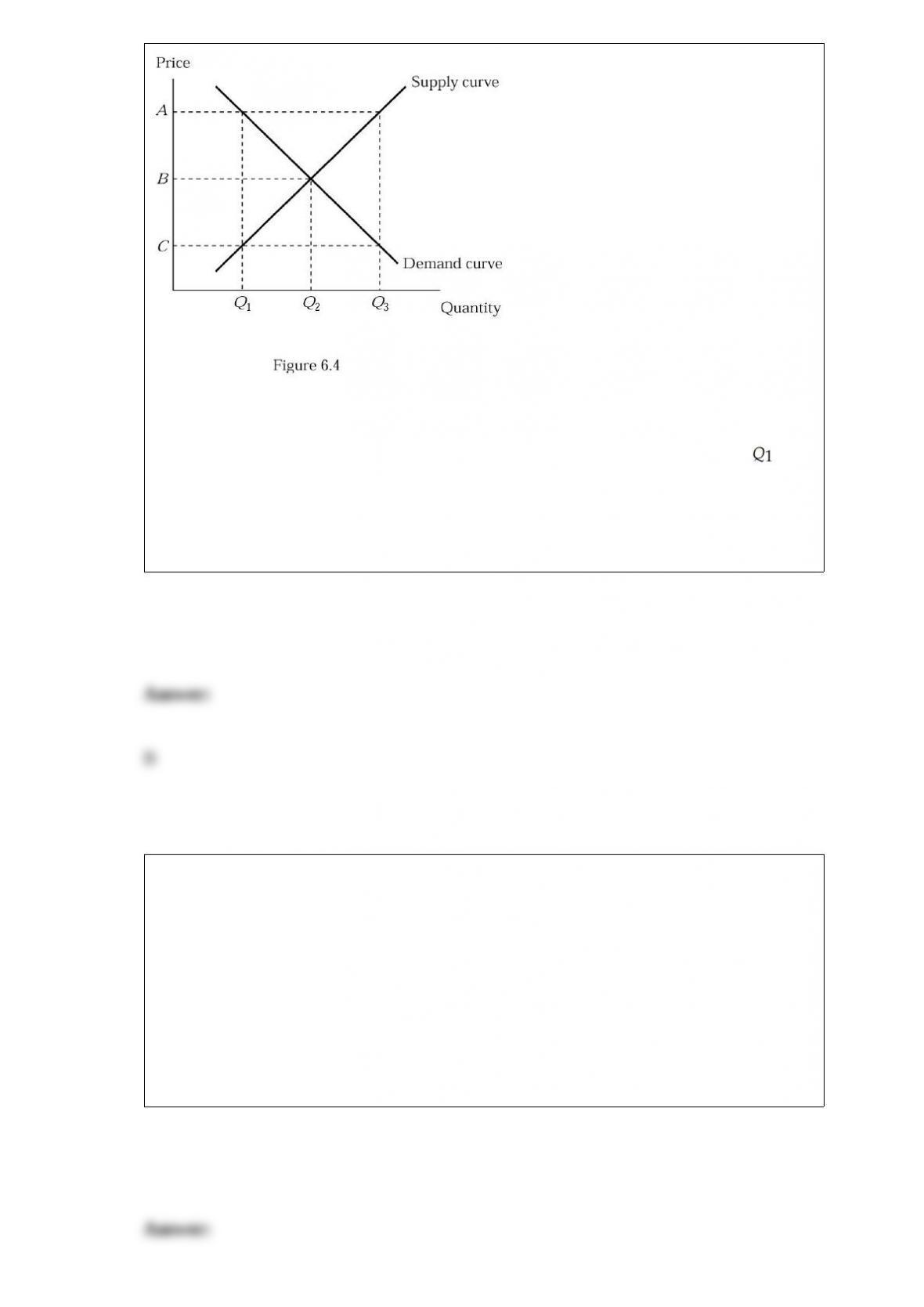
A) The quantity supplied exceeds the quantity demanded.
B) A buyer’s willingness to pay is smaller than a seller’s willingness to accept at .
C) The consumer surplus would increase should the price fall.
D) Total surplus is not maximized.
The price elasticity of demand for higher education is about 1.4. A 5% increase in
tuition would lead to:
A) a decrease in enrollment by 7%.
B) a decrease in enrollment by 6.4%.
C) a decrease in enrollment by 3.6%.
D) a decrease in enrollment by 2.8%.

The lowest price found so far in a search process is a:
A) marginal price.
B) reservation price.
C) discovered price.
D) best-guess price.
According to the marginal principle, a rational individual should not undertake an
economic activity if the:
A) marginal benefit exceeds marginal cost.
B) marginal benefit is less than marginal cost.
C) marginal benefit equals marginal cost.
D) total benefit equals total cost.