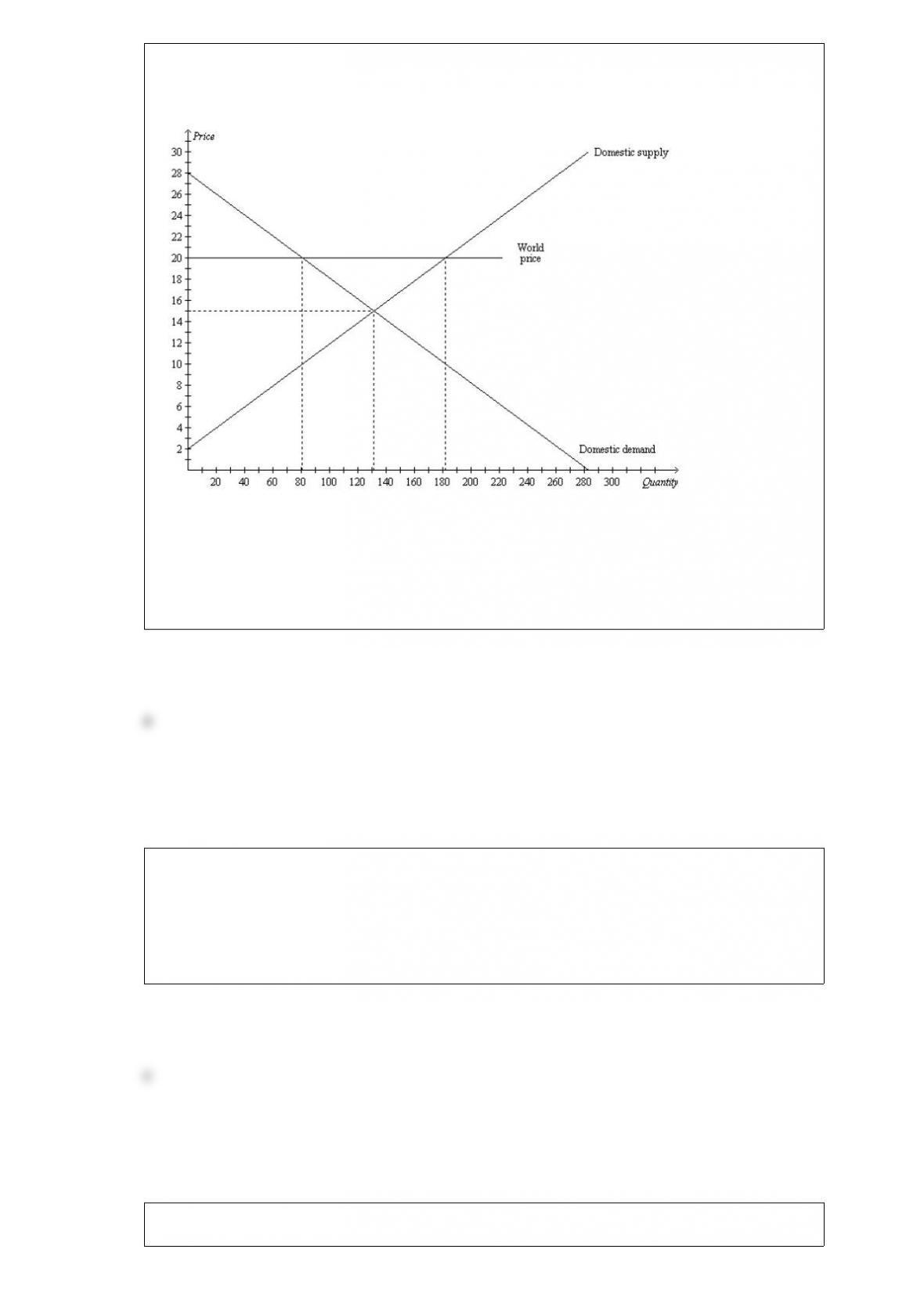
Figure 92
The figure illustrates the market for calculators in a country.
Refer to Figure 92. With free trade, consumer surplus is
a. $320.
b. $640.
c. $845.
d. $1,690.
When we move along a given supply curve,
a. only price is held constant.
b. technology and price are held constant.
c. all nonprice determinants of supply are held constant.
d. all determinants of quantity supplied are held constant.
HTMLENTITY#8203HTMLENTITYWhen a country opens up to trade in a good for
which it has a comparative advantage, and the country begins to export the good, we
can conclude that
a. HTMLENTITY#8203HTMLENTITYthe domestic price will fall after trade opens
up.
b. HTMLENTITY#8203HTMLENTITYboth buyers and sellers in that country will be
better off as a consequence of opening up the market to international trade.
c. HTMLENTITY#8203HTMLENTITYthe total surplus for this good will increase as a
result of opening up the market to international trade.
d. HTMLENTITY#8203HTMLENTITYopening the market to international trade will
create a deadweight loss.
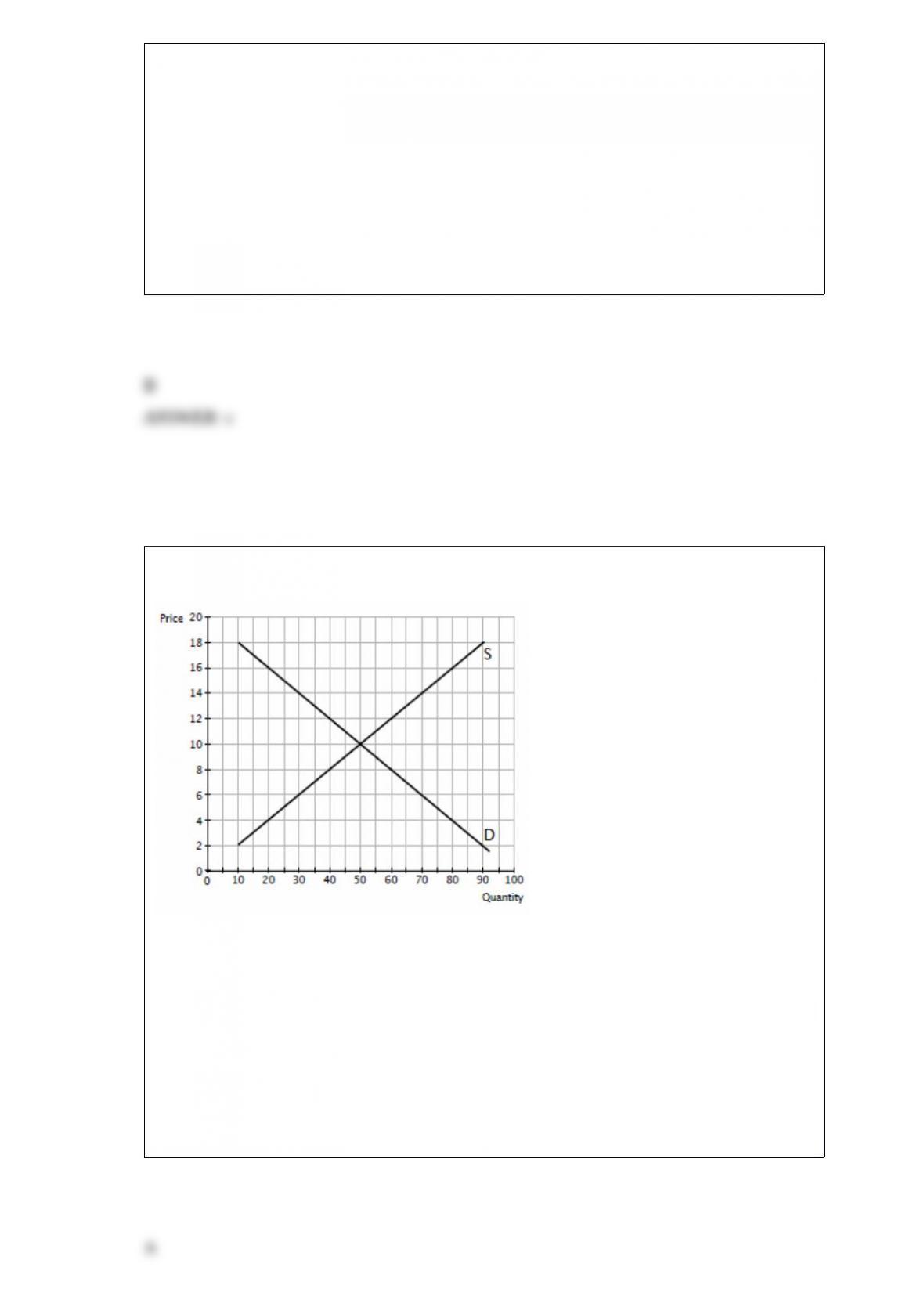
HTMLENTITY#8203HTMLENTITY Figure 632
Refer to Figure 632. Which of following statements is true based upon the conditions
in the market?
a. HTMLENTITY#8203HTMLENTITYa shortage will develop when a price ceiling is
imposed at a price of $10.
b. HTMLENTITY#8203HTMLENTITYa surplus will develop when a price floor is
imposed at a price of $8.
c. HTMLENTITY#8203HTMLENTITYa surplus will develop when a price floor is
imposed at a price of $12.
d. HTMLENTITY#8203HTMLENTITYa shortage will develop when a price ceiling is
imposed at a price of $14.
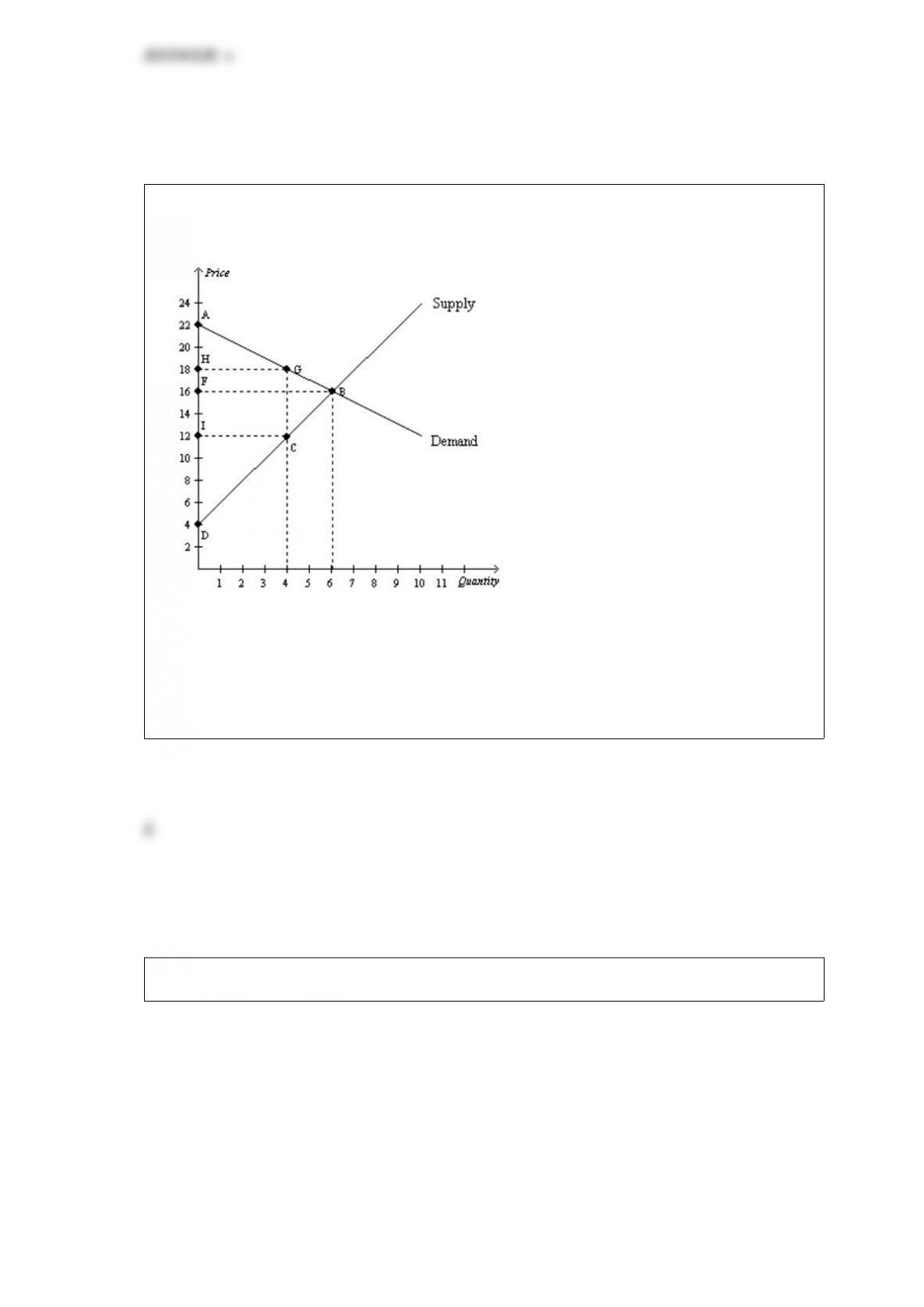
Figure 724
Refer to Figure 724. If 6 units of the good are produced and sold, then
a. efficiency is achieved in this market.
b. the marginal value to buyers equals the marginal cost to sellers.
c. the sum of consumer surplus and producer surplus is maximized.
d. All of the above are correct.
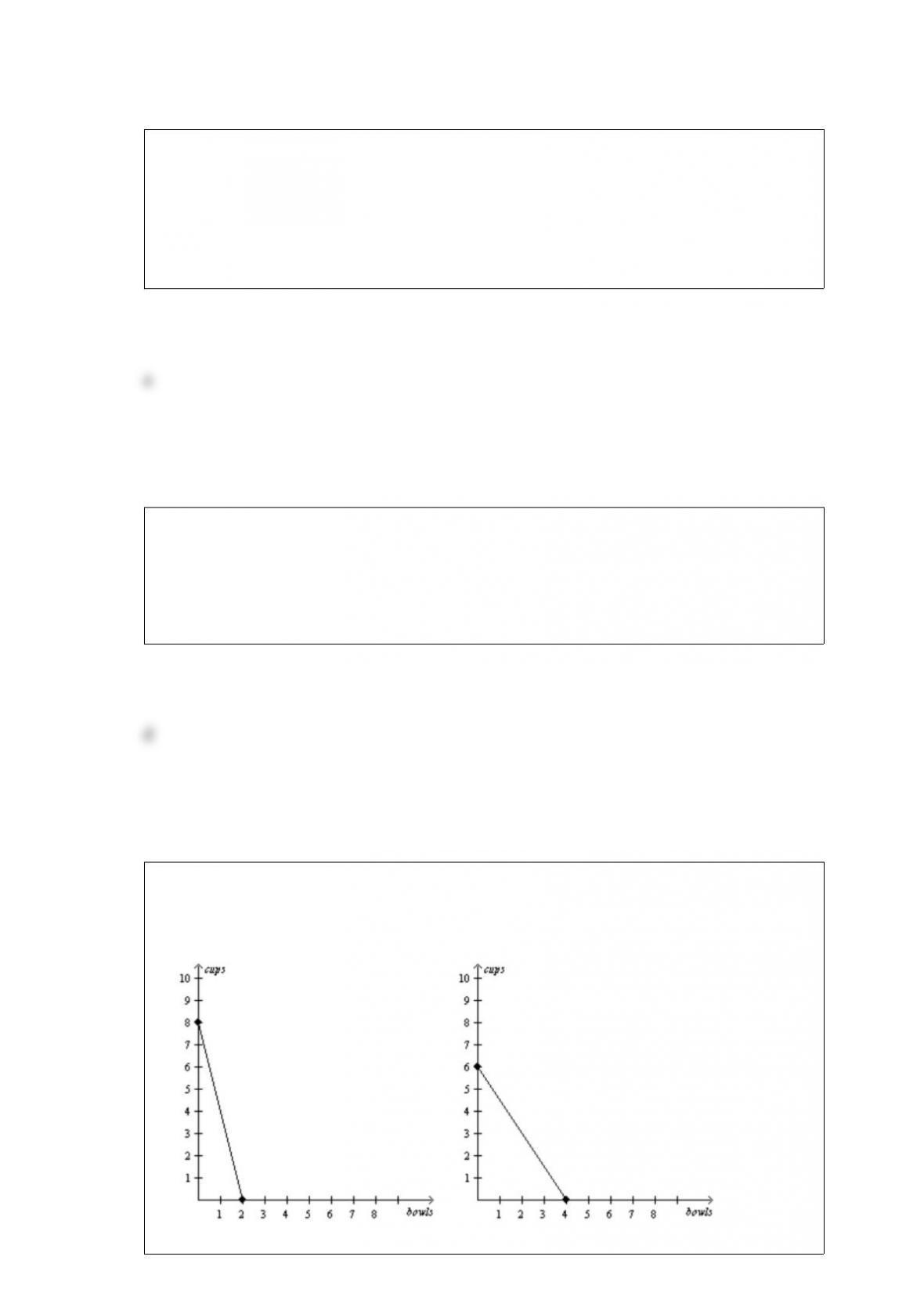
Figure 93. The domestic country is China.
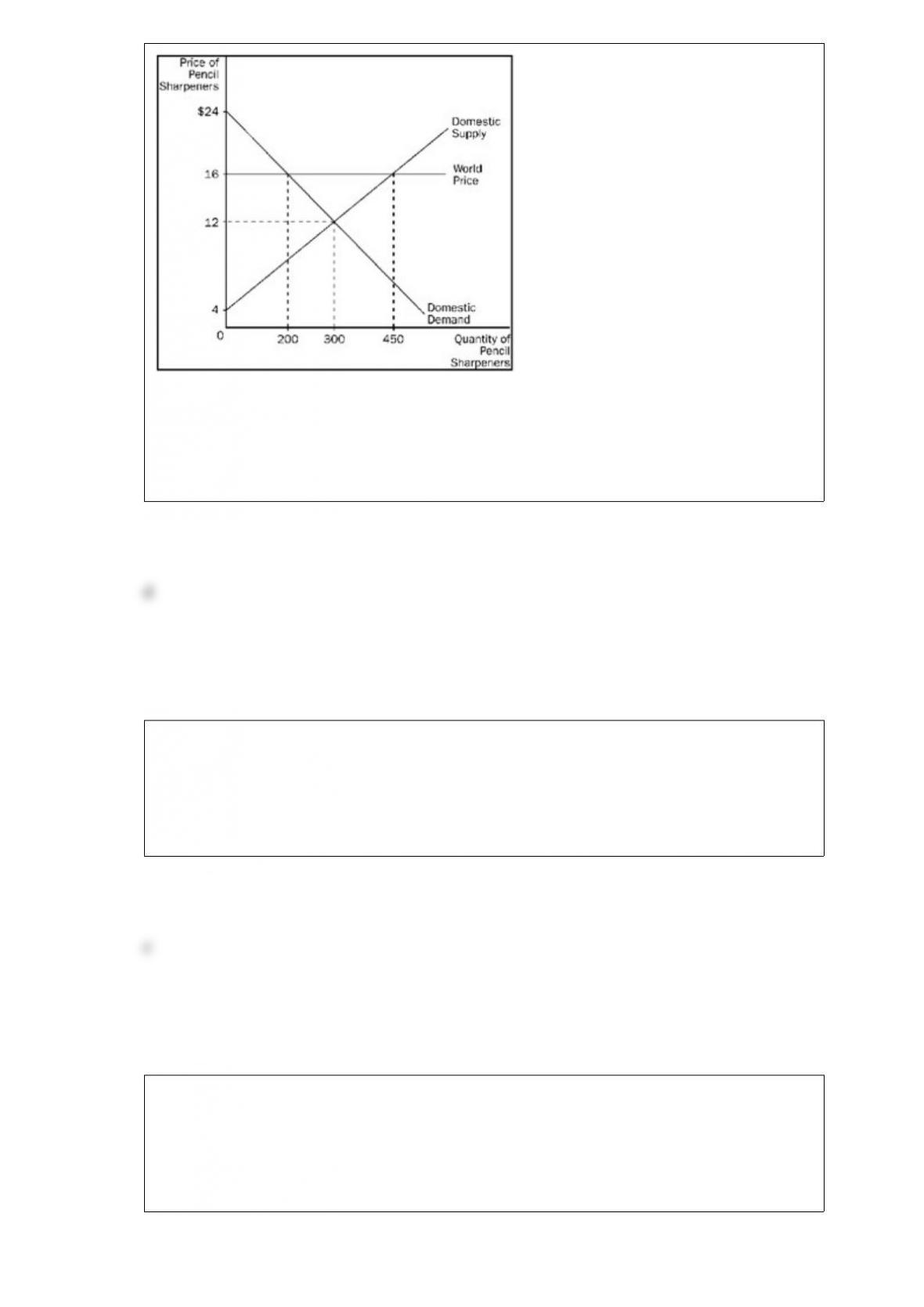
Refer to Figure 93. With trade, producer surplus in China is
a. $800.
b. $1,200.
c. $1,800.
d. $2,700.
The price paid by buyers in a market will decrease if the government
a. increases a binding price floor in that market.
b. increases a binding price ceiling in that market.
c. decreases a tax on the good sold in that market.
d. All of the above are correct.
There are fewer farmers in the United States today than 200 years ago because of
a. improvements in farm technology.
b. increased government regulations in farming.
c. an elastic demand for food.
d. environmental programs designed to reduce soil erosion.

Economists make use of assumptions, some of which are unrealistic, for the purpose of
a. teaching economics to people who have never before studied economics.
b. advancing their political agendas.
c. developing models when the scientific method cannot be used.
d. focusing their thinking.
The phenomenon of scarcity stems from the fact that
a. most economies’ production methods are not very good.
b. in most economies, wealthy people consume disproportionate quantities of goods and
services.
c. governments restrict production of too many goods and services.
d. resources are limited.
Which of the following do economists not generally regard as a legitimate reason for
the government to intervene in a market?
a. to promote efficiency
b. to promote equality
c. to enforce property rights
d. to protect an industry from foreign competition

A certain production possibilities frontier shows production possibilities for two goods,
jewelry and clothing. Which of the following concepts cannot be illustrated by this
model?
a. the flow of dollars between sellers of jewelry and clothing and buyers of jewelry and
clothing
b. the tradeoff between production of jewelry and production of clothing
c. the opportunity cost of clothing in terms of jewelry
d. the effect of economic growth on production possibilities involving jewelry and
clothing
Assume, for Vietnam, that the domestic price of textiles without international trade is
higher than the world price of textiles. This suggests that, in the production of textiles,
a. Vietnam has a comparative advantage over other countries and Vietnam will import
textiles.
b. Vietnam has a comparative advantage over other countries and Vietnam will export
textiles.
c. other countries have a comparative advantage over Vietnam and Vietnam will import
textiles.
d. other countries have a comparative advantage over Vietnam and Vietnam will export
textiles.
Ray buys a new tractor for $118,000. He receives consumer surplus of $13,000 on his
purchase. Ray’s willingness to pay is
a. $13,000.
b. $105,000.
c. $118,000.
d. $131,000.

When economists make
a. positive statements, they are speaking not as scientists but as policy advisers.
b. positive statements, they are speaking not as scientists but as forecasters.
c. normative statements, they are speaking not as scientists but as policy advisers.
d. normative statements, they are speaking not as policy advisers but as modelbuilders.
When the nation of Duxembourg allows trade and becomes an importer of software,
a. residents of Duxembourg who produce software become worse off; residents of
Duxembourg who buy software become better off; and the economic wellbeing of
Duxembourg rises.
b. residents of Duxembourg who produce software become worse off; residents of
Duxembourg who buy software become better off; and the economic wellbeing of
Duxembourg falls.
c. residents of Duxembourg who produce software become better off; residents of
Duxembourg who buy software become worse off; and the economic wellbeing of
Duxembourg rises.
d. residents of Duxembourg who produce software become better off; residents of
Duxembourg who buy software become worse off; and the economic wellbeing of
Duxembourg falls.
Which of the following would not interfere with market equilibria?
a. a minimum wage
b. a rent control
c. a nonbinding price floor
d. a binding price ceiling
The term price takers refers to buyers and sellers in
a. perfectly competitive markets.
b. monopolistic markets.
c. markets that are regulated by the government.
d. markets in which buyers cannot buy all they want and/or sellers cannot sell all they
want.
If a increase in income decreases the demand for a good, then the good is a(n)
a. substitute good.
b. complementary good.
c. normal good.
d. inferior good.
Figure 318
Bintu’s Production Possibilities FrontierJuba’s Production Possibilities Frontier
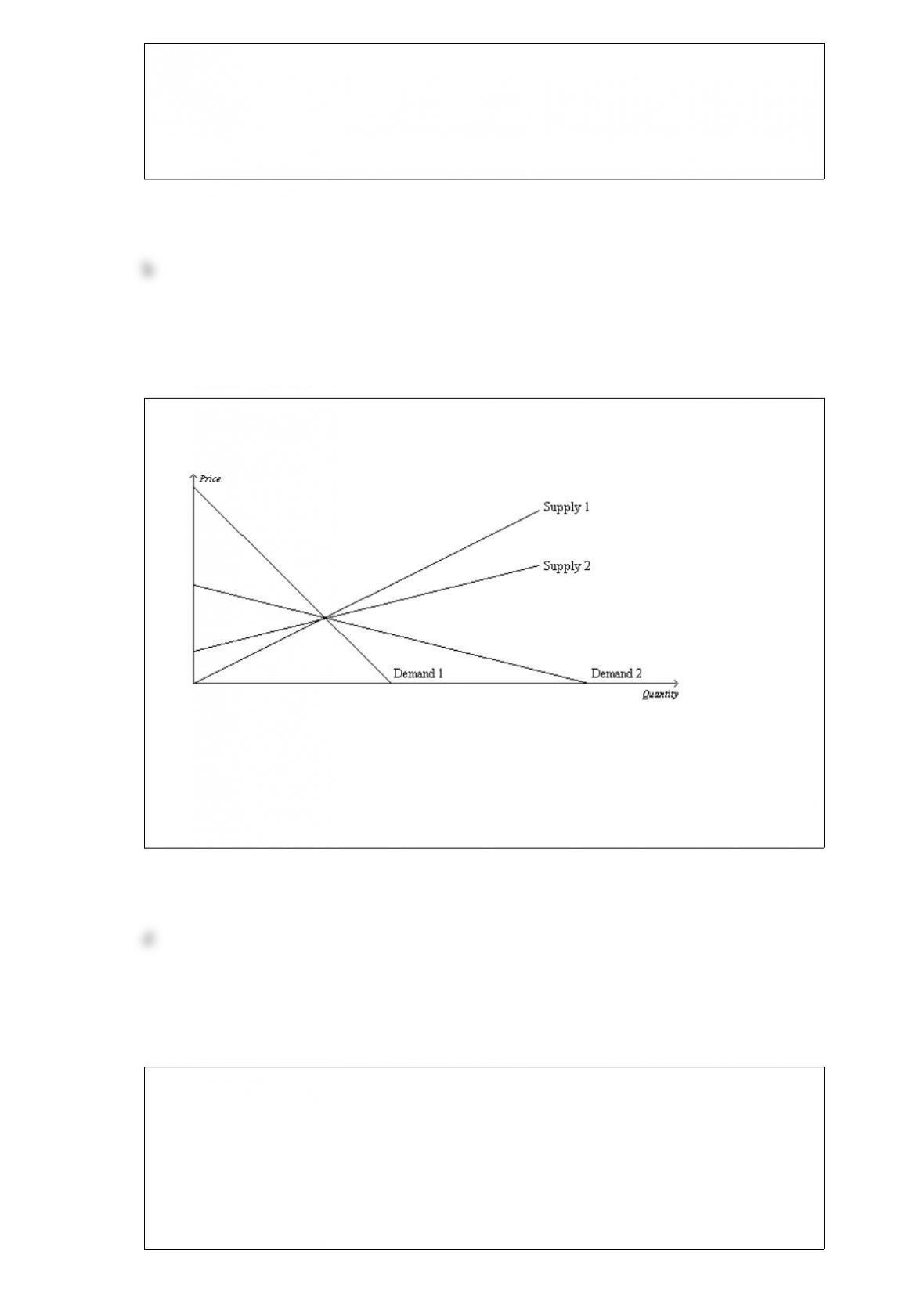
Refer to Figure 318. Bintu has an absolute advantage in the production of
a. bowls and Juba has an absolute advantage in the production of cups.
b. cups and Juba has an absolute advantage in the production of bowls.
c. both goods and Juba has an absolute advantage in the production of neither good.
d. neither good and Juba has an absolute advantage in the production of both goods.
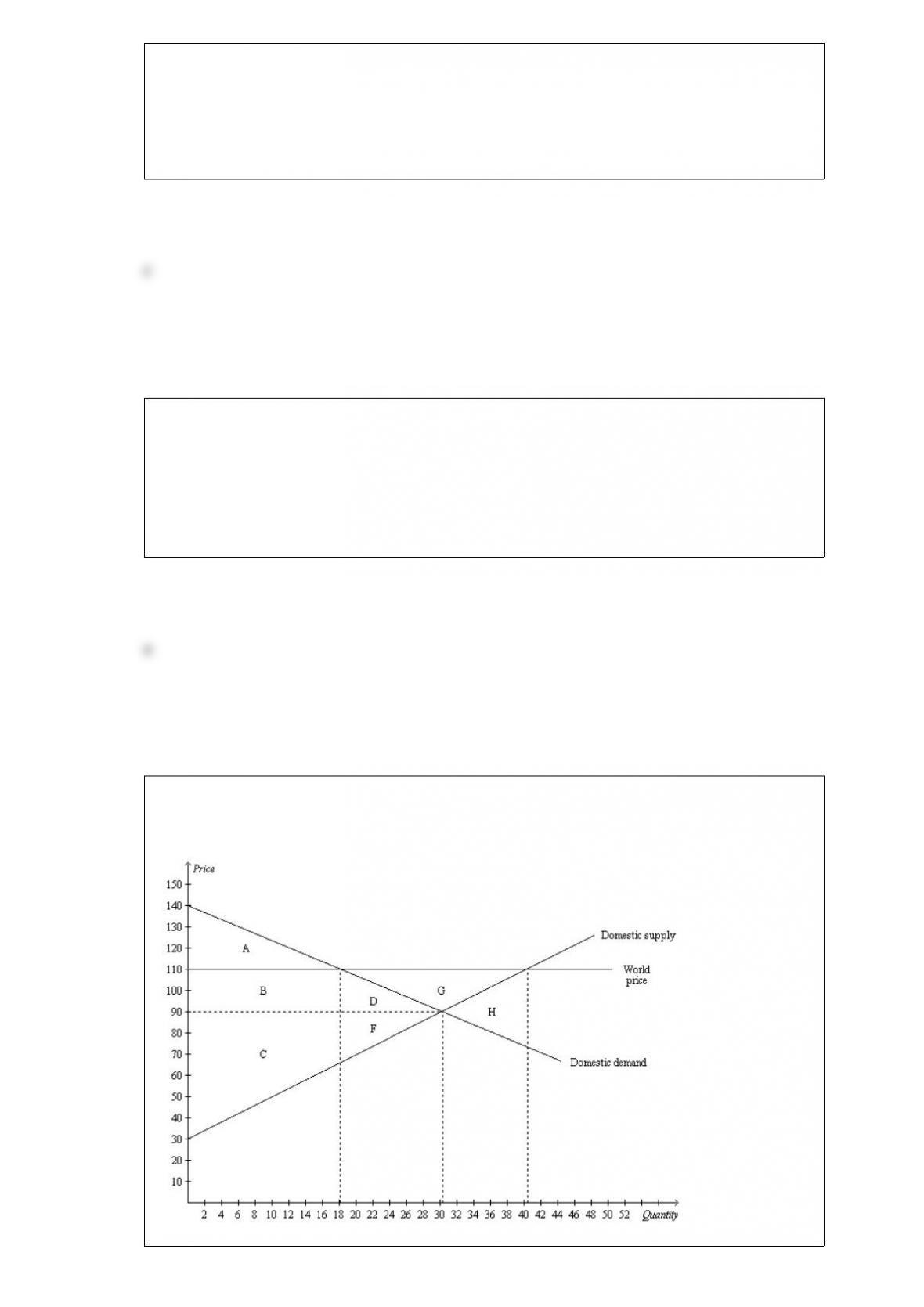
Figure 814
Refer to Figure 814. Which of the following statements is not correct?
a. Supply 2 is more elastic than supply 1.
b. Demand 2 is more elastic than demand 1.
c. Supply 1 is more inelastic than supply 2.
d. Demand 2 is more inelastic than supply 2.
Yvette buys and sells real estate. Two weeks ago, she paid $300,000 for a house on Pine
Street, intending to spend $50,000 on repairs and then sell the house for $400,000. Last
week, the city government announced a plan to build a new landfill on Pine Street just
down the street from the house Yvette purchased. As a result of the city’s announced
plan, Yvette is weighing two alternatives: She can go ahead with the $50,000 in repairs
and then sell the house for $290,000, or she can forgo the repairs and sell the house as it
is for $250,000. She should
a. keep the house and live in it.
b. go ahead with the $50,000 in repairs and sell the house for $290,000.
c. forgo the repairs and sell the house as it is for $250,000.
d. move the house from Pine Street to a more desirable location, regardless of the cost
of doing so.
Which of the following could be the price elasticity of demand for a good for which a
decrease in price would decrease revenue?
a. 0.8
b. 1
c. 1.8
d. 2.4
Figure 91
The figure illustrates the market for coffee in Guatemala.

Refer to Figure 91. When trade is allowed,
a. Guatemalan producers of coffee become better off and Guatemalan consumers of
coffee become worse off.
b. Guatemalan consumers of coffee become better off and Guatemalan producers of
coffee become worse off.
c. both Guatemalan producers and consumers of coffee become better off.
d. both Guatemalan producers and consumers of coffee become worse off.
Table 711
The only four producers in a market have the following costs:
SellerCost
Evan$50
Selena$100
Angie$150
Kris$200
Refer to Table 711. If Evan, Selena, Angie, and Kris sell the good, and the resulting
producer surplus is $700, then the price must have been
a. $200.
b. $300.
c. $500.
d. $700.
In the simple circularflow diagram, the participants in the economy are
a. firms and government.
b. households and firms.
c. households and government.
d. households, firms, and government.

If the price of oak lumber increases, what happens to consumer surplus in the market
for oak cabinets?
a. Consumer surplus increases.
b. Consumer surplus decreases.
c. Consumer surplus will not change consumer surplus; only producer surplus changes.
d. Consumer surplus depends on what event led to the increase in the price of oak
lumber.
The principle of comparative advantage does not provide answers to certain questions.
One of those questions is
a. Is it possible for specialization and trade to benefit more than one party to a trade?
b. Is it possible for specialization and trade to increase total output of traded goods?
c. Do opportunity costs play a role in people’s decisions to specialize in certain
activities?
d. What determines the price at which trade takes place?
In the housing market, supply and demand are
a. more elastic in the short run than in the long run, and so rent control leads to a larger
shortage of apartments in the short run than in the long run.
b. more elastic in the short run than in the long run, and so rent control leads to a larger
shortage of apartments in the long run than in the short run.
c. more elastic in the long run than in the short run, and so rent control leads to a larger
shortage of apartments in the short run than in the long run.
d. more elastic in the long run than in the short run, and so rent control leads to a larger
shortage of apartments in the long run than in the short run.

A survey of professional economists revealed that more than threefourths of them
agreed with fourteen economic propositions. Which of the following is not one of those
propositions?
a. The United States should not restrict employers from outsourcing work to foreign
countries.
b. The United States should withdraw from the North American Free Trade Agreement
(NAFTA).
c. The United States should eliminate agricultural subsidies.
d. Local and state governments should eliminate subsidies to professional sports
franchises.
Which of the following is not an example of a group responding to an incentive?
a. Students attend class because of an attendance policy that reduces their grade for
absences.
b. Consumers buy more of a product when it is on sale at a reduced price.
c. Universities offer fewer online classes when they generate more revenue than
traditional classes.
d. Employees work harder to earn higher commissions.