
In 1995, the United States threatened to impose 100 percent tariffs on ________ from
________ if it didn’t loosen its protectionist policies.
A) luxury cars; Japan
B) auto parts; Japan
C) brandies; France
D) light trucks; Germany
When wages increase the income effect of labor supply ________ the quantity of labor
supplied because ________.
A) reduces; the price of leisure has increased
B) reduces; workers acquire more of all normal goods when income increases
C) increases; the value of working has increased
D) increases; the price of leisure has increased
Under a system of marketable pollution permits the government:
A) chooses a level of pollution.
B) distributes permits to polluting firms.

C) allows firms to trade permits.
D) all of the above
When the price of peanuts falls:
A) the demand for peanuts decreases.
B) the demand for peanuts increases.
C) the quantity demanded of peanuts decreases.
D) the quantity demanded of peanuts increases.
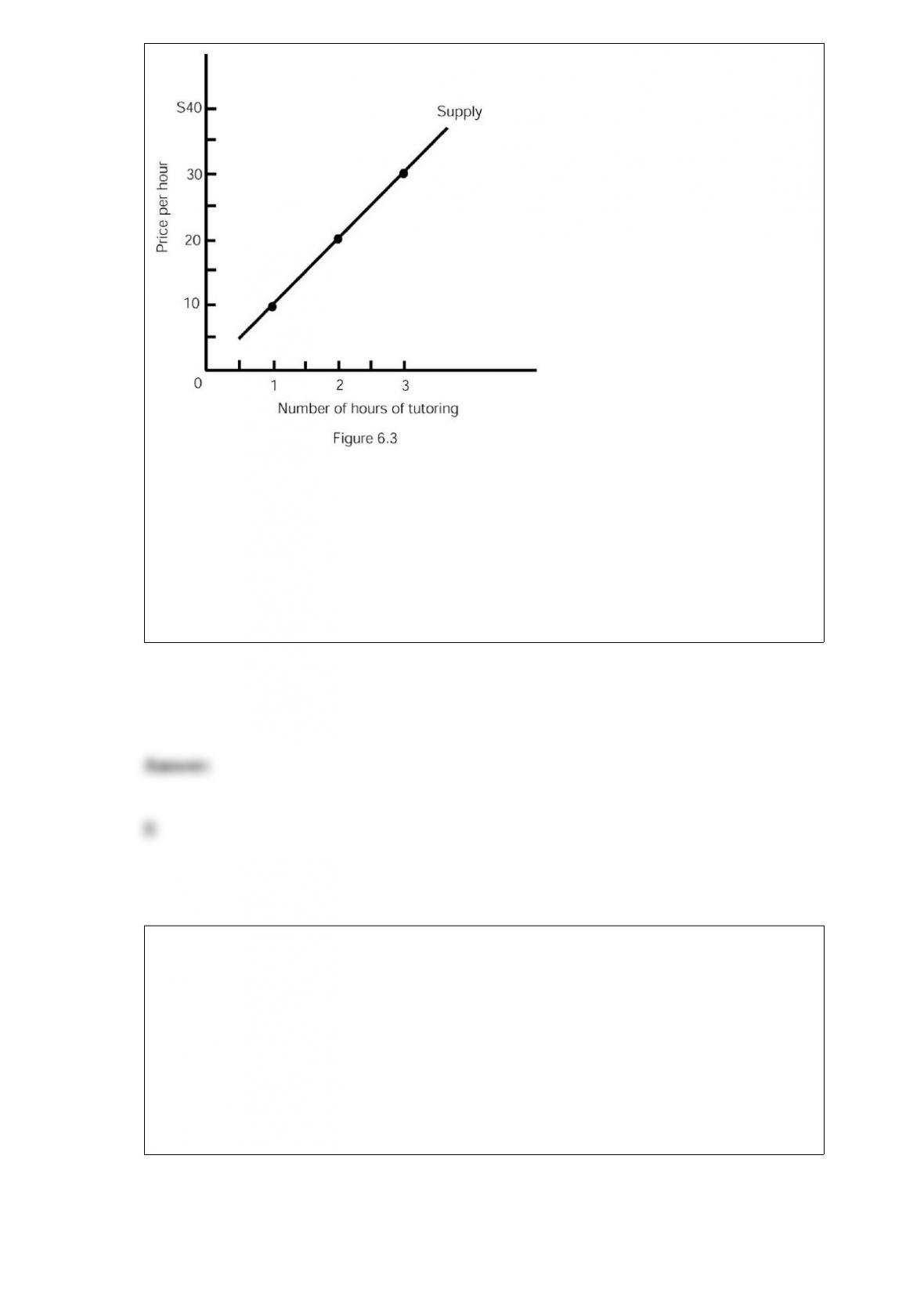
Refer to Figure 6.3. If the price of one hour of tutoring falls from $30 to $20, then
producer surplus will:
A) increase.
B) decrease.
C) not change.
D) cease to exist.
Under which conditions might diseconomies of scale result?
A) hampered coordination brought about by bureaucracy
B) decreasing costs of inputs
C) increasing output prices
D) usage of a large amount of indivisible inputs by the firm
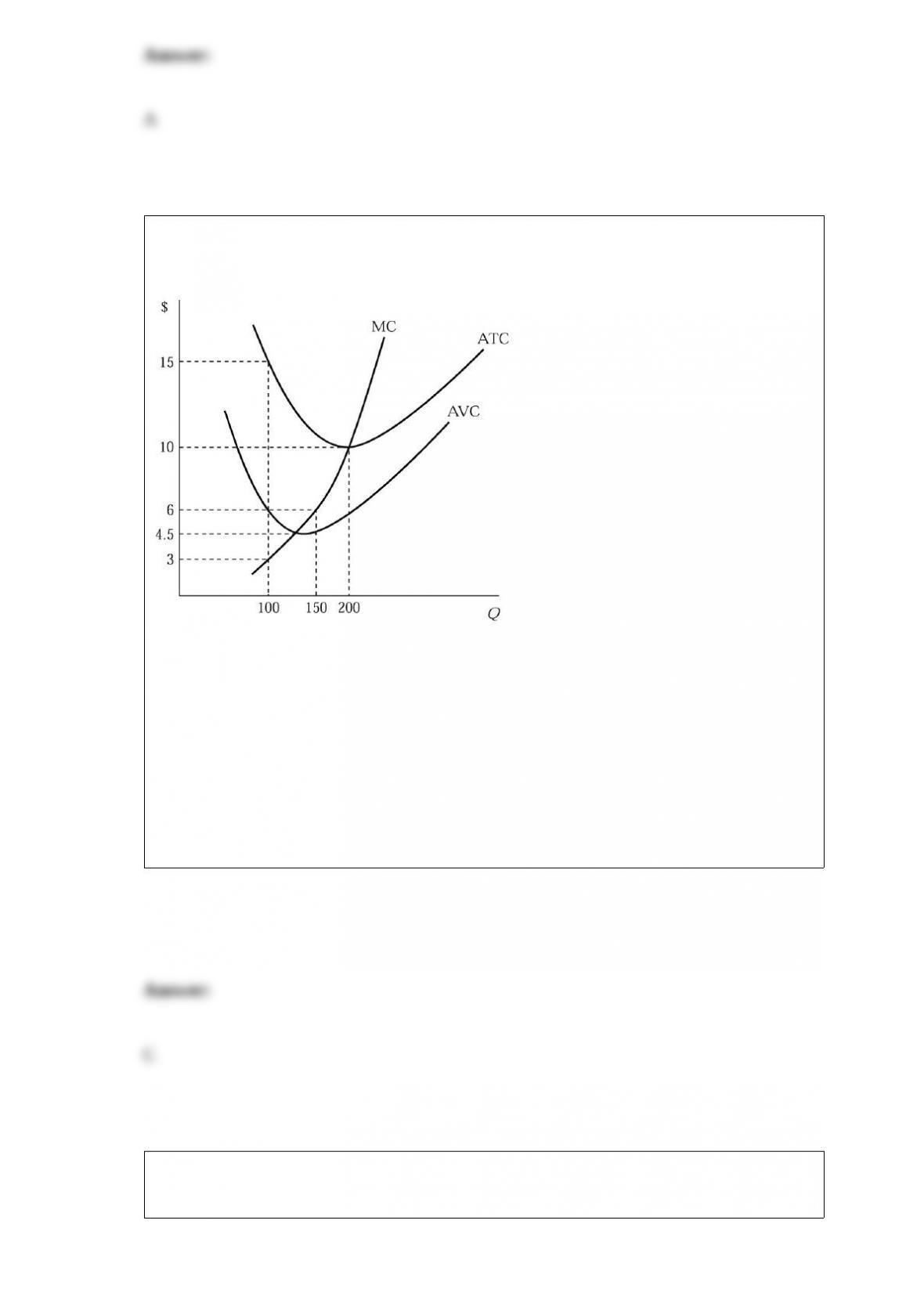
Figure 9.3 shows the cost structure of a firm in a perfectly competitive market. If the
market price is $3 and the firm shuts down in the short run, its profit is:
Figure 9.3
A) -$300.
B) -$600.
C) -$900.
D) -$1,200.
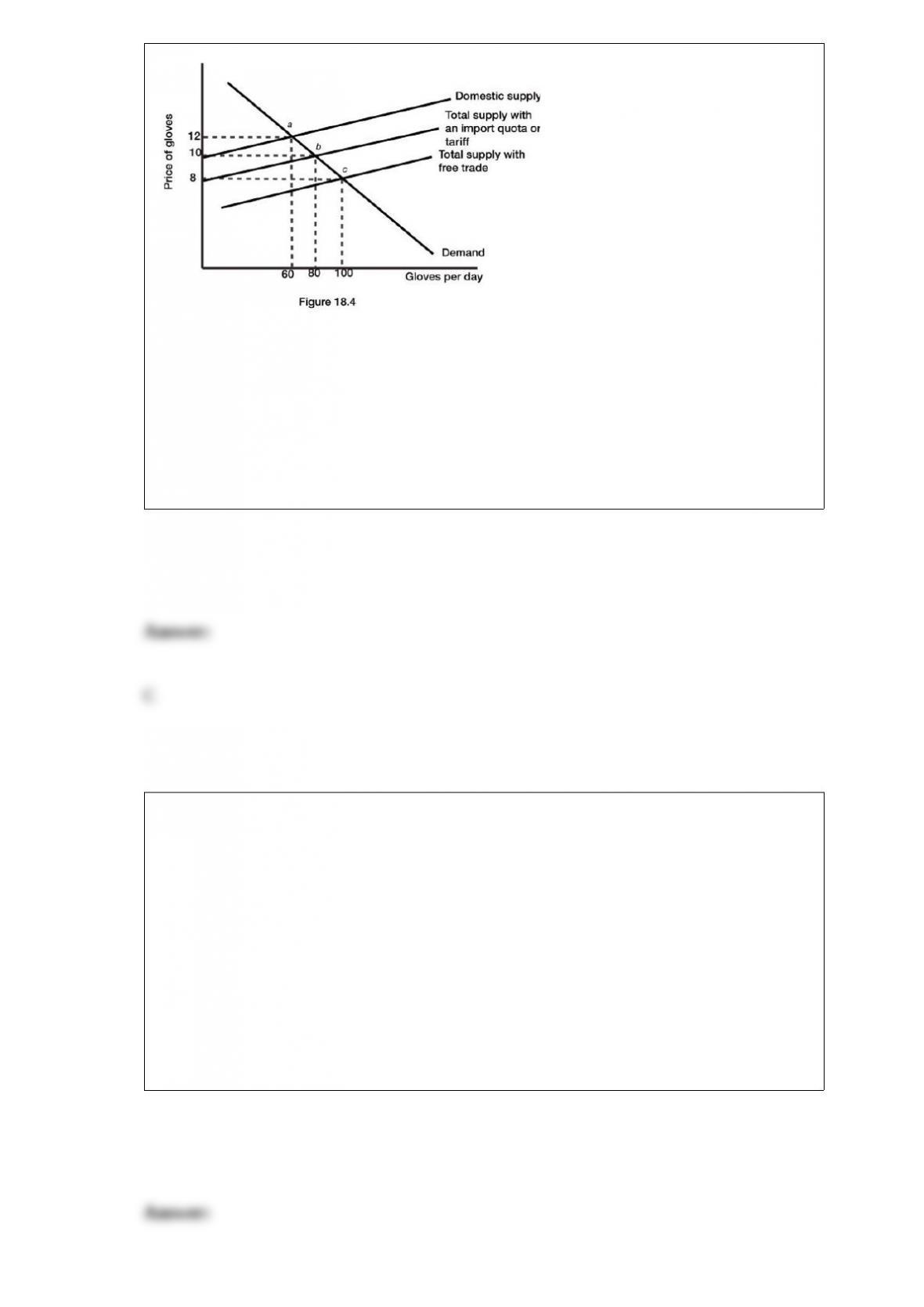
Refer to Figure 18.4. With an import ban, how many gloves are produced domestically
in Duckland?
A) 100
B) 80
C) 60
D) 0
Joe is in the market for a mattress. He is deciding between two different mattresses: one
that is fairly expensive but offers a free 20-year manufacturer’s warranty and another
that is lower-priced but only offers a on-year manufacturer’s warranty. Joe’s decision to
purchase the more expensive mattress would indicate that:
A) Joe has a high level of income.
B) Joe is not price sensitive.
C) Joe interpreted the manufacturer’s warranty as a quality indicator.
D) Joe is not a utility maximizer.
A situation in which a country does NOT trade with another country is called:
A) autarky.
B) free trade.
C) comparative advantage.
D) specialization.
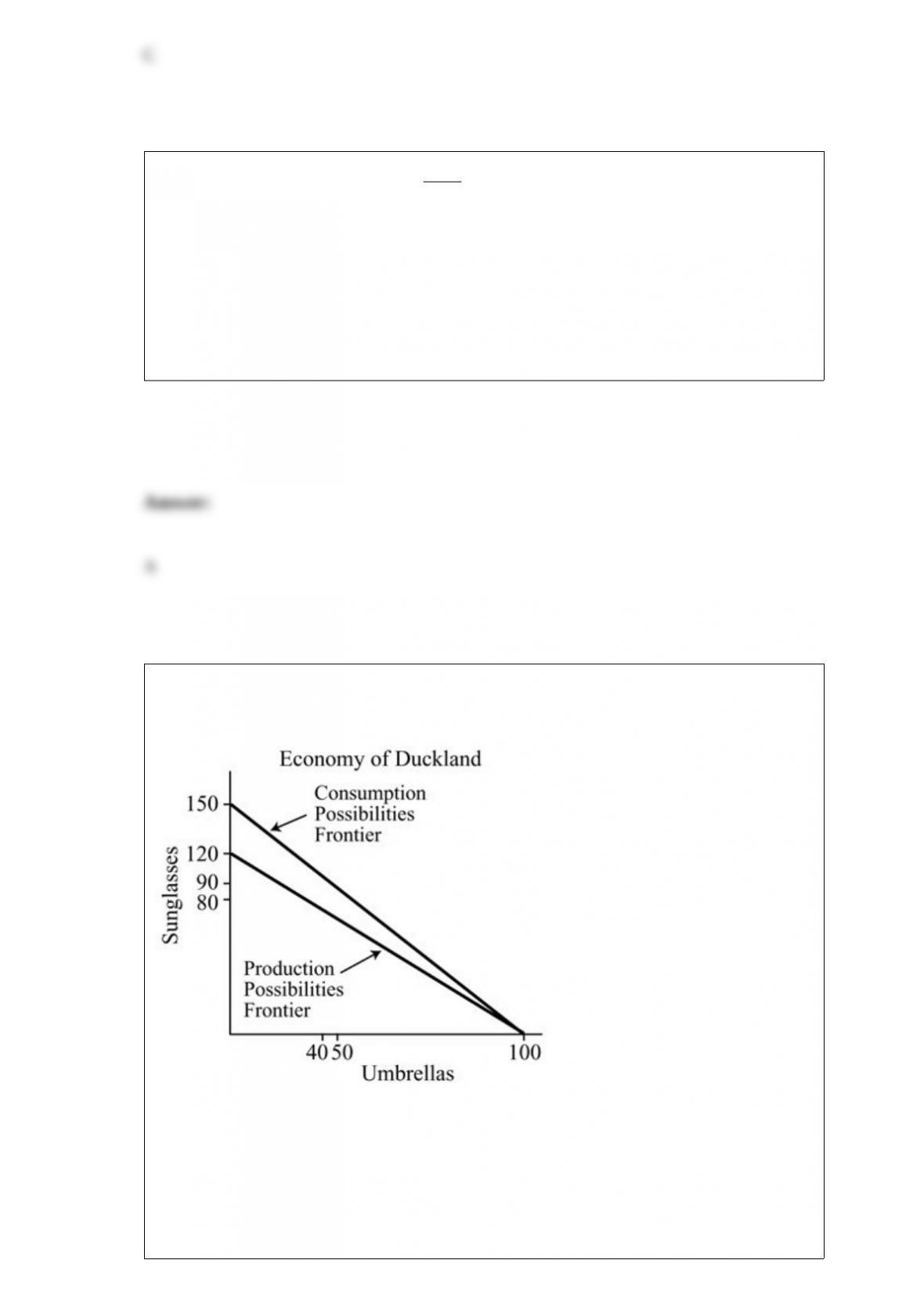
Figure 18.1
Refer to Figure 18.1. After trade and specialization begin, the maximum amount of
sunglasses that Duckland can consume is:
A) 90.

B) 100.
C) 150.
D) 40.
A market failure could be caused by:
A) firms not bearing the full costs of production.
B) firms competing against each other for customers.
C) profit.
D) capitalism.
According to the marginal principle, a rational individual should undertake an economic
activity as long as the:
A) marginal benefit exceeds marginal cost.
B) marginal benefit is less than marginal cost.
C) marginal benefit equals marginal cost.
D) total benefit equals total cost.
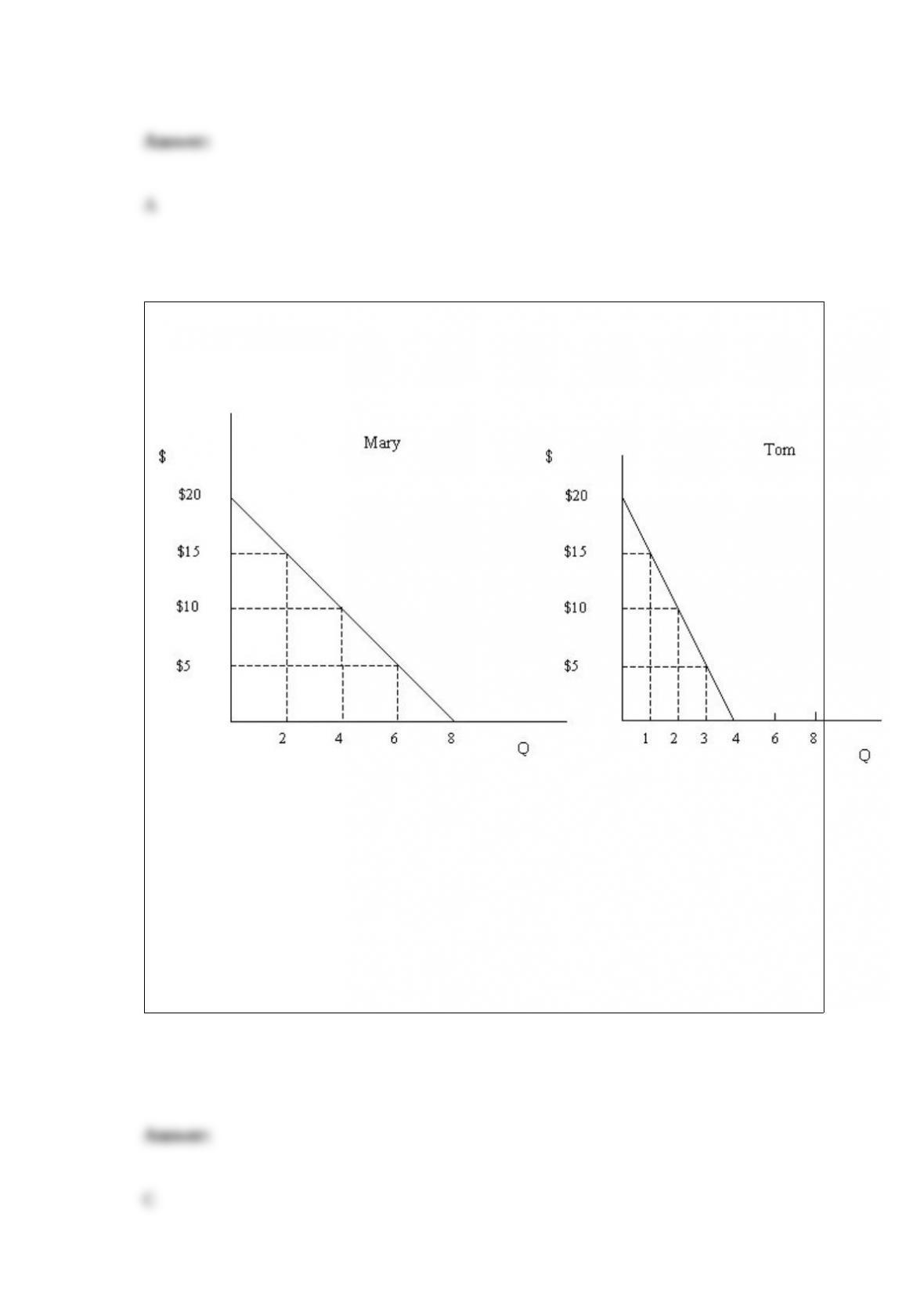
Refer to Figure 4.1 that shows Mary and Tom’s individual demand curves for meals per
week at Fratelli’s Italian Restaurant. Assuming Mary and Tom are the only consumers in
the market, what is the market quantity demanded at a price of $10?
Figure 4.1
A) 2
B) 4
C) 6
D) 8

If France can produce grapes at a lower opportunity cost than any other nation, France
is said to have a(n) ________ in the production of grapes.
A) autarky
B) absolute advantage
C) comparative disadvantage
D) comparative advantage
An example of a good that is nonrival in consumption is:
A) a music CD.
B) a radio broadcast of a song.
C) a ticket to a concert.
D) a guitar.
If two firms use a tit-for-tat scheme to maintain cartel pricing and one firm chooses a
low price in the current time period then:
A) that firm will also choose a low price in the next time period.
B) that firm will also choose a high price in the next time period.
C) the other firm will choose a low price in the next time period.
D) the other firm will choose a high price in the next time period.
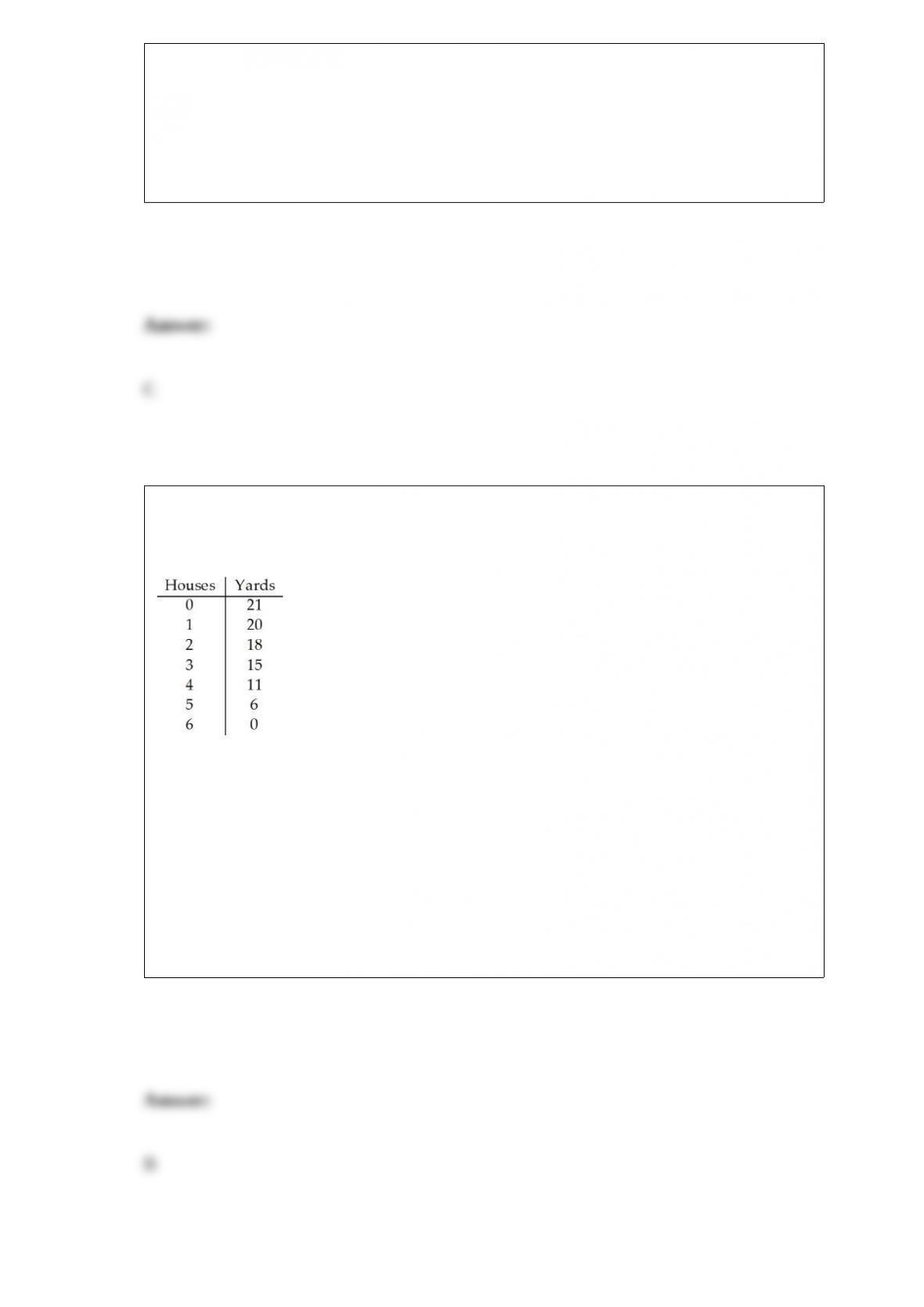
A group of people has formed a house cleaning and yard maintenance business. The
number of houses or yards that they can clean or maintain in any given day is depicted
in Table 2.1. As the group cleans more houses, the opportunity cost of doing yard work:
Table 2.1
A) falls.
B) rises.
C) stays the same.
D) becomes equal to the opportunity cost of cleaning houses.
Which of the following is an example of a normative question?
A) How will an increase in the price of gasoline affect taxi drivers?
B) What fraction of an income-tax cut will be spent on consumer goods?
C) Should the government provide free prescription drugs to senior citizens?
D) How will an increase in the minimum wage affect teenaged workers?
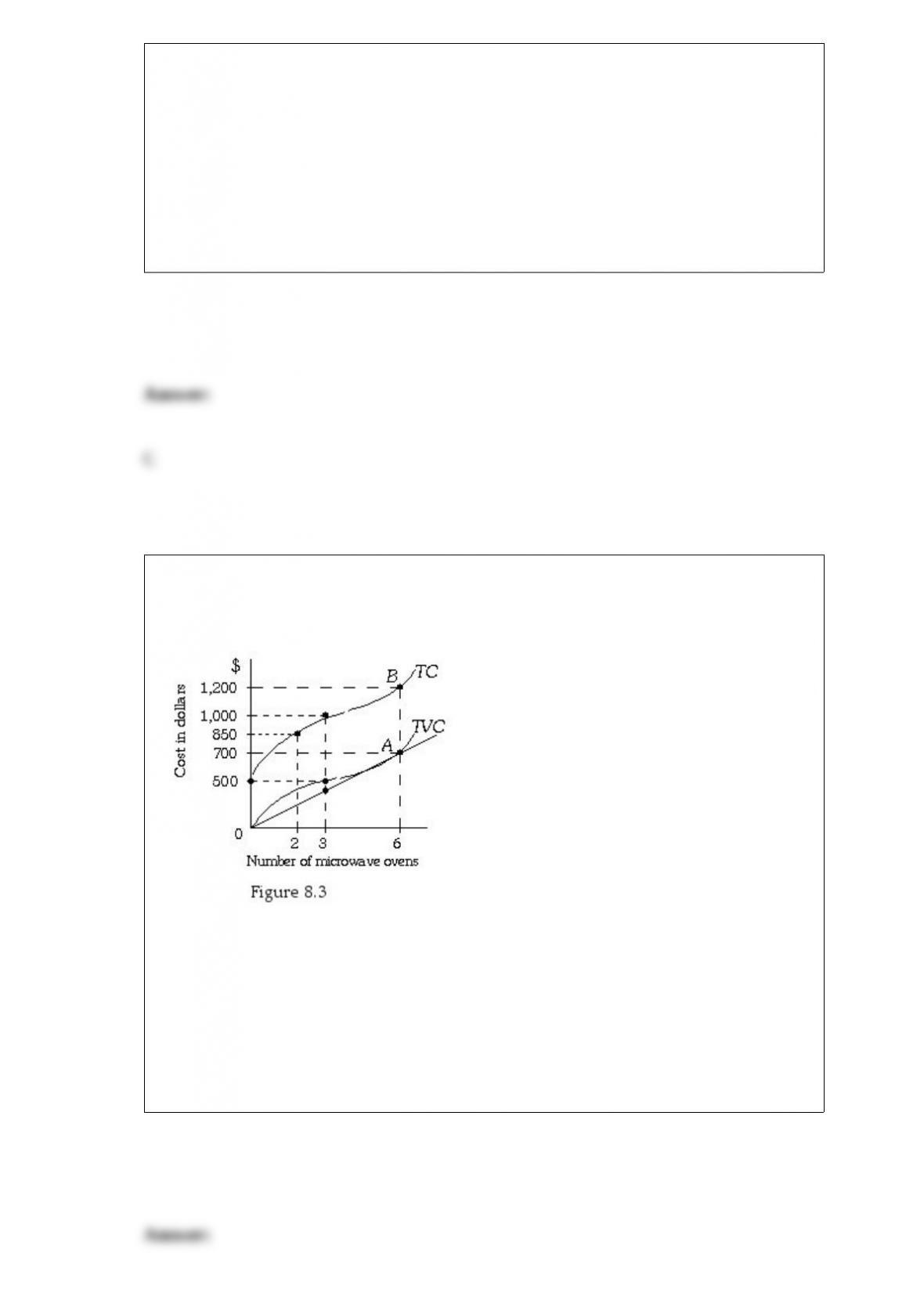
Refer to Figure 8.3. If two microwave ovens are produced, Micro Oven’s total variable
costs are:
A) $350.
B) $425.
C) $500.
D) indeterminate from this information.
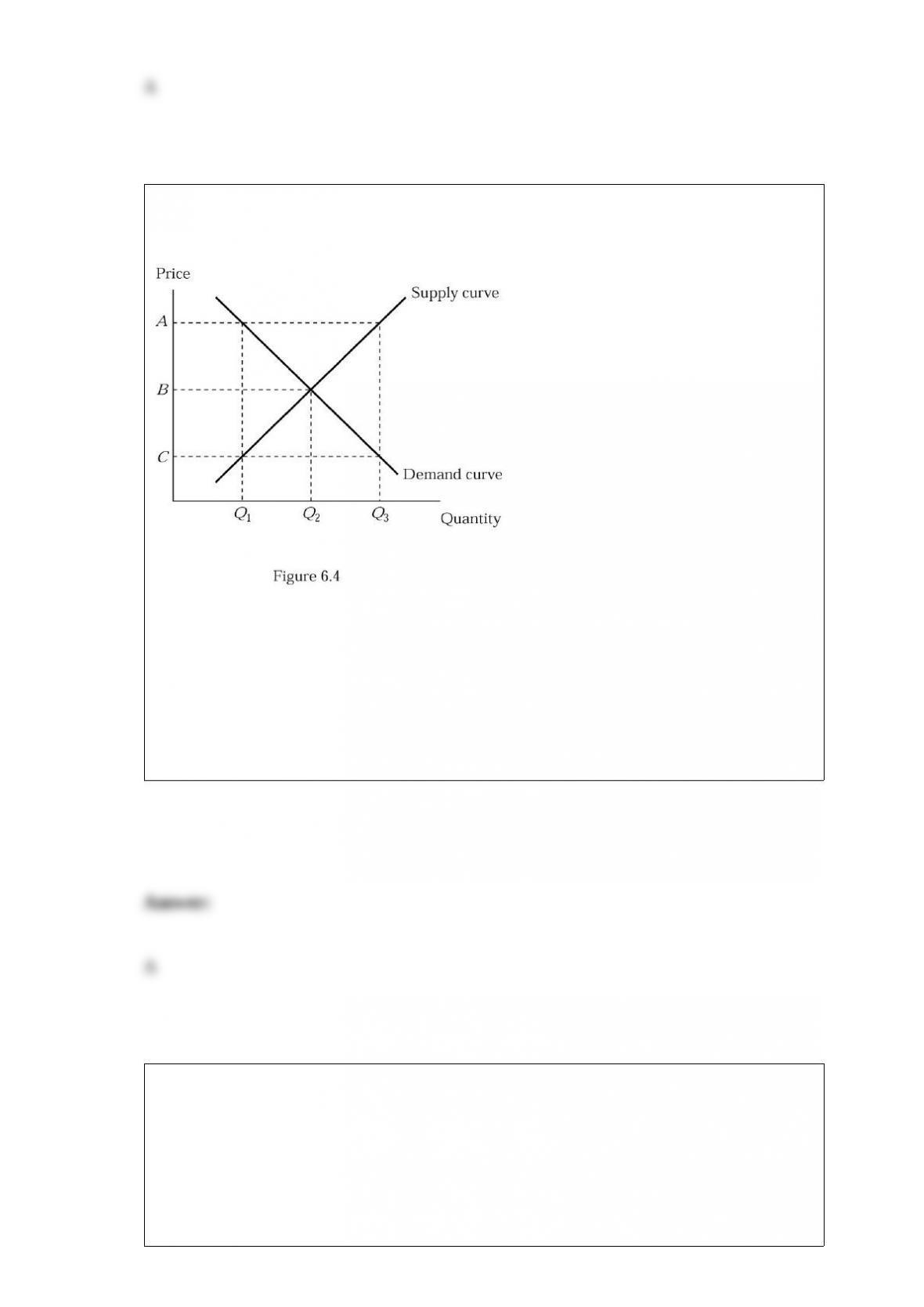
Refer to Figure 6.4. If a market experiences excess supply and fails to maximize total
surplus, a minimum price must have been set at:
A) A.
B) B.
C) C.
D) There is not sufficient information.
Suppose more people drive SUVs because they believe they are safer than cars. The
number of car related deaths may increase if:
A) an adverse selection problem causes people to drive more recklessly.
B) a moral hazard problem causes people to drive more recklessly.

C) there is adverse selection in the market for SUVs.
D) there is asymmetric information in the market for sedans.
The extra benefit resulting from a small increase in an activity is called the:
A) opportunity cost.
B) marginal benefit.
C) marginal cost.
D) diminishing returns of the activity.
Suppose that the price of New York style slices of pizza is $4 each. Matthew is willing
to pay $6 for the first slice, James is willing to pay $5 for the second slice, Jessica is
willing to pay $4 for the third slice, and Tammy is willing to pay $3 for the fourth slice.
Which consumer will NOT buy pizza slices?
A) Matthew
B) James
C) Jessica
D) Tammy

Recall the Application about the incentives to buy hybrid vehicles to answer the
following question(s).
In the Application, which of the following increased the incentive to buy hybrid
vehicles?
A) Purchases of hybrid vehicles qualified for a $3400 subsidy from the federal
government.
B) Oil prices decreased.
C) Hybrid vehicles were more expensive than regular vehicles.
D) Hybrid vehicles had similar emissions as the non-hybrid vehicles.
Recall the Application about determining the optimal level of methane abatement
to answer the following question(s).
Recall the Application. Applying the marginal principle to methane reduction suggests
that efforts at reduction should:
A) target the sources of methane that are cheapest to abate, or recover, first.
B) target the most costly to recover sources of methane first.
C) continue until methane is reduced to zero metric tons because the harm from

methane is so high.
D) not be undertaken because livestock is one of the major sources of methane, and
livestock is not an industrial source of pollution.
If the price elasticity of supply is 1, supply is:
A) unaffected by price changes.
B) inelastic.
C) unitary elastic.
D) elastic.
Kaitlyn and Larissa have formed a dog bathing and grooming business. The number of
dogs they can bathe or groom in any given day is depicted in Table 2.1.
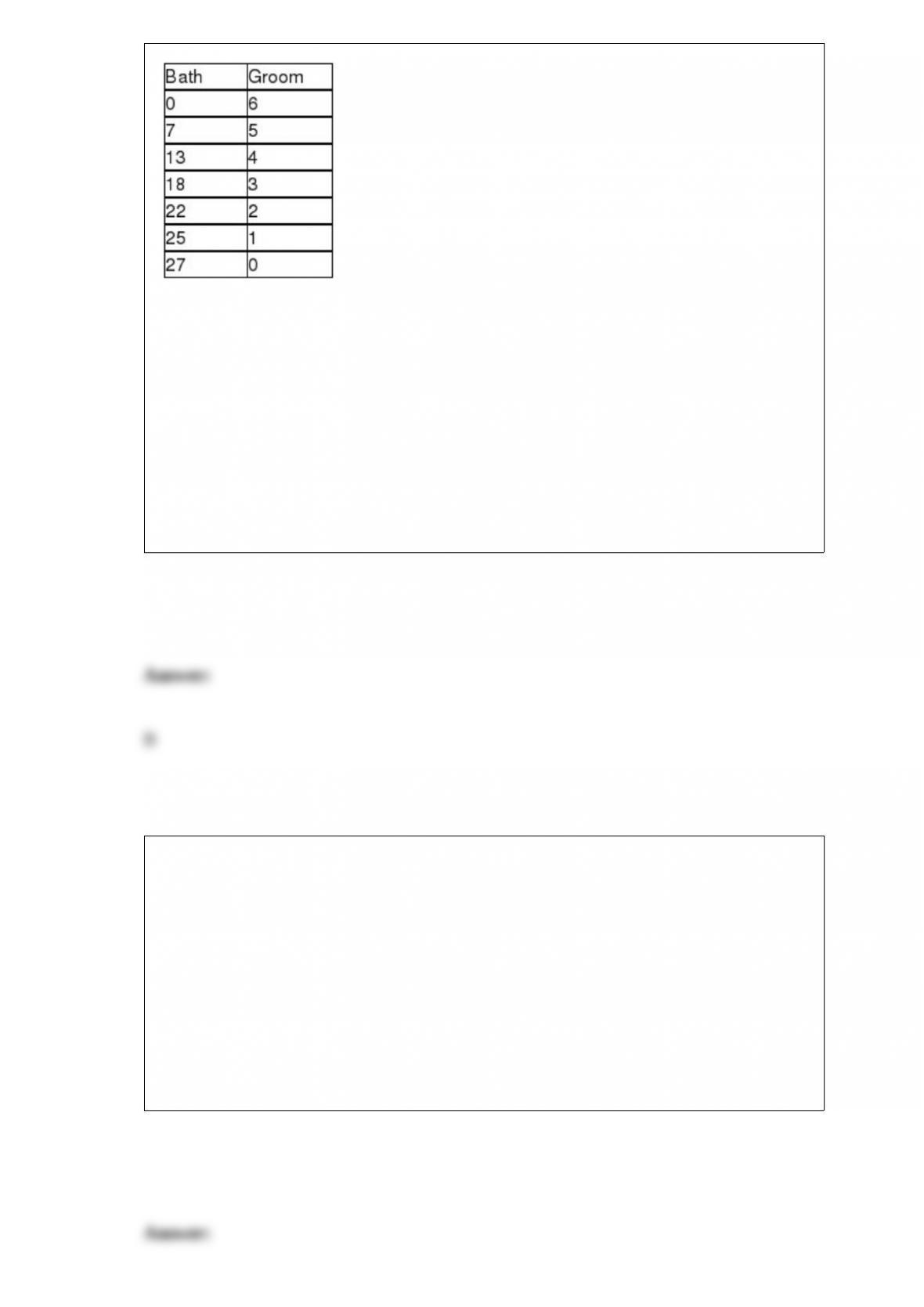
Table 2.1
As they groom more dogs, the opportunity cost of grooming additional dogs:
A) falls.
B) rises.
C) remains constant.
D) depends on the prices being charged.
An advantage of pollution taxes that is NOT offered by command-and-control policies
is that:
A) with a pollution tax zero pollution is produced.
B) a pollution tax decreases the price of the polluting good.
C) with a pollution tax, firms have flexibility in their choice of strategies to use to clean
up pollution.
D) a pollution tax decreases the demands for goods that cause pollution.
The short run can be defined as any period of time:
A) less than one year.
B) in which some inputs are fixed.
C) in which all inputs are variable.
D) in which price is fixed.
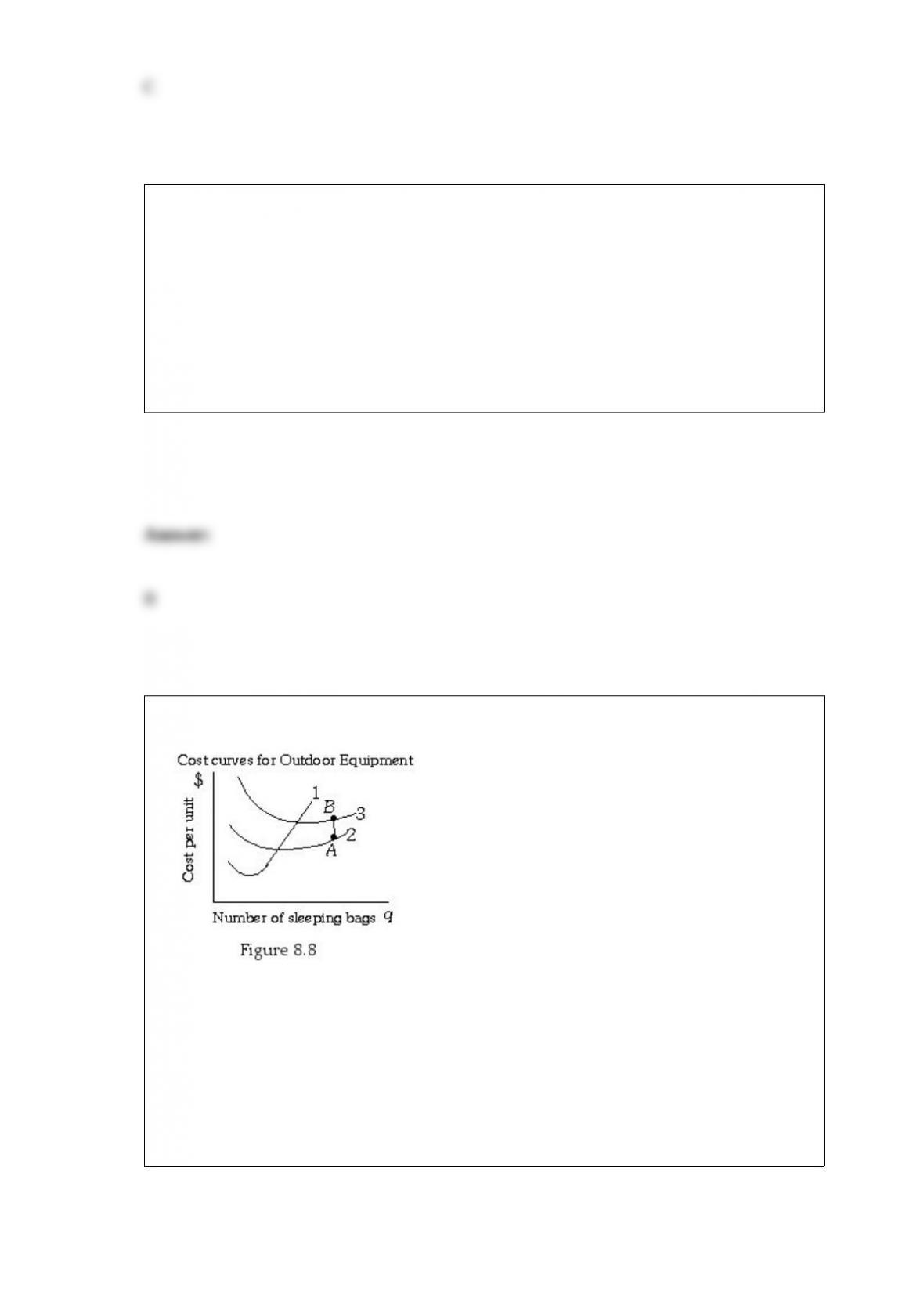
Refer to Figure 8.8. Curve 3 is Outdoor Equipment’s:
A) marginal cost curve.
B) average variable cost curve.
C) average total cost curve.
D) average fixed cost curve.

The percentage change in the quantity of bread demanded divided by the percentage
change in price of jelly measures:
A) the cross-price elasticity of demand for bread with respect to jelly.
B) the cross-price elasticity of demand for jelly with respect to bread.
C) the price elasticity of demand for bread.
D) the price elasticity of demand for jelly.
Public Broadcasting, in its fund drives, often appeals to viewers by saying, “without
you, there will be no Big Bird.” This is likely to ________ the free-rider problem and
lead to a ________ level of contribution to the public good.
A) increase; smaller
B) increase; larger
C) reduce; smaller
D) reduce; larger
Suppose that the quantity of cars supplied exceeds the quantity of cars demanded. We
would expect that:
A) the price of cars will increase.
B) the price of cars will decrease.
C) the supply will increase (supply will shift to the right) to meet the demand.
D) the demand will decrease (demand will shift to the left) to meet the supply.