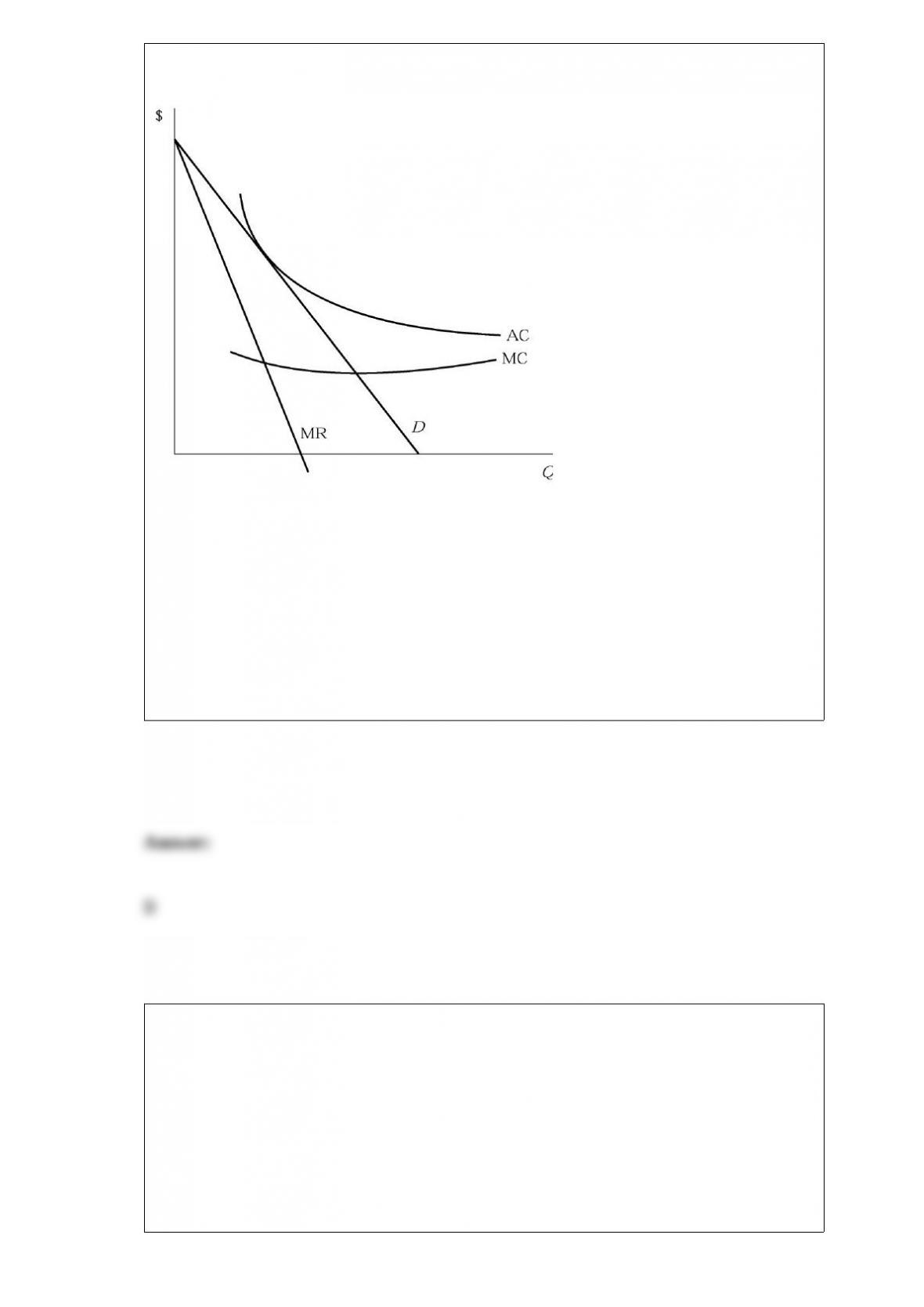
The monopolistic competitive industry in Figure 11.5 will tend to:
Figure 11.5
A) contract.
B) remain the same size.
C) expand.
D) go out of business.
An example of a public good is:
A) a levee.
B) a monopoly.
C) profit.
D) imperfect information.

According to this Application, those communities that were more exposed to imports
had larger increases in workers receiving:
A) food stamps.
B) unemployment insurance.
C) disability payments.
D) all of the above.
The duopolists’ dilemma refers to the situation in which:
A) duopolists would be better off maintaining high prices but face an incentive to
choose a low price.
B) duopolists can only earn high profits by breaking the law.
C) duopolists who are engaged in price fixing have an incentive to report the behavior
to the government.
D) duopolists do not have a dominant strategy.

When the wage increases:
A) all workers will work more hours.
B) all workers will work fewer hours.
C) some workers will work more hours and some workers will work fewer hours, but
on average, hours worked will increase.
D) some workers will work more hours and some workers will work fewer hours, but
we don’t know whether average hours will increase or decrease.
Which of the following did NOT directly cause the worldwide recession in 2007-2008?
A) the decision by the government to bailout banks in 2008
B) easy access to credit in the U.S.
C) a large number of home purchasers who were unable to afford the homes
D) booming housing prices that ultimately dropped
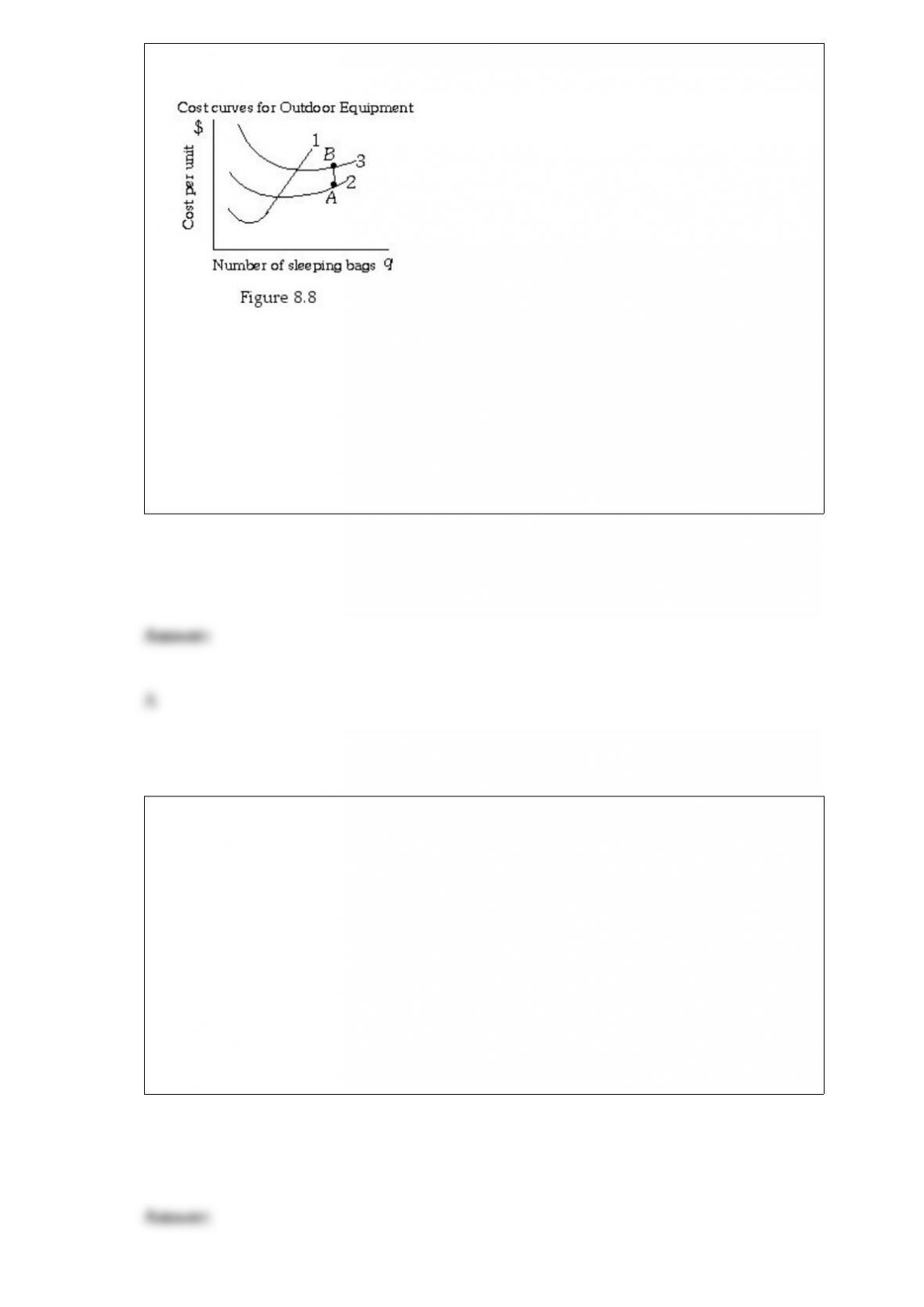
Refer to Figure 8.8. Curve 1 is Outdoor Equipment’s:
A) marginal cost curve.
B) average variable cost curve.
C) average total cost curve.
D) average fixed cost curve.
Suppose buyers in the used car market are willing to pay $5,000 for a plum
(high-quality) used car and $2,500 for a lemon (low-quality) used car. If buyers believe
that 50% of the used cars on the market are lemons (low quality), what would they be
willing to pay for a used car?
A) $2500
B) $3000
C) $3750
D) $5000

If a severe natural disaster reduced the population of a city, one would expect a natural
monopoly to:
A) raise prices.
B) split into two firms.
C) increase sales.
D) merge with a competitor.
A decrease in the amount of subsidies that a public university receives would result in:
A) an upward movement along the supply curve for college classes.
B) an downward movement along the supply curve for college classes.
C) a shift in the supply of college classes to the left.
D) a shift in the supply of college classes to the right.
Recall the Application about the decrease in the price of wool in the 1990s to
answer the following question(s). In the 1990s, the world price of wool decreased
by about 30 percent and prices have remained relatively low since then. In 2012,
an organization in New Zealand proposed that sheep shearing be added to the
Commonwealth Games and the Olympics as a spectator sport in an effort to
increase the awareness and the demand for wool.
Recall the Application. As the world price of wool decreased, the quantity of wool
supplied by individual ranchers would ________, and the quantity supplied in the
whole market would ________.
A) increase; increase
B) increase; decrease
C) decrease; decrease
D) decrease; increase
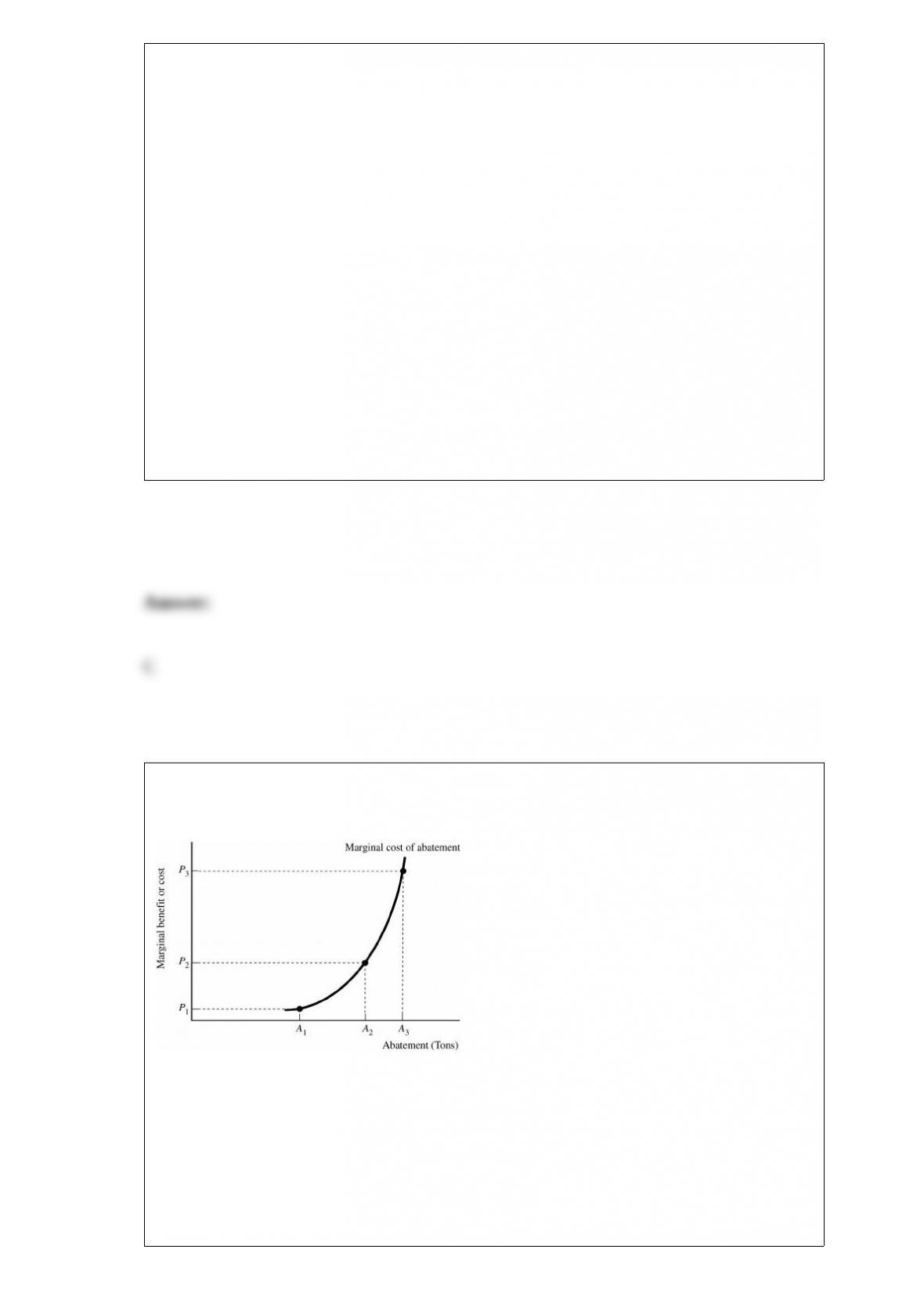
A firm that generates pollution is illustrated in Figure 16.1. Suppose the government is
considering changing the pollution tax from P3 to P2. That new policy would:
Figure 16.1
A) increase the marginal benefit to firms of abating, and thus encourage greater
abatement.
B) increase the marginal benefit to firms of abating, causing them to generate more
pollution.

C) reduce the marginal benefit to firms of abating, causing them to generate more
pollution.
D) reduce the marginal benefit to firms of abating, and thus encourage greater
abatement.
One result of adverse selection in the market for used cars is:
A) more lemons (low quality) may be offered for sale than plums (high quality).
B) more plums (high quality) may be offered for sale than lemons (low quality).
C) few lemons (low quality) are sold.
D) no used cars are sold.
Heterogeneous inputs in a perfectly competitive market will cause the industry to face
________ costs because as the firm produces a larger quantity, it is forced to use
________ productive inputs.
A) increasing; less
B) decreasing; less
C) increasing; more
D) decreasing; more

Advancements in technology in the U.S. have resulted in:
A) less U.S. imports.
B) an increase in demand for high-skilled workers.
C) less U.S. exports.
D) an increase in demand for low-skilled workers.
Suppose there are only 2 nations, Atlantis and Pacifica, and only two goods, surfboards
and kayaks. If Atlantis produces only surfboards, it can make 50 per day. If Atlantis
produces only kayaks, it can make 75 per day. If Pacifica produces only surfboards, it
can make 75 per day. If Pacifica produces only kayaks, it can make 75 per day. After
trade begins, ________ will specialize in the production of surfboards and ________
will specialize in the production of kayaks.
A) Atlantis; Atlantis
B) Pacifica; Pacifica
C) Atlantis; Pacifica
D) Pacifica; Atlantis
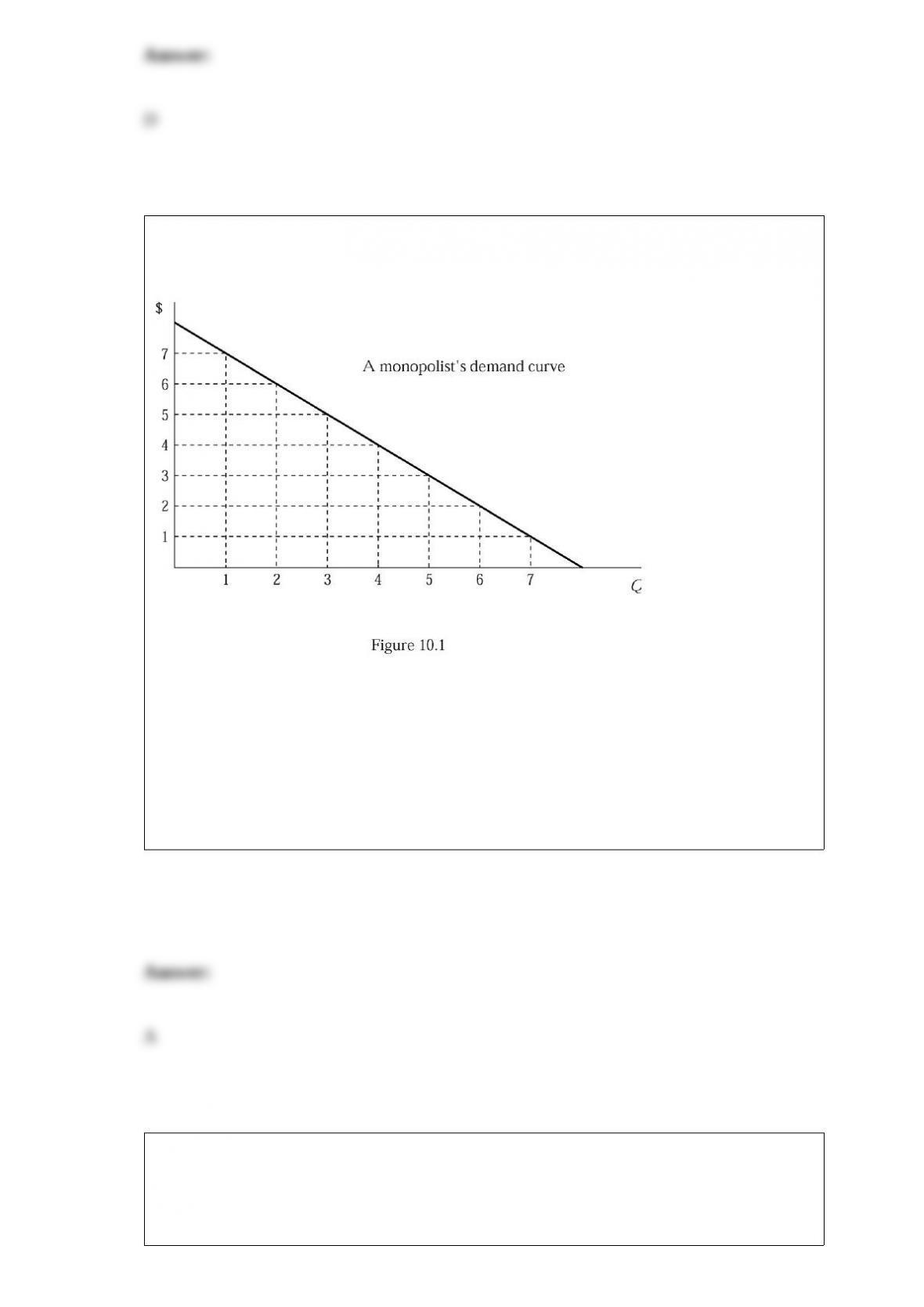
Figure 10.1 shows a monopolist’s demand curve. If the monopolist increases output
from two to three units, what is its marginal revenue?
A) $3
B) $5
C) $12
D) $15
Which of the following statements about consumer choice theory is TRUE?
A) Given the limitations dictated by people’s incomes and prices, it helps the consumer
choose a commodity bundle of the highest level of utility.
B) It provides insights into how consumers make decisions.
C) It helps us understand changes in consumption patterns.
D) All of the above are true about consumer choice theory.
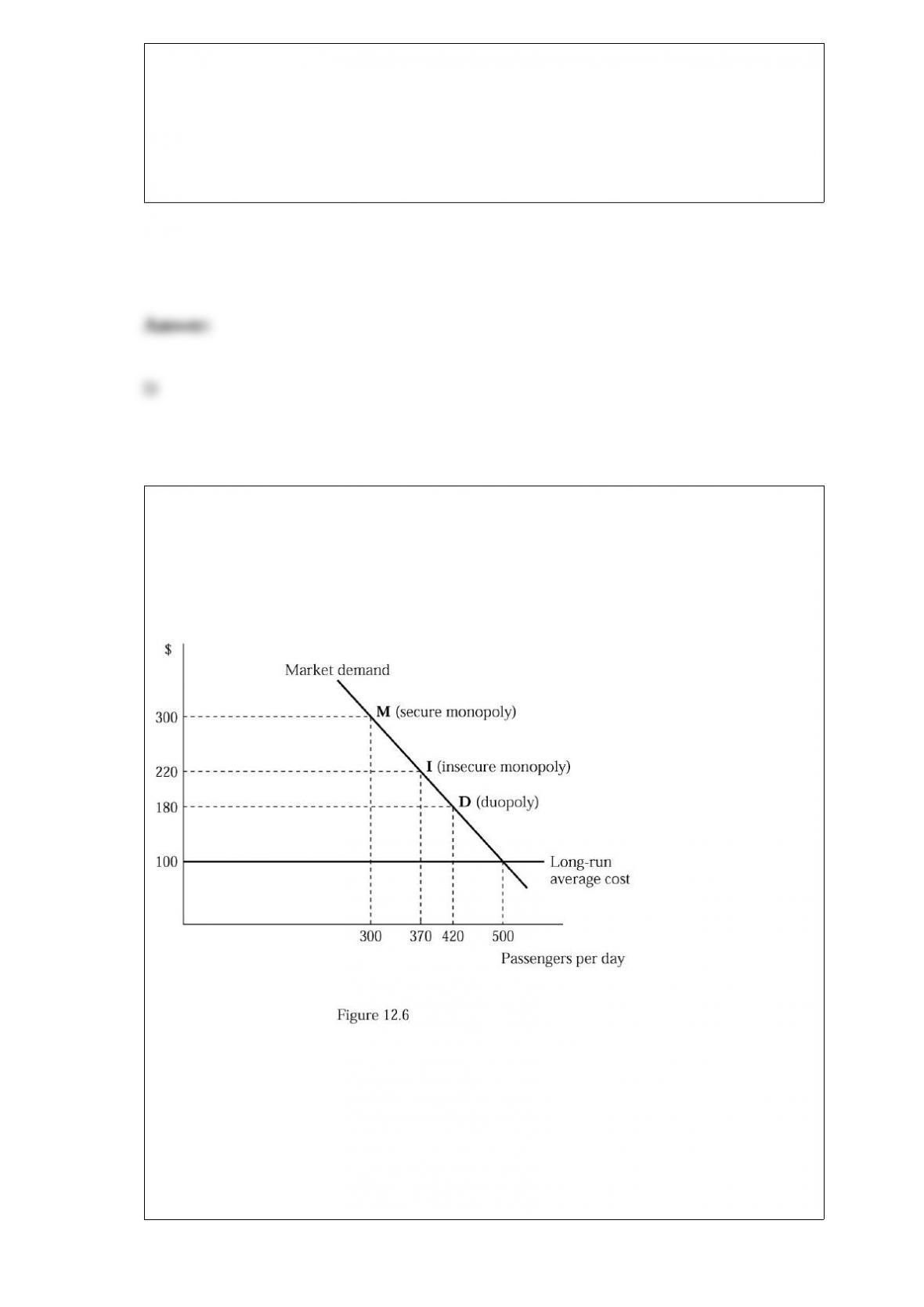
In Figure 12.6, airline Fly Smart is initially a secure monopoly between two cities X
and Y at point M, serving 300 passengers per day at the profit maximizing price of $300
per ticket. Suppose that Fly Smart discovers that a second airline is contemplating
entering the market. If the minimum market entry quantity is 130 passengers per day,
Fly Smart’s entry-deterring quantity is:
A) 500 passengers per day.
B) 420 passengers per day.
C) 370 passengers per day.
D) 300 passengers per day.

The weekly income earned in 2011 at that time could buy ________ standard baskets of
goods and services.
A) 1.70
B) 1.29
C) 1.54
D) 2.81
Bananas and apples are substitutes. When the price of bananas rises, and a
technological advance in apple production occurs at the same time:
A) the equilibrium price of apples rises and the equilibrium quantity of apples falls.
B) the equilibrium price of apples rises and the equilibrium quantity of apples rises.
C) the equilibrium price of apples rises and the equilibrium quantity of apples might
rise or fall.
D) the equilibrium quantity of apples rises and the equilibrium price of apples might
rise or fall.

Suppose that 100 firms operate in a perfectly competitive industry and each firm has the
same technology and cost structure. If each firm maximizes profits by selling 20 units
of output at $5.00, then the quantity supplied in the market at $5.00 is:
A) 2,000.
B) less than 2,000.
C) greater than 2,000.
D) zero.
If a good is available only to those who pay for it, the good is:
A) excludable but not necessarily rival.
B) excludable and rival.
C) rival but not necessarily excludable.
D) nonrival and nonexcludable.

Which one of the following is the best example of an oligopolistic industry?
A) long-distance telephone service
B) wheat growers
C) apple growers
D) public utilities
Which of the following is a characteristic of a monopolistically competitive market?
I. Each firm is a price-taker.
II. Firms sell slightly differentiated products.
III. Each firm faces a downward-sloping demand curve.
A) I only
B) I and II only
C) II and III only
D) I, II, and III
When John in searching for a particular product and the lowest price observed so far in

his search process is called:
A) search price.
B) discovered price.
C) marginal price.
D) reservation price.
The change in the quantity consumed that is caused by a change in real income, with
the relative prices held constant, refers to the:
A) substitution effect.
B) income effect.
C) equimarginal rule.
D) law of diminishing marginal utility.
Under which of the following conditions will an increase in demand cause a relatively
small increase in price?
A) If the shift of the demand curve is relatively small, the gap between the new demand
and the old supply will be relatively small.
B) If there is highly elastic demand, consumers are very responsive to changes in price.
C) If there is highly elastic supply, producers are very responsive to changes in price.
D) All of the above.
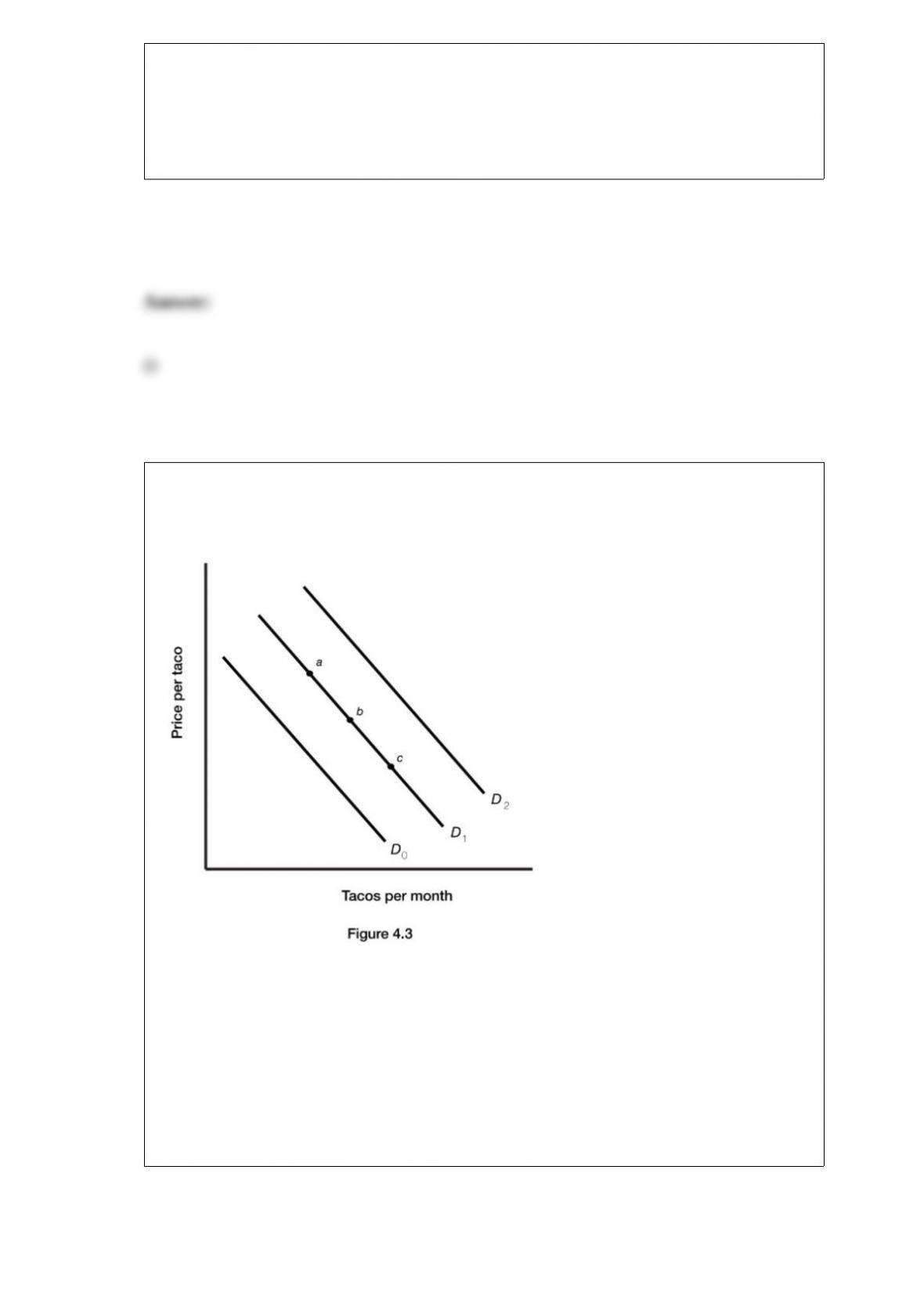
Figure 4.3 illustrates the demand for tacos. An increase in the number of consumers in
the market would bring about a movement from:
A) point a to point b.
B) point c to point a.
C) D2 to D1.
D) D0 to D2.

In a monopolistically competitive market, there:
A) are many firms selling an identical product.
B) is only one firm that sells many similar yet slightly different products.
C) are many firms that have slight control over the price they charge for their product.
D) are substantial barriers to entry.