
Consider a downward-sloping demand curve. When the price of a normal good
increases, the income and substitution effects
A) work in the same direction to increase quantity demanded.
B) work in the same direction to decrease quantity demanded.
C) work in opposite directions and quantity demanded increases.
D) work in opposite directions and quantity demanded decreases.
As a measure of competition in an industry, concentration ratios have several flaws.
One of these flaws is that concentration ratios
A) assume that all industries have low barriers to entry.
B) assume that a ratio less than 40 percent means an industry is perfectly competitive.
C) assume there are only four firms in an industry.
D) are calculated for the national market, even though competition in some industries is
mainly local.
The Gini coefficient for the United States in 1980 was 0.403. In 2011, the coefficient
was equal to 0.477. This means that
A) per capita income in the United States rose from 1980 to 2011.
B) there was a decrease in the amount of government transfer payments from 1980 to
2011.
C) cuts in federal income tax rates in the early 1980s and 2001 helped to reduce income
inequality.
D) income inequality increased from 1980 to 2011.
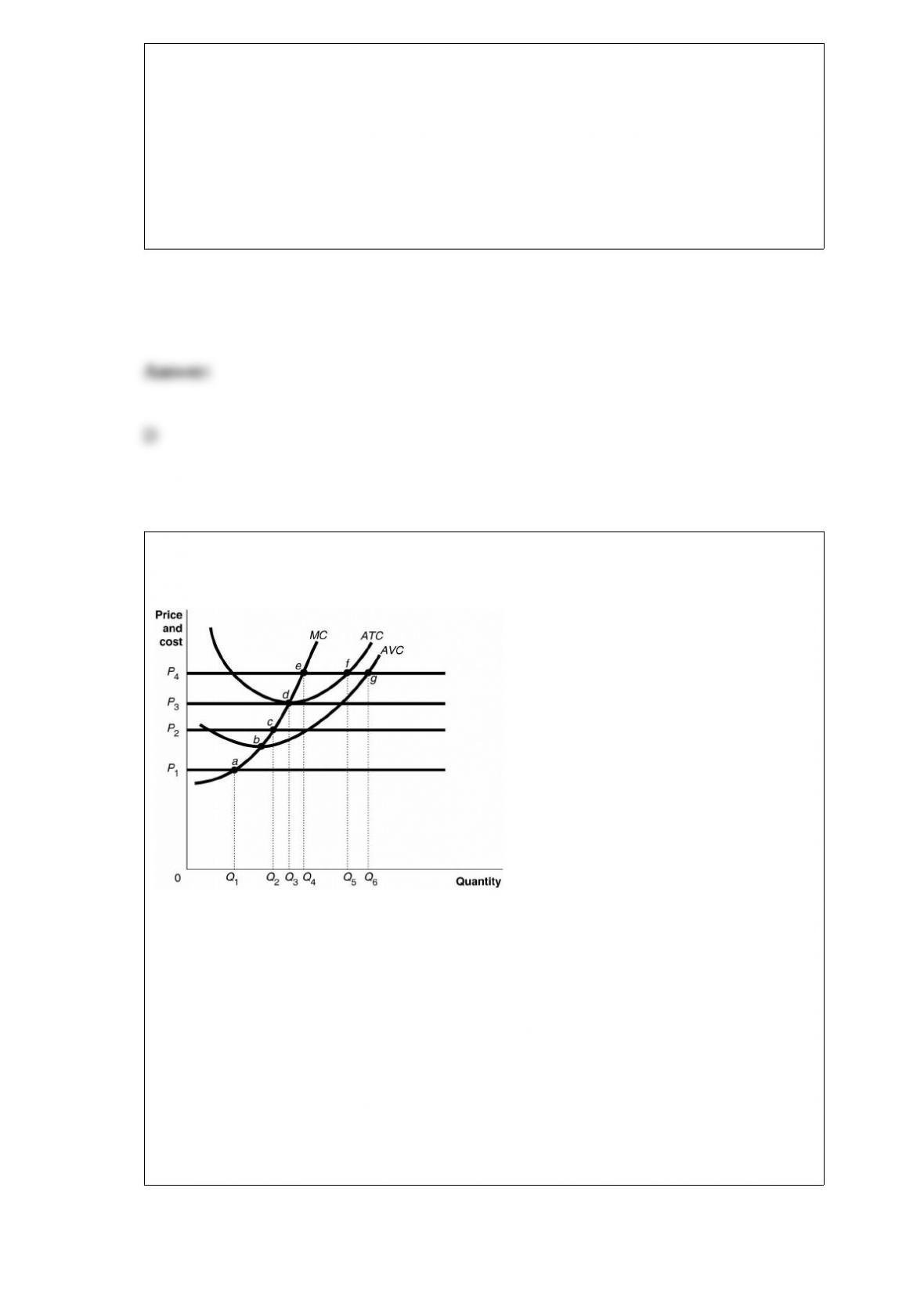
Figure 12-9
Figure 12-9 shows cost and demand curves facing a profit-maximizing, perfectly
competitive firm.
Refer to Figure 12-9. At priceP2, the firm would
A) lose an amount equal to its fixed cost.
B) lose an amount more than fixed cost.
C) lose an amount less than fixed cost.
D) break even.
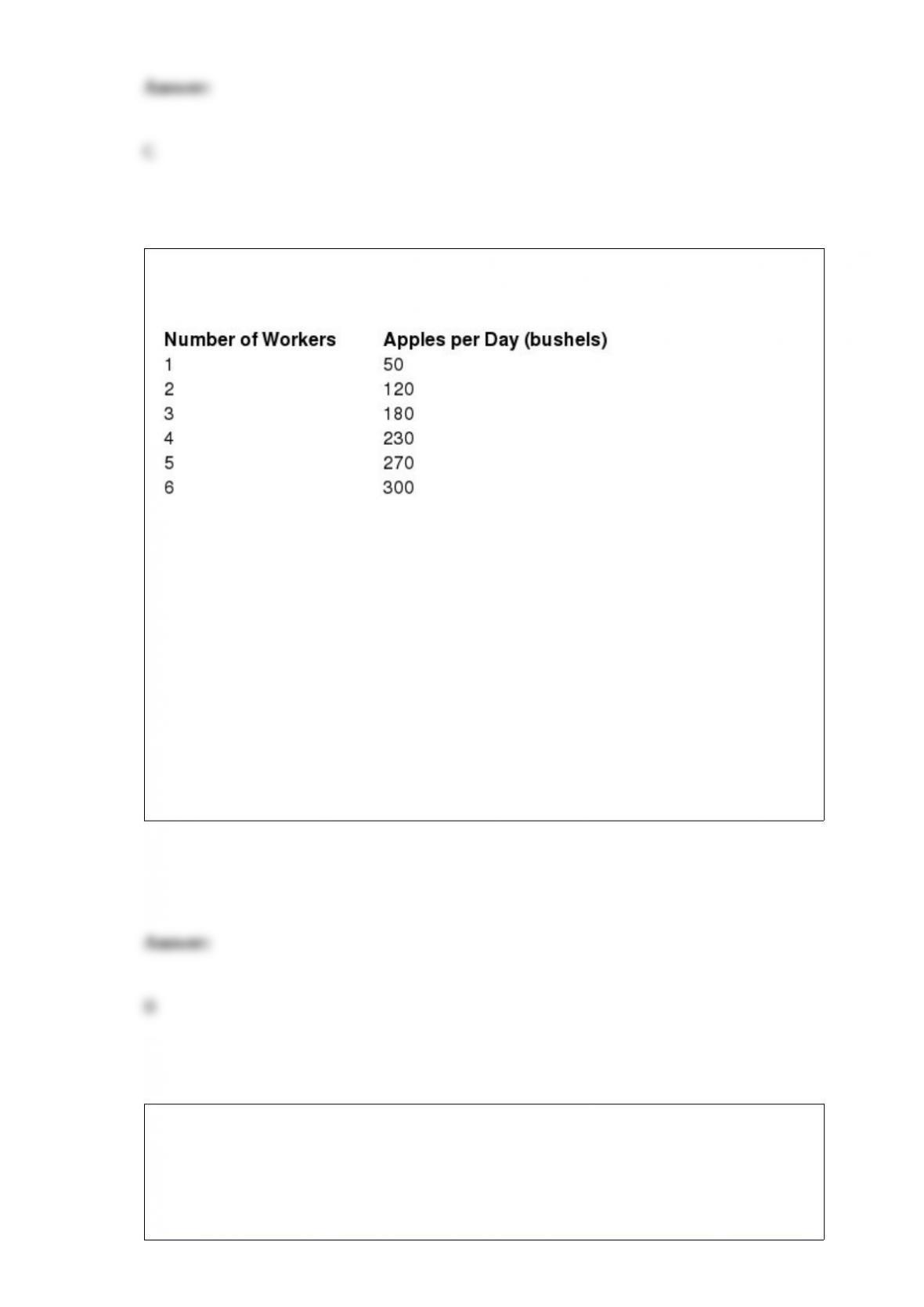
Table 11-2
Table 11-2 summarizes production at the Crunchy Apple Orchard for the month of April
2005.
Refer to Table 11-2. What is the average product of labor when the orchard employs 5
workers?
A) 270 bushels
B) 54 bushels
C) 40 bushels
D) 8 bushels
In the principal-agent relationship, the agent is
A) the owner of a resource that has hired another party to act on his behalf.
B) the person who is placed in control over resources that are not his own, with a

contractual obligation to use these resources in the interests of some other party.
C) the person who is placed in control over resources that are not his own and agrees to
compensate the resource owner in the event of outcomes that do not satisfy the resource
owner.
D) the person who places his resources in professional hands in exchange for the
professional’s promise to act on the resource owner’s behalf.
If the price of milk was $2.50 a gallon and it is now $3.25 a gallon, what is the
percentage change in price?
A) 13 percent
B) 30 percent
C) 75 percent
D) 77 percent
Suppose a frost destroys the tomato crop in California but farmers see an increase in
their revenues. Which of the following best explains this?
A) The decrease in supply led to huge price increases.
B) Tomatoes are necessities.

C) The demand for tomatoes is price inelastic.
D) The cross-price elasticity between tomatoes and most other substitute vegetables is
very low.
Which of the following is used to explain why a consumer’s willingness to buy a cell
phone increases as the number of other people who own and use cell phones increases?
A) network externalities
B) market failure
C) diminishing marginal utility
D) the income effect of a price change
Figure 12-5
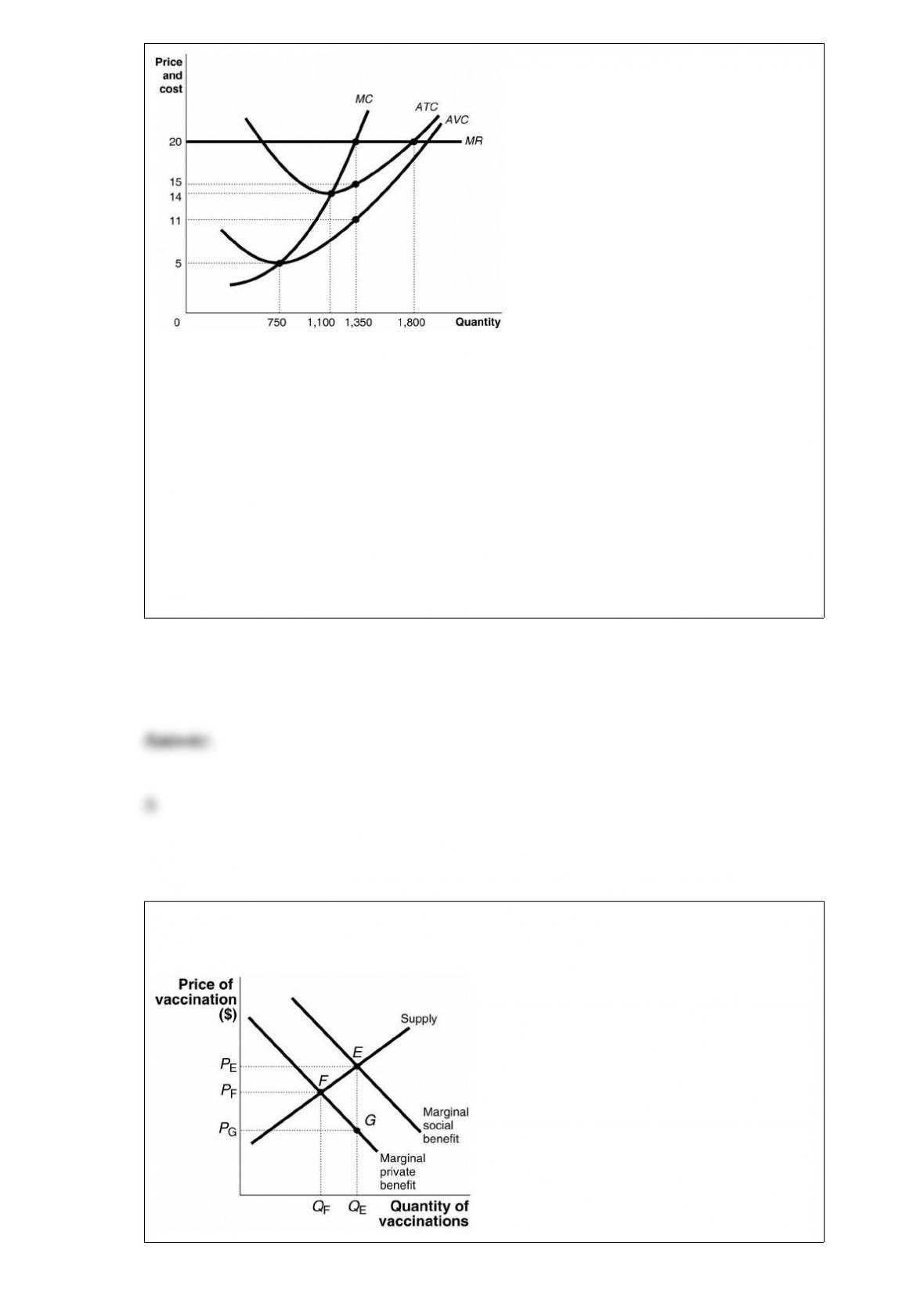
Figure 12-5 shows cost and demand curves facing a typical firm in a constant-cost,
perfectly competitive industry.
Refer to Figure 12-5. What is the amount of the firm’s fixed cost of production?
A) $5,400
B) $6,750
C) $8,100
D) It cannot be determined.
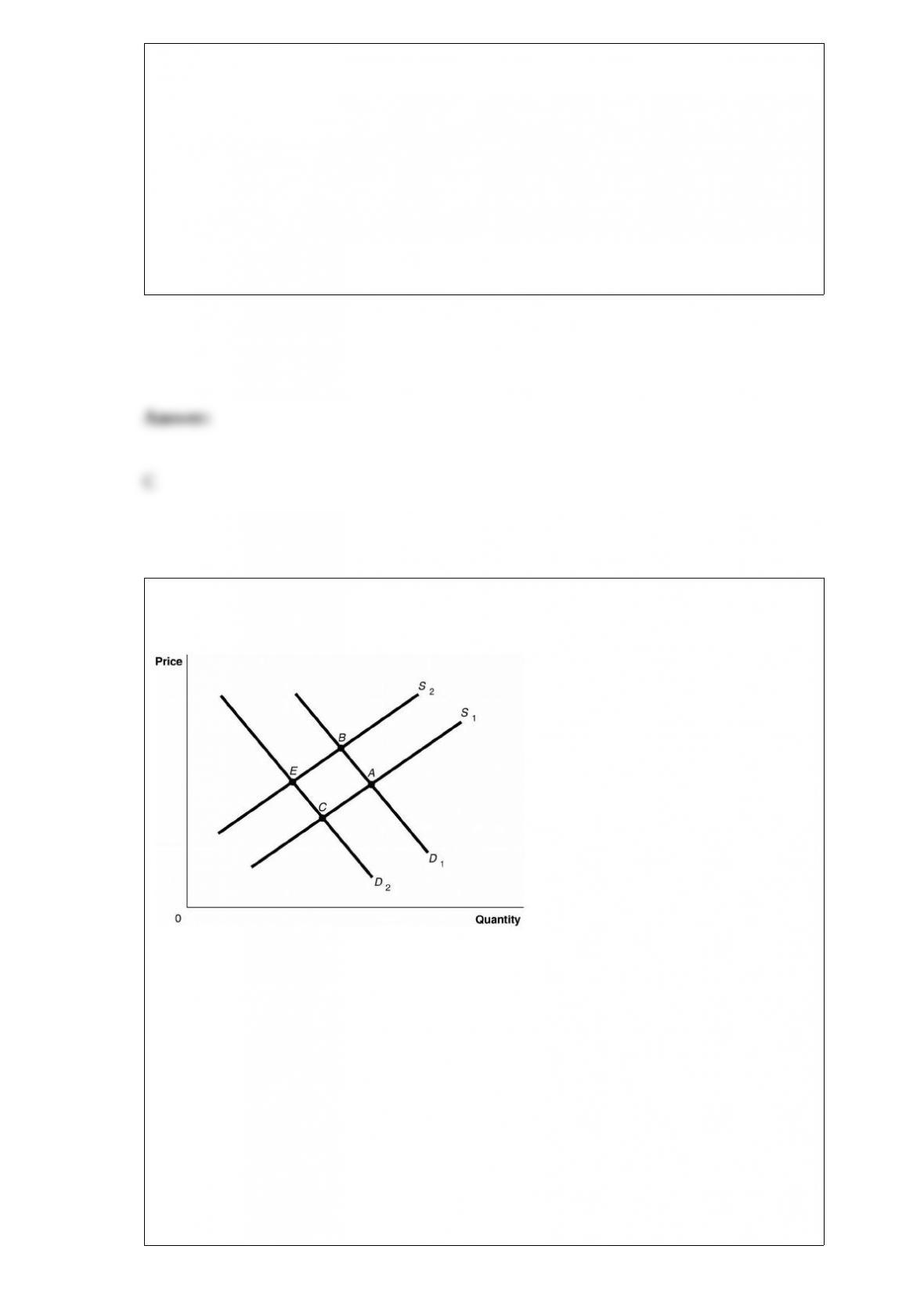
Figure 5-10

Chicken pox vaccinations for toddlers benefit society by protecting young children and
by preventing an epidemic of the disease. Thus, the social benefits of chicken pox
vaccinations exceed the private benefit for any quantity of vaccinations as illustrated in
Figure 5-10.
Refer to Figure 5-10. One way to obtain the economically efficient amount of chicken
pox vaccinations is for governments to subsidize these vaccinations. What is the size of
the per-vaccination Pigovian subsidy that the government must provide to internalize
the external benefits?
A) PE
B) (PE– PG)
C) (PE– PF)
D) (PF– PG)
Ben’s Peanut Shoppe suffers a short-run loss. Ben will not choose to shut down if
A) his Shoppe’s total revenue exceeds his fixed cost.
B) his Shoppe’s total revenue exceeds his variable cost.
C) his Shoppe’s total revenue exceeds his implicit costs.
D) his Shoppe’s total revenue exceeds his capital costs.
It is difficult for a private market to provide the economically efficient quantity of a
public good because
A) by law governments cannot use cost-benefit analysis to determine this quantity.
B) public goods produce positive and negative externalities.
C) individual preferences are not revealed in the market for the good.
D) it is too expensive to produce the necessary amount of the good.
Figure 3-8
Refer to Figure 3-8. The graph in this figure illustrates an initial competitive
equilibrium in the market for apples at the intersection of D2 and S2 (point E). Which of
the following changes would cause the equilibrium to change to point A?
A) A positive change in the technology used to produce apples and decrease in the price
of oranges, a substitute for apples.
B) An increase in the wages of apple workers and a decrease in the price of oranges, a
substitute for apples.
C) An increase in the number of apple producers and a decrease in the number of apple
trees as a result of disease.

D) A decrease in the wages of apple workers and an increase in the price of oranges, a
substitute for apples.
Which of the following economists is best known for exploring the application of
economic analysis to human resources issues?
A) Edward Lazear
B) Claudia Goldin
C) David Hammermesh
D) Alan Krueger
In the United States
A) the income tax system has little or no impact on the distribution of income.
B) the after-tax income distribution of income is more equal than the before-tax
distribution.
C) once a person is in poverty, it is very difficult for a person to get out of poverty.
D) the degree of income mobility is relatively low.

Cost-plus pricing is a reasonable way to determine the optimal price when
A) marginal cost and average cost are roughly equal.
B) fixed cost and variable costs are roughly equal.
C) fixed costs vary.
D) fixed costs are high.
Suppose the equilibrium price in a perfectly competitive industry is $15 and a firm in
the industry charges $21. Which of the following will happen?
A) The firm’s profits will increase.
B) The firm’s revenue will increase.
C) The firm will not sell any output.
D) The firm will sell more output than its competitors.
At the profit-maximizing level of output for a perfectly competitive firm, price equals
marginal cost. Which of the following is also true?
A) The difference between total revenue and total cost is the greatest.
B) Total revenue equals total cost.
C) Average revenue equals average total cost.
D) Marginal profit equals marginal cost.
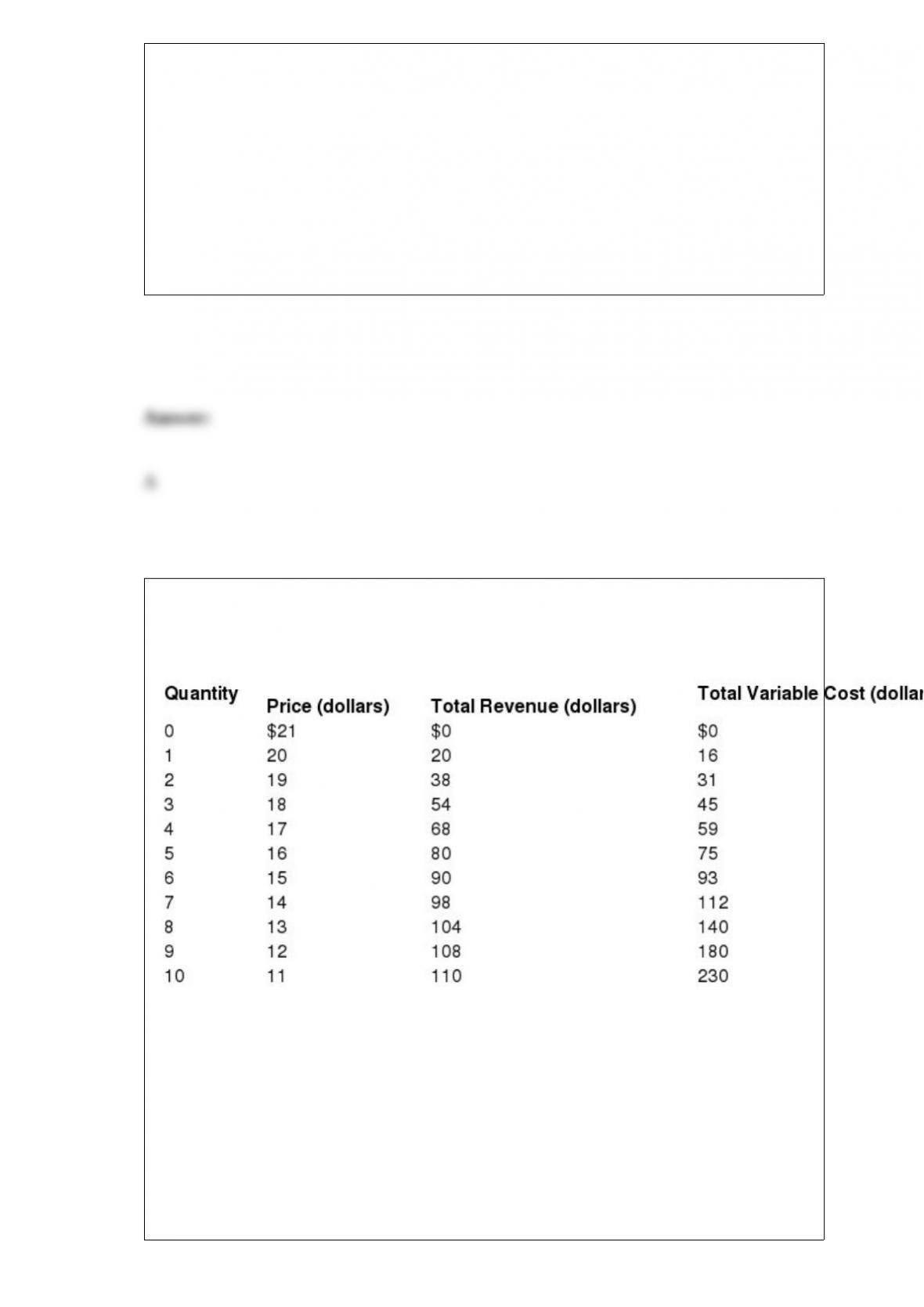
Table 13-3
Table 13-3 shows the demand and cost schedules for a monopolistically competitive
firm.
Refer to Table 13-3. If this firm continues to produce, what is likely to happen to the
product’s price in the long run?
A) It will fall.
B) It will increase

C) It will remain constant.
D) It cannot be determined without information on its long run demand curve.
Jason, a high-school student, mows lawns for families in his neighborhood. The going
rate is $12 for each lawn-mowing service. Jason would like to charge $20 because he
believes he has more experience mowing lawns than the many other teenagers who also
offer the same service. If the market for lawn mowing services is perfectly competitive,
what would happen if Jason raised his price?
A) He would lose some but not all his customers.
B) Initially, his customers might complain but over time they will come to accept the
new rate.
C) If Jason raises his price he would lose all his customers.
D) If Jason raises his price, then all others supplying the same service will also raise
their prices.
Suppose the U.S. government encouraged new medical school graduates to take over
existing practices from doctors wishing to retire by paying both the new and retiring
doctors $100,000. These doctors would be exemplifying the economic idea that
A) people are rational.
B) people respond to economic incentives.

C) optimal decisions are made at the margin.
D) equity is more important than efficiency.
Which of the following parties is likely to have the most information about the health of
an individual who is trying to purchase a health insurance policy?
A) the company that issues the health insurance policy
B) the individual who is applying for the health insurance policy
C) the employer of the individual who is trying to purchase the health insurance policy
D) All parties in the health insurance market have access to the same level of
information.
In the long run firms in both monopolistically competitive markets and perfectly
competitive markets earn zero economic profits, but unlike perfectly competitive firms
in the long run, monopolistically competitive firms
A) charge a price that is greater than average revenue.
B) charge a price that is equal to marginal cost.
C) do not produce at minimum average total cost.

D) charge a price that is equal to average total cost.
Pierre can produce either a combination of 20 bow ties and 30 neckties or a
combination of 35 bow ties and 15 neckties. If he now produces 35 bow ties and 15
neckties, what is the opportunity cost of producing an additional 15 neckties?
A) 2 bow ties
B) 15 bow ties
C) 20 bow ties
D) 35 bow ties
Of the following high-income countries, which has the lowest life expectancy at birth?
A) Canada
B) Japan
C) the United Kingdom
D) the United States

If there is pollution in producing a product, then the market equilibrium price
A) is too high and equilibrium quantity is too low.
B) and equilibrium quantity are too low.
C) and equilibrium quantity are too high.
D) is too low and equilibrium quantity is too high.
Suppose a chain of convenience stores reorganized its system of supplying its stores
with food. This led to a sharp reduction in the number of trucks that the company had to
use and increased the amount of fresh food on store shelves. Which of the following
statements best describes the chain stores’ actions?
A) The change implemented is not an example of technological change because it did
not require the use of new machinery of equipment.
B) Technological change refers only to the introduction of new products or
improvements to existing product. As such, the scenario described in the question is not
technological change.
C) The firm is able to produce more output (increase its sales) using fewer inputs (less
trucks). Therefore, the chain of convenience stores has implemented a positive
technological change.
D) The scenario described is an example of management efficiency and not
technological change. Essentially, the chain changes its way of operating its business.

The Brooks Appliance Store and the Lefingwell Appliance Store (both are located in the
same city) each sell an identical washer-dryer. The owner of each store considered
offering the washer-dryer for $700, but decided on a price of $500. If this is a Nash
equilibrium we can conclude that
A) each store owner feared charging the higher price would result in being undercut by
the other store charging the lower price.
B) the owners of the stores feared that charging $700 could be used as evidence of
collusion.
C) charging $500 was the most profitable strategy for each store, regardless of what
price was charged by the other store.
D) the stores were less concerned about making a profit from the washer-dryers than
they were with attracting customers who would also buy other appliances.
________ increases economic efficiency because it forces firms to produce and sell
goods and services as long as the additional benefit to consumers is greater than the
additional cost of production.
A) Competition
B) Voluntary exchange
C) Equity
D) A centrally planned economy
Over longer periods of time, increases in oil prices provide firms with incentives to
explore and recover oil. What does this indicate about the long run price elasticity of
supply for oil?
A) The elasticity coefficient is likely to be higher in the long run than in the short run.
B) The elasticity coefficient is likely to be lower in the long run than in the short run.
C) The elasticity coefficient approaches 0 in the long run as supplies are depleted.
D) The elasticity coefficient is unstable in the long run because oil supplies may be
depleted.
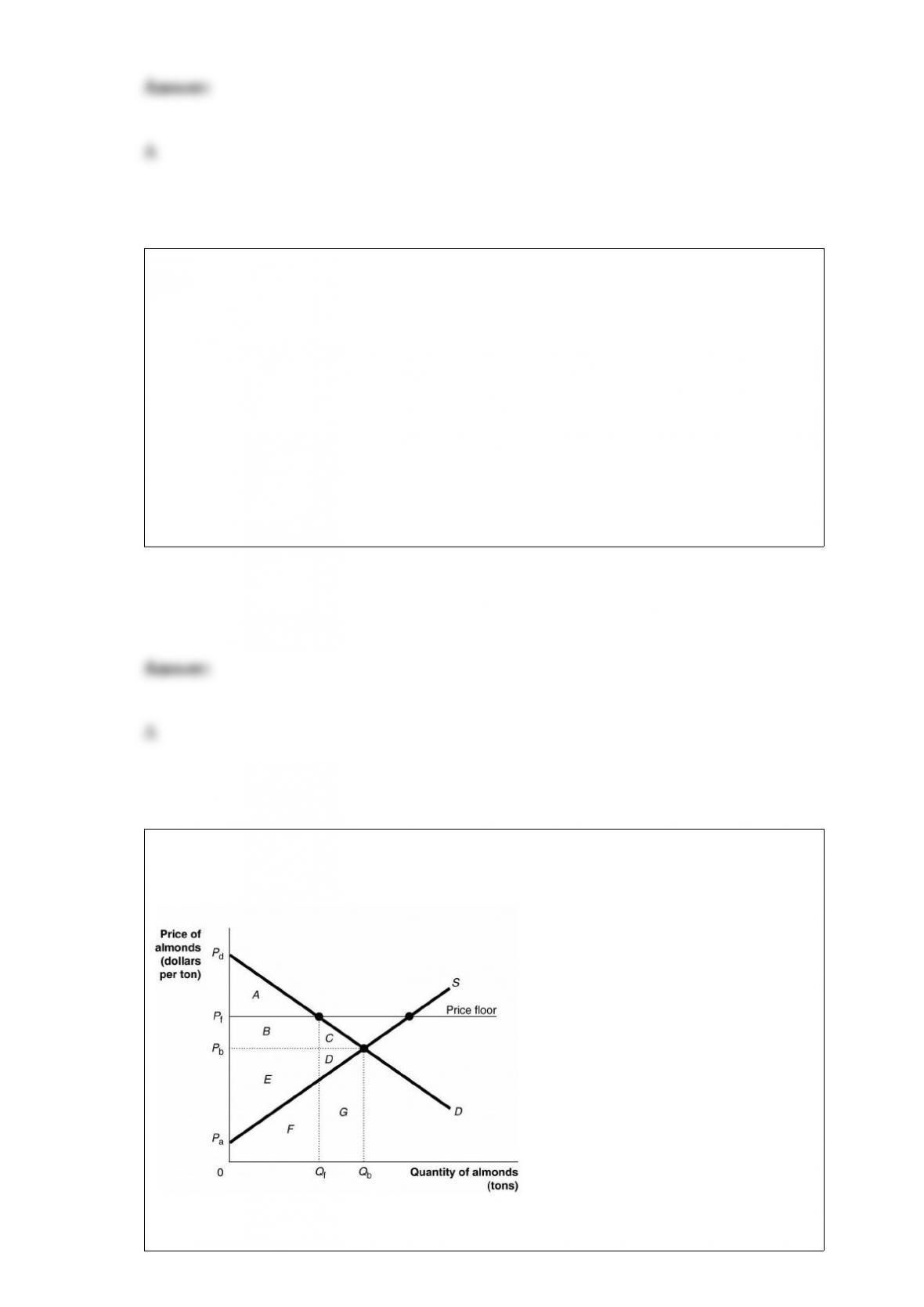
Figure 4-6
Figure 4-6 shows the demand and supply curves for the almond market. The

government believes that the equilibrium price is too low and tries to help almond
growers by setting a price floor at Pf.
Refer to Figure 4-6. What area represents the deadweight loss after the imposition of
the price floor?
A) C + D + G
B) F + G
C) C + D
D) C + D + F + G
The economic analysis of monopolistic competition shows that market forces eliminate
profits in the long run. However, it is possible for a firm to continue to earn economic
profits if the firm
A) expands its marketing budget.
B) adopts new technologies that enable it to lower its cost of production.
C) expands its product offerings to appeal to a wider range of consumers.
D) reduces its price to expand its market.
A Herfindahl-Hirschman Index is calculated by

A) summing the amount of sales by the four largest firms and dividing by total industry
sales.
B) dividing the number of firms wanting to merge by the total number in the industry.
C) summing the squares of the market shares of each firm in the industry.
D) summing the advertising expenditures of the firms that want to merge by total
industry advertising expenditures.
According to the horizontal-equity principle of taxation
A) individuals who receive the benefits of a good or service should bear a greater share
of the tax burden.
B) individuals who are most able to pay should bear a greater share of the tax burden.
C) people in the same economic situation should be treated equally.
D) individuals who are willing to bear a greater share of the tax burden should be
compensated with non-monetary benefits.