
If you are planning to visit wildlife preserves in Kenya, you hope the U.S. dollar
appreciates against Kenya’s currency.
a. True
b. False
The tendency for the poorest risks to buy health insurance and the tendency of the
insured to take more risks with their health are known as
a. moral hazard and adverse selection, respectively
b. the winner’s curse and adverse selection, respectively
c. adverse selection and natural selection, respectively
d. adverse selection and moral hazard, respectively
e. the winner’s curse and moral hazard, respectively
The income distribution in less-developed nations tends to be
a. more uneven than in developed economies
b. less uneven than in developed economies
c. similar to that in developed economies

d. impossible to calculate
e. not comparable because tax structures differ among countries
Temporary Assistance for Needy Families and Supplemental Security Income are
a. cash transfers for income assistance
b. cash transfers for social insurance
c. in-kind transfers for income assistance
d. in-kind transfers for social insurance
e. intended to provide health care for the poor
A product that is physical and tangible is refered to as a(n)
a. service
b. good
c. resource
d. commodity

e. asset
Families receive income from two primary sources:
a. resource earnings and transfers
b. transfers and subsidies
c. wages and rents
d. transfers and gifts
e. interest and dividends
If dairy farmers use automatic milking machines instead of milking by hand, which
economic question does their decision answer?
a. What to produce?
b. How to produce?
c. For whom to produce?
d. Who has a comparative advantage in milking?
e. What is the price of milk?

Between 1917 and 1982, the US ran a financial account deficit.
a. True
b. False
Which of the following is not based on the benefits-received principle of taxation?
a. charging a fee for use of public golf courses
b. differences between residential and out-of-state college tuition
c. the excise tax on gasoline
d. toll booths on a highway
e. charging a fee per bag to haul away garbage

If a monopolist must lower the price on all units in order to sell an additional unit,
a. it is impossible for the monopolist to maximize profit
b. the monopolist will always lose profit when it increases quantity
c. the monopolist will always lose revenue when it increases quantity
d. price will always be greater than marginal revenue
e. price will always be less than marginal revenue
The production of capital goods, which are then used to produce consumer goods, is
called
a. efficient production
b. intermediation
c. time preferences
d. roundabout production
e. derived production
An example of an uncontrollable resource that contributes to diseconomies of scale for
a movie theater is
a. concession stand staff
b. public roads congested with traffic
c. volume discounts from movie distributors
d. a single lobby in the theater

e. bigger, more noticeable newspaper ads
For a nondiscriminating monopolist, describe the relationship between market price (P),
average revenue (AR), and marginal revenue (MR).
a. P = AR = MR
b. P > AR = MR
c. P = AR > MR
d. P > AR > MR
e. P = AR < MR
Suppose a firm is a price searcher in the product market and hires labor in a perfectly
competitive labor market. The firm hires four workers, the marginal product of the
fourth worker is 4, and the wage rate is $40. The firm produces 100 units of the product,
which sell for a price of $10 each. This firm is
a. maximizing profit when it hires four workers
b. not maximizing profit and should hire more workers to increase profit
c. not maximizing profit and should hire fewer workers to increase profit
d. maximizing profit when it produces 100 units of the product
e. not maximizing profit when it produces 100 units of the product and should increase
production to increase profit

Assume that supply increases slightly and demand increases greatly. Which of the
following will happen?
a. equilibrium price will fall and equilibrium quantity will rise
b. equilibrium price will rise and equilibrium quantity will fall
c. equilibrium price will rise and equilibrium quantity will rise
d. equilibrium price will fall and equilibrium quantity will fall
e. neither equilibrium price nor equilibrium quantity will change
The automobile industry is
a. in monopolistic competition because brand names are important
b. in monopolistic competition because it has economies of scale
c. in monopolistic competition for legal reasons
d. an oligopoly because each firm must produce a large amount of output before it can
achieve low average costs
e. an oligopoly for legal reasons

A profit-maximizing firm in monopolistic competition should shut down in the short
run
a. if marginal revenue is less than price
b. if price is always less than average total cost
c. if price is always less than average fixed cost
d. if price is always less than average variable cost
e. under no circumstances
To ensure that we get the same result for price elasticity no matter which direction we
move on the demand curve, we must take the average of the
a. initial price and the initial quantity demanded and the average of the new price and
the new quantity demanded
b. new price and the initial quantity demanded and the average of the new quantity
demanded and the initial price
c. initial price and the new price and the average of the initial quantity demanded and
the new quantity demanded
d. initial price and the new price only
e. new quantity demanded and the initial quantity demanded only
A stock market crash that reduces the value of an individual’s trust fund would tend to
a. increase her supply of labor if the substitution effect outweighs the income effect
b. decrease her supply of labor if the substitution effect outweighs the income effect
c. have no impact on her labor supply decision
d. increase her supply of labor
e. decrease her supply of labor
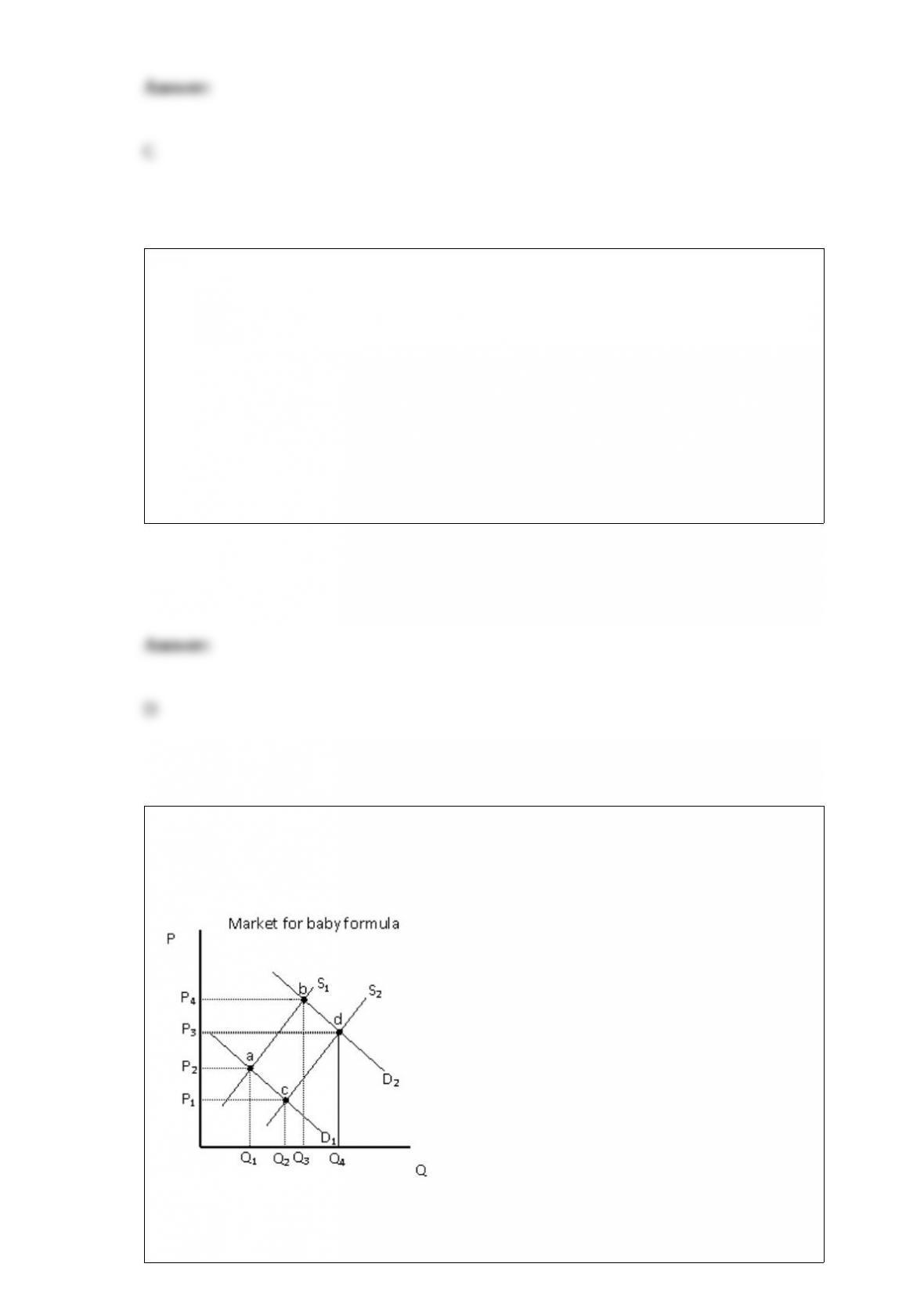
Exhibit 4-16
Refer to exhibit 4-16. If the market demand for baby formula is given by demand curve
D2 and the supply is given by supply curve S2, which of the following is the market

equilibrium?
a. P1, Q1
b. P3, Q4
c. P4, Q3
d. P2, Q1
e. P1, Q1
Public choice theory assumes that government makes optimal policies to respond to the
shortcomings of private markets.
a. True
b. False
For a given supply curve, an increase in demand will typically
a. increase price, but quantity could change in either direction
b. increase quantity, but price could change in either direction
c. increase price but leave quantity unchanged

d. decrease both quantity and price
e. increase both quantity and price
Which of the following is the best example of vertical integration
a. an auto firm acquires a tire manufacturer
b. a farmer buys the neighboring farm
c. a retail store buys an internet retailer
d. a software company buys a soft drink manufacturer
e. a hotel chain buys a fast food chain
Basil is maximizing his utility from consuming tea and crumpets. If the marginal utility
of his last cup of tea was 24 units of utility and that of his last crumpet was 6 units of
utility, which of the following is true?
a. The price of tea is six times the price of crumpets.
b. The price of crumpets is four times the price of tea.
c. The prices of tea and crumpets are equal.
d. The price of tea is four times the price of crumpets.
e. The MU of the next cup of tea is less than the MU of the next crumpet.
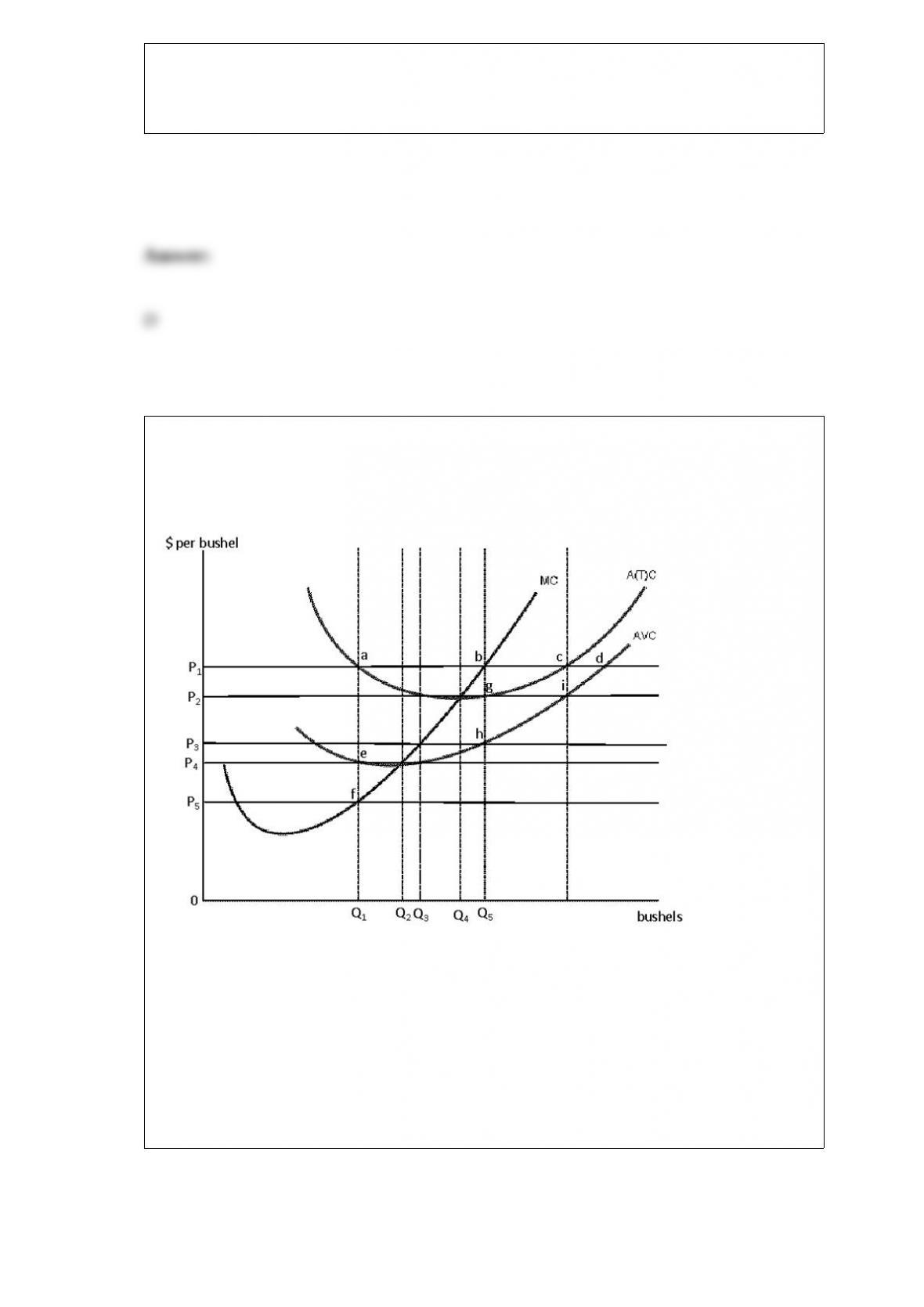
Exhibit 8-19 A Single Firm in a Perfectly Competitive Market
Consider Exhibit 8-19. When the market price is P5, which of the following most
acurately reflects the firms short-run situation?
a. the firm will choose to produce no output and shut-down
b. The firm will choose to produce quantity Q3and earn a profit
c. The firm will choose to produce quantity Q3and suffer a loss
d. The firm will choose to produce quantity Q5and earn a profit > 0
e. The firm will choose to produce quantity Q5and earn exactly 0 profit
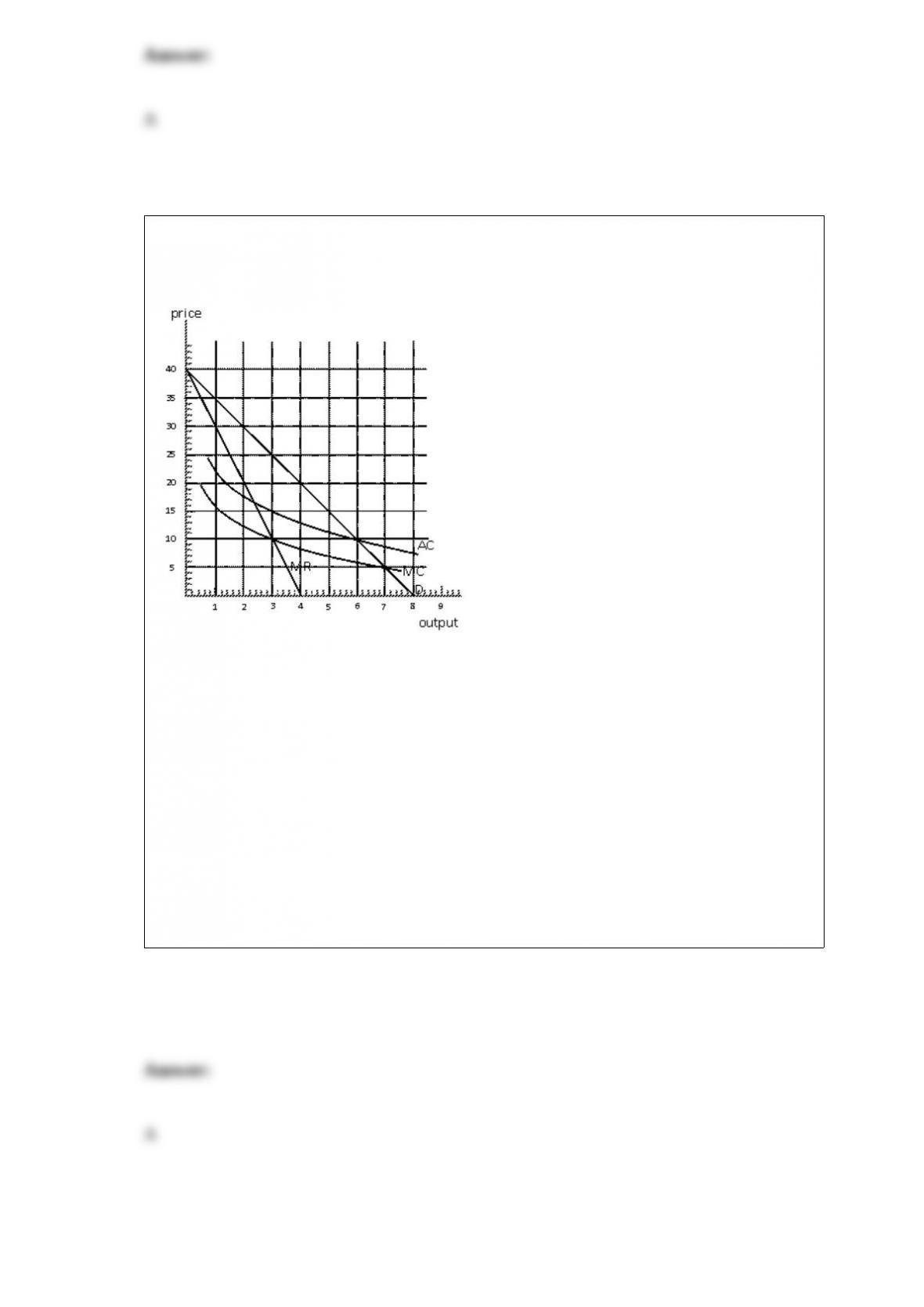
Exhibit 15-5
Consider the natural monopoly depicted in exhibit 15-5. To achieve the socially
efficient level of output, regulators should set the price at what level?
a. $5
b. $10
c. $15
d. $20
e. $25

In oligopoly, minimum efficient scale is large relative to the market.
a. True
b. False
An entrepreneur
a. always makes a profit
b. starts with an idea, organizes the resources to bring the idea to life and assumes the
risk of profit or loss
c. always avoids risk
d. is a parasite that benefits by not paying other resources for their services
e. is the manager who runs an enterprise and keeps the customers happy
Some pollution occurs because property rights to some resources are well defined.
a. True
b. False

Which of the following best expresses the benefit from international trade?
a. With trade, each country can concentrate on producing those goods and services that
it produces most efficiently.
b. With trade, a country can increase its political involvement on a global scale.
c. Increased U.S. trade would improve high-tech exports but not agricultural exports.
d. Increased trade would increase U.S. exports and decrease U.S. imports.
e. Increased trade implies that exports of goods and services will always equal imports
of goods and services.
Maximizing total revenue is the same as maximizing profit.
a. True
b. False
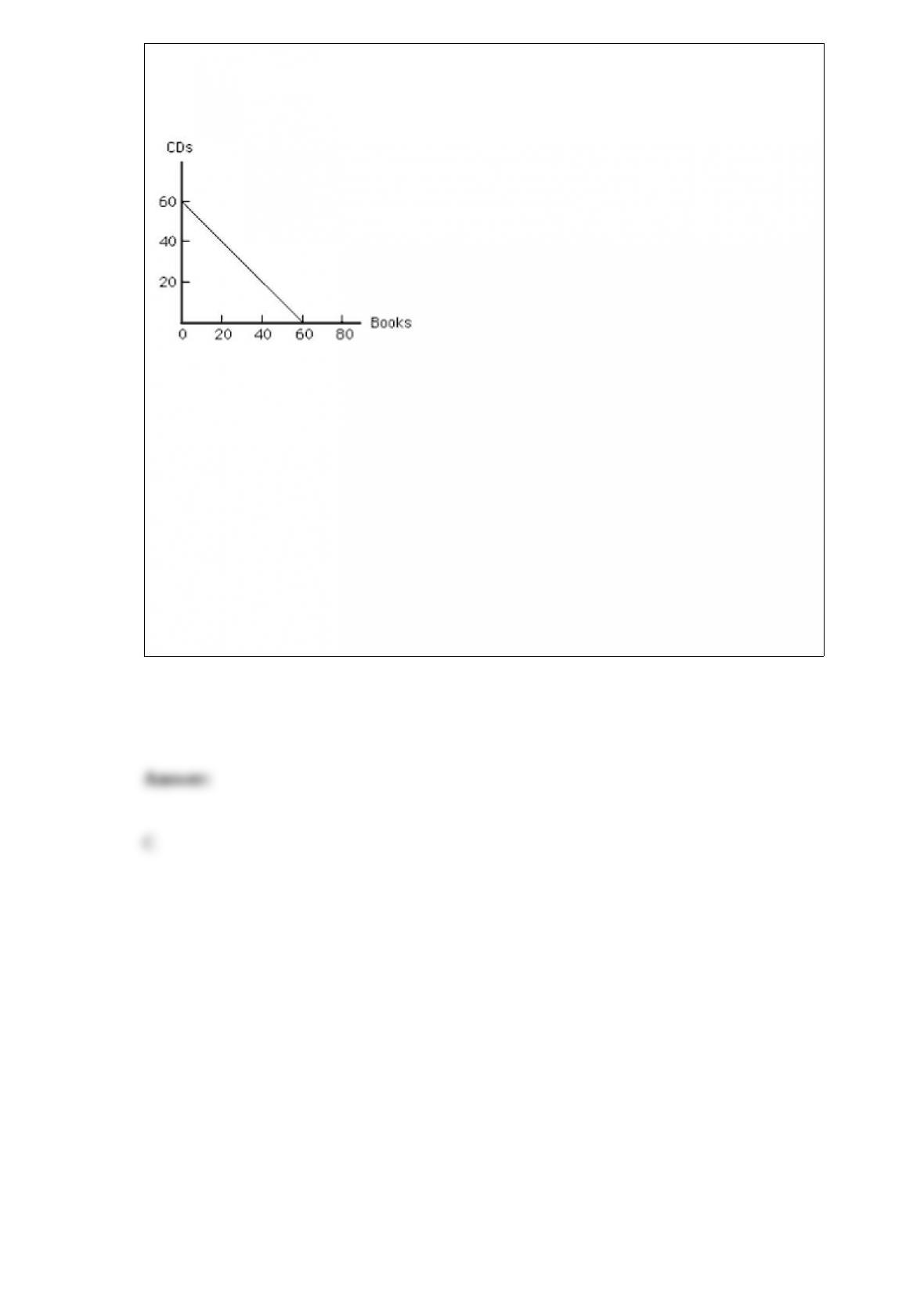
Exhibit 6-30
Consider Exhibit 6-30. Assume that you have $600 to spend on books and compact
disks. What is the current price of compact disks?
a. $1
b. $5
c. $10
d. $60
e. unable to determine