
Total variable cost:
A) increases as output increases.
B) is constant as output increases.
C) decreases as output increases.
D) is lowest for labor-intensive technologies.
Which of the following strategic behaviors do firms in an oligopoly market usually
engage?
A) price fixing
B) entry deterrence
C) advertising
D) all of the above
The period of time when a firm is unable to change all of inputs, or factors of
production, is called the:
A) economic term.
B) short run.

C) accounting term.
D) long run.
A limit on the amount of a good that can be imported is known as:
A) a tax.
B) an export agreement.
C) a tariff.
D) an import quota.
Suppose the demand for energy drinks decreases by 20% due to recent repercussions
found in the consumption. If the supply elasticity is 1.2 and the demand elasticity is
0.80, the percentage change in the equilibrium price for energy drinks will:
A) rise by 0.1%.
B) fall by 0.1%.
C) rise by 10%.
D) fall by 10%.
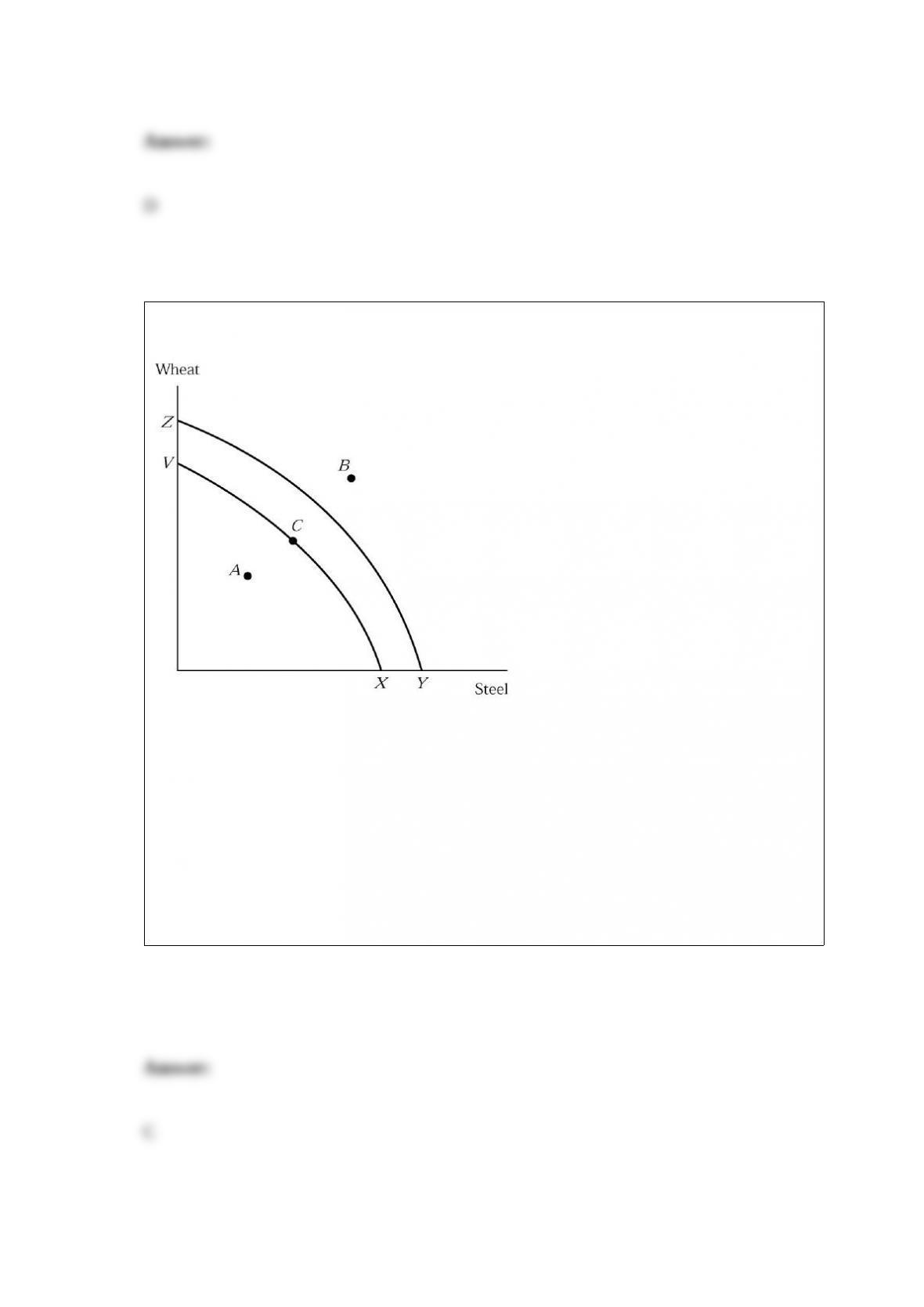
In Figure 2.3, an efficient production point on production possibility curve XV is:
Figure 2.3
A) point A.
B) point B.
C) point C.
D) none of the above.
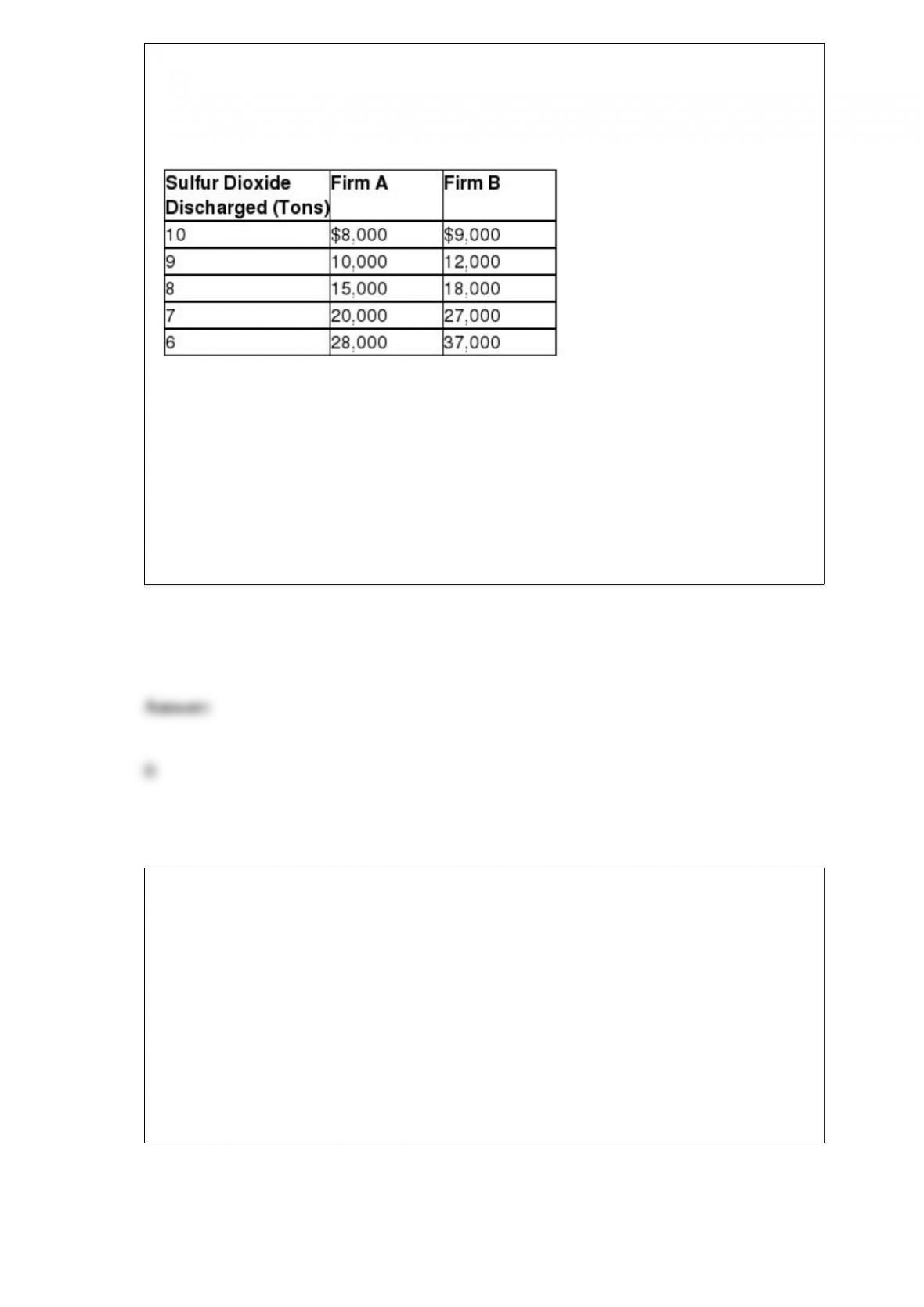
Table 16.3 shows the production cost for two utilities at different levels of sulfur
dioxide emissions. Assume that the government issued 8 marketable pollution permits
to each firm. If the two firms agree to swap one permit and split the difference between
the willingness to pay and willingness to accept, what is the price of a permit?
Table 16.3
A) $4,500
B) $5,500
C) $7,250
D) $9,750
Consider a college that has only ever had one on-campus bookstore. Over the last two
years you have observed that book prices are 20% lower. You conclude that:
A) the cost of producing books must have fallen.
B) the college ordered the bookstore to lower prices.
C) competition from online stores has encouraged the bookstore to behave as an
insecure monopolist.
D) fewer students are opting to buy books and supply has decreased.

Adverse selection occurs in the health insurance market because:
A) it is difficult for insurance companies to distinguish between high risk and low risk
customers.
B) people cannot predict their future health status.
C) the least healthy people are the least likely to acquire insurance.
D) health care markets are unregulated.
From the Application, which of the following would we observe in the market for
pecans as a result of an increase in the demand for pecans?
A) higher equilibrium price and equilibrium quantity of pecans.
B) higher equilibrium price and equilibrium quantity of pecan pies.
C) lower equilibrium price and equilibrium quantity of pecans.
D) higher equilibrium price and lower equilibrium quantity of pecans.
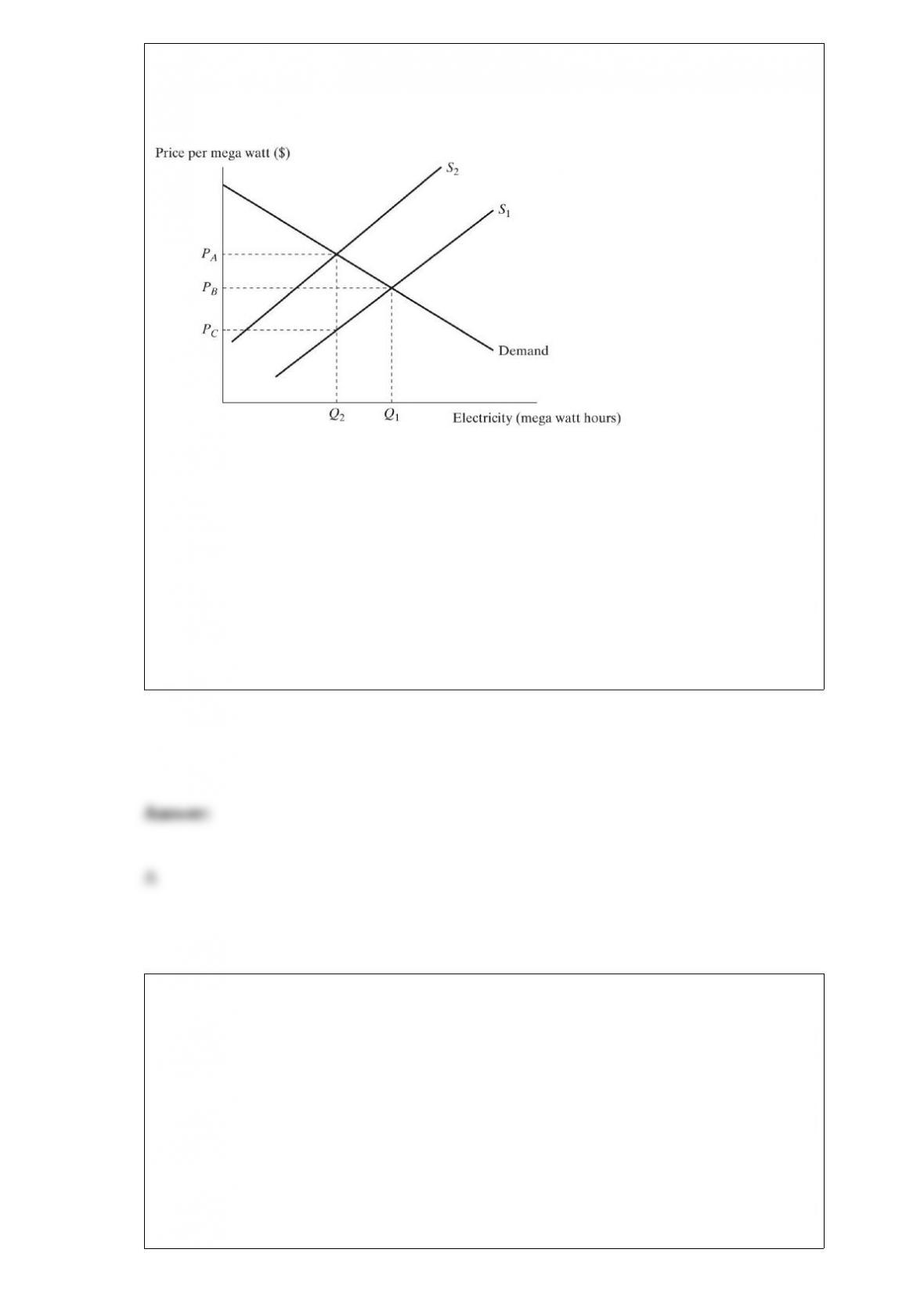
Figure 16.3 depicts a market for electricity. Assume electricity production incurs
external costs. If the government imposes a pollution tax in the amount illustrated, the
price of a mega-watt of electricity will increase by:
Figure 16.3
A) PA– PB.
B) PA-PC.
C) PB– PC.
D) 1/2 (PA-PC).
Which of the following best defines a public good?
A) A public good is available for anyone to utilize, regardless on who pays and who
doesn’t.
B) A public good is a good that uses public funds to finance its production.
C) A public good is a good that is sold to other people in the market.
D) A public good is a good that requires government approval before it can be
produced.
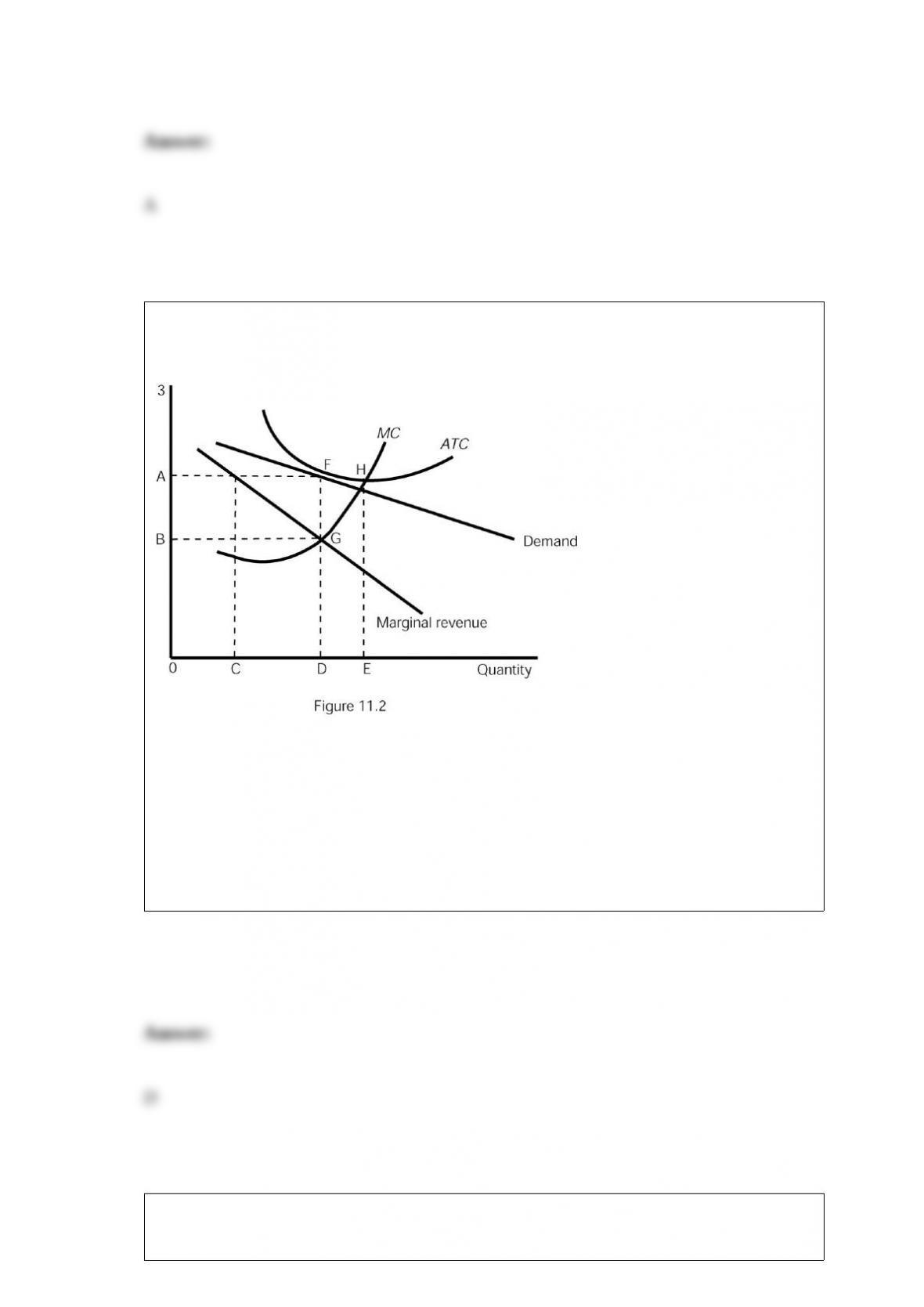
Refer to Figure 11.2. In the long run the monopolistic competitor would earn an
economic profit equal to the area:
A) 0AFD.
B) AHE0.
C) 0BGD.
D) none of these.
There is a negative relationship between two variables if:

A) they move in opposite directions.
B) they move in the same direction.
C) one variable changes and the other does not.
D) neither variable moves.
Recall the Application about how marginal utility changes with the quantity
consumed to answer the following question(s). Neuroscientists offered subjects in
an experiment varying monetary rewards, and observed the neural activity in a
subject’s striatum region of the brain.
Recall the Application. As the monetary reward increased, the utility value as measured
in neuron activity:
A) increased at an increasing rate.
B) increased at an decreasing rate.
C) decreased at an increasing rate.
D) decreased at an decreasing rate.
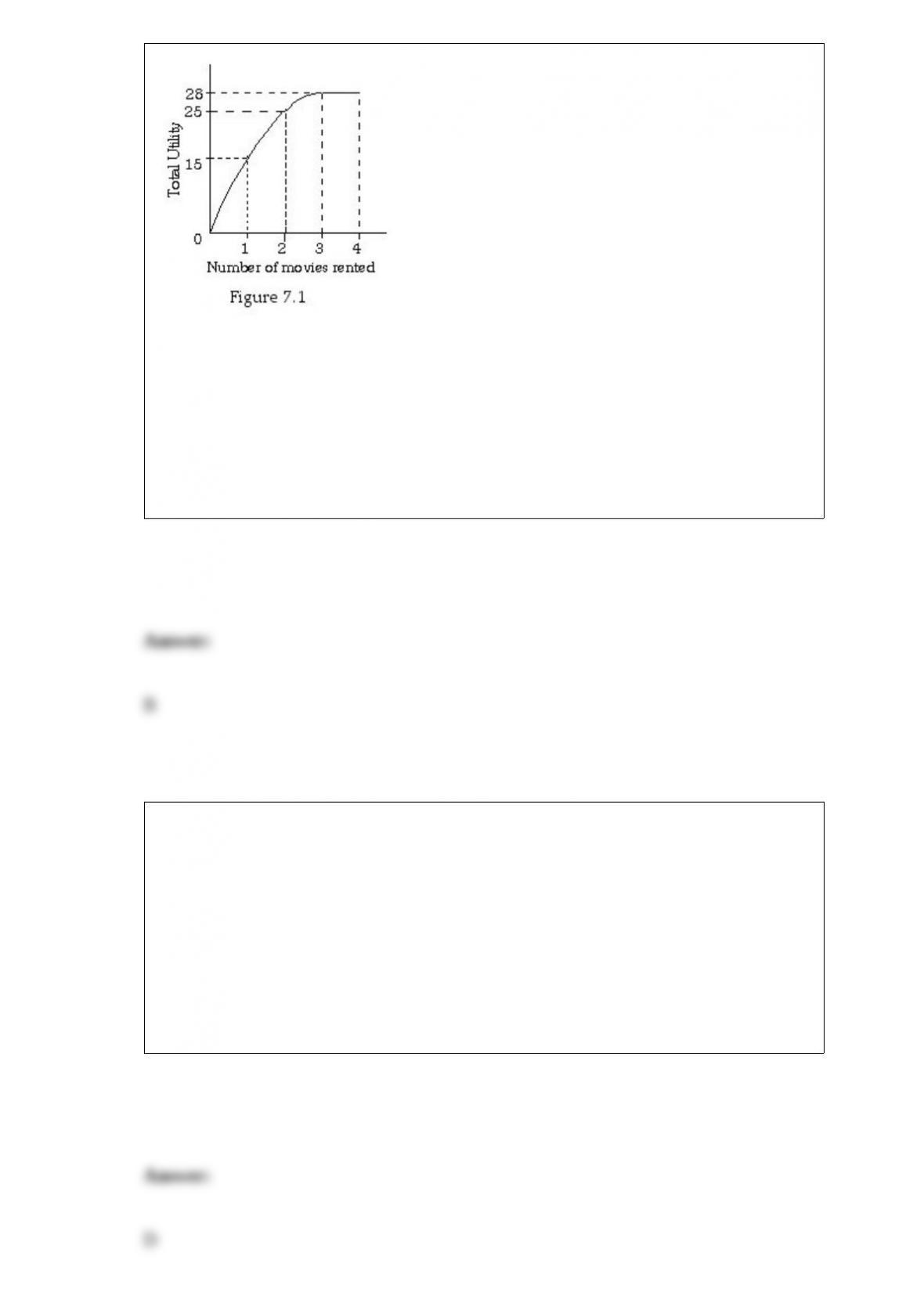
Refer to Figure 7.1. The marginal utility of the third movie rental is:
A) 1.
B) 3.
C) 9.33.
D) 28.
In general, firms in a cartel:
A) agree to set price equal to marginal cost.
B) do not consider the actions of the other firms in the cartel when making output
decisions.
C) produce levels of output exceeding the monopoly output level.
D) agree to charge the price the monopolist would charge.
Suppose the wage rate in a certain industry rises, yet firms hire more workers. The best
explanation of this is that labor:
A) demand fell.
B) demand increased.
C) supply fell.
D) supply increased.
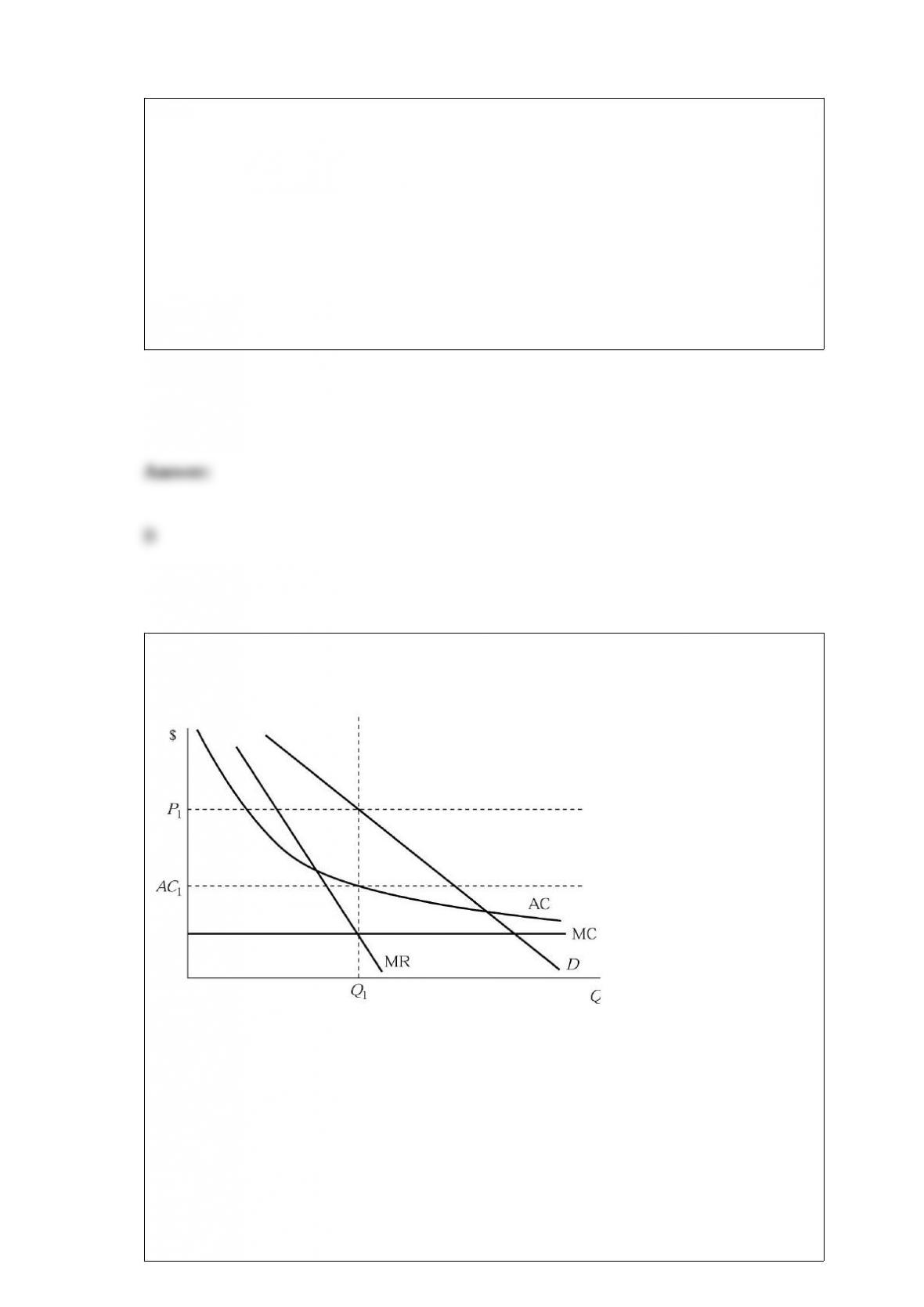
Figure 11.1 depicts demand and costs for a monopolistically competitive firm. At the
profit maximizing output level:
Figure 11.1
A) this firm is earning economic profits equal to zero.
B) this firm is earning economic profits equal to Q1(P1 – AC1).
C) this firm is earning economic profits equal to P1(Q1 – AC1).
D) this firm is in long-run equilibrium.

A tariff is a:
A) tax on an imported good.
B) tax on a domestically produced goods.
C) limit on the amount a good that can be imported.
D) voluntary reduction of exports.
Recall the Application about how a simultaneous increase in the gasoline tax and
decrease in the income tax affect gasoline consumption to answer the following
question(s). This Application discusses a gasoline tax increase which is combined
with a cut in income taxes to insure that total tax revenue does not change.
Recall the Application. If a gasoline tax increase is combined with a cut in income taxes
to insure that total tax revenue does not change, the gasoline tax is:
A) ineffective.
B) regressive.
C) progressive.
D) revenue neutral.
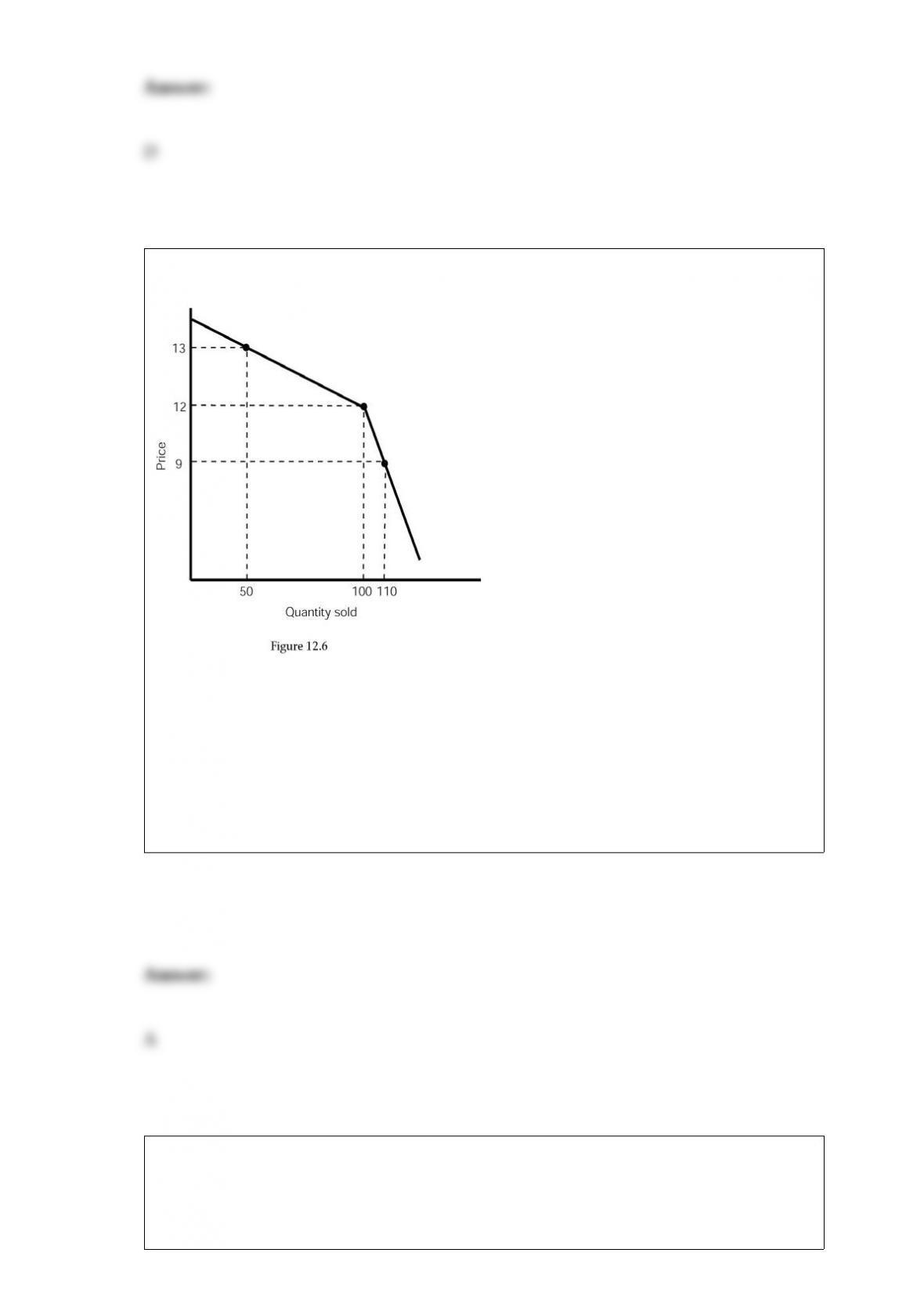
Refer to Figure 12.6. The segment of the demand curve from $9 to $12 is:
A) relatively inelastic.
B) positively sloped.
C) relatively elastic.
D) not realistic.
With respect to present bias in the case of saving for retirement, the cost ________ and
the benefit ________.
A) occurs in the past; occurs in the present
B) occurs in the present; occurs in the future
C) occurs in the present and in the future; does not occur
D) occurs in the future; occurs in the present
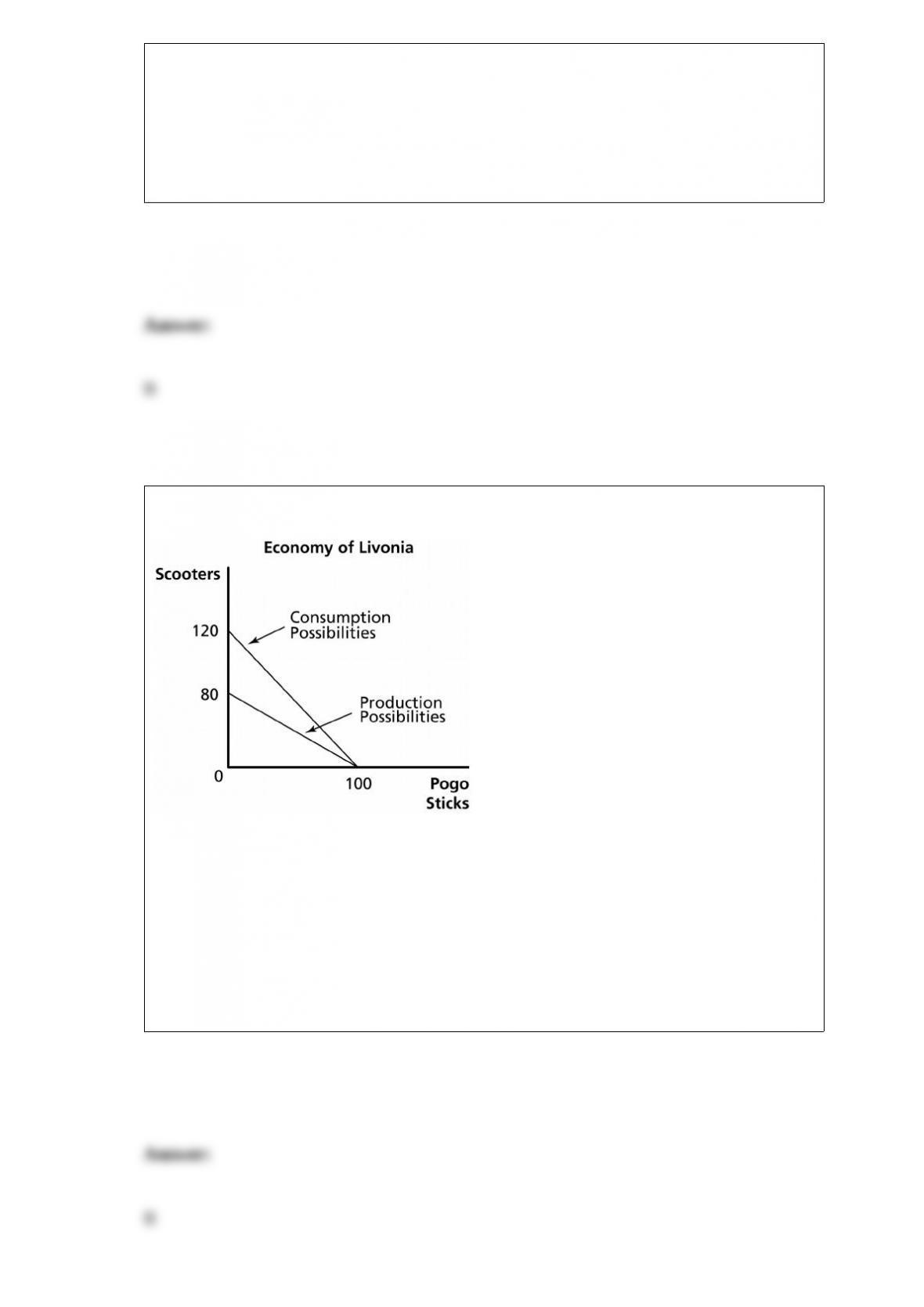
Refer to Figure 18.3. The opportunity cost of producing pogo sticks in Livonia is:
Figure 18.3
A) 2/3 of a scooter.
B) 4/5 of a scooter.
C) 6/5 scooters.
D) 1.25 scooters.

The brain gets most of its energy from:
A) dopamine.
B) blood sugar.
C) the prefrontal cortex.
D) electrons.
To maximize profit, the monopolist produces on the ________ portion of the demand
curve where ________.
A) elastic; price equals marginal cost
B) elastic; marginal revenue equals marginal cost
C) inelastic; price equals marginal revenue
D) inelastic; marginal revenue equals marginal cost
Given their skills and education, American workers in hostile regions such as Iraq earn
higher incomes than American workers in the homeland. This is partly because:
A) American workers in Iraq face the higher risk of getting kidnapped and killed.
B) jobs in Iraq in general require more education.
C) the U.S. government restricts the number of American workers to work in Iraq.
D) only few people have skills necessary for jobs in Iraq.
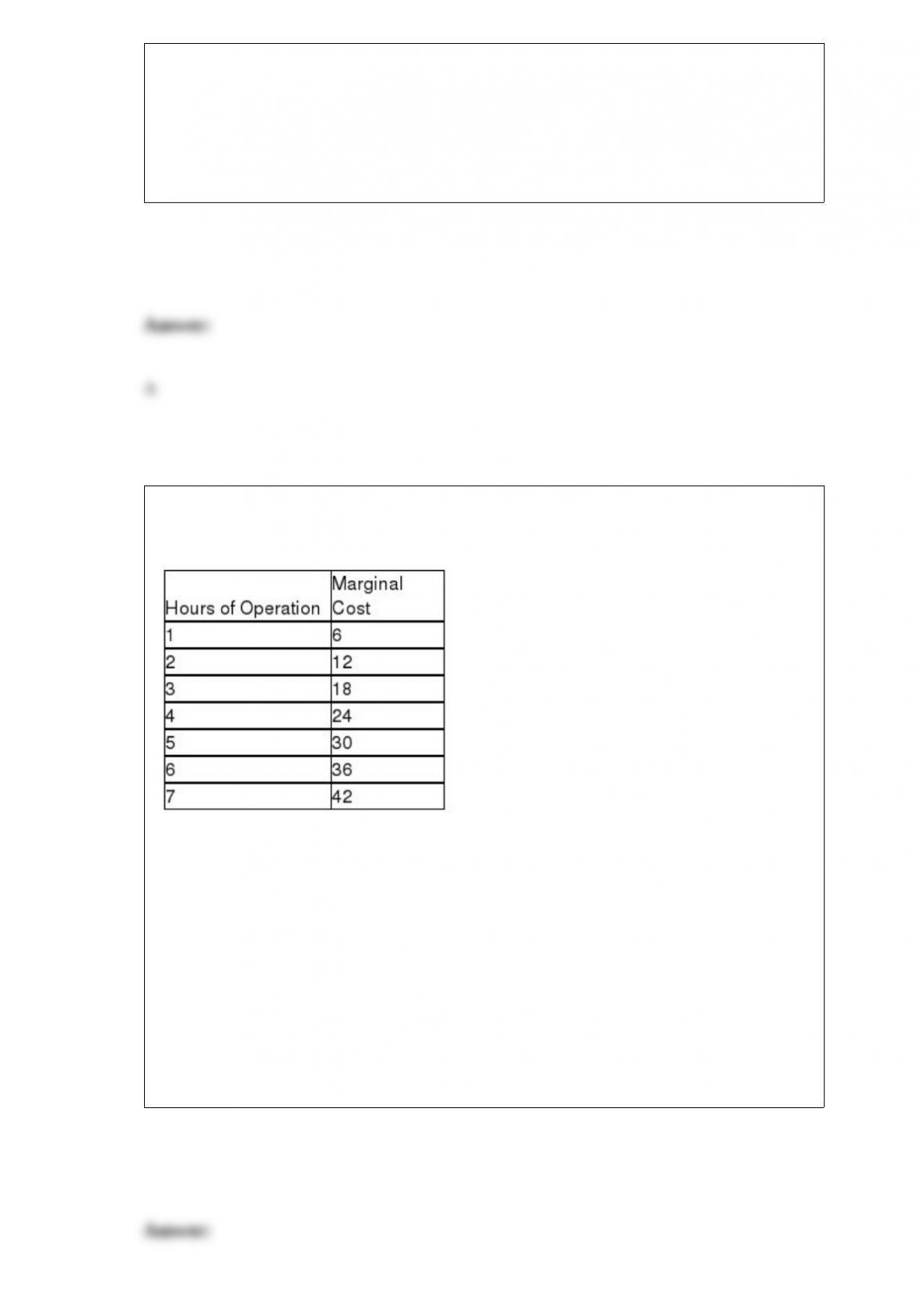
Krystal runs a nail salon and needs to decide how many hours to stay open. Table 2.2
illustrates her marginal costs of staying open for each additional hour.
Table 2.2
Suppose that Krystal’s marginal benefit of staying open per hour is $30. If she is
following the marginal principle, how many hours should Krystal stay open?
A) 4 hours
B) 5 hours
C) 6 hours
D) 7 hours

The cost of producing a hardback book is only about 20 percent higher than producing a
paperback book, yet the hardback price is typically three times the paperback price.
This suggests that demand for paperback books is ________ than demand for hardback
books.
A) more elastic
B) less elastic
C) more variable
D) lower
Medical doctors earn higher incomes than Ph.D.s in economics. This is partly because:
A) medical doctors are more likely to face malpractice lawsuits.
B) the costs of receiving necessary medical education are higher.
C) a relatively small number of students are admitted to medical schools.
D) all of the above

Which of the following groups of countries are members of NAFTA?
A) Japan, Canada, and Mexico
B) The U.S., Japan, and Mexico
C) The U.S., France, and Germany
D) The U.S., Canada, and Mexico
A single firm selling its output in a contestable market can raise its prices and:
A) insure higher profits.
B) guarantee monopoly profits.
C) give other firms the incentive to enter that market.
D) keep other firms out of the industry with its market power.
Diminishing marginal returns implies that firms:
A) require fewer and fewer workers to produce each additional unit of output.
B) require more and more workers to produce each additional unit of output.
C) get decreasing amounts of revenue for each unit of output they produce.

D) get increasing amounts of revenue for each unit of output they produce.
A local cable company has a monopoly on cable service. If it sells 20 of the services its
total revenue is $10,000 and if it sells 21 services its total revenue is $10,600. The
marginal revenue of the 21st service sold is:
A) $800.
B) $13.
C) $850.
D) $600.