
Some of the inaccuracies in measuring GDP are attributable to
a. monopolization
b. ignoring production by U.S.-owned plants abroad
c. the underground economy and quality changes
d. tax evasion and inflation
e. short-term changes in spending
If output is below the full-employment level of output, we should expect wages to
increase over time.
Suppose the nominal interest rate charged is 5 percent and the expected inflation rate is
2 percent. Which of the following is the expected real interest rate?
a. 2 percent
b. 5 percent
c. 7 percent
d. -3 percent
e. 3 percent

Which of the following statements is true?
a. Exports tend to decrease economic efficiency.
b. A nation should specialize in producing a good in which it has an absolute advantage.
c. A nation should specialize in producing a good only when it has both an absolute and
a comparative advantage.
d. A nation should specialize in producing a good in which it has a comparative
advantage.
e. International trade does not reflect the benefits of specialization.
If the Fed wishes to maintain its interest rate target in the face of increased money
demand it would likely
a. increase the money supply.
b. decrease the money supply.
c. more stringently enforce already existing banking regulations.
d. propose new banking regulations.
e. become more lax when it enforces already existing banking regulations.
When the feedback effects from income to the money market are included,
a. a given change in the money supply will cause a smaller change in the quantity of
money demanded.
b. a given change in the money supply will cause a larger change in the interest rate
c. given change in the money supply will cause no change in the interest rate
d. a given change in the money supply will cause a smaller change in the interest rate
e. a given change in the money supply will cause a larger change in the quantity of
money demanded.
Which of the following could lead to a decrease in worker productivity?
a. An increase in the physical capital stock
b. A decrease in the number of workers
c. A war that destroys an enormous amount of plant and equipment
d. An increase in the physical capital stock
e. A decrease in the human capital stock
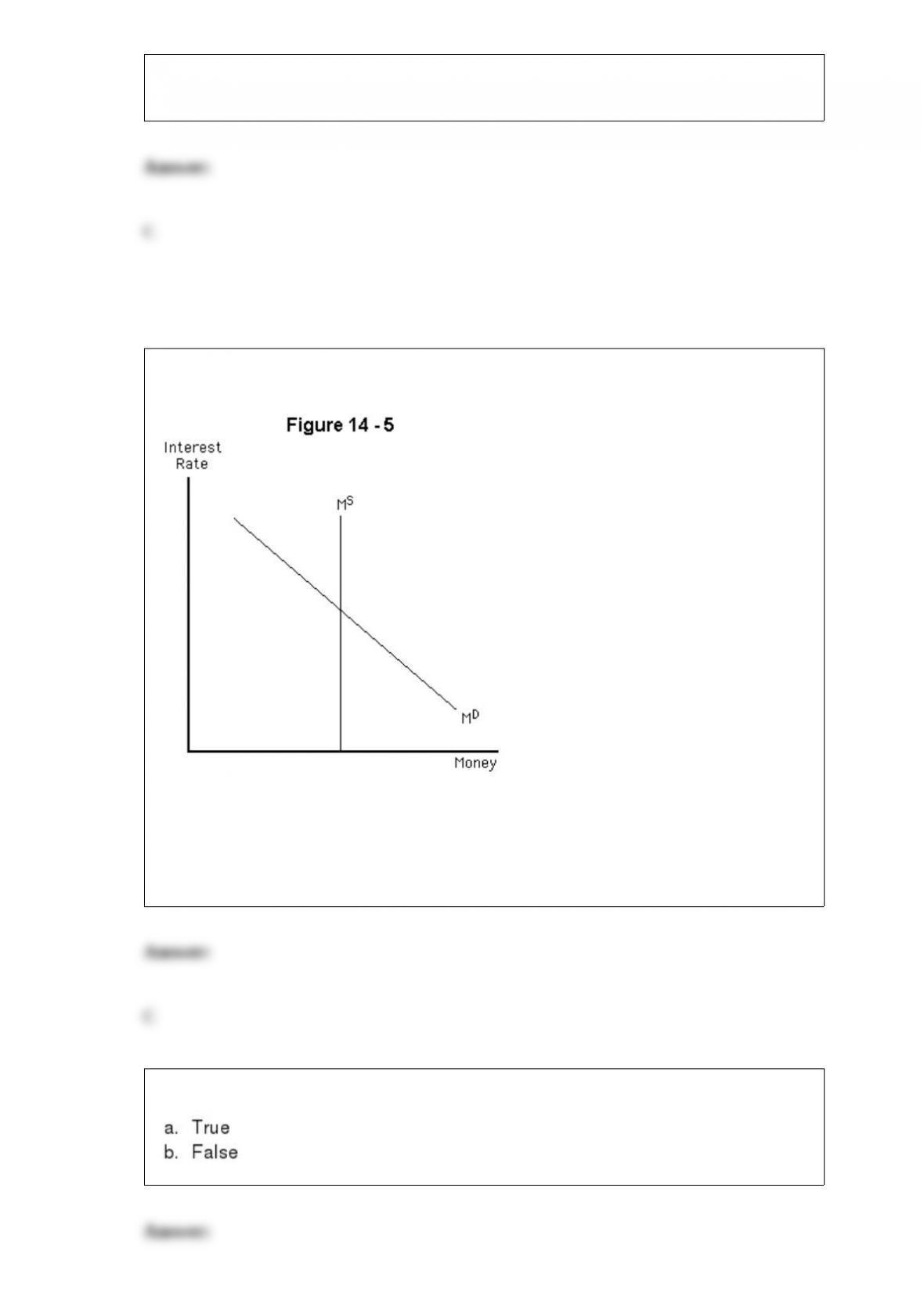
Refer to Figure 14-5. If the Fed wishes to reduce the interest rate, it will
a. increase money demand
b. decrease money demand
c. increase the money supply
d. decrease the money supply
e. simply set a lower market interest rate
An inferior good is defined by an income elasticity less than 1.

Household saving is the defined as consumption minus disposable income.
Under a managed float, if U.S. demand for British goods drops, which of the following
actions would the Bank of England need to take in order to stop any movement in the
dollar-pound exchange rate?
a. Buy British pounds for dollars in order to shift the demand curve for pounds leftward
b. Sell British pounds for dollars in order to shift the supply curve for pounds leftward
c. Sell British pounds for dollars in order to shift the supply curve for pounds rightward
d. Buy British pounds for dollars in order to shift the demand curve for pounds
rightward
e. Do nothing, since purchasing power parity will correct the situation in the short run.
If the interest rate dropped, what would be the effect on spending?
a. Spending on automobiles would decrease.
b. Business spending on new capital would decrease.
c. Spending on consumer durables would decrease.
d. Business spending on new factories would increase.
e. Spending on new homes would decrease.
An increase in the wage rate will cause
Whether or not a reduction in the budget deficit is a pro-growth measure depends on
how the budget deficit shrinks.
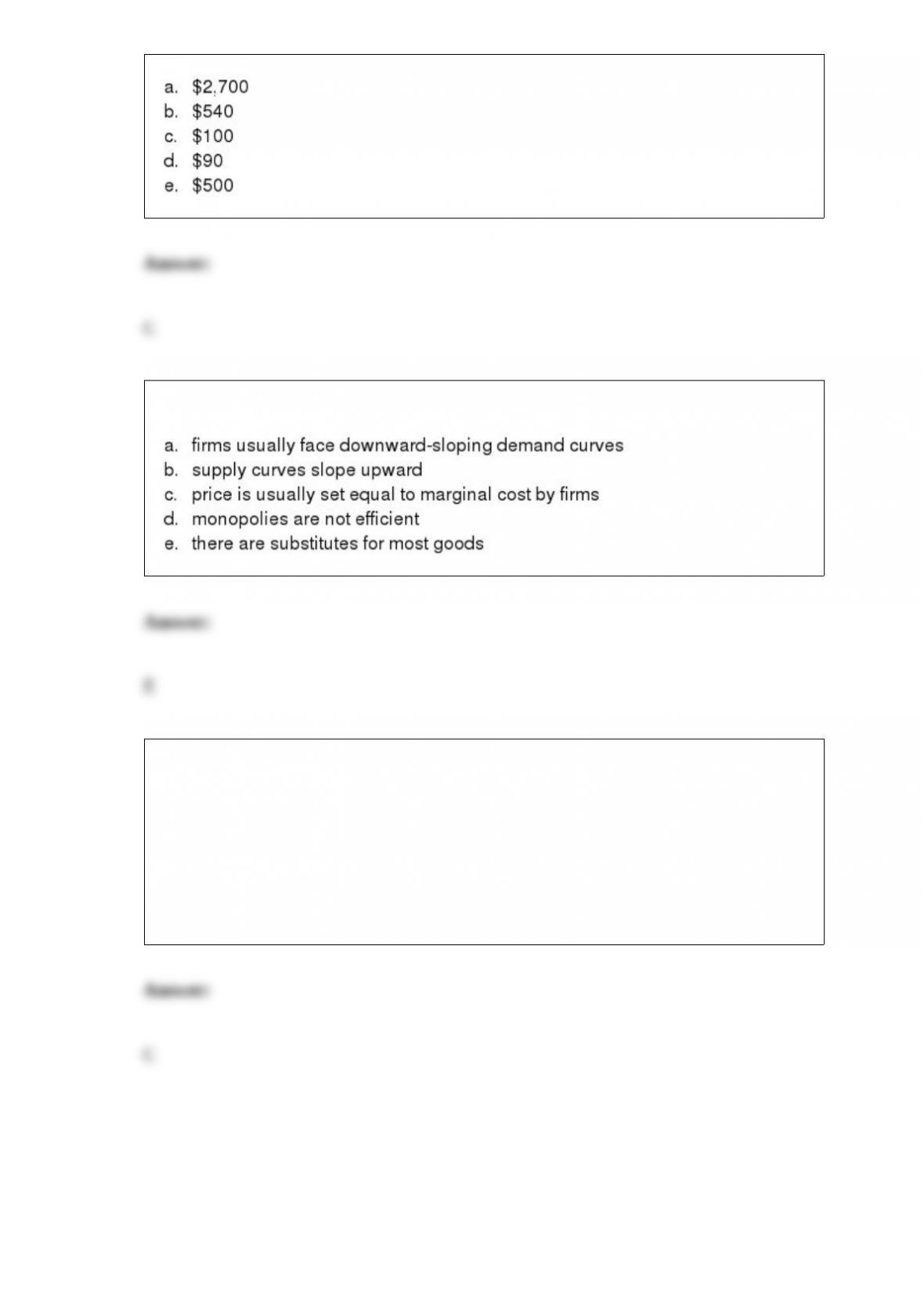
Figure 7-6 shows the total cost for six different levels of output for a particular firm.
What is the marginal cost (MC) of the last unit of output listed in the table (i.e., the fifth
unit of output)?
Most firms are not monopolies in the real world because
If the Swiss price level fell relative to the British price level, there would be
a. a rightward movement along the supply of British pounds curve in the franc-pound
market
b. a leftward movement along the supply of British pounds curve in the franc-pound
market
c. a rightward shift of the supply of British pounds curve in the franc-pound market
d. a leftward shift of the supply of British pounds curve in the franc-pound market
e. no change of the supply of British pounds curve in the franc-pound market