As a percentage of GDP, federal expenditures ________ from 1950 to the early 1990s,
________ from 1992 to 2001, and have ________ since 2001.
A) rose; fell; risen
B) fell; fell; risen
C) rose; rose; fallen
D) fell; rose; fallen
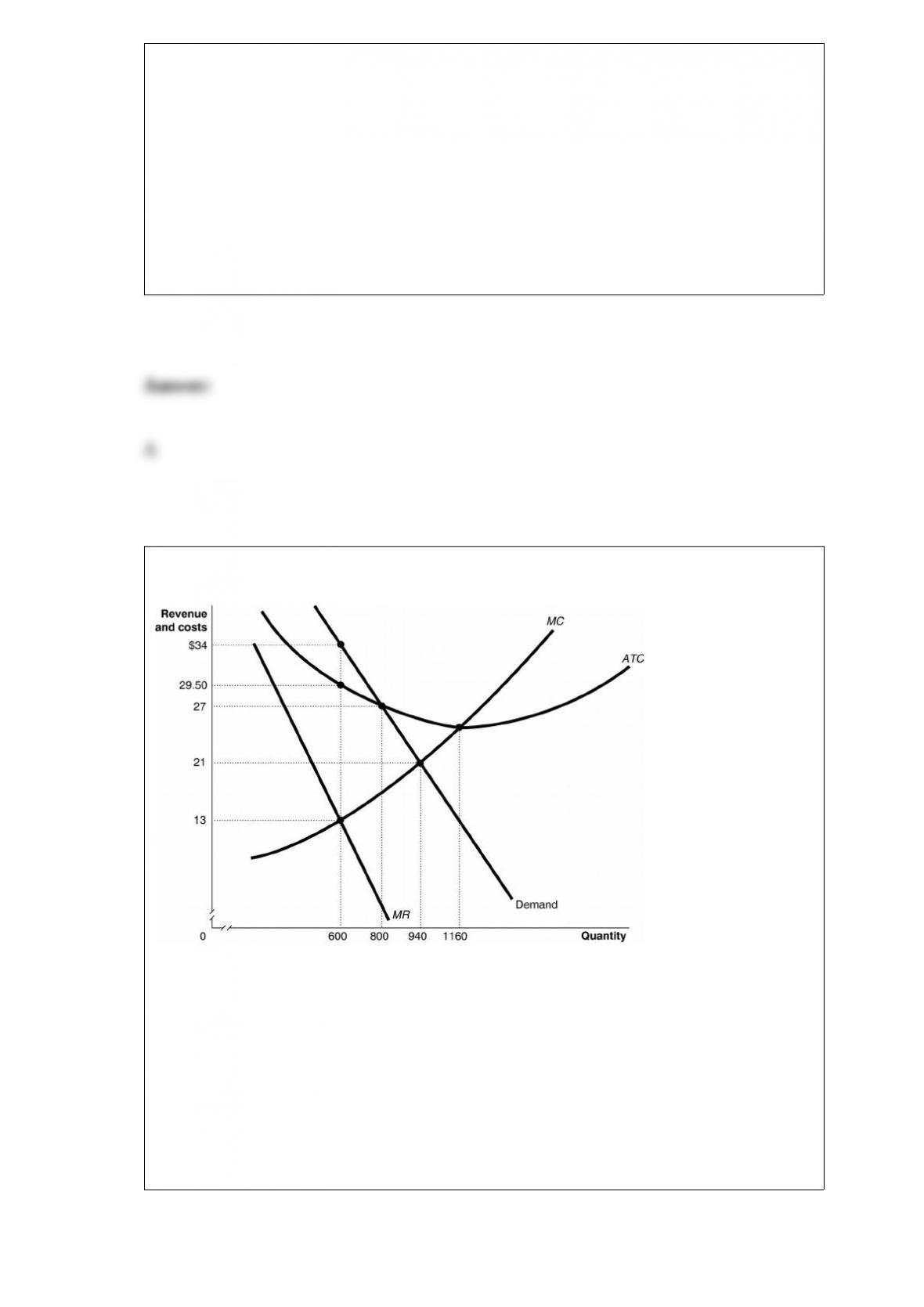
Figure 15-4
Figure 15-4 shows
the demand and cost curves for a monopolist. What is the
profit-maximizing/loss-minimizing output level?
A) 600 units
B) 800 units
C) 940 units
D) 1,160 units
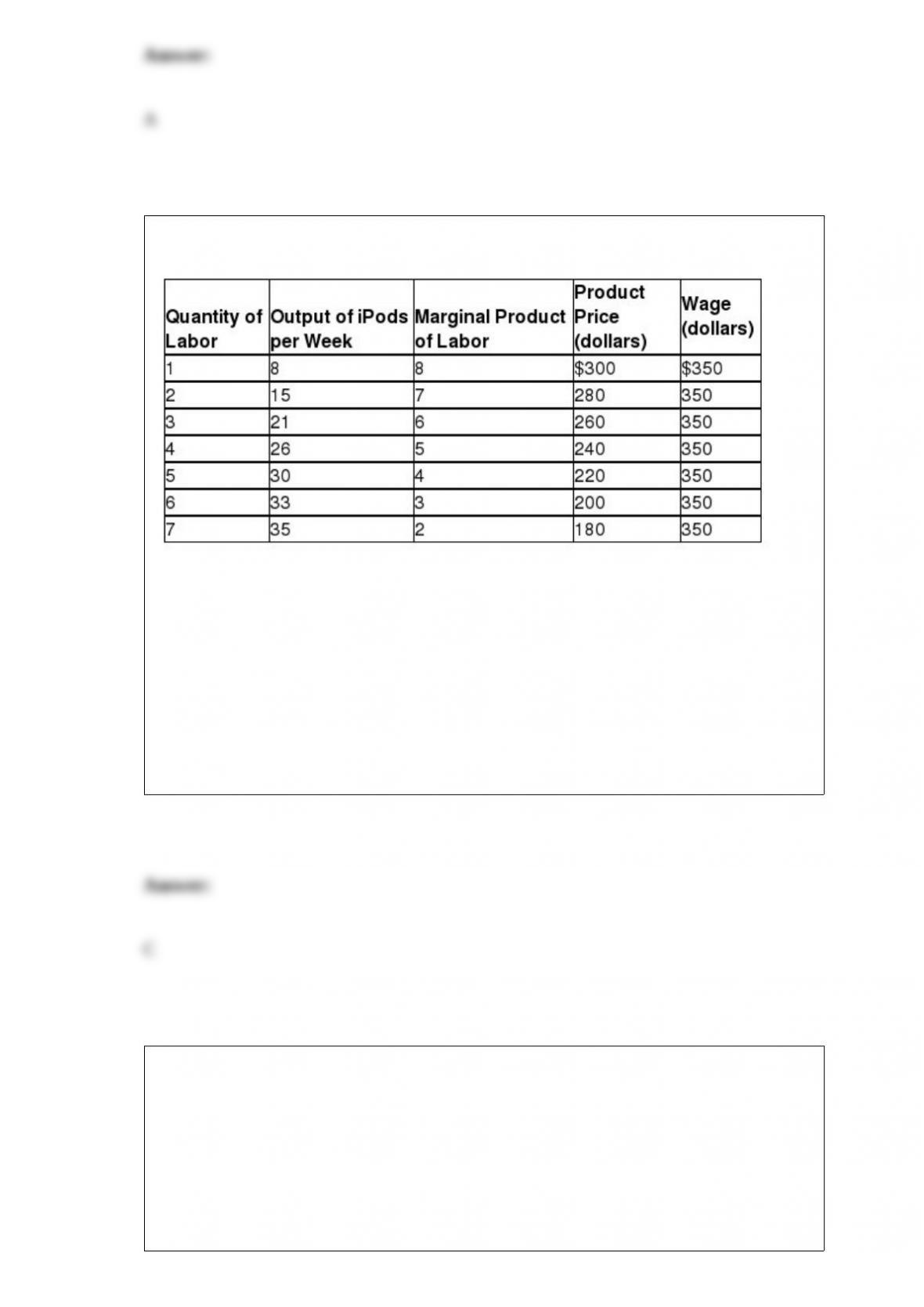
Table 17-2
The marginal revenue product of labor from the third unit of labor is
A) $5,460.
B) $1,560.
C) $1,260.
D) $780.
Experience with patents in the pharmaceutical industry shows that when patents on
drugs expire
A) most patients will continue to buy the drugs from the same firms because their
doctors recommend they buy brand-name drugs.
B) prices remain high without patent protection because of a lack of competition. Firms
that are not granted patents cannot compete with firms that are granted patents.

C) other firms are free to produce chemically identical drugs. Competition reduces the
profits that had been earned by the firms that received patents.
D) firms will find ways to obtain additional patent protection – often by making
cosmetic changes in drugs that were patented – so that they can continue charging high
prices.
A firm’s expansion path
A) is the same thing as its long-run average cost curve.
B) is a curve that shows a firm’s cost-minimizing combination of inputs for every level
of output, holding input prices constant.
C) shows the targeted growth rate in sales over the long run.
D) is a curve that shows expected profits at various price levels.
What is investment in a closed economy if you have the following economic data?
Y = $10 trillion
C = $5 trillion
TR = $2 trillion
G = $2 trillion A) $2 trillion
B) $3 trillion
C) $5 trillion
D) cannot be determined without information on taxes (T)

Many economists believe that when the federal government establishes an agency to
regulate a particular industry, the regulated firms try to influence the agency even if
these actions do not benefit the public. Economists refer to this result of government
regulation by which of the following terms?
A) regulatory capture
B) logrolling
C) special interest regulation
D) the regulatory paradox
In an effort to discover whether or not workers understand inflation, economist Robert
Shiller conducted a survey. When asked about the effect of general inflation on their
wages or salary, the most popular response coming from workers was:
A) “My wages usually catch up to rising prices within a year.”
B) “The price increase will create extra profit for my employer…. There will be no
affect on my pay.”
C) “My wages have always increased by more than the rate of inflation.”
D) None of the above is correct.

Many colleges and universities practice yield management. As a result, they offer
different financial aid packages to different students. One result of yield management is
that colleges often
A) offer a less generous financial aid package to students who apply for an early
admission decision.
B) offer a more generous financial aid package to students who apply for an early
admission decision.
C) offer a less generous financial aid package to students with relatively high family
incomes.
D) offer a less generous financial aid package to students who don’t participate in many
extracurricular activities when they are in high school.
Which of the following displays rivalry and excludability in consumption?
A) a public good
B) a private good
C) a quasi-public good
D) a common resource
Expansionary fiscal policy will
A) shift the aggregate demand curve to the left.
B) shift the aggregate demand curve to the right.
C) not shift the aggregate demand curve.
D) shift the short-run aggregate supply curve to the left.
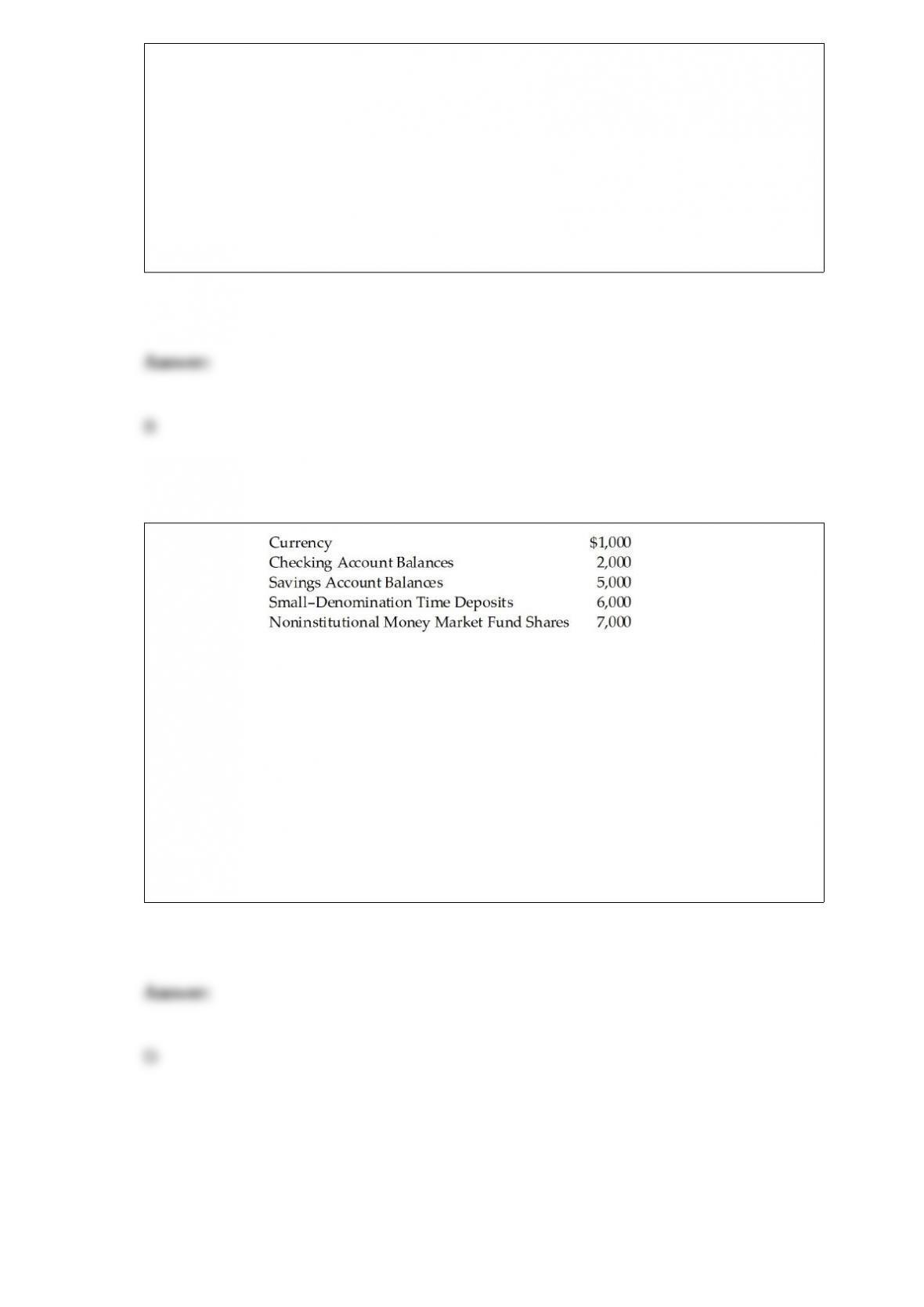
Scenario 25-1 Consider the
information above for a simple economy. Assume there are no traveler’s checks.
M2 in this simple economy equals
A) $3,000.
B) $8,000.
C) $14,000.
D) $21,000.