1) The demand for agricultural products is:
A.relatively elastic with respect to price.
B.relatively inelastic with respect to price.
C.relatively elastic with respect to income.
D.downward sloping to the individual farmer, but perfectly elastic to farmers as a
group.
2)
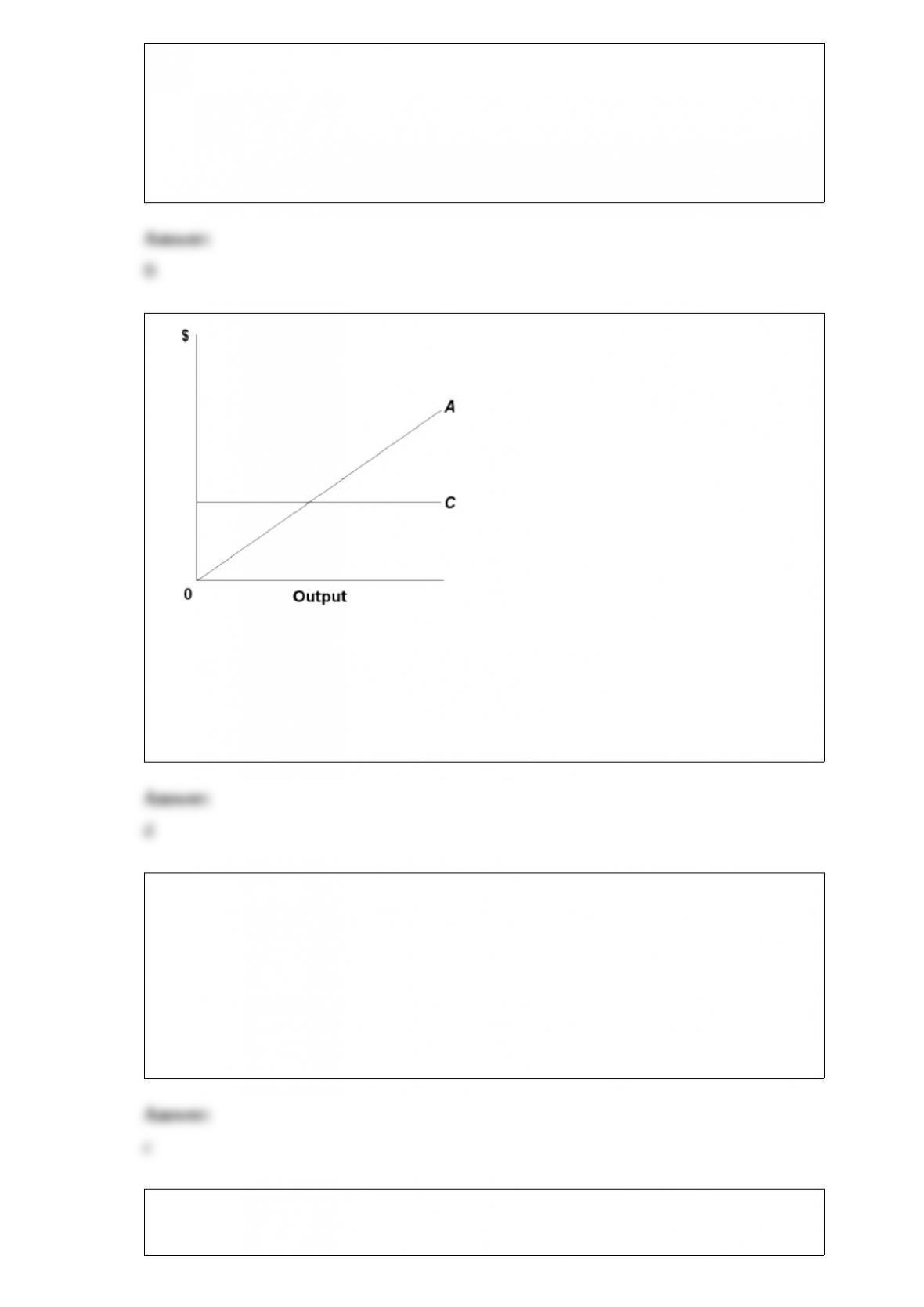
refer to the above diagram, which pertains to a purely competitive firm. curve c
represents:
a.total revenue and marginal revenue.
b.marginal revenue only.
c.total revenue and average revenue.
d.average revenue and marginal revenue.
3) the gdp tends to:
a.overstate economic welfare because it does not include certain nonmarket activities
such as the productive work of housewives.
b.understate economic welfare because it includes expenditures undertaken to offset or
correct pollution.
c.understate economic welfare because it does not take into account increases in leisure.
d.overstate economic welfare because it does not reflect improvements in product
quality.
4) The amount of reserves that a commercial bank is required to hold is equal to:
A.the amount of its checkable deposits.
B.the sum of its checkable deposits and time deposits.
C.its checkable deposits multiplied by the reserve requirement.
D.its checkable deposits divided by its total assets.
5)
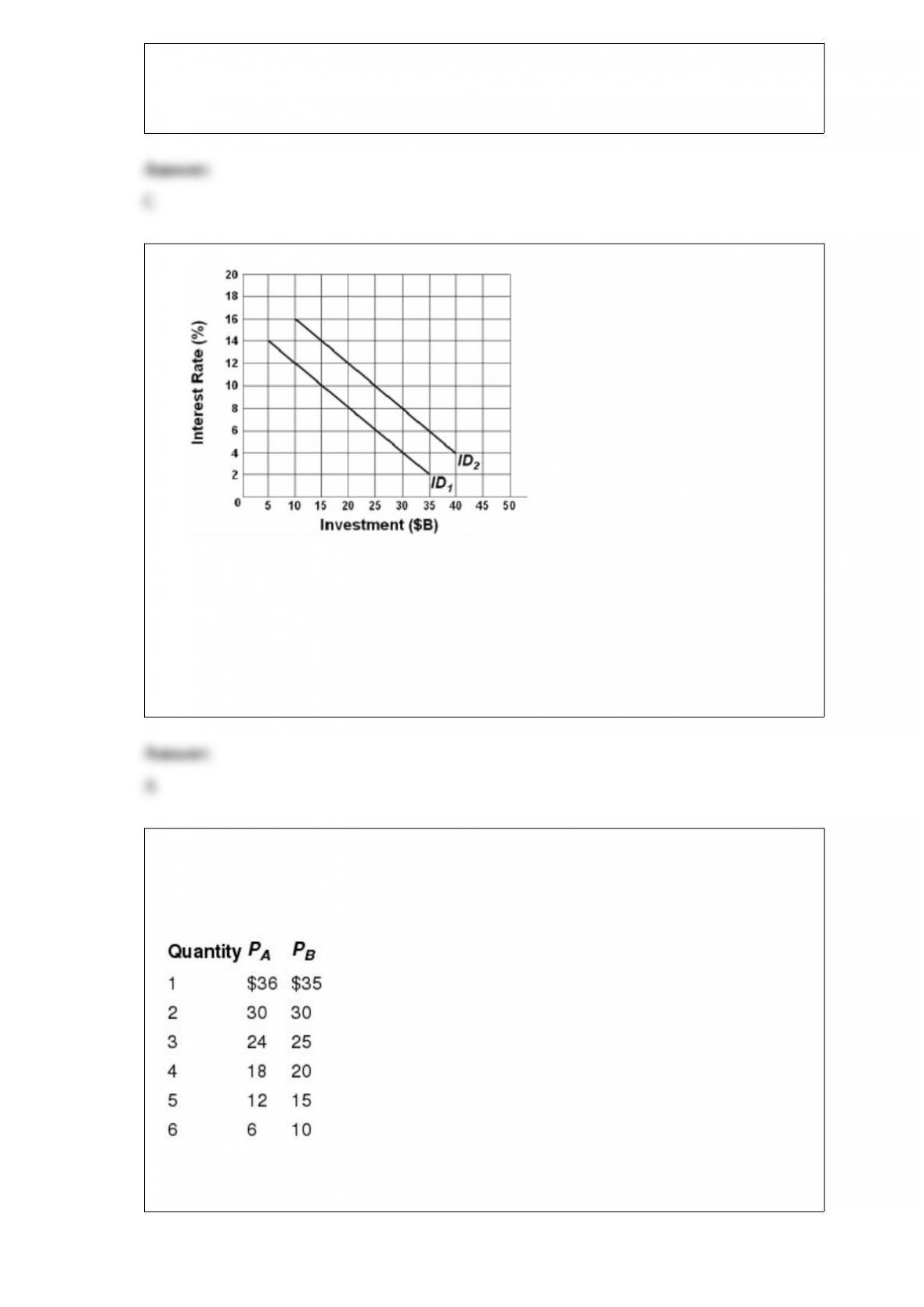
Refer to the above diagram. Initially assume that the investment demand curve is ID1.
Which of the following effects of financing a large public debt might shift the
investment demand curve from ID1 to ID2, wholly offsetting any crowding-out effect?
A.an improvement in profit expectations by businesses
B.a decrease in saving
C.a decline in the interest rate
D.an increase in the marginal propensity to consume
6) Data on two individuals preferences for a public good are reflected in the table
below. PA and PB represent the prices individuals A and B, the only two people in the
society, are willing to pay for the last unit of a public good, rather than do without.
(a)Complete the table below showing the collective willingness to pay for the public
good in this society.
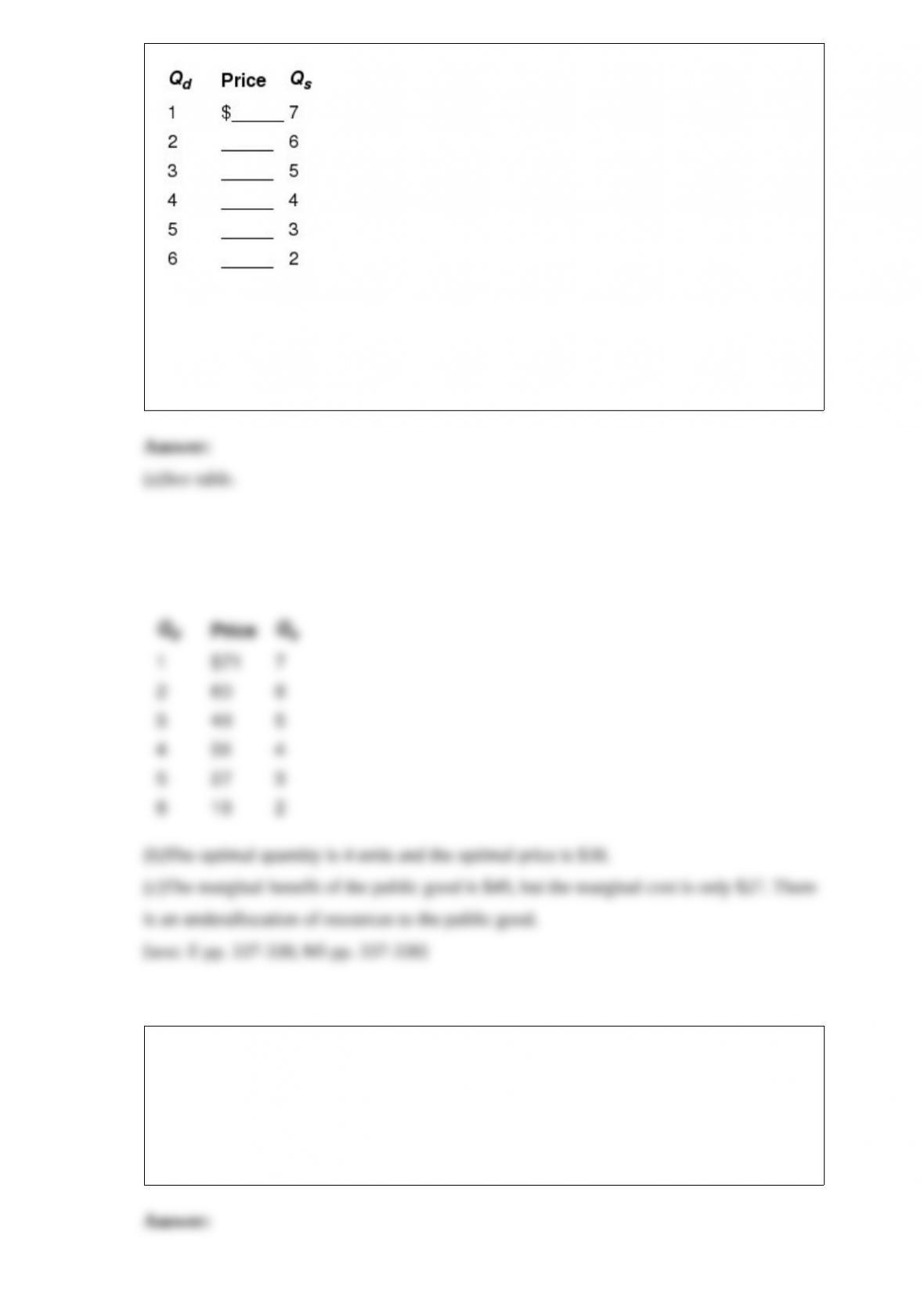
(b)Given the supply schedule for this public good as shown by the Qs column, what is
the optimal quantity of this public good and what is the optimal price?
(c)What is the perceived marginal benefit and perceived marginal cost when 3 units of
the public good are supplied? What does this indicate about the allocation of resources
to this public good?
7) If MPC = .5, a simultaneous increase in both taxes and government spending of $20
will:
A.decrease GDP by $20.
B.decrease GDP by $40.
C.increase GDP by $20.
D.increase GDP by $40.
8) The amount by which Federal tax revenues exceed Federal government expenditures
during a particular year is the:
A.Federal reserve.
B.budget deficit.
C.budget surplus.
D.public debt.
9)
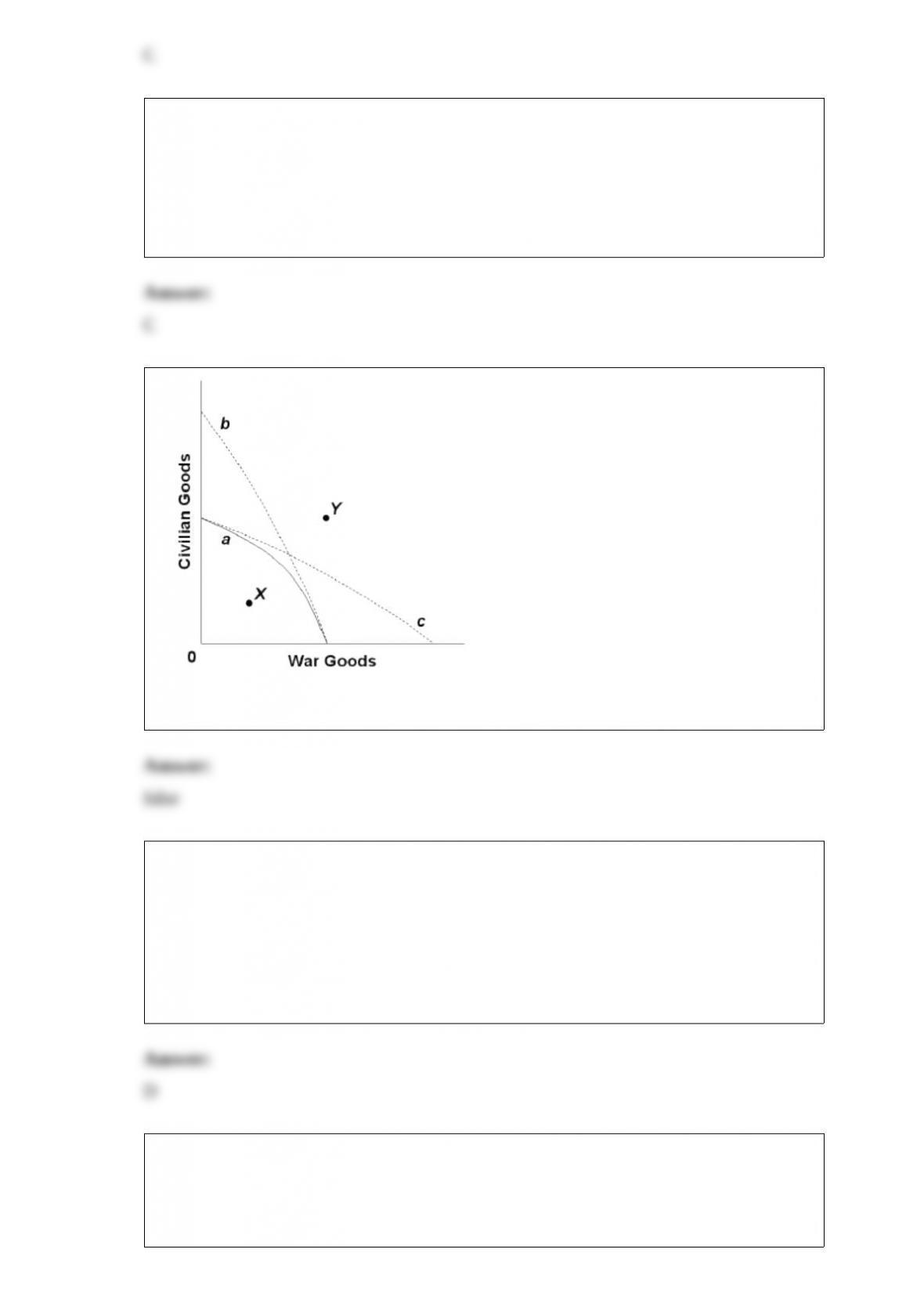
refer to the above diagram. given production possibilities curve (a), point y indicates
that society is failing to use available resources efficiently.
10) Henry George’s single tax movement was based on the argument that:
A.the tax structure should consist solely of a highly progressive tax on nonwage
incomes.
B.interest is unearned income and should be taxed away by government.
C.in less developed countries the supply of and demand for land will be such that land
will be a free good and therefore capable of bearing sizable taxes.
D.a high tax on land rent is justified because land rent performs no incentive function.
11) Compensating differences in wages pay workers for:
A.differences in worker training and skills.
B.differences in the nonmonetary characteristics of jobs.
C.geographic immobilities.
D.discrimination in hiring and firing.
12) Which of the following represents the most expansionary fiscal policy?
A.a $10 billion tax cut
B.a $10 billion increase in government spending
C.a $10 billion tax increase
D.a $10 billion decrease in government spending
13) Critics of unions argue that unions diminish efficiency and productivity by:
A.engaging in featherbedding.
B.precipitating strikes.
C.causing a misallocation of labor.
D.doing all of these.
14) Economic development in DVCs often focuses on capital accumulation. Why?
15) In the long run, what would happen if the demand for agricultural products
suddenly became elastic? Explain.
16) What contributed to stagflations demise between 1982 and 1989? How did these
events affect aggregate supply and the Phillips Curve?
17) Assume that M is $300 billion and V is 10. What is the level of nominal GDP
according to the monetarist equation? If V rises by 10%, then according to the
monetarist equation, what will be the new level of nominal GDP?
18) Define the multiplier. How is it related to real GDP and the initial change in
spending? How can the multiplier have a negative effect?
19) Give an equation that shows the relationship between actual, required, and excess
reserves.