1) Granting a pharmaceutical company a patent for a new medicine will lead to
(i)a product that is priced higher than it would be without the exclusive rights.
(ii)incentives for pharmaceutical companies to invest in research and development.
(iii)higher quantities of output than without the patent.
a.(i) and (ii) only
b.(ii) and (iii) only
c.(i) and (iii) only
d.(i), (ii), and (iii)
2)
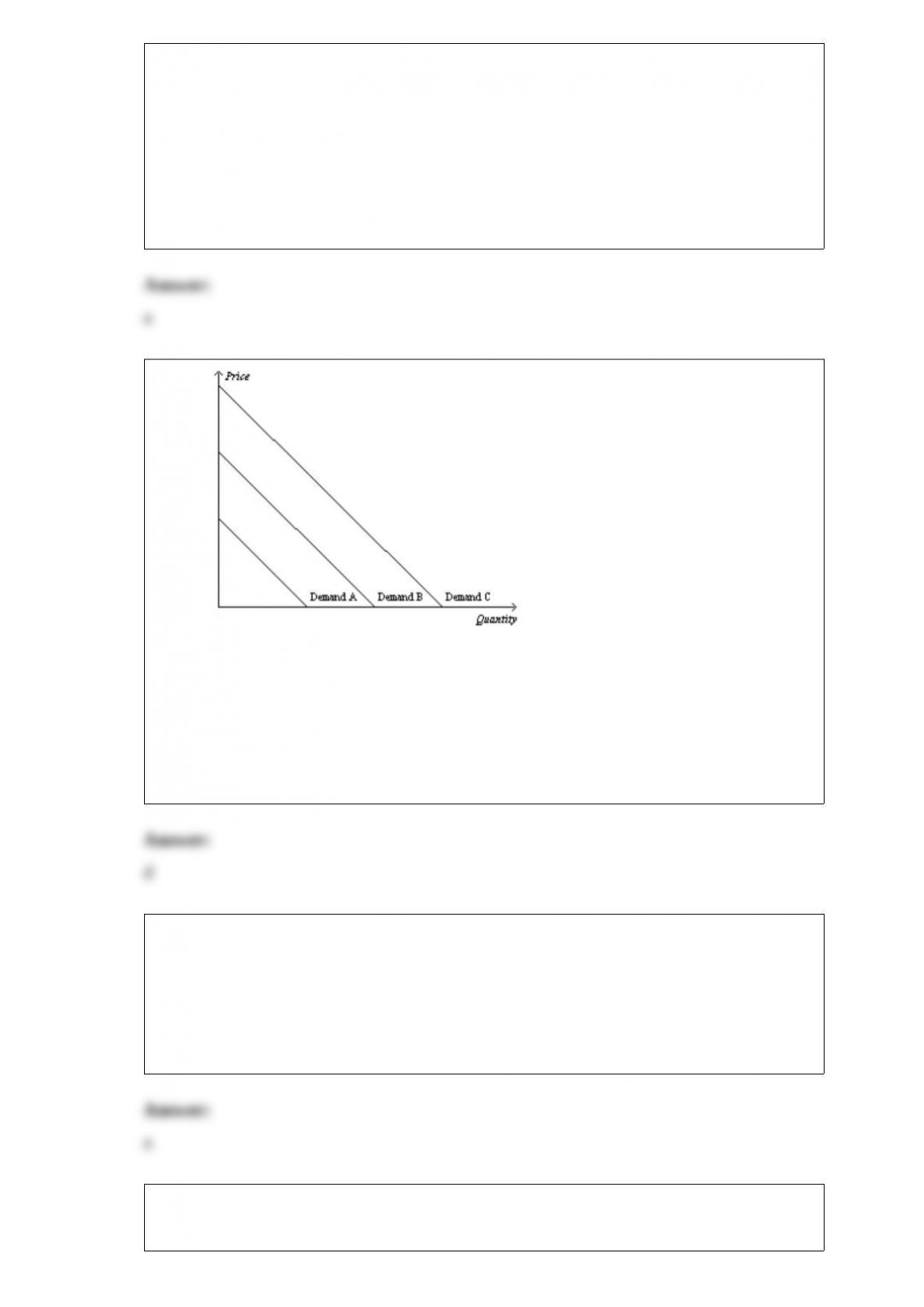
Which of the following would cause the demand curve to shift from Demand C to
Demand A in the market for tennis balls in the United States?
a.an increase in the price of tennis balls
b.a decrease in the price of tennis racquets
c.an expectation by buyers that their incomes will increase in the very near future
d.a decrease in the number of people in the United States under age 70
3) Given the market for illegal drugs, when the government is successful in reducing
the flow of drugs into the United States,
a.supply decreases, demand is unaffected, and price increases.
b.demand decreases, supply is unaffected, and price decreases.
c.demand and supply both decrease, leaving price essentially unchanged.
d.supply decreases, demand increases, and price increases substantially.
4) When quantity demanded exceeds quantity supplied at the current market price, the
market has a shortage, and market price will likely rise in the future to eliminate the
shortage.
a.True
b.False
5) Suppose that a competitive firm hires labor up to the point at which the value of the
marginal product equals the wage and that labor is the only input that varies for the
firm. If the firm pays a wage of $700 per week and the marginal product of labor equals
35 units per week, then the marginal cost of producing an additional unit of output is
a.$20.
b.$35.
c.$700.
d.We do not have enough information to answer this question.
6) If the for apples is 0.8, then a 2.4% increase in the price of apples will decrease the
quantity demanded of apples by
a.1.92%, and apples sellers’ total revenue will increase as a result.
b.1.92%, and apples sellers’ total revenue will decrease as a result.
c.3%, and apples sellers’ total revenue will increase as a result.
d.3%, and apples sellers’ total revenue will decrease as a result.
7) Yasmine
Mercedes

Suppose Yasmine and Mercedes are the only two consumers in the market. When the
market price falls from $12 to $6, the quantity demanded increases by
a.6 units.
b.9 units.
c.12 units.
d.15 units.
8) Nancy and Sheila are both loan officers who started working for their current
employer during the same year, graduated from the same university with bachelors’
degrees in economics, and achieved similar performance reviews. Nancy earned a
master’s degree last year. If Nancy earns a higher annual salary than Sheila because she
has more formal education, the employer is
a.basing pay on experience.
b.paying efficiency wages.
c.practicing discrimination.
d.rewarding increases in human capital.
9) Prices allocate a market economy’s scarce resources.
a.True
b.False
10) A farmer has the ability to grow either corn or cotton or some combination of the
two. Given no other information, it follows that the farmer’s opportunity cost of a
bushel of corn multiplied by his opportunity cost of a bushel of cotton
a.is equal to 0.
b.is between 0 and 1.
c.is equal to 1.
d.is greater than 1.
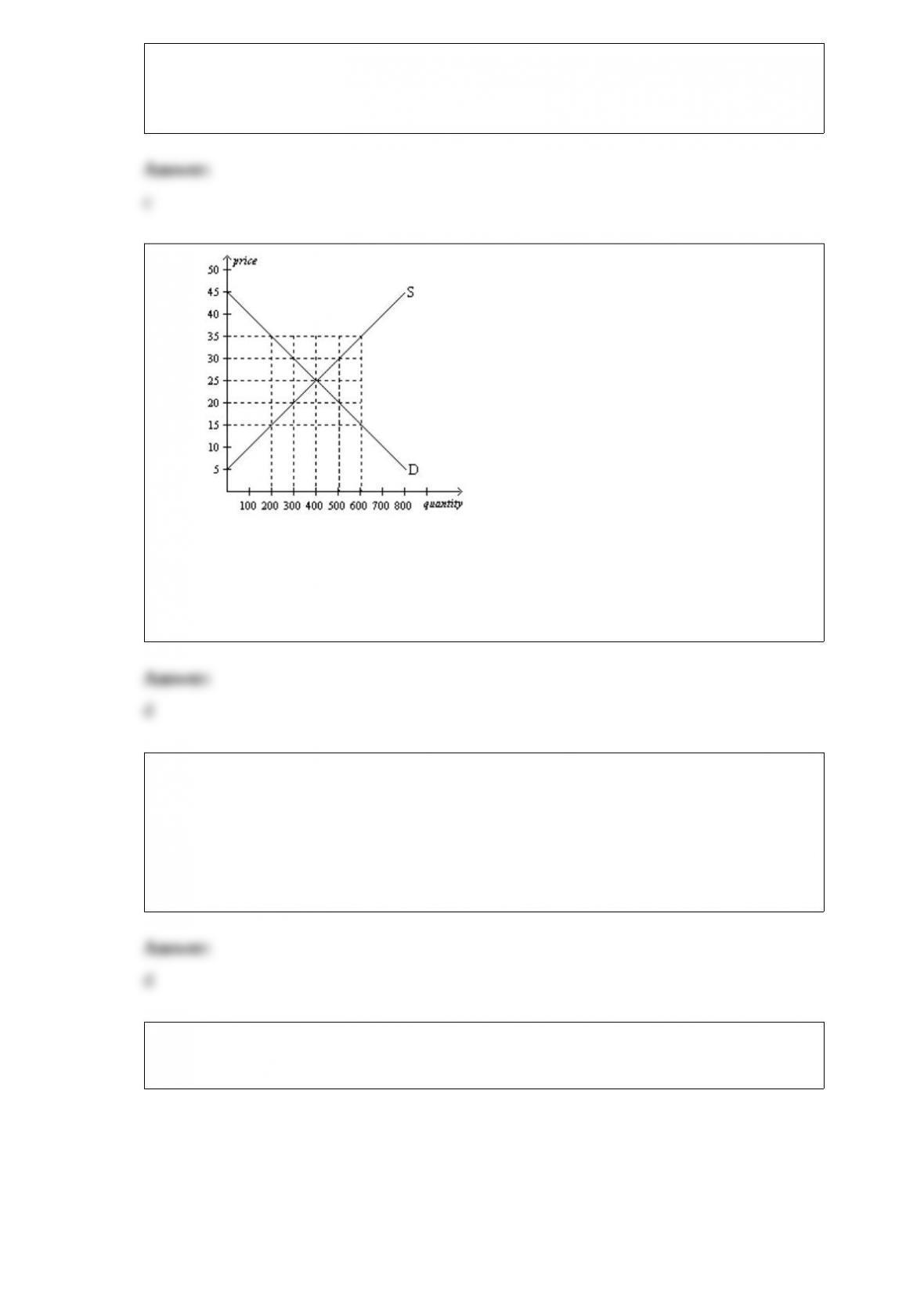
11) At a price of $35, there would be
a.a shortage, and the price would tend to rise from $35 to a higher price.
b.a surplus, and the price would tend to rise from $35 to a higher price.
c.excess demand, and the price would tend to fall from $35 to a lower price.
d.excess supply, and the price would tend to fall from $35 to a lower price.
12) Monopolistic competition is an inefficient market structure because
a.price exceeds marginal cost.
b.it has a deadweight loss, just as monopoly does.
c.at the equilibrium, some consumers will value the good at more than the marginal cost
of production.
d.All of the above are correct.
13) Table 13-6
Wooden Chair Factory
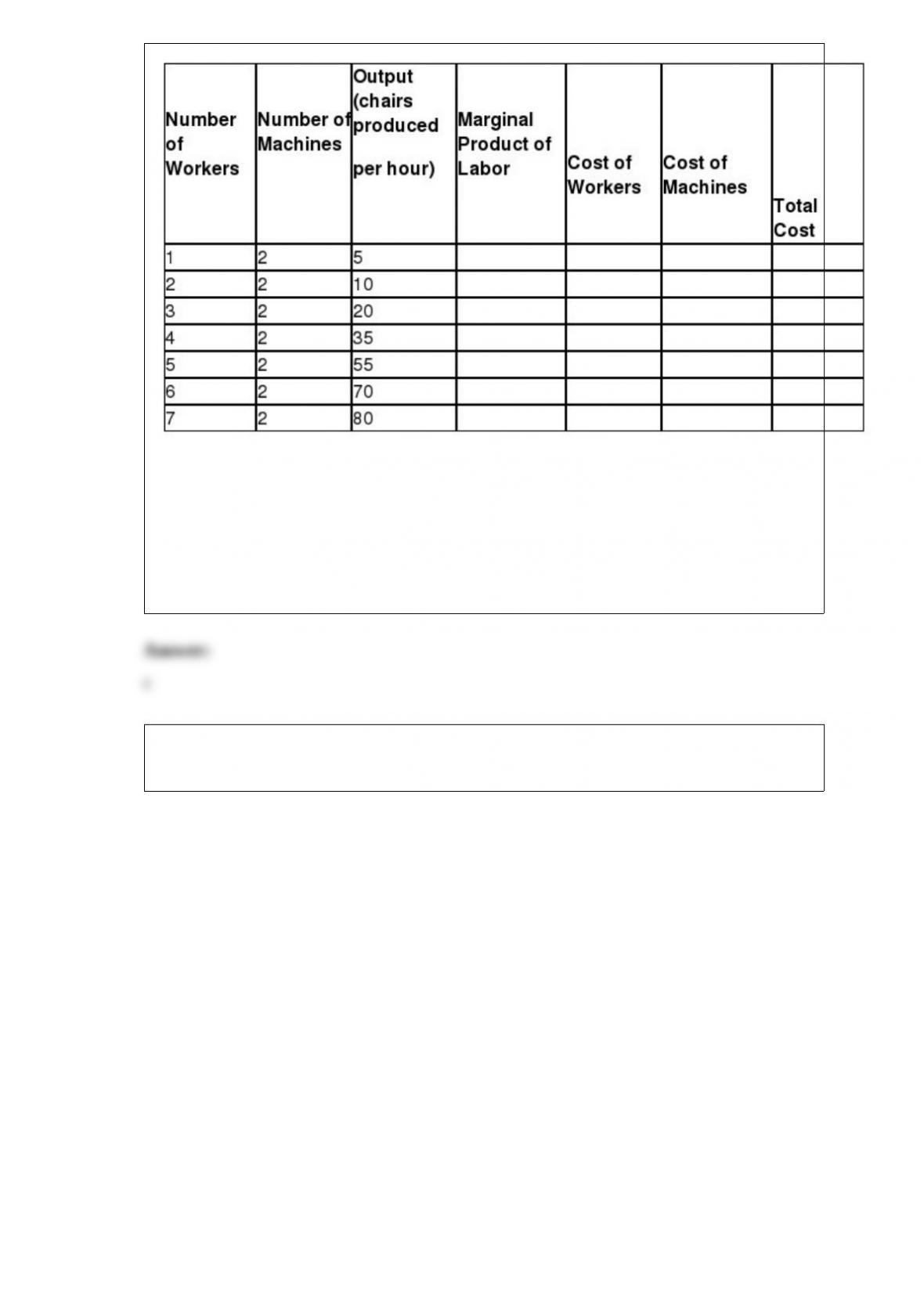
Each worker at the Wooden Chair Factory costs $12 per hour. The cost of each machine
is$20 per day regardless of the number of chairs produced. What is the total daily cost
of producing at a rate of 55 chairs per hour if the factory operates 8 hours per day?
a.$480
b.$576
c.$520
d.$616
14) Figure 9-6
The figure illustrates the market for roses in a country.
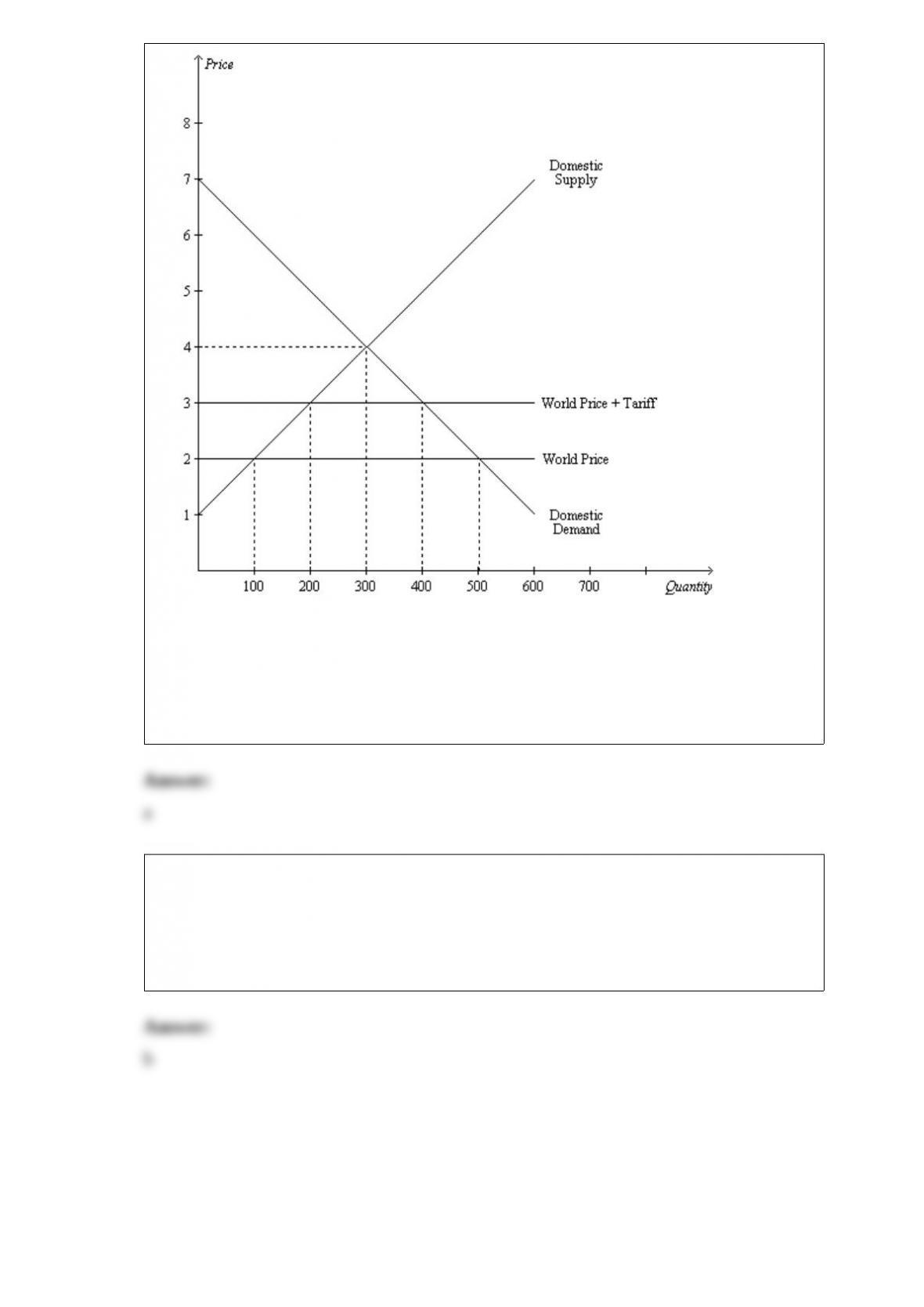
The amount
of deadweight loss caused by the tariff equals
a. $100.
b. $200.
c. $400.
d. $500.
15) A cable television broadcast of a movie is
a.excludable and rival in consumption.
b.excludable and not rival in consumption.
c.not excludable and rival in consumption.
d.not excludable and not rival in consumption.