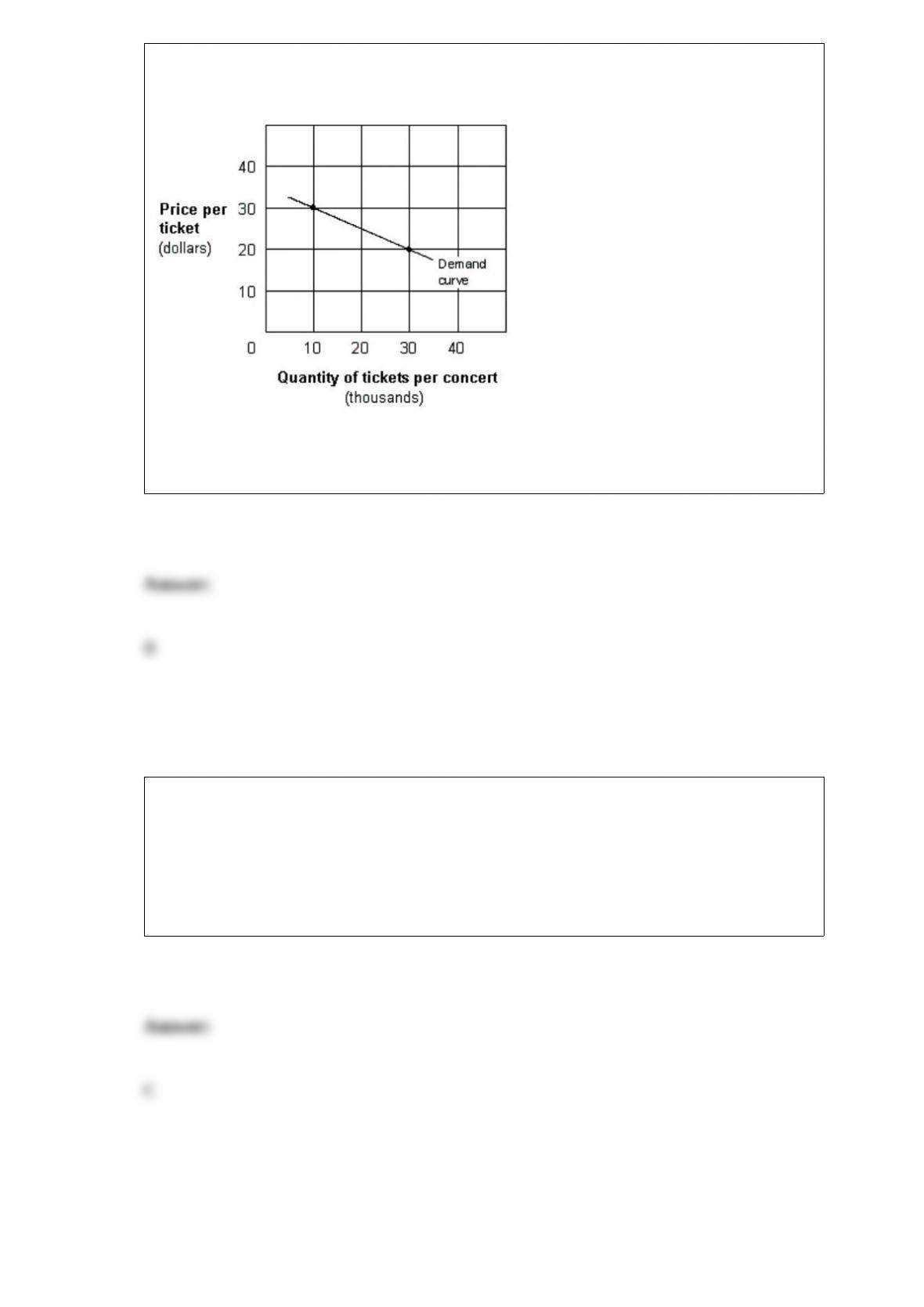
Exhibit 5-6 Demand curve for concert tickets
In Exhibit 5-6, the demand curve for concert tickets shown above is classified as:
a. inelastic. c. unitary elastic.
b. elastic. d. cross elastic.
Which of the following factors is associated with products with a highly price elastic
demand?
a. Few close substitutes.
b. A very short time period for consumers to respond to price changes.
c. Many very close substitutes.
d. A per unit price that is only a very small portion of most peoples’ budgets.
The marginal revenue curve of a monopolistically competitive firm will always lie:
a. below the firm’s demand curve. c. parallel to the firm’s quantity axis.
b. parallel to the firm’s demand curve. d. above the firm’s demand curve.
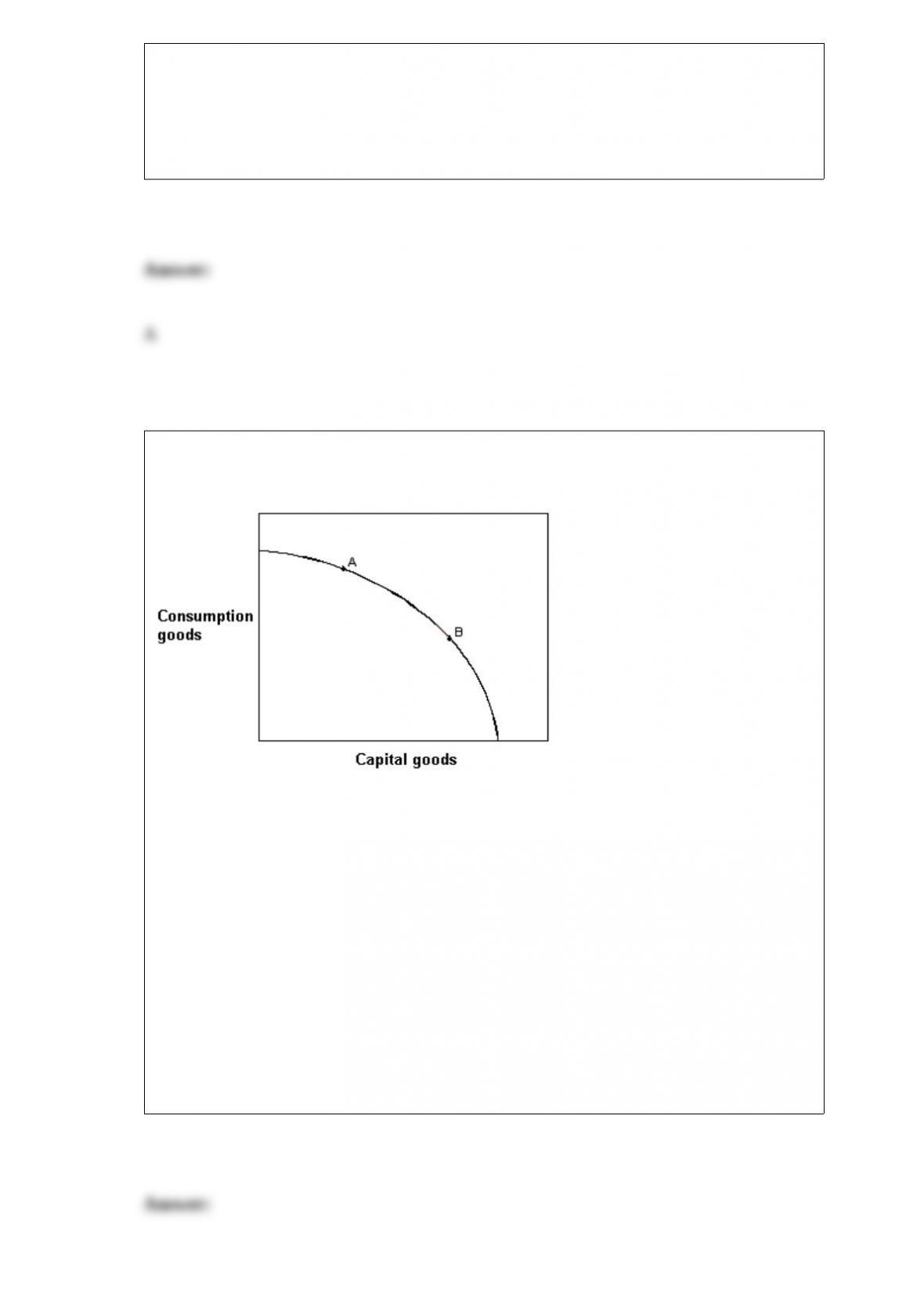
Exhibit 2-17 Production possibilities curve
In Exhibit 2-17, if countries A and B currently have the same production possibilities
curve (PPC) as given in the figure, but this year country A locates at point A on its PPC
and country B locates at point B on its PPC, then country A:
a. is better off than country B.
b. will grow at a faster rate than country B.
c. will grow at a slower rate than country B.
d. is producing more capital goods than country B.
e. is more efficient than country B.

Exhibit 7-13 Cost curves
In Exhibit 7-13, TFC is shown by the graph labeled:
a. I.
b. II.
c. III.
d. IV.
e. V.
If we measure the income elasticity of a good as 1.8, this means this good is a(n):
a. luxury good.
b. substitute good.
c. complementary good.
d. inferior good.
e. good from the food group.

If market supply decreases and, simultaneously, market demand increases, the new
equilibrium will show:
a. market price will decrease, and market quantity exchanged will increase.
b. market price will increase, and market quantity exchanged will decrease.
c. market price will increase, and the quantity exchanged could increase, decrease, or
remain the same.
d. market price could increase, decrease, or remain the same, and quantity exchanged
will increase.
e. market price will increase, decrease, or remain the same, and quantity exchanged will
decrease.
The number of the countries of the world classified as a less developed country (LDC)
is about:
a. 50.
b. 75.
c. 100.
d. 150.
e. 300.

Critics of advertising argue that it:
a. lowers price by increasing competition.
b. results in more variety of products.
c. establishes brand loyalty, which promotes competition.
d. serves as a barrier to entry for new firms.
For which pair of firms would a merger be horizontal?
a. Avis Rentals and United Airlines
b. Rawlings and Nike
c. Barnes and Noble and Wordsworth Booksellers
d. Starbucks and Baskin and Robbins
e. Samuel Adams and Samsonite
Exhibit 8-17 Marginal revenue and cost per unit curves
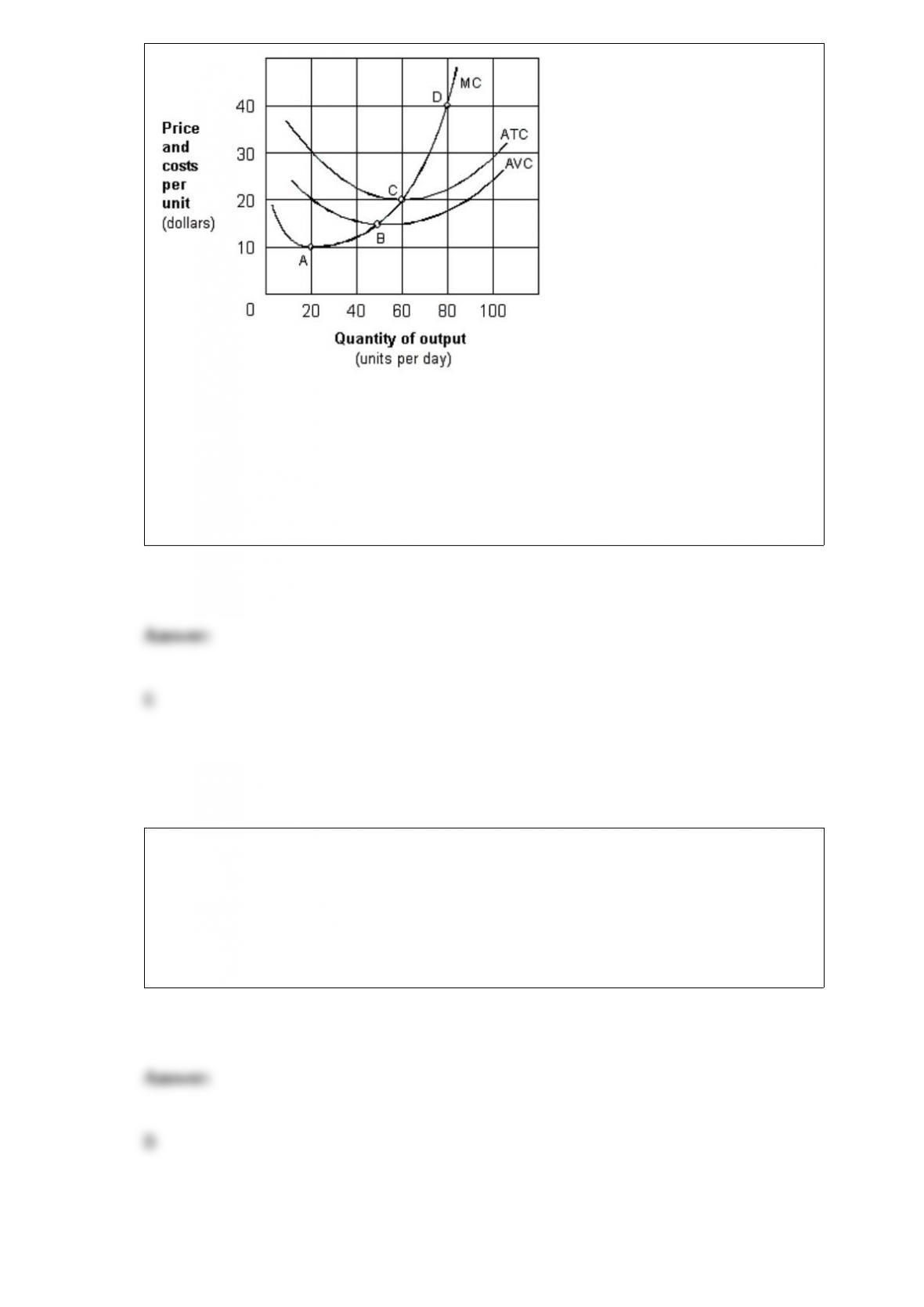
As shown in Exhibit 8-17, the price at which the firm earns zero economic profit in the
short-run is:
a. $10 per unit.
b. $15 per unit.
c. $40 per unit.
d. more than $20 per unit.
e. $20 per unit.
The demand curve a monopolist faces:
a. is more elastic than a perfectly competitive firm’s demand curve.
b. is the market demand curve.
c. is as elastic as a perfectly competitive firm’s demand curve.
d. is not affected by the prices of complements.
e. will not shift in response to a change in consumer tastes.

Which of the following is true?
a. The production possibilities curve indicates that it will be impossible to expand total
output with the passage of time.
b. As long as resources are scarce, output cannot be increased.
c. The size of the economic pie is fixed, and therefore, if one individual has more
income, others must have less.
d. Over time, the output of goods and services can be increased through human
ingenuity and discovery of better ways of doing things.
An advance in technology which increases labor productivity will shift the:
a. labor demand curve to the left.
b. MFC curve to the left.
c. MP curve downward.
d. labor demand curve to the right.
e. product demand to the right.
If a hotel room priced at 120,000 Venezuela bolivar per night can be purchased for 80
U.S. dollars, the exchange rate is:
a. 9,600 bolivar per dollar. c. 1,500 bolivar per dollar.
b. 1,500 dollars per lira. d. .00066 bolivar per dollar.
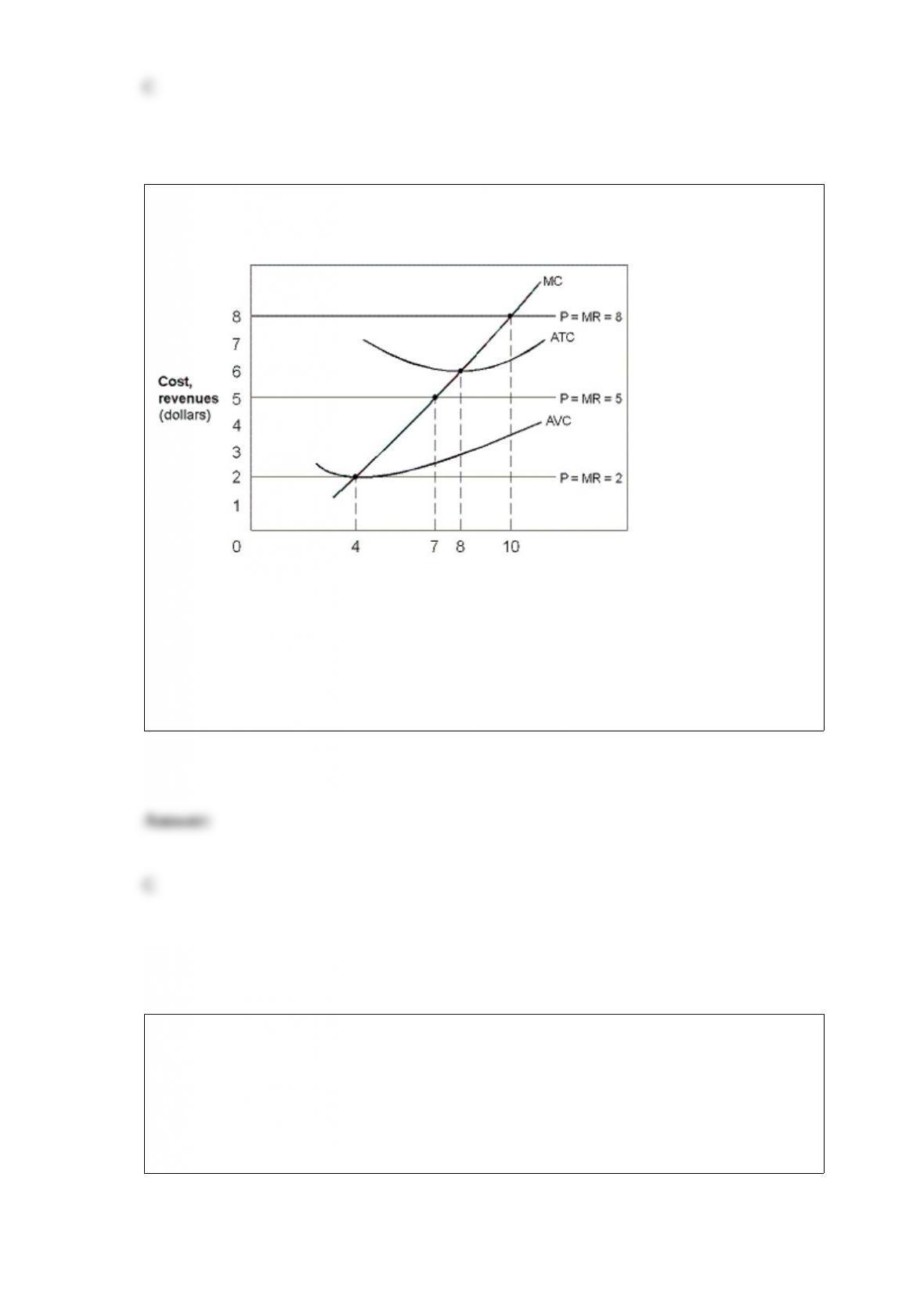
Exhibit 8-11 A firm’s cost and marginal revenue curves
In Exhibit 8-11, when the price rises from $5 to $8, the profit-maximizing (or
loss-minimizing) firm goes from making a:
a. loss to making a smaller loss.
b. loss to making a larger loss.
c. loss to making a profit.
d. profit to making a loss.
e. profit to making a larger profit.
Assume the price of Nikes decreases. As a result, consumers increase the quantity of
Nikes purchased each year and purchase fewer Reeboks. This is an example of the:
a. substitution effect.
b. income effect.
c. utility effect.
d. consumption effect.