1) The Federal Reserve System:
A.has the same status as the Supreme Court.
B.is basically an independent agency.
C.has the status of a Congressional committee.
D.is an agency of the executive branch of the Federal government.
2) approximately what percentage of the federal government’s tax revenues are
generated from personal income taxes?
a.80 percent
b.18 percent
c.37 percent
d.45 percent
3)
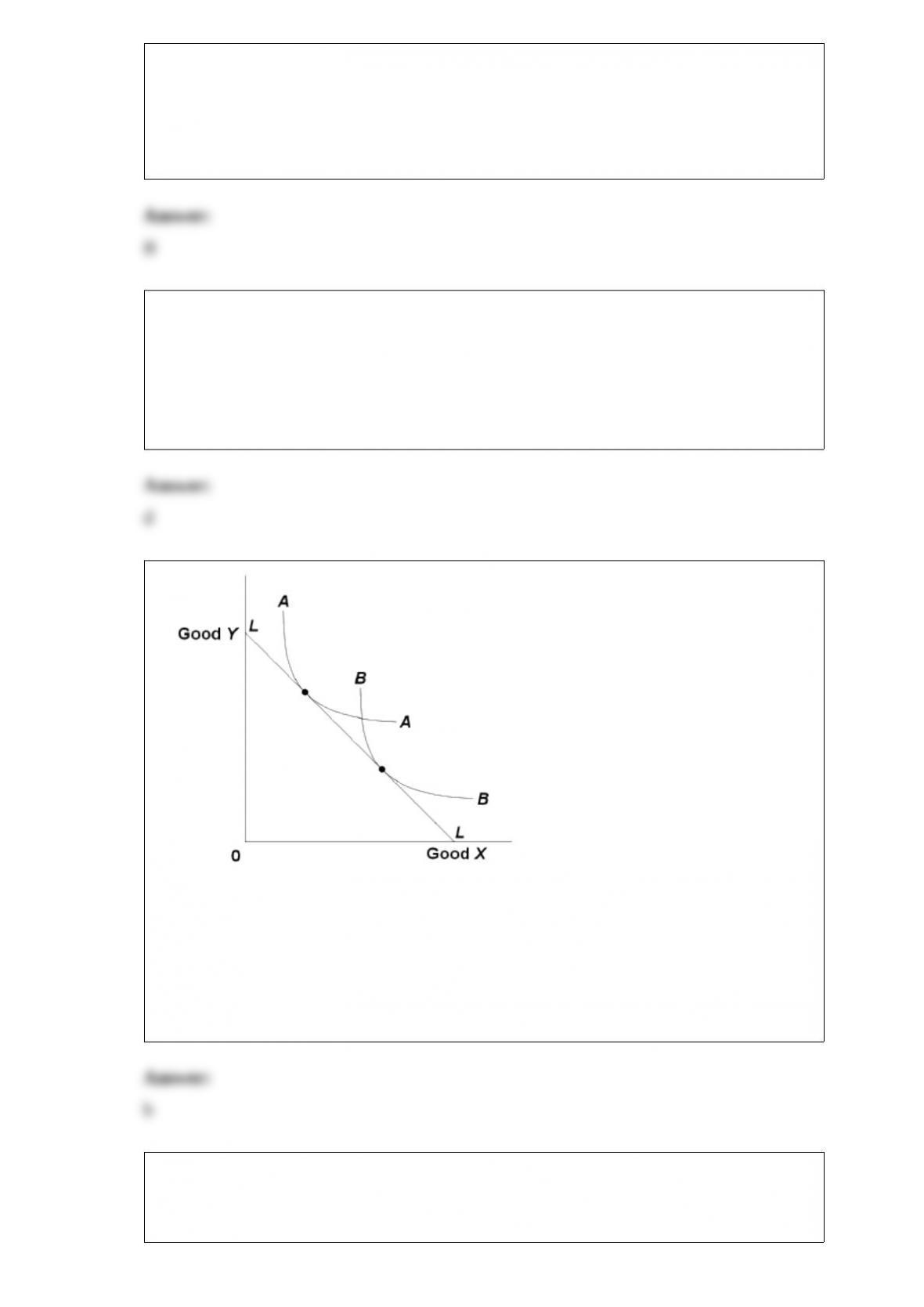
aa is al’s indifference curve and bb is betty’s. al and betty have the same budget line, ll.
this information implies that:
a.al’s demand for x is stronger than betty’s.
b.al’s demand for y is stronger than betty’s.
c.al and betty have the same demand for both products.
d.al will buy some of x, but betty will not.
4) If the Fed wants commercial banks to borrow and expand their reserves by a specific
amount, what monetary policy tool best guarantees that it will happen?
A.term auction facility
B.open-market operations
C.Federal funds rate
D.reserve ratio
5) On a diagram where the interest rate and the quantity of money demanded are shown
on the vertical and horizontal axes respectively, the asset demand for money can be
represented by:
A.a line parallel to the horizontal axis.
B.a vertical line.
C.a downsloping line or curve from left to right.
D.an upsloping line or curve from left to right.
6) the market system’s answer to the fundamental question “how will the goods and
services be produced?” is essentially:
a.”with as much machinery as possible.”
b.”using the latest technology.”
c.”by exploiting labor.”
d.”using the least-cost production techniques.”
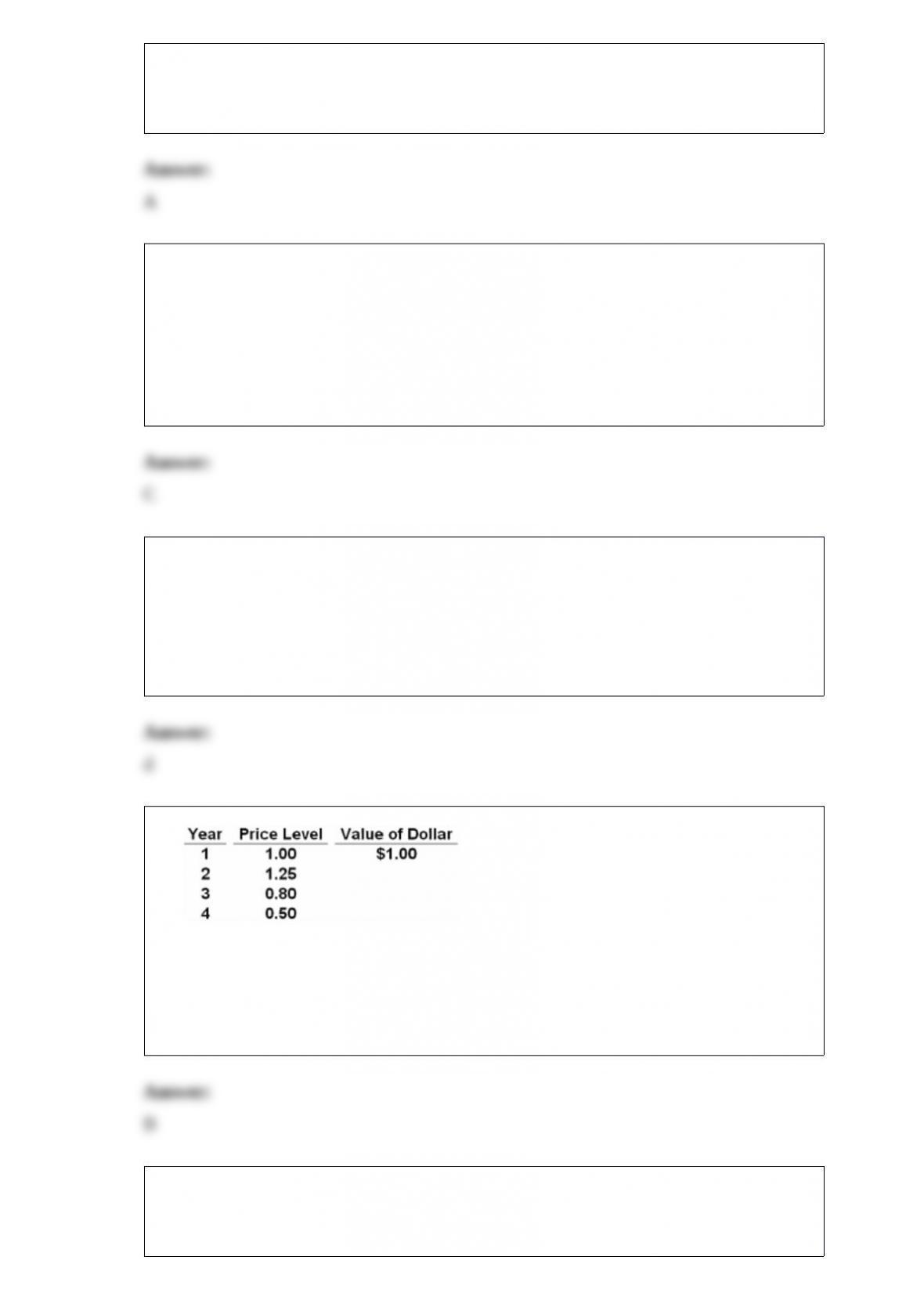
7)
Refer to the above table. The value of the dollar in year 3 is:
A.$1.00.
B.$1.25.
C.$.80.
D.$1.10.
8) Suppose American winemakers convince the Federal government to issue a directive
to serve only domestically produced wine at government functions. This would be an
example of:
A.nonselectivity.
B.the Coase theorem.
C.logrolling.
D.rent-seeking behavior.
9) The incidence of an excise tax is:
A.such that the tax is progressive in its effect.
B.distributed among the consumer and the seller in a manner determined by the
elasticities of demand and supply.
C.upon the consumer of the product.
D.upon the seller of the product.
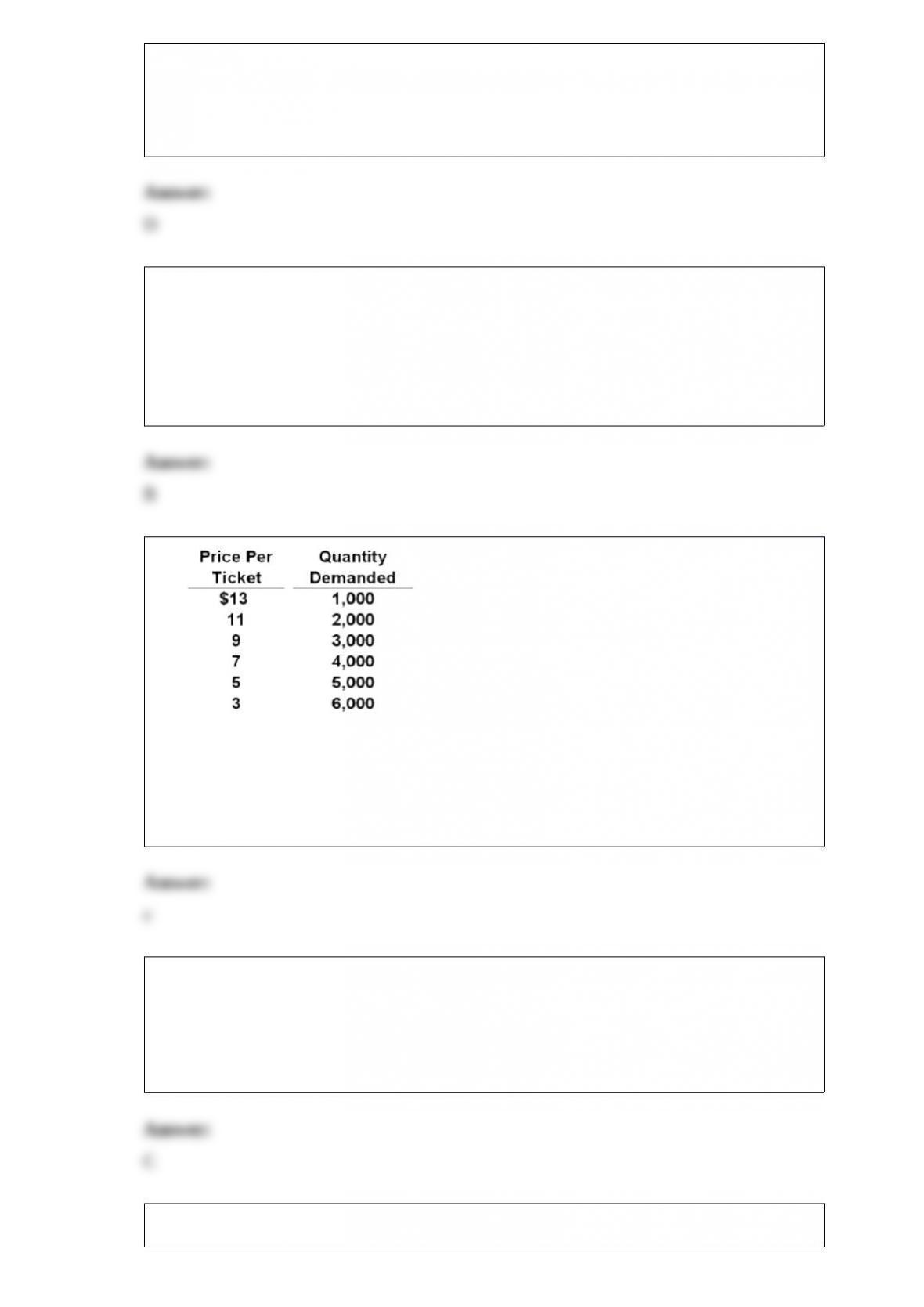
10)
refer to the above information. over the $11-$9 price range, demand is:
a.perfectly elastic.
b.perfectly inelastic.
c.elastic.
d.inelastic.
11) Public goods are those for which there:
A.is no free-rider problem.
B.are no externalities.
C.is nonrivalry and nonexcludability.
D.is neither an adverse selection nor moral hazard problem.
12) If a country has a total fertility rate of 1.8, then all else equal we would expect:

A.population in that country to rise over time.
B.population in that country to fall over time.
C.the replacement rate to also equal 1.
D.the population to remain stable over time.
13) Under an international gold standard:
A.a nation sacrifices an independent monetary policy.
B.gold flows between nations would always promote macroeconomic stability.
C.exchange rates would fluctuate with changes in demand and supply.
D.balance of payments imbalances would be magnified.
14) which of the following is not a supply factor in economic growth?
a.the stock of capital
b.technological advance
c.the size and quality of the labor force
d.aggregate expenditures of households, businesses, and government
15) a point inside a production possibilities curve best illustrates:
a.unemployment.
b.the efficient use of resources.
c.the use of best-available technology.
d.unlimited wants.
16) the demand for commodity x is represented by the equation p = 100 – 2q and supply
by the equation p = 10 + 4q.
refer to the above information. if demand changed from p = 100 – 2q to p = 130 – q, the
new equilibrium quantity is:
a.15
b.20
c.24
d.32

17) Which of the following is least likely to be a problem for monetary policy?
A.The recognition lag.
B.The operational lag.
C.The administrative lag.
D.Cyclical asymmetry.
18) Insurance companies require male drivers under age 25 to pay higher insurance
rates than female drivers under age 25. Craig Raymond, however, is a safer driver than
the average female driver under age 25. Craig’s higher insurance rate reflects:
A.monopoly power.
B.statistical discrimination.
C.the insurance firm’s taste for discrimination.
D.human-capital discrimination.
19) (consider this) according to the council of economic advisers:
a.skilled immigrants regularly displace domestic-born workers.
b.skilled immigrants pay more in taxes than they receive in services from the
government.
c.immigration is a net drain on the u.s. economy and should be more tightly restricted.
d.children of immigrants frequently lack the skills to perform well academically,
particularly in math and science.
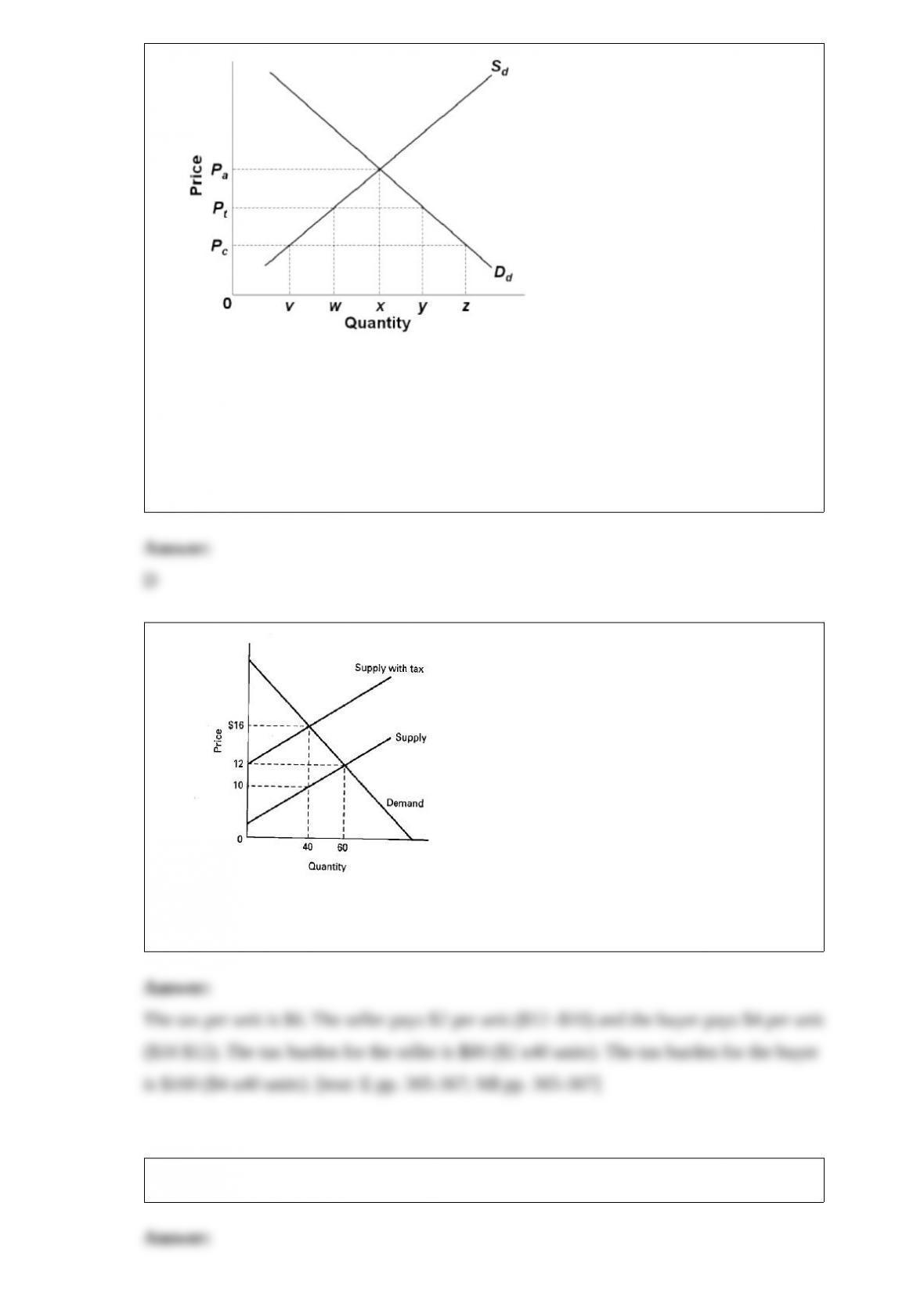
20)
Refer to the above diagram, where Sd and Dd are the domestic supply and demand for a
product and Pc is the world price of that product. If the economy is opened to free trade,
the price and quantity sold of this product would be:
A.Pc and v
B.Pa and z
C.Pt and y
D.Pc and z
21)
In the graph below, if the government imposes an excise tax as shown, what is the tax
burden to the seller? And to the buyer? Explain.
22) What is Okuns law? Give an example of how it works.
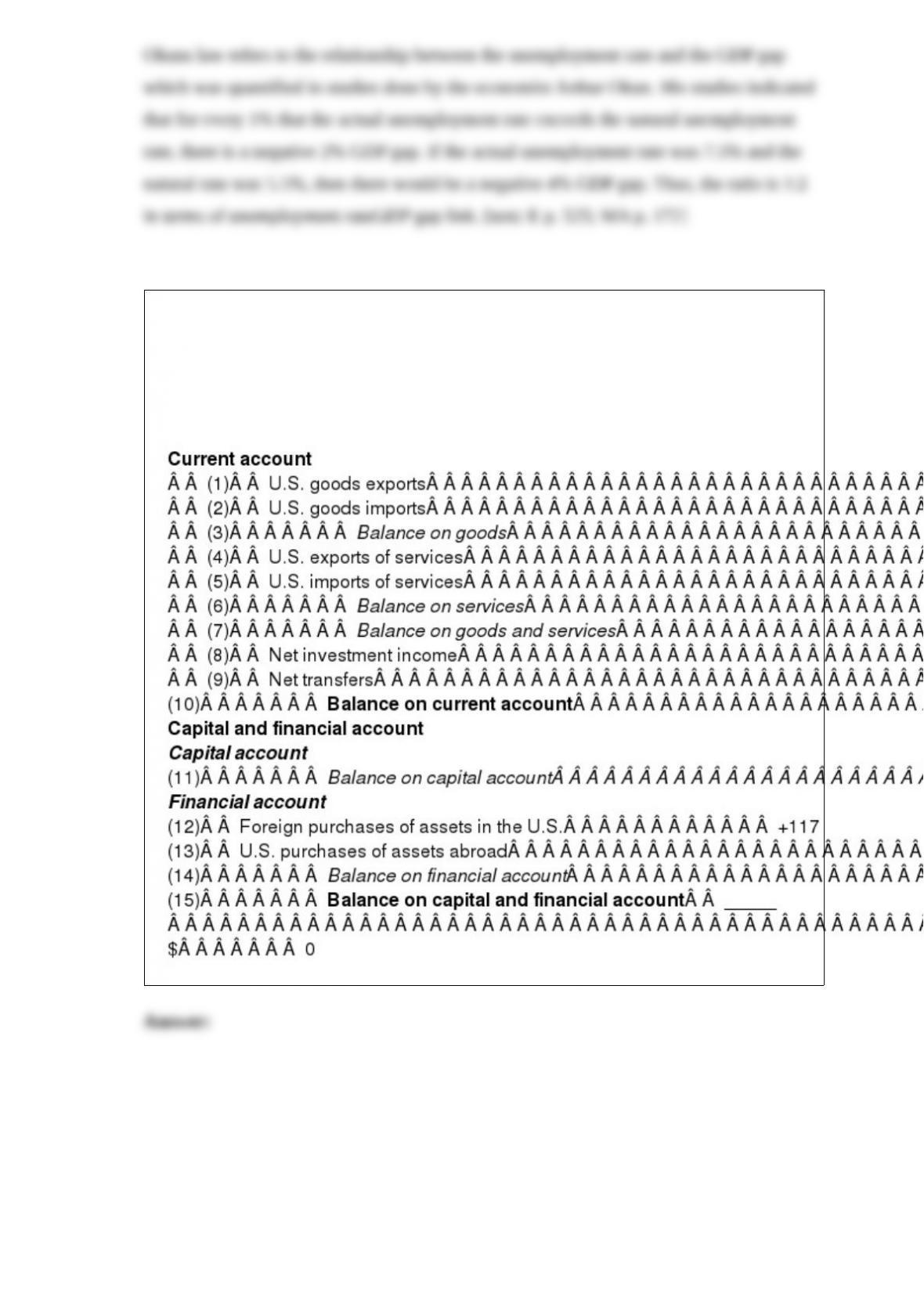
23) The table below contains the international balance-of-payments data for the United
States in a past year. All figures are in billions. Compute with the appropriate sign (+
or ) and enter in the table the six missing items. What was the condition of the balance
of payments in the United States?
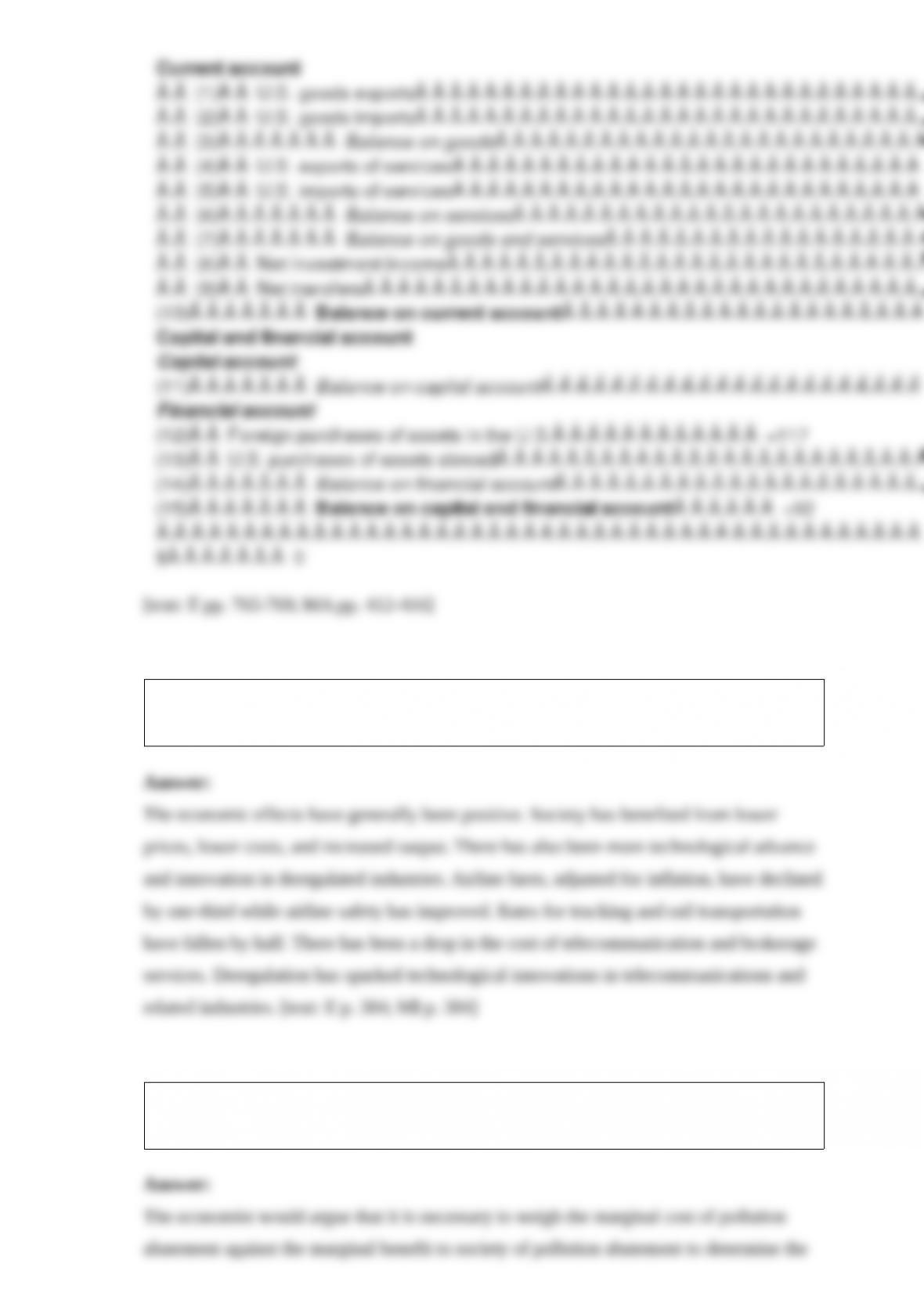
24) What have been the major outcomes from deregulation of industry? Give three
examples of changes in particular industries.
25) Should all pollution be banned? Why might some level of pollution be
economically efficient?
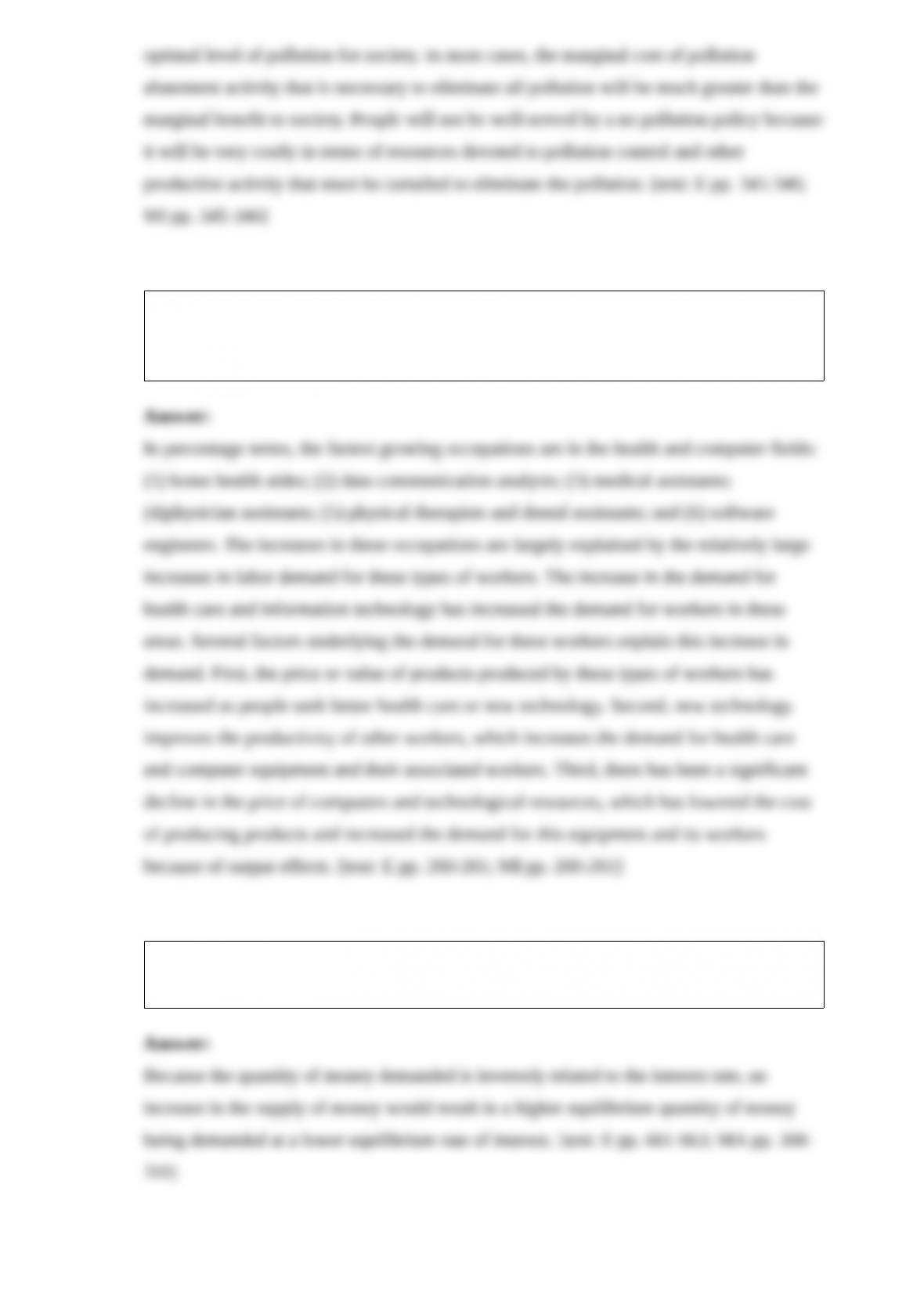
26) What are examples of the fastest growing occupations in percentage terms expected
to be from 20062016? What economic principle of resource pricing best explains these
trends?
27) Analyze what would happen to the equilibrium rate of interest in the money market
if the supply of money were increased while the demand schedule remained the same.
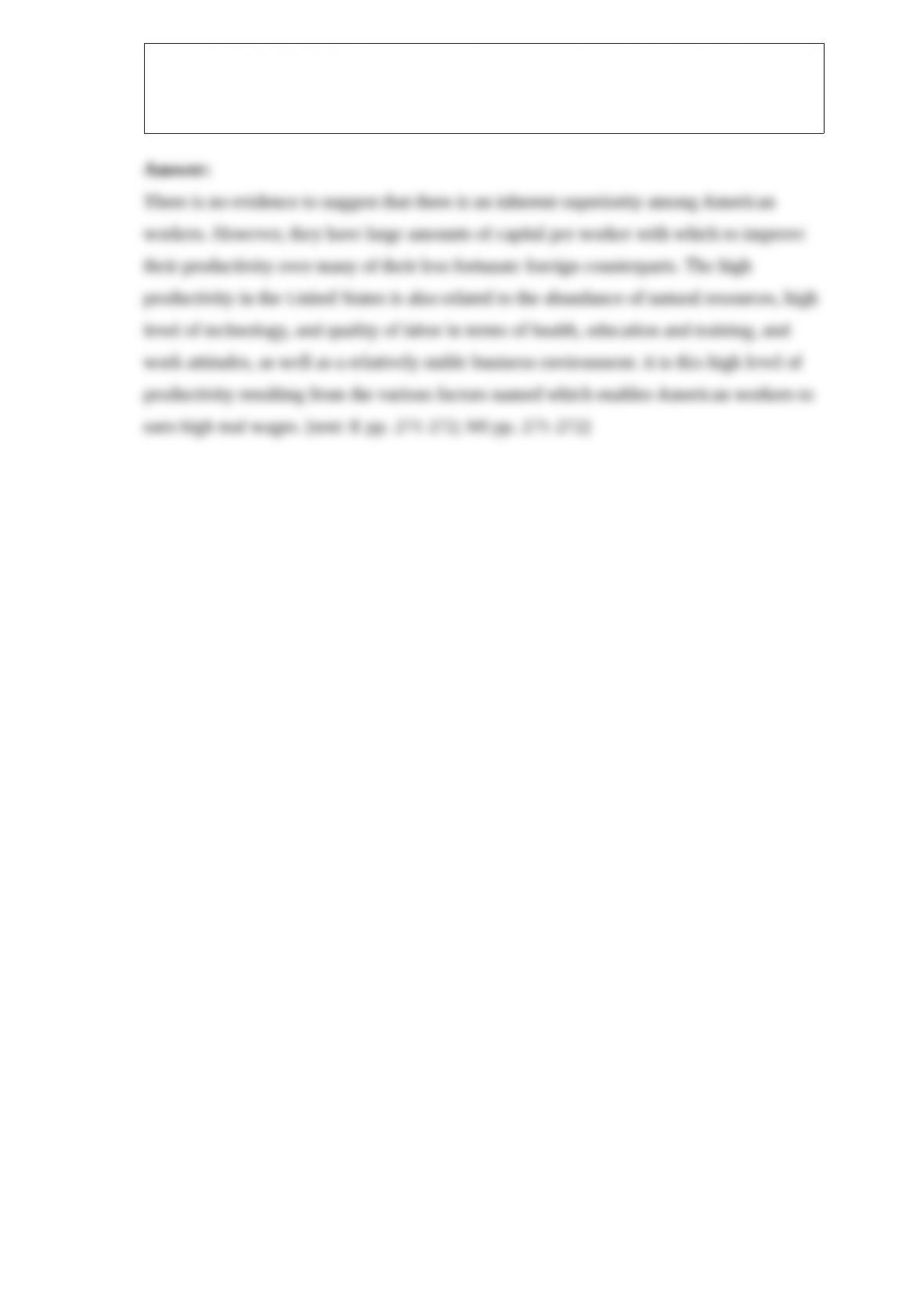
28) The higher real wages earned by American workers primarily reflect the fact that
Americans have a greater inherent ability to produce goods and services than do foreign
workers. Evaluate.