
Marginal revenue is
A) total revenue divided by the total quantity of output.
B) the change in profit divided by the change in the quantity of output.
C) the change in total revenue divided by the change in total cost.
D) the change in total revenue divided by the change in the quantity of output.
Macroeconomics, as opposed to microeconomics, includes the study of what
determines the
A) average price levels of goods and services in the economy.
B) price charged for laptop computers by Dell.
C) wages paid to employees by Dell.
D) quantity of Dell employees.
Economies of scale exist as a firm increases its size in the long run because of all of the
following except
A) the firm can afford more sophisticated technology in production.
B) labor and management can specialize even further in their tasks.
C) as a larger input buyer, the firm can purchase inputs at a lower per unit cost.
D) as a firm expands its production, its profit margin per-unit of output increases.
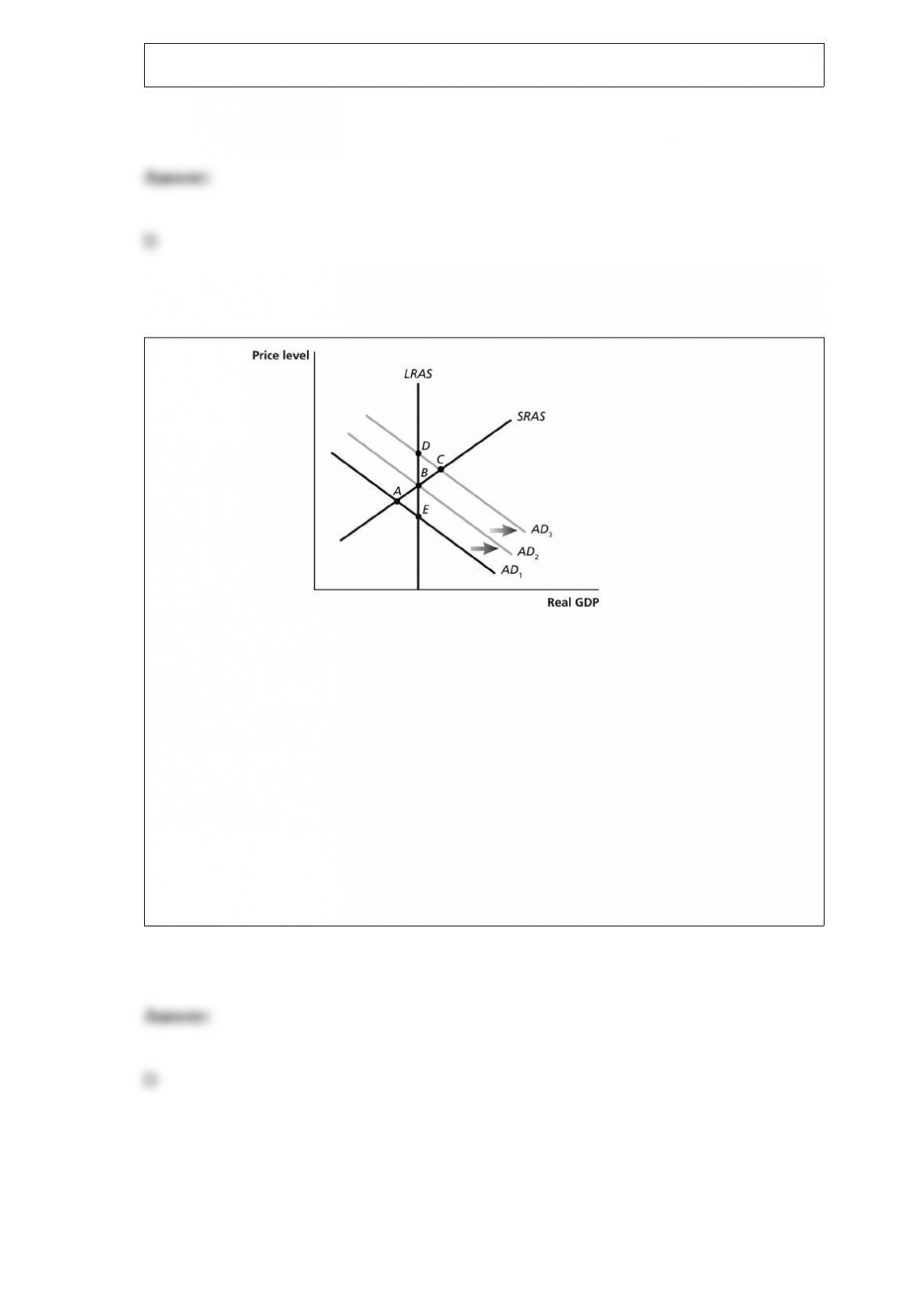
Figure 16-1
An increase in taxes would be depicted as a movement from ________, using the static
AD–AS model in the figure above.
A) E to B
B) B to C
C) A to B
D) B to A
E) C to D

Figure 29-2
Which of the events below cause the shifts in the supply and demand curves in the
market for dollars against the British pound shown in the graph above?
A) Interest rates rise in England.
B) Interest rates rise in the United States.
C) Real income rises in the United States.
D) Real income falls in England.
Which of the following displays these two characteristics: rivalry and nonexcludability?
A) a public good
B) a private good
C) a quasi-public good
D) a common resource

Which of the following is an example of a positive externality?
A) banning the sale of candy in elementary schools
B) planting trees along a sidewalk, which adds beauty and creates shade
C) forbidding the use of cell phones in public
D) prohibit street parking in all residential neighborhoods
Which type of business has the most government rules and regulations affecting it?
A) sole proprietorship
B) partnership
C) corporation
D) They all have the same set of rules and regulations affecting them.
Figure 11-2
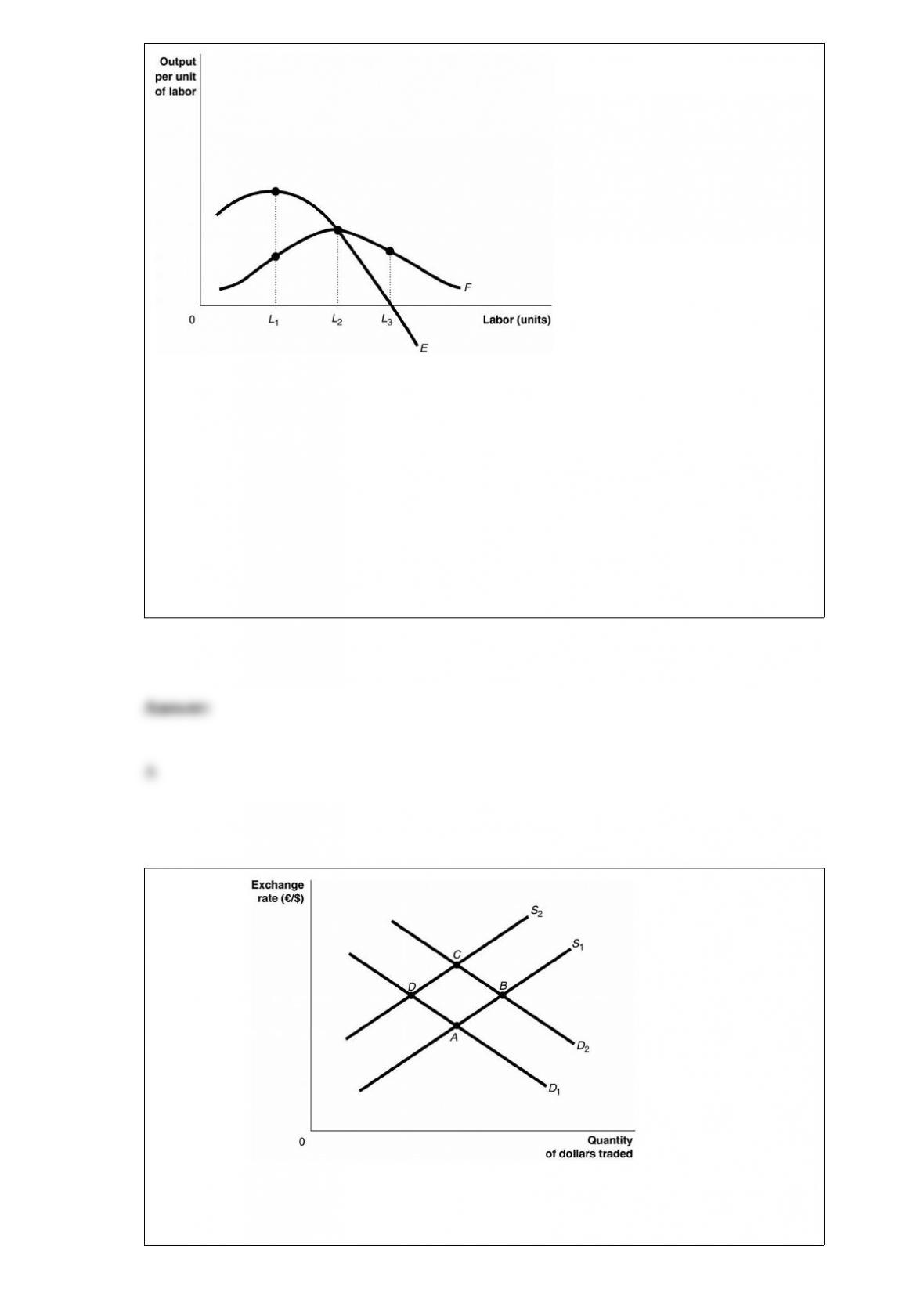
Diminishing returns to labor set in
A) after L1.
B) after L2.
C) after L3.
D) immediately.
Figure 29-1
The appreciation of the euro is represented as a movement from
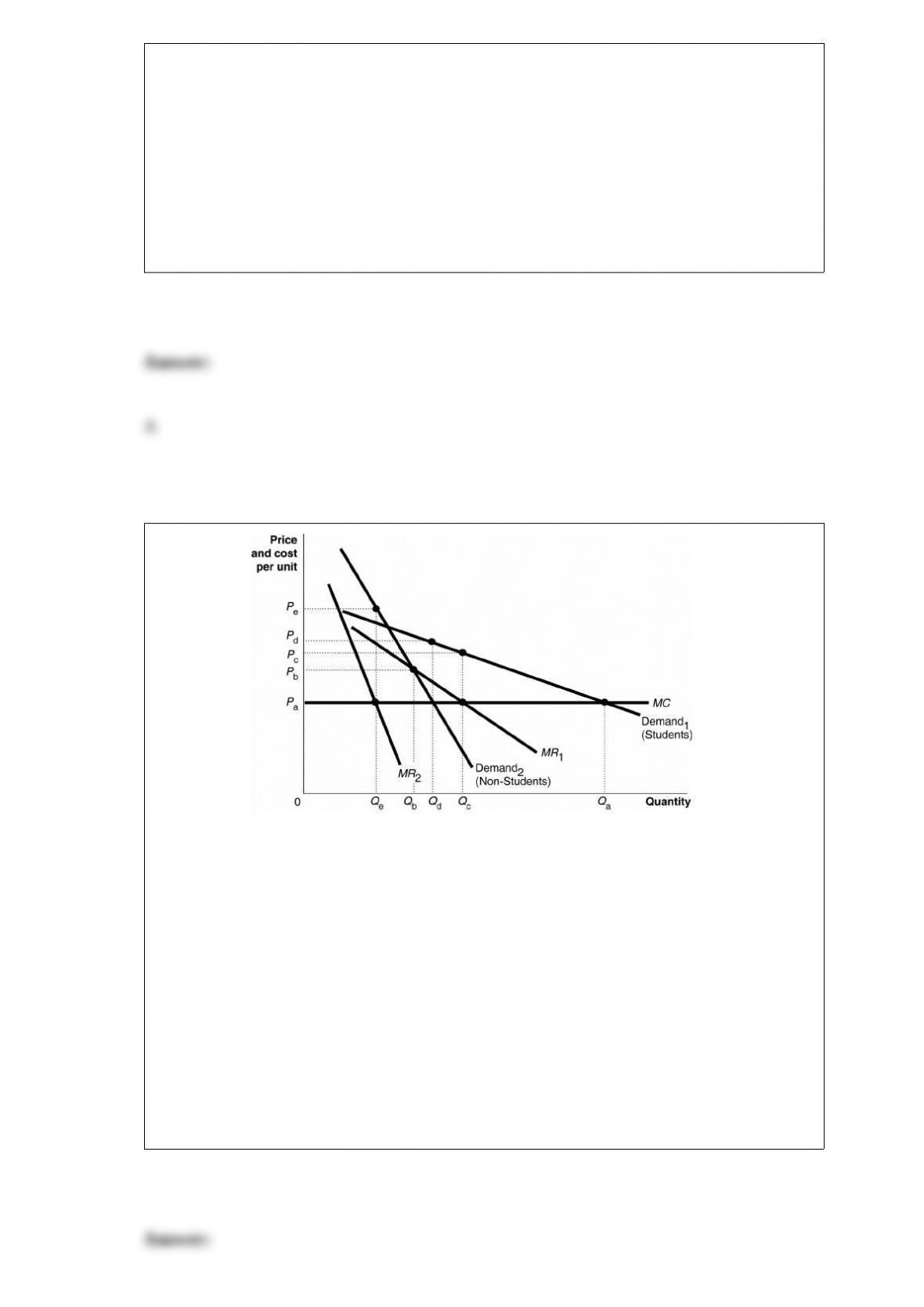
A) D to A.
B) D to C.
C) B to C.
D) A to C.
E) A to B.
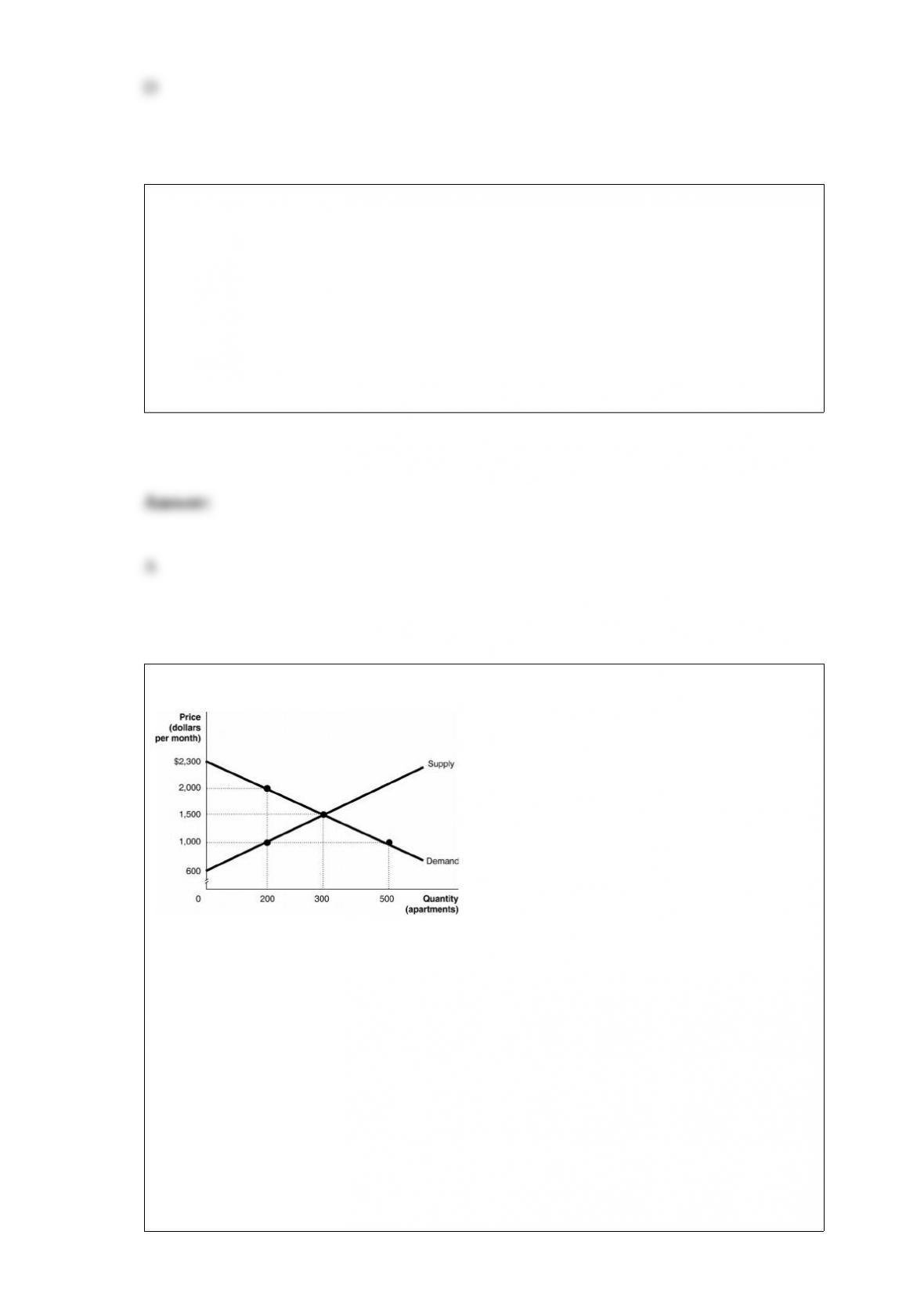
Figure 16-2 Plato
Playhouse, a theatre company in the university town of Wegg, caters to two groups of
customers: students and the non-student population. Figure 16-2 shows the demand
curves for the two groups of customers.
What is the price charged in the two markets?
A) price in the student market = price in the non-student market = Pa
B) price in the student market = price in the non-student market = P
C) price in the student market = Pd;price in the non-student market = Pe
D) price in the student market = Pc;price in the non-student market = Pe
When new firms are encouraged to enter a monopolistically competitive market,
A) some existing firms must be earning economic profits.
B) they do so because there is insufficient product differentiation.
C) the demand curve facing an existing firm shifts to the right.
D) the marginal cost curve facing an existing firm shifts downwards.
Figure 4-5
Figure 4-5 shows the market for apartments in
Springfield. Recently, the government imposed a rent ceiling of $1,000 per month.
Suppose that instead of a rent ceiling, the government imposed a price floor of $2,000
per month for apartments. What is the value of consumer surplus after the imposition of
the price floor?
A) $6,000
B) $30,000
C) $100,000
D) $240,000

________ occurs when one party takes advantage of having more information than
another party about the attributes of the good or service they will exchange.
A) A negative externality
B) Moral hazard
C) A transaction cost
D) Adverse selection
We can draw demand curves for firms in perfectly competitive and monopolistically
competitive industries, but not for oligopoly firms. The reason for this is
A) there are no barriers to entry in perfectly competitive and monopolistically
competitive industries. There are high barriers to entry in oligopoly industries.
B) we can assume that the prices charged by perfectly competitive and monopolistically
competitive firms have no impact on rival firms. For oligopoly this assumption is
unrealistic.
C) that perfectly competitive and monopolistically competitive firms are price takers.
Oligopoly firms are price makers.
D) perfectly competitive and monopolistically competitive firms sell standardized
products. Oligopoly firms sell differentiated products.
Technological advancements have led to lower prices and an increase in the sale of
color laser printers. How does this affect the market for laser printer ink cartridges?
A) The demand curve for laser printer ink cartridges shifts to the right.
B) The demand curve for laser printer ink cartridges shifts to the left.
C) The quantity of laser printer ink cartridges demanded increases.
D) The quantity of laser printer ink cartridges demanded decreases.
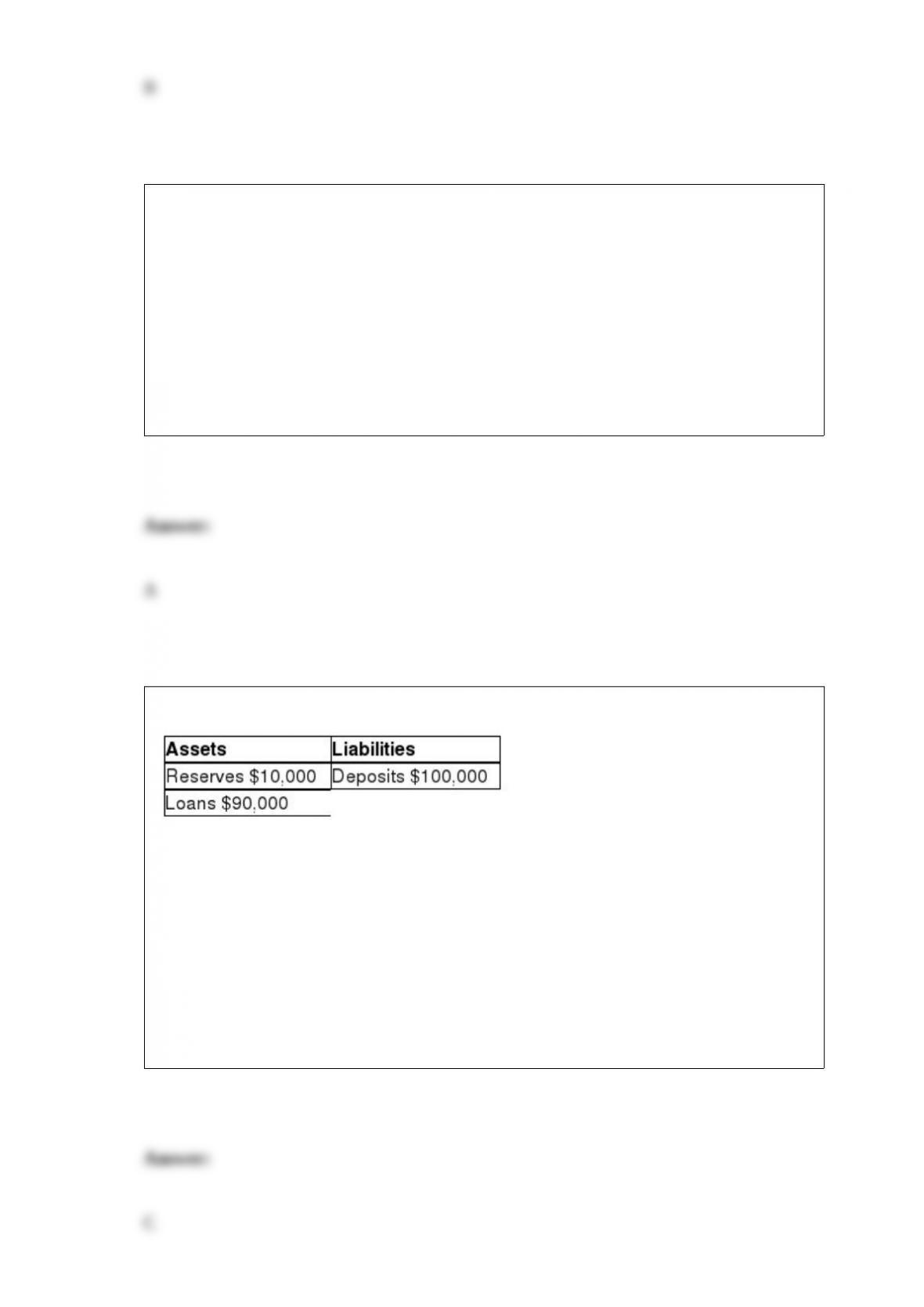
Consider the following T-account for National City Bank:
If the required reserve ratio is lowered to 8 percent, how much can National City loan
out?
A) $10,000
B) $8,000
C) $2,000
D) $0