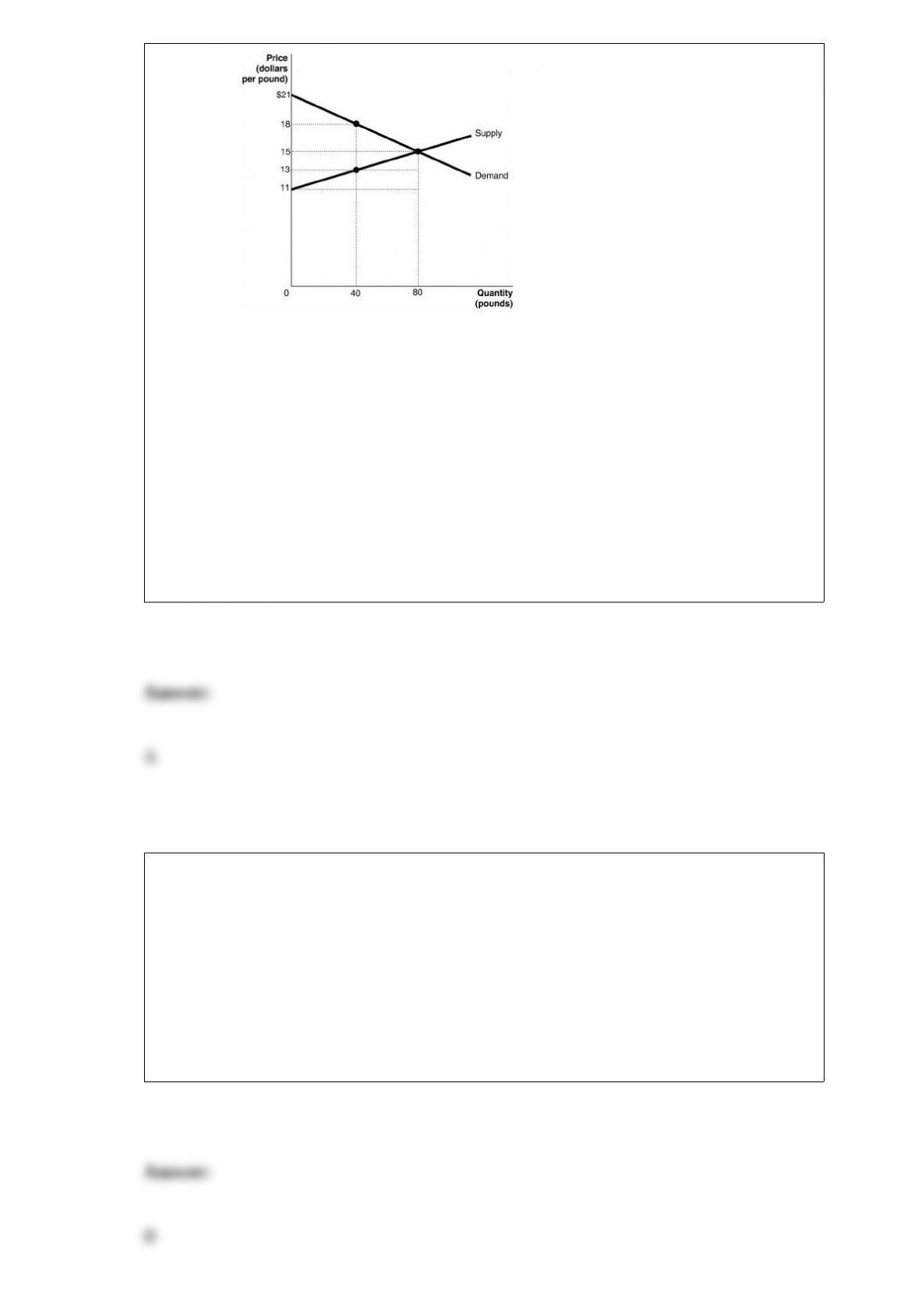
Figure 4-4 Figure 4-4 shows the market for tiger
shrimp. The market is initially in equilibrium at a price of $15 and a quantity of 80.
Now suppose producers decide to cut output to 40in order to raise the price to $18.
What is the value of consumer surplus at a price of $18?
A) $60
B) $120
C) $180
D) $240
In 2013, health care’s share of gross domestic product in the United States was about
A) 6.5 percent.
B) 17.3 percent.
C) 45 percent.
D) 62.5 percent.
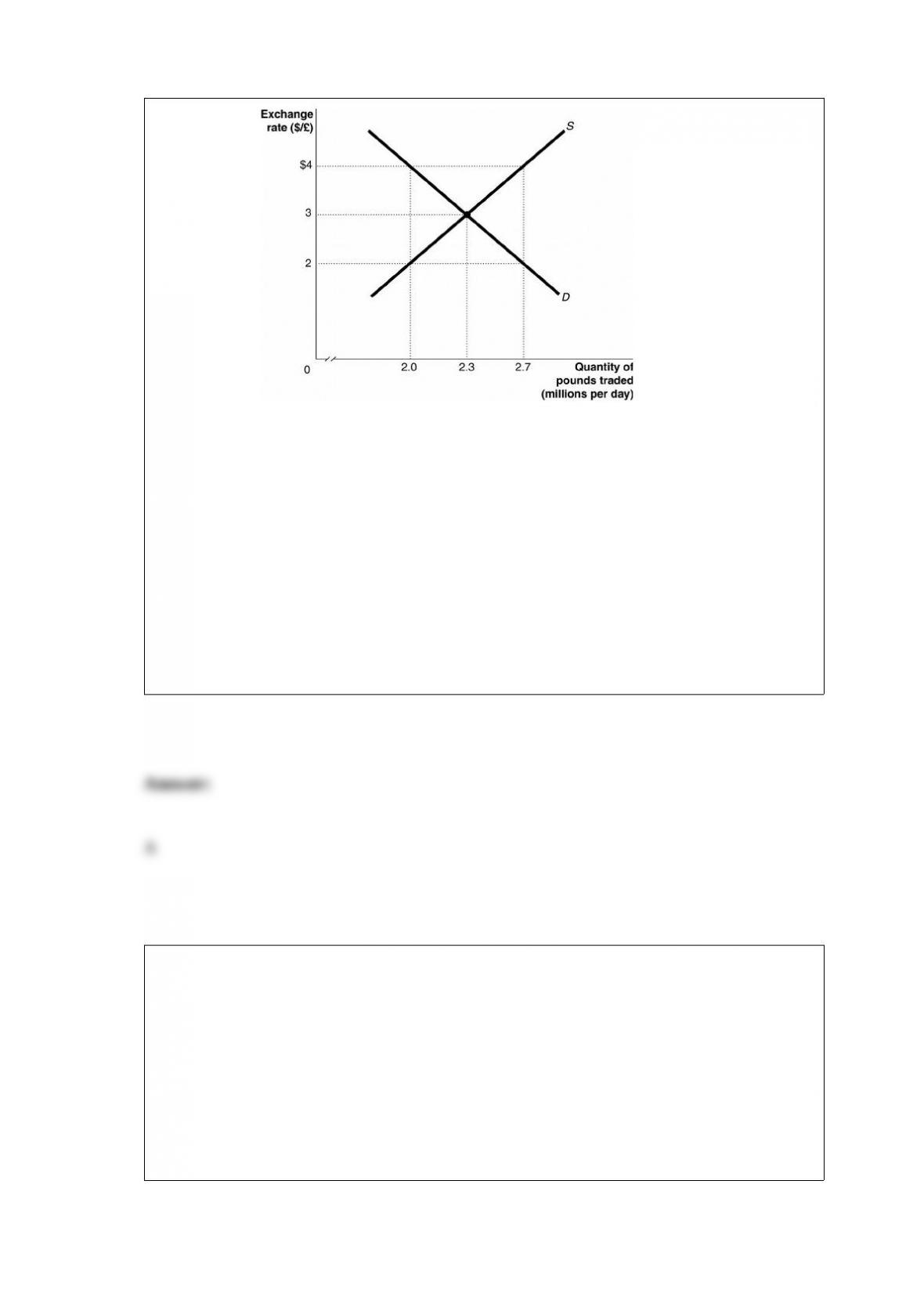
Figure 30-10
Under the Bretton Woods System of exchange rates, if the par exchange rate was $2 per
pound in the figure above, and equilibrium persisted at $3, then this was evidence of
________ and the IMF would allow a ________ in the exchange rate.
A) fundamental disequilibrium; revaluation
B) fundamental disequilibrium; devaluation
C) fundamental overvaluation; devaluation
D) fundamental overvaluation; revaluation
Refer to Figure 4-3. What area represents producer surplus at P2?
A) A + B + D
B) B + D
C) B + D + G
D) B + C + D + E

The multiplier effect is the series of ________ increases in ________ expenditures that
result from an initial increase in ________ expenditures.
A) induced; investment; autonomous
B) induced; consumption; autonomous
C) autonomous; consumption; induced
D) autonomous; investment; induced
To reassure investors who were unwilling to buy mortgages in the secondary market,
the U.S. Congress used two government sponsored enterprises, ________, to sell bonds
to investors and use the funds to purchase mortgages from banks.
A) the Fed and the Treasury Department
B) Fannie Mae and Freddie Mac
C) the Securities and Exchange Commission (SEC) and the Federal Trade Commission
(FTC)
D) ACORN and the Federal Housing Administration (FHA)
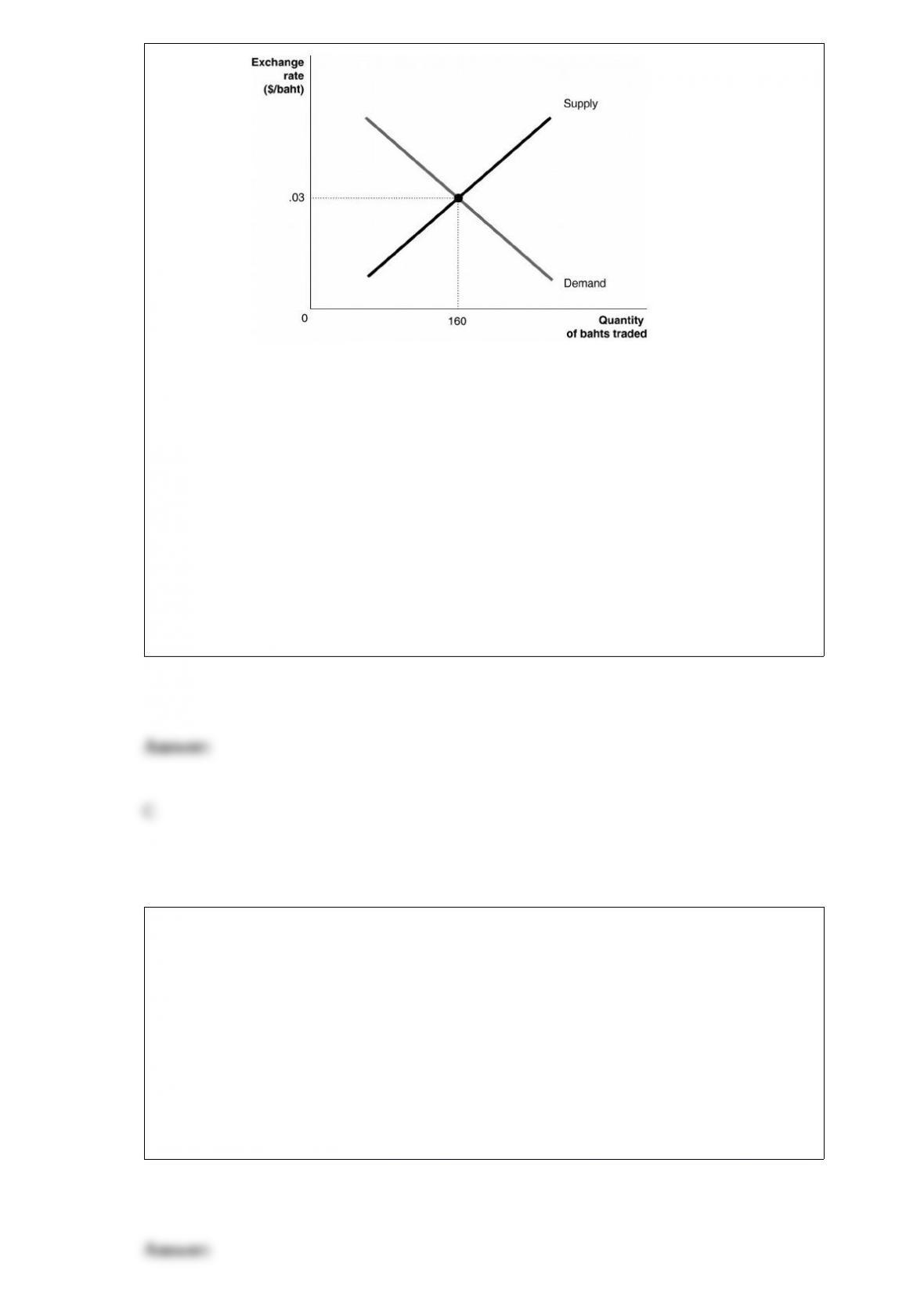
Figure 30-3
Which of the following is not true?
A) U.S imports are cheaper at exchange rates greater than $.03/baht than at the
equilibrium exchange rate.
B) The baht is overvalued at exchange rates greater than $.03/baht.
C) To achieve an exchange rate greater than $.03/baht, the Bank of Thailand must buy
surplus dollars with bahts.
D) Thai exports to the United States are more expensive at exchange rates greater than
$.03/baht than at the equilibrium exchange rate.
Why do most firms in monopolistic competition typically make zero profit in the long
run?
A) because firms produce differentiated products
B) because the lack of entry barriers would compete away profits
C) because firms do not produce at their minimum efficient scale
D) because the total market is not large enough to accommodate so many firms

In October 2013, Abercrombie & Fitch (ANF) posted a price-earnings ratio of 13. If the
price of the stock at that time was $36 per share, which of the following must have been
true?
A) ANF’s revenues that month were $4.68 million.
B) ANF’s earnings per share was $2.77.
C) ANF’s coupon payment was $23.23 per year.
D) ANF’s dividend yield for the year was 47%.
When actual inflation is less than expected inflation,
A) borrowers lose and lenders gain.
B) borrowers gain and lenders lose.
C) borrowers and lenders both gain.
D) borrowers and lenders both lose.
For each of the following pairs of products, state which are complements, which are
substitutes, and which are unrelated.

a. Blu-ray discs and video-on-demand
b. Fiat 500 and Mini Cooper S
c. Toothpaste and toothbrush
d. Popcorn and snowboards
e. Razors and razor blades
Which of the following describes a difference between allocative efficiency and
productive efficiency in a perfectly competitive market?
A) Allocative efficiency is achieved only in the long run. Productive efficiency is
achieved only in the short run.
B) Allocative efficiency is achieved only in the long run. Productive efficiency is
achieved in the short run and the long run.
C) Allocative efficiency is achieved only in the short run. Productive efficiency is
achieved only in the long run.
D) Allocative efficiency is achieved in the short run and the long run. Productive
efficiency is achieved only in the long run.

When you open a checking account at Bank of America, Bank of America
A) has more reserves and more excess reserves.
B) has more reserves, but excess reserves remain unchanged.
C) has more deposits and less in excess reserves.
D) has more deposits, but excess reserves remain unchanged.