1)
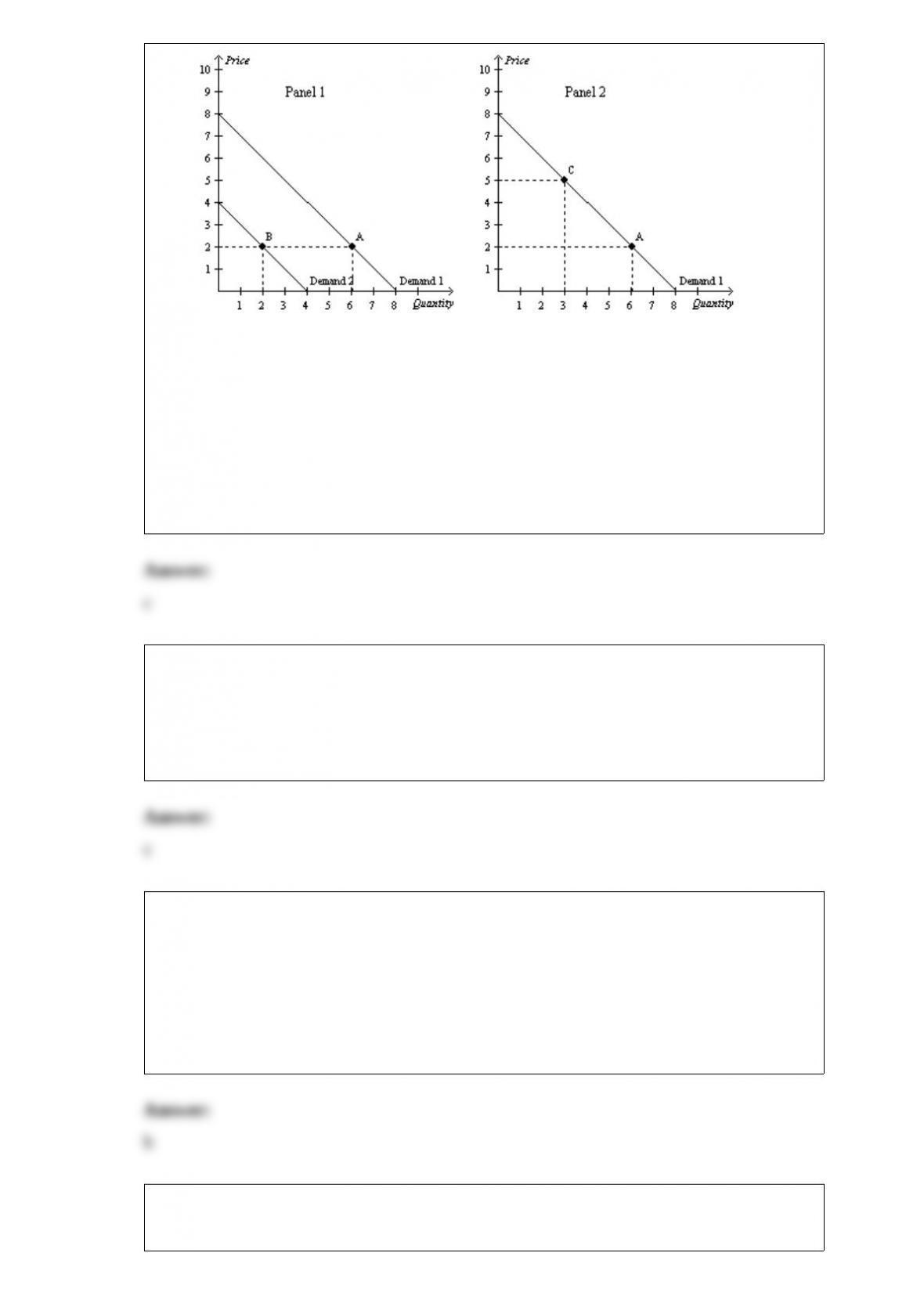
Suppose that the federal government is concerned about obesity in the United States.
Congress is considering two plans. One would require “junk food” producers to include
warning labels on all junk food. The other would impose a tax on all products
considered to be junk food. We could illustrate the tax as producing a movement from
a.Point A to Point B in Panel 1
b.Point B to Point A in Panel 1
c.Point A to Point C in Panel 2
d.Point C to Point A in Panel 2
2) Goods that are not excludable include both
a.private goods and public goods.
b.club goods and common resources.
c.common resources and public goods.
d.private goods and club goods.
3) Once tradable pollution permits have been allocated to firms,
a.the government controls the price of permits.
b.firms that can reduce pollution only at high cost will be willing to pay the most for the
pollution permits.
c.the value of pollution-saving technology will be lower than the market value of a
pollution permit.
d.the Coase theorem is no longer applicable as a solution to reducing pollution.
4) The decisions of the US and Soviet Union to build nuclear weapons is much like the
prisoners’ dilemma.
a.True
b.False
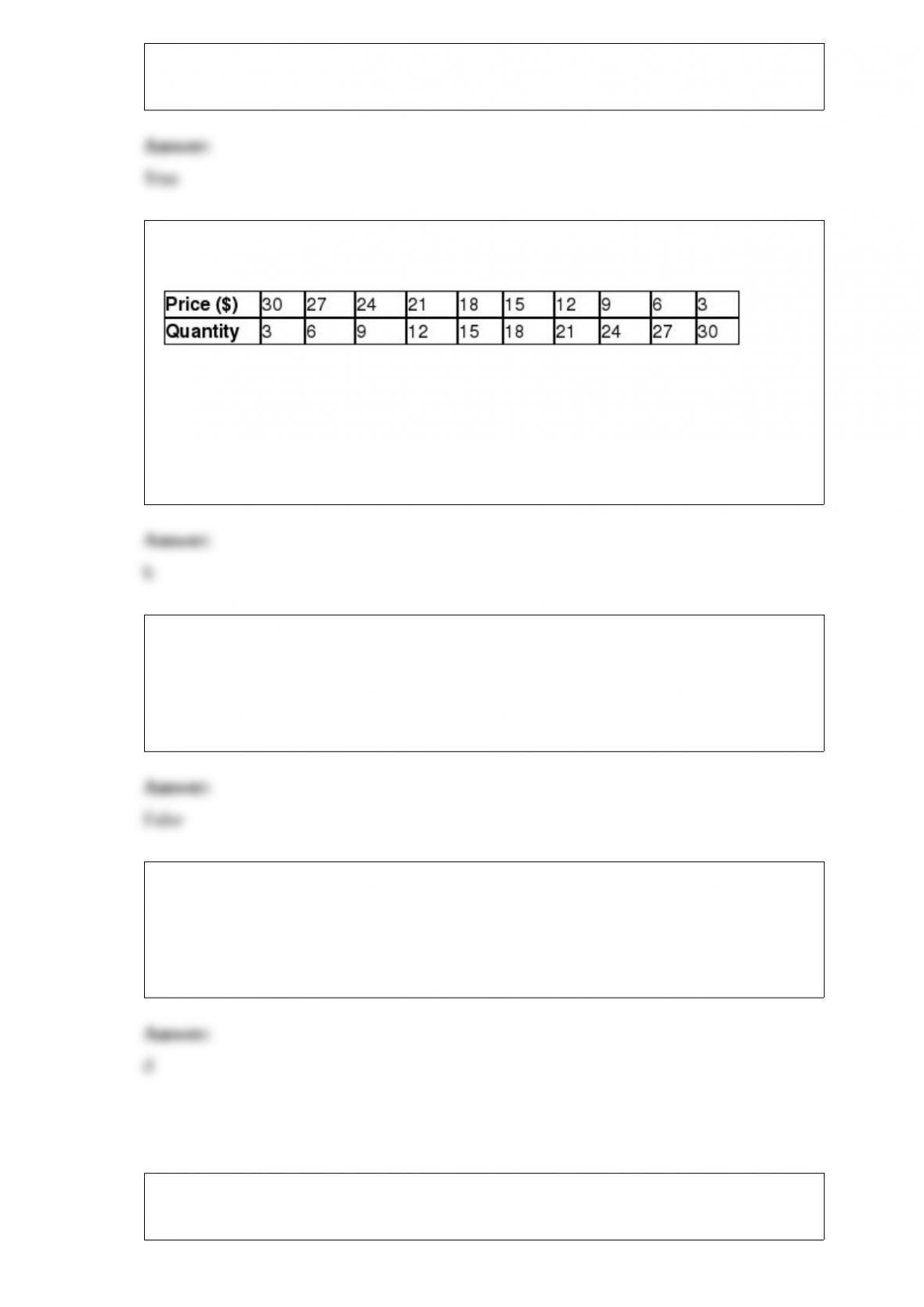
5) A monopolistically competitive firm faces the following demand schedule for its
product:
The firm has total fixed costs of $9 and a constant marginal cost of $3 per unit. The firm
will maximize profit with
a.9 units of output.
b.15 units of output.
c.21 units of output.
d.30 units of output.
6) According to the Coase Theorem, individuals can always work out a mutually
beneficial agreement to solve the problems of externalities even when high transaction
costs are involved.
a.True
b.False
7) A likely example of substitute goods for most people would be
a.peanut butter and jelly.
b.tennis balls and tennis rackets.
c.televisions and subscriptions to cable television services.
d.pencils and pens.
8) Barb and Jim run a business that sets up and tests computers. Assume that Barb and
Jim can switch between setting up and testing computers at a constant rate. The
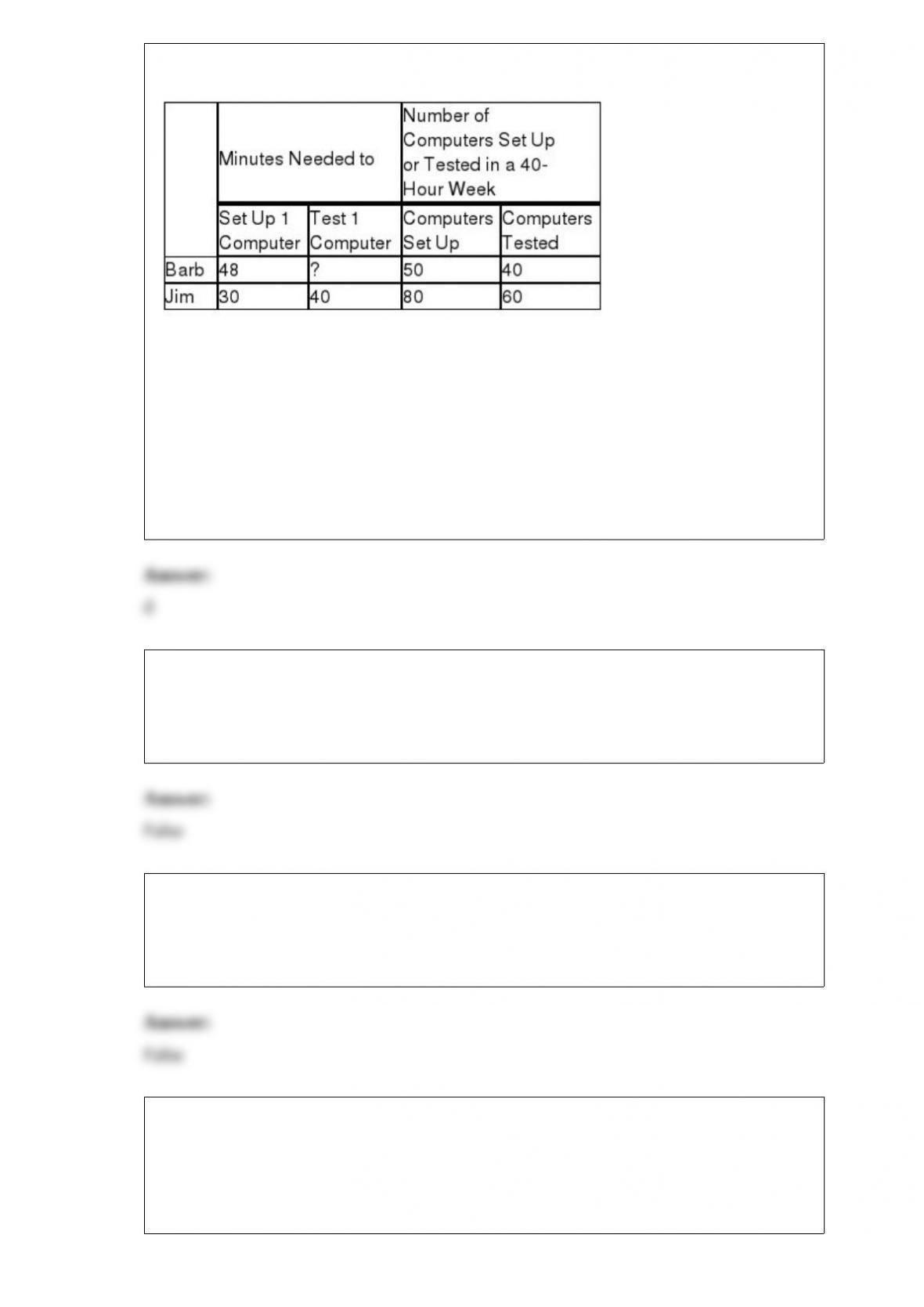
following table applies.
Barb has an absolute advantage in
a.both setting up and testing computers and a comparative advantage in setting up
computers.
b.both setting up and testing computers and a comparative advantage in testing
computers.
c.neither setting up nor testing computers and a comparative advantage in setting up
computers.
d.neither setting up nor testing computers and a comparative advantage in testing
computers.
9) From 1960 to 2010, inflation-adjusted wages increased by 87 percent in the U.S. As
a result, firms reduced the amount of labor they employed by nearly 15 percent.
a.True
b.False
10) In 2011 the top 20% of income earners accounted for over 80% of all income
received by United States’ families.
a.True
b.False
11) Economists speaking like policy advisers make
a.positive statements.
b.descriptive statements.
c.claims about how the world is.
d.claims about how the world should be.