1) Which set of characteristics below best describes the basic features of monopolistic
competition?
A.Easy entry, many firms, and standardized products
B.Barriers to entry, few firms, and differentiated products
C.Easy entry, many firms, and differentiated products
D.Easy entry, few firms, and standardized products
2) In the short run the Sure-Screen T-Shirt Company is producing 500 units of output.
Its average variable costs are $2.00 and its average fixed costs are $.50. The firm’s total
costs:
A.are $2.50.
B.are $1,250.
C.are $750.
D.are $1,100.
3) Key features of so-called “nudges” include the following, except:
A.They are subtle
B.They induce changes in behavior without bullying or coercion
C.They involve significant monetary incentives
D.They do not require stringent rules
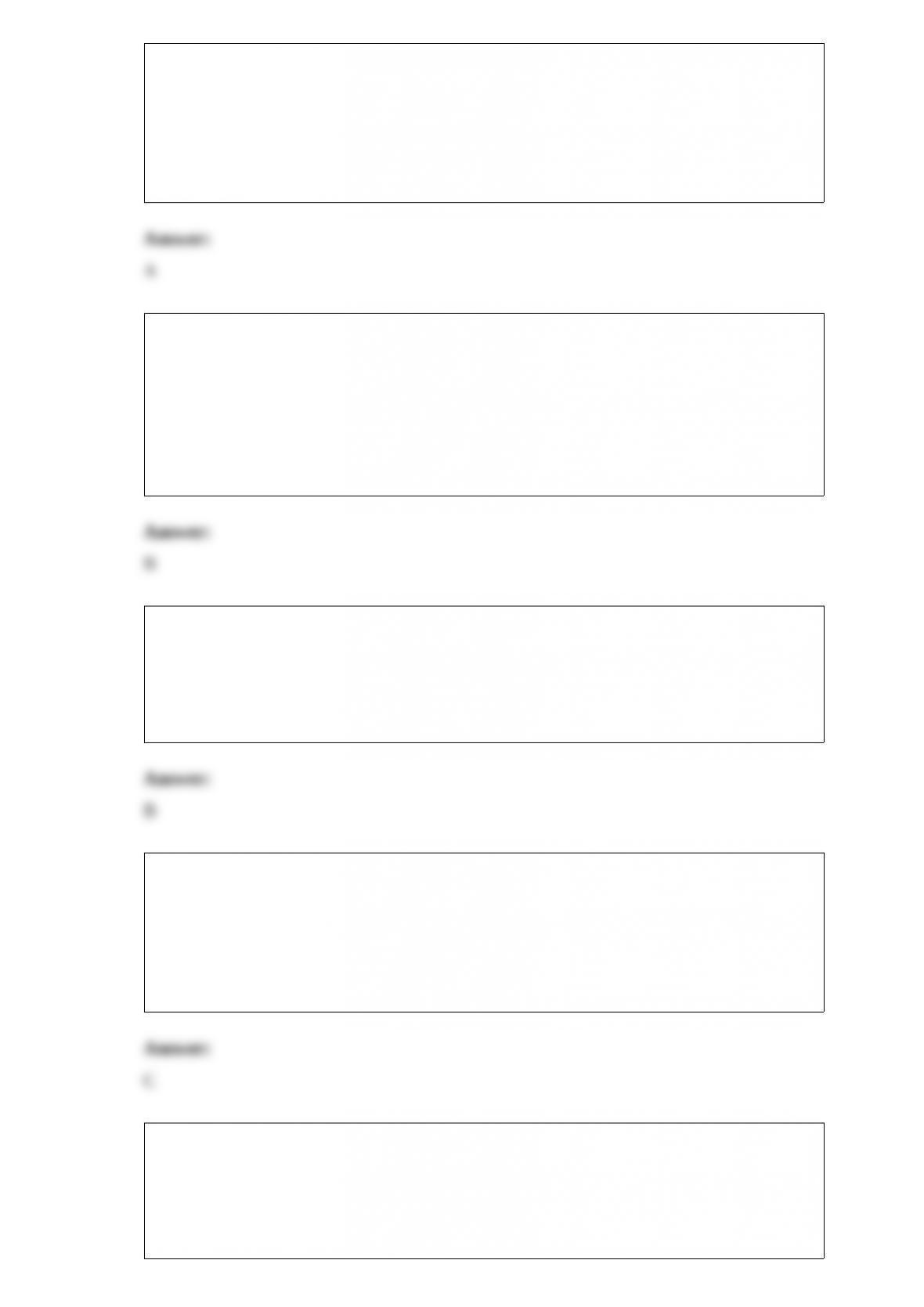
4)
A wage payment system in a firm incorporates a guaranteed wage with an incentive
element, provided that a certain minimum level of output is achieved. Which of the
above graphs represents such a system?
A.1
B.2
C.3
D.4
5) Between 1960 and 2011, U.S. health care spending as a percentage of domestic
output:
A.more than tripled.
B.more than quadrupled.
C.declined by one-half.
D.remained relatively constant.
6) When economists say that the demand for labor is a derived demand, they mean that
it is:
A.dependent on government expenditures for public goods and services.
B.related to the demand for the product or service labor is producing.
C.based on the desire of businesses to exploit labor by paying below equilibrium wage
rates.
D.based on the assumption that workers are trying to maximize their money incomes.
7) Advertising can enhance economic efficiency when it:
A.increases brand loyalty.
B.expands sales such that firms achieve substantial economies of scale.
C.keeps new firms from entering profitable industries.
D.is undertaken by pure competitors.
8) Which of the following would be considered an example of adverse selection?
A.Malpractice insurance may increase the amount of malpractice
B.Drivers may be less cautious because they have airbags installed in a car
C.Those individuals who most need insurance are the ones most likely to buy it
D.Work contracts that give a set number of sick-days may encourage more workers to
call in sick
9) The circular flow model with government included would show that government:
A.Controls economic resources and sells them in the resource market
B.Produces goods and services and sells them in the product market to generate net
taxes
C.Provides goods and services to businesses and households and pays for them with net
taxes
D.Obtains revenues in the product market and uses it to cover costs in the resource
market
10) The price-elasticity of demand is always negative because of:
A.The law of demand
B.Percent-changes being used in the formula
C.The midpoint formula
D.Scarcity
11) The MR = MC rule can be restated for a purely competitive seller as P = MC
because:
A.each additional unit of output adds exactly its price to total revenue.
B.the firm’s average revenue curve is downsloping.
C.the market demand curve is downsloping.
D.the firm’s marginal revenue and total revenue curves will coincide.