1) As it relates to Federal Reserve activities, the acronym FOMC describes the:
A.Federal Open Market Committee.
B.Federal Options Market Committee.
C.Federal Organization for Monetary Control.
D.Federal Organization for Money Creation.
2) In the balance of payments of the United States, U.S. goods imports are recorded as
a:
A.positive entry.
B.capital account entry.
C.current account entry.
D.official reserves entry.
3) Which of the following best describes the cause-effect chain of an expansionary
monetary policy?
A.A decrease in the money supply will lower the interest rate, increase investment
spending, and increase aggregate demand and GDP.
B.A decrease in the money supply will raise the interest rate, decrease investment
spending, and decrease aggregate demand and GDP.
C.An increase in the money supply will raise the interest rate, decrease investment
spending, and decrease aggregate demand and GDP.
D.An increase in the money supply will lower the interest rate, increase investment
spending, and increase aggregate demand and GDP.
4) if price is above the equilibrium level, competition among sellers to reduce the
resulting:
a.surplus will increase quantity demanded and decrease quantity supplied.
b.shortage will decrease quantity demanded and increase quantity supplied.
c.surplus will decrease quantity demanded and increase quantity supplied.
5) which of the following is most likely to be an inferior good?
a.fur coats
b.ocean cruises
c.used clothing
d.steak
6) listed in descending order of total numbers, the business population is comprised of:
a.sole proprietorships, corporations, and partnerships.
b.sole proprietorships, partnerships, and corporations.
c.partnerships, corporations, and sole proprietorships.
d.corporations, partnerships, and sole proprietorships.
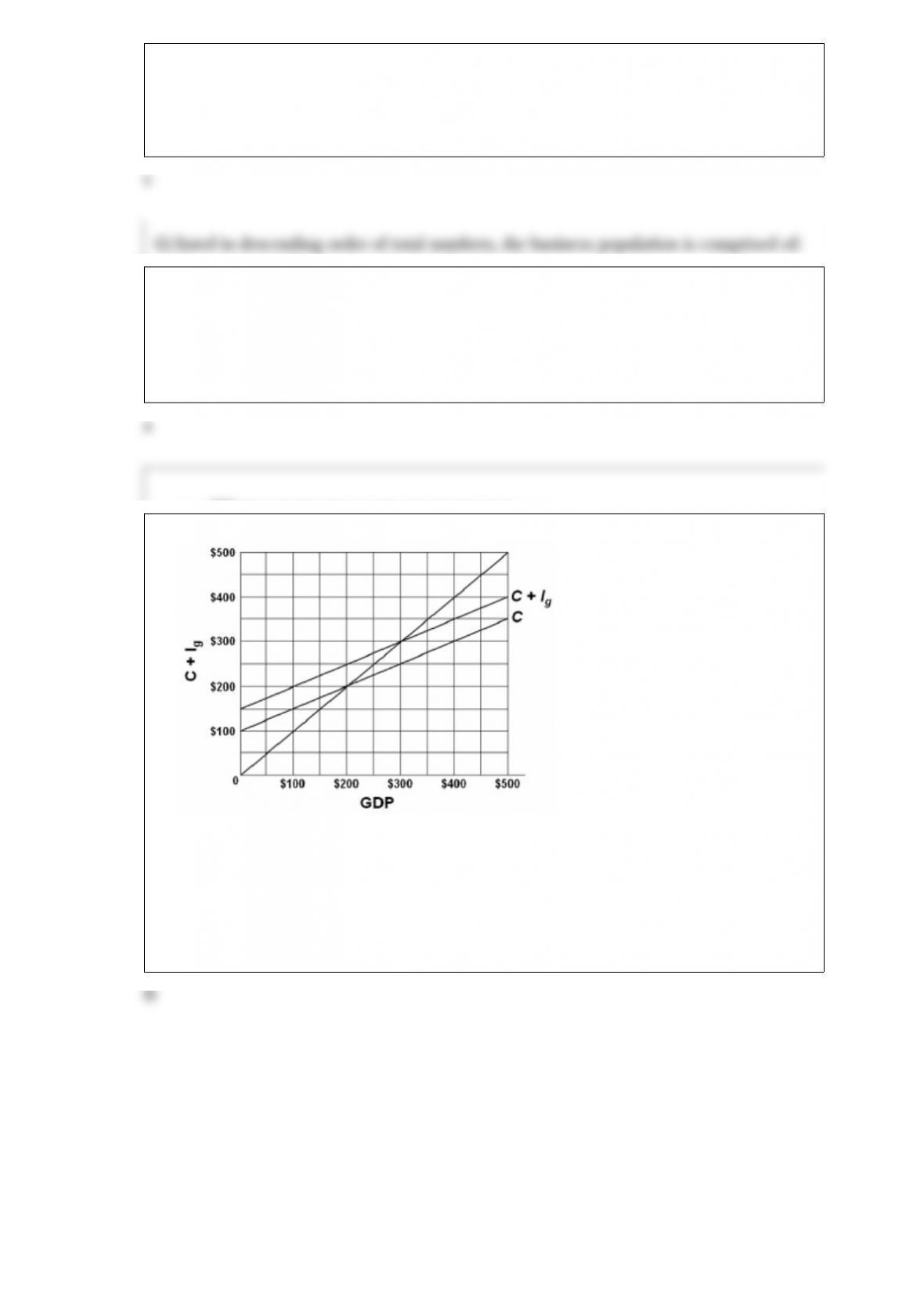
7)
Refer to the above diagram for a private closed economy. The equilibrium level of GDP
is:
A.$400.
B.$300.
C.$200.
D.$100.
8)
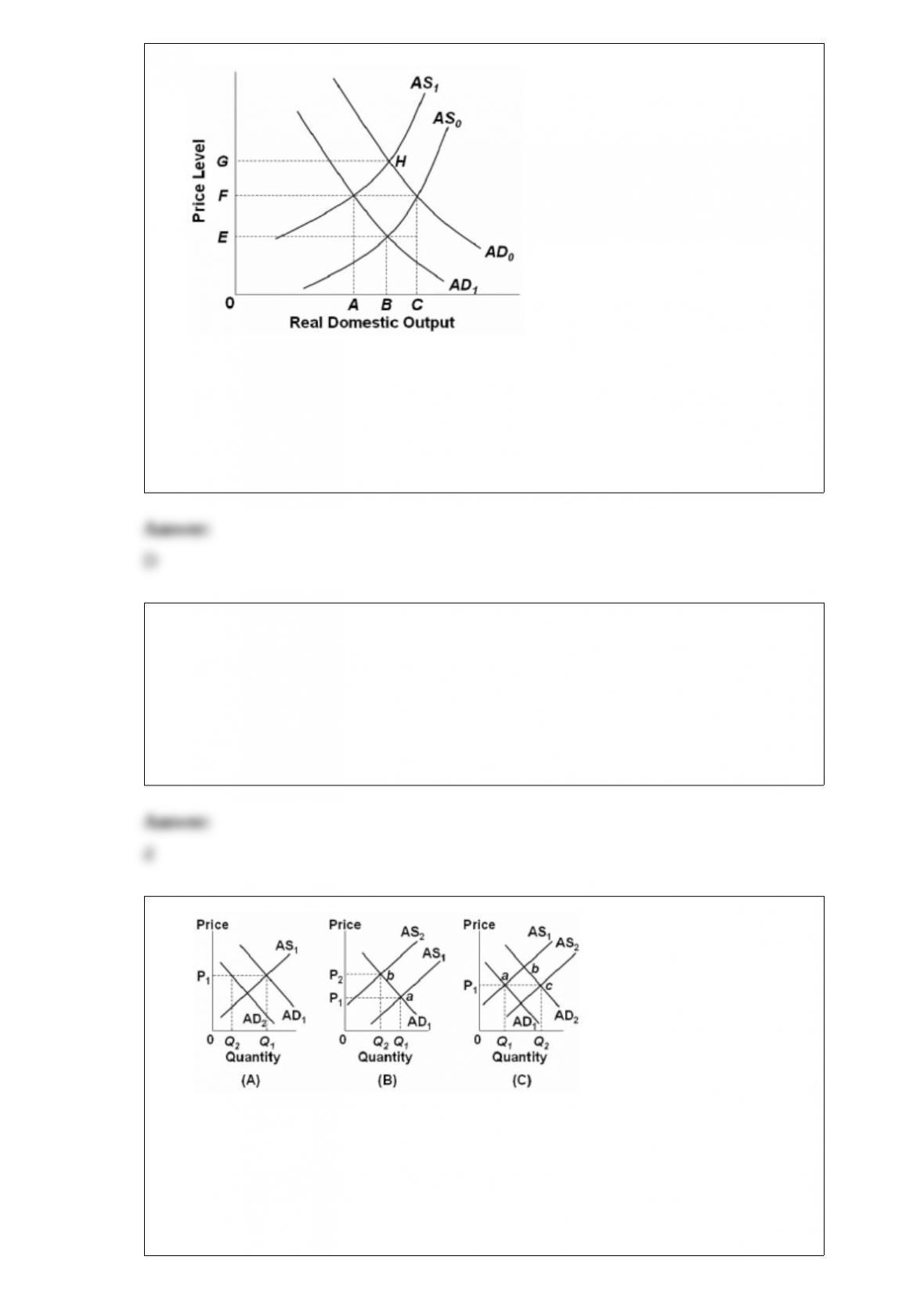
Refer to the above diagram. If aggregate supply is AS1 and aggregate demand is AD0,
then:
A.at any price level above G a shortage of real output would occur.
B.F represents a price level that would result in a surplus of real output of AC.
C.a surplus of real output of GH would occur.
D.F represents a price level that would result in a shortage of real output of AC.
9) at the point where the demand and supply curves for a product intersect:
a.the selling price and the buying price need not be equal.
b.the market may, or may not, be in equilibrium.
c.either a shortage or a surplus of the product might exist, depending on the degree of
competition.
d.the quantity that consumers want to purchase and the amount producers choose to sell
are the same.
10)
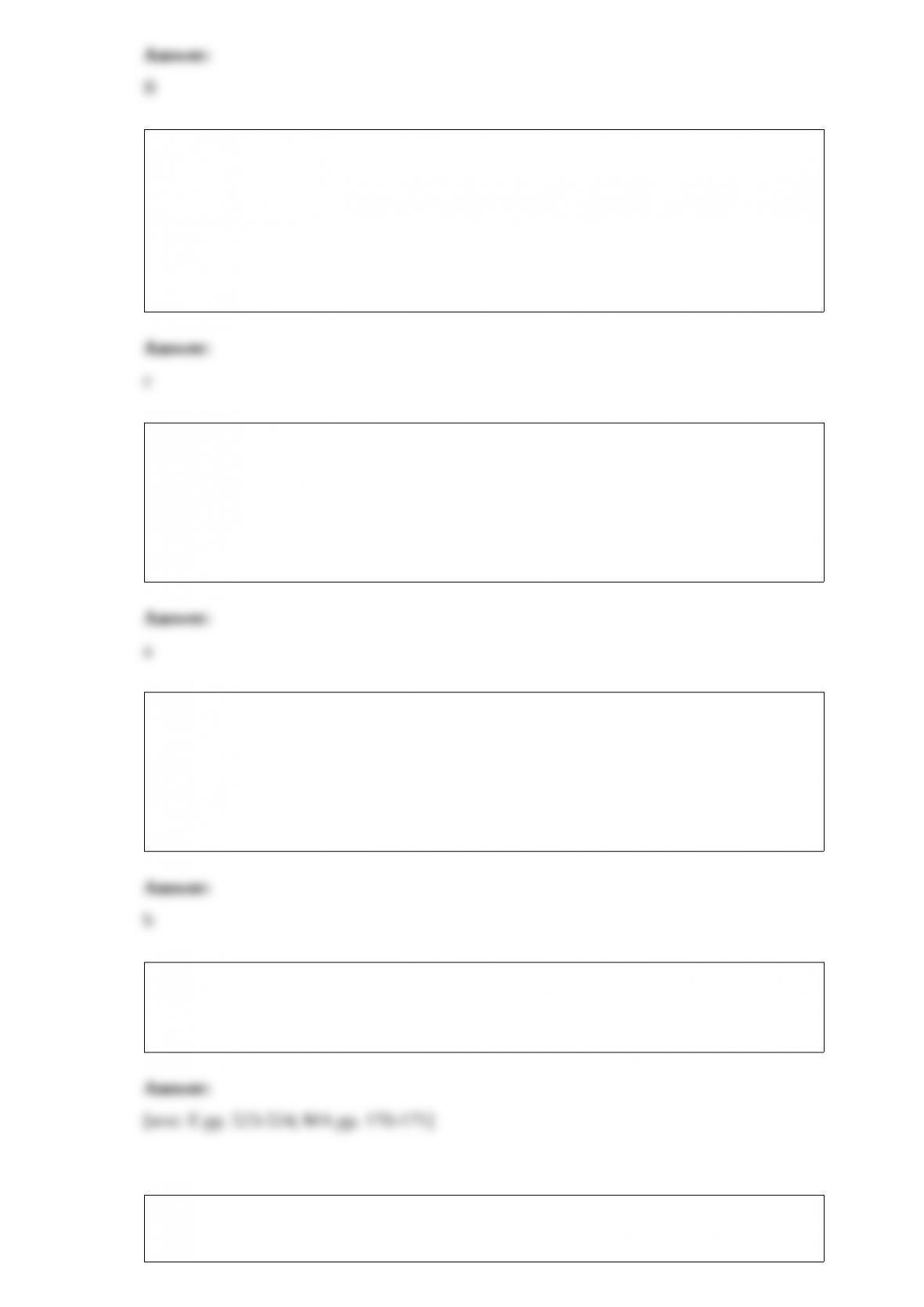
Refer to the above diagrams, in which AD1 and AS1 are the “before” curves and AD2
and AS2 are the “after” curves. Cost-push inflation is depicted by:
A.panel (A) only.
B.panel (B) only.
C.panel (C) only.
D.panels (B) and (C).
11) when the economist says that economic wants are insatiable, this means that:
a.economic resources are valuable only because they can be used to produce consumer
goods.
b.economic resources-land, labor, capital, and entrepreneurial ability-are scarce.
c.these wants are virtually unlimited and therefore incapable of complete satisfaction.
d.the structure of consumer demand varies from time to time and from country to
country.
12) which of the following terms implies the least degree of confidence in an economic
generalization?
a.a hypothesis.
b.a theory.
c.a principle.
d.a law.
13) an indifference curve:
a.may be either upsloping or downsloping, depending on whether the two products are
complements or substitutes.
b.is downsloping and convex to the origin.
c.is upsloping and has a constant slope.
d.is downsloping and concave to the origin.
14) In the table below are statistics showing the labor force and total employment in
month 1 and month 2 of the same year. Make the computations necessary to complete
the table. (Number of persons is in thousands.)
15) Explain the relationship between the current account and the capital account in the
balance of payments.
16) What are the two reasons that people want to hold money? In other words, what are
the two types of demand for money?
17) In Year 1, the standardized budget showed a deficit of about $100 billion and the
actual budget showed a deficit of $150 billion one year. In Year 2, the full employment
budget showed a deficit of about $125 billion and the actual budget showed a deficit of
$150 billion. Based on these data, what can be concluded about the direction of fiscal
policy?
18) Briefly describe the historical background that gave rise to antitrust and regulation
in the United States.
19) Explain: An effectively regulated natural monopoly will have trouble attracting
capital to sustain and modernize its facilities.
20) What is the GDP price index?
21) Explain the aspects of expansionary and contractionary fiscal policy. During which
phases of the business cycle would each be appropriate?
22) What are political business cycles and how could they be created?