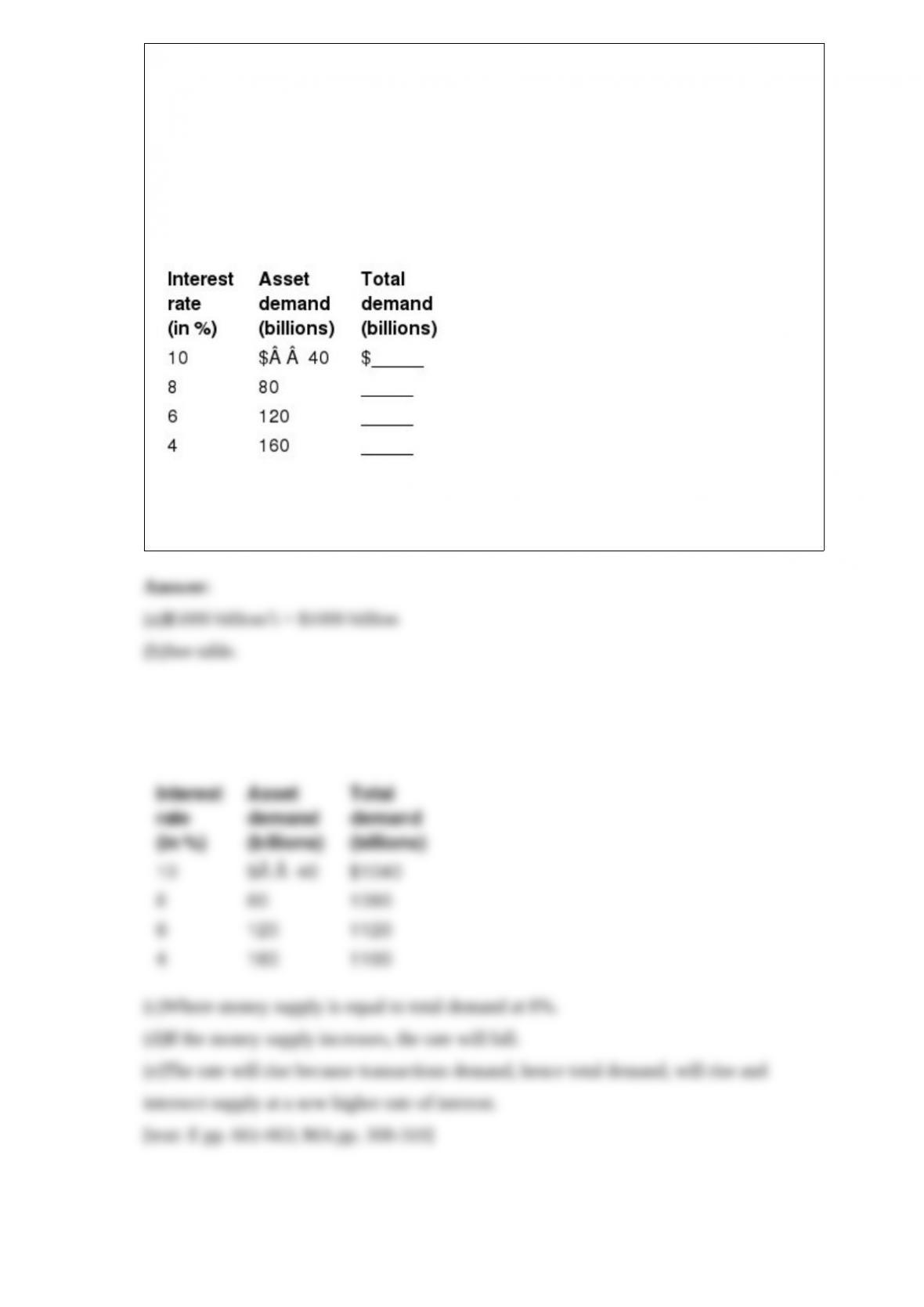
1) The total demand for money is equal to the transactions demand plus the asset
demand for money.
(a)Assume that each dollar held for transactions purposes is spent on the average five
times per year to buy final goods and services. If the nominal GDP is $5000 billion ($5
trillion), what is the transaction demand?
(b)The table below shows the asset demand at certain rates of interest. Using your
answer to part (a), complete the table to show the total demand for money at various
rates of interest.
(c)If the money supply is $1080 billion, what will be the equilibrium rate of interest?
(d)If the money supply rises, will the equilibrium rate of interest rise or fall?
(e)If GDP rises, will the equilibrium rate of interest rise or fall?
2)
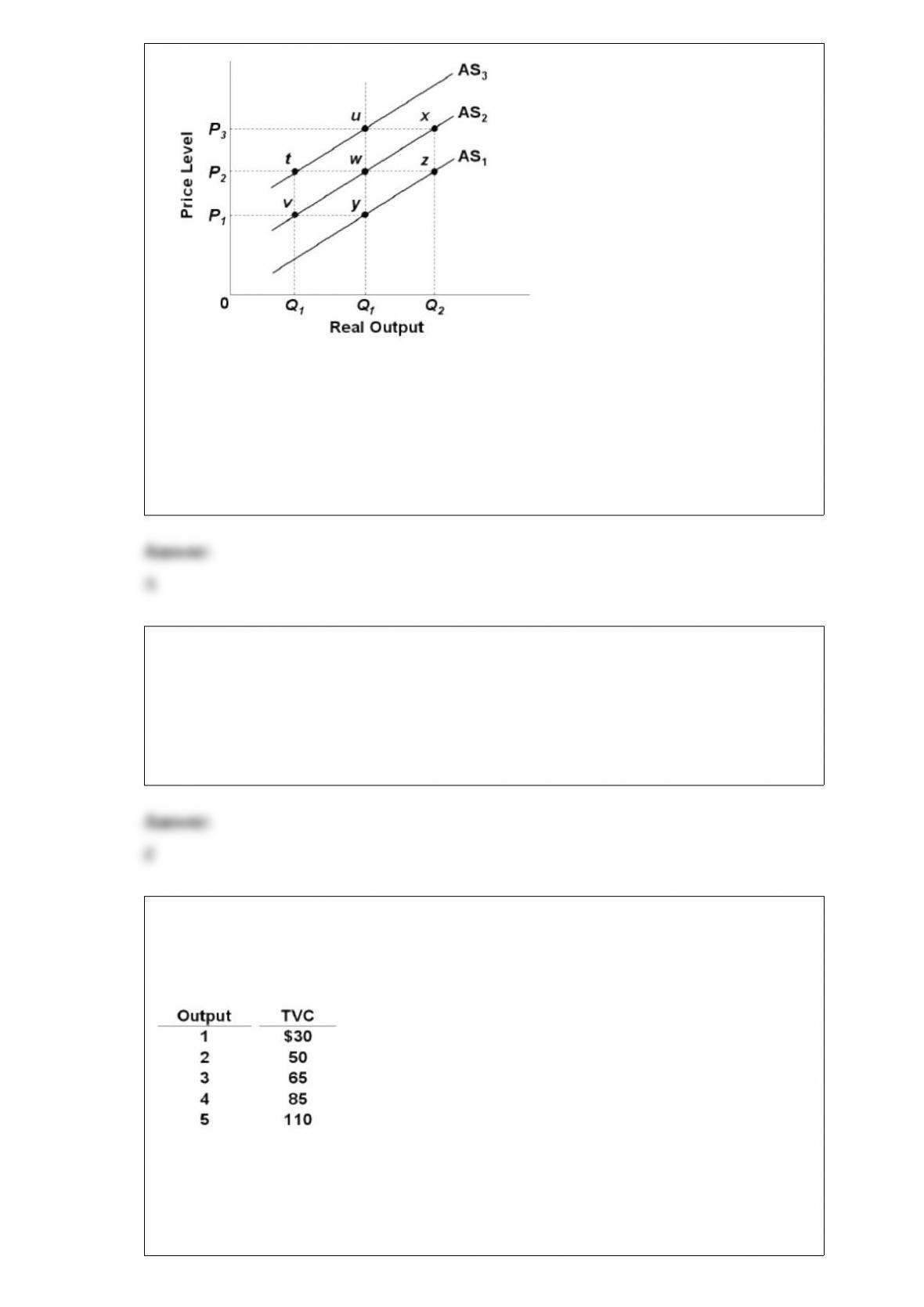
Refer to the above diagram and assume the economy is operating at equilibrium point
w. In the short run, a decrease in the price level from P2 to P1 would move the economy
from point w to point:
A.v
B.x
C.t
D.y
3) the alternative combinations of two goods which a consumer can purchase with a
given money income is shown by:
a.a production possibilities curve.
b.a demand curve.
c.consumer expenditure line.
d.a budget line.
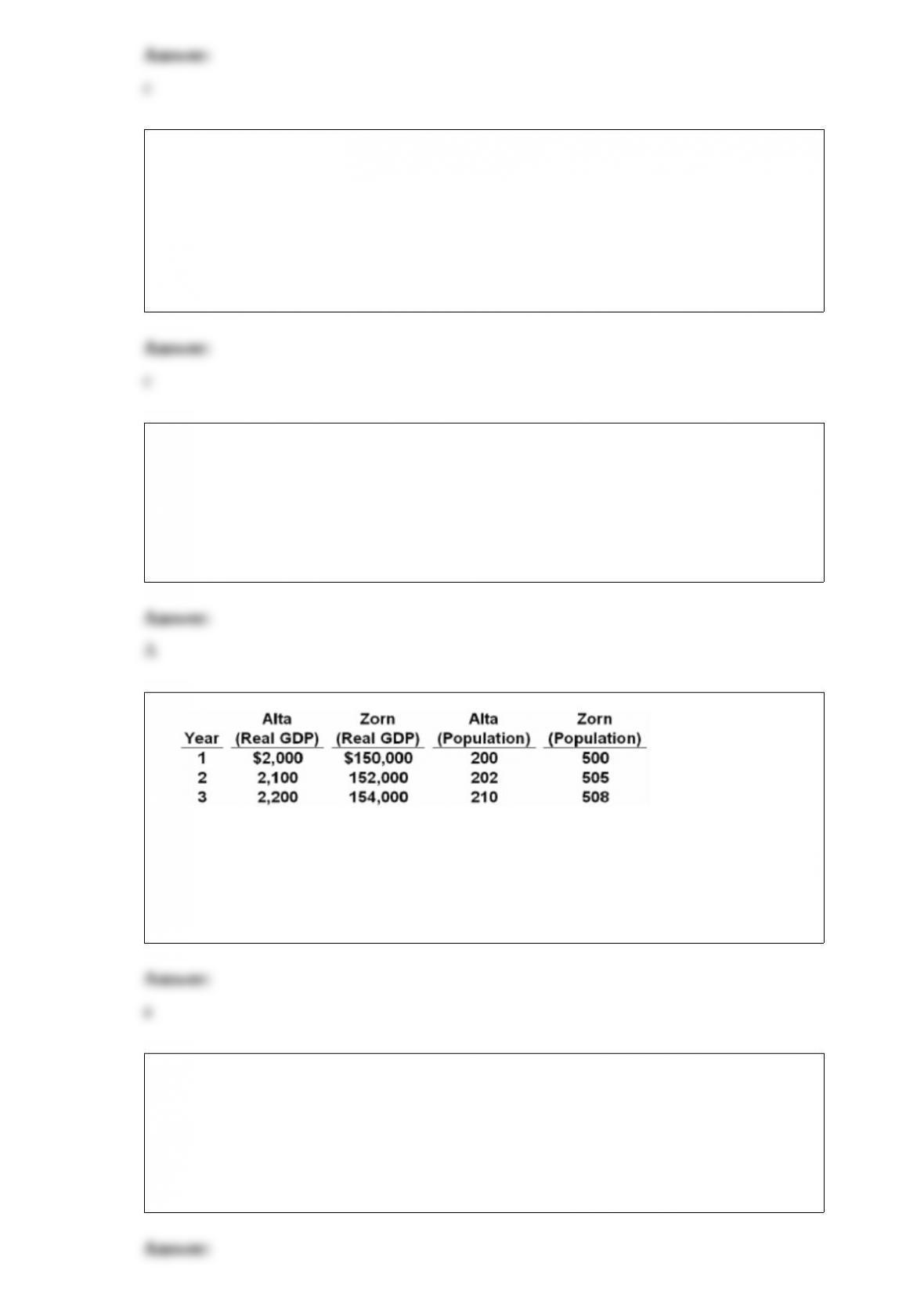
4) the sunshine corporation finds that its costs are $40 when it produces no output. its
total variable costs (tvc) change with output as shown in the accompanying table. use
this information to answer the following question(s).
refer to the above information. this firm:
a.is making an economic profit of $260.
b.is realizing a loss of $125.
c.may be either realizing a profit or a loss.
d.is selling its output in a competitive market.
5) economic cost can best be defined as:
a.any contractual obligation that results in a flow of money expenditures from an
enterprise to resource suppliers.
b.any contractual obligation to labor or material suppliers.
c.compensations that must be received by resource owners to insure their continued
supply.
d.all costs exclusive of payments to fixed factors of production.
6) Suppose the balance on the current account is +$50 billion and the balance on the
capital account is +$1 billion. The balance on the financial account is:
A.-$51 billion.
B.-$50 billion.
C.-$49 billion.
D.+ $51 billion.
7)
refer to the above table. between years 2 and 3:
a.alta’s real gdp grew more rapidly than zorn’s real gdp.
b.real gdp fell in zorn.
c.population growth reduced alta’s real gdp growth to zero.
d.population fell in alta.
8) Which one of the following, other things equal, will directly alter the United States
balance of trade?
A.an increase in the balance on capital account
B.a decrease in U.S. goods exports
C.an increase in net transfers
D.a decrease in U.S. purchases of assets abroad
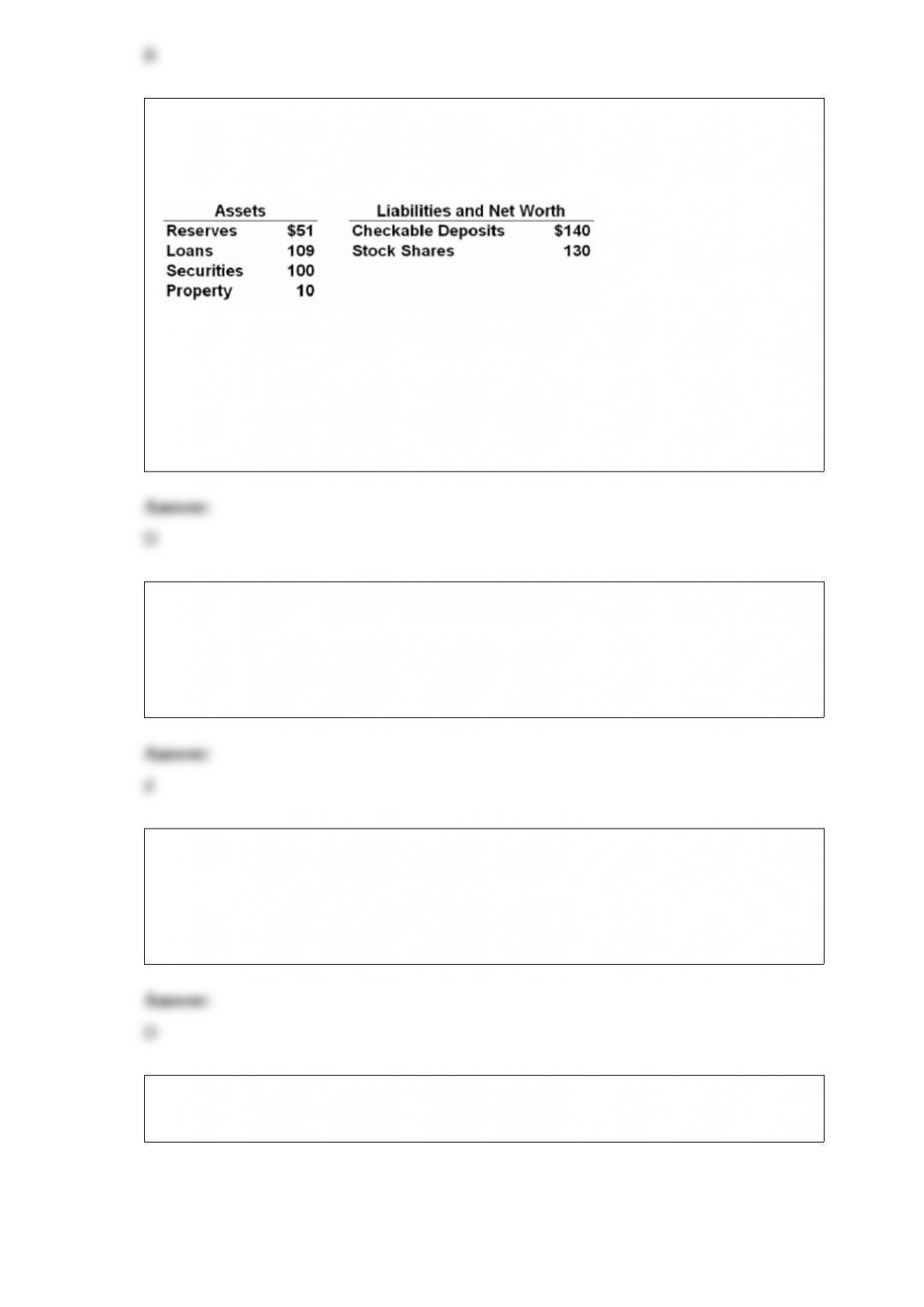
9) The following consolidated balance sheet for the commercial banking system.
Assume the required reserve ratio is 30 percent. All figures are in billions.
Refer to the above data. If the commercial banking system actually loans the maximum
amount it is able to lend:
A.reserves and deposits equal to that amount will be gained.
B.excess reserves will be $2.6 billion.
C.excess reserves will fall to $1.7 billion.
D.excess reserves will be reduced to zero.
10) all of the following are sources of increasing returns and economies of scale except:
a.network effects.
b.spreading of development costs.
c.more specialized inputs.
d.coordination problems in large organizations.
11) Which of the following is a component of the equation of exchange?
A.consumption
B.the interest rate
C.investment
D.the velocity of money
12) the following cost data for a purely competitive seller:
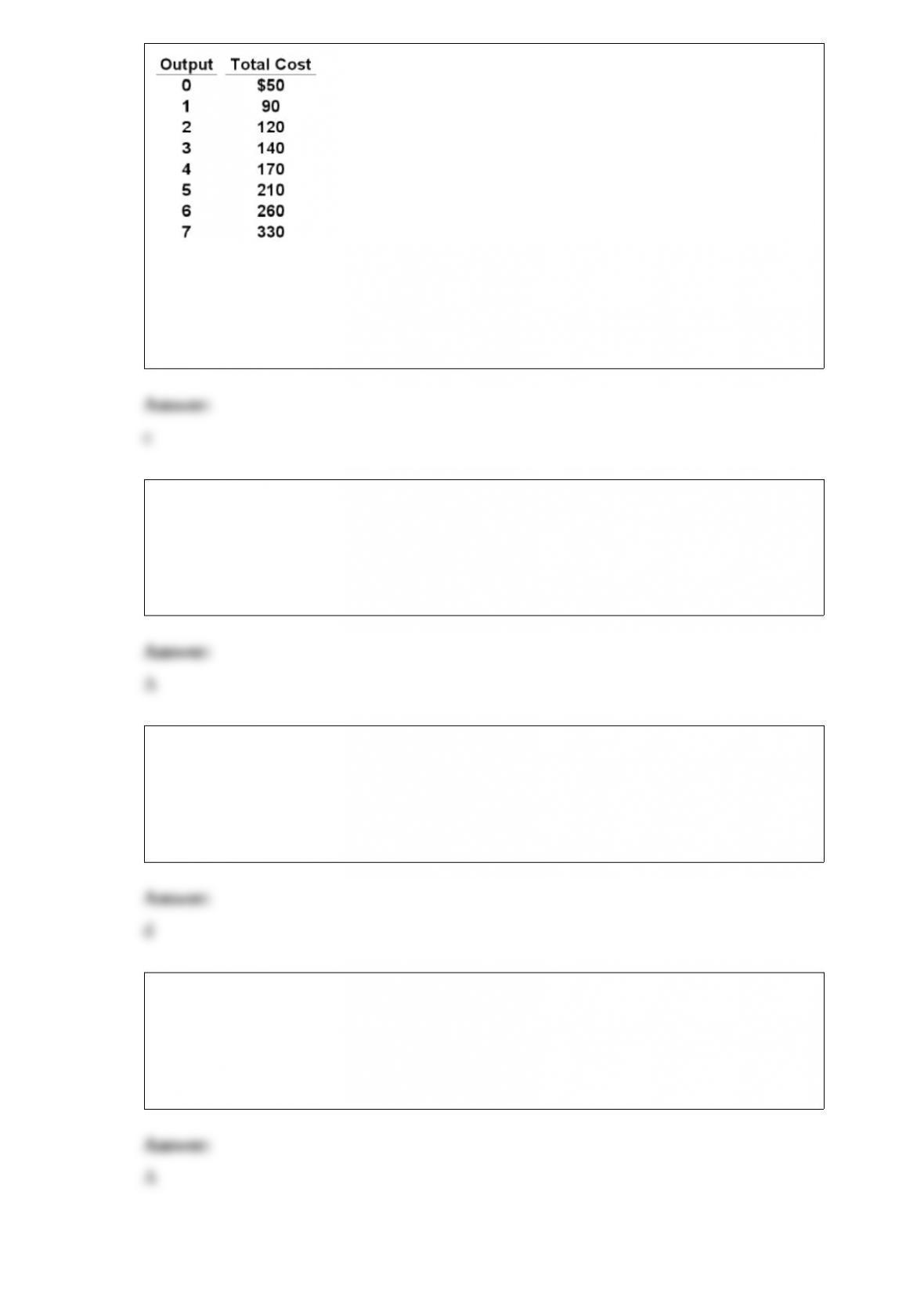
refer to the above data. if product price is $45, the firm will:
a.shut down.
b.produce 4 units and realize a $120 economic profit.
c.produce 5 units and realize a $15 economic profit.
d.produce 6 units and realize a $100 economic profit.
13) In the equation of exchange the level of aggregate expenditures is indicated by:
A.MV.
B.MV/Q.
C.PM.
D.MV/P.
14) a leftward shift of a product supply curve might be caused by:
a.an improvement in the relevant technique of production.
b.a decline in the prices of needed inputs.
c.an increase in consumer incomes.
d.some firms leaving an industry.
15) The basic equation of monetarism is:
A.MV = PQ.
B.Sa + T + M = Ig + G + Xn.
C.V = M/PQ.
D.Ca + Ig + Xn + G = GDP.

16) In the DVCs underemployment frequently takes the form of:
A.factory workers who are working longer hours than they would prefer.
B.workers who are employed inefficiently in small industry when they could be highly
productive in agriculture.
C.farmers whose productivity is very low.
D.craftsworkers and artisans who are replaced by simple machinery and equipment.
17) use the list below to answer the following questions:
1. improvements in technology
2. increases in the supply (stock) of capital goods
3. purchases of expanding output
4. obtaining the optimal combination of goods, each at least-cost production
5. increases in the quantity and quality of natural resources
6. increases in the quantity and quality of human resources
which set of items in the above list would shift an economy’s production possibilities
curve outward?
a.2, 5, and 6 only
b.2, 4, 5, and 6 only
c.1, 2, 5, and 6 only
d.1, 3, 4 only
18) the principle that a firm should produce up to the point where the marginal revenue
from the sale of an extra unit of output is equal to the marginal cost of producing it is
known as the:
a.output-maximizing rule.
b.profit-maximizing rule.
c.shut-down rule.
d.break-even rule.
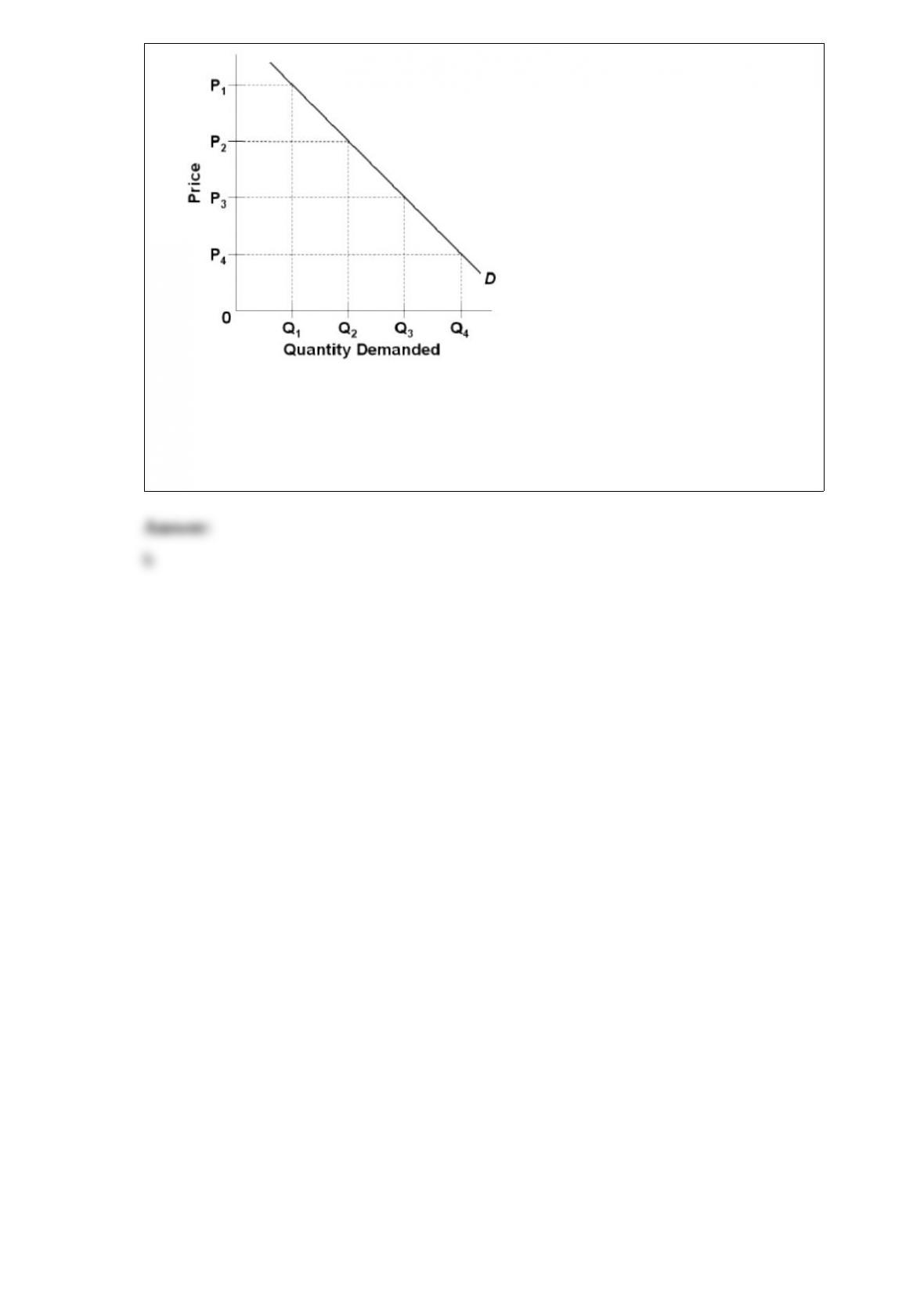
19)
refer to the above diagram. in the p3p4price range demand is:
a.of unit elasticity.
b.relatively inelastic.
c.relatively elastic.
d.perfectly elastic.