
A competitive market economy is unlikely to provide an efficient quantity of some
public goods because:
a. only the government has the vast resources necessary to produce public goods.
b. the nature of public goods makes it difficult for producers to withhold them from
nonpaying consumers.
c. the technology involved in the production of public goods makes it difficult for
private firms to produce them even though, once produced, they could be marketed
efficiently.
d. private production of public goods generally results in a large amount of profit,
which is difficult for a firm to effectively pay out to shareholders.
Which of the following characterizes the IACs?
a. High per capita GDP growth and high population growth.
b. Low per capita GDP growth and low population growth.
c. Low per capital GDP growth and high savings rate.
d. Low human capital investment.
Exhibit 3A-2 Comparison of Market Efficiency and Deadweight Loss
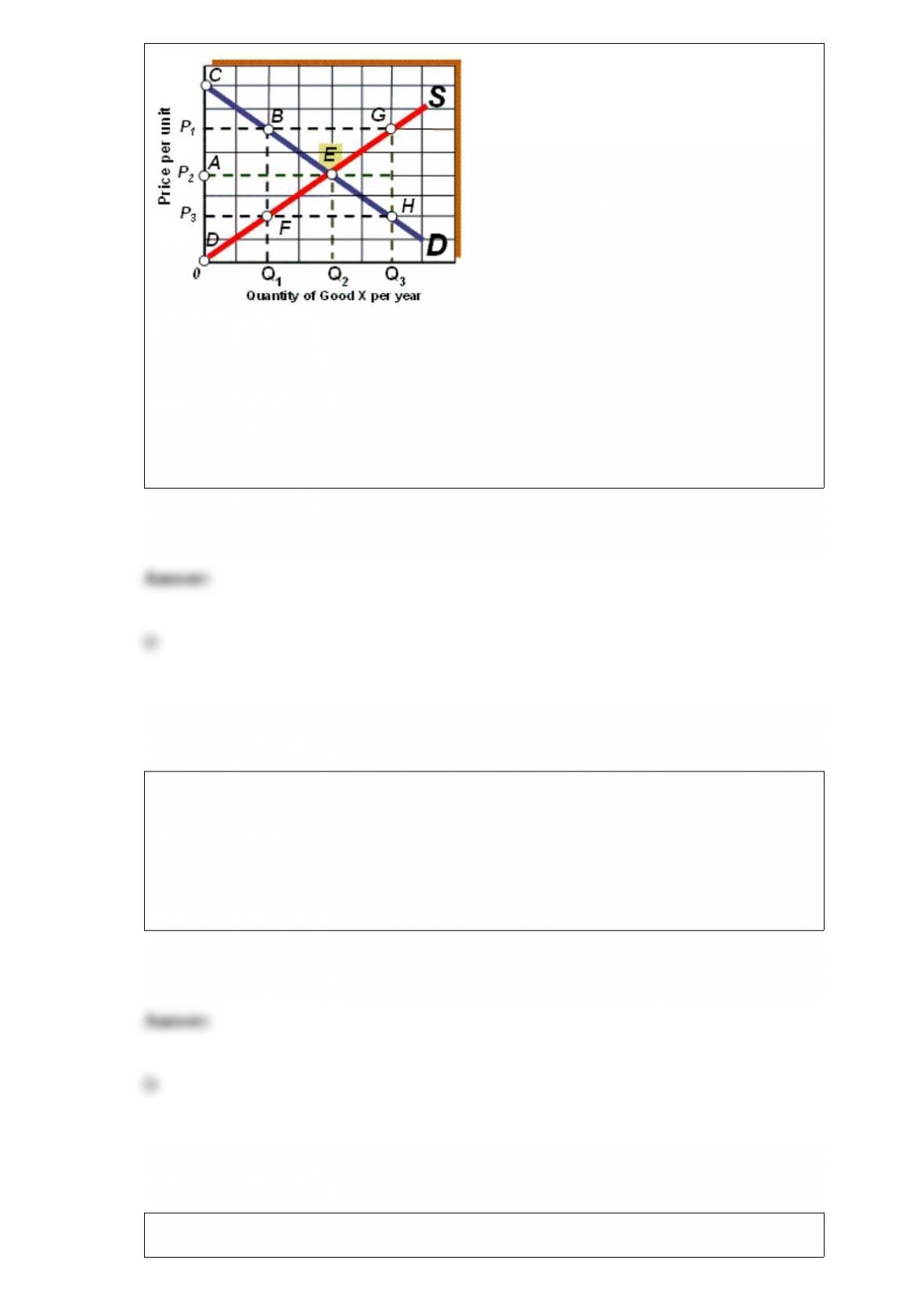
As shown in Exhibit 3A-2, if the quantity supplied of good X per year is Q3, the result
is:
a. deadweight loss.
b. inefficiency.
c. overproduction.
d. all of the above are true.
e. none of the above are true.
If a firm equates MR and MC, then:
a. TR is at a maximum, and TC is at a minimum.
b. output is at a maximum.
c. losses are at a maximum.
d. profits are at a maximum or losses are at a minimum.
e. both TR and TC are at a maximum.
Which of the following will cause a movement along the supply curve?

a. An increase or decrease in the raw materials costs.
b. An increase in labor costs.
c. Changes in the cost of the machinery used to make a good.
d. Changes in the market price of a good, other things held constant.
In the long-run equilibrium for a perfectly competitive firm, price equals which of the
following?
a. price.
b. minimum short-run average total cost.
c. short-run marginal cost.
d. All of these.
A rational consumer should not consume more of a good when:
a. total utility is decreasing.
b. marginal utility is diminishing.
c. both a and b.
d. income is decreasing.
e. the price is high.
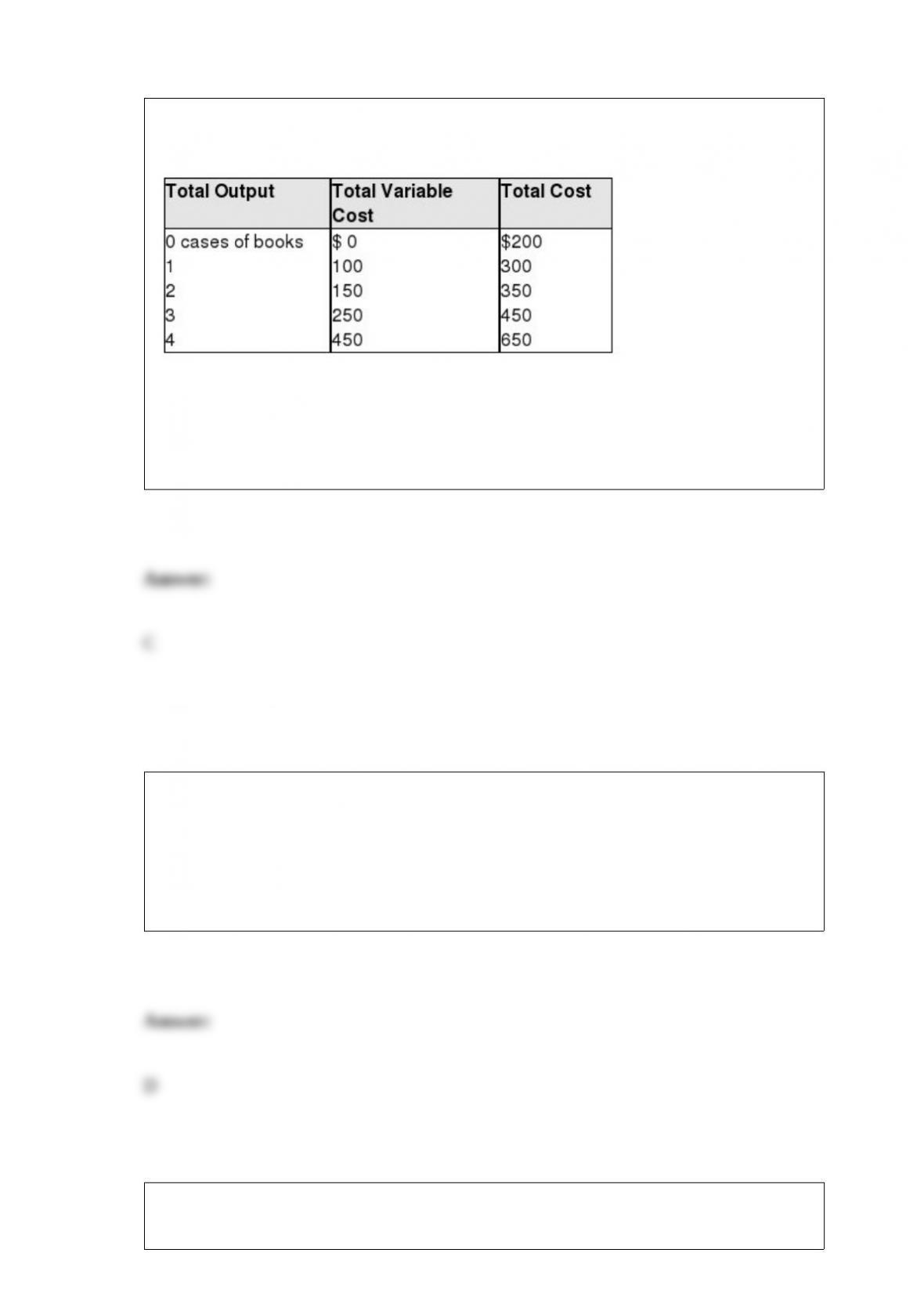
Exhibit 7-10 Short-run cost schedule for book publisher’s hourly production
In Exhibit 7-10, the publisher’s fixed cost is equal to:
a. $50.
b. $100.
c. $200.
d. $300.
The infant industry argument is based on the idea that:
a. competitive pressure from established foreign firms would encourage the infant
industry’s prospects for future growth.
b. failure to shelter these infant industries tends to lead to political instability.
c. small firms must be protected.
d. none of these.
An example of price discrimination is the price charged for:
a. an economics textbook at a campus bookstore.

b. gasoline.
c. theater tickets that offer lower prices for children.
d. a postage stamp.
A common characteristic of oligopolies is:
a. interdependence in pricing decisions.
b. independent pricing decisions.
c. low industry concentration.
d. few or no plant-level economies of scale.
The Sherman Antitrust Act is primarily concerned with:
a. mergers.
b. nationalization.
c. price discrimination.
d. monopolization.
e. unfair and deceptive practices.

Which of the following statements is correct?
a. Total surplus is the sum of consumer and producer surplus.
b. Deadweight loss is the net loss of both consumer and producer surplus resulting from
underproduction or overproduction of a product.
c. Deadweight loss is a measure of market inefficiency.
d. All of these.
The Secretary of Labor states that wage rates in the country have risen by 2 percent this
past year. The head of a local labor union states that wage gains have not kept pace with
the 3 percent rate of inflation. The Secretary’s statement is a (n) ____ economic
statement, and the labor head’s statement is a (n) ____ economic statement.
a. normative; normative
b. normative; positive
c. positive; normative
d. positive; positive
e. proper; improper
Entrepreneurs can delegate every one of the following tasks to labor except:
a. hiring and training new employees.
b. assuming business risk and uncertainty.

c. supervision of the production process.
d. researching ideas for new products.
e. marketing the goods and services produced.
The antitrust legislation that was designed to help small stores survive competition with
large retail chains was the:
a. FTC Act.
b. Sherman Antitrust Act.
c. Celler-Kefauver Act.
d. Robinson-Patman Act.
e. Clayton Act.
Deficient information on unsafe products can cause:
a. overconsumption of a product.
b. waste of resources used to produce a product.
c. consumers to pay a higher price for a product.
d. all of the above answers are true.
e. none of the above answers a. – c. are true.

Using a production possibilities curve, an economy that produces an output
combination less than the maximum possible is depicted by a point located:
a. at the top corner of the curve.
b. near the middle of the curve.
c. at the bottom corner of the curve.
d. outside the curve.
e. inside the curve.
Adam Smith wrote that the:
a. economic problems of eighteenth-century England were caused by free markets.
b. government should control the economy.
c. pursuit of private self interest promotes the public interest in a market economy.
d. public or collective interest is not promoted by people pursuing their self interest.

City streets, sewage systems, and police protection are all examples of:
a. public goods.
b. private goods.
c. exclusive goods.
d. rival goods.
e. consumer goods.
Consider a competitive industry in which a “green” company uses a cleaner but costlier
production method than is used by other firms. In the long run, the “green” company
will:
a. earn more profit than will the typical firm in the industry.
b. drive its competitors out of business.
c. have economic losses and exit the industry.
d. charge a higher-than-average price for its product.
If pork and beans is an inferior good, other things being equal, an increase in consumer
income will decrease the demand for pork and beans.

Two variables that are inversely related tend to move in opposite directions.
In the long run, command-and-control (CAC) regulations encourage firms to develop
new technology to lower future emissions.
As the price of a competitive firm’s product rises, the firm’s demand for labor also rises.
A tariff will decrease the supply of the product.

The graph of a direct relationship will have a positive slope.
In the United States during the 1980s, there was a movement toward deregulation of
industry.