
The long run for the industry is defined as a period of time long enough for
a. any new firm that desires to enter the industry.
b. any old firm that desires to leave the industry.
c. all aspects of production to vary and there are no fixed costs.
d. All of the above are correct.
If part of the labor force is unemployed, the foregone goods and services are
a. lost until the unemployed find jobs.
b. are replaced by unemployment insurance.
c. are lost forever.
d. are replaced by an equal amount of imports.
An increase in income taxes was part of President George W. Bush’s plan in 2001 and
2008 to increase aggregate demand.
a. True
b. False
Economists ordinarily favor setting price equal to marginal cost when this option is
feasible.
a. True
b. False
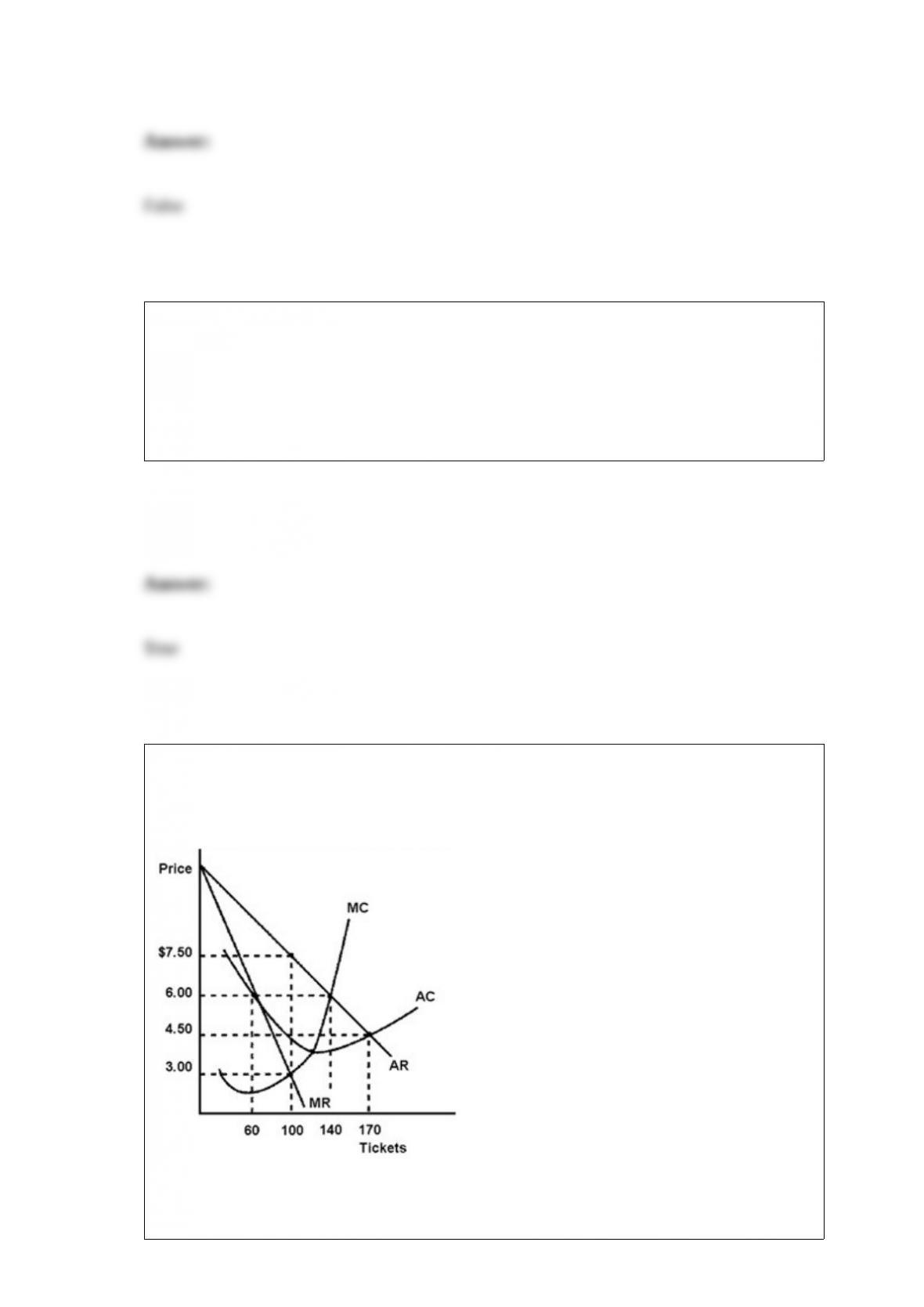
Figure 11-5
In Figure 11-5, Crown Theater, a monopolist movie theater, will make a profit of ____
at its profit-maximizing price and quantity of theater tickets.

a. $450
b. $150
c. $300
d. $750
If the output of a firm is increased by one unit, the revenue addition is called
a. total revenue.
b. average revenue.
c. marginal revenue.
d. economic profit.
Figure 18-1

According to the graph in Figure 18-1, the tax is which of the following?
a. 400
b. 600
c. 1,000
d. 200
Why is it true that domestic product and national income must be equal?
a. The IRS national accounting system assures that taxes equal total income.
b. The total amount of spending must equal total national sales.
c. The value of final product must equal the sum of resource income that produced it.
d. The total amount of income earned is eventually spent.

If a commodity is inexpensive and its total utility great,
a. it is an inferior good.
b. it is plentiful.
c. its marginal utility is high.
d. the ratio of price to marginal utility is very high.
An industry that generates detrimental externalities will have a marginal social cost
higher than the marginal private cost to the industry.
a. True
b. False
Total cost equals average cost multiplied by the quantity of output.
a. True
b. False

The United States has been willing to trade off greater efficiency for greater wage
equality.
a. True
b. False
Older people often reminisce about the “good old days” when prices were much lower.
This is misplaced nostalgia primarily because in the “good old days,”
a. prices were not really that low.
b. wages were much lower also.
c. people worked longer hours.
d. people had more leisure time.

Economists who argue in favor of rapid deficit reduction claim that deficit reduction
will
a. reduce crowding in, reduce interest rates, and increase AS.
b. stimulate AD and productivity.
c. trigger crowding in, increase investment, and increase AS.
d. reduce crowding out, increase investment, and increase AS.
Many economists argue that the most efficient way to control pollution is to
a. ban all activities that create pollution.
b. enforce legal standards on air and water quality.
c. promote environmental awareness among citizens.
d. impose taxes on emissions.
Richard Bland quit his job as an accounting professor to start his own restaurant. He
gave up a salary of $50,000 per year and withdrew $100,000 in bank CDs earning 5
percent to buy a building and equipment. In the restaurant’s first year it had direct
expenses of $75,000 and revenues of $150,000. The restaurant’s economic profit was
a. $15,000.
b. $20,000.
c. $75,000.
d. not possible to determine from the information given.
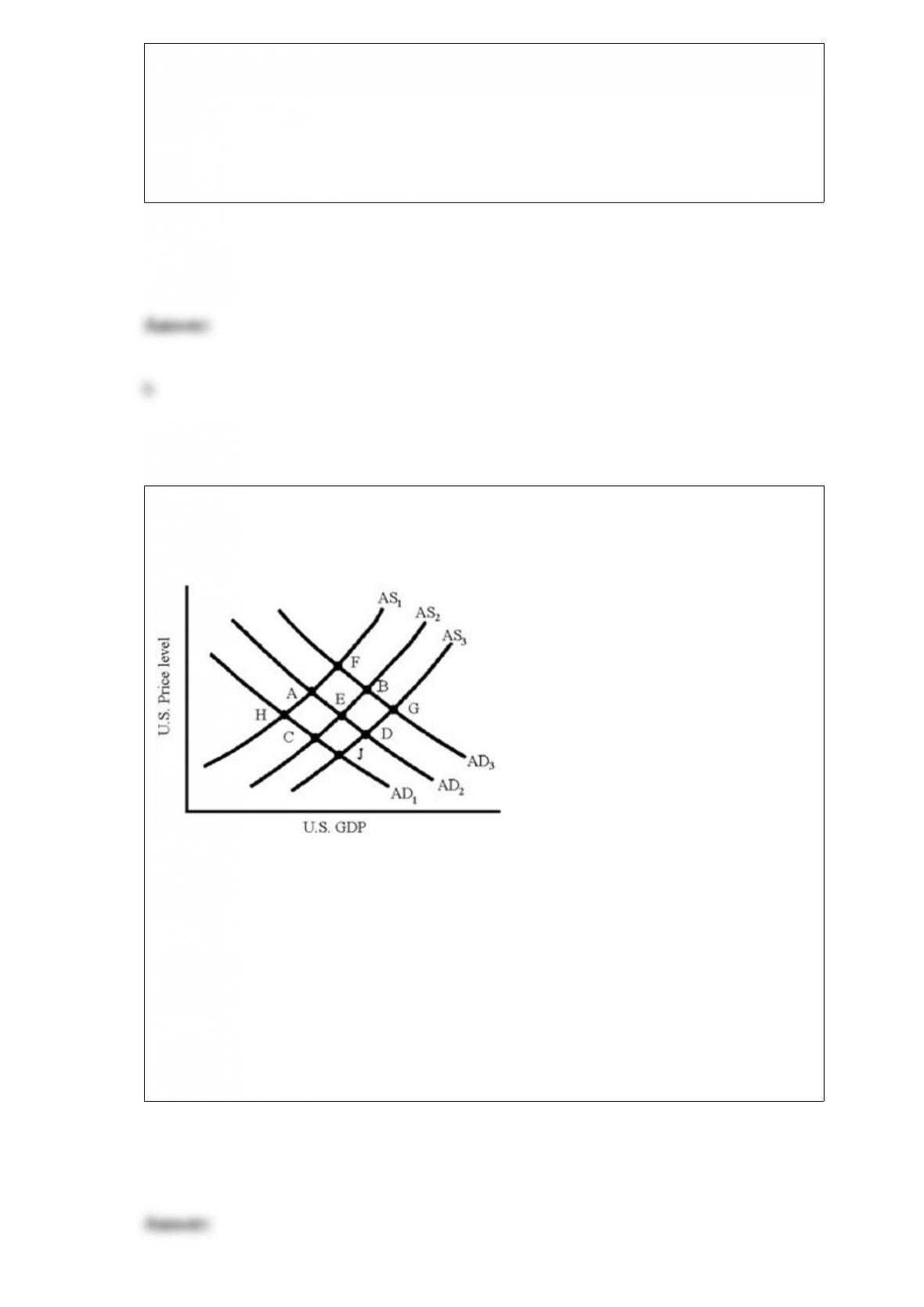
Figure 20-6
In Figure 20-6, which of the following will cause a movement from equilibrium at point
A to equilibrium at point C?
a. an appreciation of the dollar
b. a depreciation of the dollar
c. an appreciation of the Japanese yen
d. an increase in the U.S. price level

The structural deficit is equal to expenditures
a. plus transfers less taxes for the fiscal year in government statistics.
b. less taxes at some hypothetical high employment level.
c. plus transfers less taxes at some hypothetical high employment level.
d. less transfers for the fiscal year in government statistics.
Schooling and other types of training
a. are regarded as investment in human capital.
b. are an important cause of income differentials.
c. involve workers’ sacrificing current income in order to enjoy higher future income.
d. All of the above are correct.
Service to consumers of deregulated products has generally not diminished.
a. True
b. False
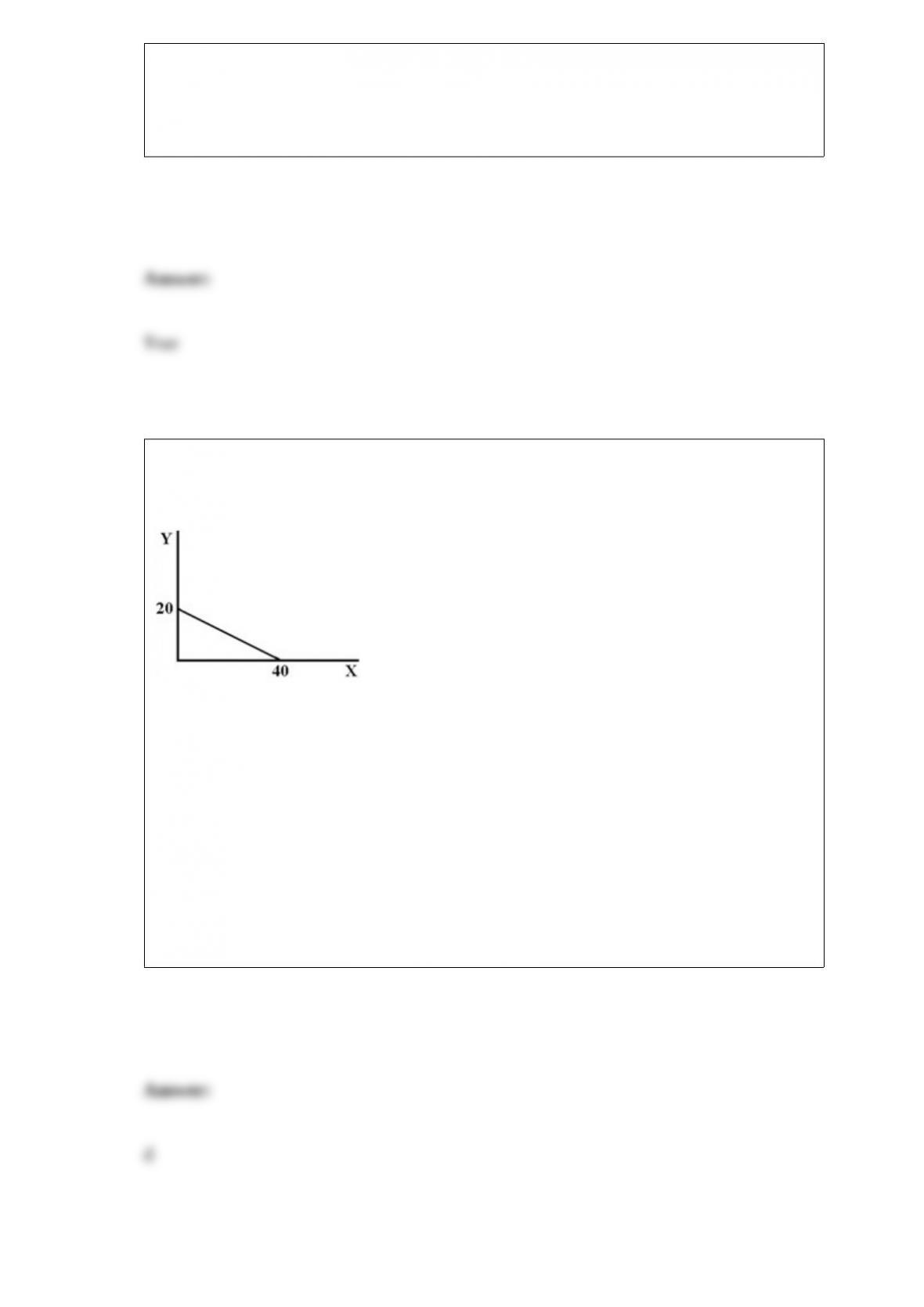
Figure 1-1
Which of the following mathematical expressions represents the equation of a straight
line with a slope of zero at all points on a graph with Y on the vertical axis and X on the
horizontal axis?
a. Y = a + X
b. X = bY
c. X = a
d. Y = a

Centrally planned economies are not constrained by the problem of scarcity.
a. True
b. False
A “single tax” on land was proposed in the nineteenth century by
a. Lloyd George.
b. Henry George.
c. George Washington.
d. George Sands.
The rapid advance in computer technology is one of the reasons given for the shift of
the
a. aggregate demand curve outward.
b. aggregate supply curve inward.
c. aggregate supply curve outward.
d. total expenditures curve upward.

Most banks in the United States are owned by the government and operate as nonprofit
institutions.
a. True
b. False
According to the U.S. Bureau of Labor Statistics, the term “employed” includes all full
time workers and part-time workers.
a. True
b. False
When a business has been profitable and needs to invest, its preferred method of
financing will likely be

a. plowback.
b. stock issue.
c. bond sales.
d. equal issues of stocks and bonds.
Critics of the huge net returns on, for example, oil production will claim that the returns
are
a. interest on the capital investment.
b. rents on a natural resource.
c. profits on entrepreneurial activity.
d. exorbitant and should be taxed away.
In general, as the amount of labor input decreases, the amount of output
a. increases.
b. decreases.
c. remains constant.
d. decreases only if the capital stock also decreases.
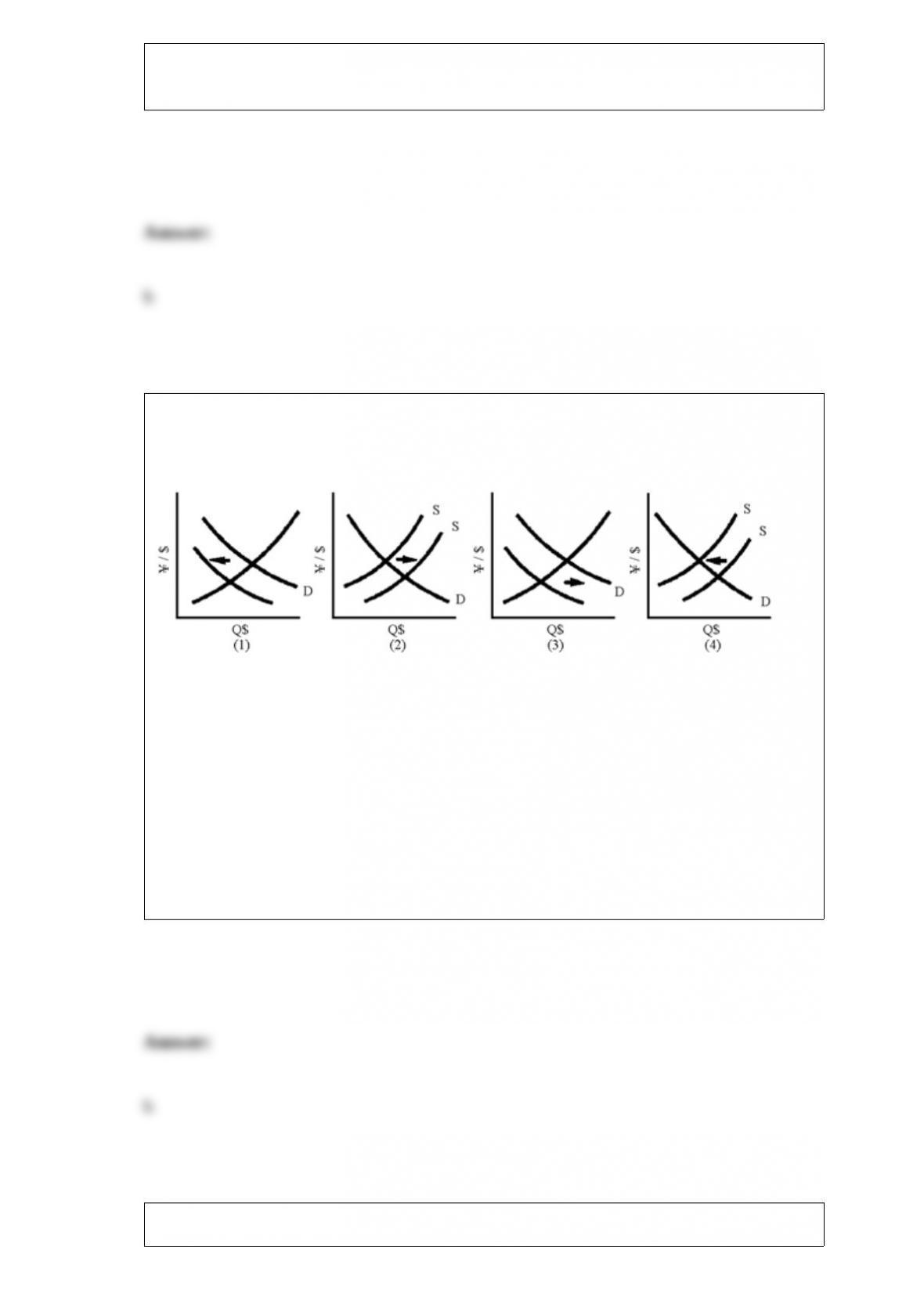
Figure 19-1
Of the graphs in Figure 19-1, which one shows the effects of an economic boom in the
United States and a depreciation of the dollar?
a. 1
b. 2
c. 3
d. 4
To the investor, stocks are riskier than bonds because

a. interest rates fluctuate more than stock prices.
b. dividends depend on profits.
c. speculators manipulate stocks but not bonds.
d. dividends are taxed twice.
If the economy experiences inflation and economic growth, this means that aggregate
demand grows by more than aggregate supply.
a. True
b. False
The substitution effect is thought to dominate the behavior of low-wage workers.
a. True
b. False

The combined effects of a fiscal contraction and a monetary expansion are
a. higher real interest rates.
b. exchange rate depreciation.
c. increased current account deficit.
d. All of the above are correct.
A theory is an untested assertion of alleged fact.
a. True
b. False