In a constant-cost industry, input prices remain constant as:
a. the supply of inputs fluctuates.
b. firms encounter diseconomies of scale.
c. workers become more experienced.
d. firms enter and exit the industry.
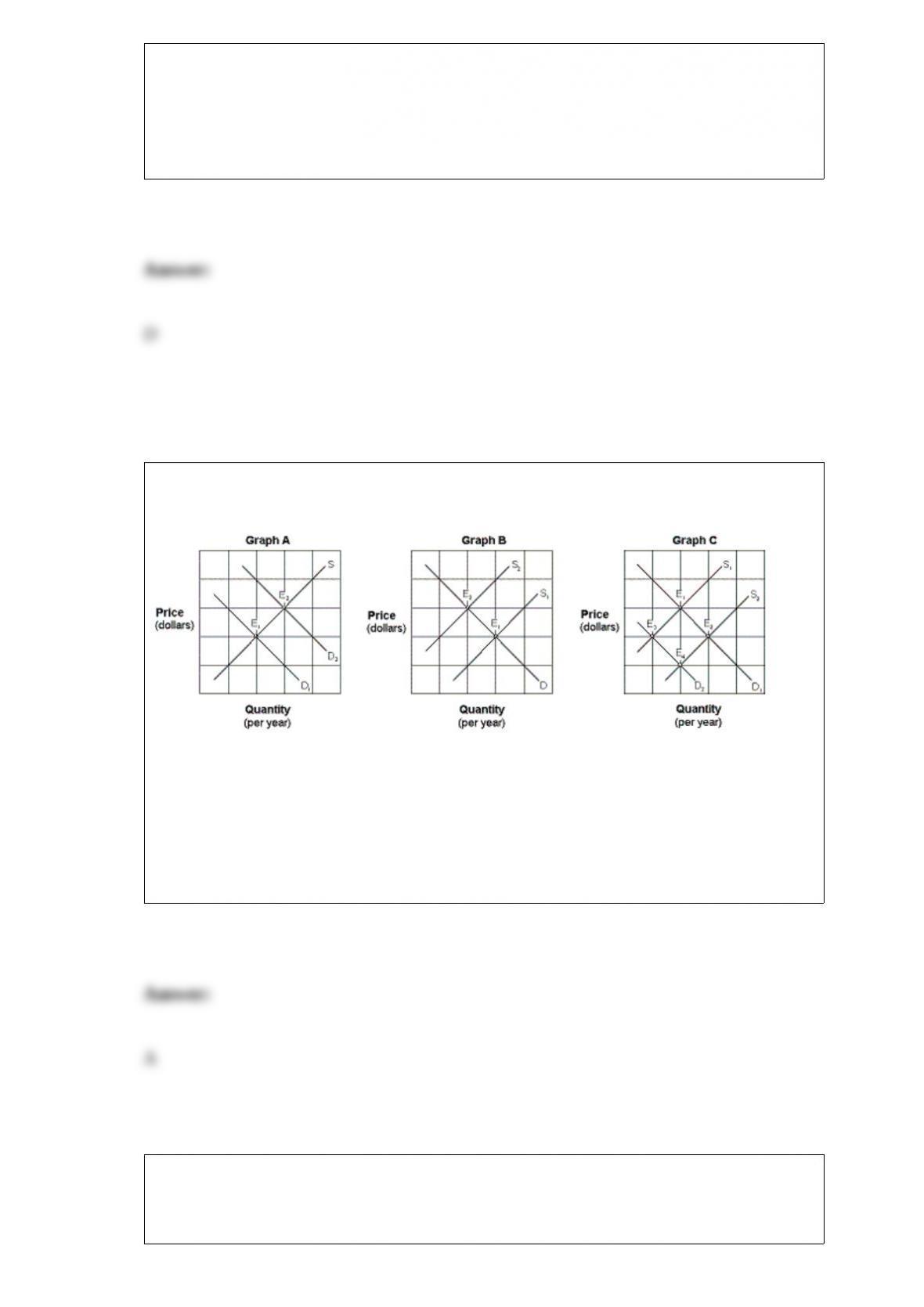
Exhibit 4-4 Supply and demand curves for good X
Which of the graphs in Exhibit 4-4 illustrates an increase in buyers’ income, assuming
that good X is a normal good?
a. Graph A. c. Graph C.
b. Graph B. d. None of these.
The basic difference between macroeconomics and microeconomics is:
a. microeconomics concentrates on individual markets while macroeconomics focuses
primarily on international trade.

b. microeconomics concentrates on the behavior of individual consumers while
macroeconomics focuses on the behavior of firms.
c. microeconomics concentrates on the behavior of individual consumers and firms
while macroeconomics focuses on the performance of the entire economy.
d. microeconomics explores the causes of inflation while macroeconomics focuses on
the causes of unemployment.
Deregulation, especially for the transportation and telecommunication industries, was
the trend in the United States during the:
a. 1930s. c. 1970s.
b. 1950s. d. 1980s.
Exhibit 12-2 Lorenz curve
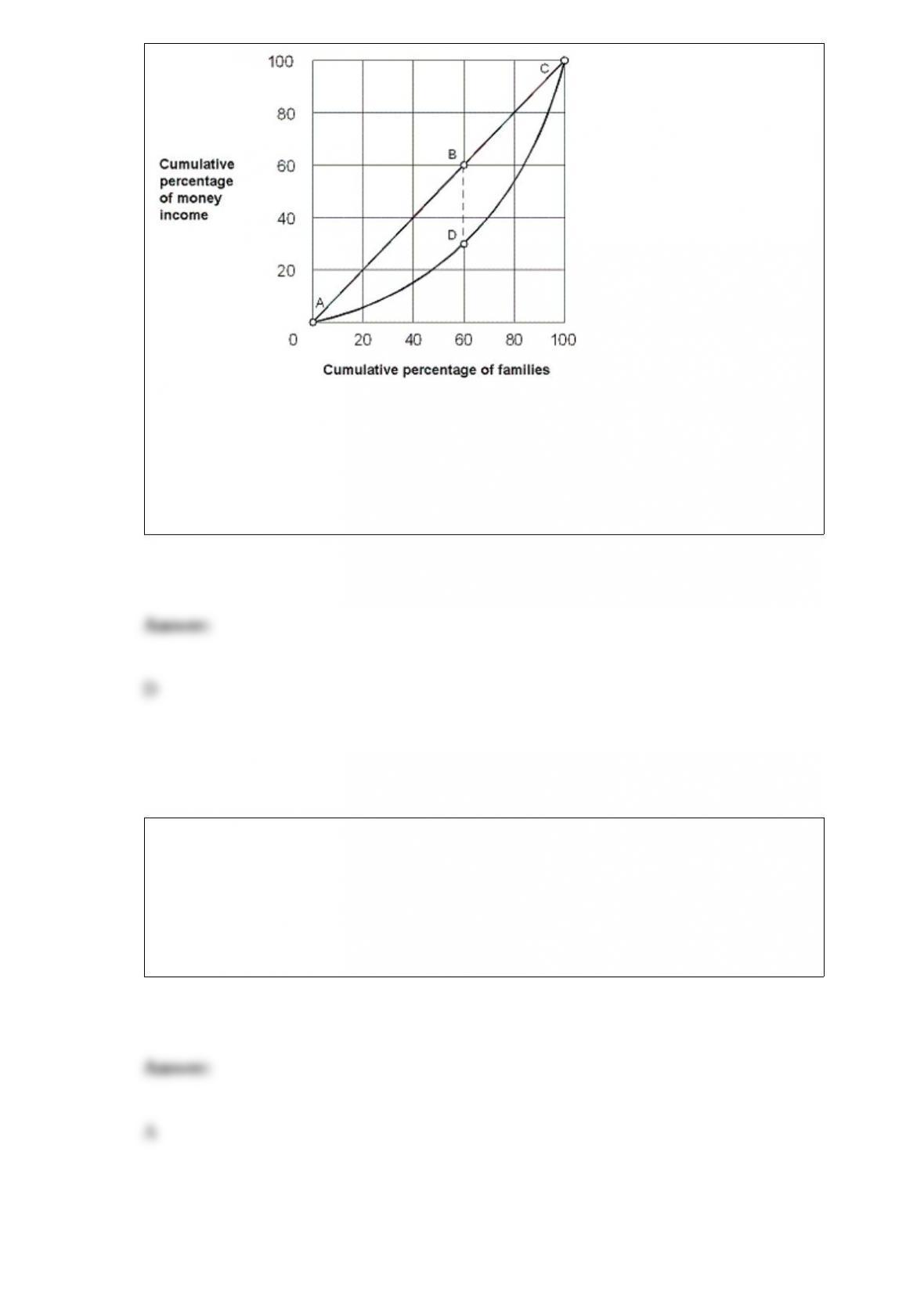
As shown in Exhibit 12-2, the degree of unequal income distribution is measured by the
area between the:
a. Lorenz curve and the horizontal axis.
b. Lorenz curve and the vertical axis.
c. Perfect equality line and the origin.
d. Perfect equality line and the Lorenz curve.
A sub-discipline of economics that looks at the economy as a whole is:
a. macroeconomics.
b. microeconomics.
c. positive economics.
d. normative economics.
e. impossible to model.

If ABC Printing is producing an output level of 100, where MR is $5 and MC is $3,
then the firm is:
a. maximizing total profit.
b. making too much profit.
c. making $200 total profit.
d. making $200 total loss.
e. making an unknown amount of profit or loss.
A farm is able to produce 10,000 bushels of peanuts per season on 10 acres. Assume it
adds one more acre and is able to produce 12,000 bushels per season. The marginal
product of the additional acre of land for this farm is:
a. 10,000 bushels per acre per year.
b. 1,200 bushels per acre per year.
c. 2,000 bushels per acre per year.
d. 12,000 bushels per acre per year.
Price elasticity of demand refers to the:
a. percentage increase in price in response to a percentage increase in quantity
demanded.
b. percentage decrease in price in response to a percentage increase in income.
c. minimum amount that consumers will pay for a percentage change in quantity
demanded or supplied.
d. responsiveness of quantity demanded to a change in the price of a good.
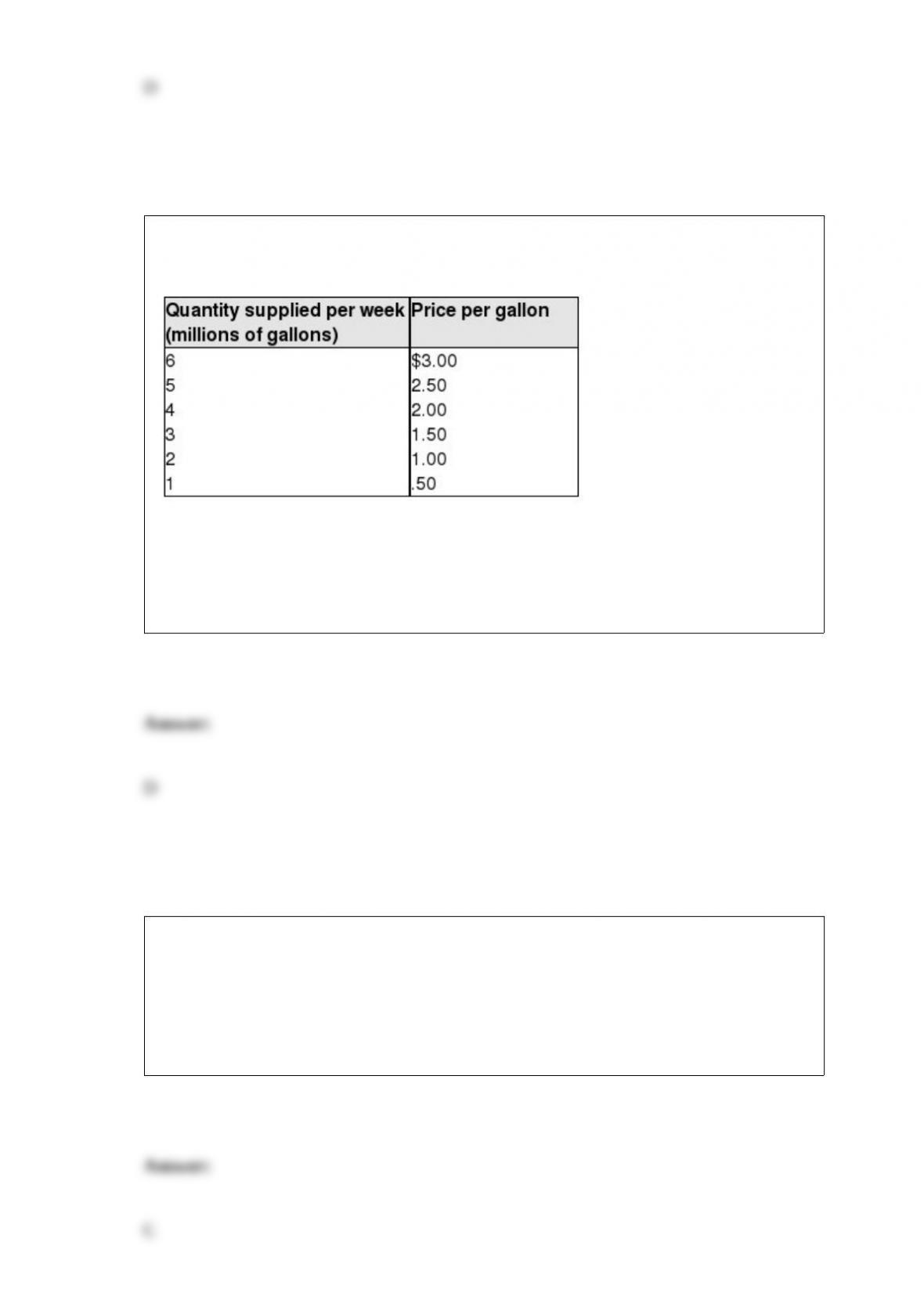
Exhibit 3-5 Supply for Tucker’s Cola Data
In reference to Exhibit 3-5, assume the price of Tucker’s Cola is $1.00 per gallon. If the
price were to rise to $3.00 per gallon, and all other factors, such as taxes, etc. remained
constant, the result would be a(n):
a. decrease in supply. c. decrease in quantity supplied.
b. increase in supply. d. increase in quantity supplied.
The marginal rate of substitution ____ as one moves downward along the indifference
curve.
a. increase
b. remains constant
c. decreases
d. increases and then decreases
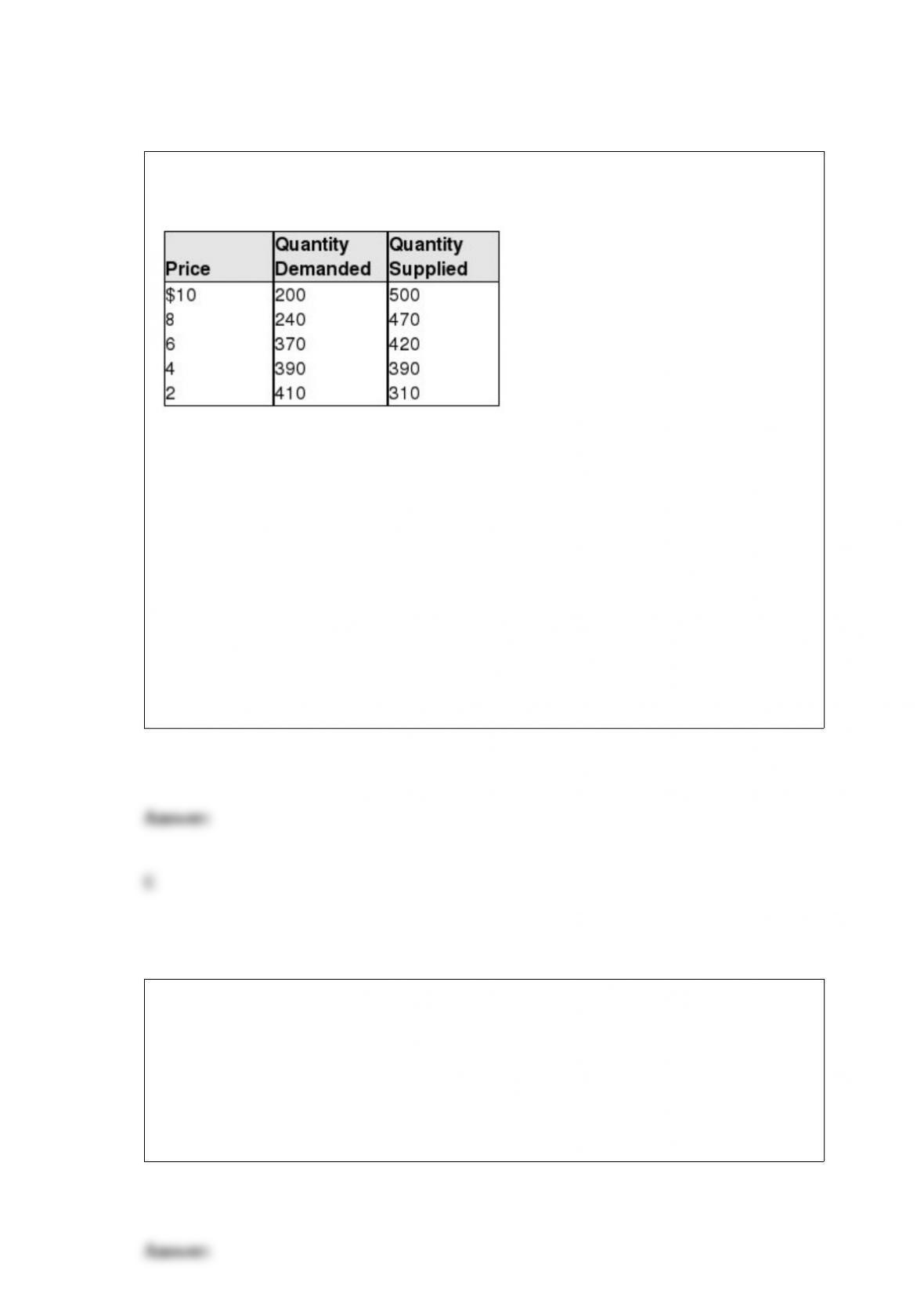
Exhibit 4-7 Demand and supply schedules for movie tickets
In Exhibit 4-7, a 100 decrease in quantity demanded at every price level would cause
the new equilibrium price to become:
a. $10.
b. $8.
c. $6.
d. $4.
e. $2.
During the course of a week, McDonald’s has enough time to hire or layoff workers, but
it does not have enough time to expand its kitchen or add an additional seating area. In
this situation, McDonald’s:
a. has no fixed costs.
b. is in the short run.
c. suffers an economic loss.
d. earns a large profit.

When quantity supplied equals quantity demanded, there is:
a. disequilibrium.
b. excess quantity supplied.
c. a market-clearing price (equilibrium price).
d. excess quantity demanded.
e. a shortage.
One source of economic growth is:
a. producing inside the production possibilities curve.
b. producing outside the production possibilities curve.
c. increasing capital.
d. discouraging profit-seeking entrepreneurs.