
As spending on government purchases increases, income rises and money demand falls.
An increase in wages raises the opportunity cost of leisure and leads to an increase in
the quantity supplied of labor.
The income effect of a price change refers to the change in the quantity demanded of a
good that results from a change in the price of a substitute product.
If a country has an absolute advantage in producing a product, it may not have a
comparative advantage in producing that product.

Decision trees can only be used to analyze sequential games.
A tax is efficient if it imposes a large excess burden relative to the tax revenue it raises.
Innovations, including new products and services, in financial markets and institutions
have made the job of defining the money supply easier.
The gold in Fort Knox backs all U.S. currency.

If the government wants to minimize the welfare loss of a tax, it should tax goods with
more inelastic demands or supplies.
If the CPI falls from 142 to 140 between two consecutive years, this implies that prices
fell by 2% between those two years.
In recent decades the United States has incurred overall balance of payments deficits.
If price is equal to average variable cost, a perfectly competitive firm breaks even.

A positive technological change will cause the quantity supplied of a good to increase.
A downward-sloping marginal product of labor curve demonstrates the law of
diminishing marginal returns.
Stockholders
A) select the board of directors of a corporation.
B) select the employees of a corporation.
C) select the managers of a corporation.
D) all of the above
Suppose an industry is made up of 25 firms, all with equal market share. The four-firm
concentration ratio of this industry is
A) 16%.

B) 20%.
C) 25%.
D) It cannot be determined from the information given.
In October 2005, the U.S. Fish and Wildlife Service banned the importation of beluga
caviar, the most prized of caviars, from the Caspian Sea. What happened in the market
for caviar in the U.S.?
A) The supply curve shifted to the left.
B) The supply curve shifted to the right.
C) The demand curve shifted to the right.
D) The demand curve shifted to the left.
Table 4-8
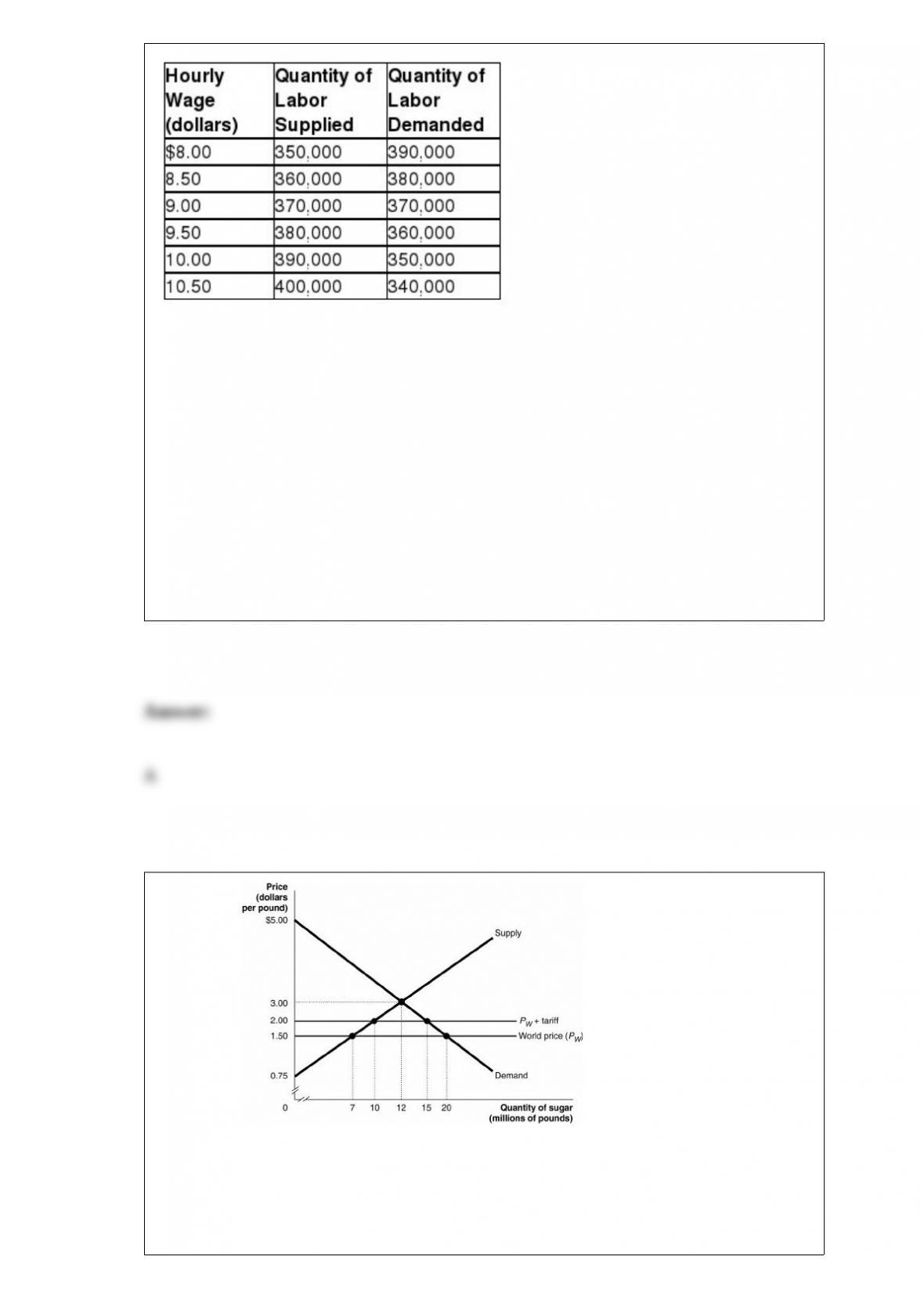
Table 4-8 shows the demand and supply schedules for the low-skilled labor market in
the city of Westover.
If a minimum wage of $10.00 an hour is mandated, what is the quantity of labor
supplied?
A) 390,000
B) 370,000
C) 350,000
D) 40,000
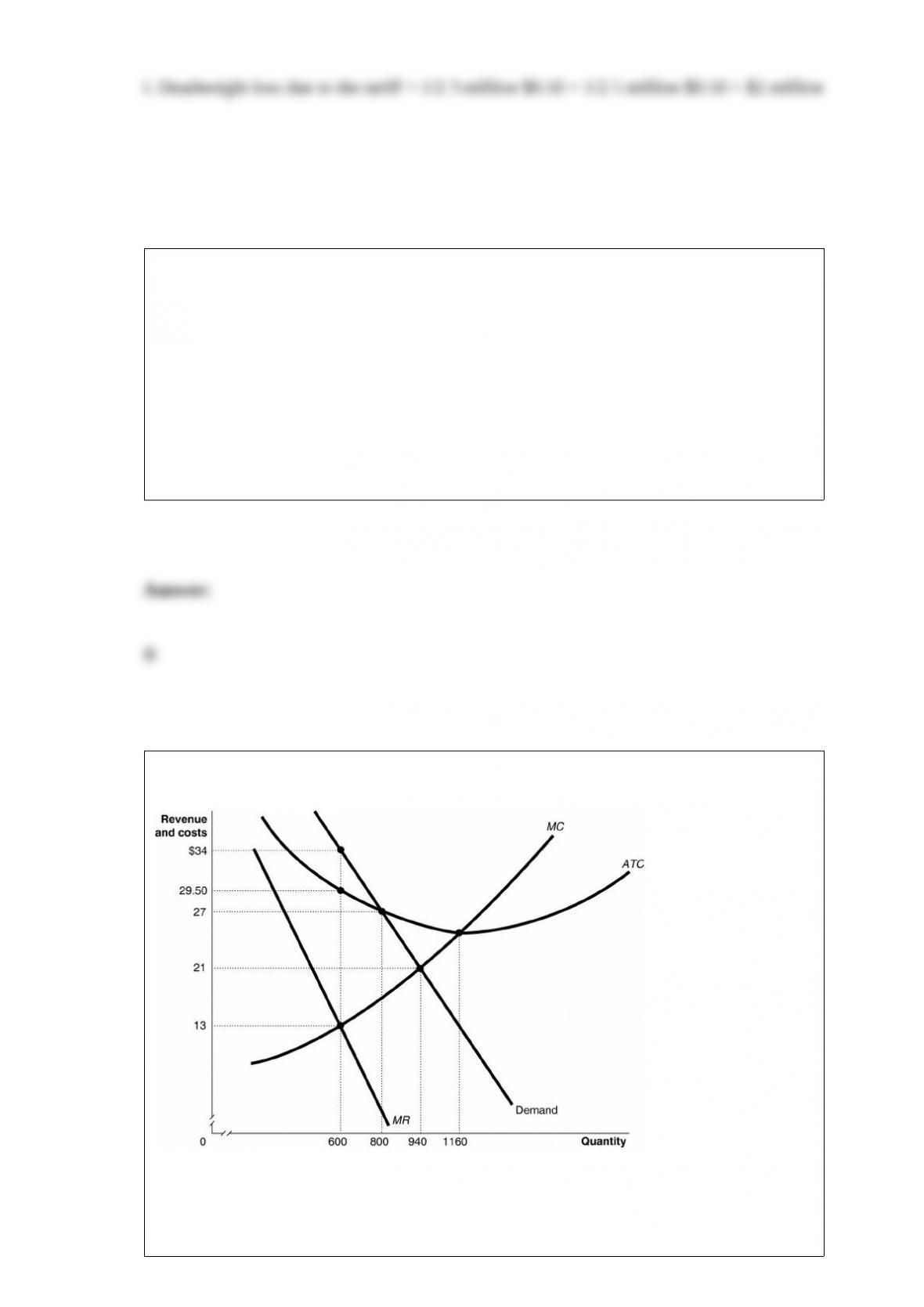
Figure 9-8 Suppose the U.S. government
imposes a $0.50 per pound tariff on sugar imports. Figure 9-8 shows the demand and
supply curves for sugar and the impact of this tariff.
Answer questions a-i. a. Following the imposition of the tariff, what is the price that
domestic consumers must now pay and what is the quantity purchased?

b. Calculate the value of consumer surplus with the tariff in place.
c. What is the quantity supplied by domestic sugar producers with the tariff in place?
d. Calculate the value of producer surplus received by U.S. sugar producers with the
tariff in place.
e. What is the quantity of sugar imported with the tariff in place?
f. What is the amount of tariff revenue collected by the government?
g. The tariff has reduced consumer surplus. Calculate the loss in consumer surplus due
to the tariff.
h. What portion of the consumer surplus loss is redistributed to domestic producers? To
the government?
i. Calculate the deadweight loss due to the tariff.
The aggregate demand curve will shift to the right ________ the initial decrease in
taxes.
A) by less than
B) by more than
C) by the same amount as
D) sometimes by more than and other times by less than
Figure 15-4
Figure 15-4 shows
the demand and cost curves for a monopolist. What is likely to happen to this monopoly
in the long run?
A) New firms will enter the market to eliminate its profits.
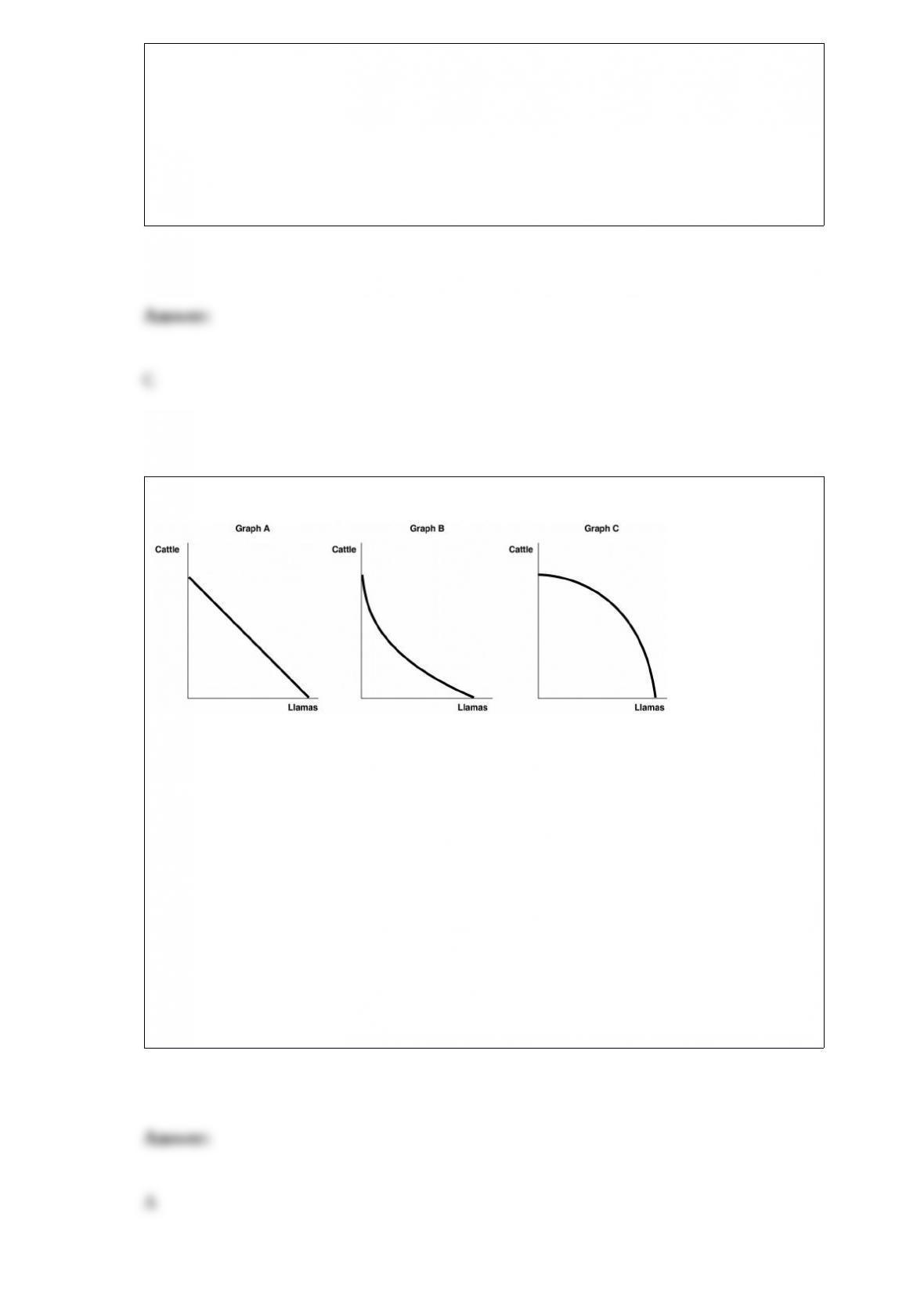
B) It will expand its output to take advantage of economies of scale so as to further
increase its profit.
C) As long as there are entry barriers, this firm will continue to enjoy economic profits.
D) It will be regulated by the government because of its excess profits.
Figure 2-3
Sergio Vignetto raises cattle and llamas on his land. His land is equally suitable for
raising either animal. Which of the graphs in Figure 2-3 represent his production
possibilities frontier?
A) Graph A
B) Graph B
C) Graph C
D) either Graph A or Graph C
E) either Graph B or Graph C

A bond’s coupon payment divided by the bond’s current price is equal to the bond’s
A) dividend yield.
B) current yield.
C) price-earnings ratio.
D) maturity value.
Painters who paint water towers earn higher wages relative to painters who paint houses
because
A) the demand for tower painters is greater than the demand for residential painters.
B) painting water towers is more risky than painting houses.
C) the tower painters’ union is probably more powerful than the house painters’ union.
D) the supply of water tower painters exceeds the supply of house painters.
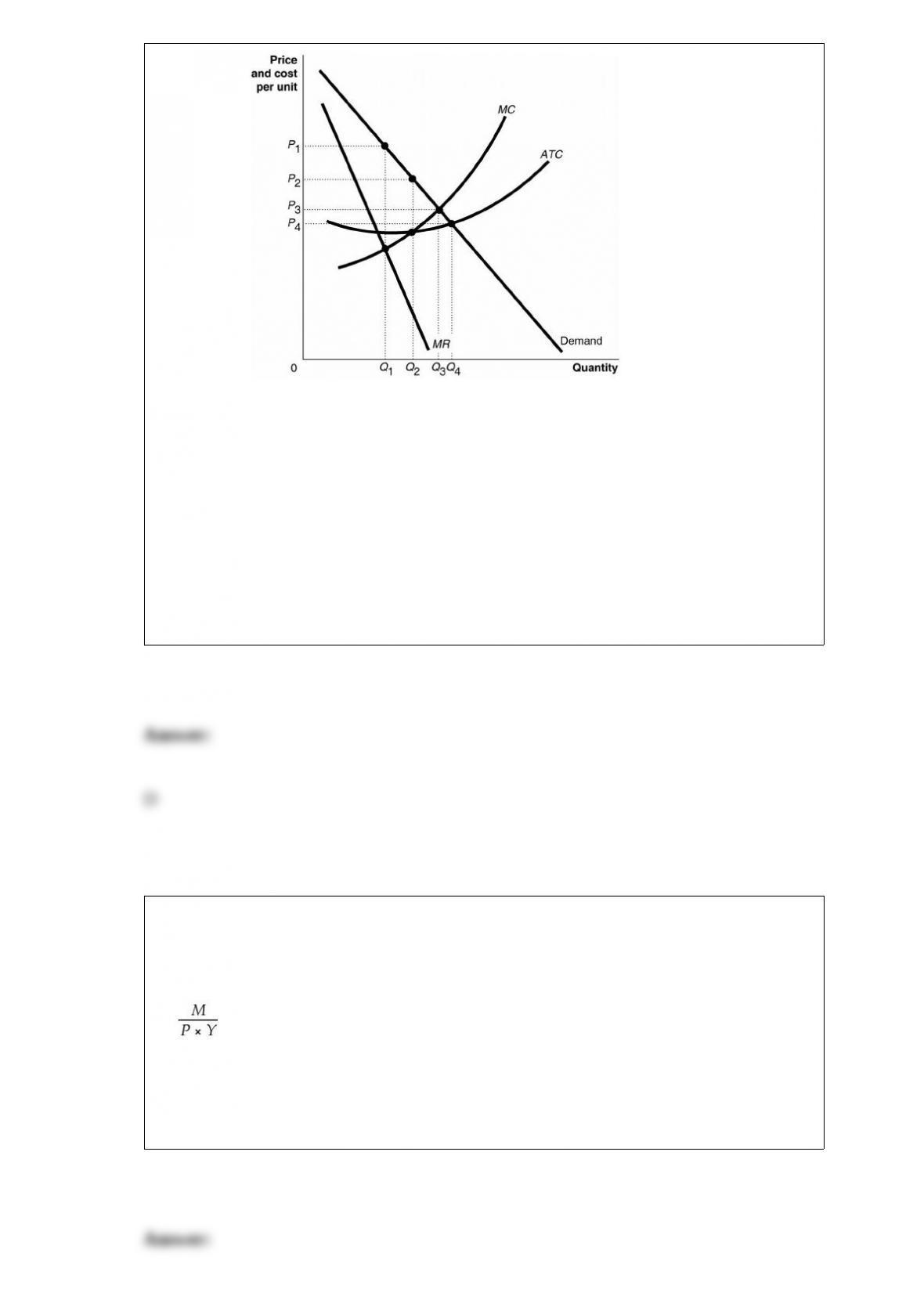
Figure 16-1
What is the consumer surplus received under perfect price discrimination?
A) the area under the demand curve above P1
B) the area under the demand curve above P3
C) the area under the demand curve above P4
D) zero
The velocity of money is defined as
A) the average number of times each dollar is used to purchase goods and services.
B) .
C) the total number of times each dollar is used to purchase goods and services.
D) P Y.

The owner of a firm wants some advice on how to increase productivity. Suggest three
ways the entrepreneur could increase labor productivity through improving technology.
Describe the relationship between marginal cost and average total cost.
The breakfast cereal industry has a four-firm concentration ratio of 78 percent. Is this
enough information to classify the industry as an oligopoly? Is a high concentration
ratio evidence that an industry is not competitive?
Why do most economists believe that it is important for a country’s central bank to be
independent of the rest of the country’s central government?
What is the connection between the gold held at the Fort Knox Bullion Depository in
Kentucky and the U.S. money supply?