
In the United States, the typical person who has lost his or her job finds another one in a
few months except during severe recessions.
A commission system of compensation reduces the risk to workers during seasonal
periods when business is sluggish.
Money will fail to serve as a medium of exchange if it ceases to be a store of value.
Suppose the extra cost for a doctor to keep his office open for one extra hour is $200.
Then, the doctor should stay open for the extra hour even if he can generate additional
revenue of $200 for that hour.
Real GDP per capita is calculated by dividing the value of real GDP for a country by
the country’s adult population.
The long-run aggregate supply curve is vertical.
The natural rate of unemployment consists of frictional unemployment plus structural
unemployment.
If there is public dissaving, investment spending in the economy will decline, holding
everything else constant.

Jobs lost to foreign trade are generally easy to identify, but jobs created by foreign trade
are generally less easy to identify.
Firms in monopolistic competition compete by selling similar, but not identical
products.
Most pharmaceutical firms selling prescription drugs continue to earn economic profits
long after the patents on the prescription drugs expire because they have established a
strong foothold in the market.
The Bretton Woods system was established in 1944 and remained in place until the
early 1970s.

The government of Silverado raises revenue to operate the city’s hospital, open to all
residents, through a general income tax paid by its residents. This method of raising
revenue is consistent with the benefits-received principle.
If inflationary expectations on the part of the public increase, the trade-off between
inflation and unemployment becomes worse.
The barrier to entry that allowed Alcoa to make persistent economic profits was
ownership of an essential input.
How does an increase in the budget deficit affect the demand for dollars and the supply
of dollars on the foreign exchange market?

A) The demand for dollars falls, and the supply of dollars falls.
B) The demand for dollars rises, and the supply of dollars rises.
C) The demand for dollars rises, and the supply of dollars falls.
D) The demand for dollars falls, and the supply of dollars rises.
Deflation will
A) increase aggregate demand.
B) increase the quantity of real GDP demanded.
C) decrease aggregate demand.
D) decrease the quantity of real GDP demanded.
The “Buy American” provision in the 2009 stimulus package required that stimulus
money be spent only on U.S.-made goods, effectively acting as a quota of zero imports
when stimulus money was being spent. The “Buy American” provision would
________ consumer surplus and ________ producer surplus for industries that
produced protected products in the United States.
A) increase; increase
B) increase; decrease
C) decrease; increase
D) decrease; decrease
Explain how the listed events (a-d) would affect the following at Hilton Hotels.
i. Marginal cost
ii. Average variable cost
iii. Average fixed cost
iv. Average total cost
a. Hilton decides on an across-the-board 5 percent increase in executive salaries.
b. Hilton decides to eliminate all print advertising.
c. Hilton signs a new contract with the Culinary Workers Union that requires the
company to increase wages for all its kitchen workers.
d. The federal government starts to levy a $5 room tax on all hotel rooms.

When exchange rates are ________, we say that the country’s exchange rate is fixed.
A) determined in the market
B) set by a country’s central bank
C) determined by supply and demand
D) relatively stable
If Canada imports fishing poles from Mexico and Mexico imports bacon from Canada,
which of the following would explain this pattern of trade?
A) Mexico has a lower opportunity cost of producing bacon than Mexico and Mexico
has a comparative advantage in producing fishing poles.
B) The opportunity cost of producing fishing poles in Canada is higher than the
opportunity cost of producing bacon in Mexico.
C) Mexico must have an absolute advantage in producing fishing poles and Canada
must have an absolute advantage in bacon.
D) Mexico has a higher opportunity cost of producing fishing poles than Canada, and
Canada has a higher opportunity cost of producing bacon.
Economist Steve Landsburg has pointed out that Ebenezer Scrooge’s change in behavior
from miser to spender might actually be detrimental to the economy because
A) Scrooge’s miserly saving helped contribute to the production of investment goods
rather than consumption goods.

B) Scrooge was happiest when he was saving money, and happiness is the key to
economic growth.
C) saving has to be greater than consumption for the economy to grow.
D) Scrooge’s consumption habits were more detrimental to the environment than were
his earlier saving habits.
Government spending ________ is included in gross domestic product.
A) at federal, state, and local levels of government
B) at the federal level of government only
C) at state and local levels of government only
D) on defense goods only
Contractionary fiscal policy to prevent real GDP from rising above potential real GDP
would cause the inflation rate to be ________ and real GDP to be ________.
A) higher; higher
B) higher; lower
C) lower; higher
D) lower; lower

The quota on imported sugar costs U.S. consumers more than $2 billion annually and
protects very few jobs. Why does Congress maintain a sugar quota that protects only a
few thousand workers while forcing millions of people to pay higher prices for sugar
products?
A) Most U.S. citizens do not buy sugar products and want to help workers in the sugar
industry.
B) Voters fear that if they oppose the sugar lobby, the lobby may oppose issues that they
want Congress to support.
C) Citizens are not as involved in social and political issues as they used to be.
D) The per person cost of the sugar quota is too small for many people to lobby
Congress to make their views known.
If, at the current exchange rate between the dollar and the Norwegian kroner of 5.78
kroner per dollar, the dollar is “overvalued,” how do you expect demand and supply in
the foreign exchange markets to respond?
A) The demand for the dollar will rise, while the supply of the kroner will fall.
B) The demand for the dollar will fall, while the supply of the kroner will rise.
C) The supply of the dollar will rise, while the demand for the kroner will fall.
D) The supply of the dollar will rise, while the demand for the kroner will rise.

If a bank receives a $1 million discount loan from the Federal Reserve, then the bank’s
reserves will
A) not change.
B) increase by $1 million.
C) increase by less than $1 million.
D) increase by more than $1 million.
Tastes for products such as beer differ. As a result
A) we see countries specializing completely in the production of beer.
B) consumers of beer have difficulty deciding what type of imported beer to buy.
C) the quality of imported beer is less than it could be.
D) different countries may each have a comparative advantage in producing different
types of beer.
Every firm that has the ability to affect the price of the good or service it sells will
A) have a perfectly elastic demand curve.
B) have a marginal revenue curve that lies below its demand curve.
C) earn a short-run profit but break even in the long run.
D) shut down in the short run.
Explain why the rates of death due to kidney disease and diabetes has slightly increased
in the United States since 1981.
Suppose the price elasticity of demand for methamphetamine is -0.35. If
decriminalization caused the price of methamphetamine to fall by 75 percent, what will
be the percentage increase in the quantity of methamphetamine demanded? If the price
elasticity is -3.5, what will be the percentage increase in quantity demanded?
“Being the only seller in the market, the monopolist can choose any price and quantity
it desires.” Evaluate this statement: is it true or false? Explain your answer.
What is autarky?
What is an economic variable?
Why are many companies concerned about brand management?
In the dynamic aggregate demand and aggregate supply model, what is the result of
aggregate demand increasing slower than potential real GDP?
Figure 7-6 Figure 7-6 represents the supply and
demand for medical services with and without a third-party payer.
Answer the following questions:
1. What would be the equilibrium price and quantity if consumers had to pay the full
price of medical services?
2. With insurance acting as a third-party payer, what price will consumers pay for
medical service?
3. With insurance acting as a third-party payer, what price will doctors receive for
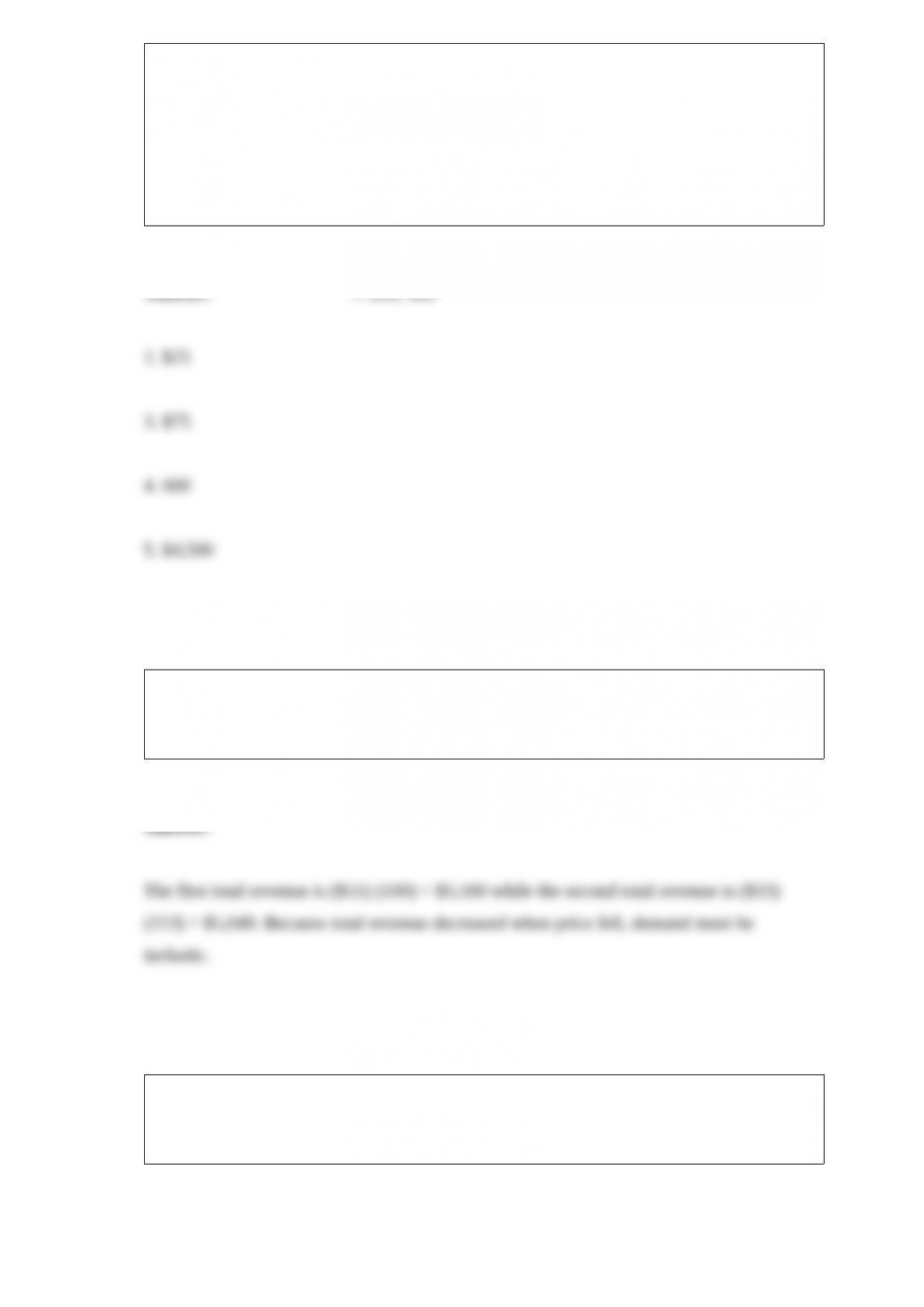
medical service?
4. With insurance acting as a third-party payer, what will be the equilibrium quantity of
medical services?
5. With insurance acting as a third-party payer, what will be the value of the deadweight
loss?
Suppose that at a price of $55, 100 units were sold while at a price of $33, 153 units
were sold. Without calculating the price elasticity value, can you determine whether
demand is elastic, unit-elastic, or inelastic? Explain your answer.
What has happened to health care’s share of gross domestic product in the United States
since 1965? How does this compare to what has happened to out-of-pocket spending on
health care as a percentage of all spending on health care?