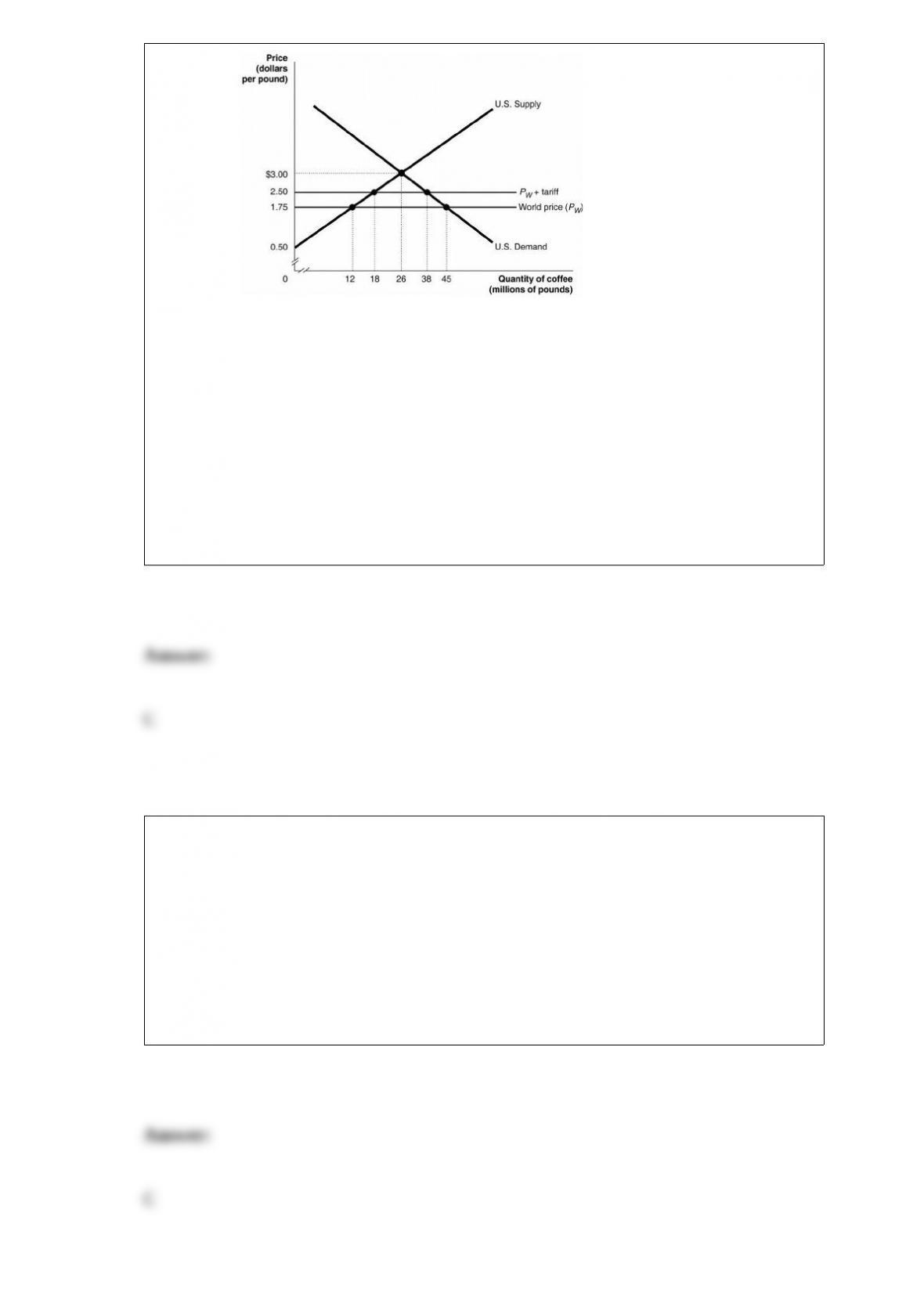
Figure 9-5 Suppose the U.S. government
imposes a $0.75 per pound tariff on coffee imports. Figure 9-5 shows the impact of this
tariff. If the tariff was replaced by a quota which limited coffee imports to 20 million
pounds, the amount of revenue received by coffee importers would equal
A) $5 million.
B) $15 million.
C) $50 million.
D) $78 million.
National income is derived from gross domestic product by
A) subtracting retained earnings from gross domestic product.
B) adding personal taxes and depreciation to gross domestic product.
C) subtracting depreciation from gross domestic product.
D) adding personal income and transfer payments to gross domestic product.

The United States has developed a comparative advantage in film production due to the
film industry being long-established in southern California, and lower costs result from
the size of the industry in the area. This source of comparative advantage is referred to
as
A) the abundance of natural resources.
B) superior process technology.
C) external economies.
D) best practices of unskilled labor.
Which of the following would cause an increase in the equilibrium price and an
increase in the equilibrium quantity of watermelons?
A) an increase in demand and an increase in supply
B) an increase in supply
C) an increase in supply and an increase in demand greater than the increase in supply
D) a decrease in demand and an increase in supply
Figure 12-12
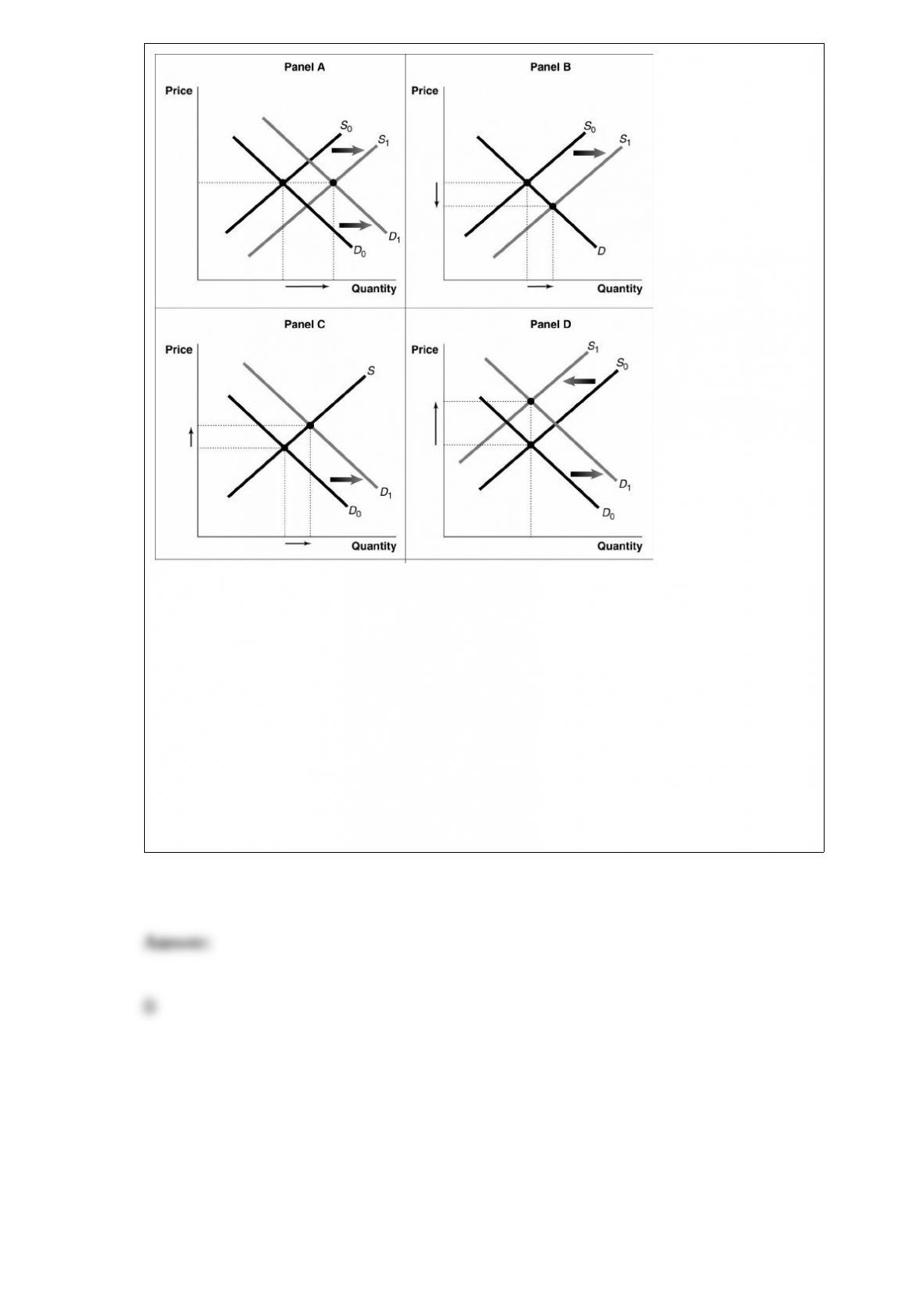
Consider a typical firm in a perfectly competitive industry that makes short-run profits.
Which of the diagrams in the figure shows the effect on the industry as it transitions to a
long-run equilibrium?
A) Panel A
B) PanelB
C) PanelC
D) PanelD
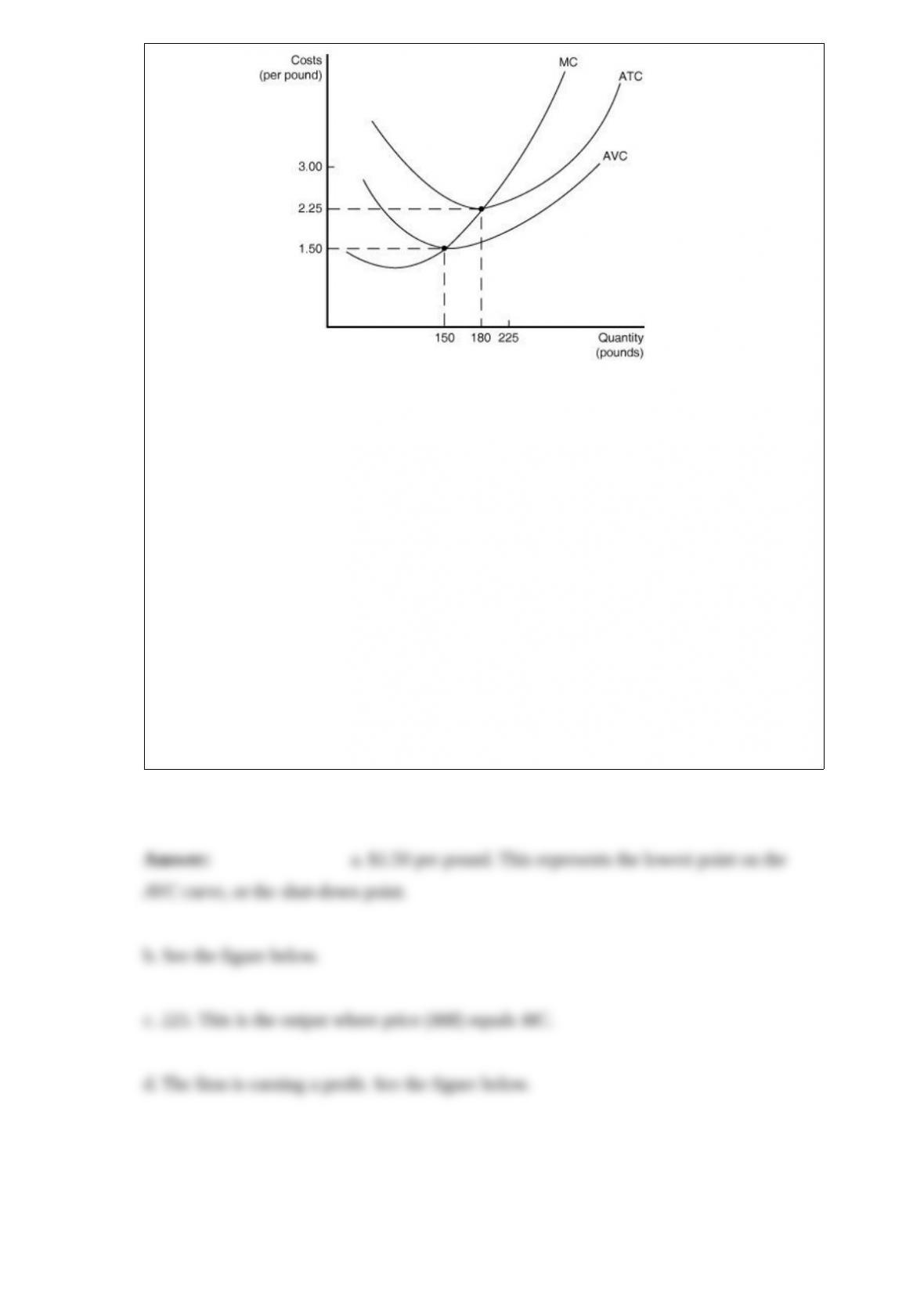
Figure 12-19
The figure above shows the cost curves of a perfectly competitive firm in the coffee
market. Use the graph in Figure 12-19 to answer the following questions. Assume the
market price is $3 per pound.
a. What is the lowest price at which the coffee grower will supply output in the short
run?
b. In the diagram draw the firm’s demand curve (label this “MR” for marginal revenue).
c. What is the firm’s profit-maximizing output?
d. Is the firm earning a profit or a loss? Identify the area in the graph that represents the
firm’s profit or loss.
e. Explain how entry or exit will occur in the market to ensure that firms will break
even in the long run.
Which of the following willshift the demand curve for a good?
A) a change in the technology used to produce the good
B) an increase in the price of the good
C) a decrease in the price of a complementary good
D) a decrease in the price of the good
Suppose that the economy is producing above potential GDP and the Fed implements
the correct change in monetary policy, but not until after the economy has passed the
peak of the boom. Then
A) the Fed’s contractionary policy will result in too large of a decrease in GDP.
B) the Fed’s contractionary policy will result in too small of a decrease in GDP.
C) the Fed’s expansionary policy will result in too small of a decrease in GDP.

D) the Fed’s expansionary policy will result in too large of an increase in GDP.
The Industrial Revolution began in
A) England around 1750.
B) the United States around 1820.
C) France around 1680.
D) Germany around 1780.
Which of the following provides health-care coverage to people age 65 and over?
A) Medicaid
B) Medicare
C) Social Security
D) Health-Aid

Carrie Bradshaw claims that when it comes to buying shoes, “price is no object.” If this
is true, then her demand for shoes is
A) perfectly elastic.
B) perfectly inelastic.
C) unit-elastic.
D) horizontal.
Economists who support market-based reforms for health care believe that increased
competition among providers of health care would ________ costs and ________
economic efficiency.
A) increase; increase
B) increase; decrease
C) decrease; increase
D) decrease; decrease
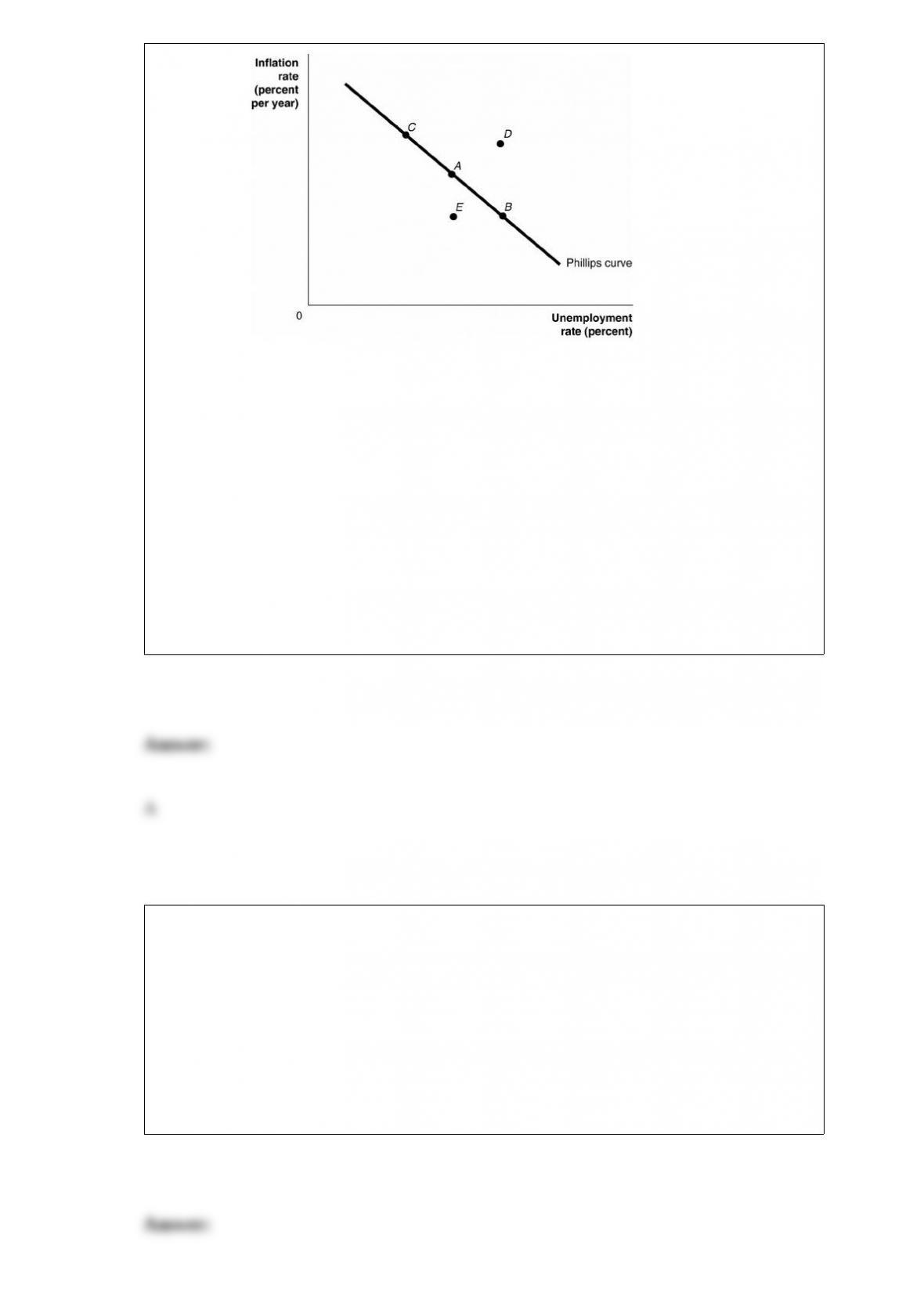
Figure 28-1
What should the Federal Reserve do if it wants to move from point A to point C in the
short-run Phillips curve depicted in the figure above?
A) buy treasury bills
B) sell treasury bills
C) raise the discount rate
D) decrease the money supply
E) raise taxes
The marginal rate of technical substitution is measured by
A) the slope of the isoquant.
B) the relative input prices.
C) the slope of the isocost line.
D) the ratio of the product’s price to the product’s cost of production.

All of the following are part of the “individual mandate” provision of the Patient
Protection and Affordable Care Act (ACA) except
A) individuals are allowed to opt out of the insurance program if they can prove they
have no serious health issues and do so before the act fully takes effect in the year 2014.
B) by 2016, fines for not having health insurance will be the greater of $695 per person
or 2.5 percent of income.
C) beginning in 2014, individuals who do not acquire health insurance will be subject to
a fine.
D) with limited exceptions, every resident of the United States will be required to have
health insurance that meets certain basic requirements.
In response to already low interest rates doing little to stimulate the economy, the Fed
began buying 10-year Treasury notes and certain mortgage-backed securities to keep
interest rates low. This policy is known as
A) inflation targeting.
B) contractionary monetary policy.
C) securities-bubble deflating.
D) quantitative easing.
A monopolistically competitive firm that is profitable in the short run will face
competition that will eventually eliminate the firm’s profits in the long run. But the firm
can stave off competition and continue to earn economic profits if
A) it can successfully sue its competitors for copyright infringement.
B) it can move to another country where there is less competition.
C) it can lobby the government to establish a price floor for its product.
D) it can find new ways to differentiate its product.
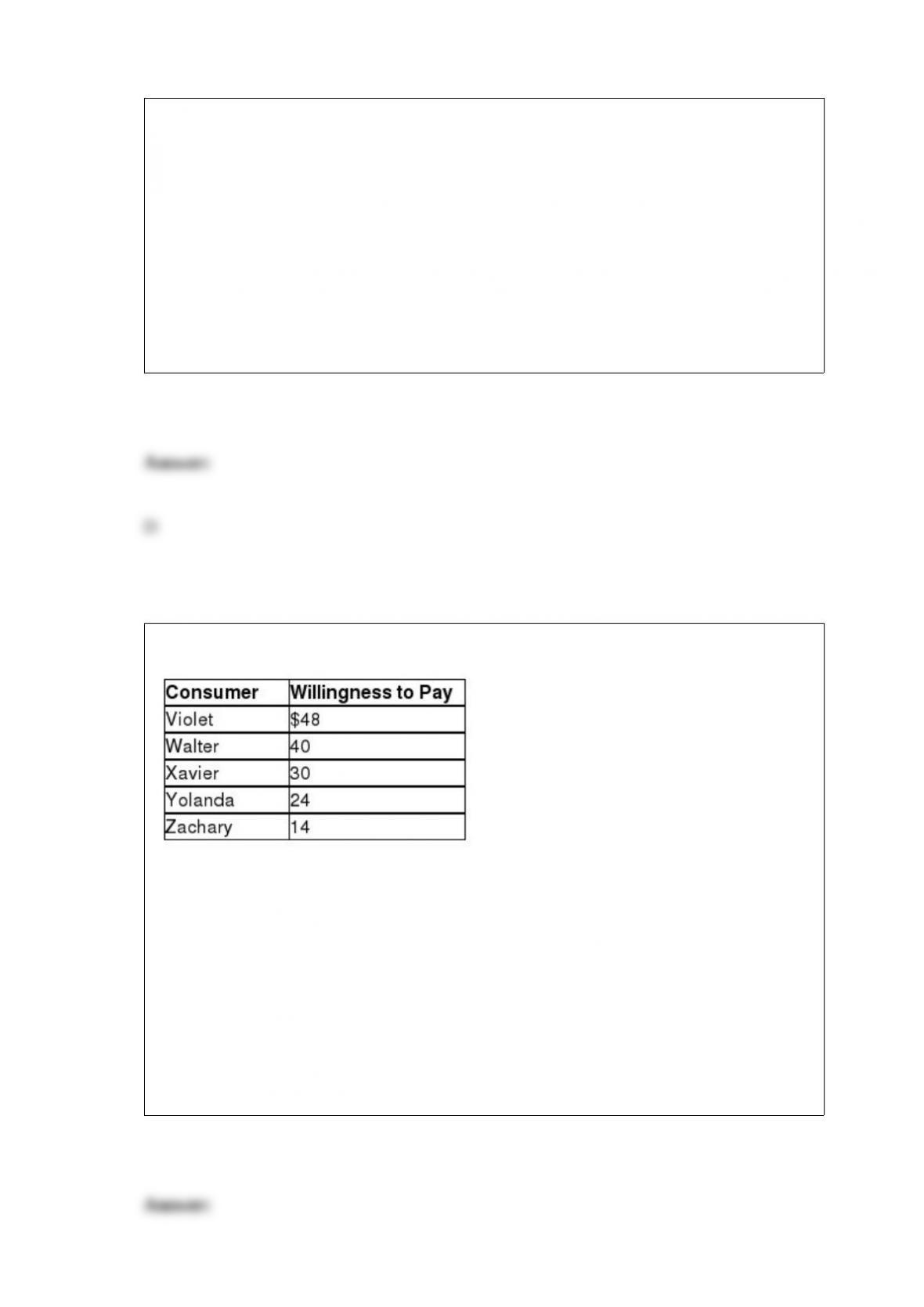
Table 4-2
The table above lists the highest prices five consumers are willing to pay for a concert
ticket. If the price of one ticket rises from $20 to $38
A) only three tickets will be sold.
B) consumer surplus decreases from $62 to $12.
C) consumer surplus increases from $88 to $142.
D) no one will buy a ticket.

Suppose a large firm allows its employees to choose whether to participate in its health
insurance plan. The firm is trying to decide between two plans: Plan I has a low
monthly premium but a high deductible, and Plan II has a high monthly premium but a
low deductible. Under which plan is adverse selection likely to be a bigger problem?
A) Plan I because it is likely to draw participants who expect high medical costs. This
group expects to consume much health care services and therefore prefer low
deductibles.
B) Plan II because it is likely to draw participants who expect high medical costs.
Healthy individuals who do not expect to consume much health care services will not
be willing to pay the high premiums.
C) Plan I because it is likely to draw the relatively healthy employees who do not
expect to spend much on health care. Because the monthly premiums are low, the
insurance company has to bear a bigger financial burden in the event of serious
illnesses.
D) Plan II because it is likely to draw employees who tend to over-consume health care
services because of the low deductible. Insurance companies are likely to end up paying
out more claims than the premiums they collect.