
If government officials are mainly interested in generating tax revenue, then they
should tax goods for which demand is price inelastic.
Capital stock increases with investment and decreases with depreciation.
When supply is fixed, price is supply determined.
In a “black market,” goods are traded at market determined prices.

You know that the computer lab at school gets very crowded at about 3:00 p.m. To
avoid the crowds, you start going to the computer lab one hour earlier every day.
However many students make the same decision, and now the computer lab becomes
very crowded at 2:00 p.m. This is an example of the
A) post hoc, ergo propter hoc fallacy.
B) ceteris paribus fallacy.
C) fallacy of division.
D) fallacy of composition.
All the combinations of goods and services that can be produced if all of society’s
resources are used efficiently are represented on an economy’s
A) production possibility frontier.
B) resource availability diagram.
C) factors of production statement.
D) allocative allotment graph.
An efficient economy is an economy
A) in which output is steady or growing and there is low inflation.
B) that produces what consumers demand and does so at the least possible cost.
C) that distributes output equally among all consumers.
D) in which there is a fair distribution of wealth.
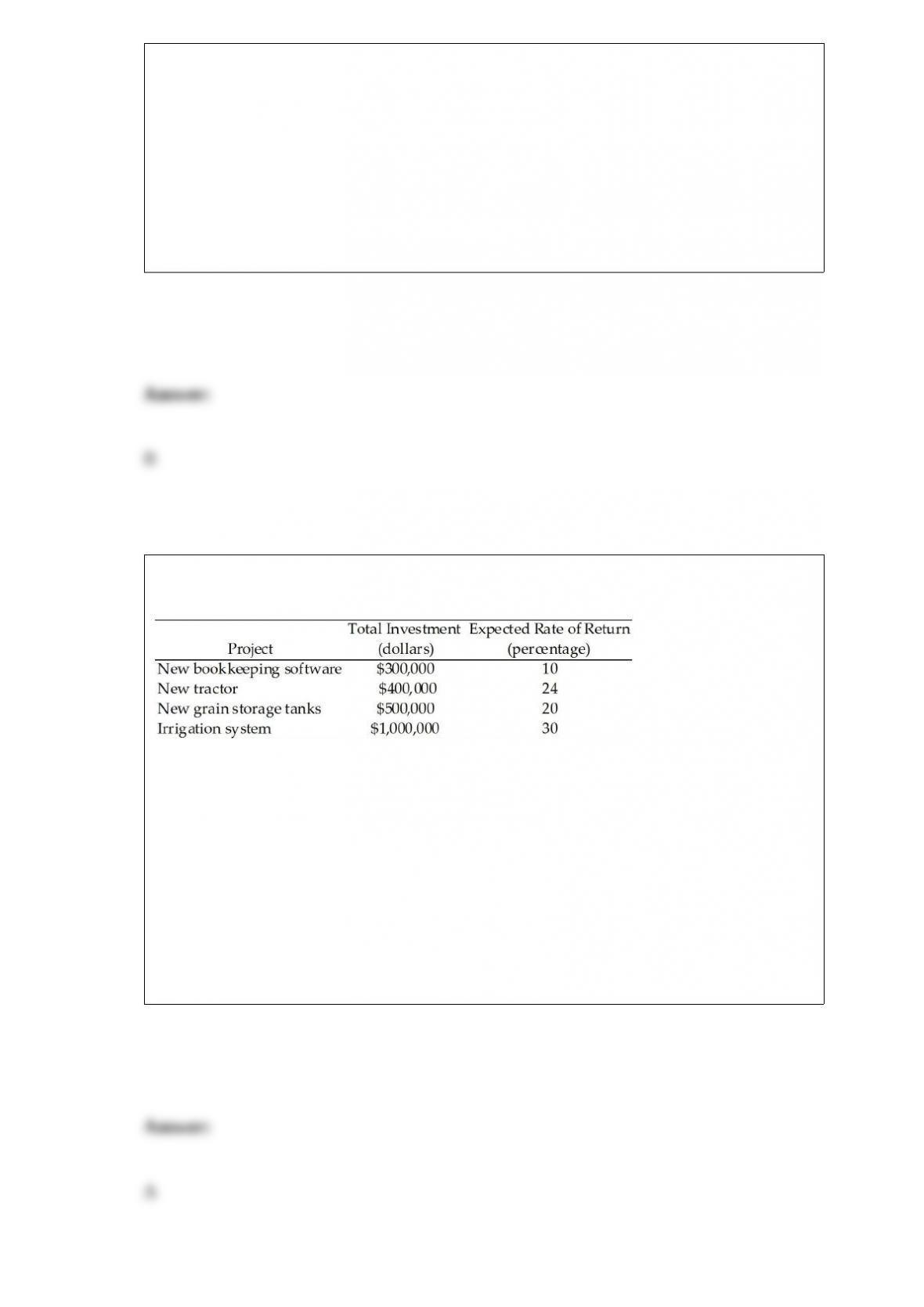
Table 11.2
Refer to Table 11.2. When the interest rate ________, the farmer will engage in no
investment.
A) is greater than 30%
B) is less than 10%
C) is less than 30%
D) is greater than 10%
Upon graduating with an accounting degree, you open your own accounting firm of
which you are the sole employee. To start the firm you passed on a job offer with a
large accounting firm that offered you a salary of $60,000 annually. Last year you
earned a total revenue of $100,000. Rent and supplies last year were $50,000.
Your annual economic costs are
A) $0.
B) $50,000.
C) $60,000.
D) $110,000.
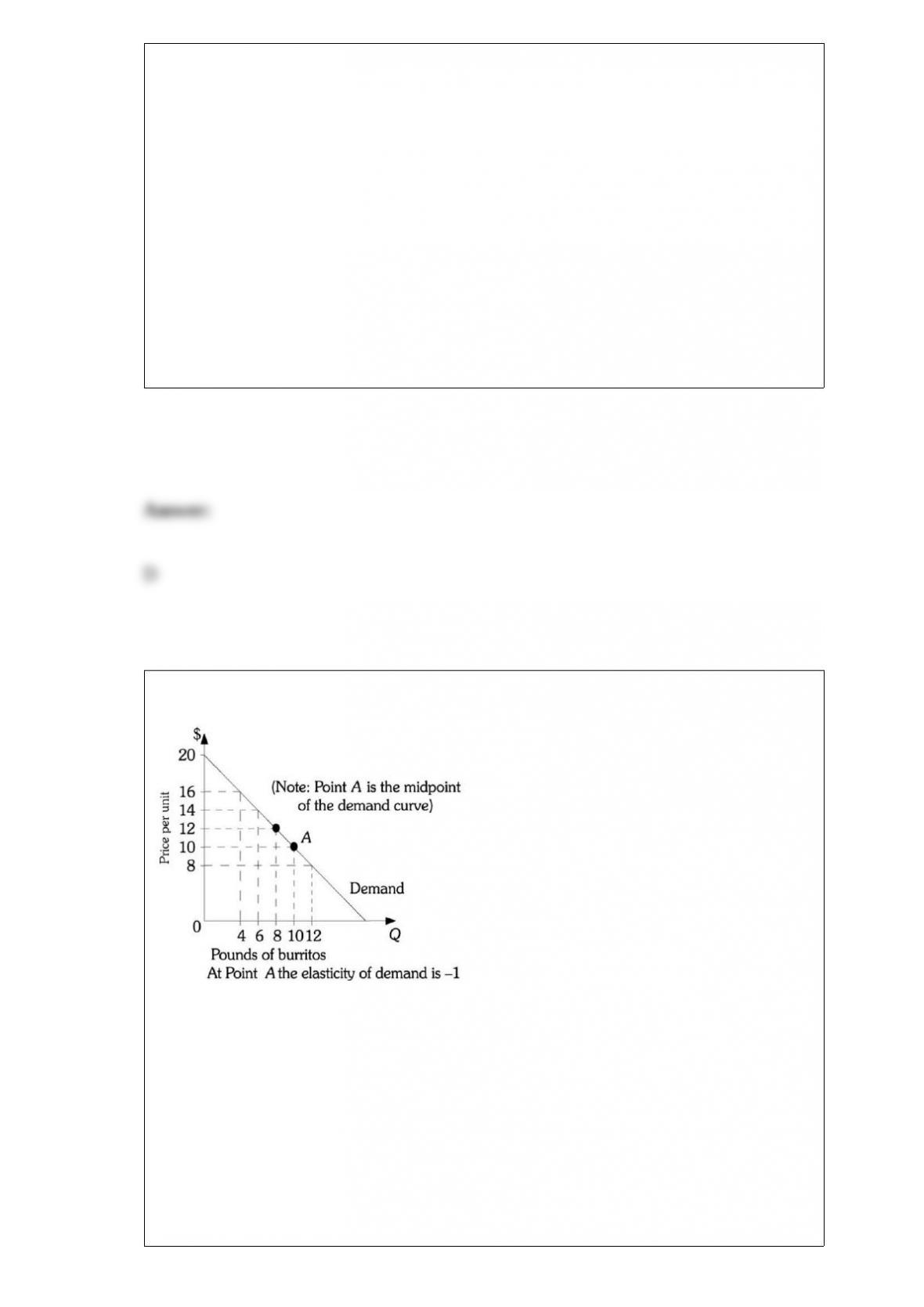
Figure 13.4
Refer to Figure 13.4. This firm’s total revenue will be maximized at a price of
A) $12.
B) $10.
C) $8.
D) $6.
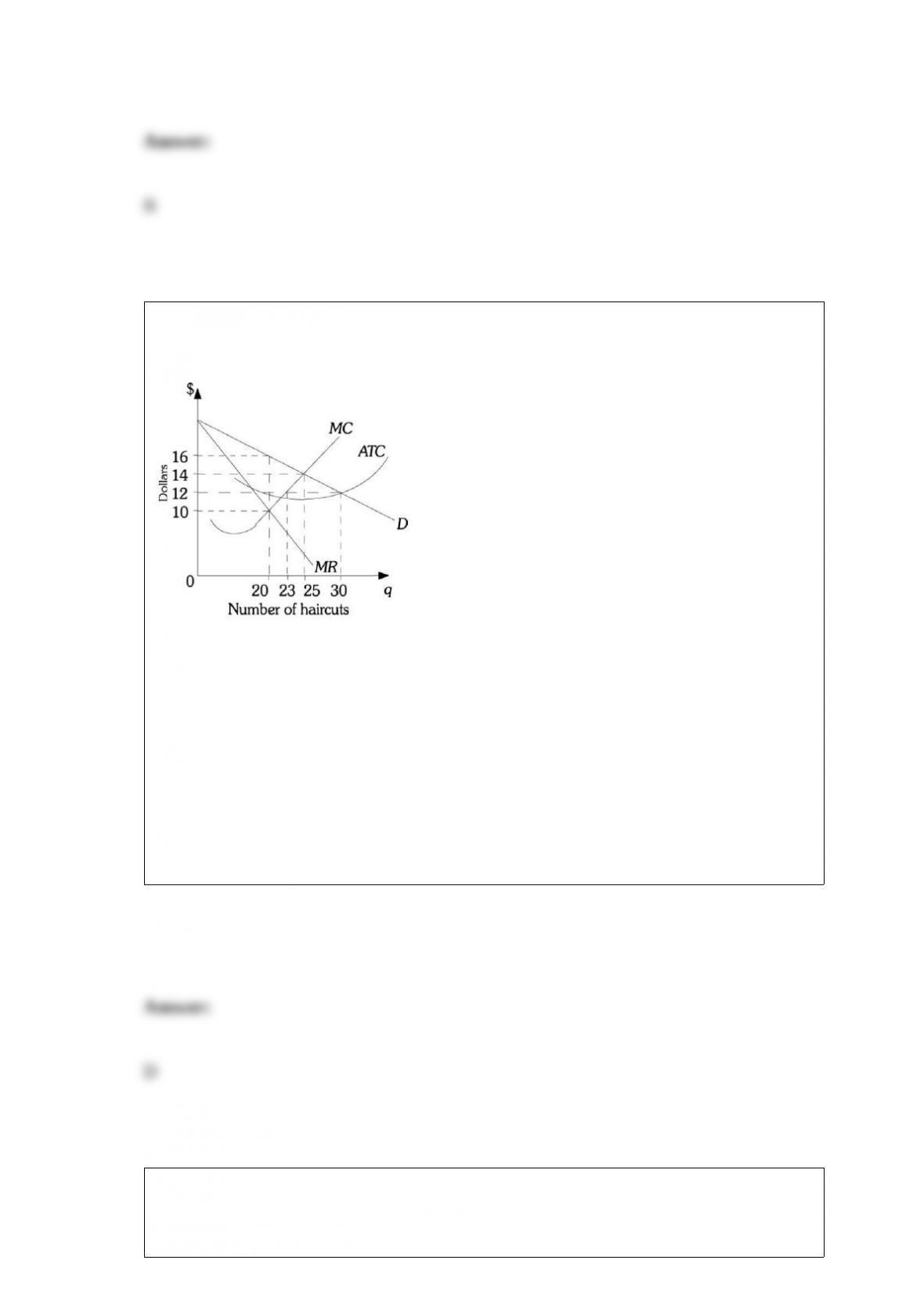
Below are cost curves for Dom’s Barber Shop, a monopolistically competitive firm.
Figure 15.1
Refer to Figure 15.1. The profit-maximizing price for a haircut is
A) $10.
B) $12.
C) $14.
D) $16.
According to the theory of comparative advantage, a country
A) exports the goods in which its has a comparative advantage.
B) imposes tariffs on goods in which it does not have comparative advantage.
C) imports the goods in which it has a comparative advantage.
D) exports goods in which it has absolute advantage.
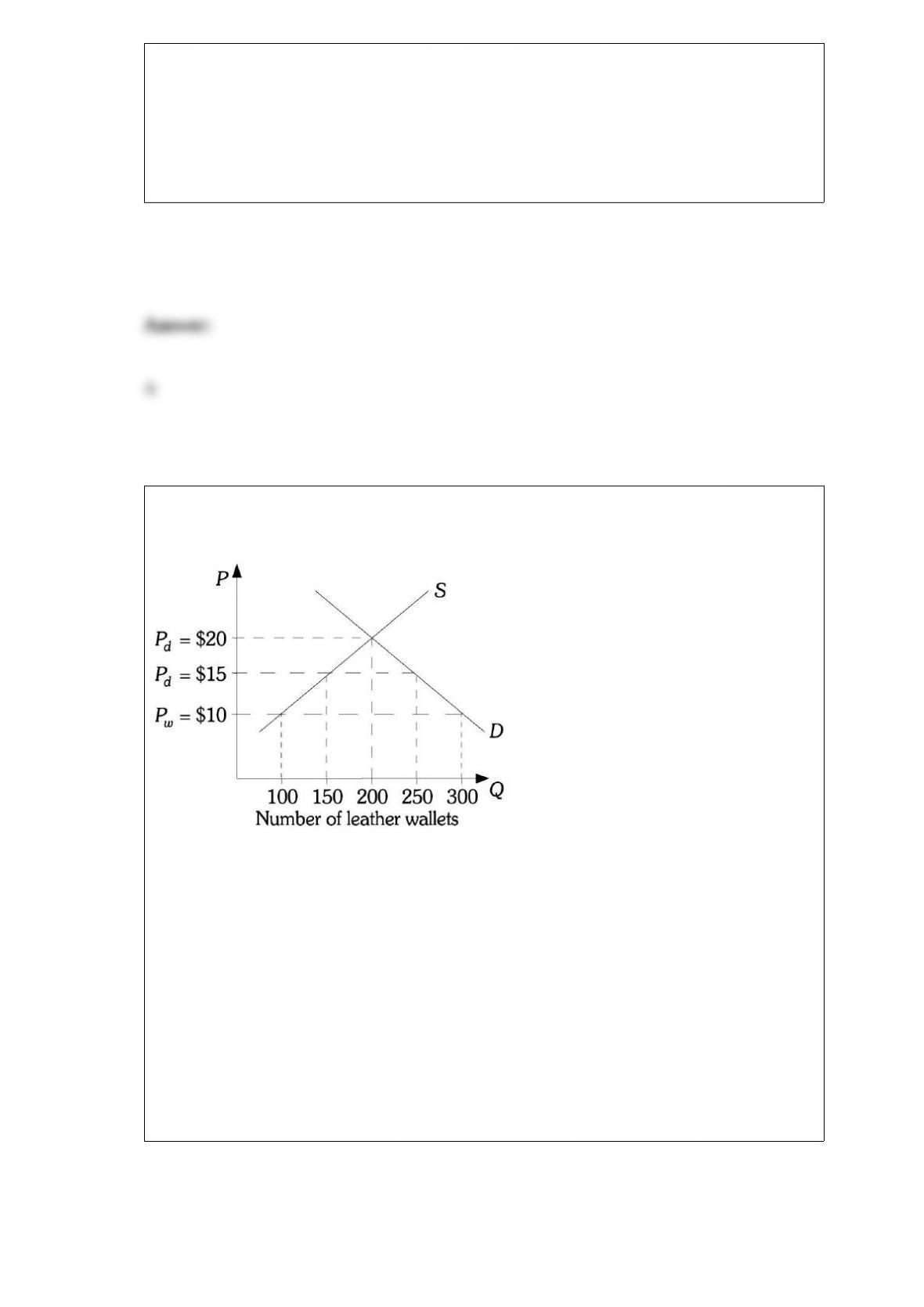
Figure 20.4
Refer to Figure 20.4. The domestic price of a leather wallet is $20. With free trade the
price of a leather wallet is $10 and after a tariff is imposed the price is $15. After the
tariff is imposed, this country will ________ 250 leather wallets.
A) buy
B) sell
C) import
D) export

Isabel noted that whenever she wore her green contact lenses, the Chicago White Sox
would win that evening. Based on this observation, she developed the
“green-eyes-for-White-Sox” theory of winning. It is most likely true that Isabel
A) showed good reasoning for the reason the White Sox would win.
B) committed the ceteris paribus error.
C) committed the fallacy of composition.
D) was confusing causality.
A vacation’s real cost is its opportunity cost. Opportunity cost is determined by
A) the price of the vacation.
B) relative prices.
C) wealth.
D) the prices of the goods that are compliments to a vacation.
Assume firms break even in an industry. New firms ________ attracted to the industry
and current ones ________ exiting it.
A) are not; are not
B) are not; are
C) are; are not
D) are; are
Table 14.2
B’s Strategy
Refer to Table 14.2. Firm A’s dominant strategy is
A) to advertise.
B) to not advertise.
C) dependent on what Firm B does.
D) indeterminate from this information, as no information is provided on Firm A’s risk
preference.
Related to the Economics in Practice on page 39: In the survey conducted by Esther
Duflo and Abhijit Banerjee, the extremely poor were found to consume ________ of
their budgets on food compared to people in the United States.
A) a significantly higher percentage
B) about the same percentage
C) a slightly lower percentage
D) approximately 50 percent less
Table 3
B’s Strategy
Refer to Table 14.3. The result of this game is a prisoner’s dilemma. In which of the
following cases is it most likely that the firms will be able to overcome the prisoner’s
dilemma?
A) repeated play

B) a single interaction
C) when both firms follow a maximin strategy
D) government intervention
The ________ curve intersects the average variable cost curve at the minimum value of
the average variable cost curve.
A) total cost
B) marginal cost
C) total variable cost
D) average fixed cost
What is the maximum value the HHI can take on?
A) 1,000
B) 5,000
C) 10,000
D) 100,000
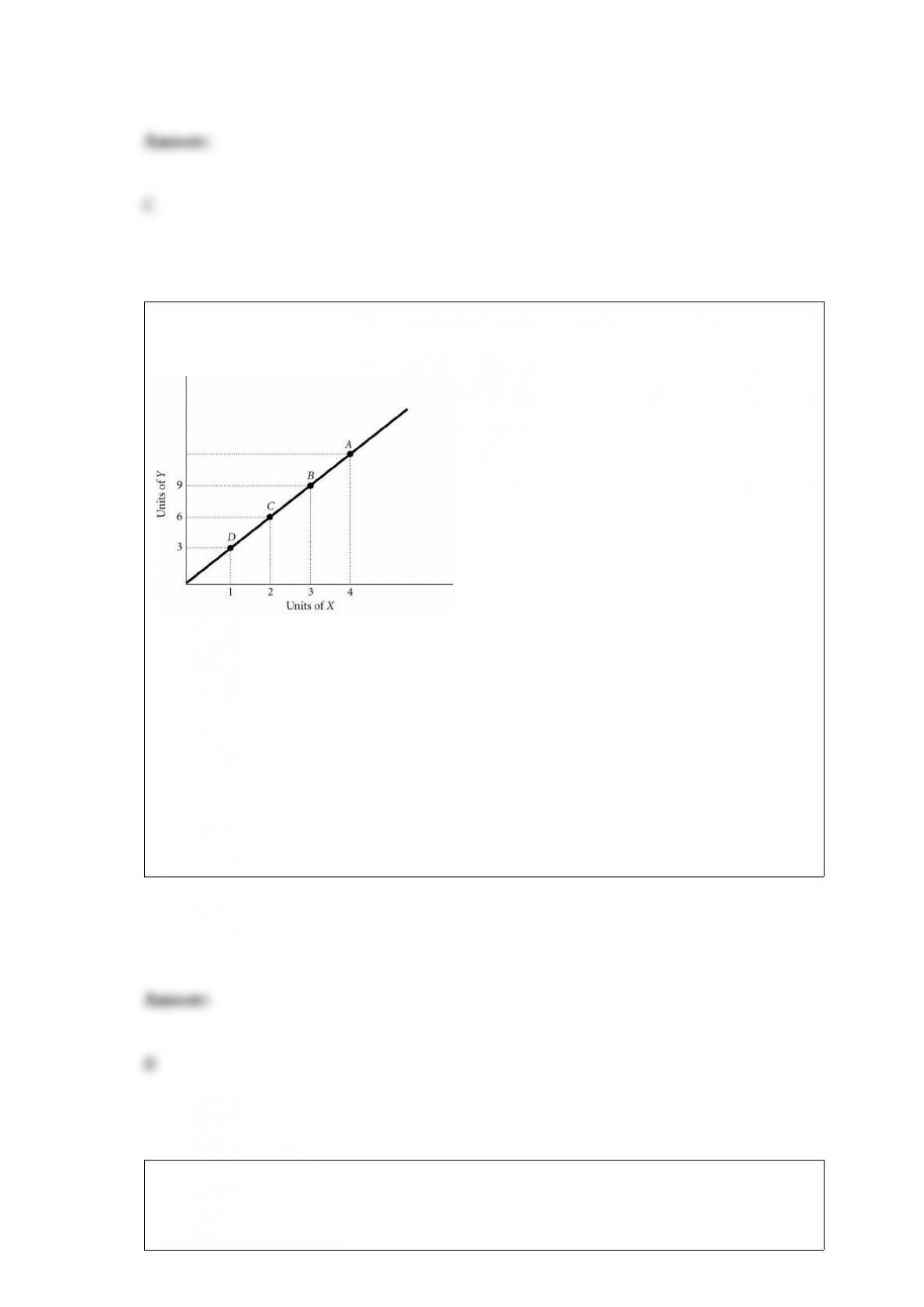
Figure 1.3
Refer to Figure 1.3. At Point A, what is the value of Y?
A) 10
B) 12
C) 15
D) indeterminate from this information
When countries specialize in producing those goods in which they have a comparative
advantage, they

A) maximize their combined output, but they do not necessarily allocate their resources
more efficiently.
B) maximize their combined output and allocate their resources more efficiently.
C) allocate their resources more efficiently, but they do not necessarily maximize their
combined output.
D) do not necessarily maximize their combined output, and they also do not necessarily
allocate their resources more efficiently.
If the marginal tax rate is less than the average tax rate, the tax would be
A) proportional.
B) regressive.
C) progressive.
D) uniform.
Table 8.3
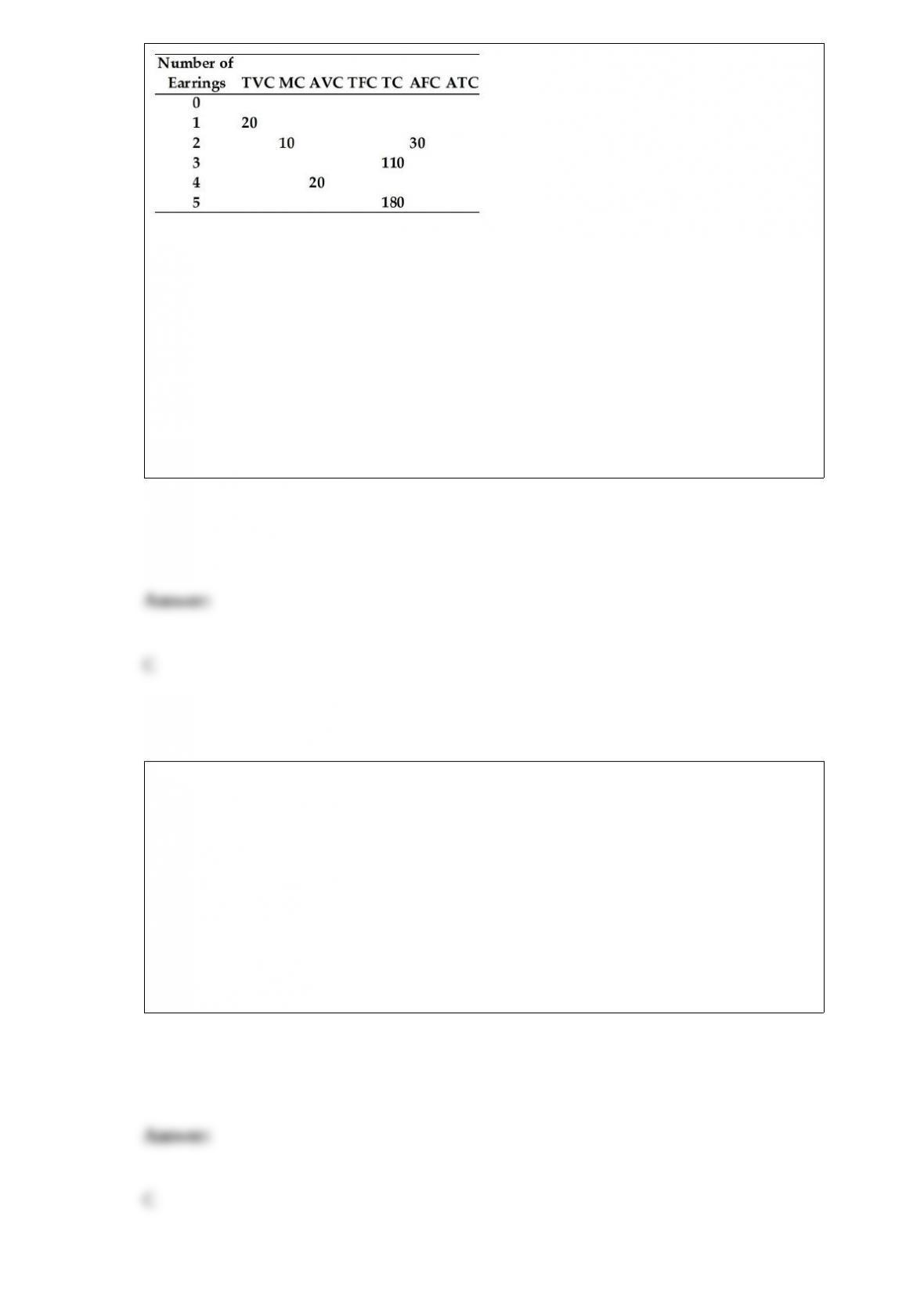
Refer to Table 8.3. The marginal cost of the fourth unit is ________ and the average
total cost of four units is ________.
A) $10; $30
B) $20; $45
C) $30; $35
D) indeterminate from the given information
The demand for food will likely be price ________ while the demand for Brand X
Burger will likely be price ________.
A) elastic; elastic
B) elastic; inelastic
C) inelastic; elastic
D) inelastic; inelastic
When a monopolist sells two units of output, its total revenue is $600. When a
monopolist sells three units of output, its total revenue is $690. When the monopolist
sells three units of output, the price per unit is
A) $210.
B) $230.
C) $300.
D) $630.
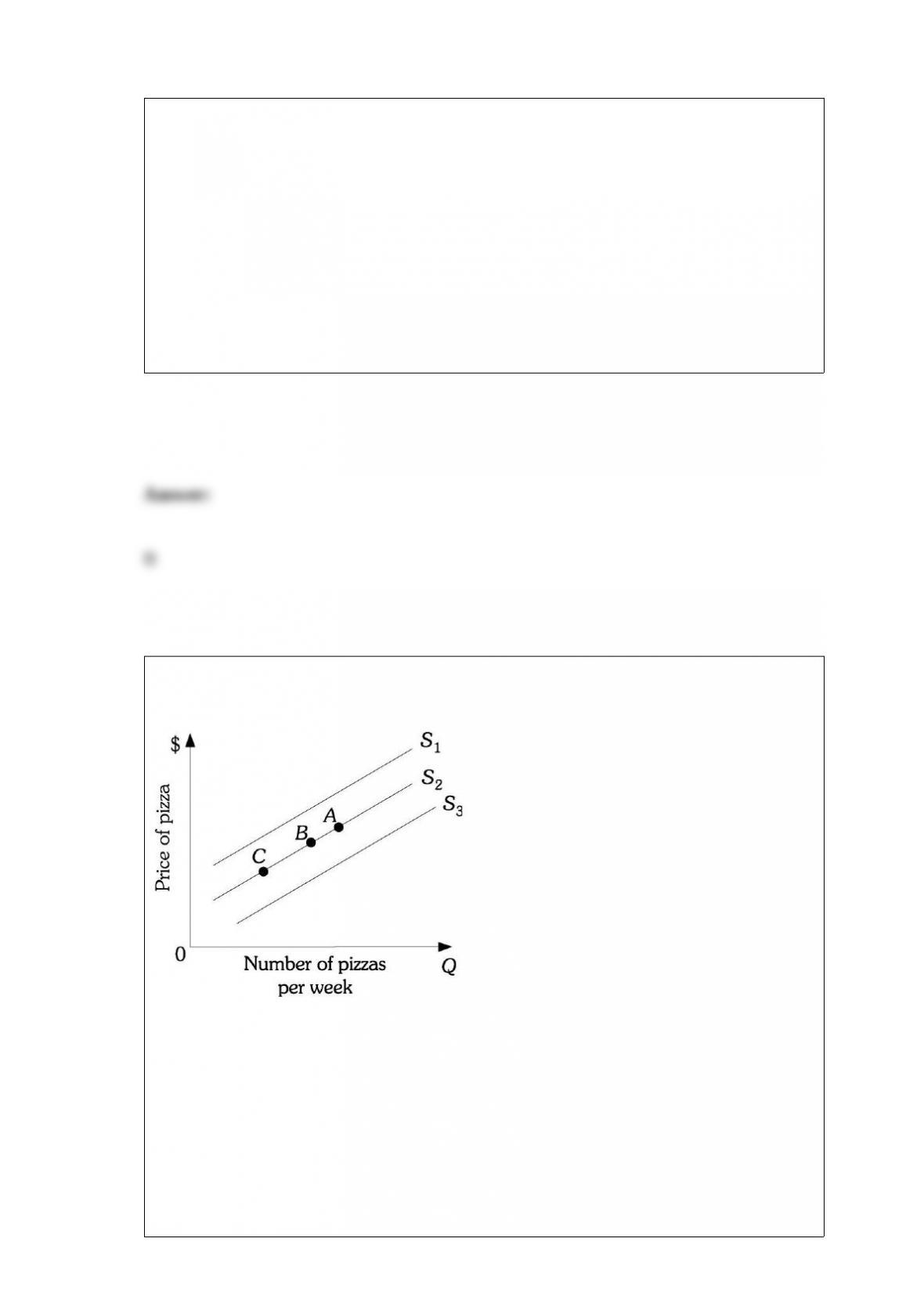
Figure 3.14
Refer to Figure 3.14. An increase in the wage rate of pizza makers will cause a
movement from Point B on supply curve S2 to
A) Point A on supply curve S2.
B) Point C on supply curve S2.

C) supply curve S3.
D) supply curve S1.
The pharmaceutical industry depends on highly trained workers, who are abundantly
available in India. The automobile industry depends on the availability of a large stock
of physical capital with which the United States is well endowed. According to
Heckscher-Ohlin theorem
A) India should export automobiles.
B) the United States should export pharmaceuticals.
C) the United States should import automobiles.
D) India should import automobiles.
When the demand curve is a downward sloping straight line, the quantity at which the
marginal revenue curve intersects the horizontal (quantity) axis is ________ the
quantity at which the demand curve intersects the horizontal (quantity) axis.
A) equal to
B) half
C) twice
D) four times
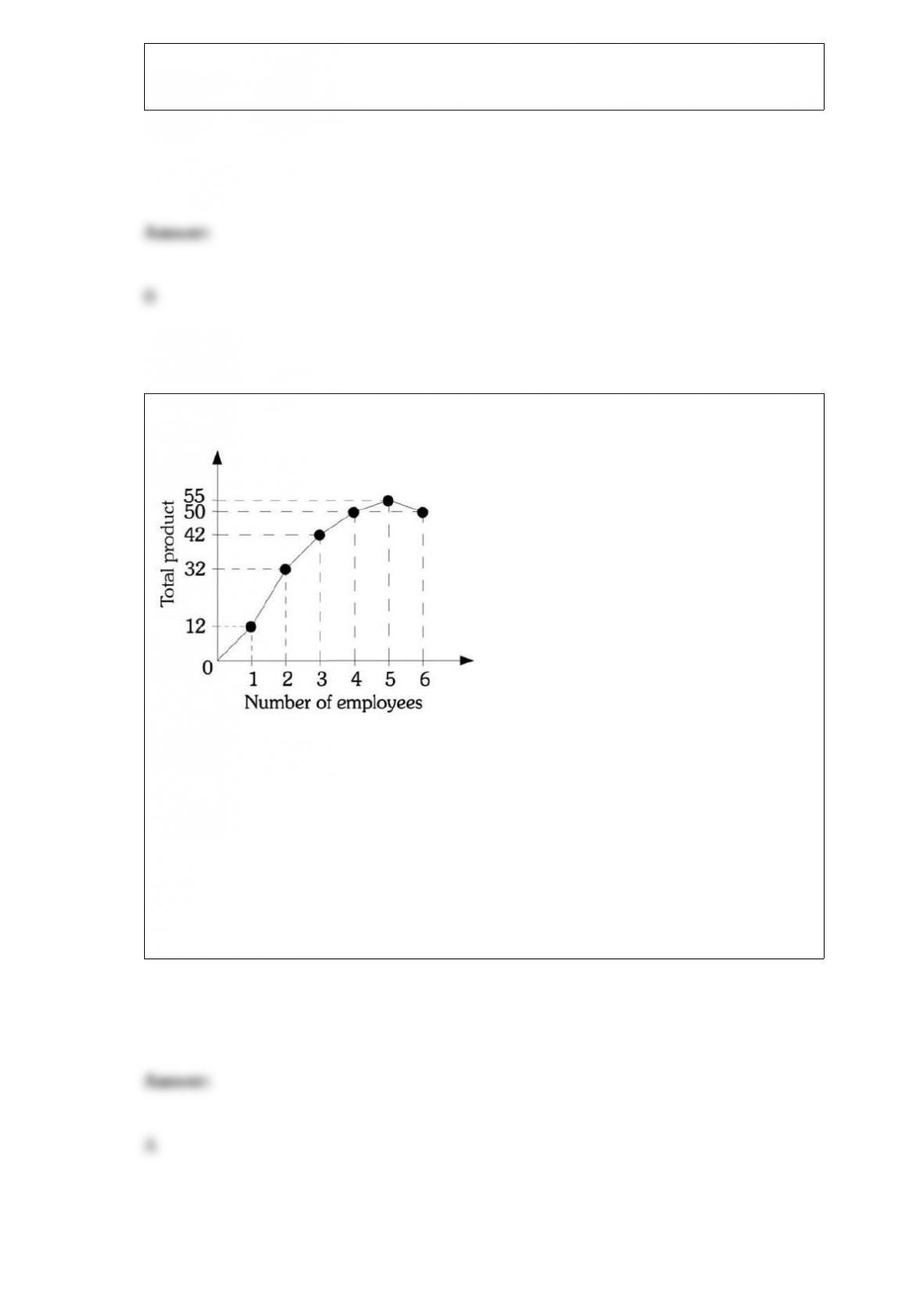
Figure 7.4
Refer to Figure 7.4. The marginal product of the first worker is
A) 12.
B) 16.
C) 20.
D) 32.
You have noticed that there is an increase in the number of homeless people in your
city. At the same time you observe that there are also a number of vacant apartments.
You believe that the government could reduce the number of homeless people if
landlords were required to rent their apartments for less than they are currently
charging. This policy recommendation would be motivated by concerns over
A) efficiency.
B) equity.
C) economic growth.
D) stability.
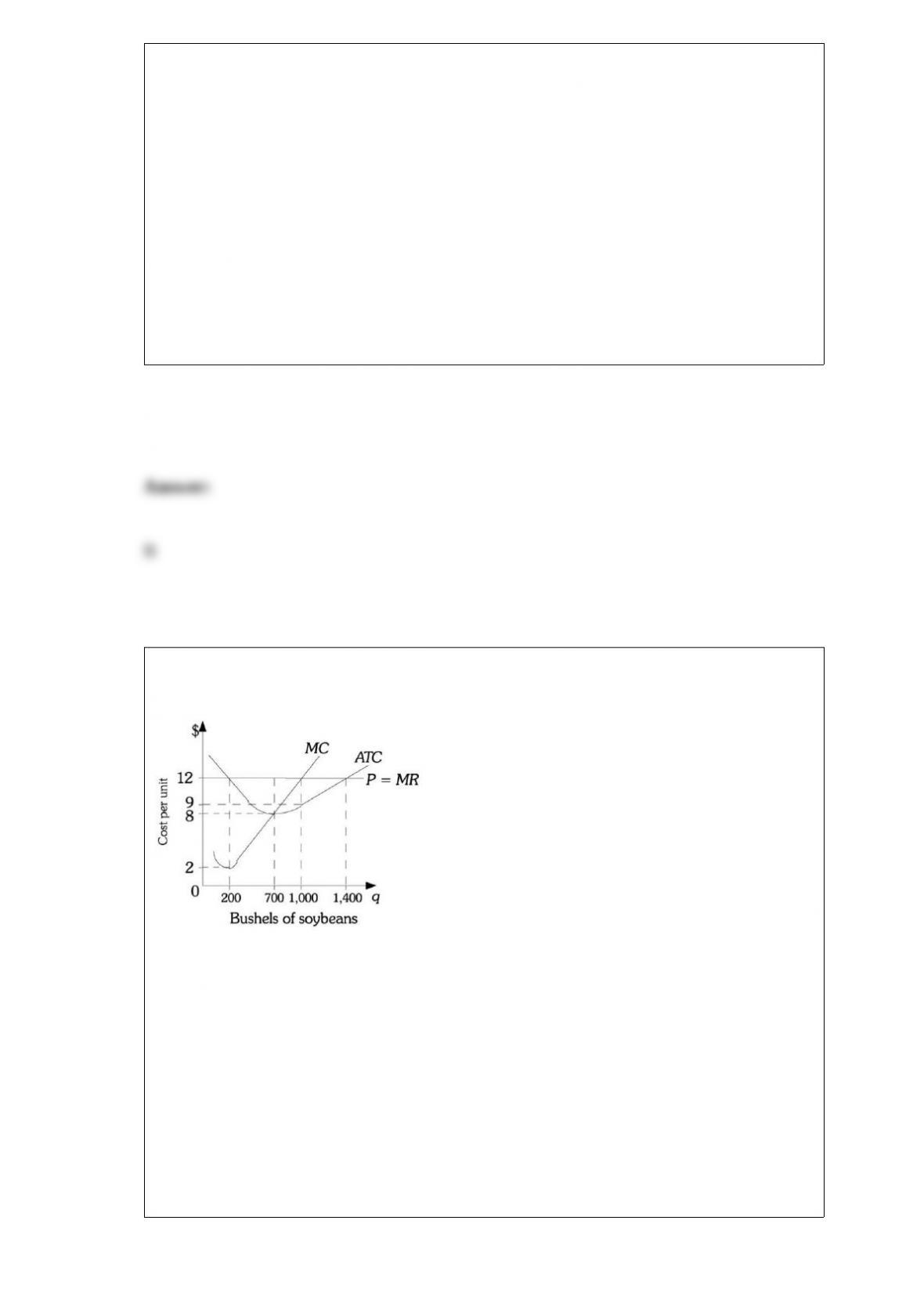
Figure 8.8
Refer to Figure 8.8. At the market price of $8 per bushel, if this farmer produces the
profit maximizing level of soybeans, the total revenue would be
A) $1,200.
B) $2,800.
C) $5,600.
D) $8,400.
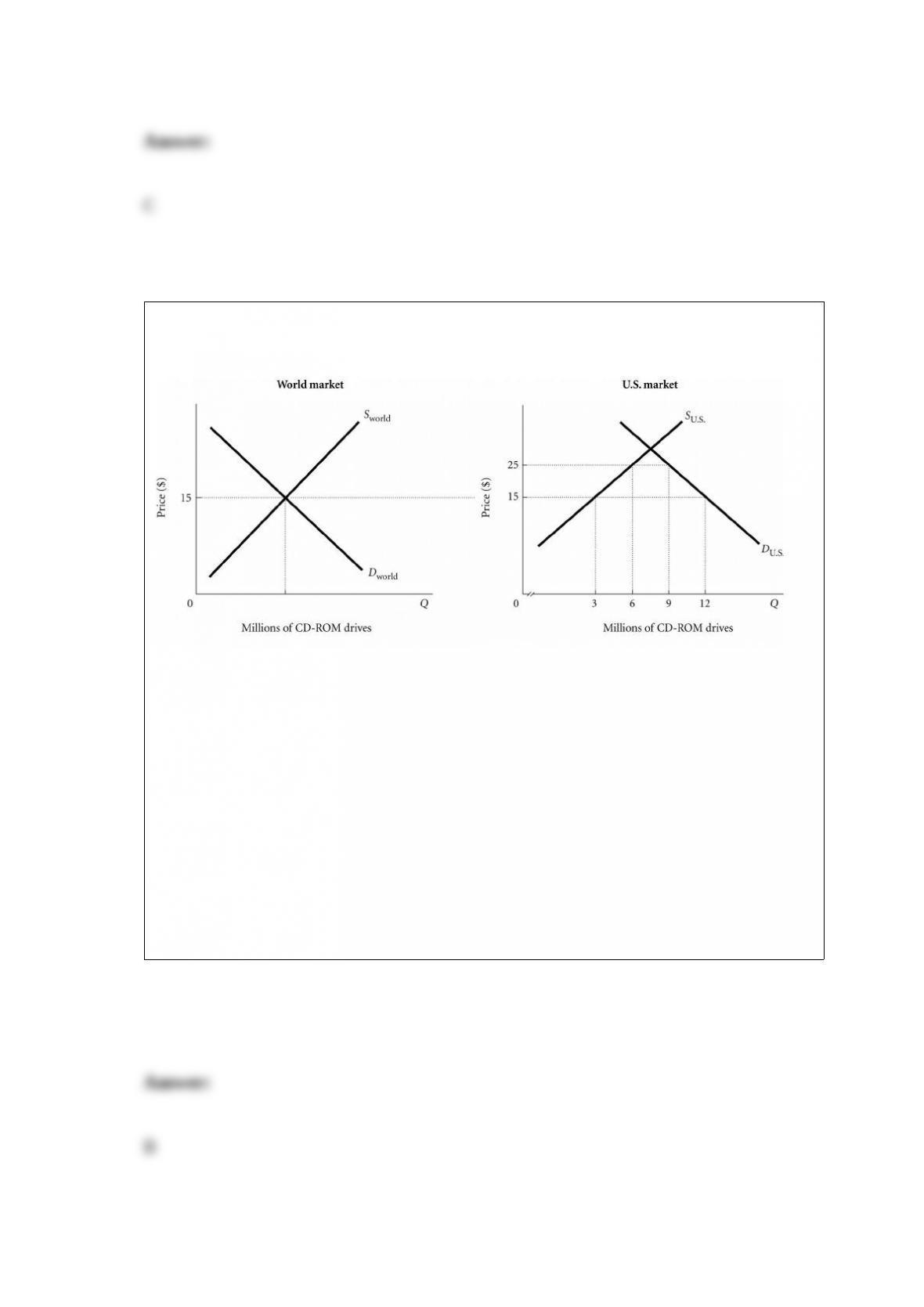
Figure 4.5
Refer to Figure 4.5. Assume that initially there is free trade. The quantity of CD-Rom
drives supplied by U.S. firms will increase by 3 million CD-Rom drives if the United
States then imposes ________ tax per CD-Rom drive on imported CD-Rom drives.
A) no
B) a $10
C) a $15
D) a $25

If diminishing marginal returns have already set in for The Picture Perfect Framing
Store and the marginal product of the fifth picture framer is 20, then the marginal
product of the sixth picture framer must be
A) negative.
B) zero.
C) less than 20.
D) greater than 20.
The practice of lending very small amounts of money, without collateral, and accepting
small savings deposits is known as
A) microfinance.
B) capital flight.
C) debt rescheduling.
D) a stabilization program.
The case AGAINST advertising includes the fact that
A) firms spend large sums of money to create artificial differences among products.
B) it provides consumers with valuable information about product availability, quality,
and price.
C) it increases competition by decreasing barriers to entry of new firms into an industry.
D) it ensures high quality and efficient production.
Firms have an incentive to substitute capital for labor as the
A) price of labor decreases.
B) price of capital increases.
C) price of labor increases.
D) marginal product of labor increases.
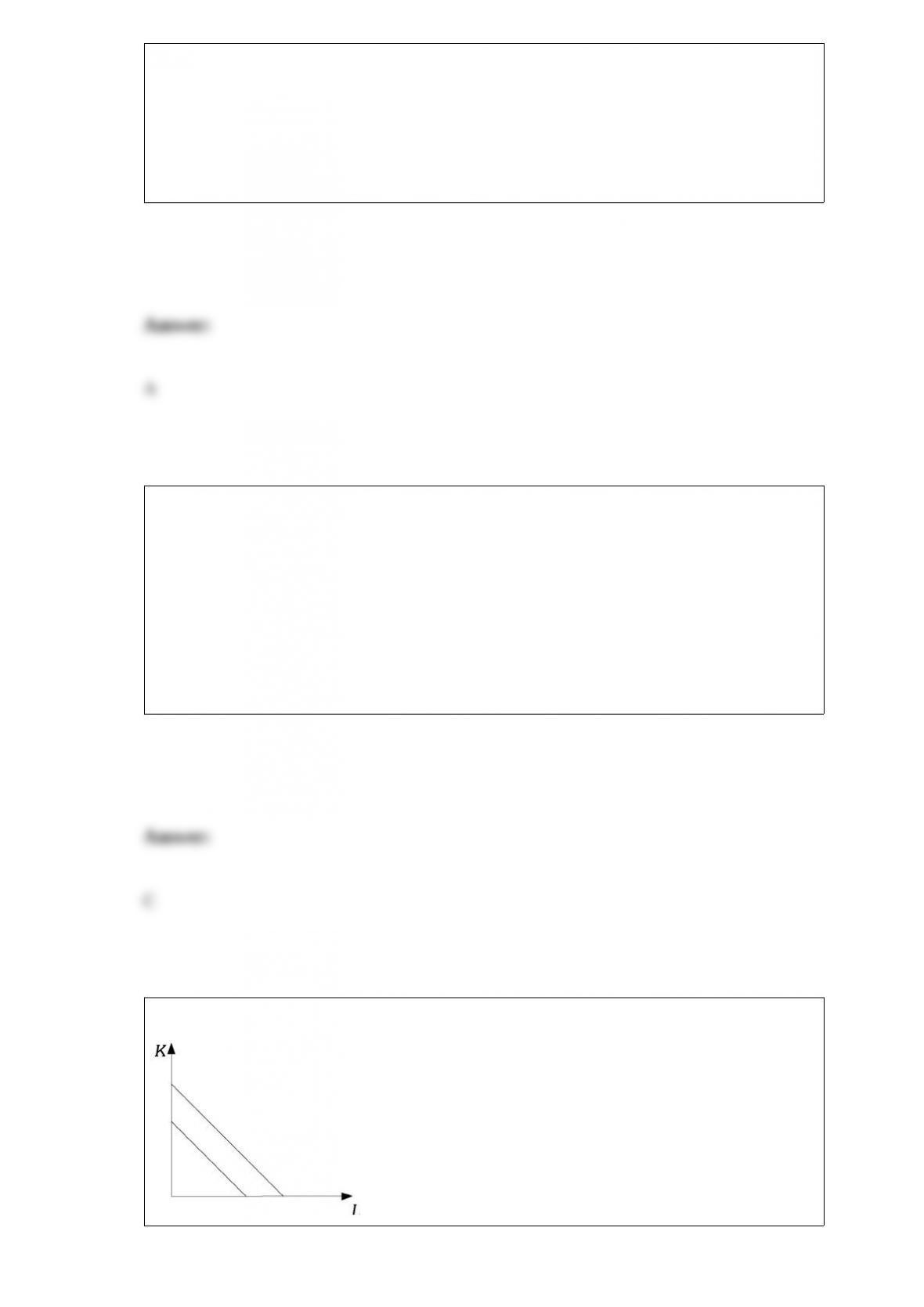
If two inputs were perfect substitutes, what would their isoquants look like? Explain.
Why would a monopolist never price in the inelastic portion of the demand curve?
Using Scenario 2 suppose Bill has eliminated one of the answers but is unsure of which
of the remaining four answers are correct. Determine whether it is rational for Bill to
guess.
Explain the principle of neutrality with respect to taxes.
Define what is meant to be risk-averse.
What role do households play in the capital market? What role do firms play?
Explain the Coase theorem. In order for the Coase theorem to be applicable, explain
which three conditions must be satisfied. Give an example to show how the Coase
theorem can be applied.
What is the impossibility theorem?
Books.com is earning a total revenue of $200,000 per year. Its annual total fixed costs
are $50,000 and its annual total variable costs are $75,000. What is the operating profit
for Books.com? What is economic profit?
The data below shows the relationship between total output and the amount of labor
hired at Papa’s Pizza Shop:
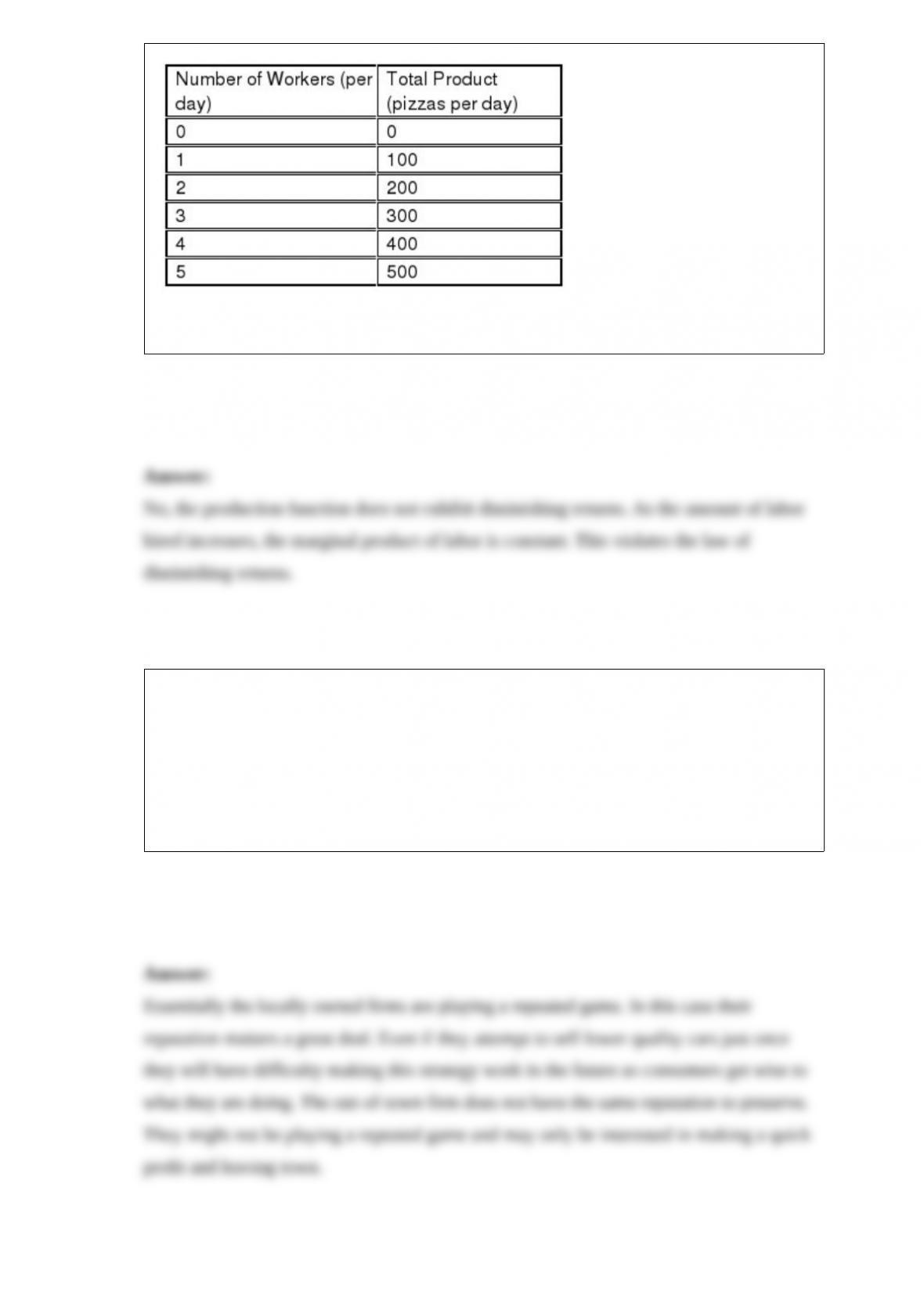
Does the production function in the table above exhibit diminishing returns? Explain.
Assume two locally owned used car dealerships that have been in direct competition for
many decades. They have a choice of selling high-quality cars at a high price but also
high costs because of the repairs that have to be made. The other choice is to sell
low-quality cars at a low cost but market them as high quality cars. Explain using game
theory why it is in the interest of both of these companies to continue to sell
high-quality cars but it may not necessarily be in the interest of a new out-of-town
dealership that has recently moved into town to do the same.
What does the labor theory of value imply about the wages workers are paid in a
capitalistic society? Explain.
Explain the law of demand. What does it imply about the shape of the demand curve?
In what ways are technological advancements like capital?
What is the difference between tangible and intangible capital?
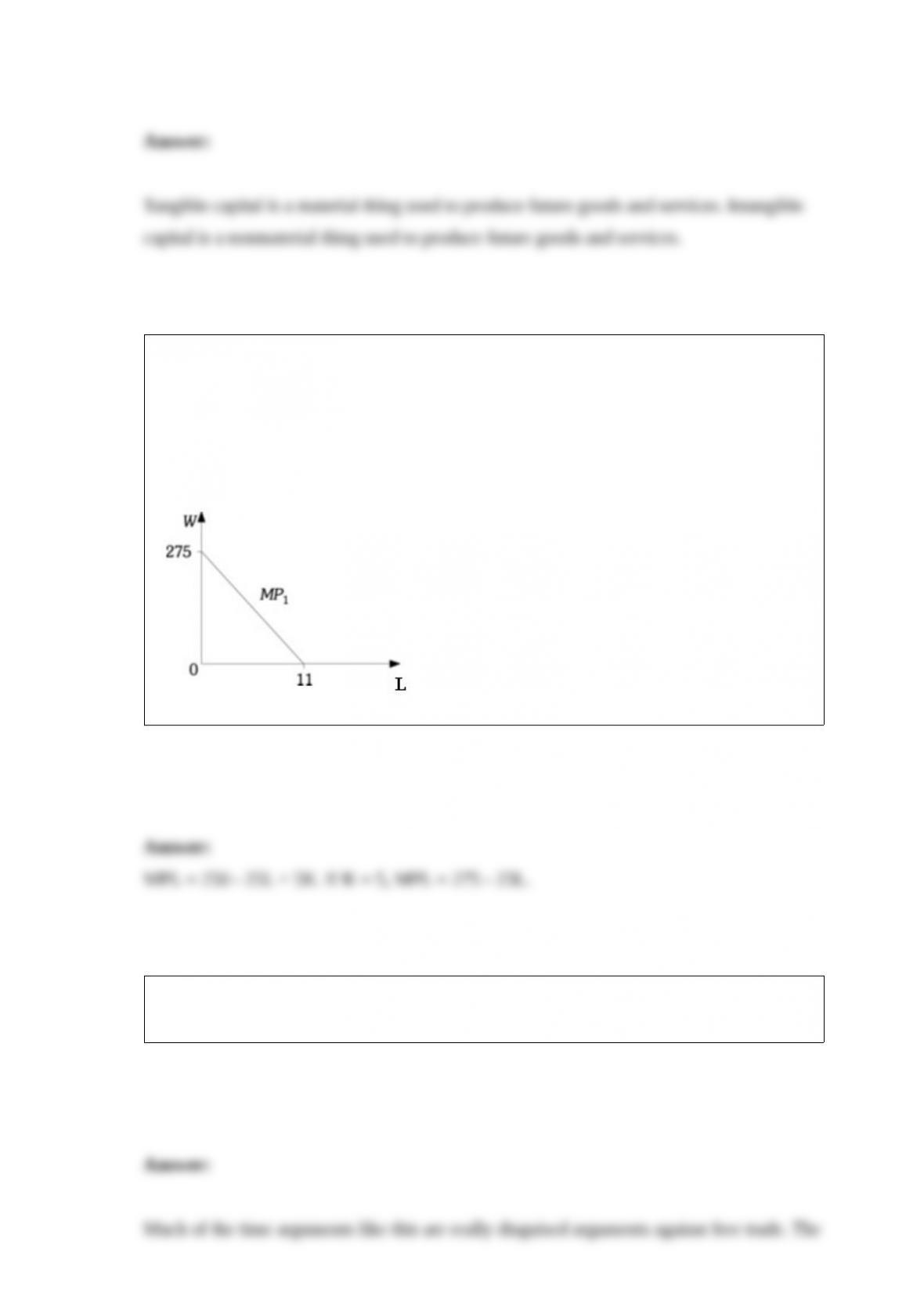
SCENARIO 1: Assume the following marginal product schedule for labor in the
production of crab pots. L measures labor input and K measures capital input. MPL =
250 – 25L + 5K
Refer to Scenario 1. Graph the marginal product schedule. Assume the firm is currently
using five units of capital.
Critically evaluate the following statement. “I am definitely in favor of free trade but
only if it means fair trade.”