
Reporters from the Wall Street Journal found that the office supply store Staples
charged different prices for the same product to different online customers based
primarily on
A) the age of the customer.
B) how close the customer’s zip code was to competitors’ stores.
C) the gender of the customer.
D) how many times the customer had looked up the product on its Website.
If firms differentiate their products in different ways and charge different price because
of these differentiation factors, then
A) the law of one price is not violated.
B) transaction costs are being ignored.
C) the firm must not be maximizing profit.
D) demand must be perfectly elastic.
In August 2008, Ethan Nicholas developed the iShoot application for the apple iPhone
3G, and within five months had earned $800,000 from this program. By May 2009,
Nicholas had dropped the price from $4.99 to $1.99 in an attempt to maintain sales.
This example indicates that in a competitive market

A) earning an economic profit in the long run is extremely easy.
B) earning an economic profit in the long run is extremely difficult.
C) it is impossible to earn an economic profit in either the short run or the long run.
D) economic profits are only earned in the long run.
Nike has used Michael Jordan to create the impression that Air Jordan basketball shoes
are superior to any other basketball shoes. Nike is attempting to
A) differentiate Air Jordan basketball shoes from other types of basketball shoes.
B) lower the marginal cost of producing Air Jordan basketball shoes.
C) increase its profit by raising the price of Air Jordan basketball shoes.
D) convince consumers that Air Jordan basketball shoes are no different from other
basketball shoes favored by celebrities.
If tablet computers are considered substitutes for e-readers, the decline in the price of
tablet computers would, all else equal
A) increase the demand for e-readers.
B) decrease the demand for e-readers.
C) increase the quantity demanded for e-readers.
D) decrease the quantity demanded for e-readers.
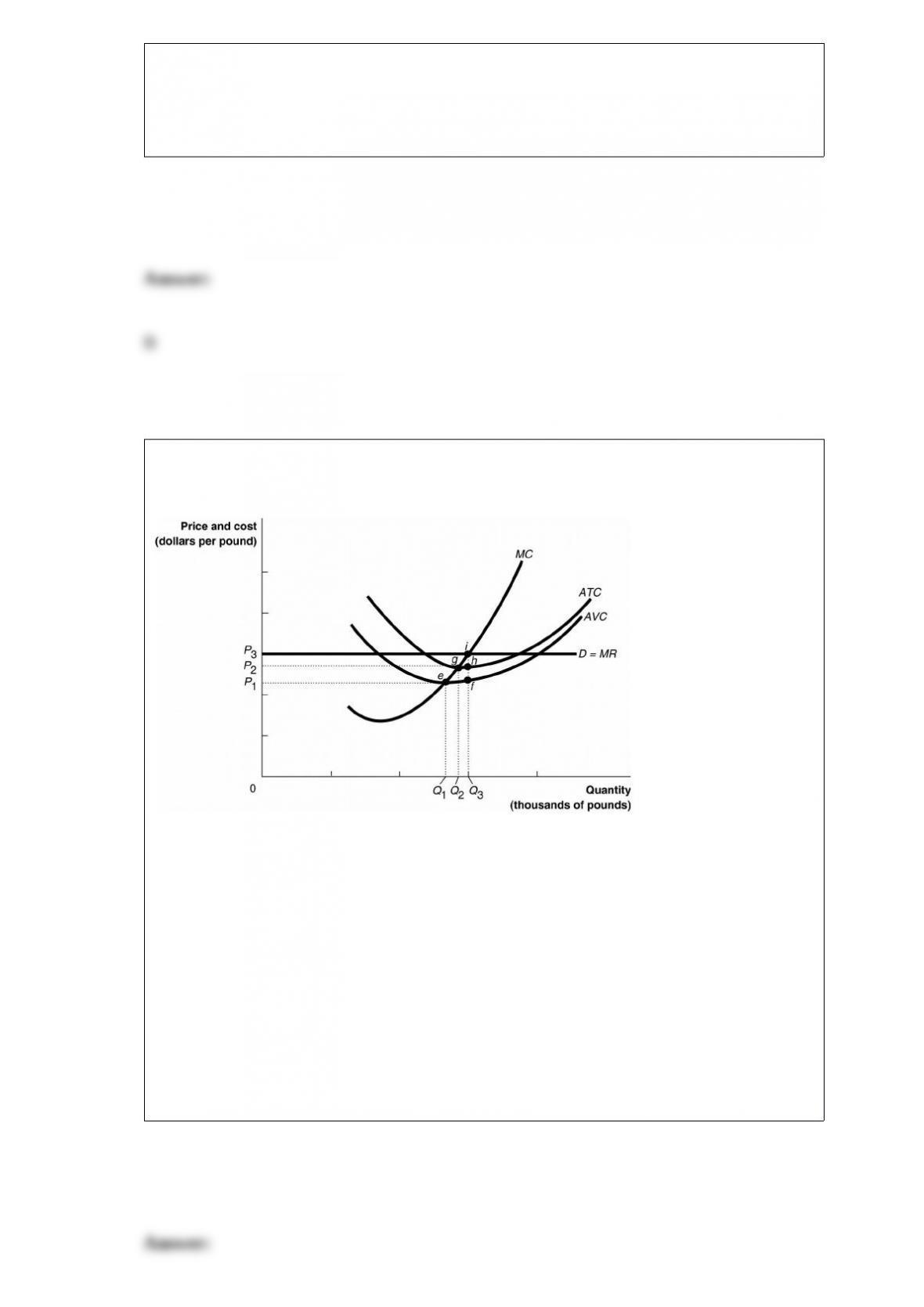
Figure 12-7
Figure 12-7 illustrates the cost curves of a perfectly competitive firm.
Refer to Figure 12-7. If the market price is P1
A) The firm will experience a loss and raise its price to P2. The firm will then break
even.
B) The firm will break even by producing a quantity of Q2.
C) The firm will experience a loss since price is less than ATC.
D) The firm may make a profit if it can increase the demand for its product.

In the short run, if marginal product is at its maximum, then
A) average cost is at its minimum.
B) average variable cost is at its minimum.
C) marginal cost is at its minimum.
D) total cost is at its maximum.
How is a stock’s price-earnings ratio found?
A) by dividing the dividend by the closing price of the stock
B) by dividing the dividend by the firm’s earnings per share
C) by dividing current market price of the stock by the firm’s earnings per share
D) by subtracting the firm’s earnings per share from the closing price of the stock
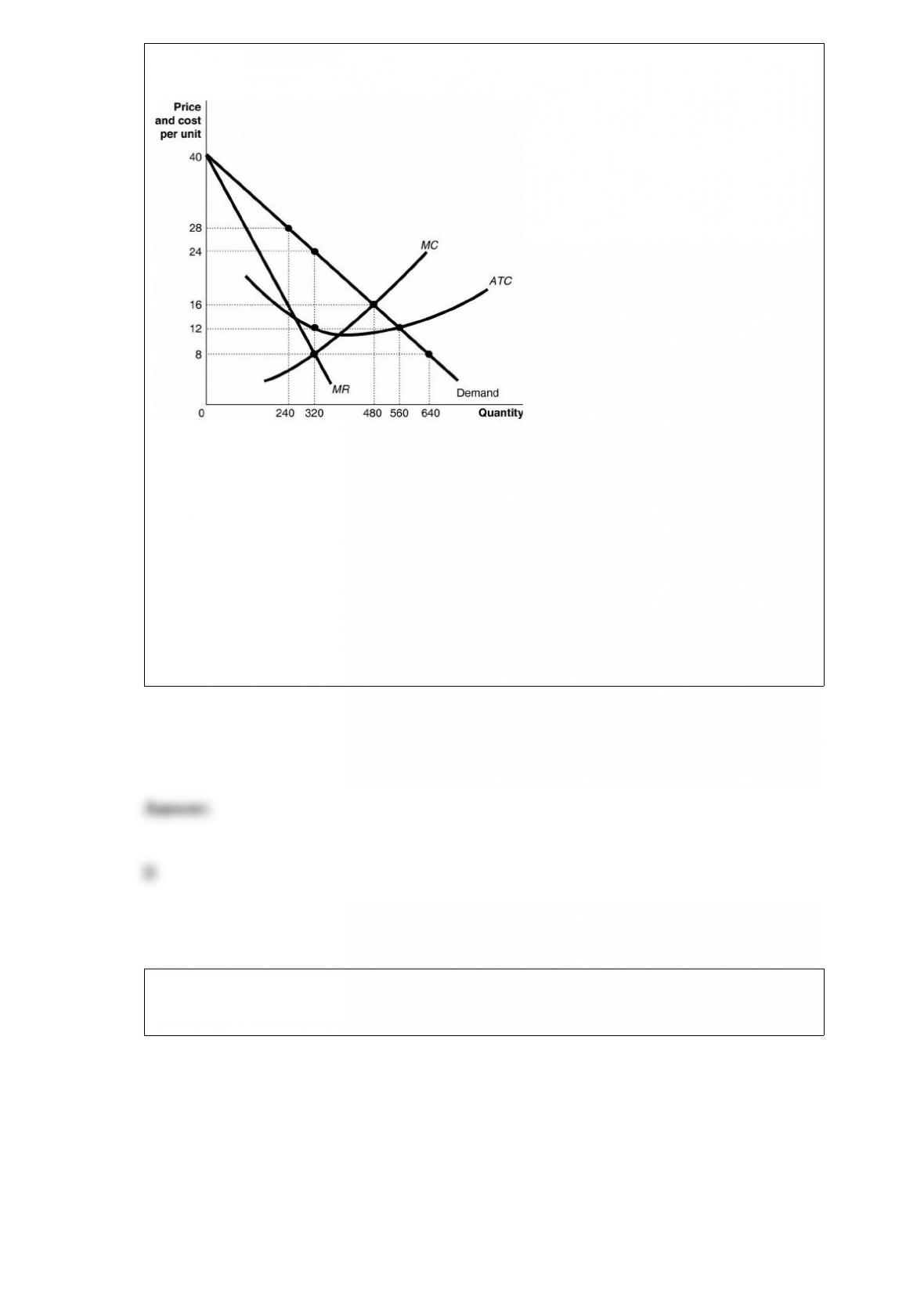
Figure 16-5
Refer to Figure 16-5. Suppose the firm represented in the diagram decides to use a
two-part pricing strategy such that it charges a fixed fee and a per-unit price equal to the
monopoly price. What is the quantity it should produce?
A) 240 units
B) 320 units
C) 480 units
D) 560 units
Figure 12-10
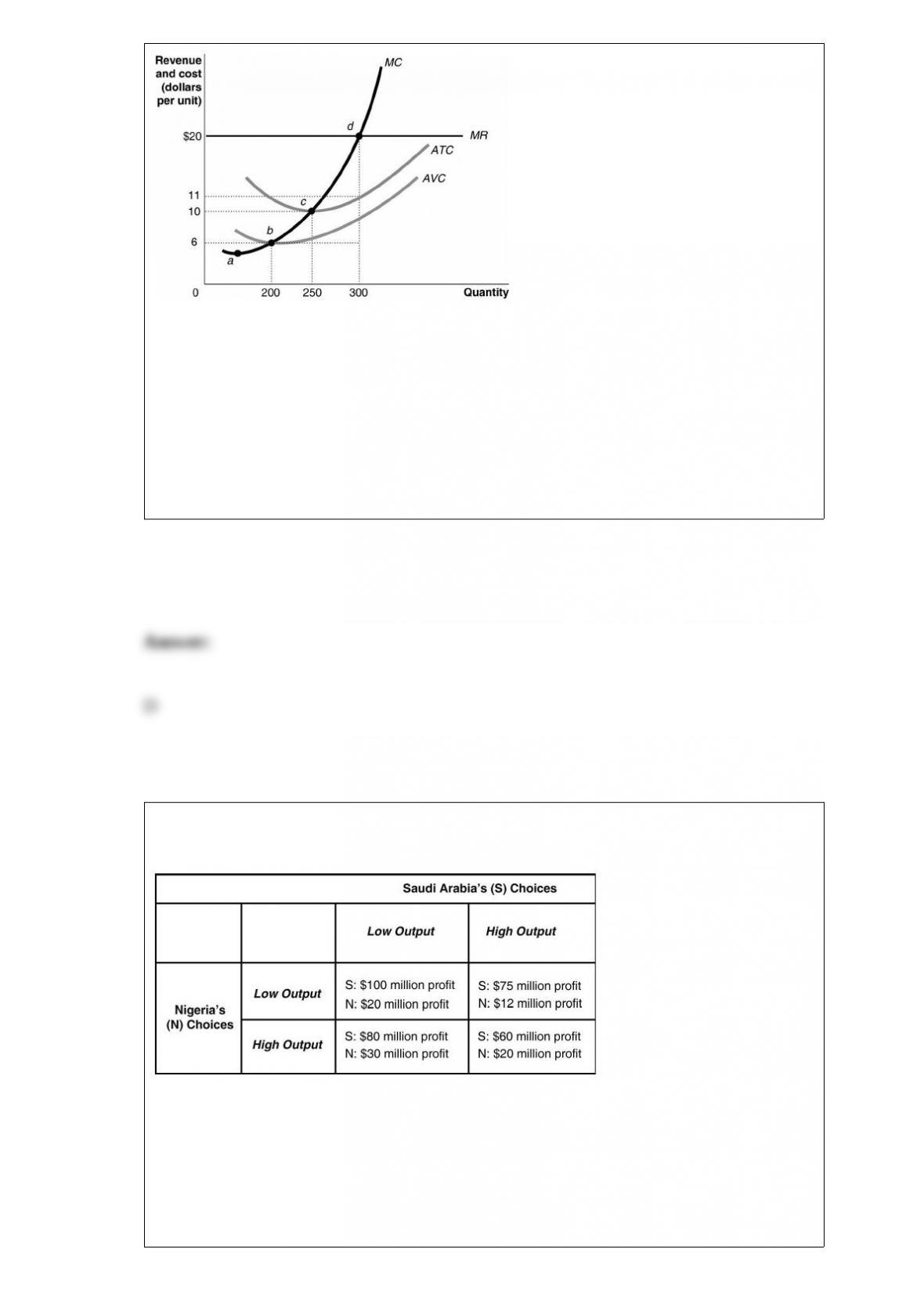
Refer to Figure 12-10. Total revenue at the profit-maximizing level of output is
A) $1,200.
B) $2,500.
C) $4,800.
D) $6,000.
Table 14-3
Suppose OPEC has only two producers, Saudi Arabia and Nigeria. Saudi Arabia has far
more oil reserves and is the lower cost producer compared to Nigeria. The payoff
matrix in Table 14-3 shows the profits earned per day by each country. “Low output”
corresponds to producing the OPEC assigned quota and “high output” corresponds to
producing the maximum capacity beyond the assigned quota.
Refer to Table 14-3. Is there a dominant strategy for Saudi Arabia and, if so, what is it?

A) Yes, the dominant strategy is to produce a high output.
B) Yes, the dominant strategy is to produce a low output.
C) No, there is no dominant strategy.
D) Yes, it has a dominant strategy depending on what Nigeria does.
A price-discriminating firm charges the highest price to
A) the group with the largest demand.
B) the group with the most elastic demand.
C) the group with the least elastic demand.
D) the group with demand that is unit-elastic.
Suppose the price of capital and labor remain constant. As a firm’s expenditures for
capital and labor increase, its isocost line
A) shifts out parallel to the original isocost line.
B) shifts in parallel to the original isocost line.
C) rotates outward on the Y-intercept.

D) rotates outward on the X-intercept.
Southwest Airlines wants to raise $20 million to finance the renovation of their
corporate offices, and the company wishes to raise the funds through direct finance.
Which of the following methods could it use?
A) It could issue $20 million in stocks.
B) It could sell $20 million in bonds.
C) It could borrow $20 million from a bank.
D) It could choose either A or B.
The basic economic problem of ________ has always existed and will continue to exist.
A) scarcity
B) efficiency
C) inflation
D) recession

Is a monopolistically competitive firm allocatively efficient?
A) No, because it does not produce at minimum average total cost.
B) Yes, because it produces where marginal cost equals marginal revenue.
C) No, because price is greater than marginal cost.
D) Yes, because price equals average total cost.
Which of the following is a normative economic statement?
A) Rising corn prices have increased the price of corn-based ethanol.
B) With rising home prices and falling mortgage interest rates, the amount of home
foreclosures has decreased.
C) The federal government is considering increasing regulations on the use of fossil
fuels to promote the use of wind power.
D) Farmers should not be allowed to grow and sell genetically-modified crops.

Producing where marginal revenue equals marginal cost is equivalent to producing
where
A) average total cost equals average revenue.
B) average fixed cost is minimized.
C) total revenue is equal to total cost.
D) total profit is maximized.
If your total satisfaction increases when you consume another unit, your marginal utility
must be
A) increasing.
B) decreasing.
C) negative.
D) positive.
Figure 15-3
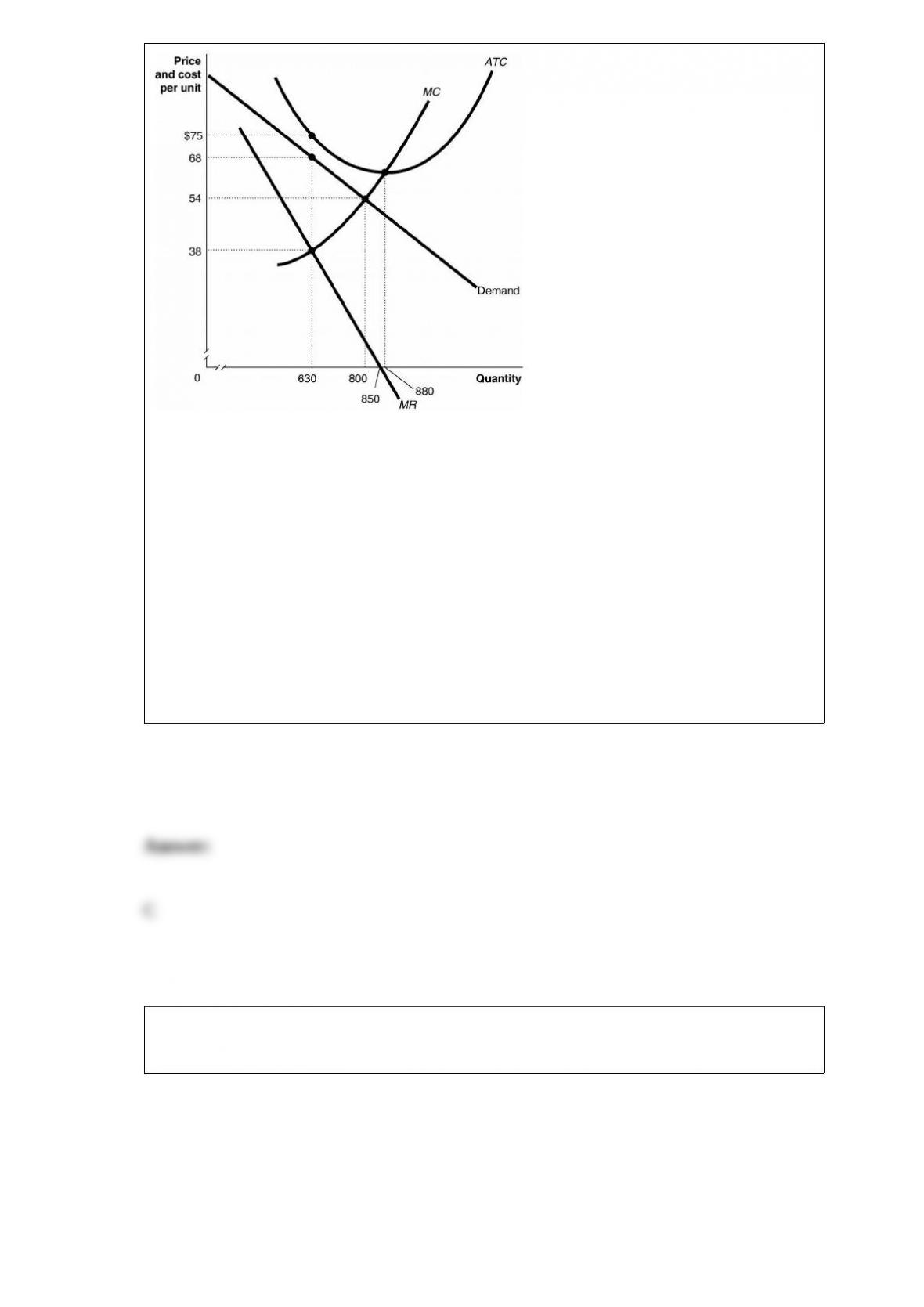
Figure 15-3 above shows the demand and cost curves facing a monopolist.
Refer to Figure 15-3. Suppose the monopolist represented in the diagram above
produces positive output. What is the price charged at the
profit-maximizing/loss-minimizing output level?
A) $38
B) $54
C) $68
D) $75
Figure 12-11
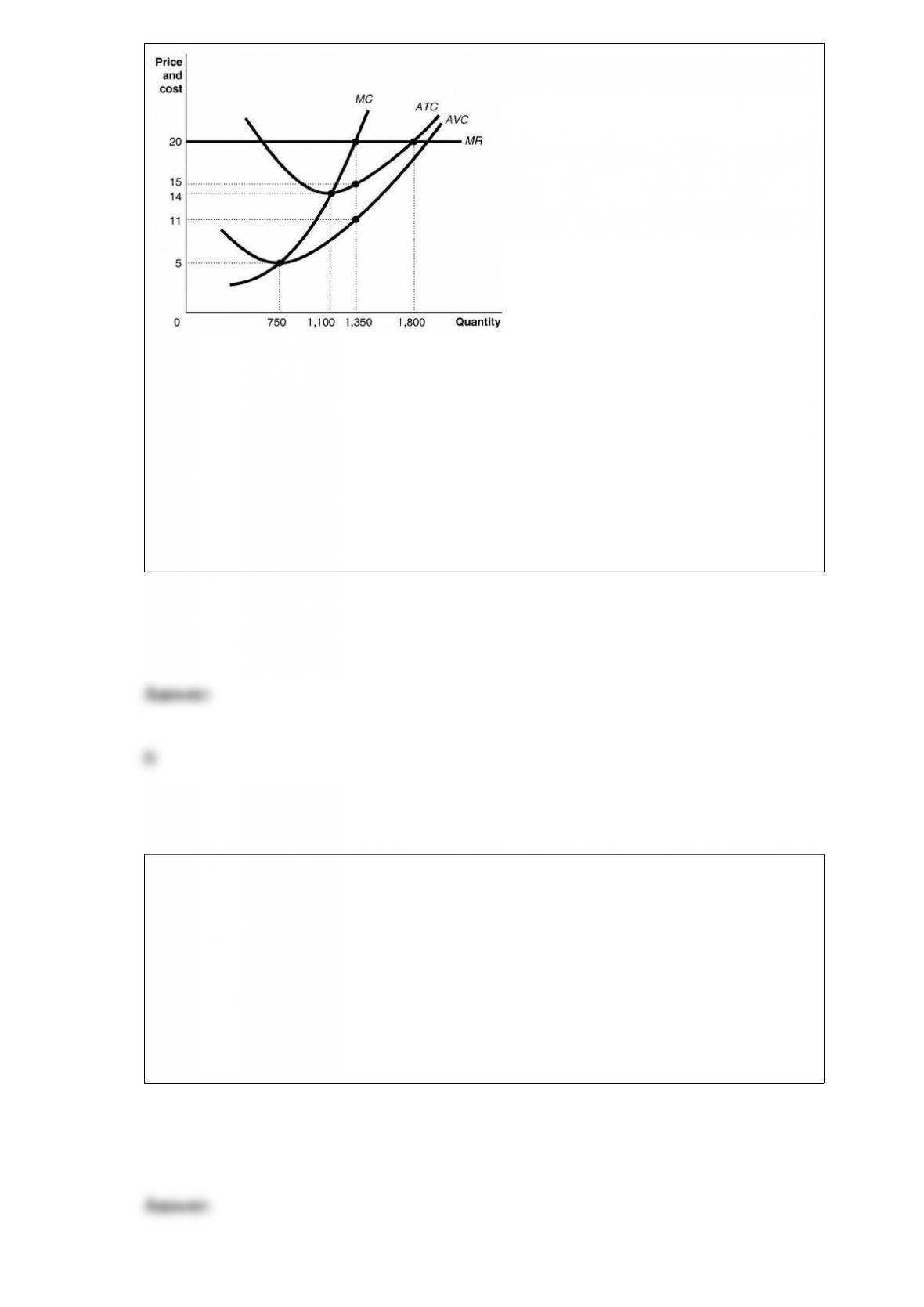
Refer to Figure 12-11. Suppose the prevailing price is $20 and the firm is currently
producing 1,350 units. In the long-run equilibrium
A) there will be fewer firms in the industry and total industry output decreases.
B) there will be more firms in the industry and total industry output increases.
C) there will be fewer firms in the industry but total industry output increases.
D) there will be more firms in the industry and total industry output remains constant.
Which of the following is an example of a federal mandate?
A) an excise tax
B) the Medicaid program
C) the personal tax exemption
D) the Food and Drug Administration (FDA)

Some economists who use the public choice model to explain the ways government
intervenes in the economy believe that regulatory capture results when an agency or
commission is given authority over a particular industry or product. Which of the
following is the best example of regulatory capture?
A) The Food and Drug Administration (FDA) has increased the time and expense
pharmaceutical firms incur to receive approval to market a new drug.
B) A federal government agency hires more employees than it requires to regulate an
industry because it does not seek to minimize costs or maximize the agency’s profits.
C) The head of an agency is required to testify before Congress because Congress
controls the size of the agency’s budget. Congress “captures” the agency because of its
budget authority.
D) Firms that were regulated by the Interstate Commerce Commission (ICC) attempted
for many years to influence the ICC’s actions.
Compared to a perfectly competitive firm, the demand curve facing a monopolistically
competitive firm is
A) more elastic because there are many close substitutes for the product of a
monopolistically competitive firm.
B) less elastic because monopolistically competitive firms produce similar, but not
identical, products.
C) just as elastic because there are many sellers in both markets.
D) more elastic because in the long run, the demand curve is tangent to the firm’s
average total cost curve.
Holding everything else constant, the demand for a good tends to be more elastic
A) the more substitutes there are for the good.
B) the shorter the time period involved.
C) the more consumers perceive the good to be a necessity.
D) the less important the product is in consumers’ budgets.
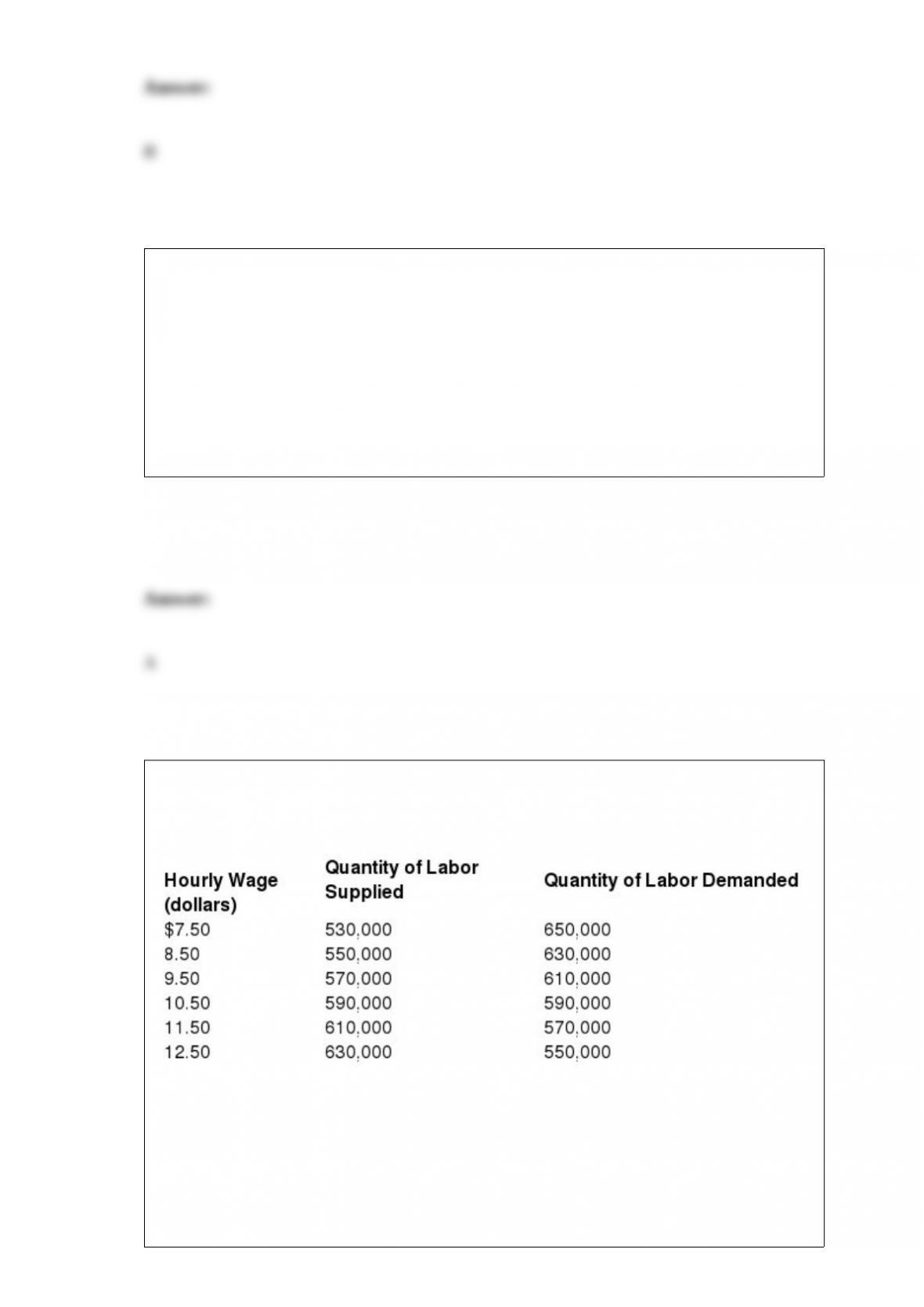
Table 4-4
Table 4-4 shows the demand and supply schedules for labor market in the city of Pixley.
Refer to Table 4-4. Suppose that the quantity of labor demanded decreases by 80,000 at
each wage level. What are the new free market equilibrium hourly wage and the new
equilibrium quantity of labor?
A) W = $8.50; Q = 550,000

B) W = $12.50; Q = 630,000
C) W = $9.50; Q = 570,000
D) W = $9.50; Q = 590,000
If the slope of a demand curve is equal to -0.1 then
A) demand is inelastic.
B) we don’t know whether the demand is elastic or inelastic.
C) the demand is elastic at low prices and inelastic at high prices.
D) as price increases by 10 percent quantity demanded decreases by 1 percent.
A monopolistically competitive market is described as one in which there are
A) a few firms producing an identical product.
B) a large number of firms selling similar, but not identical, products.
C) a few firms producing differentiated products.
D) one large firm and many small firms producing identical products.

In making decisions about what to consume, a person’s goal is to
A) allocate her limited income among all the products she wishes to buy so that she
receives the highest total utility.
B) buy low-priced goods rather than high-priced goods.
C) maximize her marginal utility from the goods and services she wishes to buy using
her limited income.
D) consume as many necessities as possible and then, if there is money left over, to buy
luxuries.
A four-firm concentration ratio measures
A) the extent to which industry sales are concentrated among the four largest firms in
the industry.
B) the price elasticity of demand among the four largest firms in an industry.
C) the number of firms in an industry.
D) the price elasticity of demand in an industry.

Assume that you had a ticket for a basketball playoff game that you bought for $50, the
maximum price you were willing to pay. If a friend of yours offers to buy the ticket for
$100 but you decide not to sell it, how can your decision be explained?
A) You expect to receive greater utility from attending the playoff game than you
received from buying the ticket.
B) by the endowment effect
C) by the law of diminishing marginal utility
D) The income effect from the increase in the price of the ticket from $50 to $100 was
greater than the substitution effect.
The market supply curve for labor is
A) derived from the market supply curve for the output produced with labor.
B) perfectly inelastic if leisure is an inferior good.
C) determined by adding up the quantity of labor supplied by each worker at each
wage, holding constant all other variables that affect the willingness of workers to
supply labor.
D) determined by adding up the wages each worker is willing to work for at a given
quantity supplied, holding constant all other variables that affect the willingness of
workers to supply labor.