
Employees at the university have negotiated a 5 percent increase in wages for the next
year, based on their inflation expectations. If inflation is actually 4 percent over the next
year, which of the following will occur?
A) Unemployment of university employees will fall.
B) Real wages for university employees will rise.
C) Inflation will be 5 percent the following year.
D) The decrease in inflation is expected.
What is accounting profit?
A) gross revenue minus explicit costs
B) gross revenue minus implicit costs
C) gross revenue minus explicit and implicit costs
D) the same as economic profit
Conceptually, the efficient level of carbon emissions is the level for which
A) the marginal benefit of reducing carbon emissions is maximized.
B) the marginal cost of reducing carbon emissions is minimized.
C) the marginal benefit of reducing carbon emissions is equal to the cost of reducing
carbon emissions.

D) the marginal benefit of reducing carbon emissions is minimized and the marginal
cost of reducing carbon emissions is maximized.
Because a monopoly’s demand curve is the same as the market demand curve for its
product
A) the monopoly’s marginal revenue equals its price.
B) the monopoly is a price taker.
C) the monopoly must lower its price to sell more of its product.
D) the monopoly’s average total cost always falls as it increases its output.
Which of the following is not part of the “taxes” provision of the Patient Protection and
Affordable Care Act (ACA)?
A) Pharmaceutical firms and health insurance firms will pay new taxes.
B) Investors earning more than $200,000 will pay a new tax on their investment
income.
C) Beginning in 2018, all taxes on employer-provided health insurance plans will be
reduced or eliminated.
D) Workers earning more than $200,000 will have their share of the Medicare payroll
tax increase.
Between 2013 and 2014, if an economy’s exports rise by $8 billion and its imports fall
by $8 billion, by how much will GDP change between the two years, all else equal?
A) Net exports will increase GDP by $8 billion.
B) The increase in exports is offset by the decrease in imports, so there is no change in
net exports and no effect on GDP.
C) Net exports will increase GDP by $16 billion.
D) Net exports will decrease GDP by $8 billion.
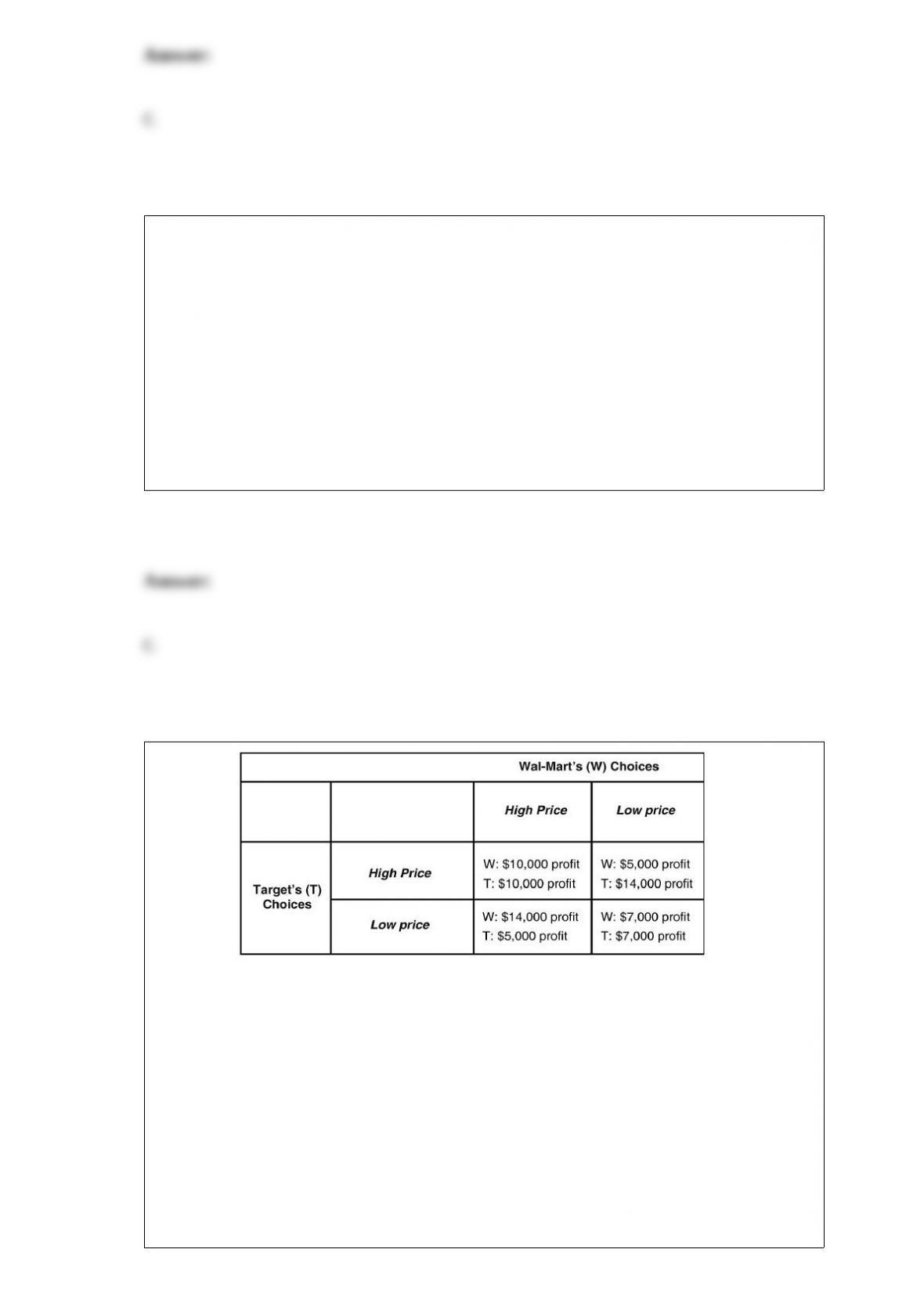
Table 14-2 Table 14-2
shows the payoff matrix for Wal-Mart and Target from every combination of pricing
strategies for the popular PlayStation 3. At the start of the game each firm charges a low
price and each earns a profit of $7,000.
Suppose Wal-Mart and Target both advertise that they will match the lowest price
offered by any competitor. What is the purpose of such a strategy?
A) to signal to each other not to charge below the current low price
B) to signal to each other that they will not hesitate to initiate a price war
C) to signal to each other that they intend to charge the high price
D) to signal to each other to share the market equally
Which of the following statements is false?
A) Corporations can issue stocks and bonds, while proprietorships cannot.
B) Corporations have one owner, while proprietorships have many owners.
C) Corporations face more taxes than do proprietorships.
D) Proprietorships have unlimited liability while corporations have limited liability.
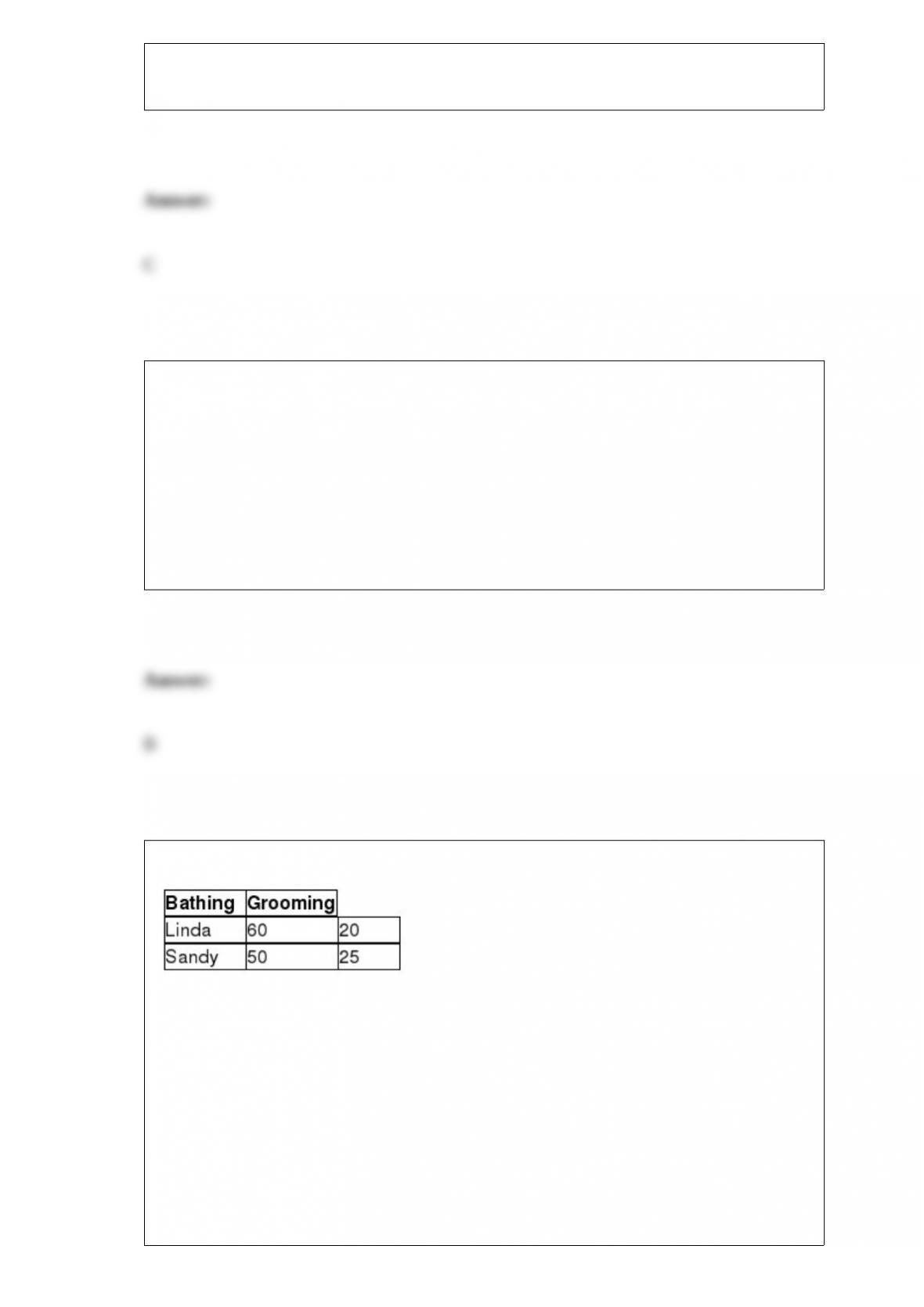
Table 9-1
Linda and Sandy own The Preppy Puppy, a dog grooming business. Table 9-1 lists the
number of dogs Linda and Sandy can each bathe and groom in one week. Select the
statement that accurately interprets the data in the table.
A) Sandy has a comparative advantage in dog grooming.
B) Linda has a comparative advantage in dog grooming.
C) Linda has a comparative advantage in dog grooming and dog bathing.
D) Sandy has a comparative advantage in dog bathing.

Historically, the largest U.S. federal budget deficits as a percentage of GDP in the 20th
century occurred during
A) World War I and World War II.
B) the Great Depression.
C) 1970-1997.
D) the Vietnam war.
E) 1998-1999.
Firms price discriminate
A) to reduce the quantity sold so as to reduce production costs.
B) to increase profits.
C) to take advantage of customers.
D) to increase total economic surplus.
If the GDP deflator in the United States is 114, and the GDP deflator in Ukraine is 142,
which of the following changes would the theory of purchasing power parity predict?
(The Ukrainian currency is the hryvnia.)
A) The demand for the dollar will rise since the dollar is undervalued.
B) The demand for the dollar will fall since the dollar is overvalued.
C) The supply of the dollar will fall since the dollar is undervalued.
D) No prediction regarding changes in the demand or supply of the dollar can be made
without information on the exchange rate between the United States and Ukraine.
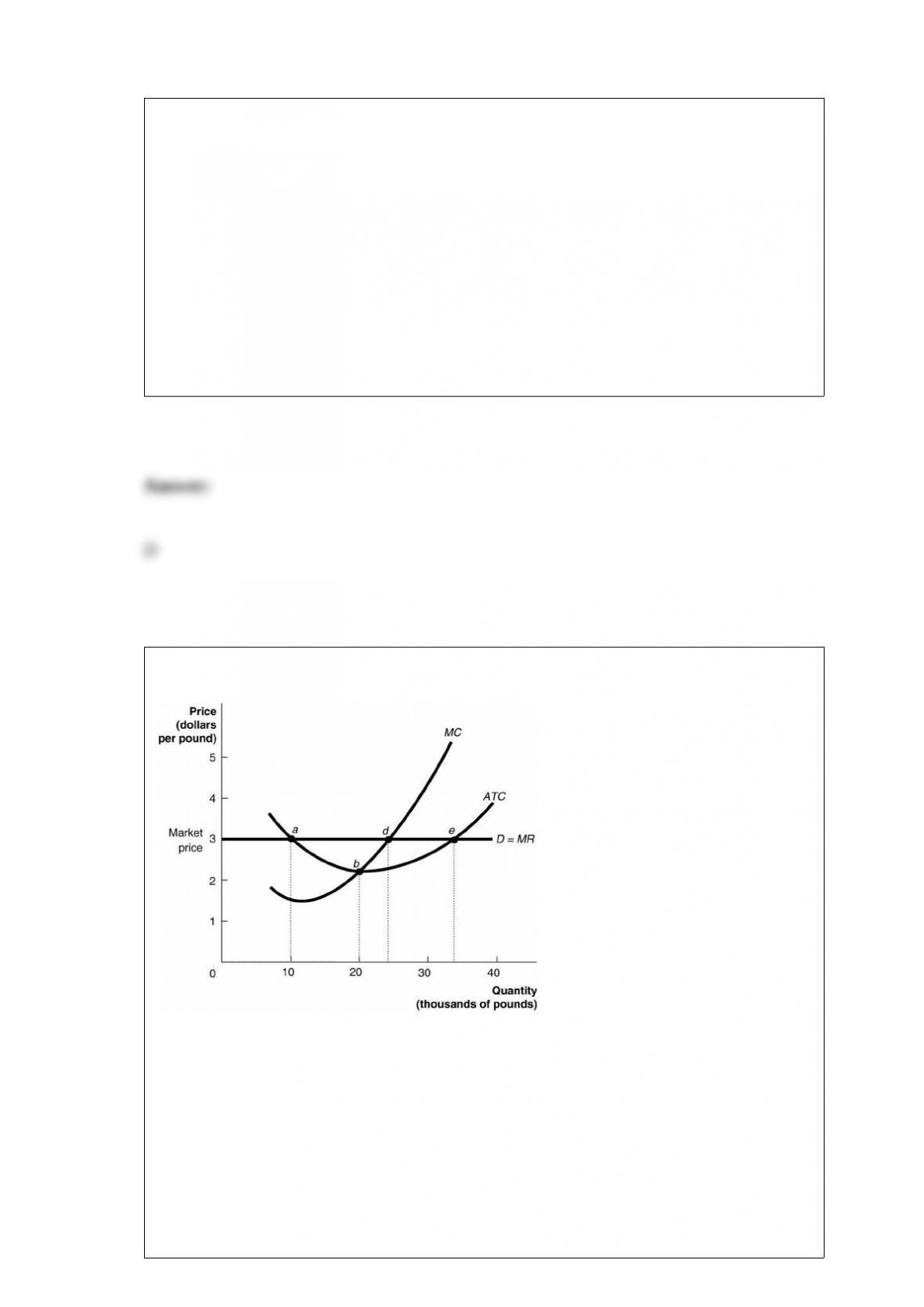
Figure 12-6
Figure 12-6 shows the demand,
marginal cost (MC) and average total cost (ATC) curves for Jason’s House of Apples.
Which of the following statements is true?
A) Jason should produce where MC equals $3 (point d) where he will minimize his
losses.
B) Jason should produce where the distance between MC and his demand curve is
greatest (point ).
C) Jason cannot earn a profit from selling any number of apples.
D) Jason should produce where MC equals $3 (point d) where he will maximize his
profit.
In economics, the total amount received for selling a good or service is referred to as
A) revenue.
B) profit.
C) capital gains.
D) factor payments.
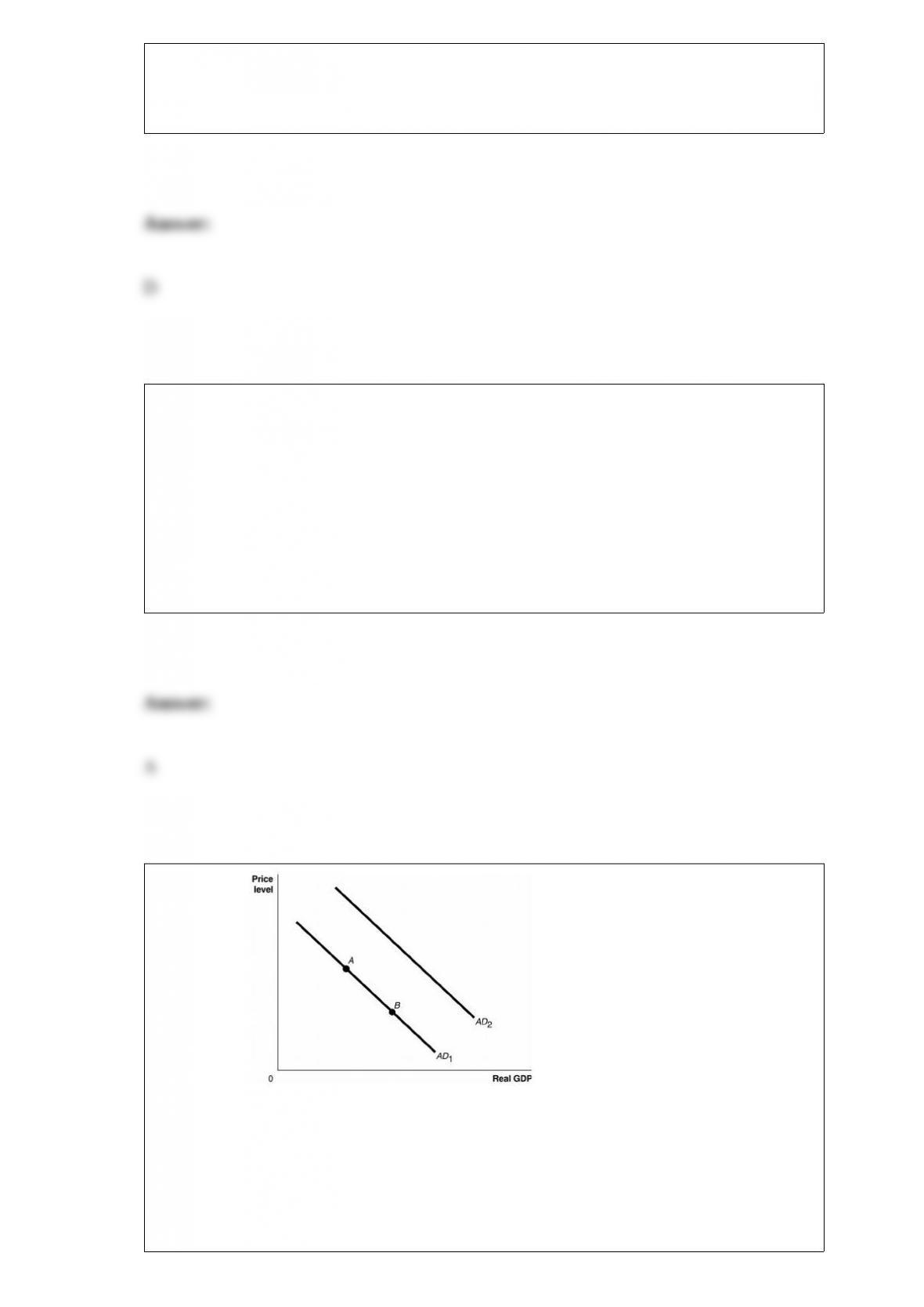
Figure 13-1
Ceteris paribus, an increase in households’ expectations of their future income would be
represented by a movement from
A) AD1 to AD2.
B) AD2 to AD1.

C) point A to point B.
D) point B to point A.
An increase in the demand for loanable funds will occur if there is
A) an increase in the real interest rate.
B) a decrease in the real interest rate.
C) an increase in expected profits from firm investment projects.
D) an increase in the nominal interest rate accompanied by an equal increase in
inflation.
What must balance on a balance sheet?
A) Total assets must equal total liabilities plus equity.
B) Revenues must equal costs.
C) Retained earnings plus dividends paid must equal earnings per share.
D) All of these must balance.

If inflation is positive and is perfectly anticipated,
A) those that borrow money lose.
B) those that lend money lose.
C) those that hold paper money lose.
D) no one in the economy loses.