1)
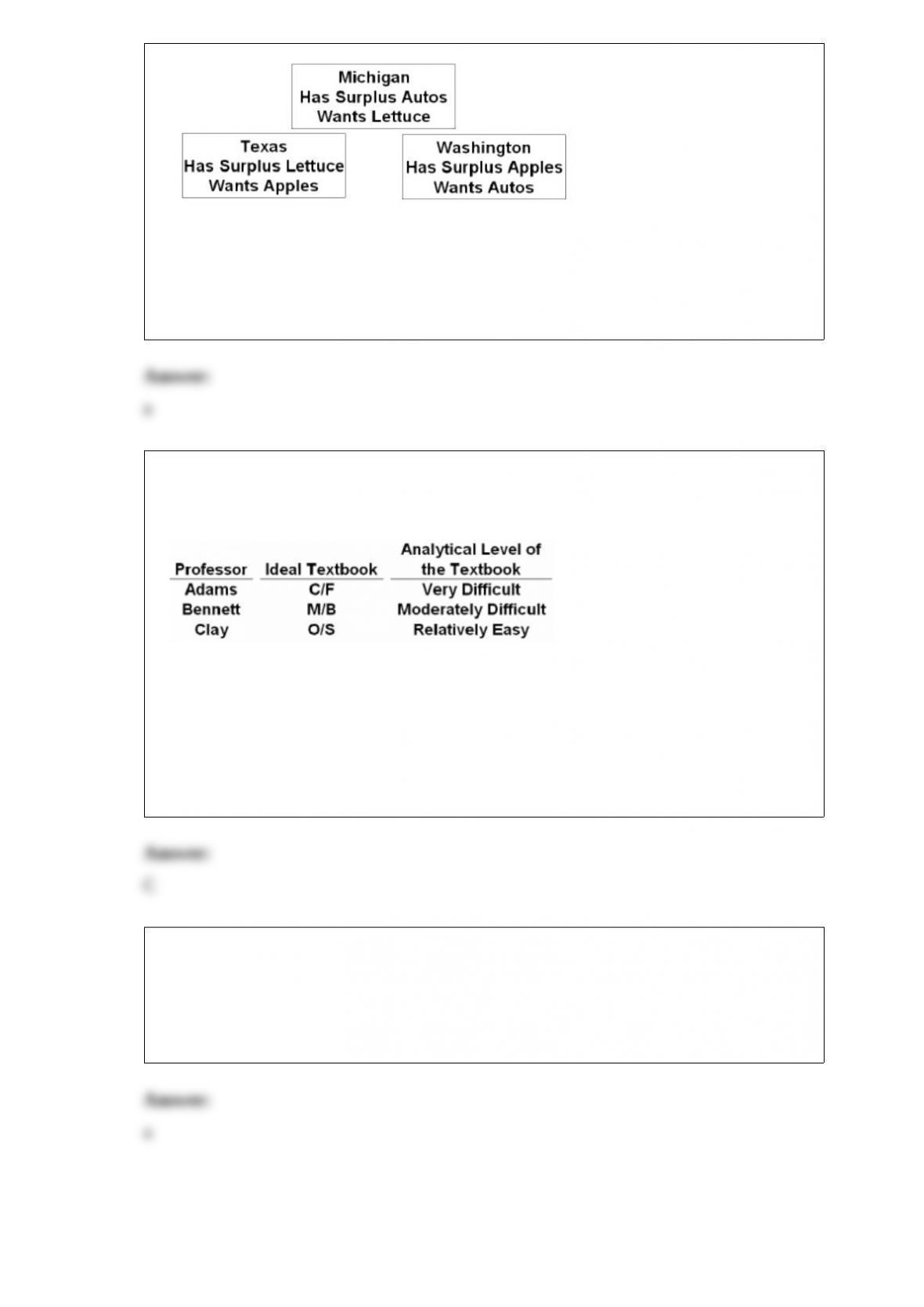
on the basis of the above information it can be said that:
a.no coincidence of wants exists between any two states.
b.a coincidence of wants exists between michigan and washington.
c.a coincidence of wants exists between texas and washington.
d.a coincidence of wants exists between michigan and texas.
2) Suppose a college economics department decides to use a single economics text for
all sections of principles of economics. Also assume that the three individual members
of the textbook selection committee have the following preferences.
Assuming all other textbook qualities except analytical level are the same,
paired-choice majority voting will result in the committee:
A.being deadlocked and unable to decide on a book.
B.selecting the C/F book.
C.selecting the M/B book.
D.selecting the O/S book.
3) refer to the above diagram. this firm is selling its product in a(n):
a.purely competitive market.
b.imperfectly competitive market.
c.monopsonistic market.
d.monopolistic market.
4)
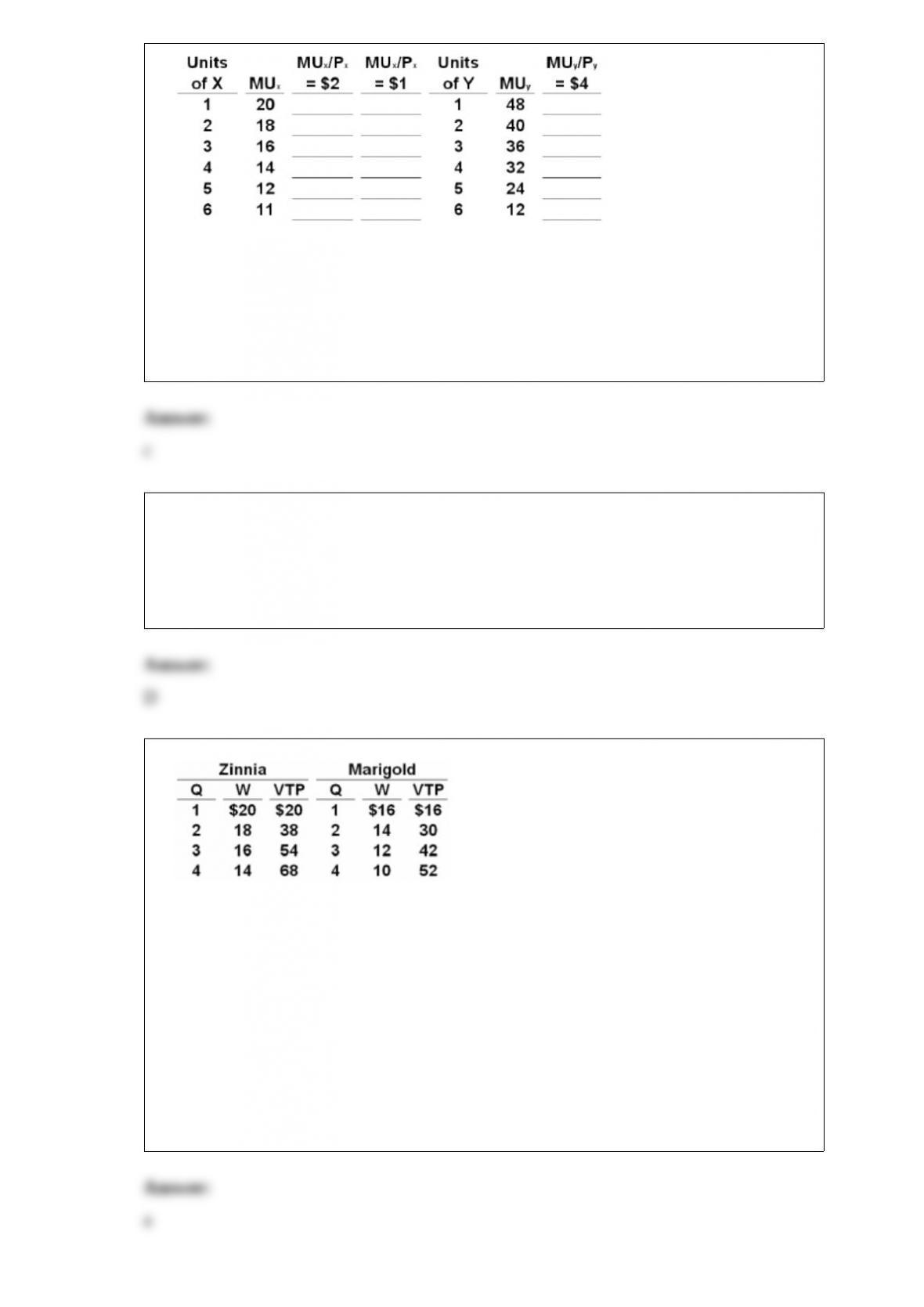
if the prices of x and y are $2 and $4 per unit, respectively, and this consumer has $10
in income to spend, to maximize total utility this consumer should buy:
a.1 units of x and 1 units of y
b.2 units of x and 2 units of y
c.1 units of x and 2 units of y
d.5 units of x and no units of y
5) Currency held in the vault of First National Bank is:
A.counted as part of M1.
B.counted as part of M2, but not M1.
C.only counted as part of M1 if it was deposited into a checking account.
D.not counted as part of the money supply.
6)
symbols: q = number of workers demanded; w = wage rate; and vtp = value of the
cumulative total product (output) of the particular number of workers.
assumptions: (1) the current wage in zinnia is $20 and the current wage in marigold is
$12; (2) full employment exists in both countries.
refer to the above data, symbols, and assumptions. if migration is costless and
unimpeded, the wage in both countries will equalize at:
a.$16.
b.$18.
c.$20.
d.$14.
7) Public choice theorists contend that:
A.government can efficiently correct instances of market system failure.
B.the existence of cost-benefit analysis has brought about the efficient use of resources
in the public sector.
C.public bureaucracies are inherently more efficient than private enterprises.
D.public bureaucracies are inherently less efficient than private enterprises.
8)
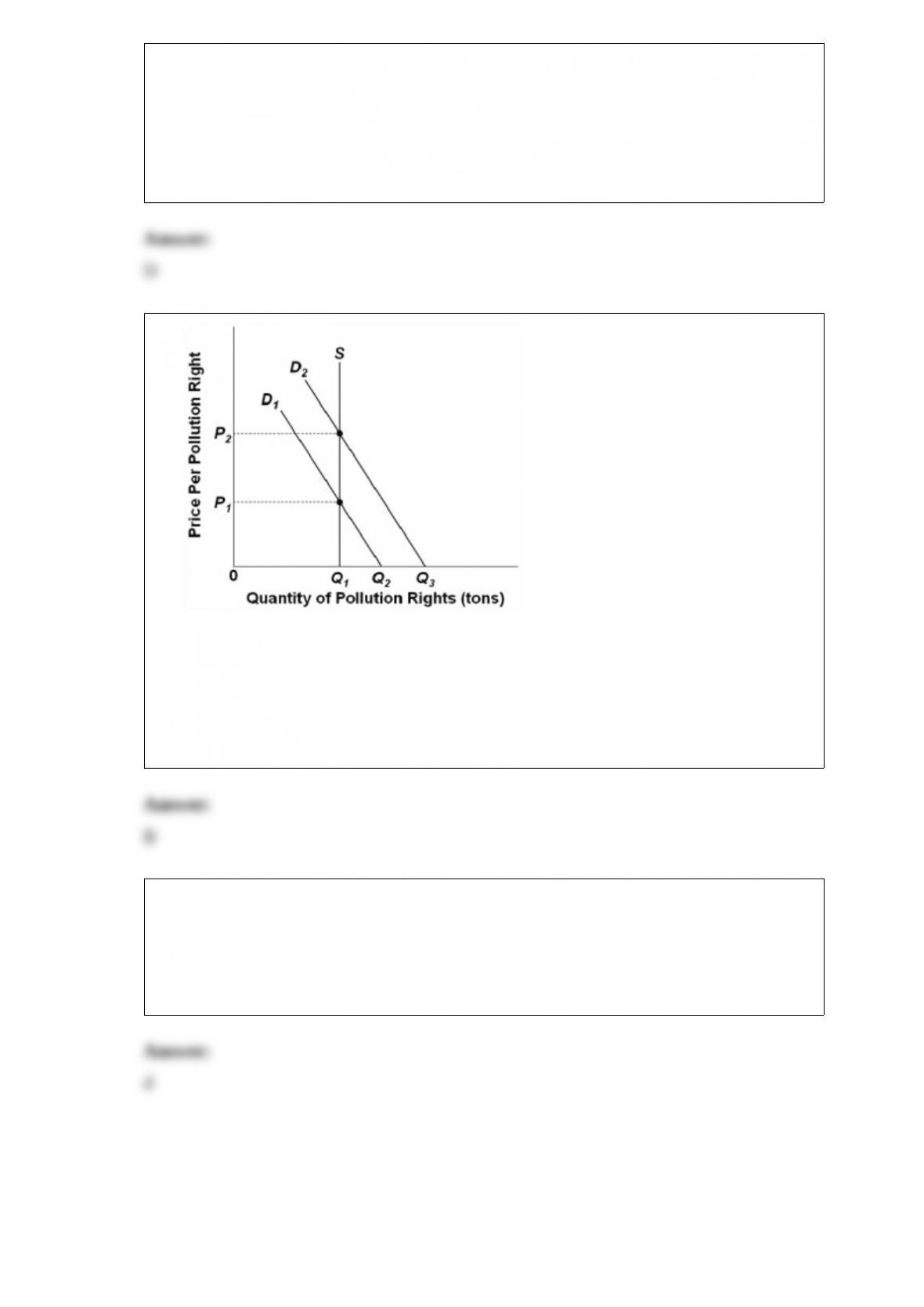
Refer to the above diagram of a market for pollution rights. Which of the following
would best explain the P1 to P2 increase in price of pollution rights?
A.implementation of improved technology for reducing pollution
B.an expansion of the number of firms
C.a subsidy of P1P2 to polluters
D.a shift of the supply curve of pollution rights from some point to the left of S to S
9) if variables x and y are positively correlated, this means that:
a.x is the cause of y.
b.y is the cause of x.
c.causation necessarily exists, but we don’t know whether x or y is the cause.
d.causation may or may not exist between x and y.
10)
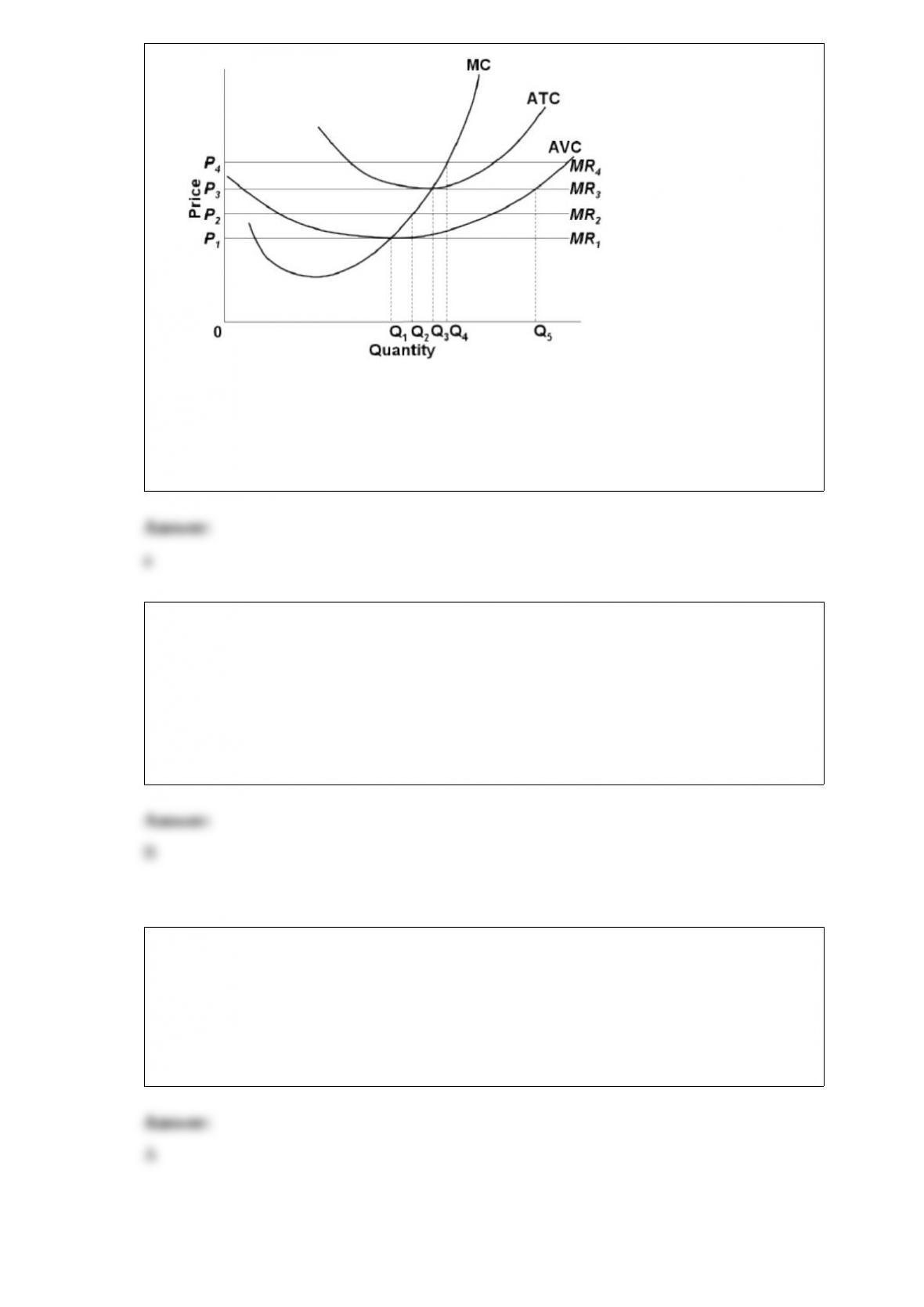
refer to the above diagram. the firm’s supply curve is the segment of the:
a.mc curve above its intersection with the avc curve.
b.mc curve above its intersection with the atc curve.
c.avc curve above its intersection with the mc curve.
d.atc curve above its intersection with the mc curve.
11) As applied to gender discrimination, the crowding model of occupational
segregation:
A.helps explain why women earn more than men.
B.predicts that men’s wages would fall and women’s wages would rise if occupational
segregation was eliminated.
C.predicts that domestic output would decline if occupational segregation was ended.
D.predicts that competition will eventually totally end discrimination.
12) Medicaid:
A.helps finance medical expenses for those participating in the TANF and
Supplemental Security Income programs.
B.has been abandoned in favor of privately provided medical insurance.
C.is a program of medical insurance for the aged and retired.
D.is a compulsory national health insurance program which covers all adult Americans.

13) According to the paradox of voting:
A.public goods that cost more than the total benefits they confer may get produced
under majority voting.
B.trading of votes may either add to or subtract from economic efficiency.
C.the median voter decides what public goods all voters should have.
D.majority voting fails under some circumstances to make consistent choices that
reflect the community’s underlying preferences.
14) about ________ of recent annual labor force growth in the united states is the result
of immigration.
a.one-tenth
b.one-fifth
c.one-third
d.one-half
15) Suppose government finds it can increase the equilibrium real GDP $45 billion by
increasing government purchases by $18 billion. On the basis of this information we
can say that the:
A.MPS in this economy is .4.
B.MPC in this economy is .4.
C.multiplier does not apply in this economy.
D.multiplier is 3.