Figure: The Value of the Marginal Product Curve
(Figure: The Value of the Marginal Product Curve) In the figure The Value of the
Marginal Product Curve, the VMPL curve will shift to the right if:
A) the wage rate increases.
B) a technological advance makes labor more productive.
C) the price of the good that the labor produces decreases.
D) the wage rate decreases.
Figure: Model of a Competitive Market
(Figure: Model of a Competitive Market) Given the figure Model of a Competitive
Market, if there are external costs, a tax imposed on sellers will:
A) decrease the equilibrium quantity.

B) increase the equilibrium quantity.
C) have no effect on the equilibrium price.
D) decrease the equilibrium price.
The amount by which total utility rises when an additional slice of pie is consumed is
called:
A) average utility.
B) the law of diminishing returns.
C) incremental utility.
D) marginal utility.
If the government removed the excise tax on gasoline, assuming that neither demand
nor supply is perfectly inelastic, which of the following would NOT occur?
A) an increase in consumer surplus
B) an increase in producer surplus
C) a decrease in producer surplus
D) an increase in total surplus
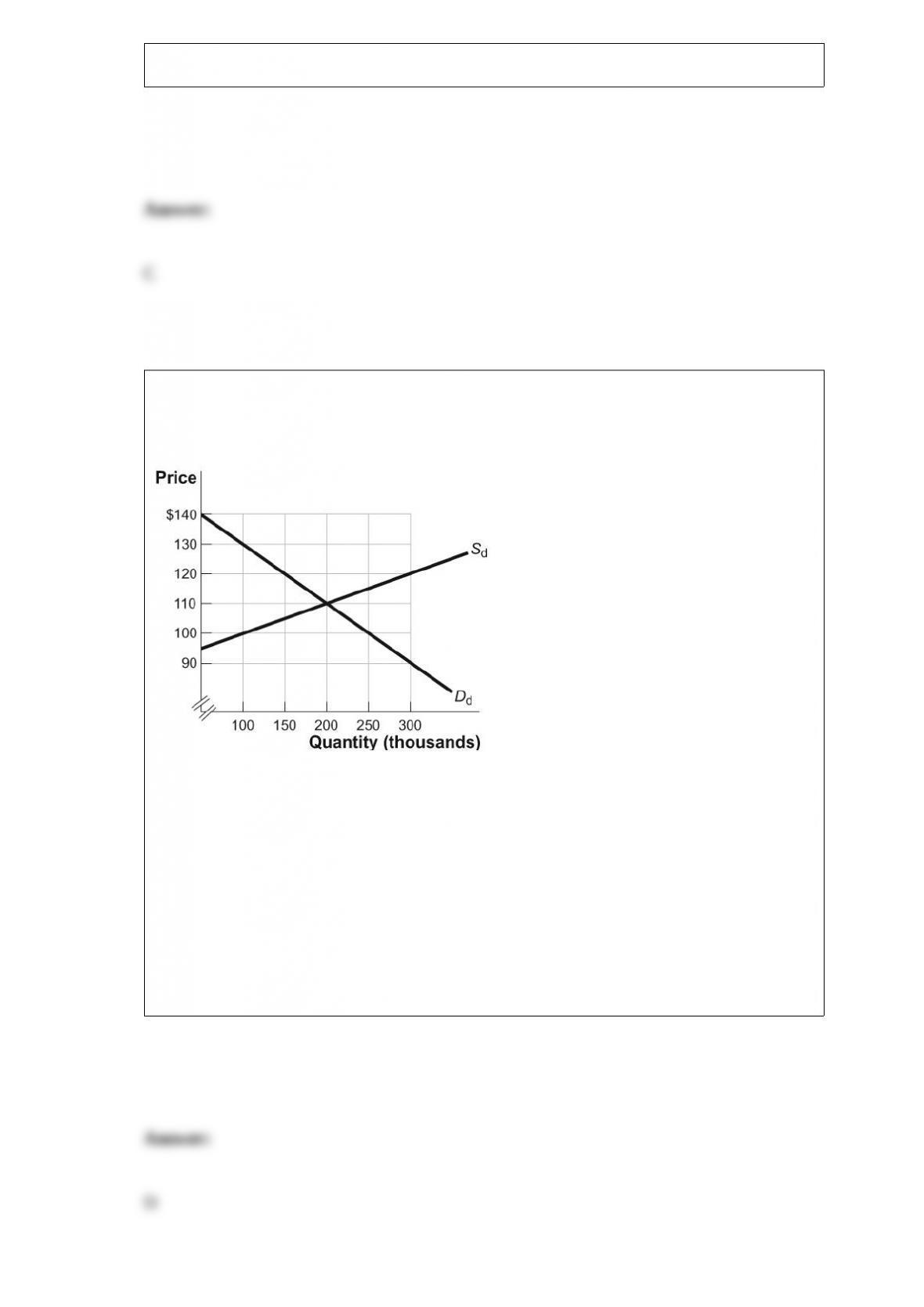
Figure: The Market for MP3 Players
(Figure: The Market for MP3 Players) Look at the figure The Market for MP3 Players.
If the world price equals $100 and there is free trade, producer surplus:
A) gains $1.5 million.
B) gains $2 million.
C) gains $750,000.
D) falls.
Which of the following statements is NOT true?
A) Resource scarcity is a major economic concern in the rich countries of the world.
B) Most opportunity costs are zero.
C) An economic situation is in equilibrium when no individual would be better off
taking a different action.
D) Some very talented, skilled individuals who can do some things better than most
people should specialize in doing that one thing.
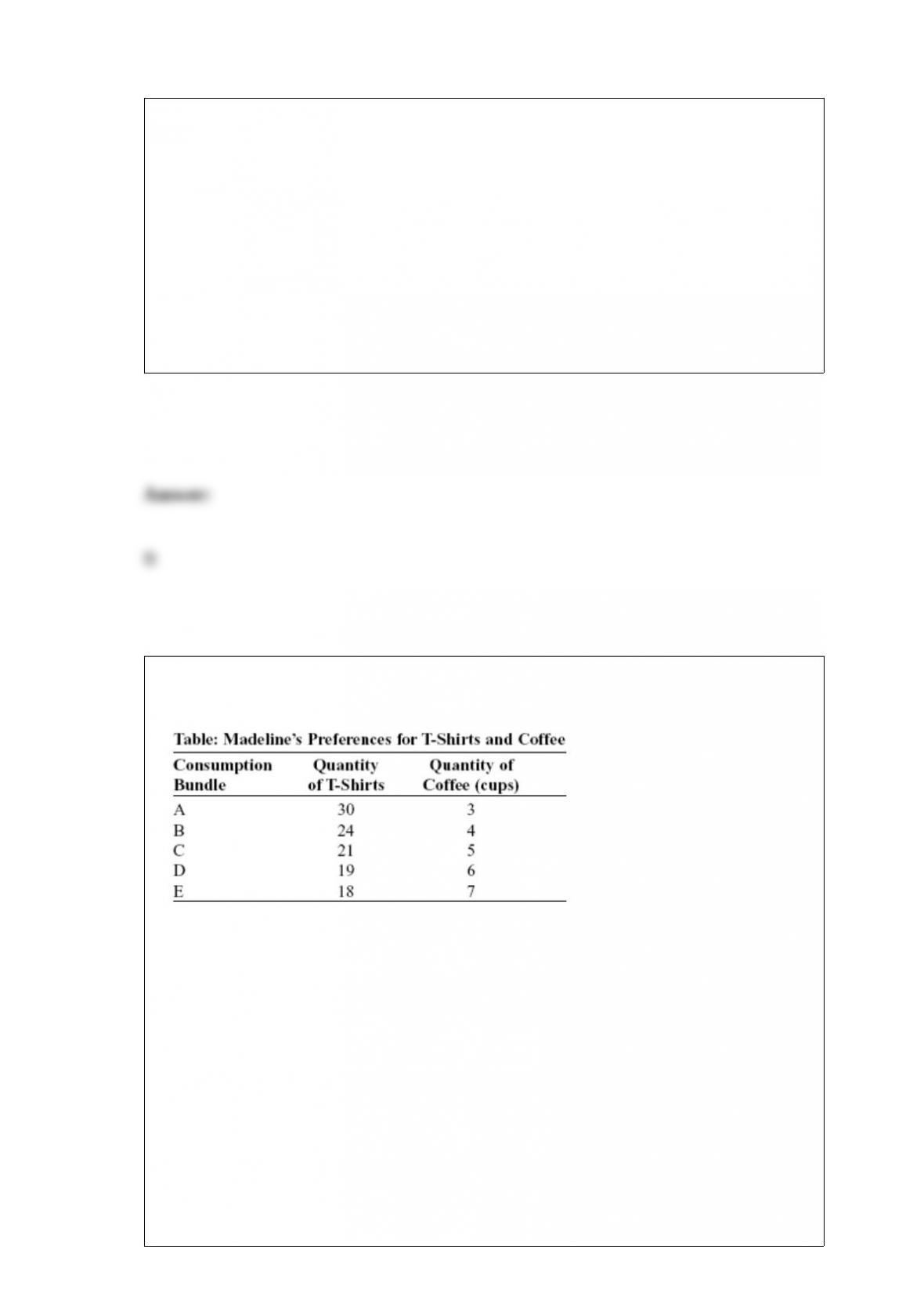
(Table: Madeline’s Preferences for T-Shirts and Coffee) Look at the table Madeline’s
Preferences for T-Shirts and Coffee. Assume each consumption bundle provides the
same level of utility. Suppose Madeline is consuming bundle A but then changes her
consumption and slowly moves along her indifference curve to bundles B, C, D, and
finally E. As she moves toward bundle E, she gives up:
A) the same number of T-shirts to obtain another cup of coffee.
B) an increasing numbers of T-shirts to obtain another cup of coffee.
C) a decreasing numbers of T-shirts to obtain another cup of coffee.
D) no T-shirts to obtain another cup of coffee.

Producers may supply a good with inefficiently high quality if the government imposes:
A) a price ceiling set above the equilibrium price.
B) a price floor set below the equilibrium price.
C) a binding price floor.
D) a binding price ceiling.
If the price of burritos increases from $4 to $6 and customers decrease their
consumption from 20 to 10 burritos, what is the price elasticity of demand (by the
midpoint method)?
A) 1.67
B) 0.67
C) 3
D) 2
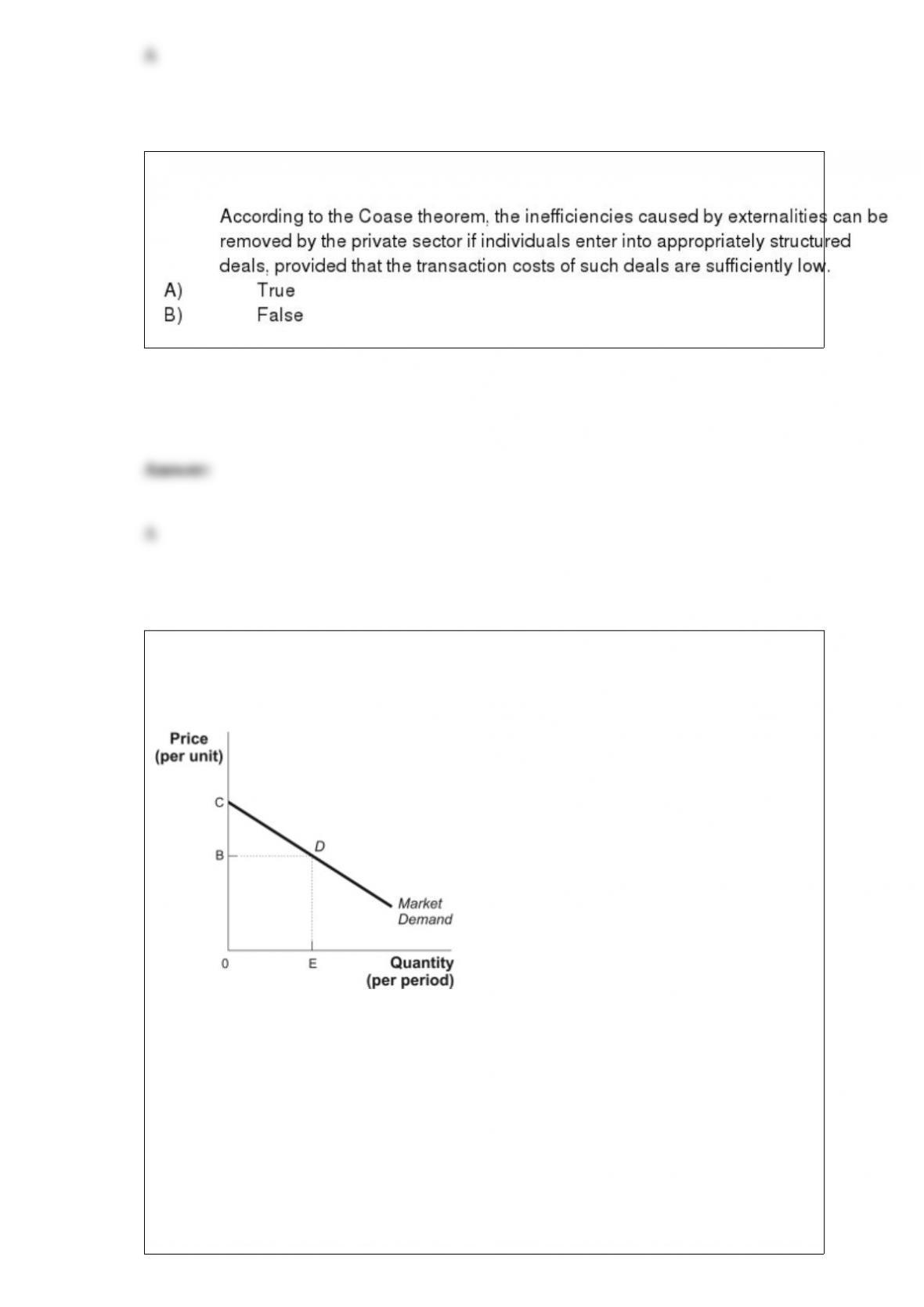
Figure: Market Demand
(Figure: Market Demand) Look at the figure Market Demand. The amount by which the
total benefits to consumers exceed their total expenditure is called _____, and if the
price is B, is depicted by the area _____.
A) producer surplus; BCD
B) consumer surplus; 0CDE
C) consumer surplus; BCD
D) net benefit; 0BDE
If the government sets out to help low-income people by establishing a maximum
amount that can be paid for rent:
A) a price floor has been set, and a shortage of rental units may occur.
B) a price ceiling has been set, and a shortage of rental units may occur.
C) in the long run more rental units will appear.
D) the quality of rental units will be inefficiently high.
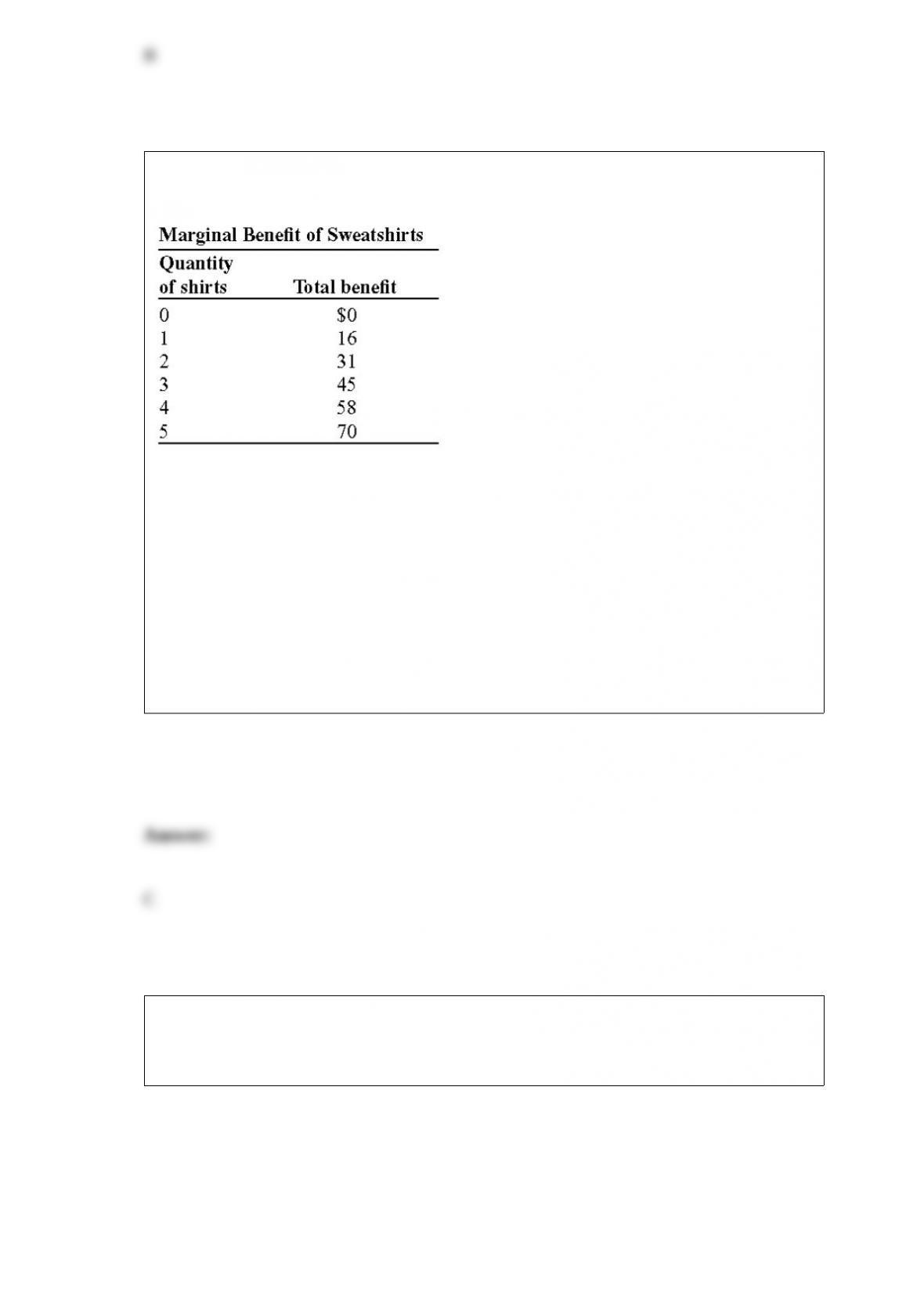
(Table: Marginal Benefit of Sweatshirts) Look at the table Marginal Benefit of
Sweatshirts. The marginal benefit of producing the second sweatshirt is:
A) $31.
B) $16.
C) $15.
D) $14.
Figure: Firms in Monopolistic Competition
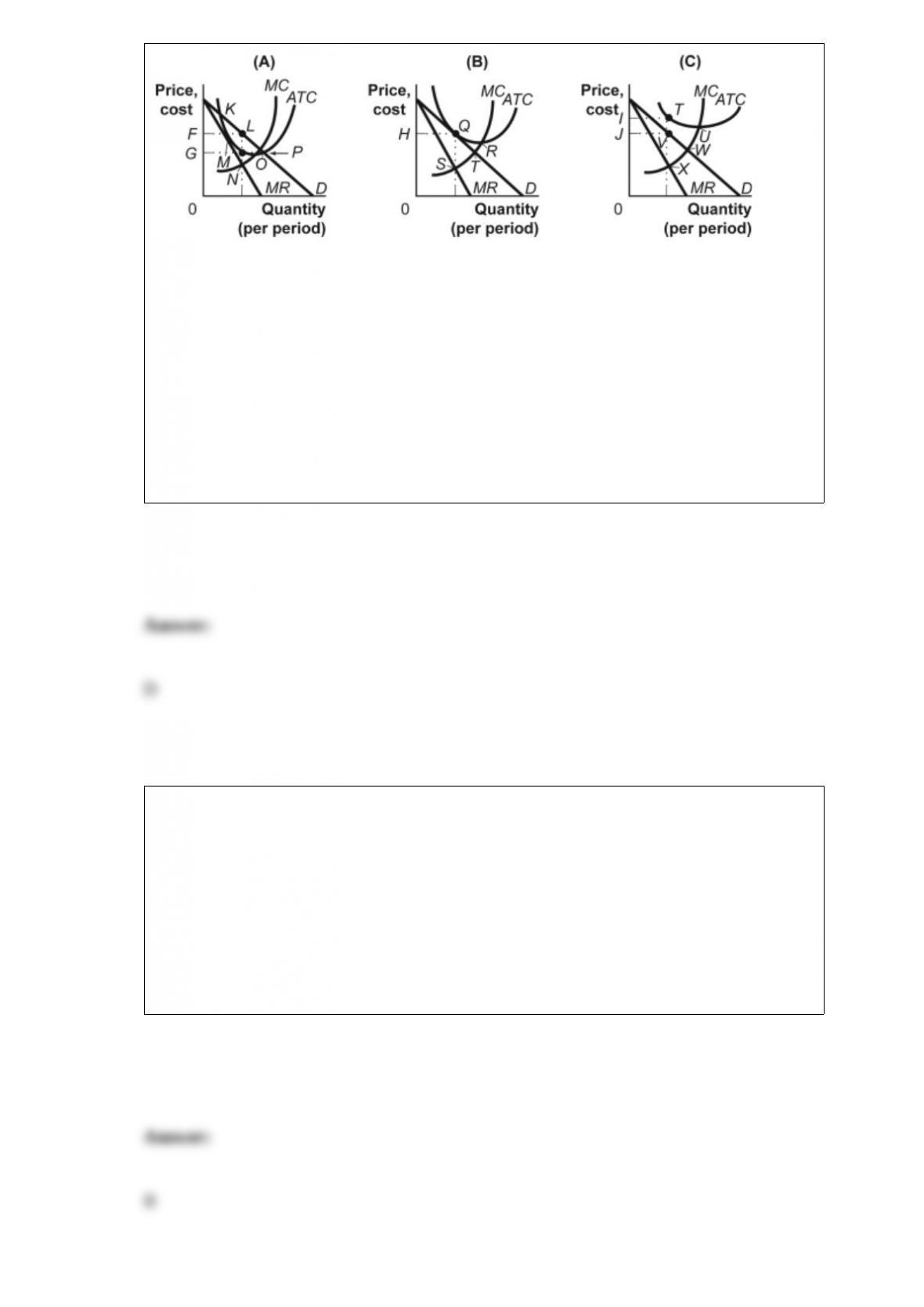
(Figure: Firms in Monopolistic Competition) In panel (C) of the figure Firms in
Monopolistic Competition, economic loss per unit is:
A) XT.
B) UW.
C) VW.
D) VT.
The means-tested U.S. government health insurance program is:
A) Medicare.
B) Medicaid.
C) the Veterans Administration.
D) health savings accounts.
Which of the following is MOST likely to cause firms to exit a perfectly competitive
industry?
A) Consumer tastes and preferences for this product get stronger.
B) A technological advance allows all firms to produce more efficiently.
C) The price of a key variable input falls.
D) Consumer income falls.
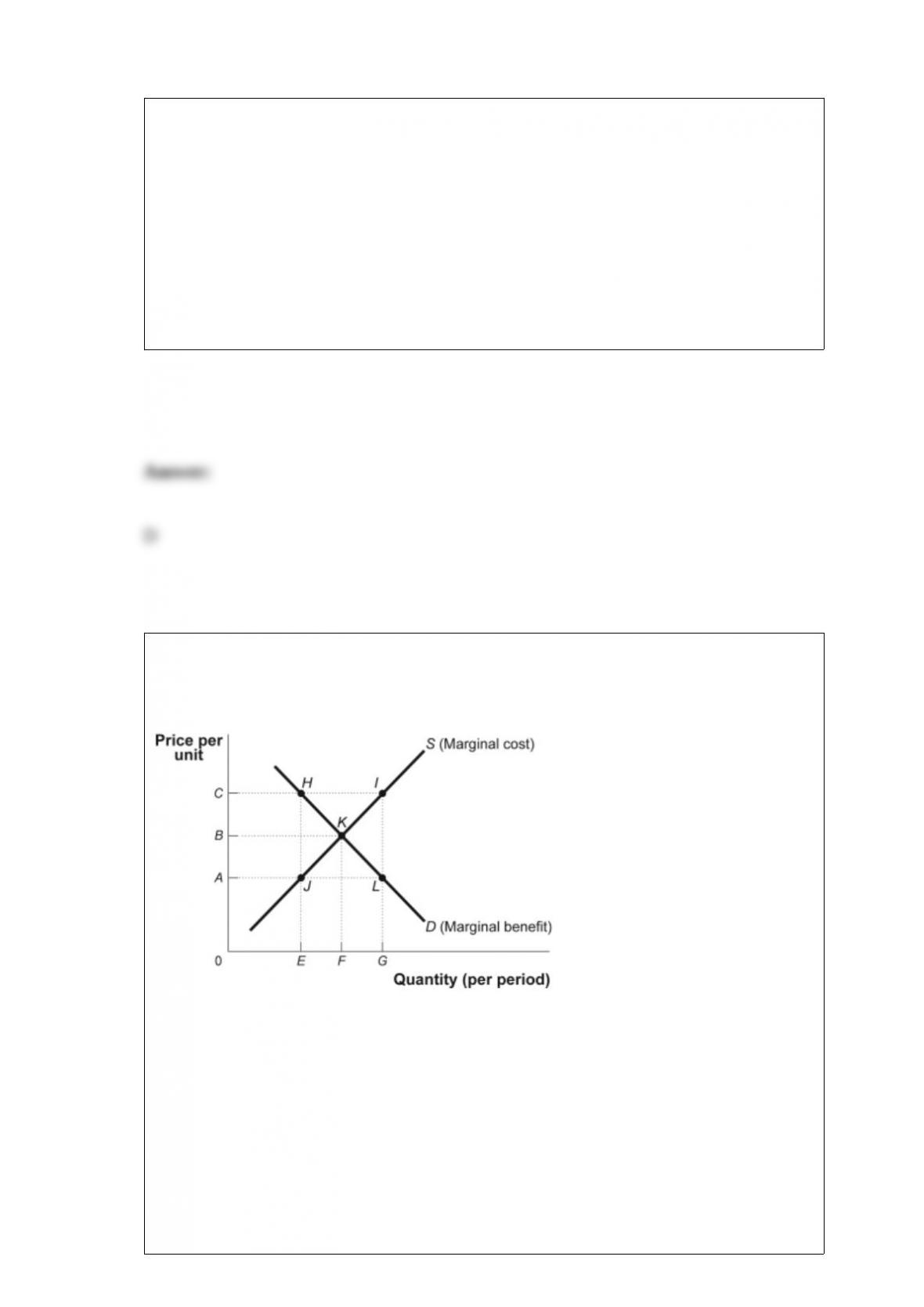
Figure: Market Failure
(Figure: Market Failure) Look at the figure Market Failure. Suppose it represents the
demand for and marginal cost per pound of shrimp in the bay. The additional cost of the
shrimp due to the depletion of the common resource is equal to AC. The efficient output
of shrimp is:
A) 0.
B) E.
C) F.
D) G.
A coal-powered electrical generator that discharges smoke into the air and causes
uncompensated costs and discomfort to residents of a town has a(n):
A) quasi-public good.
B) external cost.
C) external benefit.
D) specific tax.
(Table: Marginal Analysis of Sweatshirt Production II) Look at the table Marginal
Analysis of Sweatshirt Production II. The profit at the optimal quantity of sweatshirts
is:
A) $15.
B) $16.
C) $48.
D) $80.
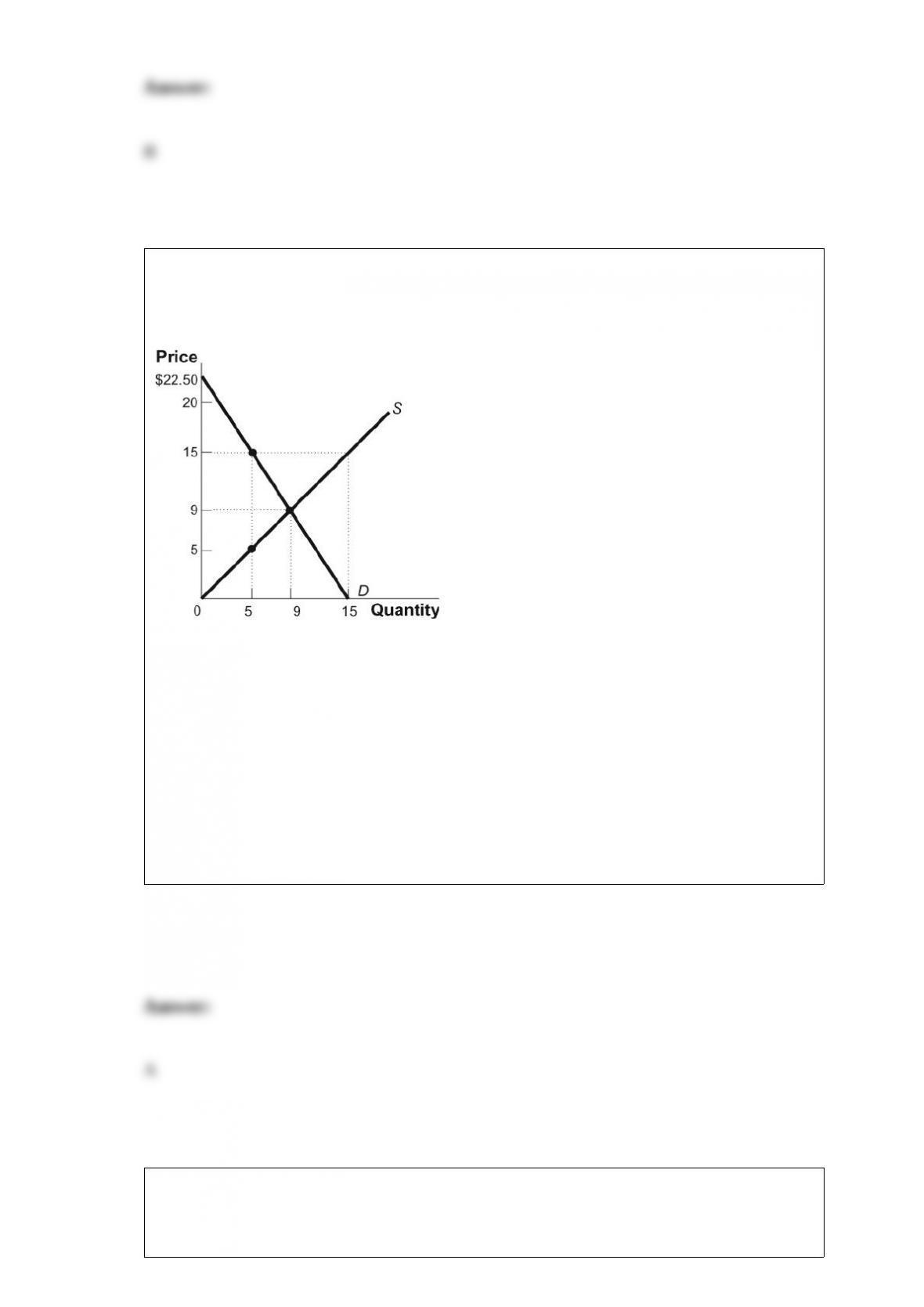
Figure: Market I
(Figure: Market I) Look at the figure Market I. A surplus of the good will result if the
price is:
A) $15.
B) $9.
C) $6.
D) $0.
Taxation according to the ability-to-pay principle is best illustrated in the United States
by:

A) sales taxes.
B) income taxes.
C) excise taxes.
D) user fees.
A business produces 10 pairs of eyeglasses. It incurs $30 in average variable cost and
$5 in average fixed cost. The average total cost of producing 10 pairs of eyeglasses is:
A) $30.
B) $35.
C) $50.
D) $300.
Figure: Guns and Butter
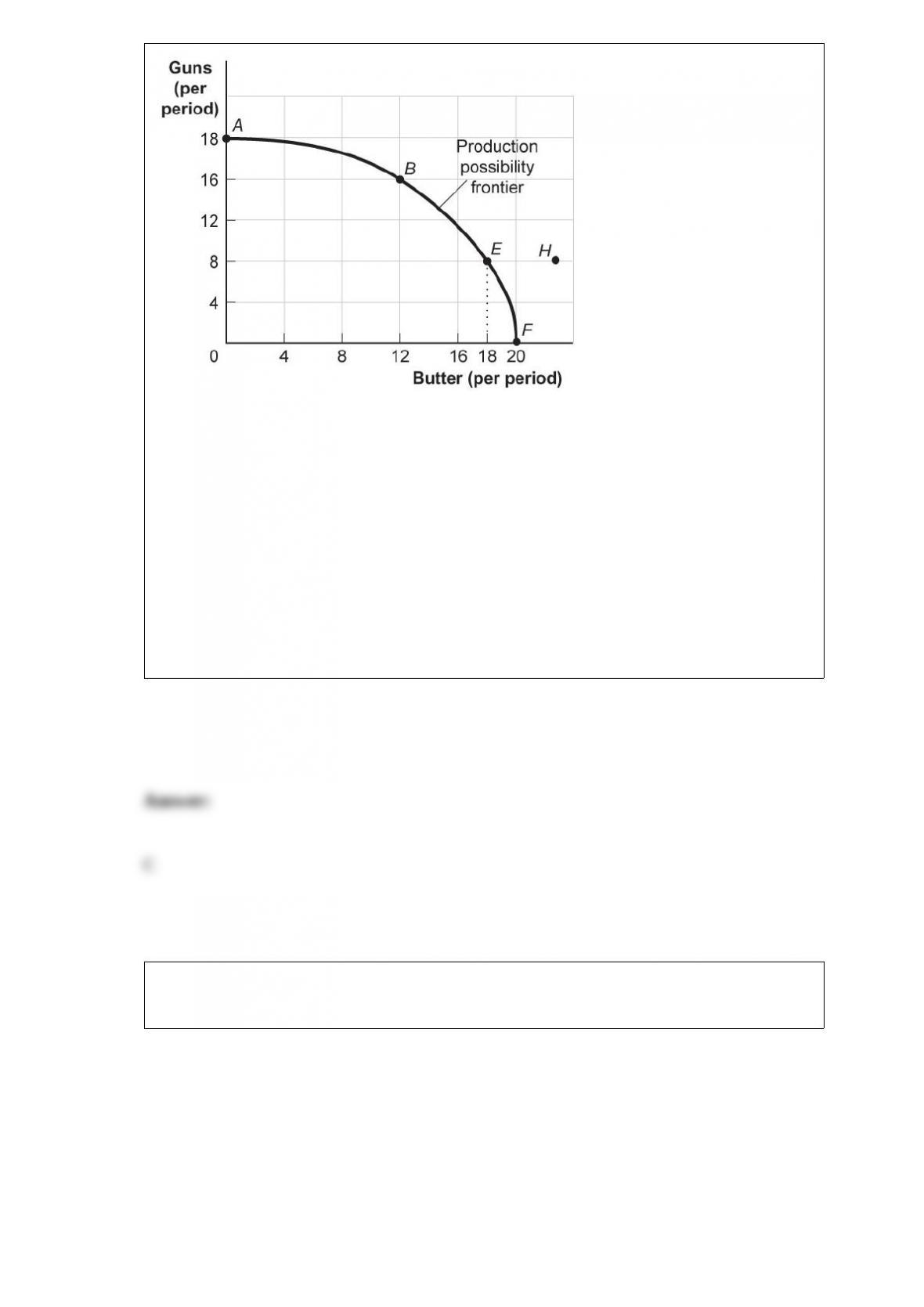
(Figure: Guns and Butter) Look at the figure Guns and Butter. If the economy is
operating at point B, producing 16 guns and 12 pounds of butter per period, a decision
to move to point E and produce 18 pounds of butter:
A) indicates that you can have more butter and guns simultaneously.
B) makes it clear that this economy has decreasing opportunity costs.
C) necessitates a loss of eight guns per period.
D) necessitates a loss of four guns per period.
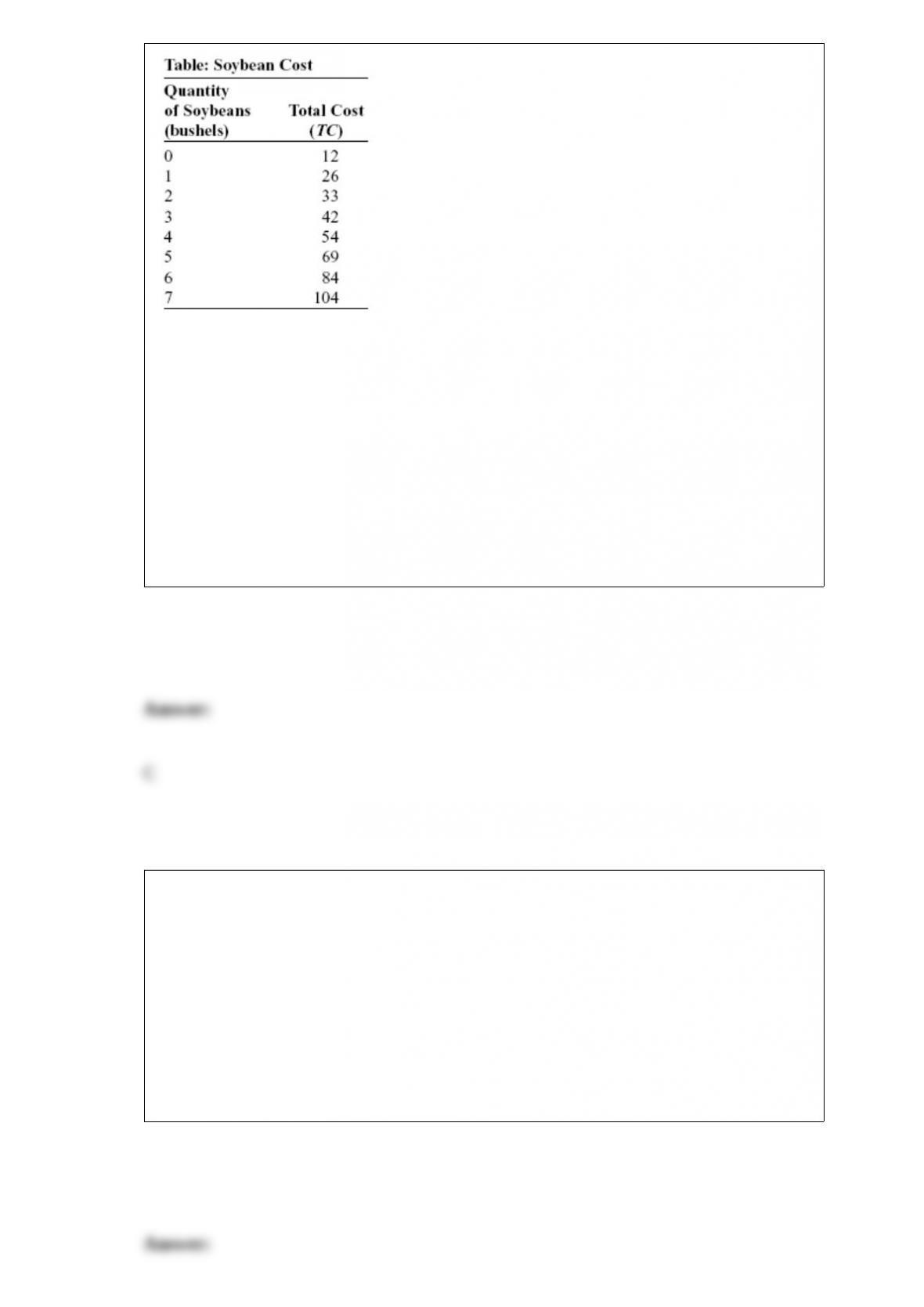
(Table: Soybean Cost) Look at the table Soybean Cost. If the market price of a bushel
of soybeans is $15, what will be the farmer’s short-run maximum profit?
A) $75
B) $69
C) $6
D) $5
For the Tampa Bay Rays baseball team, the value of the marginal product curve is the
team’s labor _____ curve. This means the marginal product curve has a _____ slope.
A) demand; positive
B) supply; positive
C) demand; negative
D) supply; negative

According to the profit-maximizing principle of marginal analysis, if the marginal
benefit is _____ the marginal cost, _____.
A) more than; an activity should be reduced
B) less than; an activity should be reduced
C) equal to; an activity should be reduced
D) more than; net benefit is maximized
A tax that takes a _____ percentage of income as income rises is _____.
A) higher; proportional
B) lower; an ability tax
C) higher; progressive
D) lower; a marginal tax
If steak and potatoes are complements, when the price of steak goes up, the demand
curve for potatoes:
A) shifts to the right.
B) shifts to the left.
C) stays the same.
D) shifts to the right and then moves back.