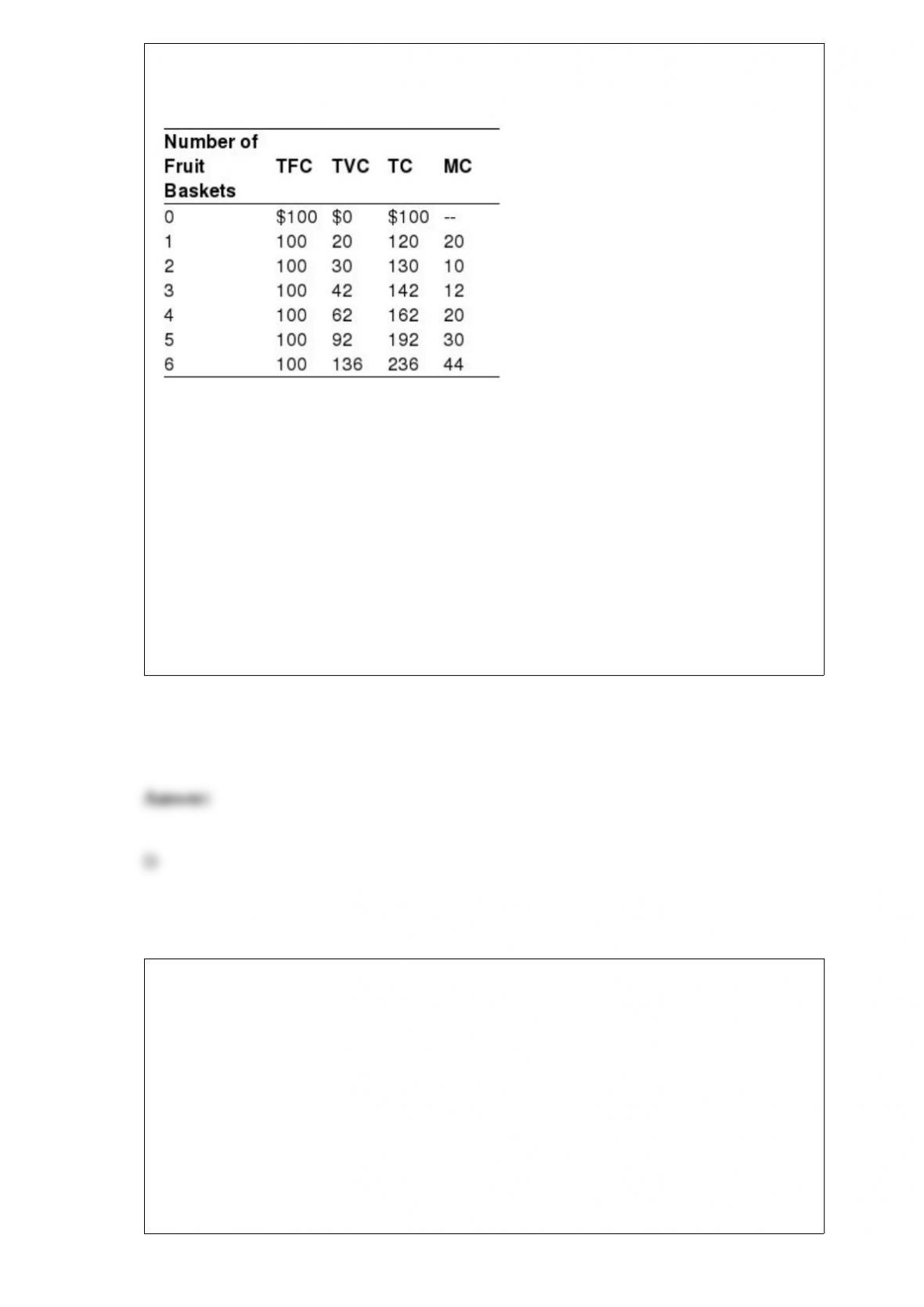
Table 8.5
Refer to Table 8.5. Assume that Polynesian Fruit sells fruit baskets in a perfectly
competitive market. The market price of a fruit basket is $44. To maximize profits,
Polynesian Fruit should sell ________ fruit baskets and their profit is ________.
A) three; $10
B) four; $14
C) five; $28
D) six; $28
The owner of a local pretzel cart has estimated that if he lowers the price of pretzels
from $4.00 to $3.00, he will increase sales from 800 to 1,000 pretzels per day. Using the
midpoint formula, the demand for pretzels is
A) elastic.
B) inelastic.
C) unit elastic.
D) perfectly elastic.
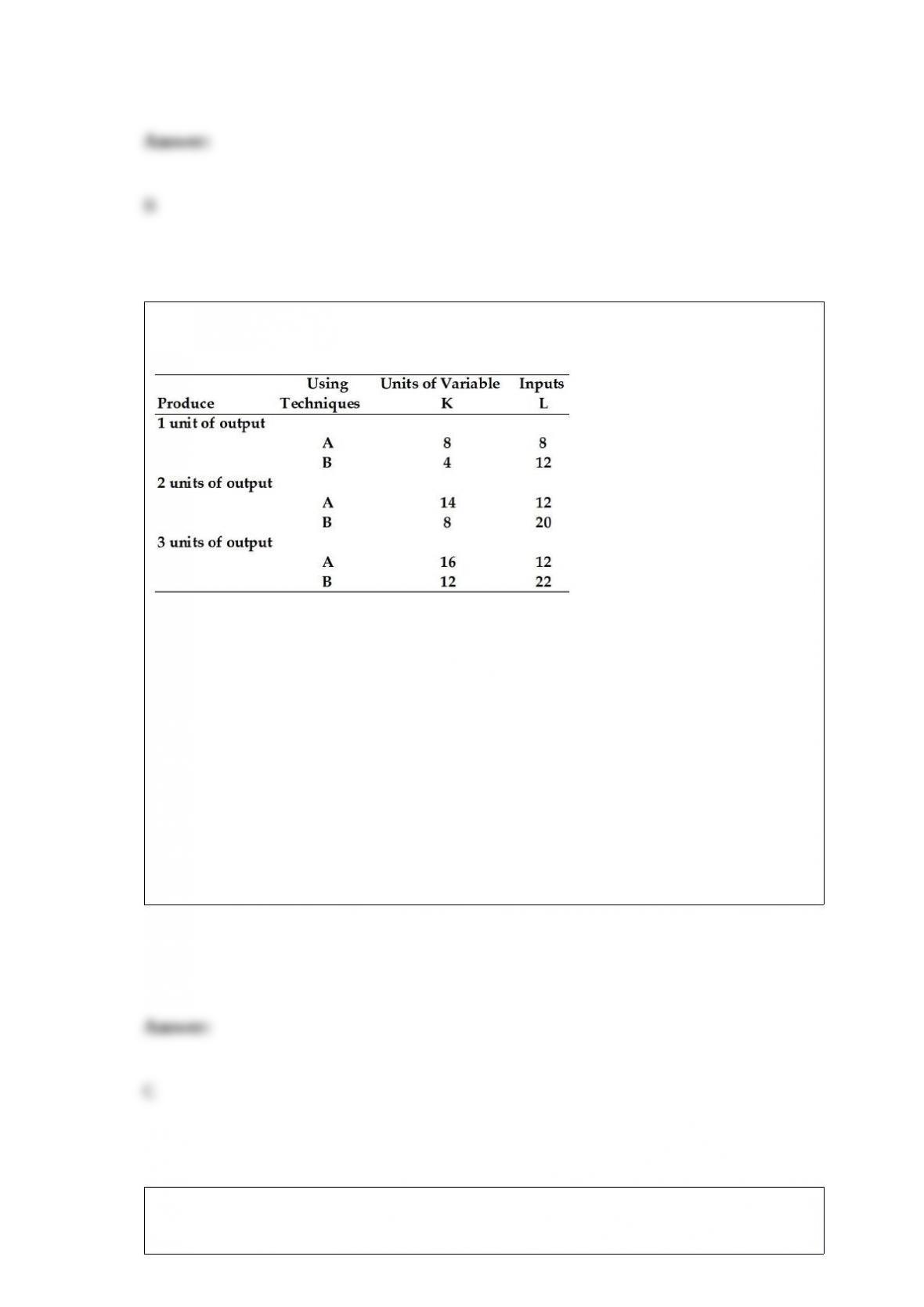
Table 8.1
Refer to Table 8.1. Assuming the price of labor (L) is $5 per unit and the price of capital
(K) is $10 per unit, which of the following statements is true?
A) The firm will use production technique A to produce all three units of output.
B) The firm will use production technique B to produce all three units of output.
C) The firm will use production technique B to produce the first two units of output and
production technique A to produce the third unit of output.
D) The firm will use production technique A to produce the first unit and production
technique B to produce the second and third units of output.
All of the following statements are true EXCEPT:

A) The total variable cost curve increases as output increases.
B) The total variable cost curve shows the variable costs of production given current
factor prices.
C) The total variable cost curve starts at the origin.
D) The total variable cost curve is a horizontal line.
A profit-maximizing monopolist will ________ where marginal revenue is equal to
marginal cost.
A) produce output
B) charge the selling price
C) minimize its average total cost
D) All of the above are correct.
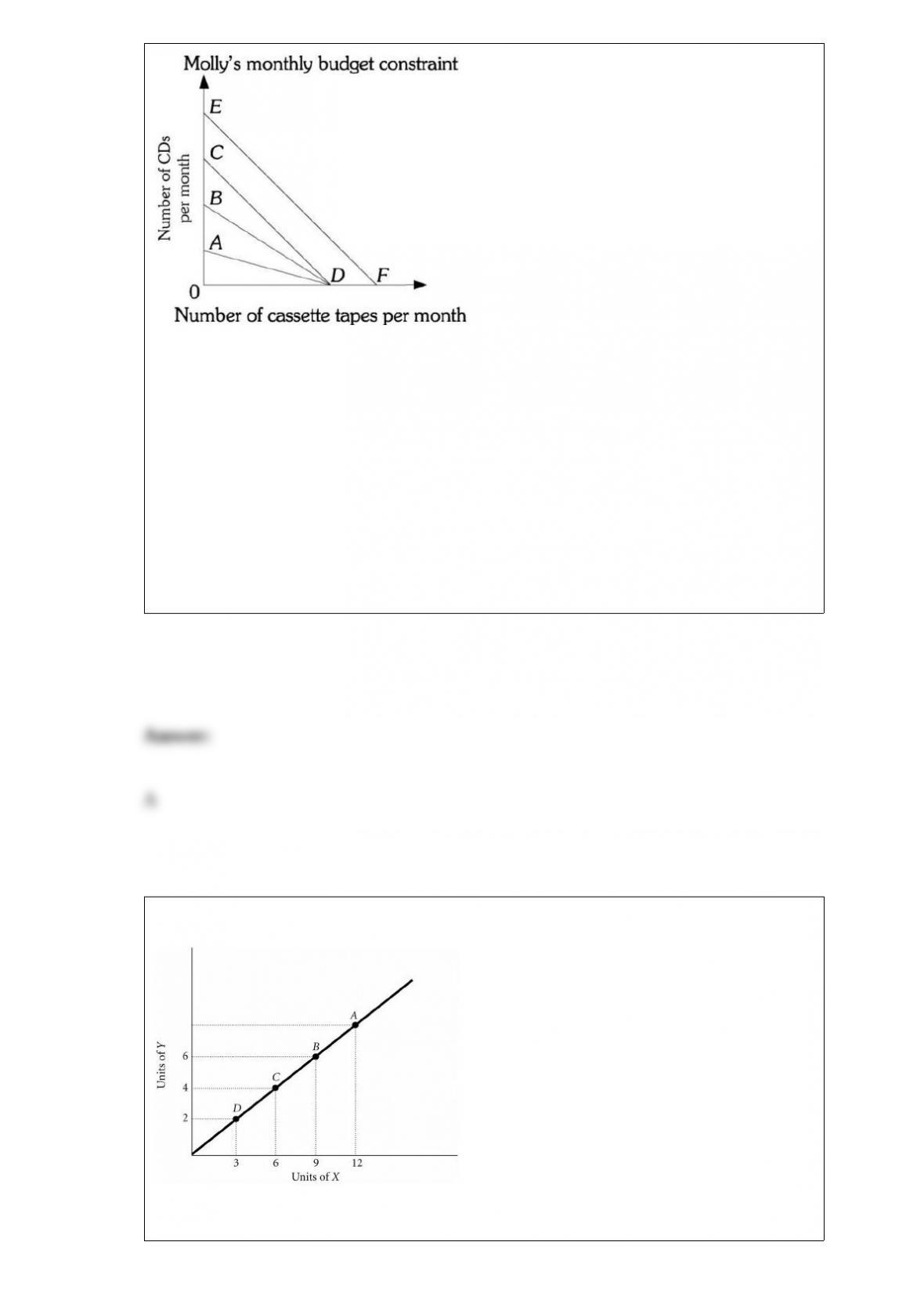
Figure 6.5
Refer to Figure 6.5. Molly’s budget constraint is CD. If the price of CDs increases, her
new budget constraint becomes
A) AD.
B) AO.
C) BE.
D) EF.
Figure 1.3

Refer to Figure 1.3. The slope of the line between Points D and B is
A) 5.
B) 67.
C) -0.67.
D) -1.5.
For a monopolist, price
A) equals marginal revenue at all output levels.
B) is less than marginal revenue.
C) is greater than marginal revenue.
D) can be greater than or less than marginal revenue.
As income becomes more equally distributed, the Lorenz curve ________ and
________.
A) moves further down to the right; the shaded area increases
B) moves further up to the left; the shaded area decreases

C) moves further up to the left, rising above the 45 degree line; the shaded area
increases
D) moves further down to the right; the shaded area decreases
If ________ bargaining to resolve an externality is to result in an efficient outcome, the
initial assignment of rights must be clear to ________ parties.
A) public; only government-sponsored
B) public; at least one
C) private; at least one
D) private; both
The case for advertising includes the idea that
A) it adds to society’s scarce resources.
B) firms spend large sums of money to create meaningless differences among products.
C) it can promote competition.
D) it creates wants that otherwise would not have existed.

Profit-maximizing firms want to maximize the difference between
A) total revenue and marginal cost.
B) total revenue and total cost.
C) marginal revenue and marginal cost.
D) marginal revenue and average cost.
A firm is producing output less than the output associated with the minimum point on
the firm’s short run average variable cost curve. At this level of output, the firm uses its
fixed capital input ________ and its variable labor input ________.
A) efficiently; efficiently
B) efficiently; inefficiently
C) inefficiently; efficiently
D) inefficiently; inefficiently

If an economy’s production possibility frontier is negatively sloped and “bowed
outward” from the origin, then the opportunity cost of producing a good
A) increases as more of that good is produced.
B) decreases as more of that good is produced.
C) remains constant as more of that good is produced.
D) remains constant as less of that good is produced.
Individuals are allowed to deduct a percentage of their expenditures for health care
from their taxable income if these expenditures are above a certain amount. This
reduces the amount that must be paid in taxes. Allowing for these deductions would
________ vertical and horizontal equity of the federal income tax.
A) not change
B) worsen
C) improve
D) Any of the above answers could be correct.
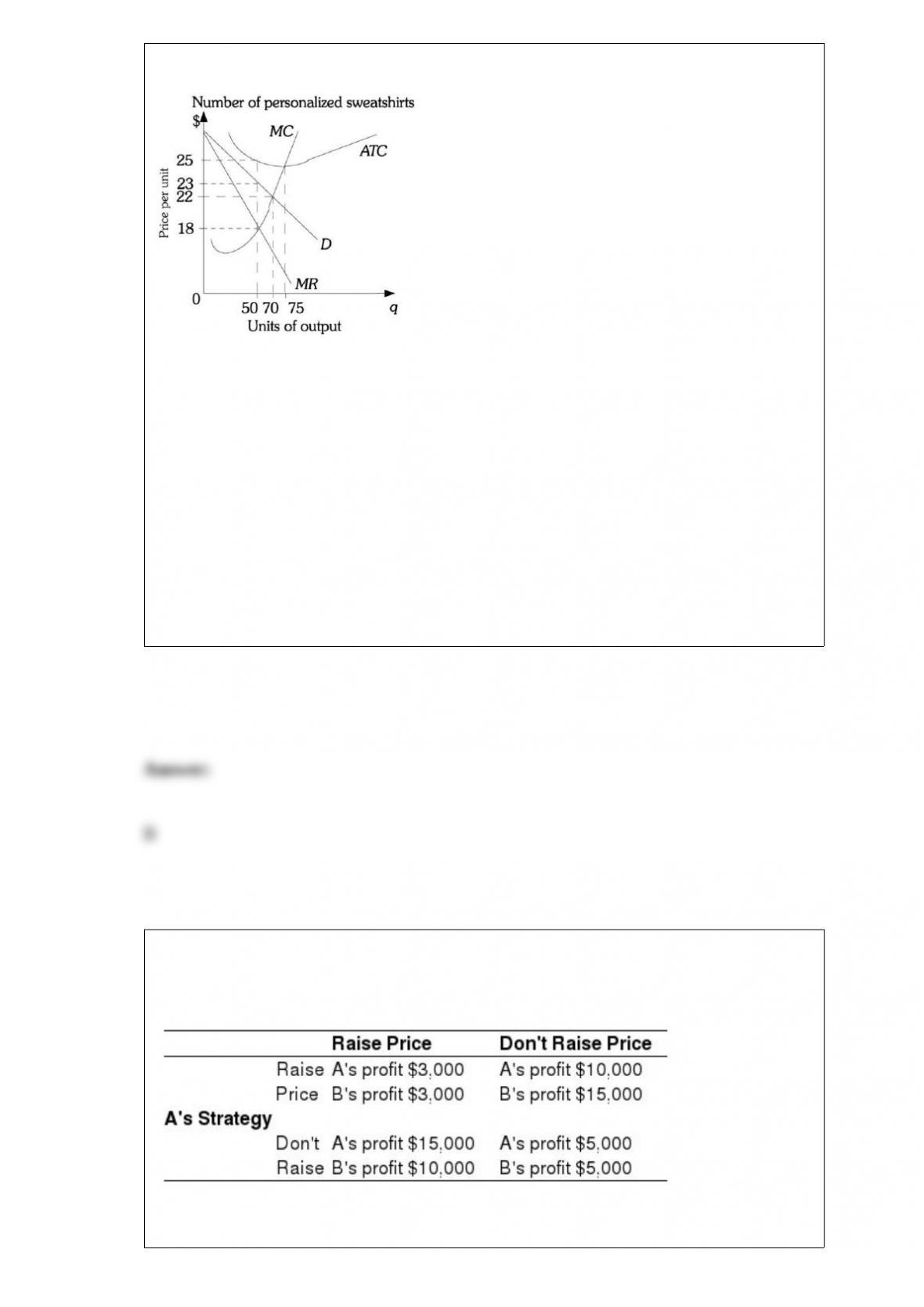
Figure 15.4
Refer to Figure 15.4. Assume The Hand Made Shirt Shop has fixed costs of $150 and is
a monopolistically competitive firm. To maximize profits in the short run, this firm
should produce ________ personalized sweatshirts.
A) 0
B) 50
C) 70
D) 75
Table 14.1
B’s Strategy
Refer to Table 14.1. The Nash equilibrium in the game is ________.

A) (Raise Price, Don’t Raise Price)
B) (Don’t Raise Price, Raise Price)
C) (Don’t Raise Price, Don’t Raise Price)
D) Both A and B are correct.
You are the owner and only employee of a company that writes computer software that
is used by gamblers to collect sports data. Last year you earned a total revenue of
$90,000. Your costs for equipment, rent, and supplies were $60,000. To start this
business you invested an amount of your own capital that could pay you a return of
$40,000 a year.
During the year your economic costs were
A) $40,000.
B) $60,000.
C) $100,000.
D) $130,000.
Building roads, power generators, and irrigation systems are projects that are referred to
as
A) social overhead capital.
B) human capital.
C) physical capital.
D) financial capital.
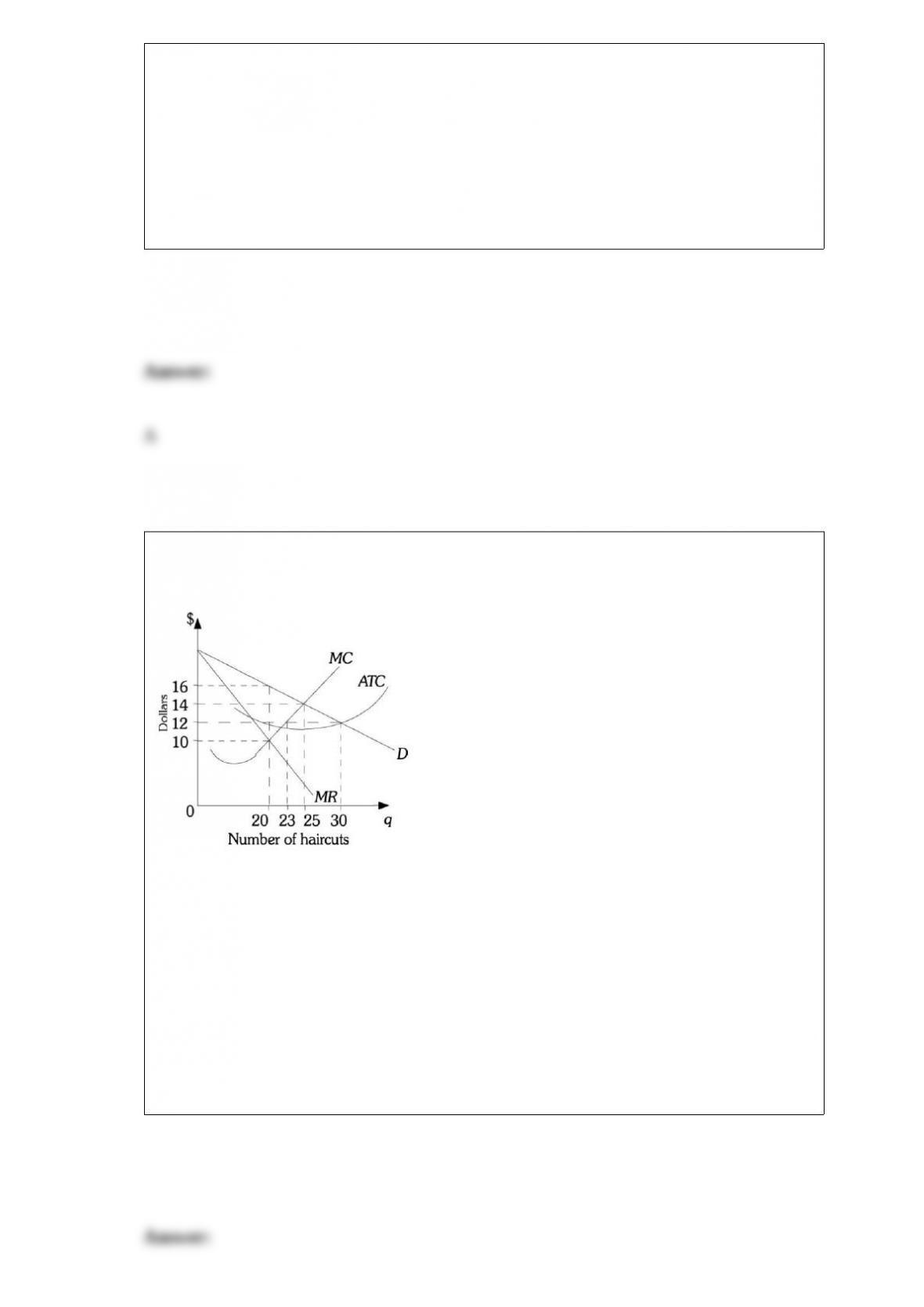
Below are cost curves for Dom’s Barber Shop, a monopolistically competitive firm.
Figure 15.1
Refer to Figure 15.1. If Dom’s Barber Shop is maximizing profit, it is earning a profit of
A) $0.
B) $80.
C) $120.
D) $320.
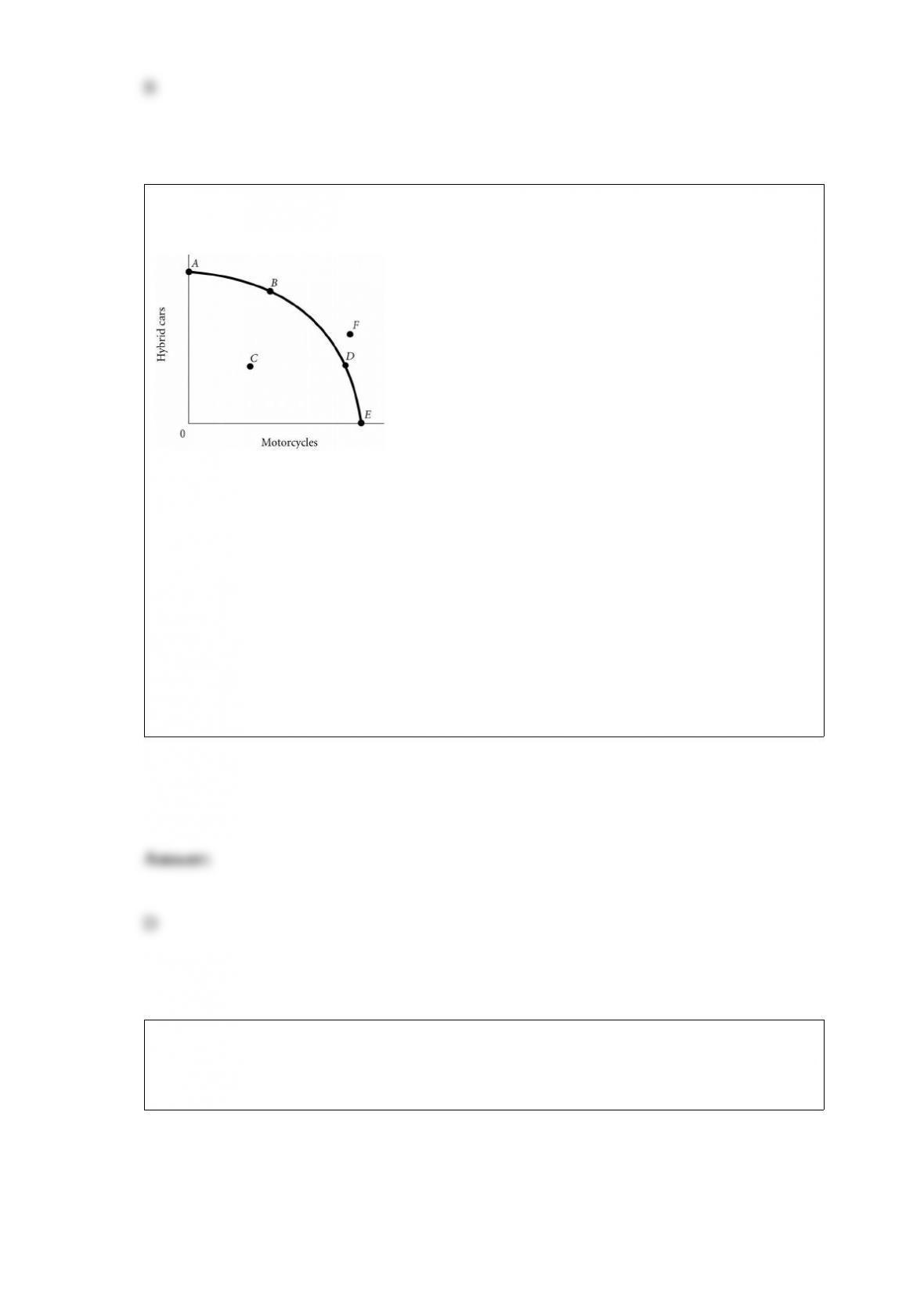
Figure 2.4
According to Figure 2.4, an increase in unemployment may be represented by the
movement from
A) B to A.
B) B to D.
C) C to D.
D) A to C.
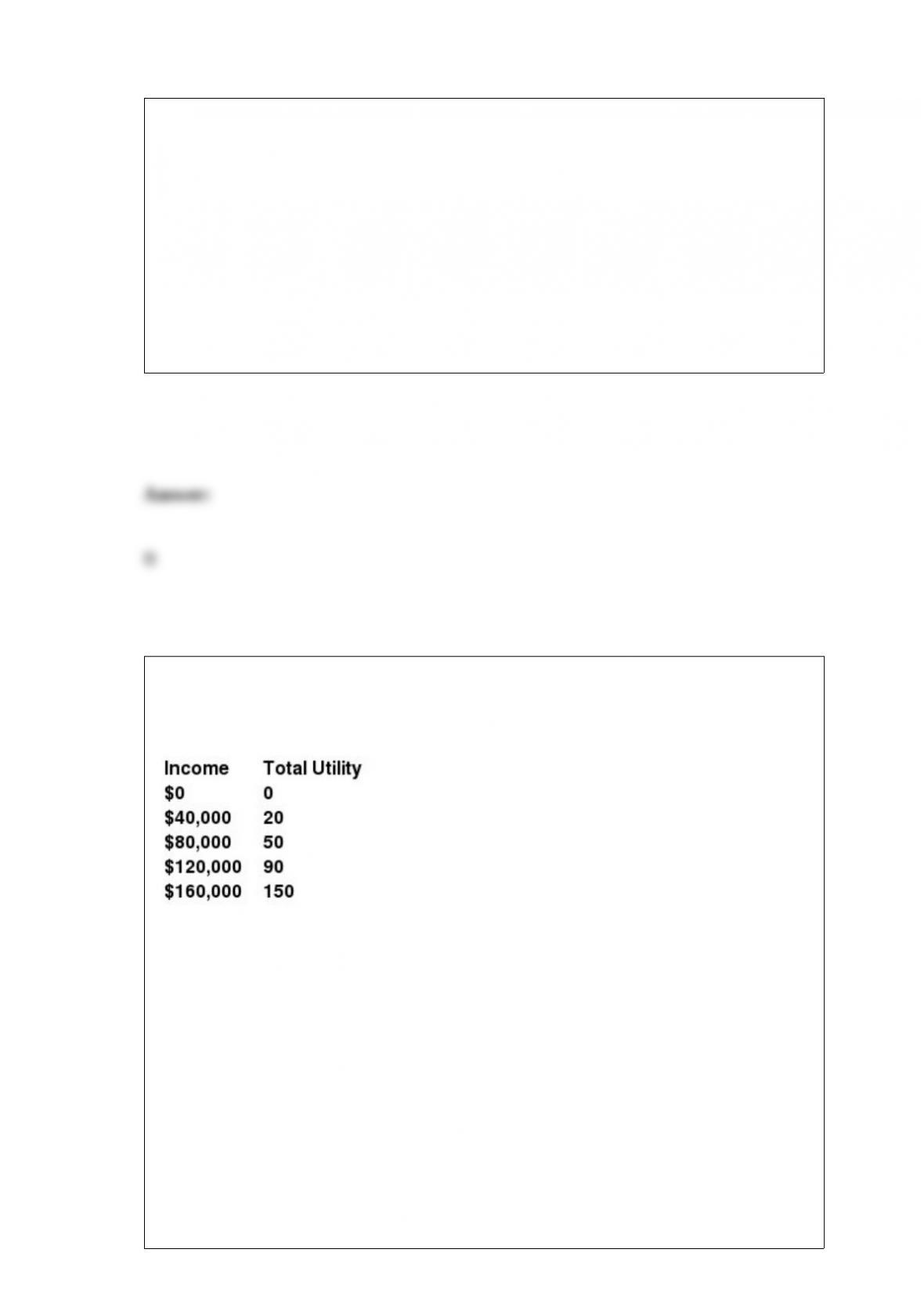
The table shows the relationship between income and utility for Isabel.
Table 17.3
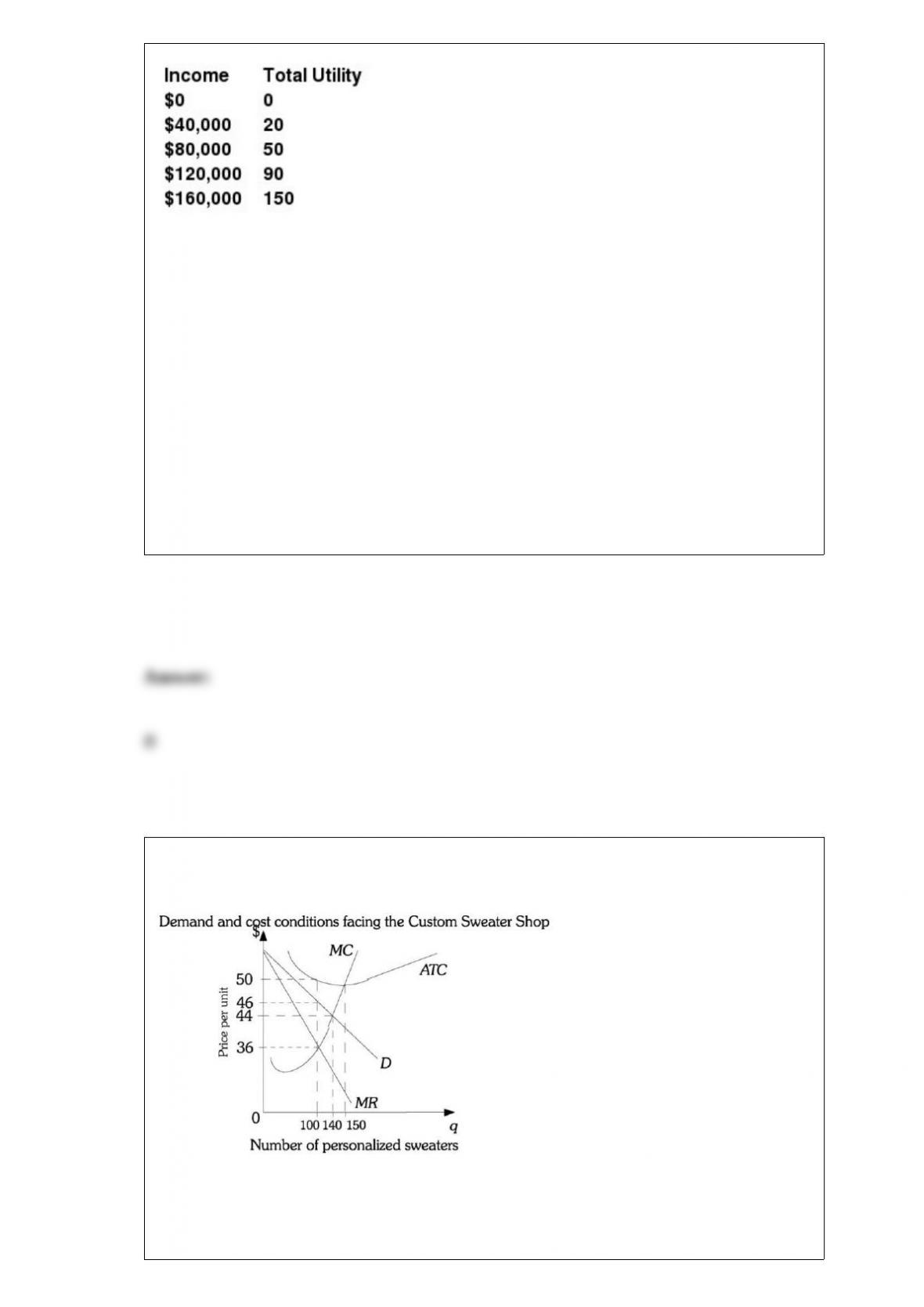
Refer to Table 17.3. Suppose Isabel has a 25% chance of becoming disabled in any
given year. If she does become disabled, she will earn $0. If Isabel does not become
disabled, she will earn her usual salary of $160,000. Isabel has the opportunity to
purchase disability insurance for $40,000 which will pay her her full salary in the event
she becomes disabled. Isabel’s utility with the policy is
A) 5 and her expected utility without the policy is 90.
B) 90 and her expected utility without the policy is 112.5.
C) 90 and her expected utility without the policy is 37.5.
D) 5 and her expected utility without the policy is 75.
Figure 15.5
Refer to Figure 15.5. Assume the Custom Sweater Shop has fixed costs of $500 and is a
monopolistically competitive firm. To maximize profits in the short run, this firm

should produce ________ personalized sweaters.
A) 0
B) 100
C) 140
D) 150
The ________ hypothesis states that poor countries are unable to save and invest
enough to accumulate capital stock that would help them grow.
A) vicious-circle-of-poverty
B) equitable investment
C) no-country-left-behind
D) global-redevelopment
Table 3.2
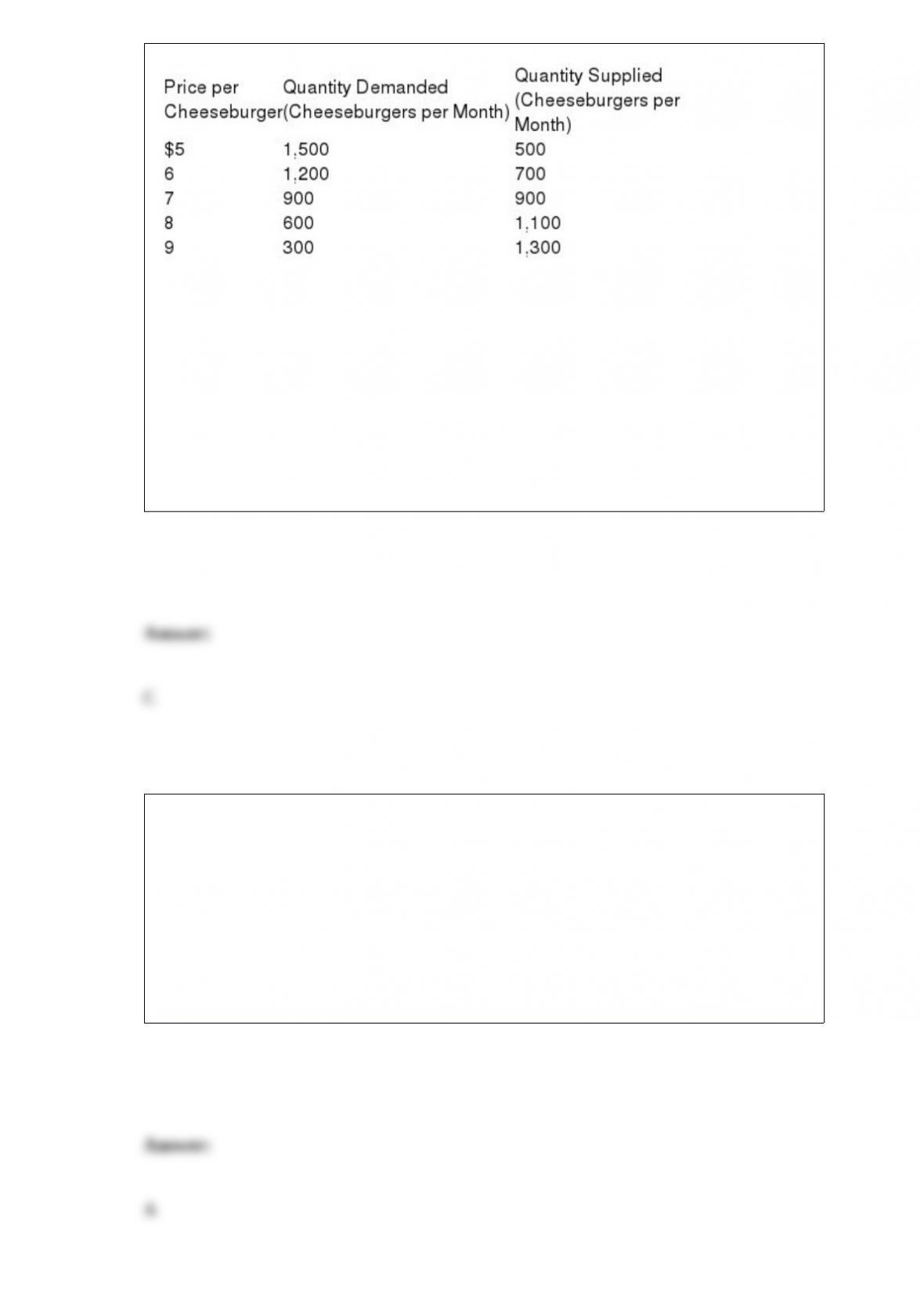
Refer to Table 3.2. If the price per cheeseburger is $6, the price will
A) remain constant because the market is in equilibrium.
B) decrease because there is an excess demand in the market.
C) increase because there is an excess demand in the market.
D) decrease because there is an excess supply in the market.
In the short run, a firm
A) has at least one fixed factor of production.
B) can enter an industry where positive profits are being earned.
C) can exit an industry, and all of its factors of production are variable.
D) both B and C are correct.
Bill sells Mary a worthless coin that Bill deviously told Mary “belonged to an ancient
Persian king and is of enormous value to coin collectors.” Economists would call this
an
A) efficient exchange, as any type of voluntary exchange promotes efficiency.
B) inefficient exchange, as at least one party used false market information.
C) efficient exchange, assuming Bill was not intentionally trying to trick Mary.
D) inefficient exchange because there were externalities involved.
The table shows the relationship between income and utility for Isabel.
Table 17.3
Refer to Table 17.3. Suppose Isabel has a 25% chance of becoming disabled in any
given year. If she does become disabled, she will earn $0. If Isabel does not become
disabled, she will earn her usual salary of $160,000. Isabel has the opportunity to
purchase disability insurance for $40,000 which will pay her her full salary in the event
she becomes disabled. Would Isabel purchase such a policy?
A) yes
B) no
C) maybe
D) indeterminate from the given information
The ________ helps illustrate the competitive forces that determine the level of
competition and profitability in an industry.
A) Cournot Model
B) concentration ratio
C) Five Forces Model
D) Contestable Market Model
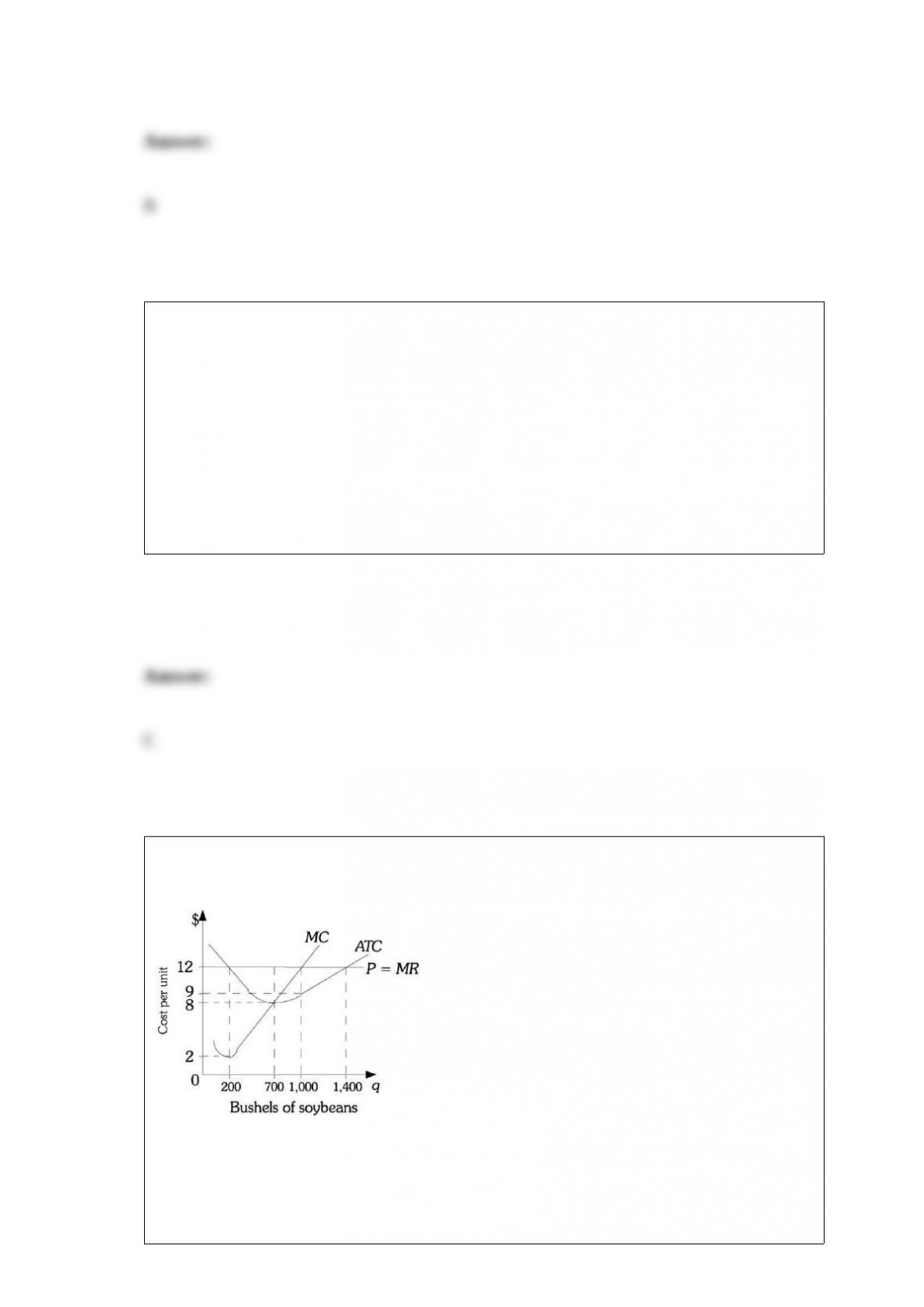
Figure 8.8
Refer to Figure 8.8. What is the total cost of producing the profit maximizing level of
output?

A) $9
B) $1,000
C) $5,600
D) $9,000
The Sweet Success Bakery sells 400 cakes at a price of $10 per cake. Its total economic
costs for producing 400 cakes are $500. The Sweet Success Bakery’s economic profits
are
A) $100.
B) $3,500.
C) $4,500.
D) indeterminate from this information.
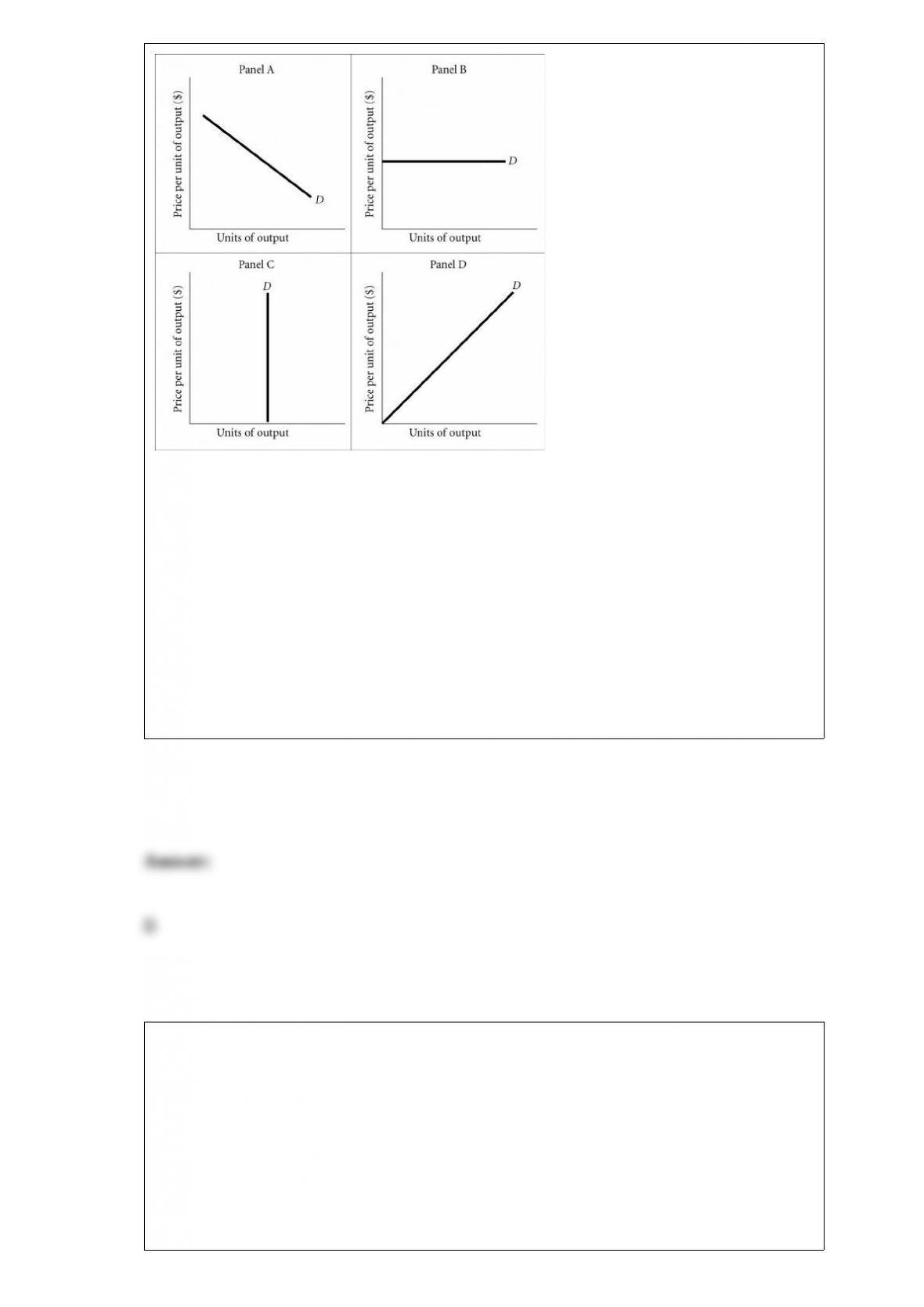
Figure 13.1
Refer to Figure 13.1. Of the following choices, Panel A best represents the demand
curve for
A) an individual producer of soybeans.
B) Dell computers.
C) insulin.
D) all of the above
The four largest firms account for approximately 95% of U.S. cigarette sales. The U.S.
cigarette industry would be best classified as a(n)
A) perfectly competitive industry.
B) monopolistically competitive industry.
C) oligopoly.

D) monopoly.