1) In economics, a difference in access to relevant knowledge is called a(n)
a.relevancy frontier.
b.knowledge gap.
c.information asymmetry.
d.information equilibrium.
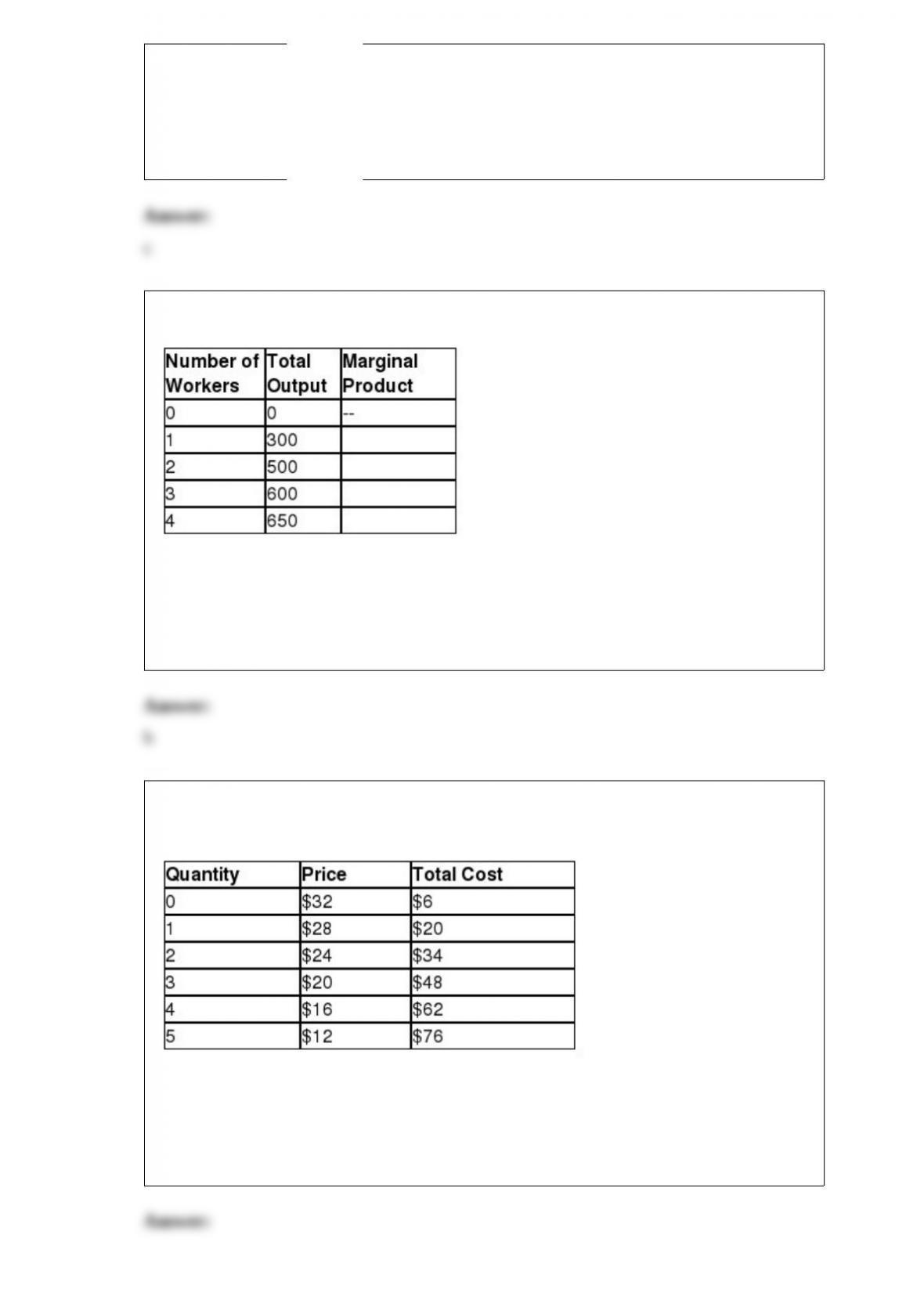
2) Table 13-2
What is the marginal product of the second worker?
a.300 units
b.200 units
c.100 units
d.50 units
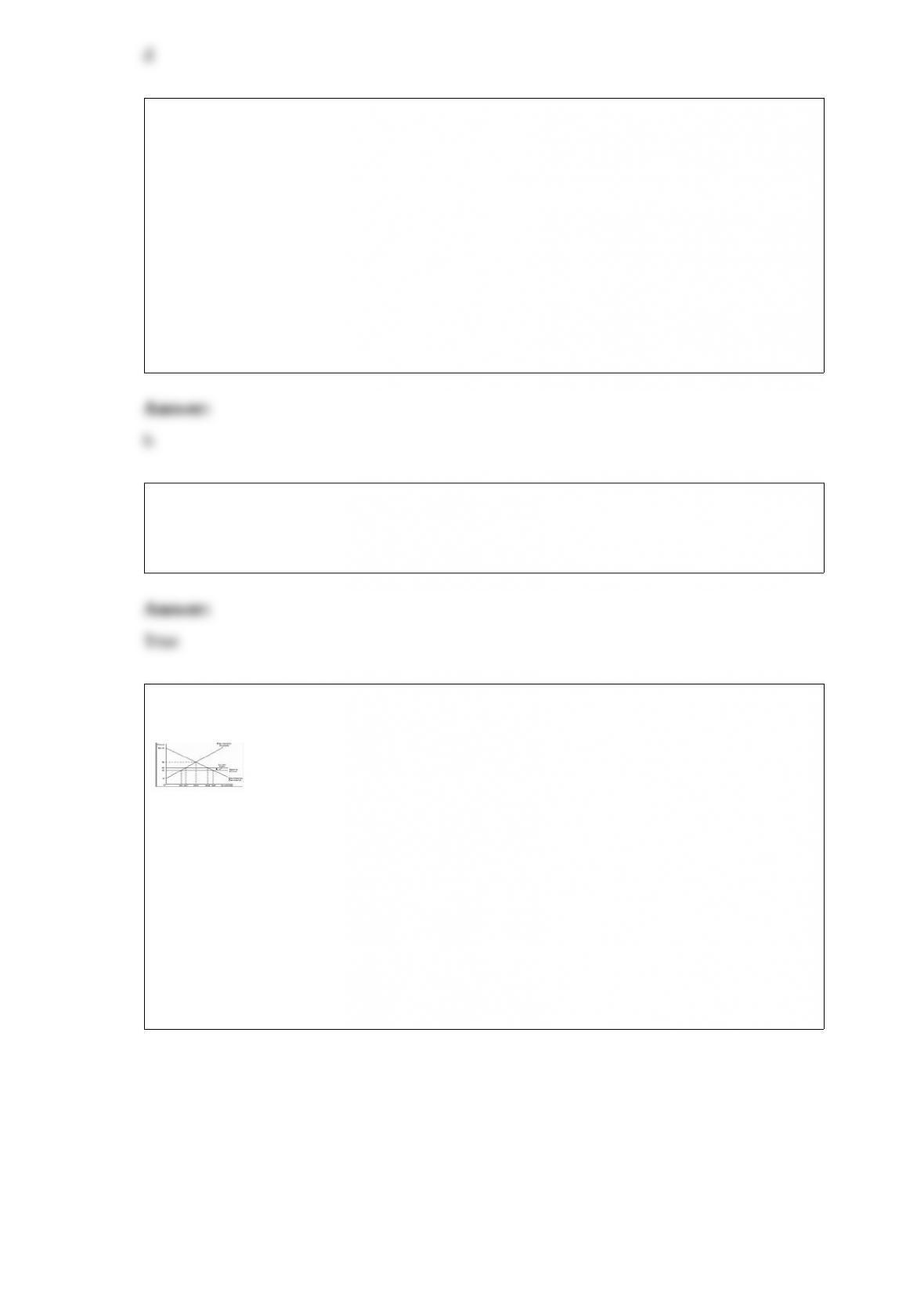
3) Table 15-9
Consider the following demand and cost information for a monopoly.
What is the monopolist’s average total cost of production at the profitmaximizing price?
a. $12
b. $14
c. $16
d. $17
4) In discussing discrimination and the wage differences that exist between men and
women and between blacks and whites, it has been said that “the disease is political
even if the symptom is economic.” What does this mean?
a.Wage differences persist because the political system has failed to enact laws to
equalize wages among all groups.
b.Wage differences exist because of past discrimination on the part of political bodies
such as city councils and school boards.
c.Wage differences exist because of the differences in the political views of the different
groups.
d.Wage differences exist because the political system is biased against paying
compensating differentials.
5) A decrease in income will shift the demand curve for an inferior good to the right.
a.True
b.False
6) Using the graph, assume that the government imposes a $1 tariff on hammers.
Answer the following questions given this information.
a.What is the domestic price and quantity demanded of hammers after the tariff is
imposed?
b.What is the quantity of hammers imported before the tariff?
c.What is the quantity of hammers imported after the tariff?
d.What would be the amount of consumer surplus before the tariff?
e.What would be the amount of consumer surplus after the tariff?
f.What would be the amount of producer surplus before the tariff?
g.What would be the amount of producer surplus after the tariff?
h.What would be the amount of government revenue because of the tariff?
i.What would be the total amount of deadweight loss due to the tariff?
7) Sue earns income of $80,000 per year. Her average tax rate is 40 percent. Sue paid
$4,500 in taxes on the first $30,000 she earned. What was the marginal tax rate on the
rest of her income?
a.15 percent
b.32 percent
c.40 percent
d.55 percent
8) Once the supply curve for a product or service is drawn, it
a.remains stable over time.
b.can shift either rightward or leftward.
c.is possible to move along the curve, but the curve will not shift.
d.tends to become steeper over time.
9) Figure 15-9
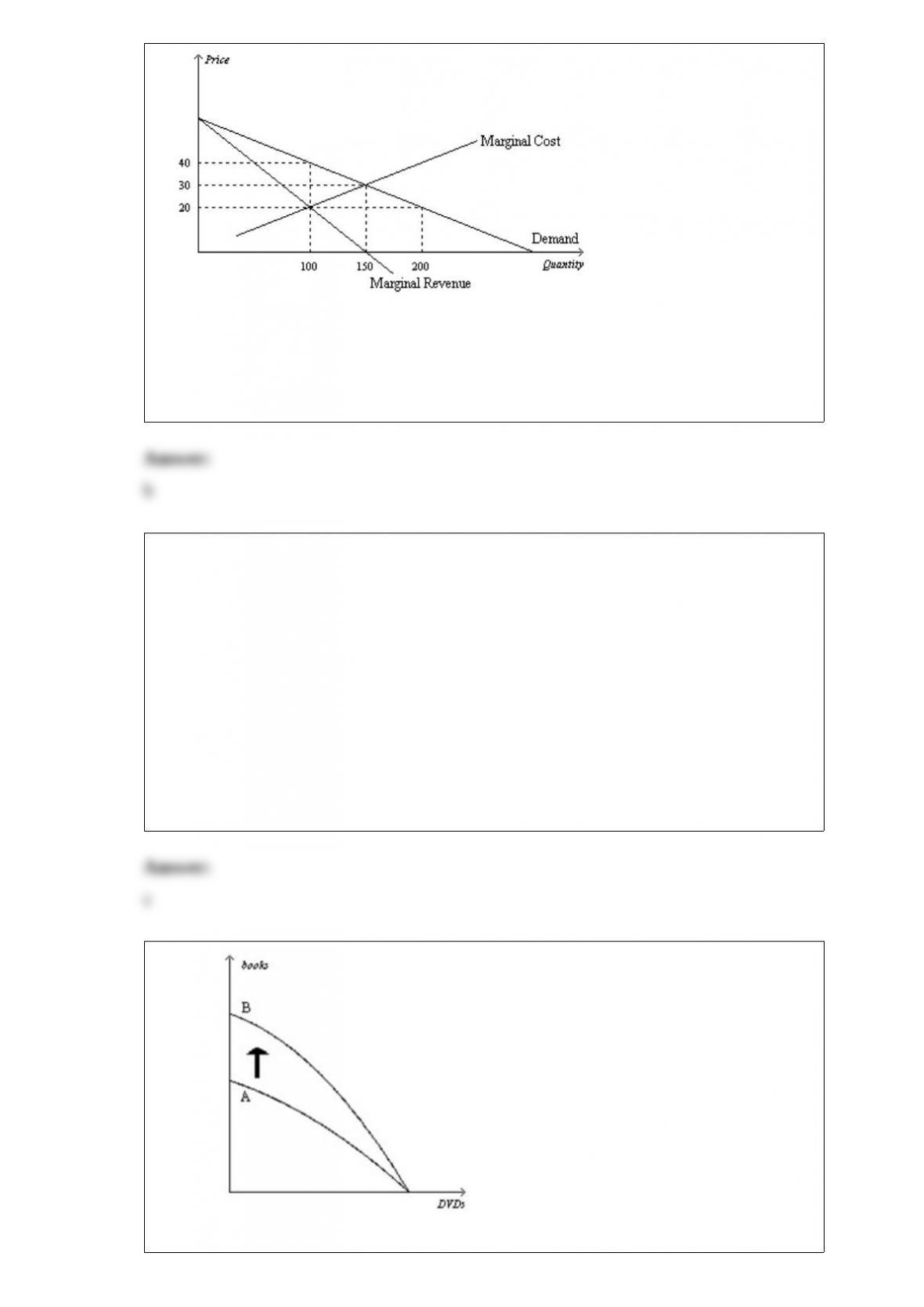
To maximize its profit, a monopolist would choose which of the following outcomes?
a.100 units of output and a price of $20 per unit
b.100 units of output and a price of $40 per unit
c.150 units of output and a price of $30 per unit
d.200 units of output and a price of $40 per unit
10) Scenario 19-3
In the small town of Hamilton, Montana, there is a local hardware store called Eddy’s
Hardware. There are only two types of workers who apply for jobs at Eddy’s Hardware:
cowboys and farm boys. Local politicians have received numerous complaints that
Eddy’s Hardware is practicing wage discrimination against farm boys. Eddy’s Hardware
denies the complaint and says the store is only trying to maximize profit.
Refer to Scenario 19-3. Which of the following statements would weaken the
discrimination complaint against Eddy’s Hardware?
a.Farm boys are more productive than cowboys.
b.Farm boys work longer hours than cowboys and their effort is greater.
c.Farm boys are generally less educated than cowboys in the field of hardware.
d.All of the above would weaken the discrimination complaint.
11)
The shift of the production possibilities frontier from A to B illustrates
a.simultaneous technological advances in the book and DVD industries.
b.a reallocation of resources away from the production of DVDs and toward the
production of books.
c.economic growth.
d.All of the above are correct.
12) Ken and Traci are two woodworkers who both make tables and chairs. In one
month, Ken can make 3 tables or 18 chairs, whereas Traci can make 8 tables or 24
chairs. Given this, we know that the opportunity cost of 1 table is
a.1/6 chair for Ken and 1/3 chair for Traci.
b.1/6 chair for Ken and 3 chairs for Traci.
c.6 chairs for Ken and 1/3 chair for Traci.
d.6 chairs for Ken and 3 chairs for Traci.
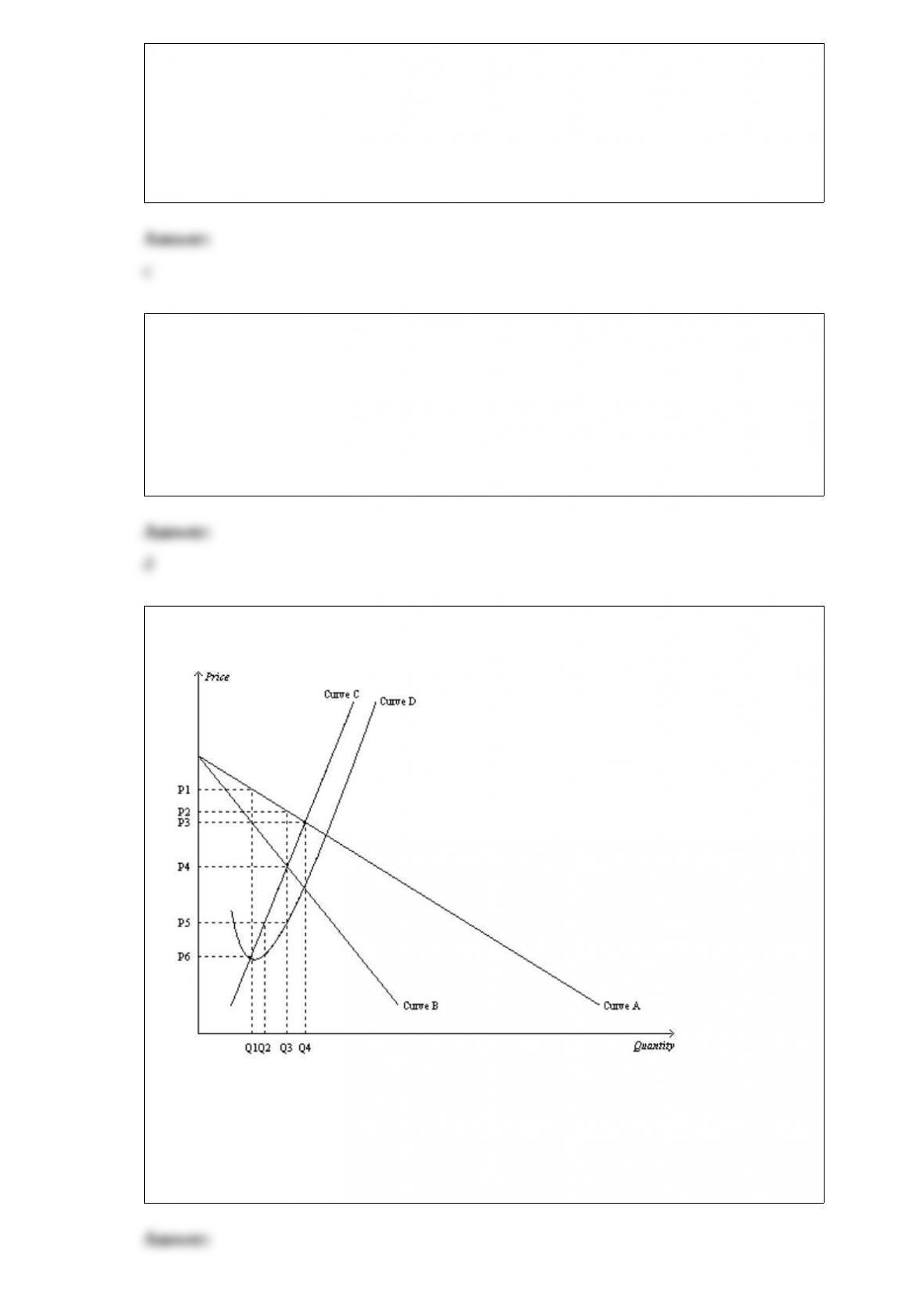
13) Figure 15-5
A profit-maximizing monopoly’s profit is equal to
a.P2 x Q3.
b.(P2-P4) x Q3.
c.(P2-P5) x Q3.
d.(P1-P6) x Q1.
14) The patent system gives firms greater incentive to engage in research and other
activities that advance technology.
a.True
b.False
15)
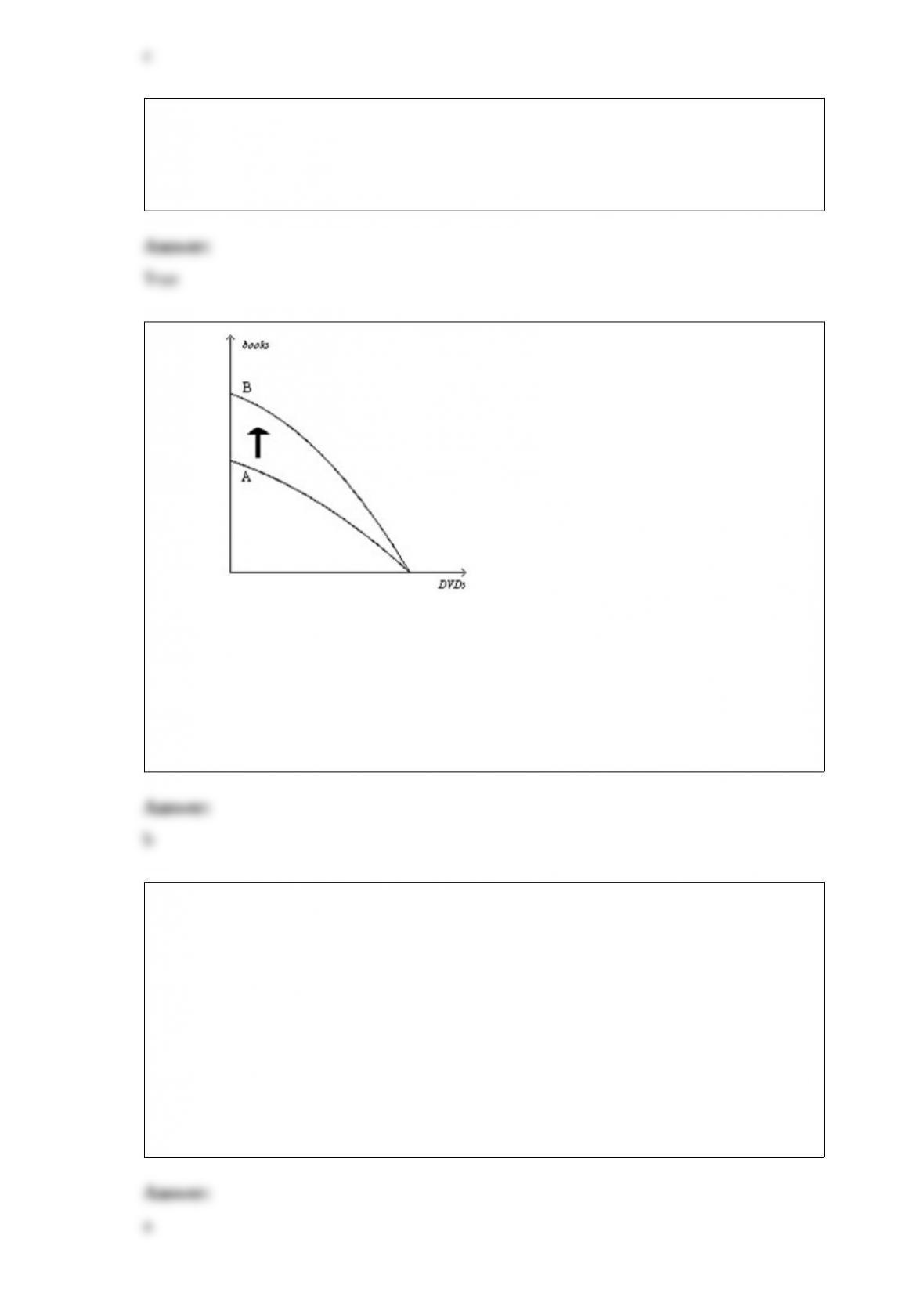
Which of the following events would explain the shift of the production possibilities
frontier from A to B?
a.The economy’s citizens developed an enhanced taste for books.
b.The economy experienced a technological advance in the production of books.
c.More capital became available in the economy.
d.More labor became available in the economy.
16) Suppose an economist advises a city’s mayor to begin charging drivers a fee to drive
on a busy highway during congested times. The mayor does not implement the policy
because it would not be popular with voters. Which of the following statements best
describes the scenario?
a.This is a common occurrence. The policymaker knows the best policy but chooses not
to institute it for other reasons.
b.This is a common occurrence. The policymaker usually disregards an economist’s
advice because they do not believe it is the most efficient policy.
c.This is an unlikely occurrence. Most of the time, policymakers follow the advice of
economists and institute the most efficient policies.
d.This would never happen. Policymakers always follow the advice of economists.
17) The poverty rate is based on a family’s
a.income, in-kind transfers, and other government aid.
b.income and in-kind transfers.
c.in-kind transfers only.
d.income only.
18) The world price of cotton is the highest price of cotton observed anywhere in the
world.
a.True
b.False
19) Which theory states that education is correlated with natural ability?
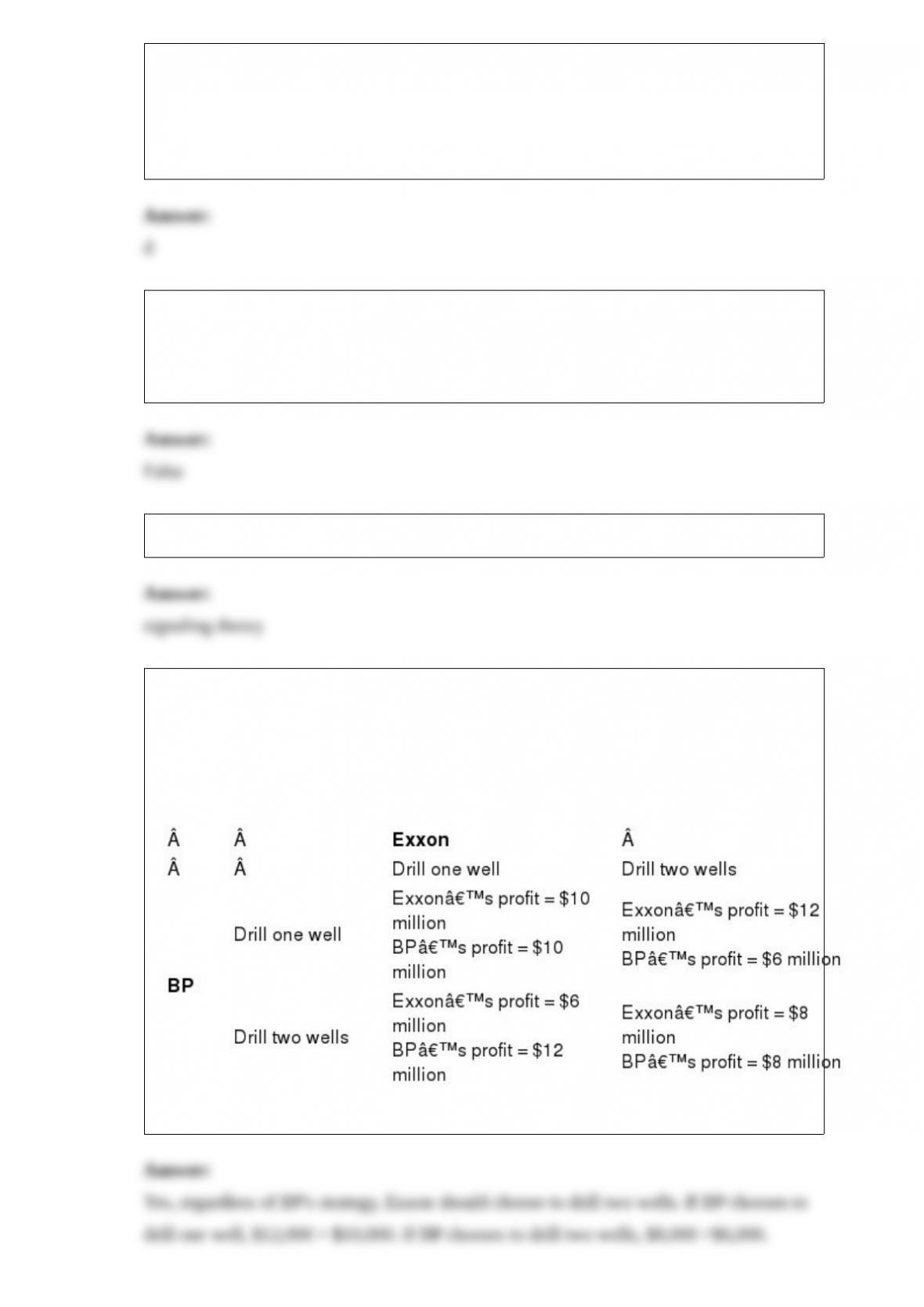
20) Table 17-34
Suppose that two oil companies – BP and Exxon – own adjacent natural gas fields. The
profits that each firm earns depends on both the number of wells it drills and the
number of wells drilled by the other firm. The table below lists each firm’s individual
profits:
Refer to Table 17-34. Does Exxon have a dominant strategy? If so, describe it.
21) Scenario 21-4 Frank spends all of his income of $240 per month on shirts and hats.
The price of a shirt is $40 and the price of a hat is $30.
Refer to Scenario 21-4. What is the slope of Frank’s budget constraint if it is drawn with
the quantity of shirts on the horizontal axis and the quantity of hats on the vertical axis?
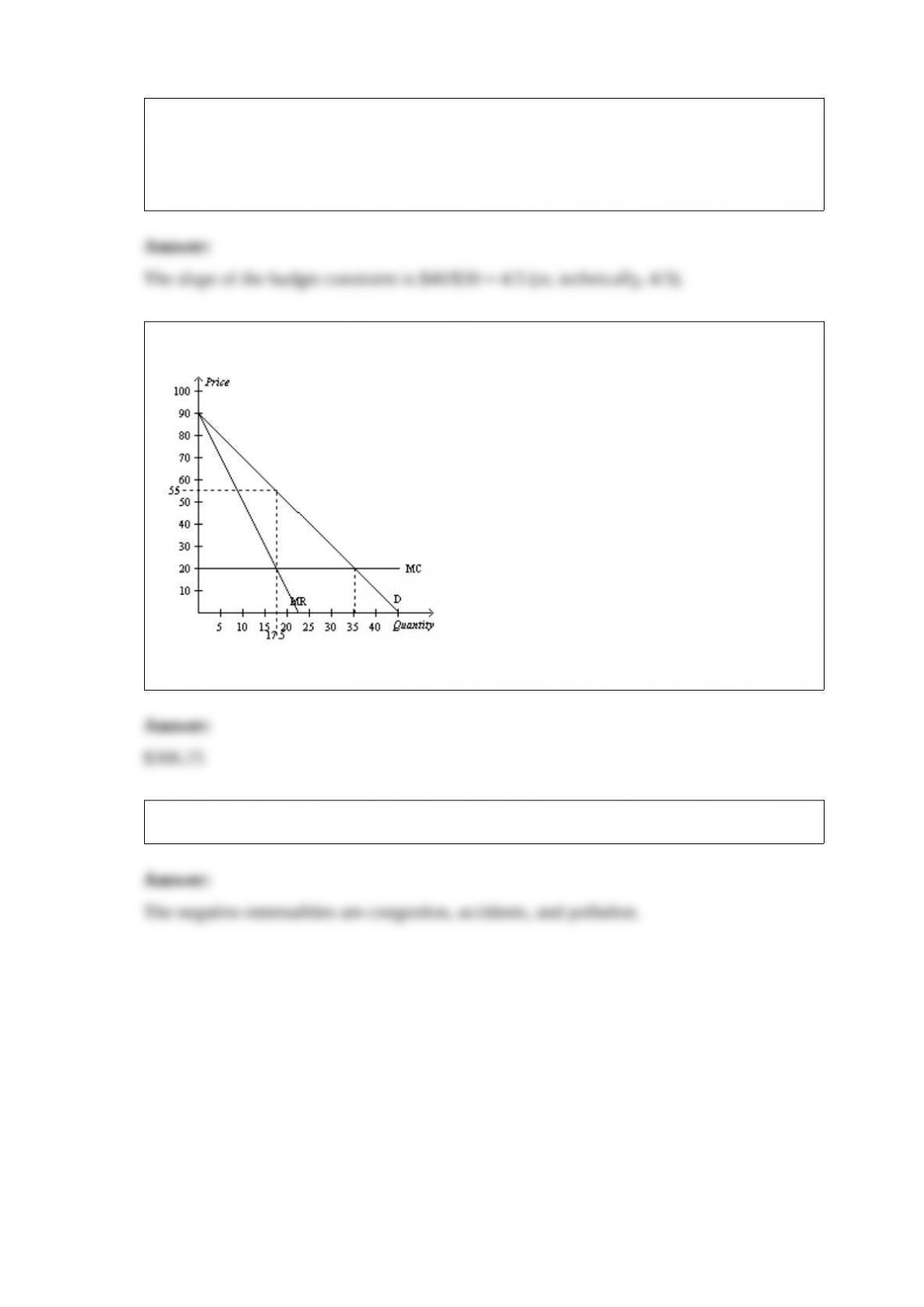
22) Figure 15-22
How much consumer surplus results if this single-price monopolist profit-maximizes?
23) What are the three externalities that are associated with driving cars and trucks?