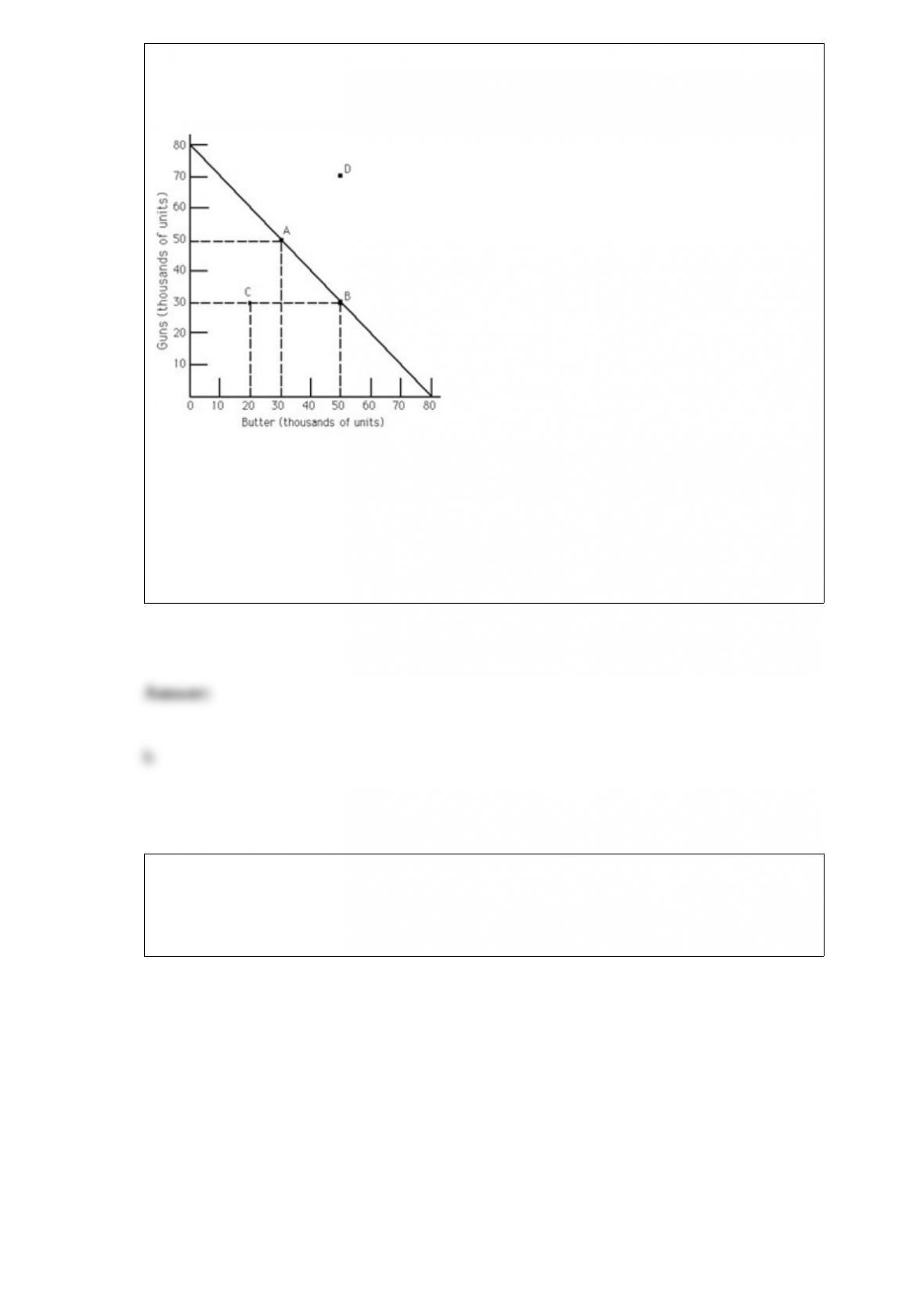
Refer to Exhibit 2-1. The opportunity cost of moving from point B to A is
Exhibit 2-1
a. 10,000 units of butter.
b. 20,000 units of butter.
c. 50,000 units of guns.
d. the maximum amount of butter that can be produced with available resources.
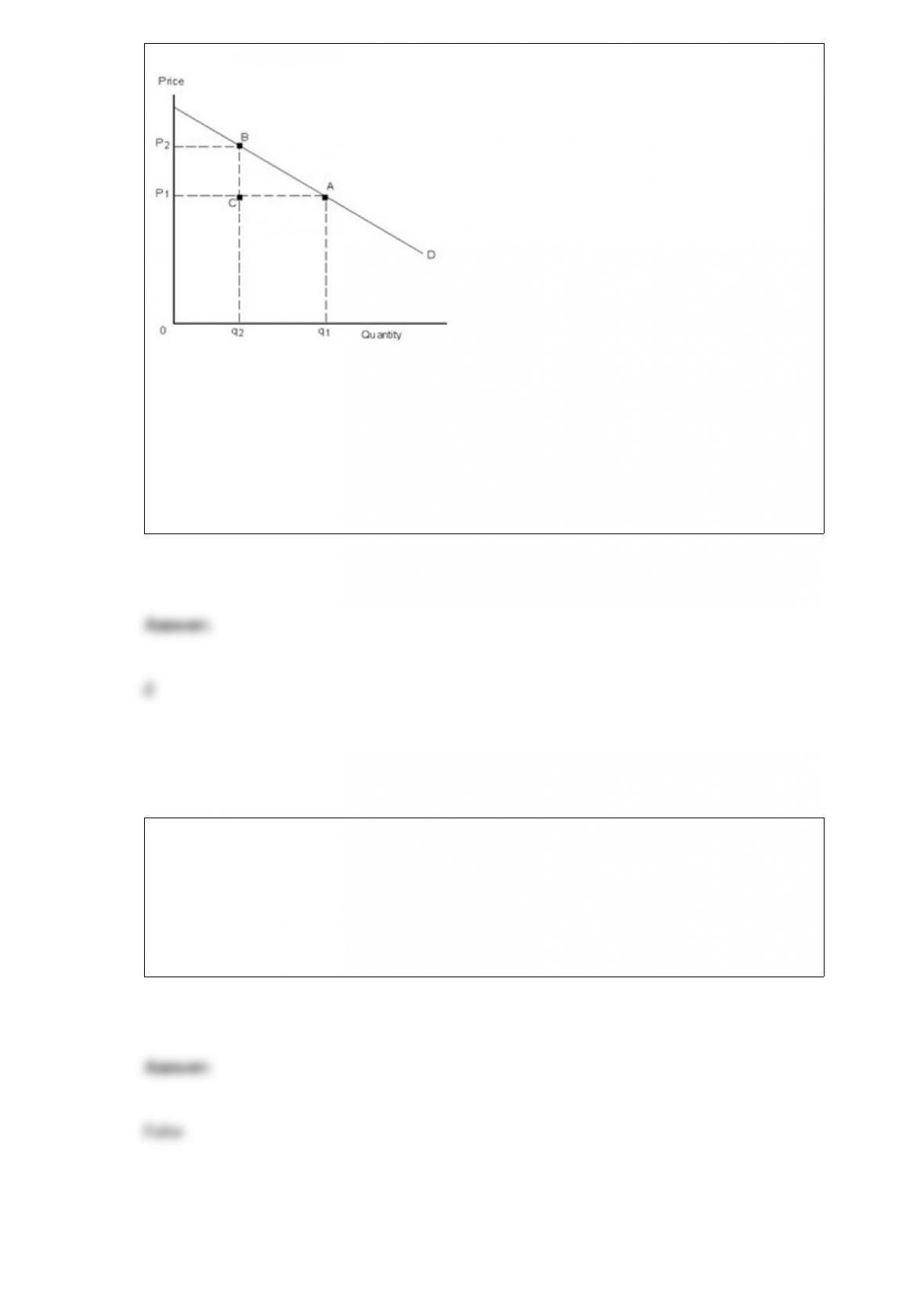
Refer to Exhibit 24-5. What area represents lost revenue when price goes from P2 to
P1?
Exhibit 24-5
a. CBA
b. 0P1Cq2
c. q2CAq1
d. P1P2BC
It is possible for an increase in minimum wage to increase the number of workers hired
in a competitive labor market, but not in a monopsony setting.
a. True
b. False

In the short-run, if P < ATC, a perfectly competitive firm should
a. increase production to the output level at which P = ATC.
b. continue producing at a loss.
c. shut down.
d. continue producing at a profit.
e. There is not enough information to answer the question.
The profit-maximizing oligopolist produces where
a. price equals marginal cost.
b. marginal revenue equals marginal cost.
c. price is greater than average total cost.
d. a and b
e. b and c
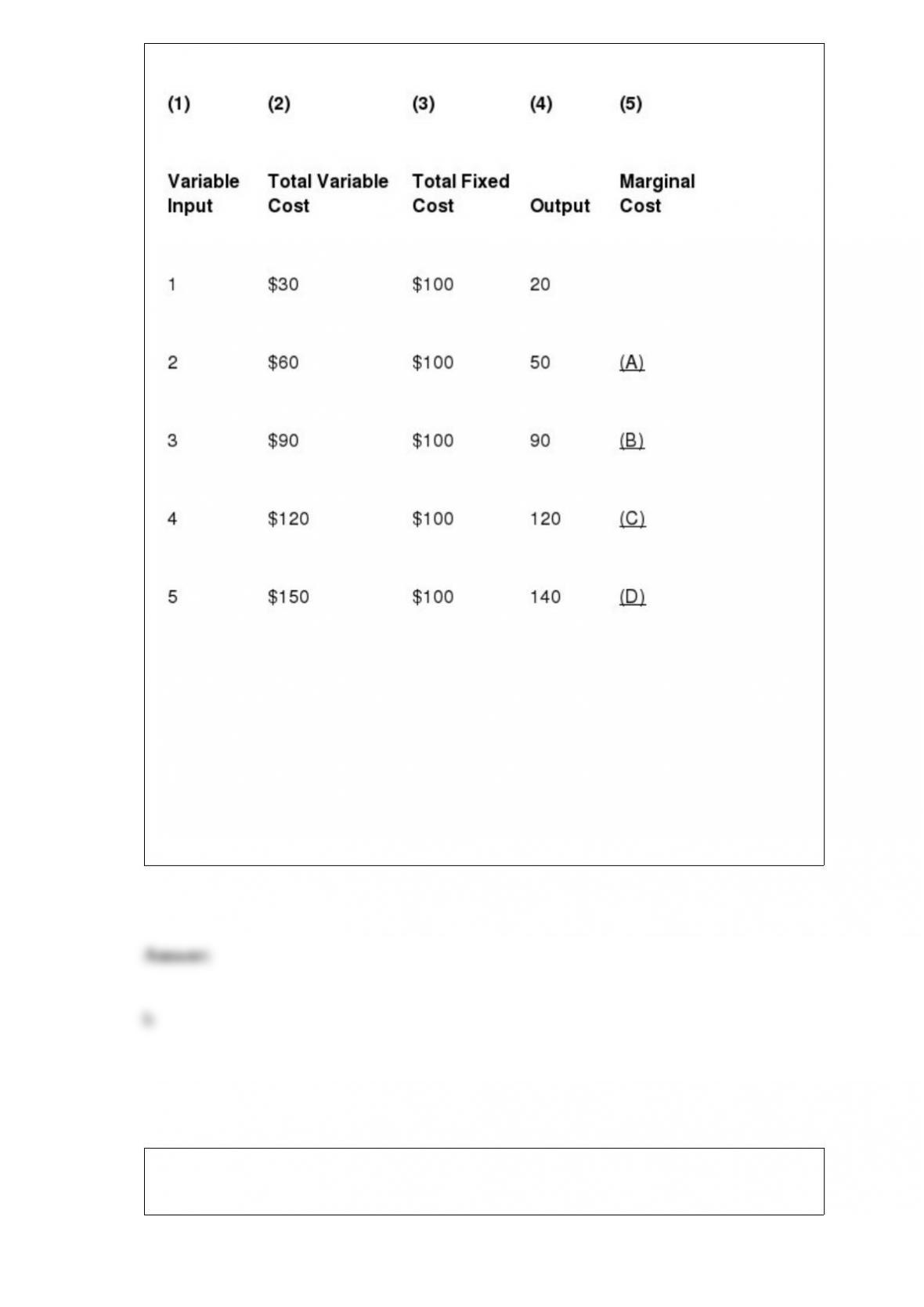
Refer to Exhibit 22-2. What is the average total cost of producing 120 units of output?
Exhibit 22-2
a. $0.67
b. $1.83
c. $1.07
d. $12.50
e. There is not enough information provided to answer the question.
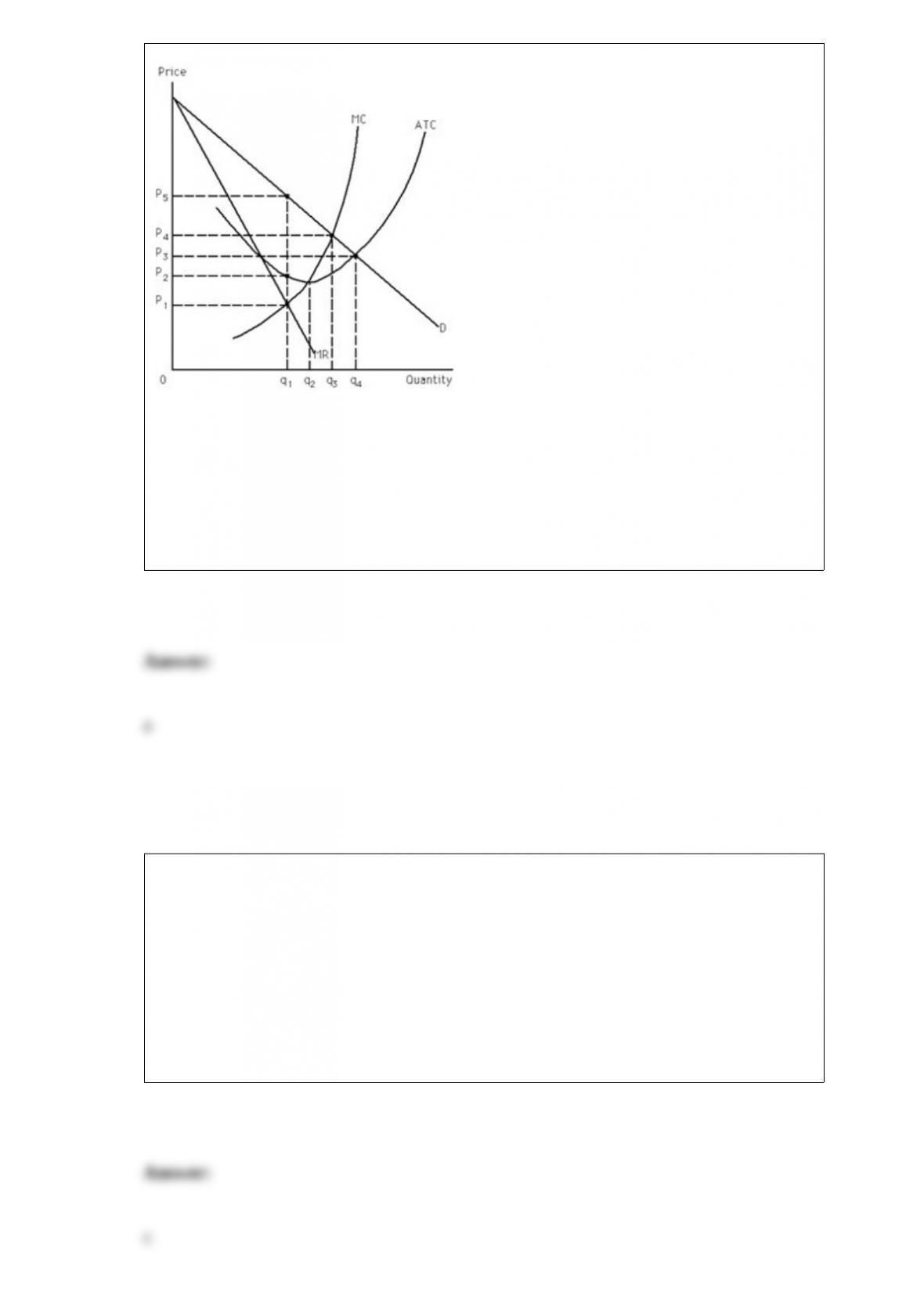
Refer to Exhibit 24-3. The profit-maximizing single-price monopolist produces output
Exhibit 24-3
a. q1.
b. q2.
c. q3.
d. q4.
Why do societies need rationing devices?
a. Because people have too many needs and not enough wants.
b. Because price exists.
c. Because scarcity exists.
d. Because people have opportunity costs.

People sometimes act differently in different settings.An economist is likely to explain
this by saying
a. the benefits and costs of certain behaviors can be different in different settings.
b. people are hard to figure out.
c. people behave as others behave.
d. it is hard to figure out what makes people tick.
e. none of the above
If the producers’ surplus is $50, and the consumers’ surplus is $40, then what is the
minimum selling price of the good?
a. $10
b. $40
c. $50
d. $90
e. There is not enough information to answer the question.
Popular online publications that have no close substitutes will be more likely to be able

to charge for those publications than will a local newspaper.
a. True
b. False
Which of the following lends support to the capture theory of regulation?
a. Persons who have been in the industry will be asked to help regulate the industry.
b. There will be more people from the regulated industry at a regulatory hearing than
people from the general public.
c. It is in the best interest of an industry that is being regulated to have its personnel
develop social relationships with members of the regulatory agency.
d. all of the above
“New industries need to be protected or they won’t have the opportunity to grow up.”
This is a statement of the __________ argument for trade restrictions.
a. national-defense
b. infant-industry
c. anti-dumping
d. tariff

e. none of the above
There are two goods, X and Y, and the absolute price of good Y falls. It follows that
a. a person can now buy more of good Y.
b. a person cannot buy more of good Y.
c. the slope of the budget constraint changes.
d. the indifference curve between goods X and Y changes.
e. a and c
An increase in the number of buyers in a particular market for a good will result in a
___________________ for that good.
a. movement up along the demand curve
b. movement down along the demand curve
c. leftward shift in the demand curve
d. rightward shift in the demand curve

When deciding whether a person is “worth” a certain salary, economists will want to
compare a person’s __________ with his or her wage or salary.
a. marginal physical product
b. marginal revenue product
c. marginal factor cost
d. derived demand
e. none of the above
If the government places a $2 tax on each unit of good X that is produced by Firm A, it
follows that the tax will not affect __________ cost, but will affect __________ cost.
a. variable; fixed
b. fixed; variable
c. average fixed; average variable
d. marginal; fixed
e. b and c

In long-run competitive equilibrium P = SRATC, because if P > SRATC
a. losses in the industry would cause some existing firms to exit the industry.
b. positive economic profit would attract firms to the industry in order to obtain the
profits.
c. firms would not be producing the quantity of output at which MR = MC.
d. firms would not be covering total fixed costs.
e. none of the above
The effects of a quota include:
a. decreasing consumers’ surplus.
b. increasing total revenue for the importers who sell the allowed number of imported
units.
c. increasing producers’ surplus.
d. b and c
e. a, b, and c

Which of the following statements is false?
a. A firm minimizes costs by buying factors in the combination at which the
MPP-to-price ratio for each is the same.
b. Marginal productivity theory states that firms in competitive or perfect product and
factor markets pay factors their marginal revenue products.
c. Marginal factor cost equals the wage rate for a factor price taker.
d. The lower the elasticity of demand for the product labor produces, the higher the
elasticity of demand for labor.
The change in output that results from changing a variable input by one unit, holding all
other inputs fixed, is called the marginal __________ product of the variable input.
a. physical
b. value
c. average
d. explicit
One way to calculate marginal revenue product is
a. MR x MPP.

b. MPP/MR.
c. MR + MPP.
d. MPP – MR.
e. none of the above
The Justice Department considers a Herfindahl index less than __________ to be
representative of an unconcentrated (competitive) industry.
a. 1,000
b. 2,000
c. 1,500
d. 1,800