
The substitution effect explains why there is an inverse relationship between the price
of a product and the quantity of the product demanded.
If additional units of a good could be produced at a constant opportunity cost, the
production possibility frontier would be linear.
Expansionary fiscal policy should raise the exchange rate of the dollar.
Residential investment includes spending by firms on office buildings.

Contractionary monetary policy refers to the Fed’s decreasing the money supply and
decreasing interest rates to decrease real GDP.
Ceteris paribus, an increase in the government budget deficit increases interest rates in
the United States and causes a real appreciation of the dollar.
Countries without well-developed financial systems are able to sustain high levels of
economic growth.
The majority of the federal government debt is held by government agencies.

The Fed can use contractionary monetary policy in an attempt to keep inflation from
increasing.
If the number of firms producing electric cars increases and consumer preference for
electric cars increases, the equilibrium quantity of electric cars will definitely increase.
For a person to have a comparative advantage in producing a product, he must be able
to produce that product at a higher opportunity cost than his competitors.
In the long run, the Fed may decrease the unemployment rate only if it is willing to
increase the rate of inflation.

At a long-run macroeconomic equilibrium, real GDP is always equal to potential GDP.
Stockholders
A) are liable for the debts of a corporation.
B) are the owners of a corporation.
C) control a corporation’s day-to-day activities.
D) hire the managers of a corporation.
The Farm Factory, a booth at the local Farmer’s Market, sells fresh eggs for $1.50 per
dozen and fresh milk for $2.50 per gallon. What is the opportunity cost of buying a
gallon of milk?
A) 1 2/3 dozen eggs
B) 3/5 of a dozen eggs
C) $2.50
D) $1.50
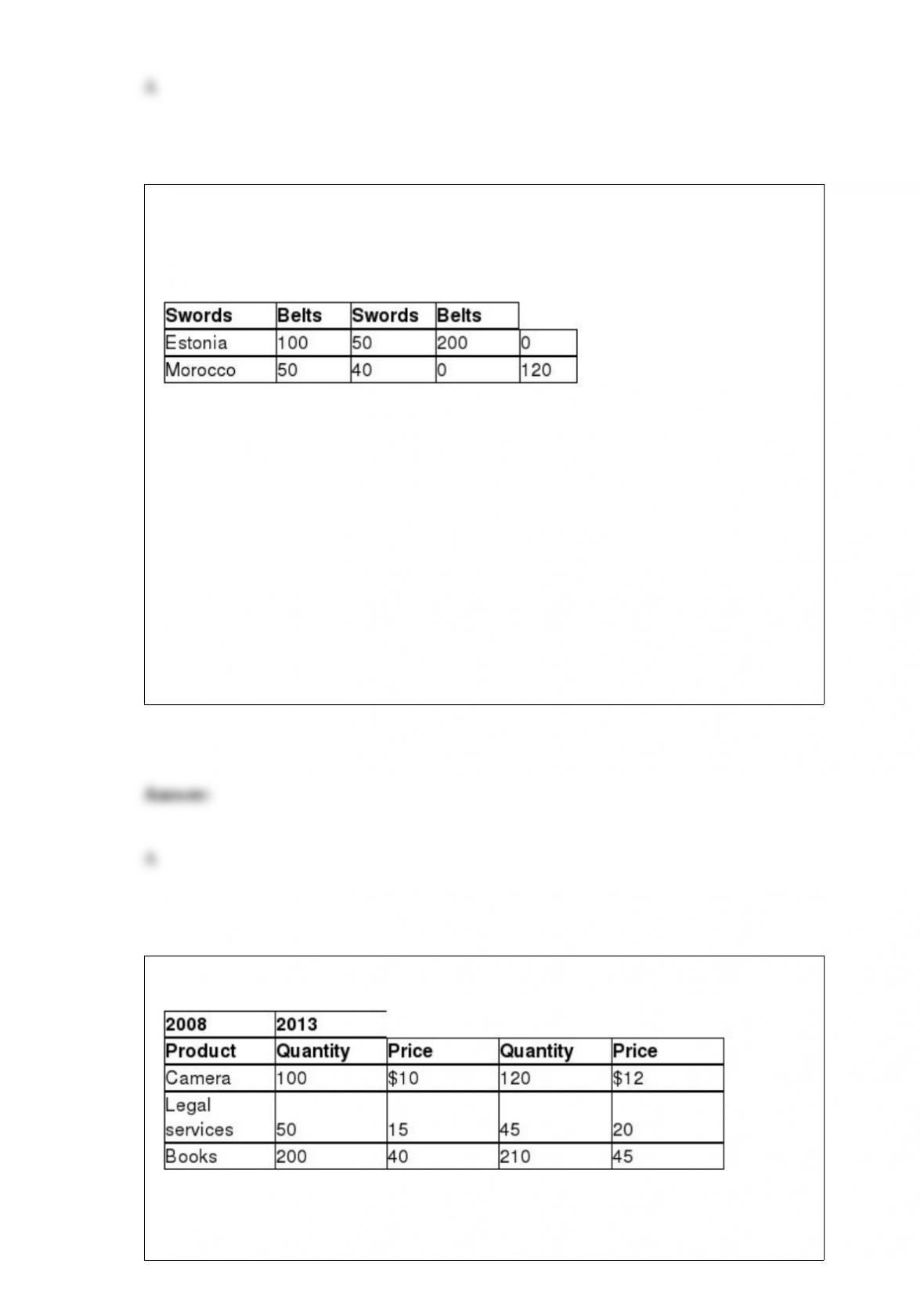
Table 7-6
Production and
Consumption Production
Without Trade With Trade
Estonia and Morocco can produce both swords and belts. Table 7-6 shows the
production and consumption quantities without trade, and the production numbers with
trade.
Refer to Table 7-6. Which country has a comparative advantage in producing swords?
A) Estonia
B) Morocco
C) both countries
D) neither country
Table 8-18
A very simple economy produces three goods: cameras, legal services, and books. The
quantities produced and their corresponding prices for 2008 and 2013 are shown in the

table above.
Refer to Table 8-18. What is real GDP in 2013, using 2013 as the base year?
A) $28,885
B) $11,790
C) $11,200
D) $10,275
An increase in the purchasing power of money would not, on average, result in an
increase in the purchasing power of people’s income because a ________ price level
would likely mean ________ wages and salaries.
A) rising; falling
B) rising; rising
C) falling; falling
D) falling; rising
In international exchange markets, a rise in interest rates in the United States will cause
the demand for dollars to ________ and the supply of dollars to ________.
A) increase; increase
B) increase; decrease

C) decrease; increase
D) decrease; decrease
Interest rates in the economy have risen. How will this affect aggregate demand and
equilibrium in the short run?
A) Aggregate demand will fall, the equilibrium price level will fall, and the equilibrium
level of GDP will fall.
B) Aggregate demand will fall, the equilibrium price level will rise, and the equilibrium
level of GDP will fall.
C) Aggregate demand will rise, the equilibrium price level will rise, and the equilibrium
level of GDP will rise.
D) Aggregate demand will rise, the equilibrium price level will fall, and the equilibrium
level of GDP will rise.
Figure 11-4
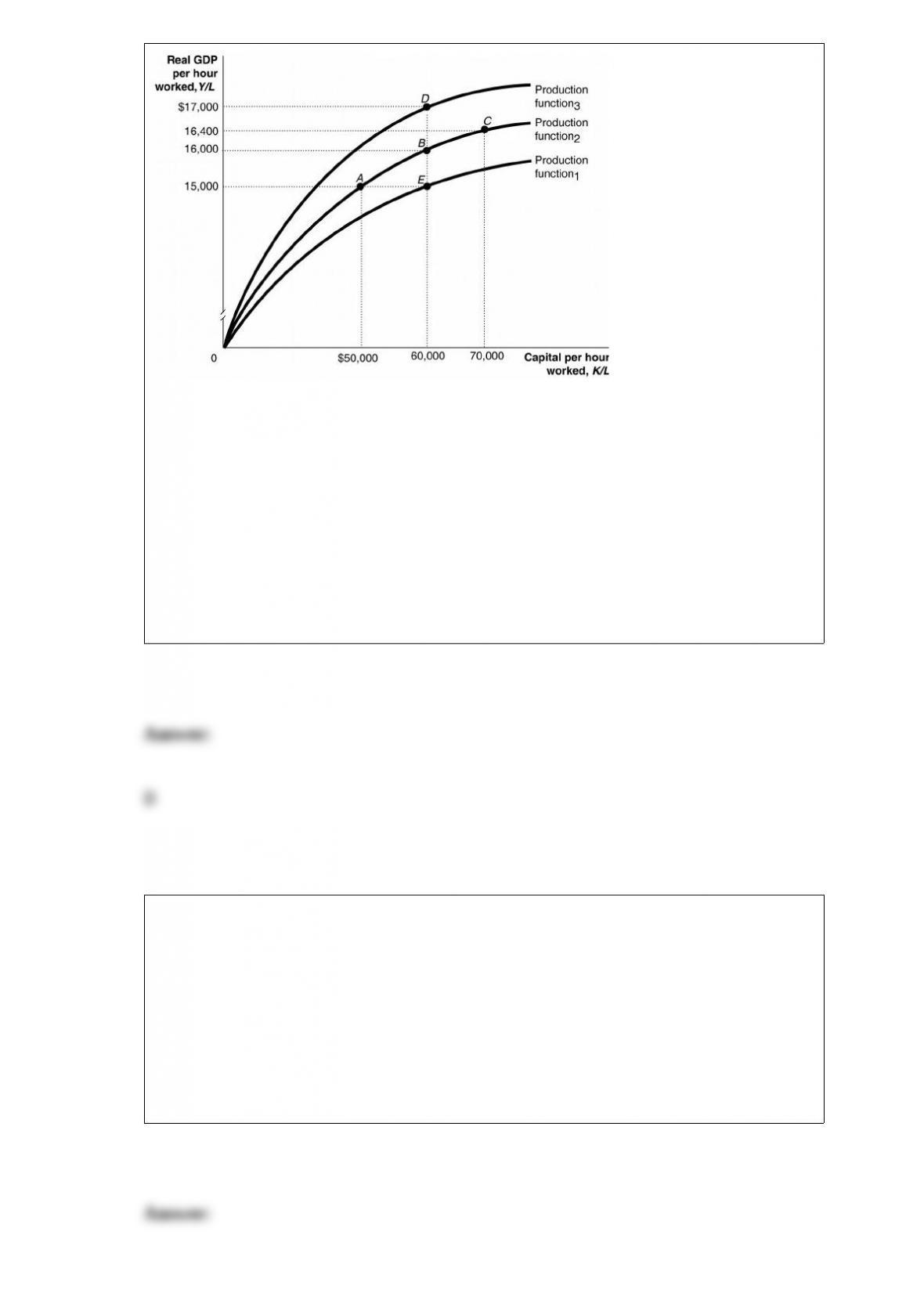
Refer to Figure 11-4. Using the per-worker production function in the figure above, the
largest changes in an economy’s standard of living would be achieved by a movement
from
A) A to B to C.
B) E to B to D.
C) C to B to A.
D) D to B to E.
Which of the following will increase aggregate expenditure in the United States?
A) an increase in the value of the dollar
B) an increase in the price level
C) an increase in interest rates
D) an increase in government purchases

Under the Bretton Woods exchange rate system, set up in 1944, which of the following
was true?
A) Americans could sell their dollars to the American government in exchange for gold.
B) Americans could sell their dollars to the American government in exchange for
silver.
C) Americans could sell their dollars to foreign central banks in exchange for gold.
D) Foreign central banks could sell their dollars to the American government in
exchange for gold.
Which of the following is included in gross domestic product for an economy in a given
year?
A) the value of intermediate goods produced in that year
B) the value of used goods sold in that year
C) the value of final goods produced in that year
D) All of the above would be included in gross domestic product for an economy in a
given year.
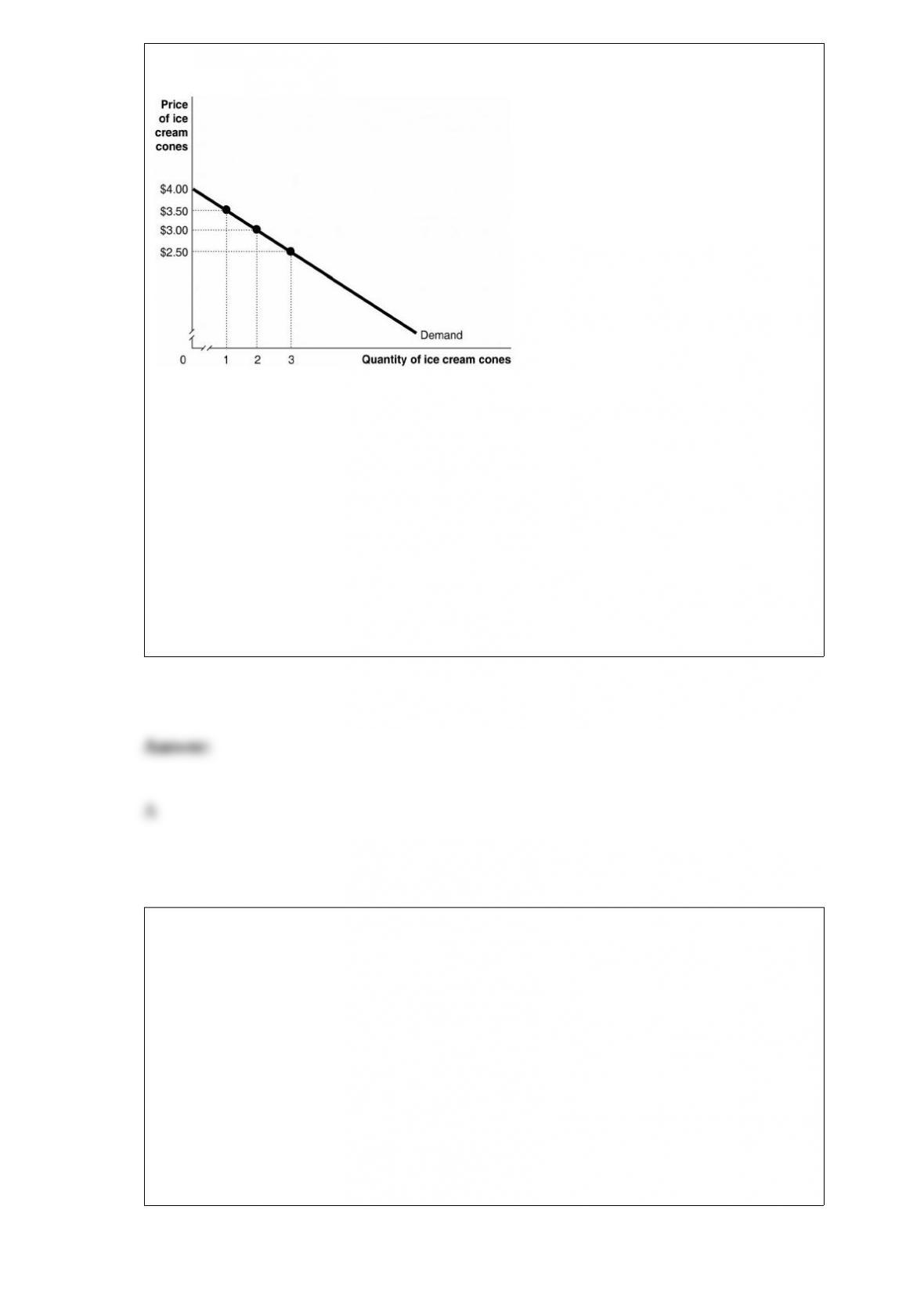
Figure 4-1
Figure 4-1 shows Kendra’s demand curve for ice-cream cones.
Refer to Figure 4-1. If the market price is $3.00, what is the consumer surplus on the
first ice cream cone?
A) $0.50
B) $1.00
C) $5.50
D) $9.00
Which of the following is one explanation as to why the aggregate demand curve slopes
downward?
A) Decreases in the price level raise the interest rate and increase consumption
spending.
B) Decreases in the price level raise the interest rate and increase investment spending.
C) Decreases in the U.S. price level relative to the price level in other countries lower
net exports.
D) Decreases in the price level raise real wealth and increase consumption spending.
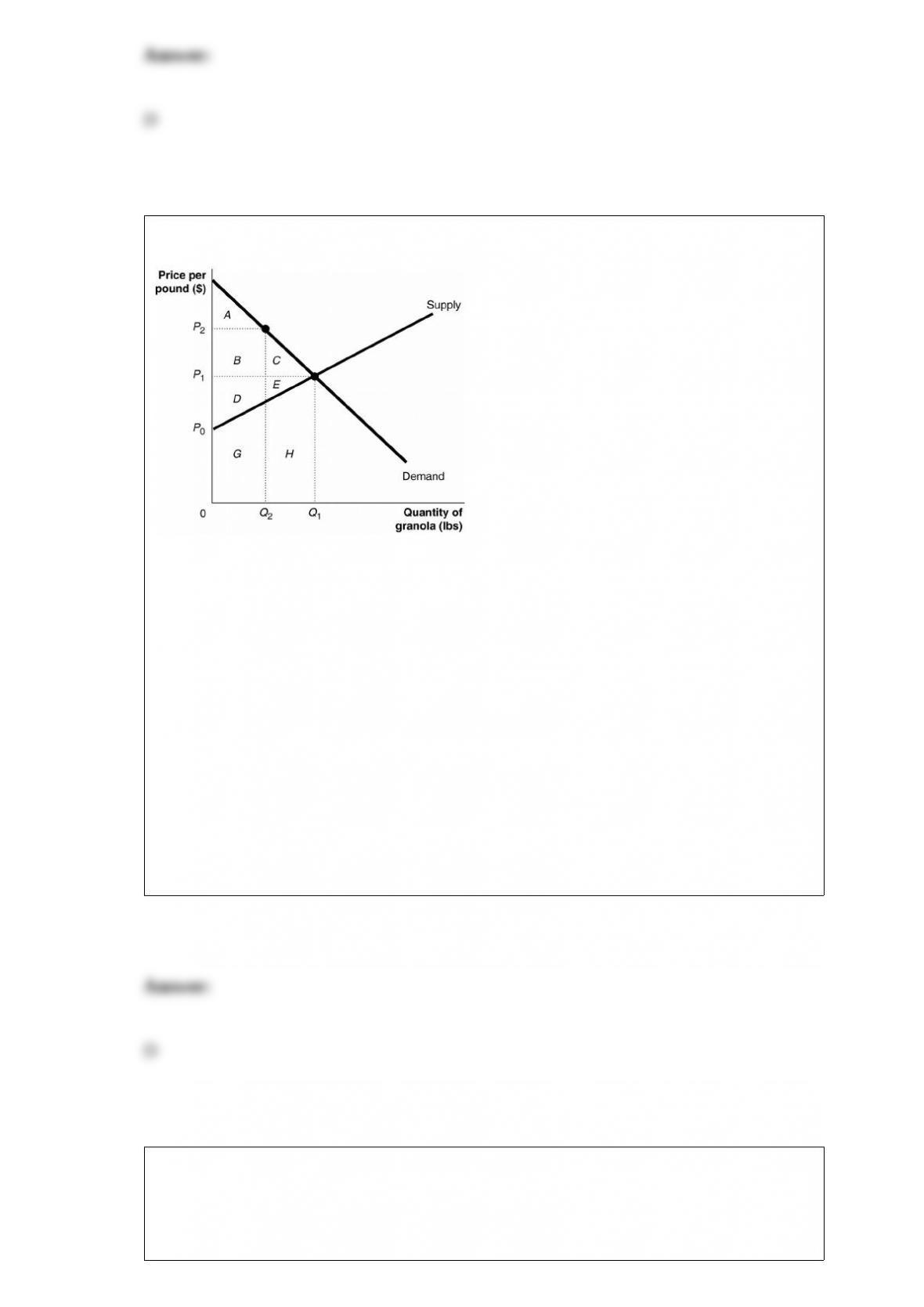
Figure 4-3
Figure 4-3 shows the market for granola. The market is initially in equilibrium at a price
of P1 and a quantity of Q1. Now suppose producers decide to cut output to Q2 in order
to raise the price to P2.
Refer to Figure 4-3. What area represents the deadweight loss at the equilibrium price
of P1?
A) C + E + H
B) G + H
C) C + E
D) There is no deadweight loss at the price of P1.
Stockholders
A) select the board of directors of a corporation.

B) select the employees of a corporation.
C) select the managers of a corporation.
D) all of the above
A decrease in aggregate demand in the economy will have what effect on
macroeconomic equilibrium in the long run?
A) The price level will fall, and the level of GDP will be unaffected.
B) The price level will fall, and the level of GDP will fall.
C) The price level will rise, and the level of GDP will fall.
D) The price level will rise, and the level of GDP will be unaffected.
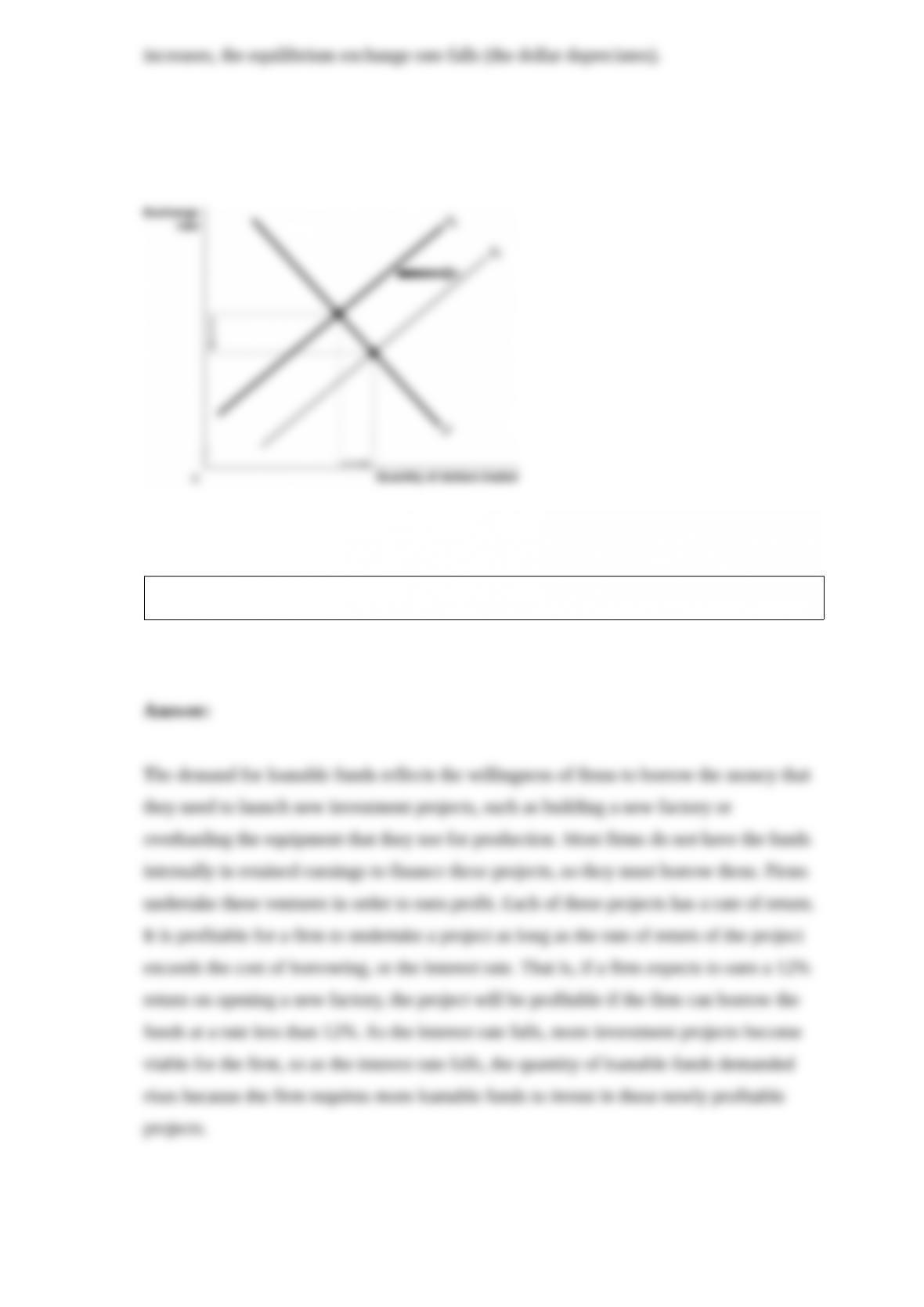
If American demand for purchases of Mexican goods has increased, how would you
expect the equilibrium exchange rate in the market for dollars to respond? Support your
answer graphically.
Explain why the demand curve for loanable funds has a negative slope.
What is fiscal policy, and who is responsible for fiscal policy?
Based on the following information, calculate public saving, net foreign investment,
and national income. Assume that the capital account is zero and net transfers are zero.
private saving = $145 billion
exports = $285 billion
imports = $240 billion
consumption = $600 billion
private investment = $125 billion
government purchases = $75 billion
Real interest rates at times have been negative. Why would anyone lending money
agree to a negative real interest rate?
What does it mean for a country to have a comparative advantage in producing a
product?