
Which of the following statements is false?
a. The Treasury bond information published under the column heading “Yield” is based
on the ask price of the bond.
b. The Treasury bond information published under the column heading “Yield” is based
on the assumption that the bond is held to maturity.
c. The Treasury bond information published under the column heading “Bid” indicates
the price a buyer will pay if he buys the bond.
d. The Treasury bond information published under the column heading “Bid” is the
price a buyer will receive if she sells the bond.
If Jack bought 18 CDs last year when his income was $20,000 and he buys 19 CDs this
year when his income is $25,000, then for Jack CDs are
a. an inferior good.
b. a normal good.
c. a substitute good.
d. a complementary good.
e. There is not enough information to answer this question.
Refer to Exhibit 24-3. The level of output the profit-maximizing perfectly
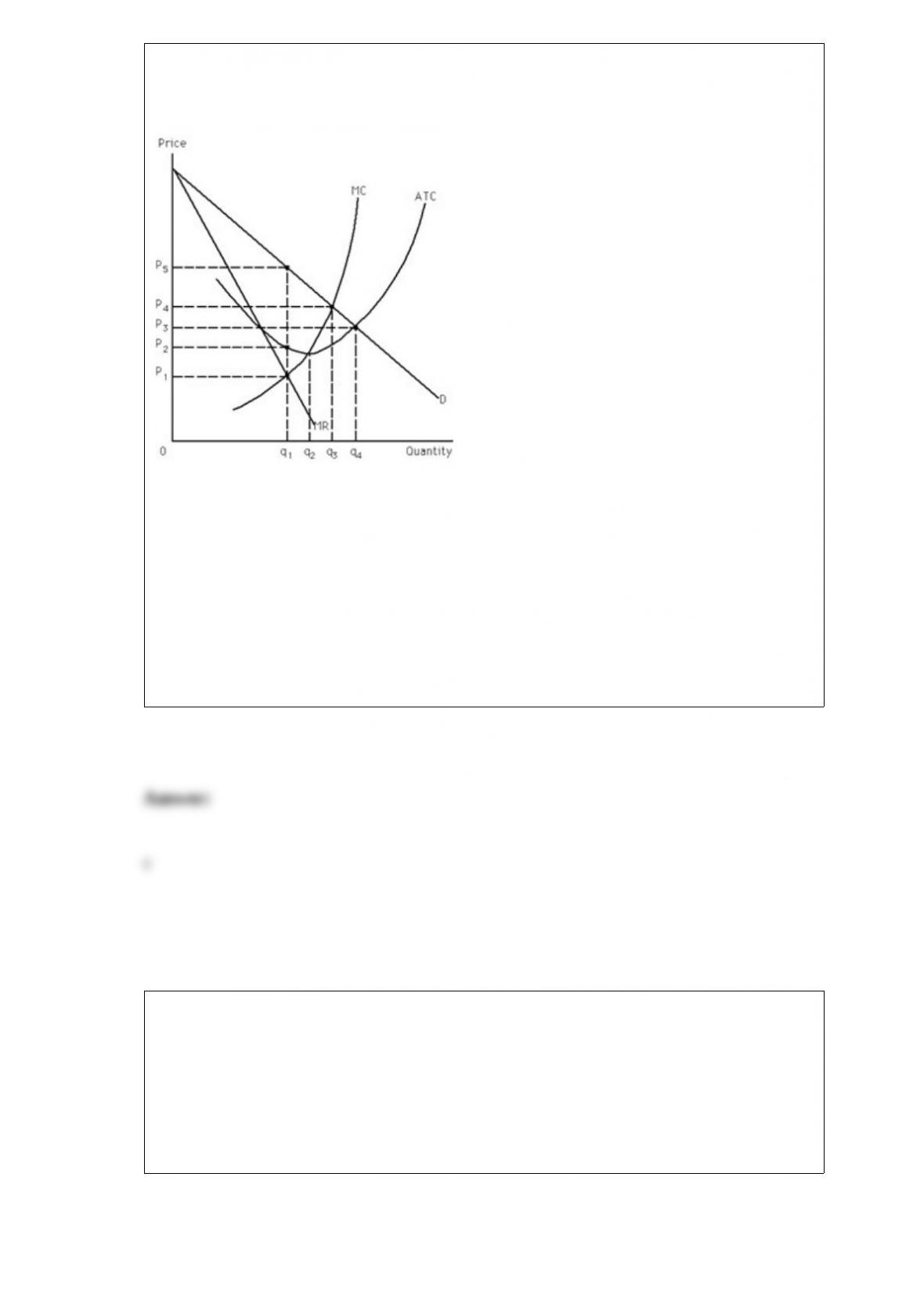
price-discriminating monopolist produces is
Exhibit 24-3
a. q1.
b. q2.
c. q3.
d. q4.
In the United States, the percentage of national income that goes to labor (union plus
nonunion) was higher when union membership was relatively high and unions were
strong, compared to when union membership was relatively low.
a. True
b. False
The situation where a country can produce a good at a lower opportunity cost than
another country is called a(n) __________ advantage.
a. permanent
b. transitory
c. absolute
d. comparative
e. natural
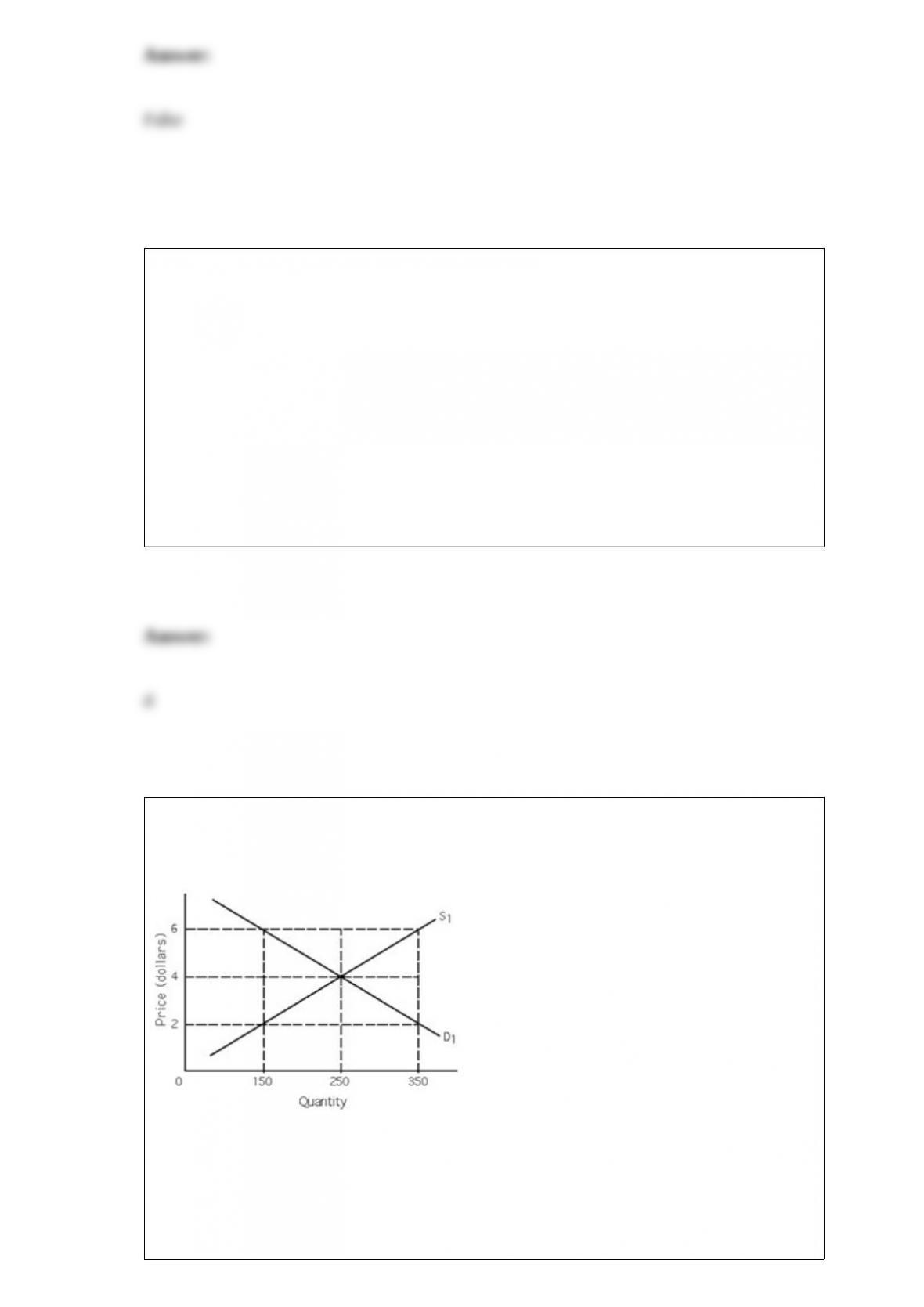
Refer to Exhibit 3-1. At a price of $6 there is a
Exhibit 3-1
a. surplus of 100 units.
b. surplus of 150 units.
c. surplus of 200 units.
d. shortage of 150 units.
e. shortage of 200 units.
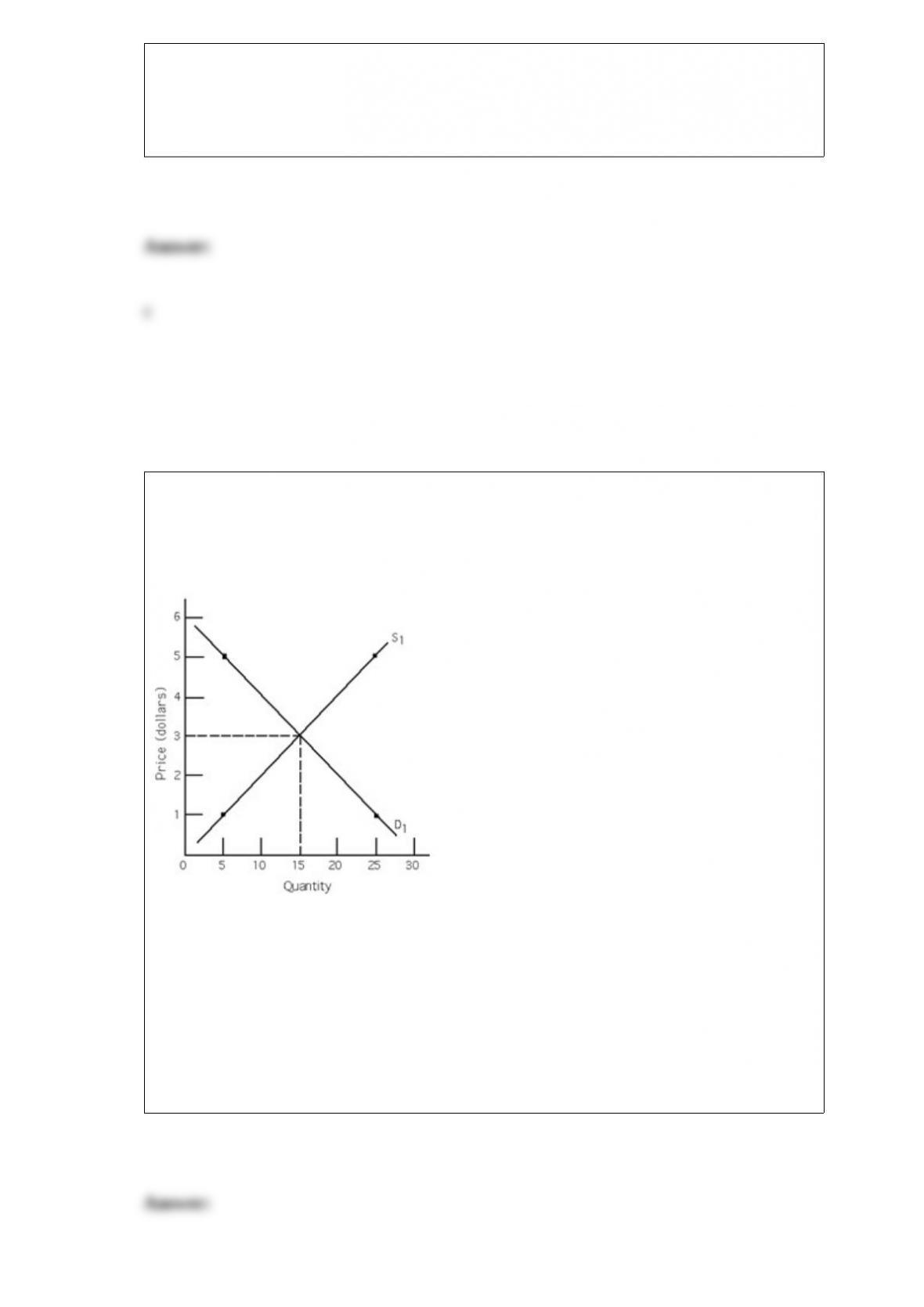
Refer to Exhibit 3-8. Equilibrium price and quantity are ____________________,
respectively.
Exhibit 3-8
a. $3 and 25 units
b. $3 and 15 units
c. $5 and 15 units
d. $5 and 25 units
e. $1 and 25 units
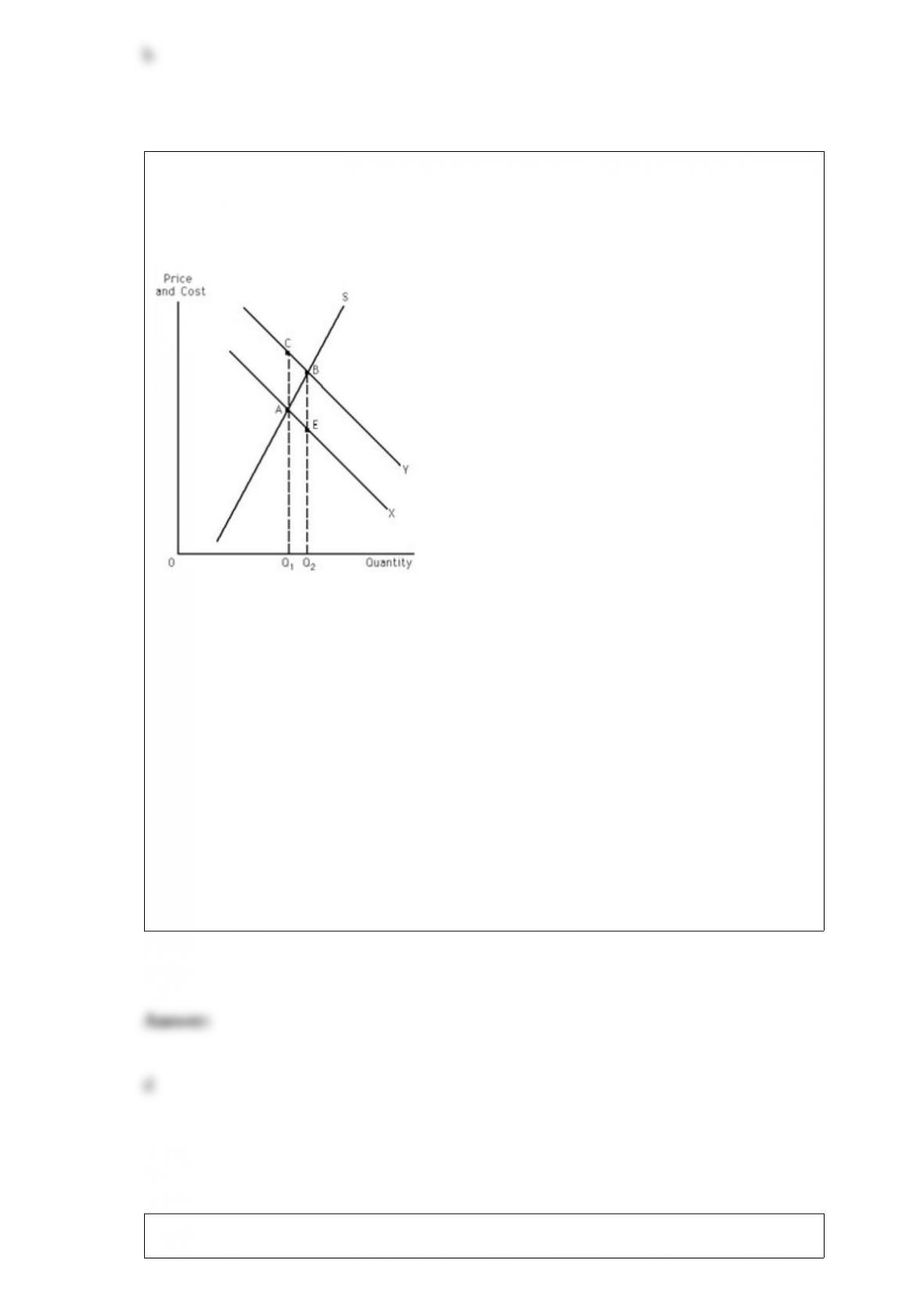
Refer to Exhibit 31-2. This graph represents a positive externality situation. Given this,
which of the two curves, X or Y, represents marginal social benefits and why?
Exhibit 31-2
a. Curve X, because if there is a positive externality, negative external benefits are
associated with it: social costs external benefits – private benefits, therefore the
marginal social benefit curve must lie below the marginal private benefit curve.
b. Curve X, because if there is a positive externality, external benefits are associated
with it: social benefits = external benefits + private benefits, therefore the marginal
social benefit curve must lie below the marginal private benefit curve.
c. Curve Y, because if there is a positive externality, external costs are associated with
it: social benefits = external costs + private benefits, therefore the marginal social
benefit curve must lie above the marginal private benefit cost curve.
d. Curve Y, because if there is a positive externality, external benefits are associated
with it: social benefits = external benefits + private benefits, therefore the marginal
social benefit curve must lie above the marginal private benefit curve.
A price searcher is
a. a person who actively seeks out the best price for a product that he or she wishes to
buy.
b. a firm that seeks out buyers who are willing to pay the price that the seller is asking
for the product.
c. a firm that has the ability to control to some degree the price of the product it sells.
d. actually any firm or consumer, because each market “player” searches for the best
price at which it can sell or buy.
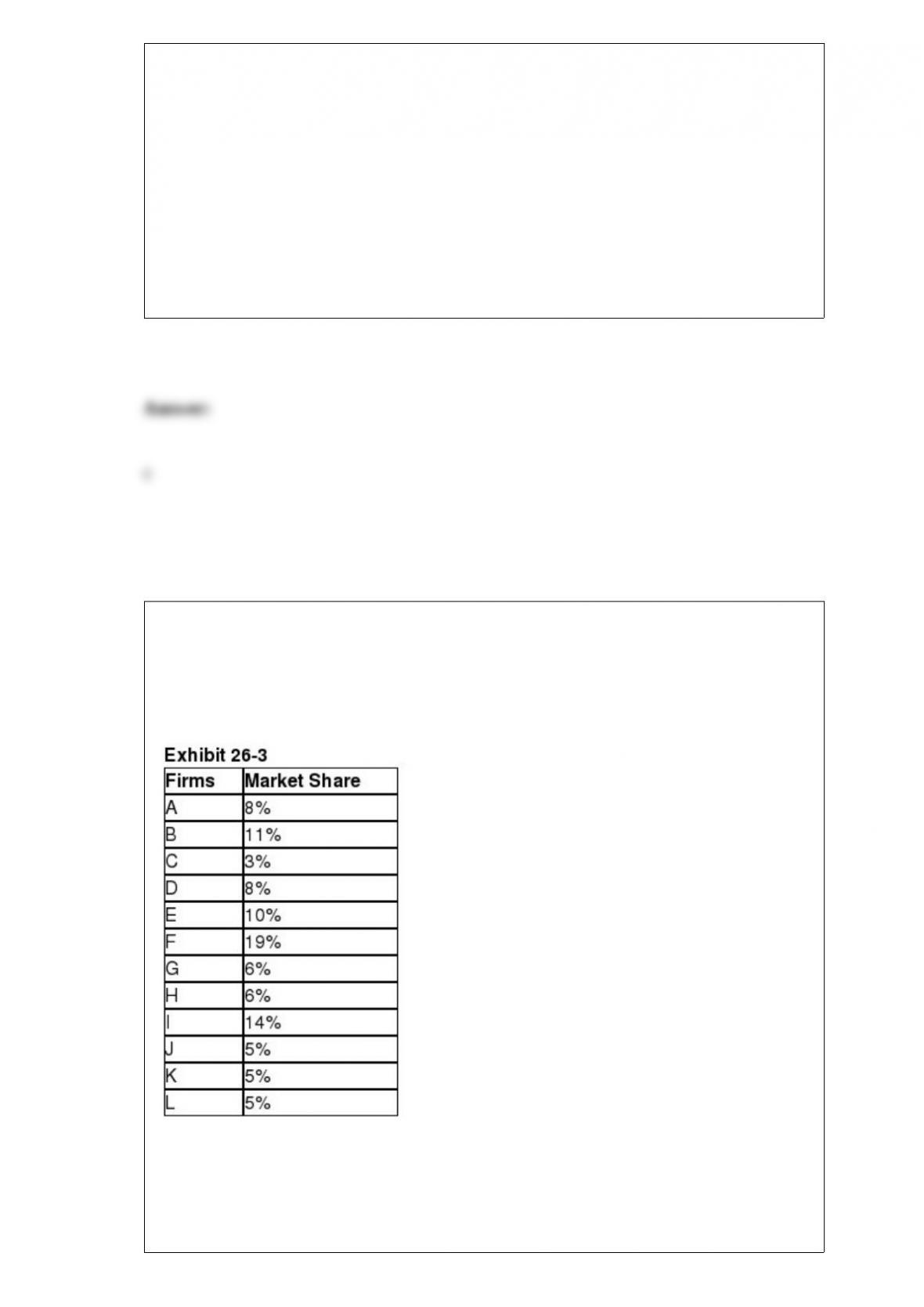
Refer to Exhibit 26-3. If Firms J, K, and L were to merge, the four-firm concentration
ratio would ____________________ and the Herfindahl Index would
_____________________.
a. rise to 50 percent; rise to 1,062
b. rise to 28 percent; rise to 10,000

c. rise to 60 percent; fall to 986
d. rise to 59 percent; rise to 1,212
e. not be affected; not be affected
Residents of cities with a reputation for good weather, ceteris paribus,
a. pay a higher price for housing because the demand for housing is higher.
b. pay a higher price for housing because the supply of housing is higher.
c. pay a higher price for housing because the supply and demand for housing is higher.
d. pay the same for housing as they would in cities with a reputation for bad weather.
Economists assume that the goal of consumers is to maximize marginal utility.
a. True
b. False

How do countries know when they have a comparative advantage in the production of a
good?
a. Government accountants collect cost data from countries and analyze it to find out
which country has a comparative advantage in the production of which good.
b. They know as the result of individuals trying to earn profits and buying low and
selling high in the process.
c. The United Nations Economic Conference Group analyzes cost data from countries
and determines which country has a comparative advantage in the production of which
good.
d. There is not one major way that countries acquire this information.
If a firm is a factor price taker in the labor market,
a. it must pay higher wages in order to hire additional workers.
b. it can hire all the workers it wants to at the going wage rate.
c. it must hire all workers who apply for a job.
d. it will continue to hire workers as long as MFC > MRP.
When price = $33, quantity demanded = 460. When price = $31, quantity demanded =
500. The price elasticity of demand is _______________, making this an
_____________ good in the price range between $31 and $33.
a. 1.33; inelastic
b. 1.33; elastic
c. 0.75; elastic
d. 0.75; inelastic
e. 6.2; elastic
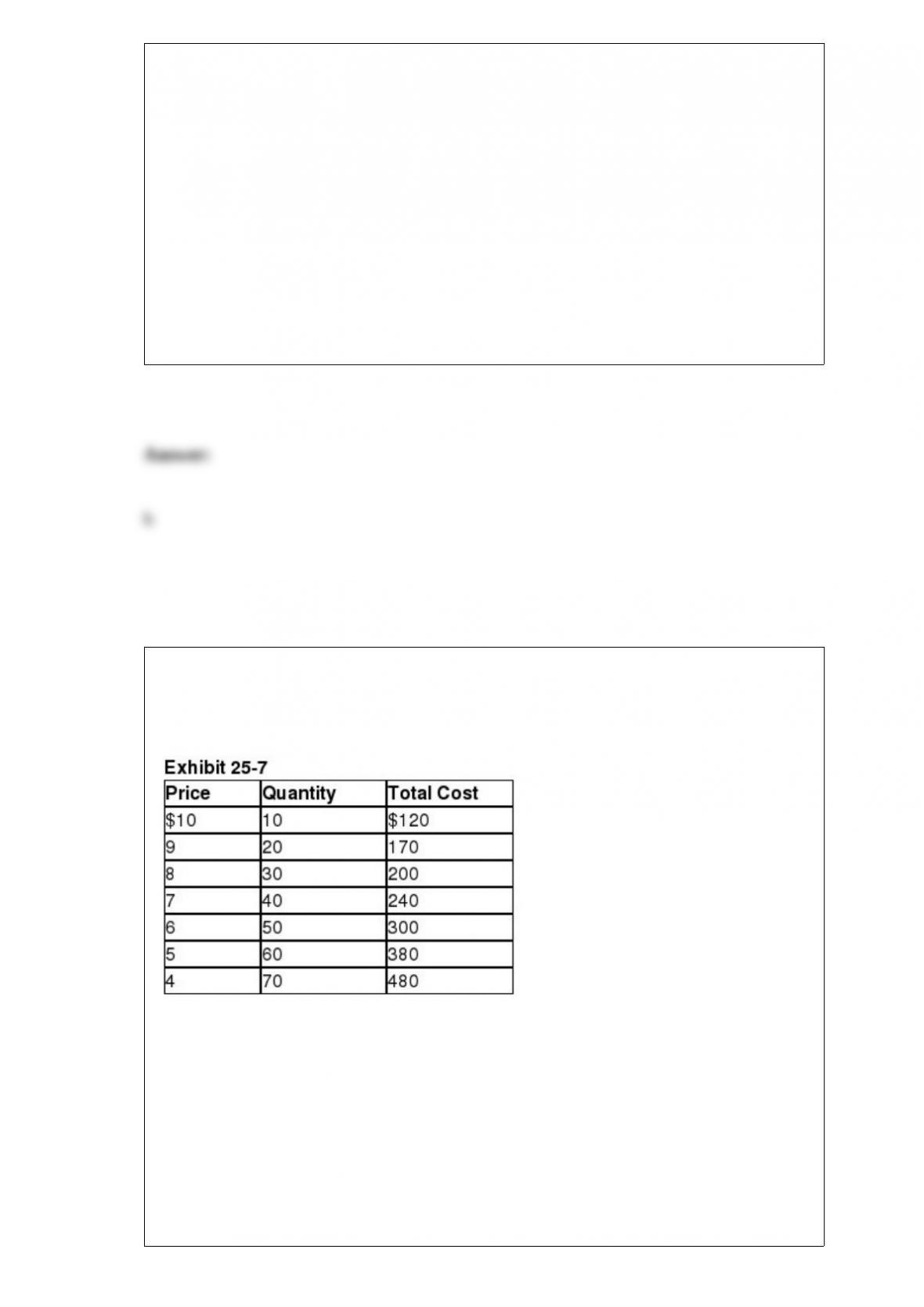
Refer to Exhibit 25-7. A monopolistic competitive firm earns a total profit of
__________ when it produces and sells 20 units of its good.
a. $40.
b. $10.
c. $200.
d. $80.
e. $50.

Economic rent is a payment in excess of
a. average fixed cost.
b. average variable cost.
c. opportunity cost.
d. explicit cost, but not necessarily implicit cost.
e. none of the above
The diamond-water paradox holds that often things that have high __________ have a
__________ price and things that have a low __________ have a __________ price.
a. value in exchange; high; value in use; low
b. value in use; low; value in use; high
c. absolute price; low relative; relative price; low absolute
d. relative price; low absolute; relative price; high absolute
e. exchange value; high; exchange value; low

If the demand for a good is perfectly inelastic, then
a. the percentage change in quantity demanded is greater than the percentage change in
price.
b. the percentage change in quantity demanded is less than the percentage change in
price.
c. the percentage change in quantity demanded is equal to the percentage change in
price.
d. quantity demanded is extremely responsive to changes in price.
e. quantity demanded is not responsive to changes in price.