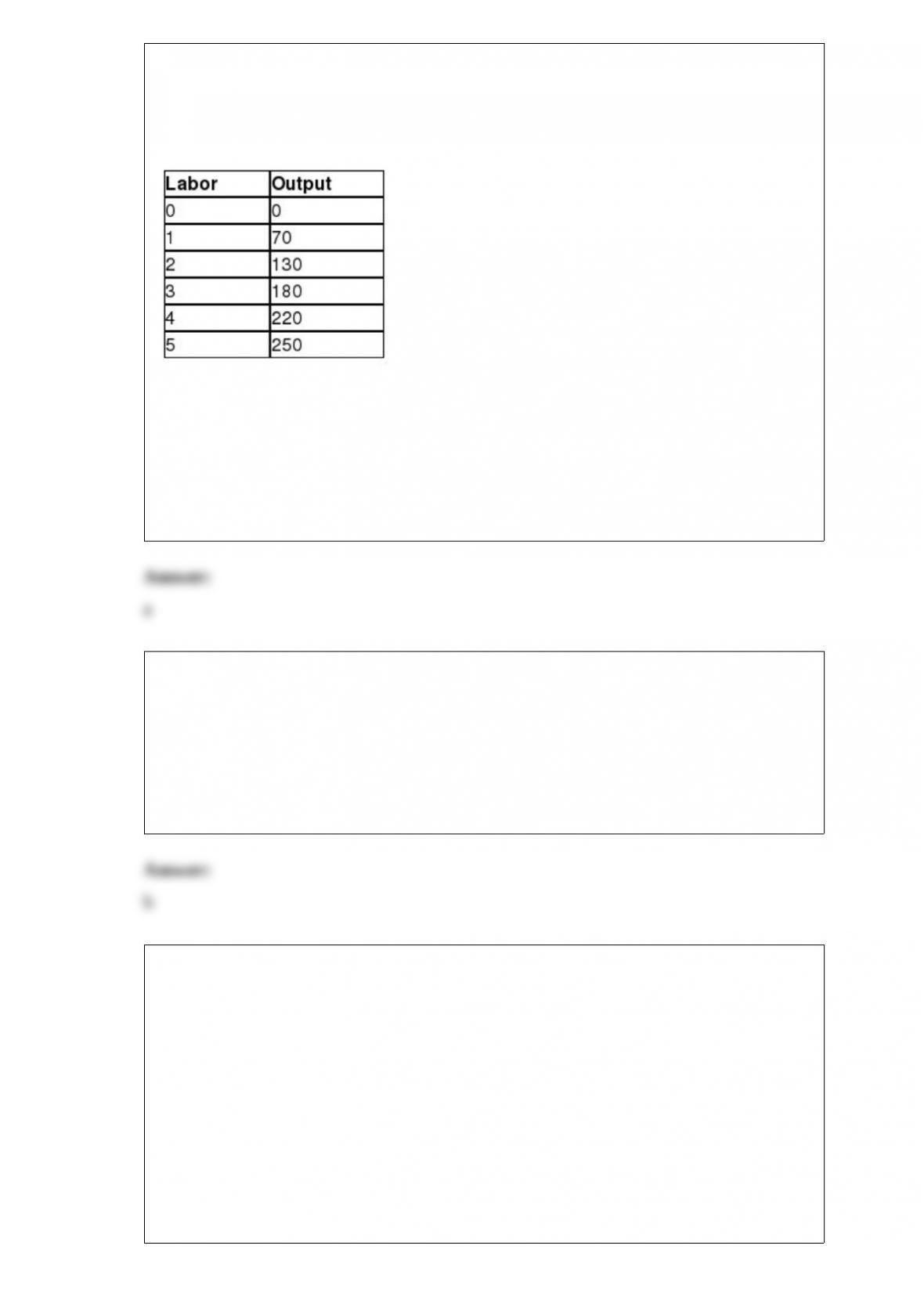
1) Table 18-9
The following table shows the production function for a particular business. The
numbers represent the various labor and output combinations the firm may choose for
its output on a daily basis.
Refer to Table 18-9. Suppose this firm charges a price of $5 per unit of output and pays
workers a wage equal to $160 per day. What is the value of the marginal product of
labor for the fourth worker?
a.$200
b.$1,000
c.$6,400
d.$32,000
2) Although the practice of predatory pricing is a common claim in antitrust suits, some
economists are skeptical of this argument because they believe
a.the evidence of its practice is nearly impossible to collect.
b.predatory pricing is not a profitable business strategy.
c.even though predatory pricing is a profitable business strategy, it is on balance
beneficial to society.
d.predatory pricing actually attracts new firms to the industry.
3) Ty lives in an apartment building and gets a benefit from playing his stereo. Olivia,
who lives next door to Ty and often loses sleep due to the loud music coming from Ty€s
stereo, bears a cost from the noise. Olivia is threatening to call the police to force Ty to
turn down his stereo. Under which of the following conditions would Ty be able to offer
Olivia some amount of money to keep her from calling the police and to allow him to
continue to play his stereo loudly?
a.The cost of the noise to Olivia must exceed the benefit of the music to Ty.
b.The benefit of the music to Ty must exceed the cost of the noise to Olivia.
c.The Coase Theorem guarantees that Olivia and Ty will always be able to come to an
agreement that keeps Olivia from calling the police regardless of the individual benefits
and costs.
d.The cost of the noise to Olivia must exceed the benefit of the music to Ty by an
amount greater than the transaction costs associated with the agreement.
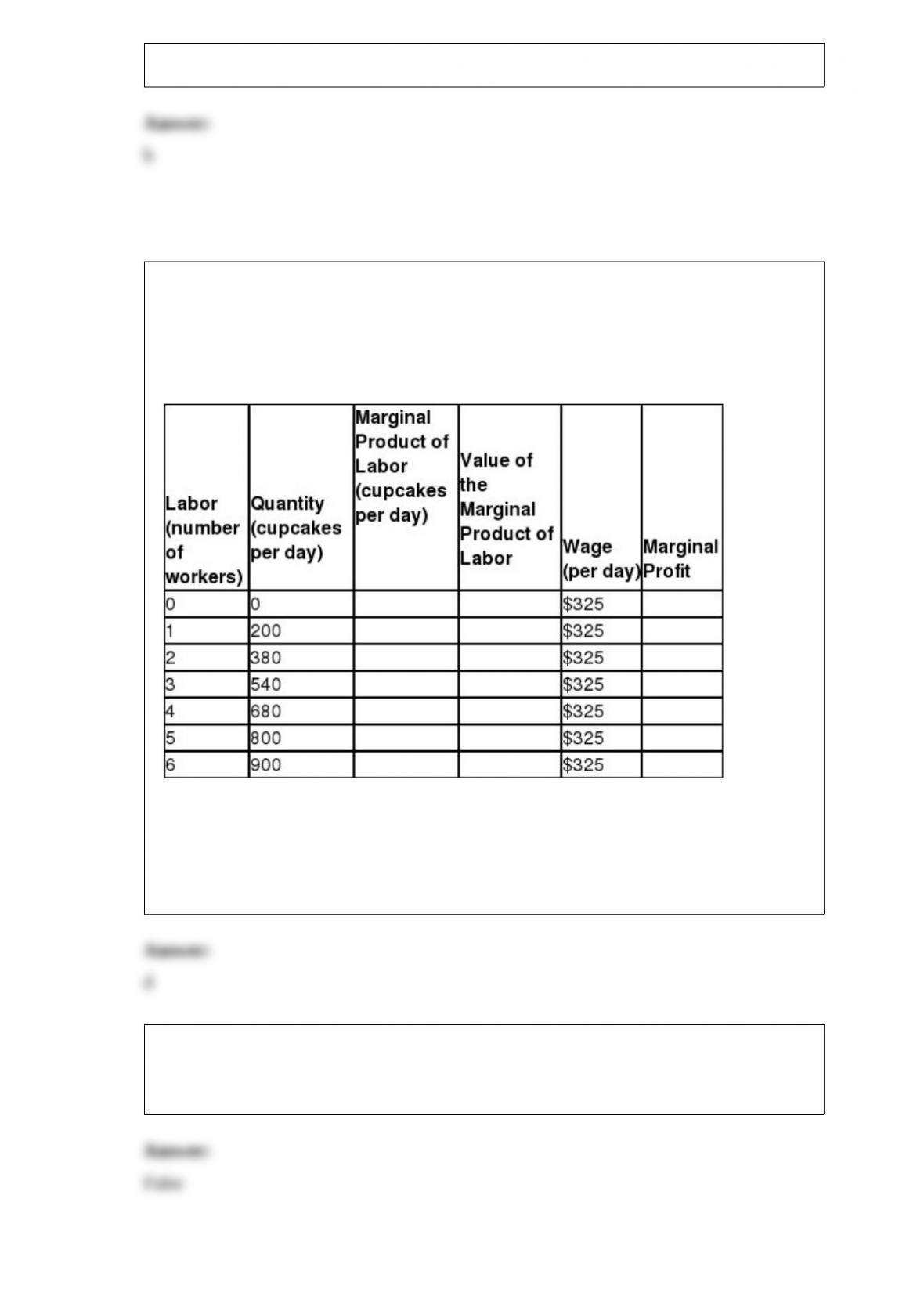
4) Table 18-11
Consider the following daily production data for MadeFromScratch, Inc.
MadeFromScratch sells cupcakes for $2 each and pays the workers a wage of $325 per
day.
Refer to Table 18-11. What is the marginal profit of the fourth worker?
a.$280
b.$25
c.€$5
d.€$45
5) The science of economics is a finished jewel, perfect and unchanging.
a.True
b.False
6) Accountants keep track of the money that flows into and out of firms.
a.True
b.False
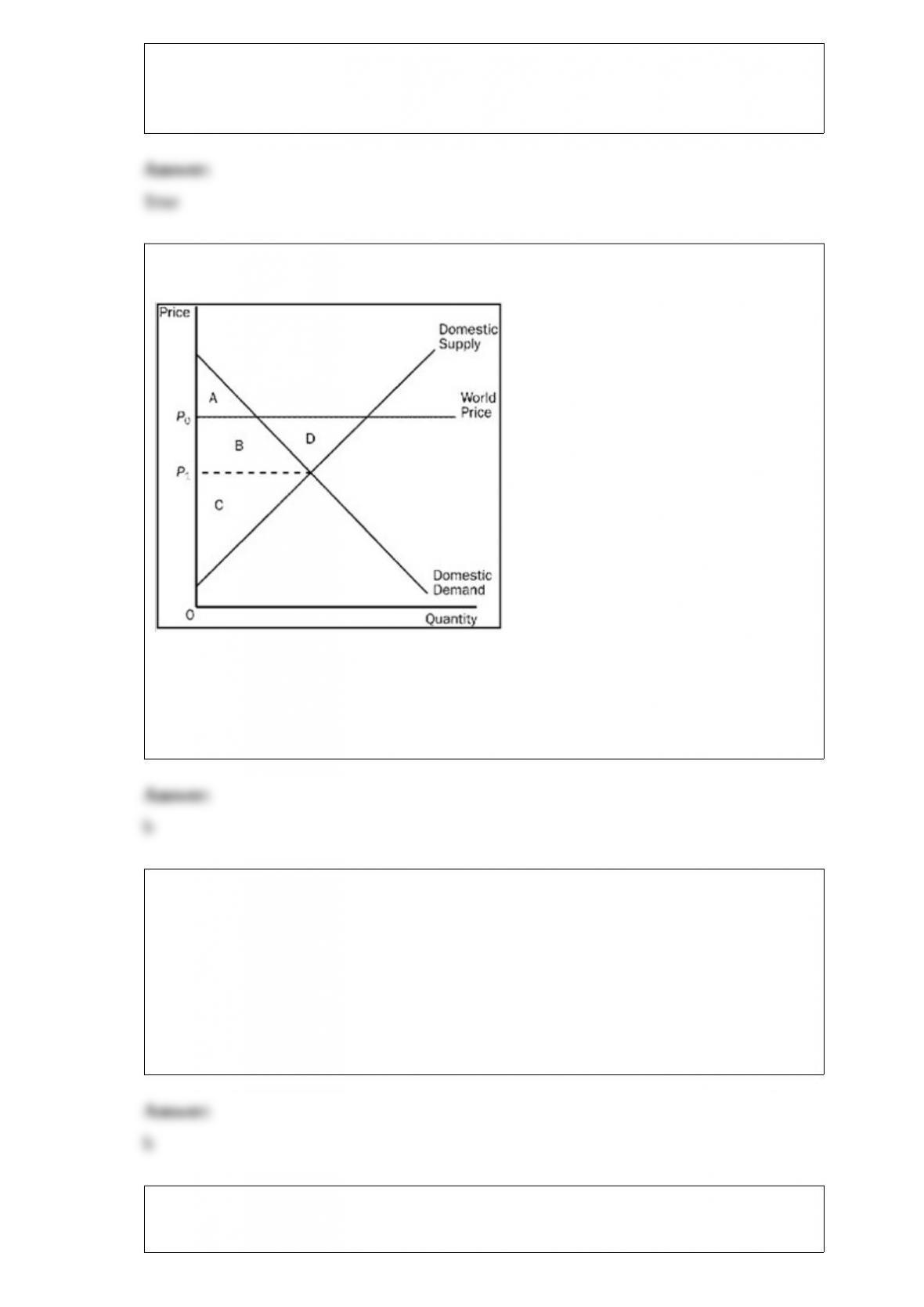
7) Figure 9-9
The change in total surplus in this market because of trade is
a.D, and this area represents a loss of total surplus because of trade.
b.D, and this area represents a gain in total surplus because of trade.
c.B + D, and this area represents a loss of total surplus because of trade.
d.B + D, and this area represents a gain in total surplus because of trade.
8) Consider the market for medical doctors. Suppose the opportunity cost of going to
medical school increases for many individuals. Suppose it generally takes about ten
years to become a practicing doctor. Holding all else constant, in ten years the
equilibrium quantity of doctors will
a.increase.
b.decrease.
c.not change.
d.It is not possible to determine what will happen to the equilibrium quantity.
9) Figure 9-2
The figure illustrates the market for calculators in a country.
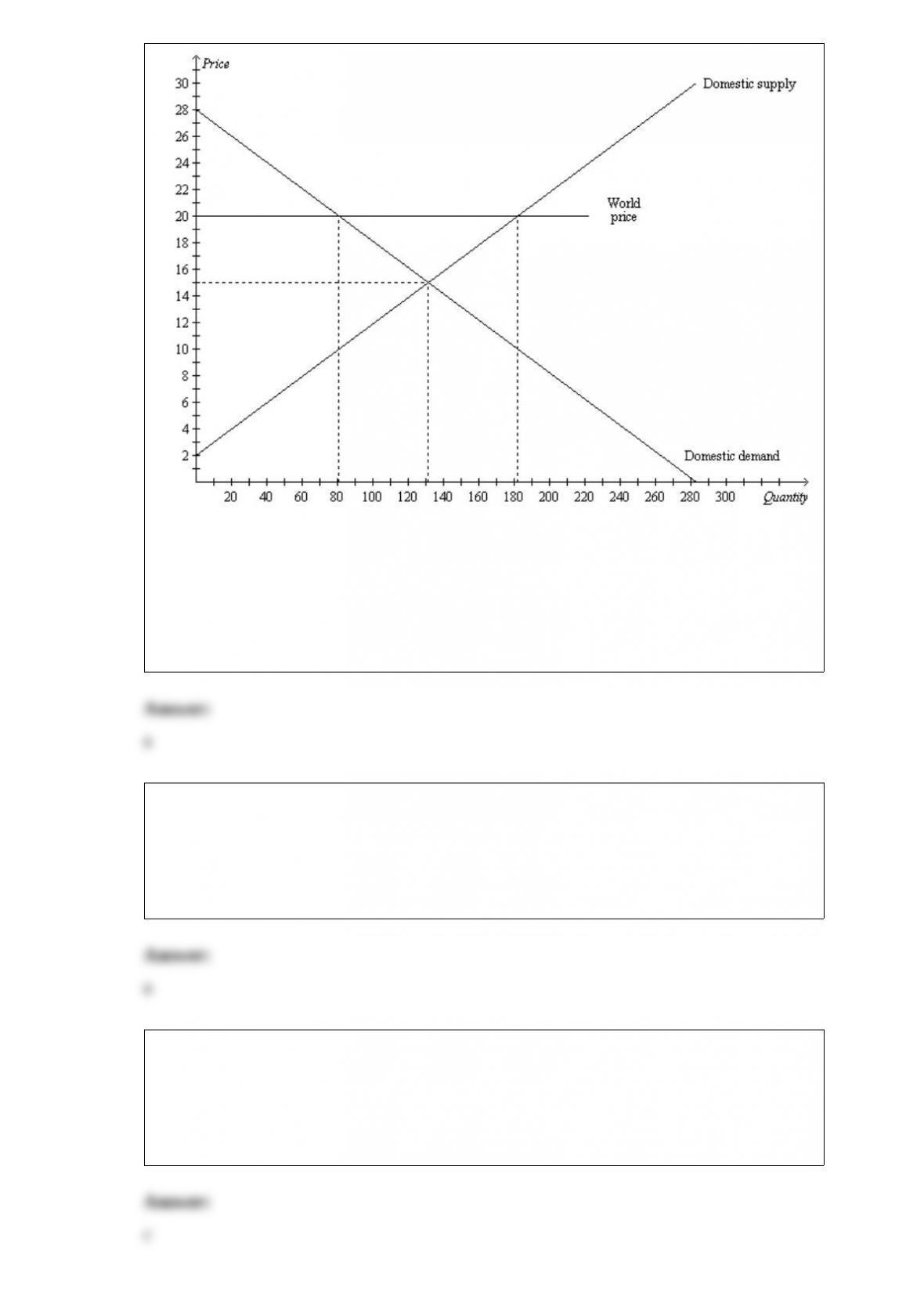
The world price for calculators represents
a.the demand for calculators from the rest of the world.
b.the supply of calculators from the rest of the world.
c.the level of inefficiency in the domestic market caused by trade.
d.the gap between domestic quantity demanded and domestic quantity supplied and the
resulting shortage.
10) If the for a good is 0.2, then a 3 percent decrease in price results in a
a.0.6 percent increase in the quantity demanded.
b.1.5 percent increase in the quantity demanded.
c.2 percent increase in the quantity demanded.
d.6 percent increase in the quantity demanded.
11) Liberalism is founded on a premise that behind a “veil of ignorance,”
a.justice cannot be agreed upon.
b.everyone’s income should be equal.
c.everyone would agree to “just” rules to reallocate income.
d.society should maximize the sum of individual utilities.

12) One result of a tax, regardless of whether the tax is placed on the buyers or the
sellers, is that the
a.equilibrium quantity of the good is unchanged.
b.price the buyer effectively pays is lower.
c.supply curve for the good shifts upward by the amount of the tax.
d.tax reduces the welfare of both buyers and sellers.
13) Critics of advertising argue that advertising
a.creates desires that otherwise might not exist.
b.hinders competition.
c.often fails to convey substantive information.
d.All of the above are correct.
14) If the demand curve for economics textbooks shifts to the left, then the value of the
marginal product of labor for economics textbook authors will
a.rise.
b.fall.
c.remain unchanged.
d.rise or fall; either is possible.
15) Select the type of market that is described by the following attributes: many firms,
differentiated products, and free entry.
a.natural monopoly
b.perfectly competition
c.monopolistic competition
d.monopoly
16) If a 15% increase in price for a good results in a 20% decrease in quantity
demanded, the is
a. 0.75.
b. 1.25.
c. 1.33.
d. 1.60.
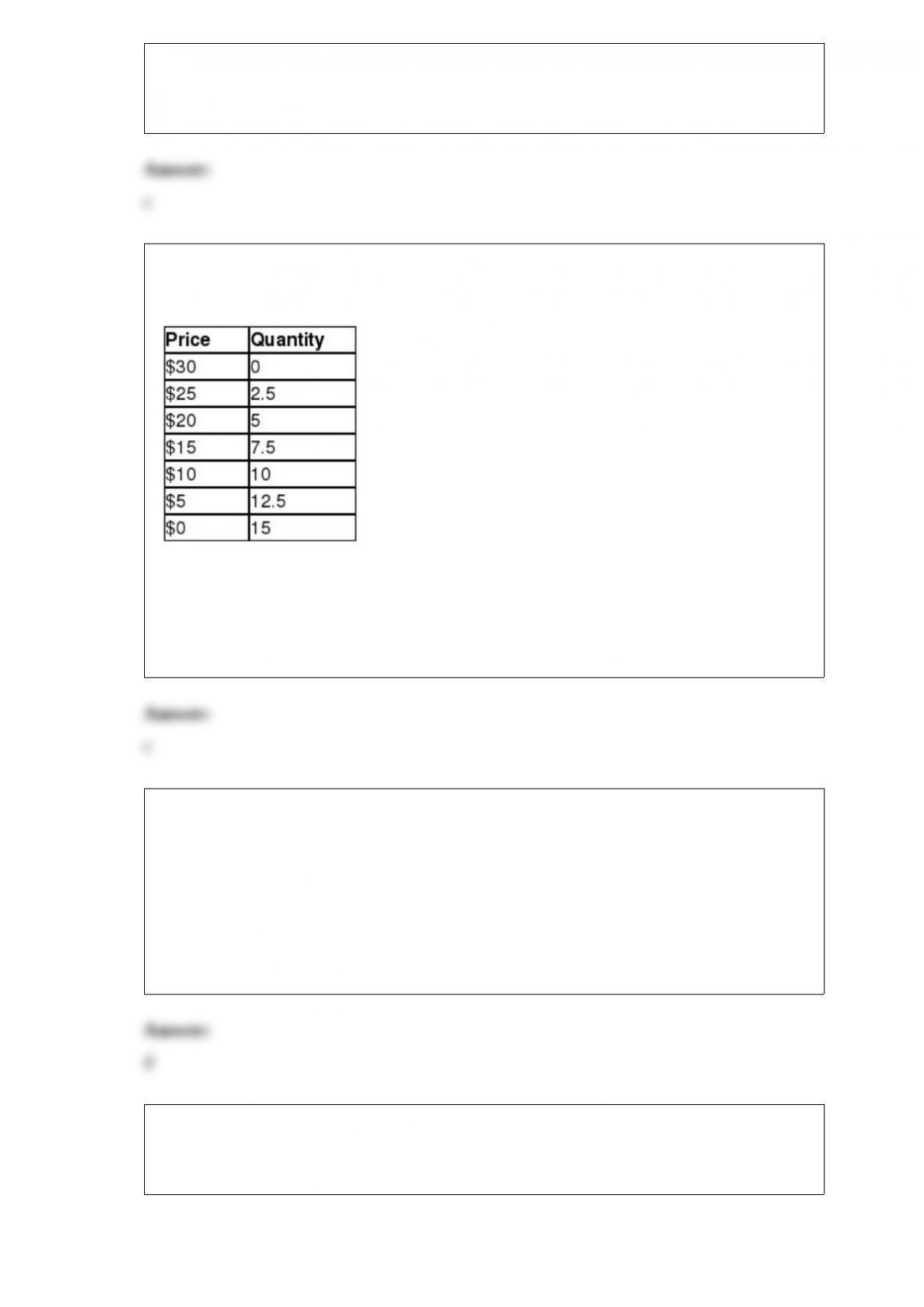
17) Table 15-4
A monopolist faces the following demand curve:
If the monopolist produces 10 units, what is its average revenue?
a. $100
b. $15
c. $10
d. $1
18) Among the people who are characterized below, who has the highest opportunity
cost of leisure?
a.a veterinarian who earns $25 per hour and who goes surfing during her leisure time
b.a professional tennis player who earns $50 per hour giving tennis lessons and who
watches TV during his leisure time
c.a retail clerk who earns $15 per hour and who plays computer games during his
leisure time
d.a CPA who earns $150 per hour and who golfs during her leisure time
19) Table 15-21
Tommy’s Tie Company, a monopolist, has the following cost and revenue information.
Assume that Tommy’s is able to engage in perfect price discrimination.
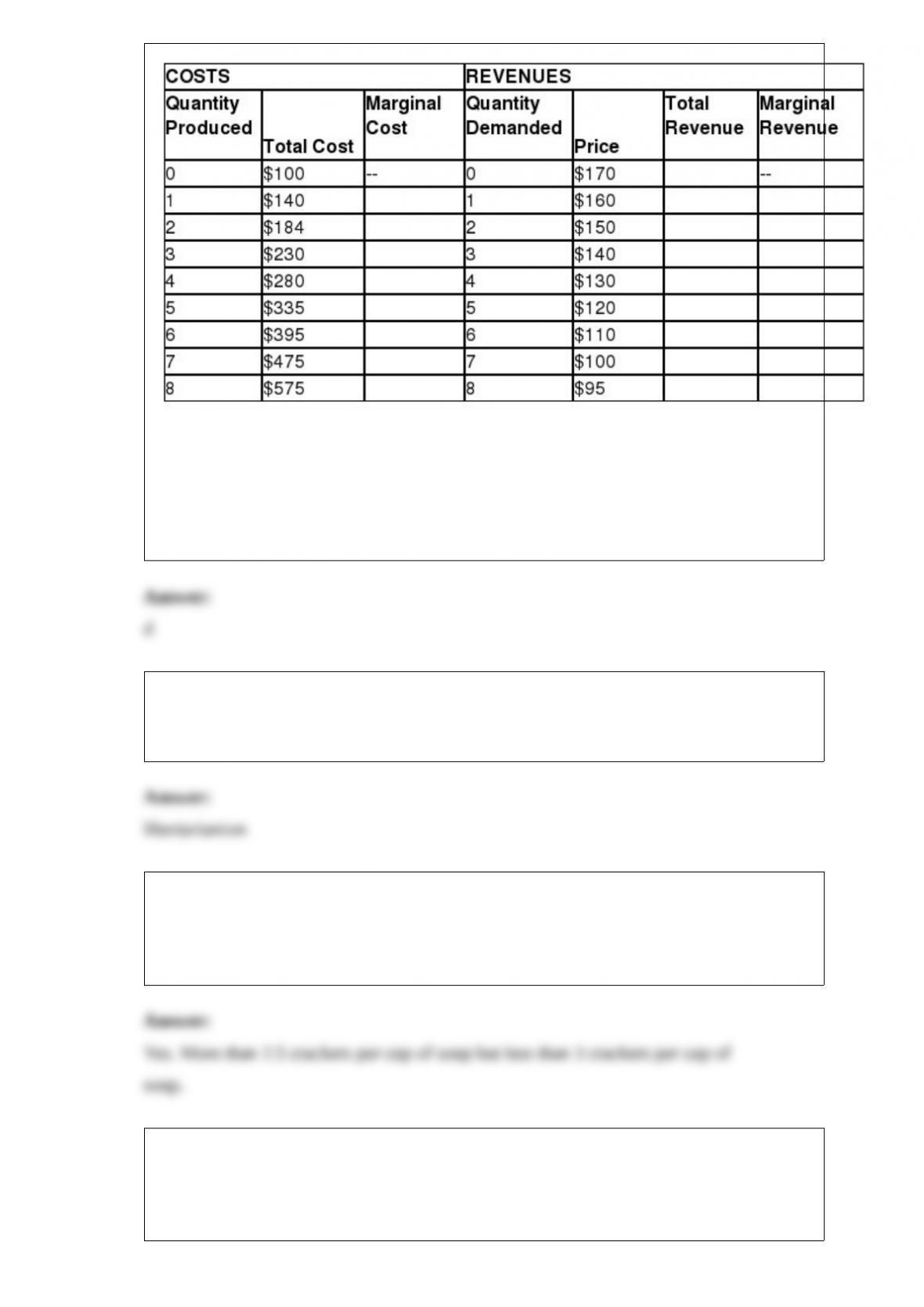
If the monopolist can engage in perfect price discrimination, what is the average
revenue when 7 ties are sold?
a.$90
b.$100
c.$110
d.$130
20) Which of the three political philosophies discussed in the textbook, if any, think the
government should not take from some individuals and give to others to achieve any
particular distribution of income?
21) Sally can make 8 cups of soup per hour or 20 crackers per hour. Harry can make 10
cups of soup per hour or 30 crackers per hour. Can Sally and Harry gain from trade? If
so, what is the range of prices of crackers for soup at which they would both find trade
advantageous?
22) You have the afternoon free. You have a choice between going to the movies with a
friend or studying economics for three hours. If you go to the movies, you will spend
$8.00 on a ticket and $50 on popcorn. If you choose to study economics for three hours,
you will raise your exam grade by 10 points.
What is your opportunity cost of going to the movies?
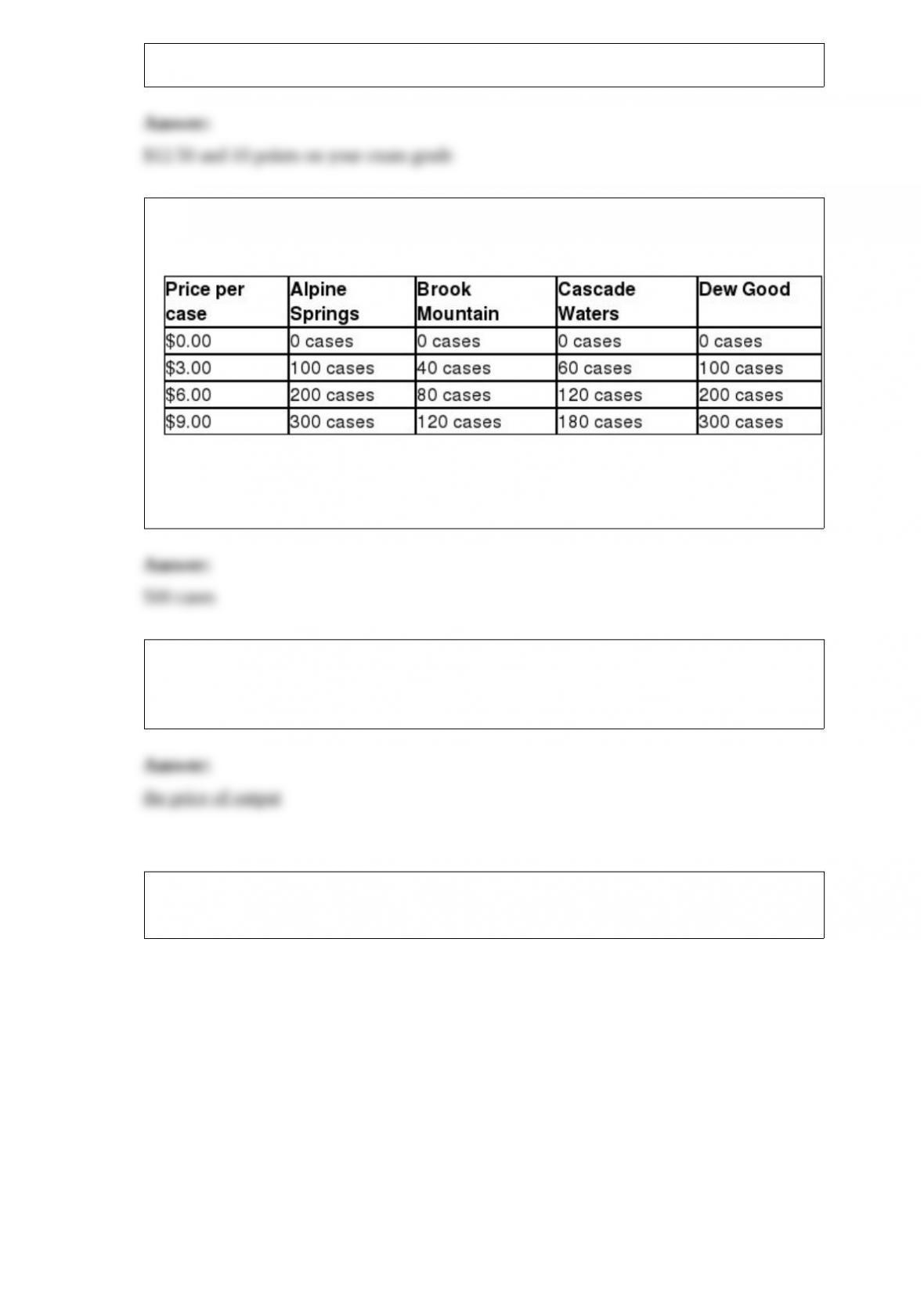
23) The following table shows the number of cases of water each seller is willing to sell
at the prices listed.
Assuming these are the only four suppliers in this market and the function for market
demand is QD=1000-100P, where QDis the quantity demanded and P is the price, what
is the equilibrium quantity?
24) When a competitive firm hires labor up to the point at which the value of the
marginal product of labor equals the wage, it also produces output up to the point at
which marginal cost is equal to __________ .
25) Figure 18-12. The figure shows the relationship between the number of mechanics
hired and the number of car repairs performed per day at a car-repair shop.
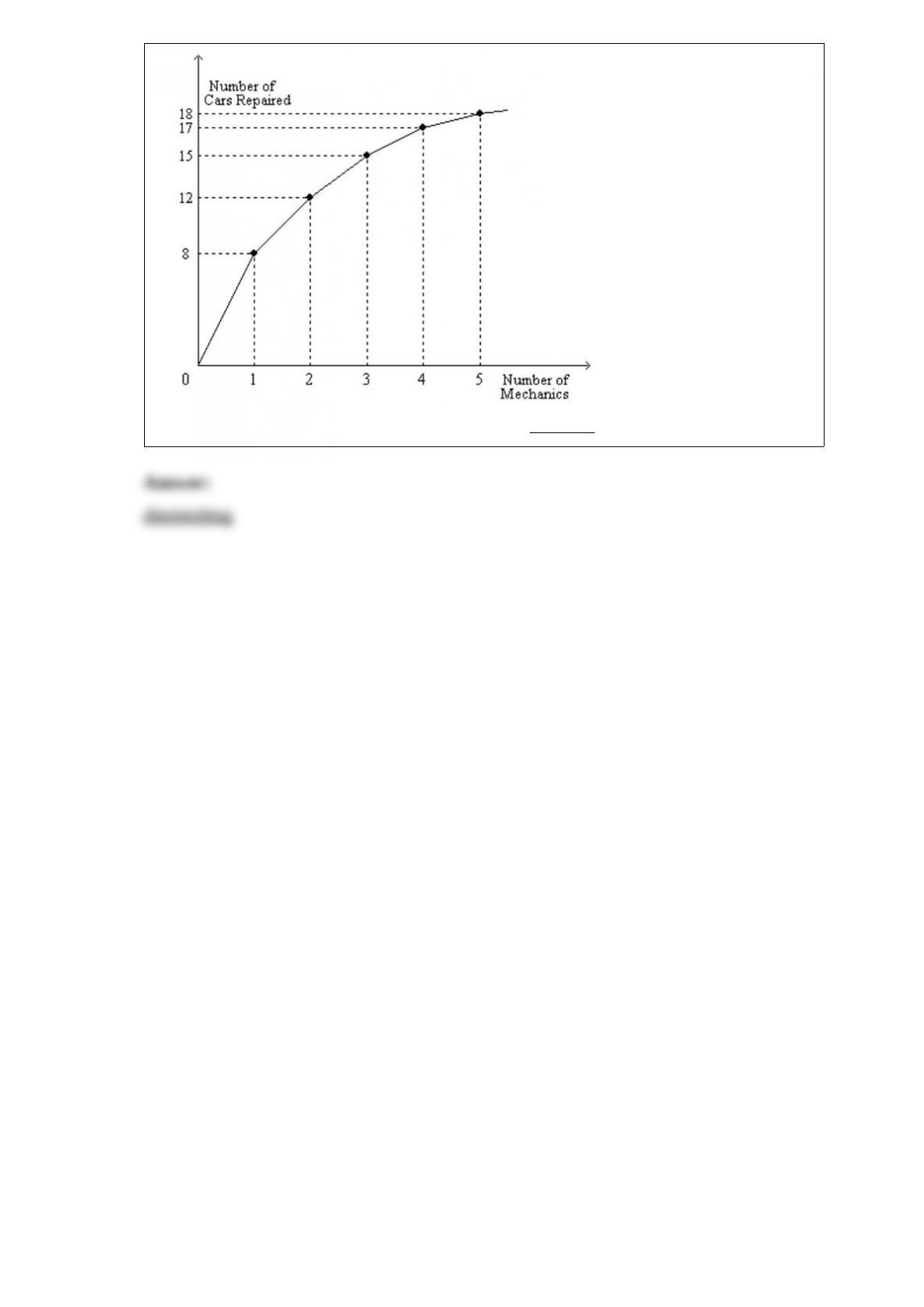
Refer to Figure 18-12. The
production process depicted on the graph exhibits _______ marginal product of labor.