The so-called tragedy of commons relates to the idea that
A) no one has an incentive to maintain collectively owned property.
B) collectively owned resources tend to be underused.
C) collective ownership provides the proper private incentives for efficiency because
individuals bear the full costs of their own decisions and enjoy the full benefits.
D) central planning sets all production and distribution targets.
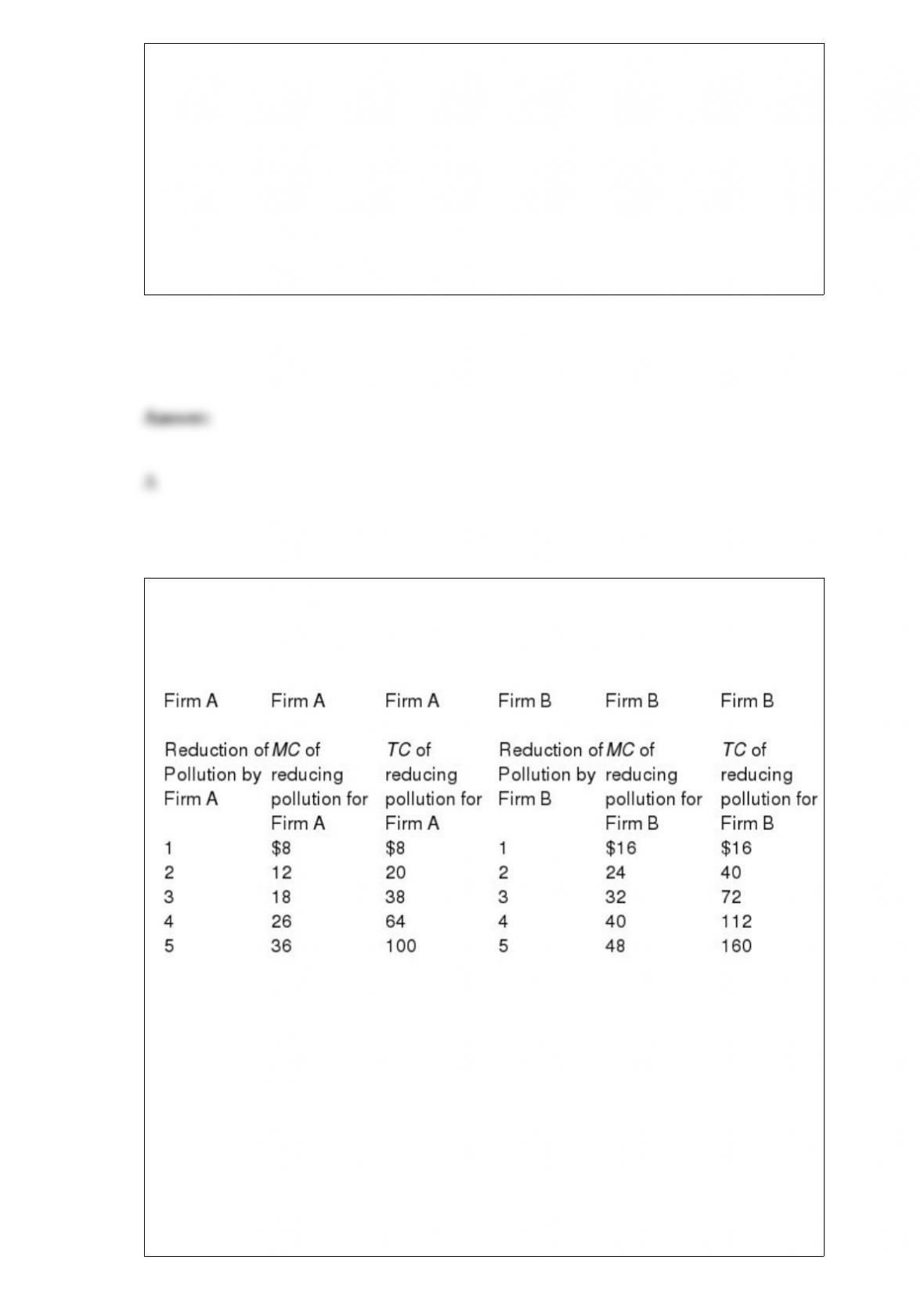
Table 16.3 shows the situation facing two firms, both of which are polluting. Assume
that each firm emits 5 units of pollution.
Table 16.3
Refer to Table 16.3. Suppose the government wants to reduce the total amount of
pollution from the current level of 10 to 4. To do this, the government caps each firm’s
emissions at 2 units and issues 2 permits to each firm. If firms are allowed to trade
permits, how many permits will be traded between the two firms?
A) A will buy two permits from B.
B) B will buy two permits from A.
C) A will buy one permit from B.
D) B will buy one permit from A.
A firm suffers losses if
A) price exceeds average variable cost but is less than average total cost.
B) price exceeds marginal cost.
C) total revenue is greater than the total fixed cost of production.
D) total revenue is greater than the total variable cost of production but less than total
costs.
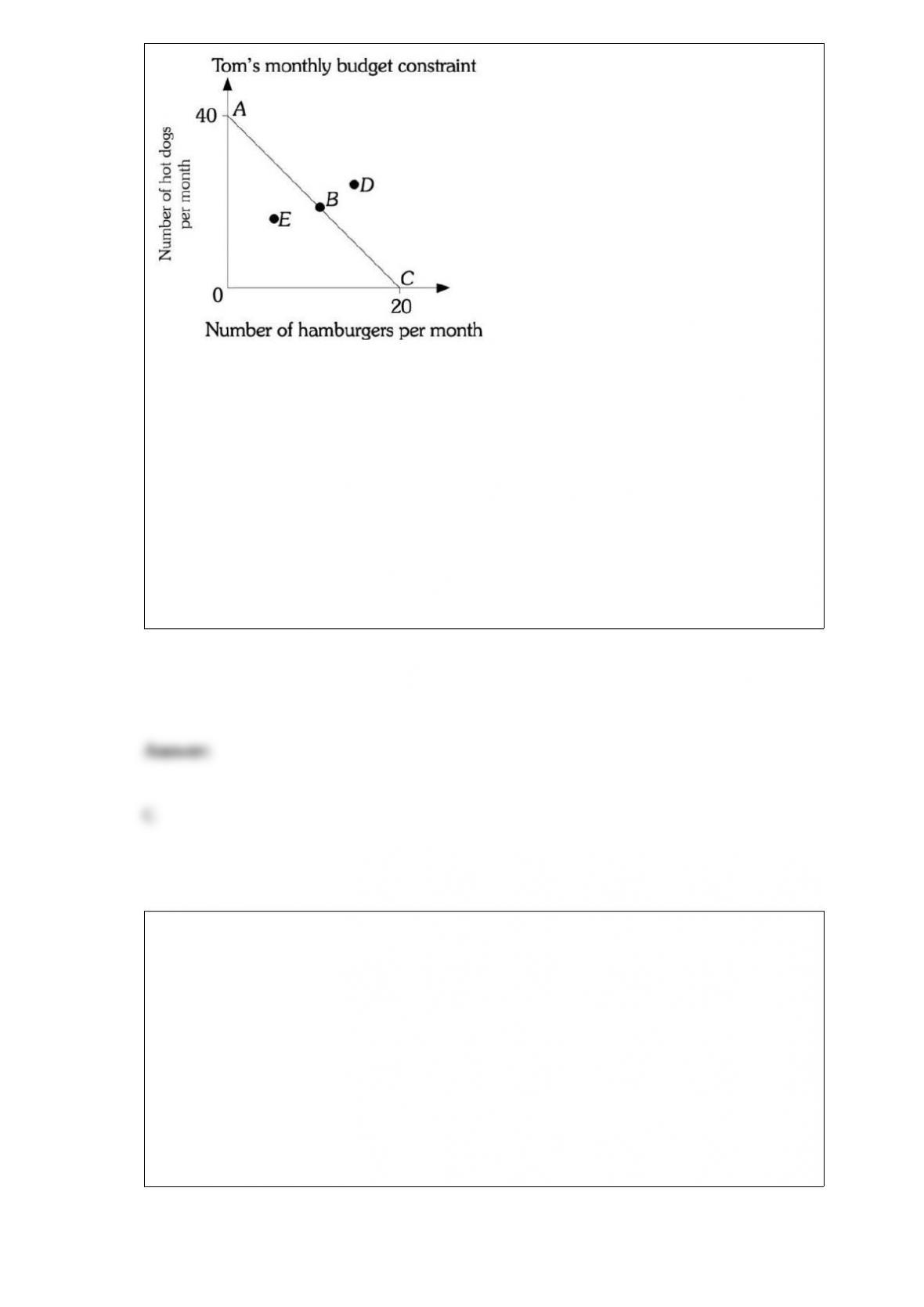
Figure 6.1
Refer to Figure 6.1. Assume Tom’s budget constraint is AC. At which point does Tom
consume only hamburgers?
A) A
B) B
C) C
D) D
You use $2,000 of your own money to start a dog-sitting service. During the first year
you earn a 10% return on your investment. If the current interest rate is 7%, you earn an
economic profit of
A) $60.
B) $140.
C) $200.
D) $340.

If a country has a trade deficit of $50 billion, which of the following can be true?
A) The country’s exports are $150 billion, and its imports are $100 billion.
B) The country’s exports are $110 billion, and its imports are $160 billion.
C) The country’s exports are $100 billion, and its imports are $50 billion.
D) The country’s exports are $150 billion, and its imports are $60 billion.
The economist Joseph Schumpeter argued that industrial concentration, in which a
relatively ________ number of firms control the market place, actually ________ the
rate of technological advance.
A) large; increased
B) small; increased
C) large, decreased
D) small; decreased

At the Pampered Pet Salon the marginal products of the first, second, and third workers
are 50, 36, and 25 dogs washed, respectively. The total product (number of dogs
washed) of the three workers is
A) 50.
B) 86.
C) 107.
D) 111.
Which of the following is a question answered with normative economic reasoning?
A) If the college offers free parking for students, will more students drive to campus?
B) If the college provided more financial aid assistance, would more students benefit?
C) If the college increased tuition, would class size decline?
D) Should the college cut tuition to stimulate enrollment?
The marginal private cost to a firm of producing the 10th unit of output is $100. The
marginal damage cost of the 10th unit of output is $25. The marginal social cost of the
10th unit of output is
A) $25
B) $75.
C) $125.
D) indeterminate from the given information.
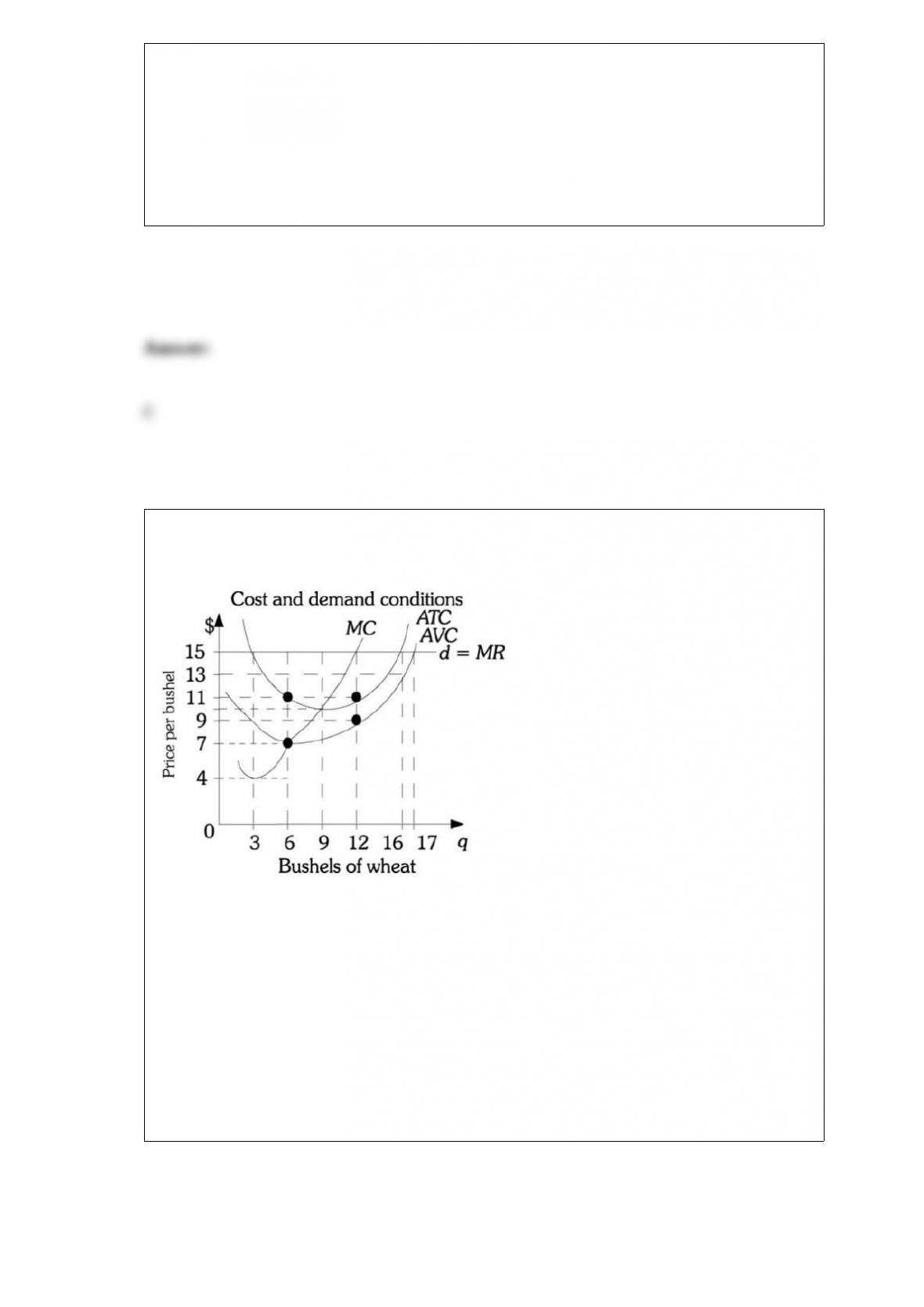
Figure 9.1
Refer to Figure 9.1. If this farmer maximizes profits, his average variable cost will be
A) $7.
B) $9.
C) $11.
D) $15.

A firm’s capital is measured as a ________ while investment in new capital is measured
as a ________.
A) flow; stock
B) stock; flow
C) stock; change
D) physical amount; dollar value
In order to discourage consumers from eating unhealthy fast food, the government is
considering placing a tax on all fast food sales. Which of the following statements is
true?
A) Given the numerous alternatives, consumers’ demand for fast food is relatively
elastic and the tax will likely work to discourage fast food consumption.
B) The tax on fast food will likely raise considerable revenue but will be unlikely to
reduce the consumption of fast food by consumers.
C) The tax on fast food will likely increase the demand for home cooked meals.
D) Both A and C are true.
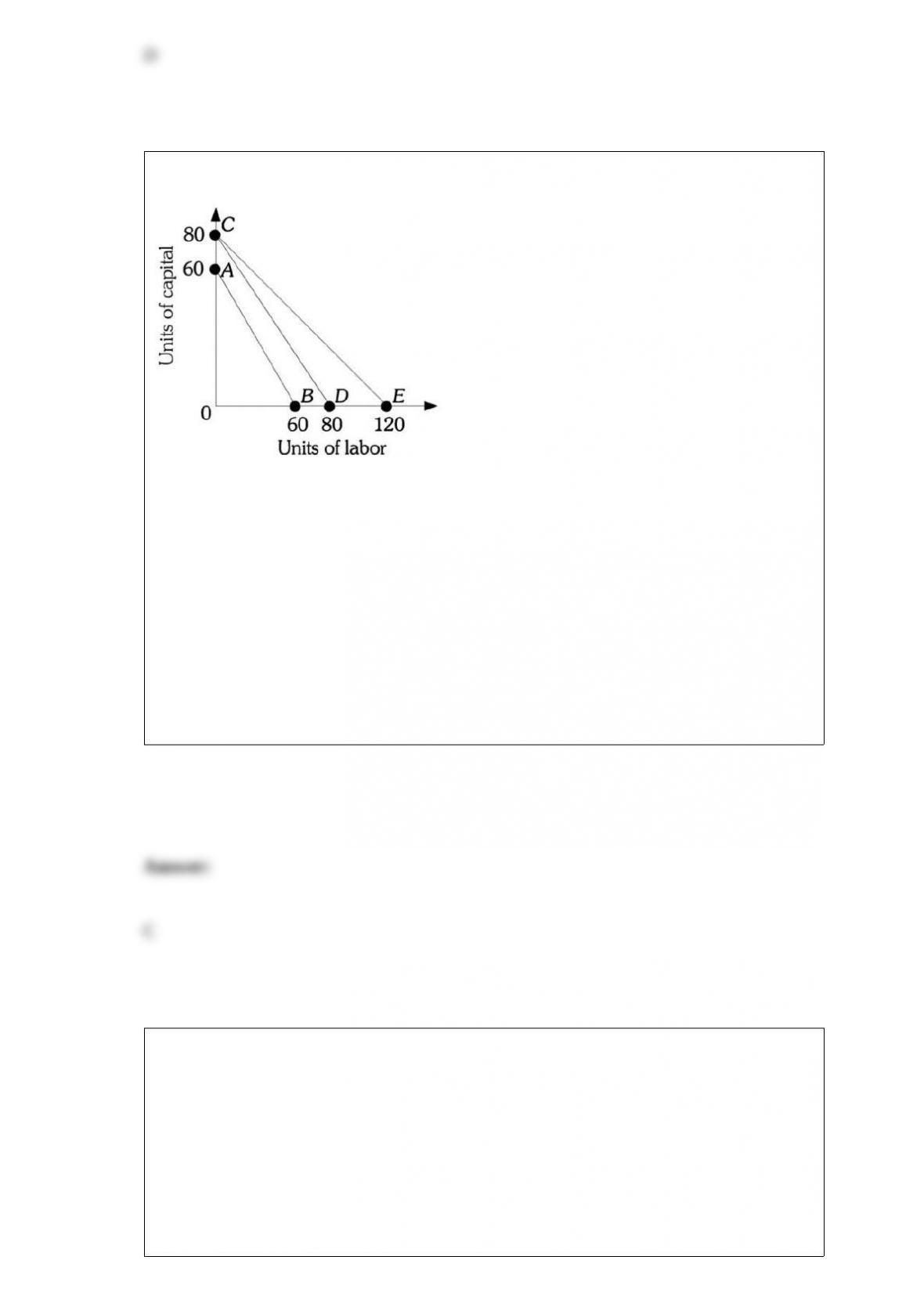
Figure 7.9
Refer to Figure 7.9 The firm’s isocost line could shift from CE to CD if
A) the price of capital increased.
B) the firm’s total expenditures decreased by 33%.
C) the price of labor increased by 33%.
D) the firm’s total expenditures decreased by 33% or the price of capital and labor each
increased by 50%.
When a monopolist sells two units of output its total revenue is $150. When a
monopolist sells three units of output its total revenue, is $210. When the monopolist
sells three units of output, the price per unit is
A) $50.
B) $60.
C) $70.
D) $75.
Darius has $1,200 a month to spend on clothing (c) and food (f). The price of clothing is
$60 and the price of food is $10. What is the equation for Darius’s budget constraint?
A) c + f < $1,200
B) $60 × c + $10 × f ≤ $1,200
C) $60 × c + $10 × f > $1,200
D) $60 × c + $10 × f = $1,200

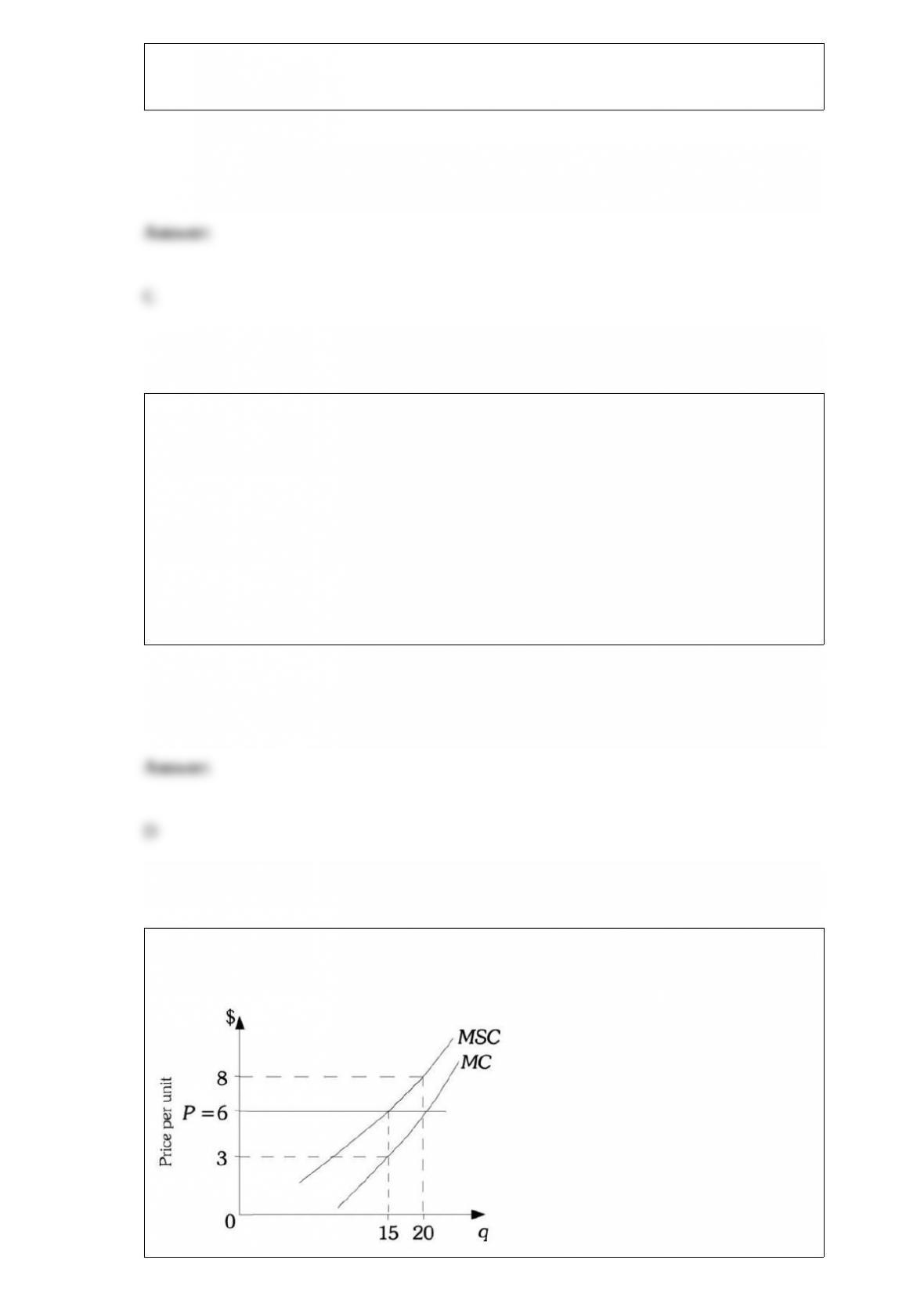
Figure 16.4
Refer to Figure 16.4. If the firm maximizes profits and the government ________ , it
will produce 20 units of output.
A) establishes a price floor of $6
B) establishes a price ceiling of $8
C) requires it to take damages into account
D) does not require it to take damages into account
Lettuce and spinach are substitutes. Lettuce and tomatoes are complements. Lettuce is a
normal good. During the winter, about 20% of the lettuce crop was destroyed by
flooding.
The floods that destroyed part of the lettuce crop would have caused the equilibrium
price of spinach to ________ and the equilibrium quantity of spinach to ________.
A) decrease; decrease
B) decrease; increase
C) increase; increase
D) increase; decrease
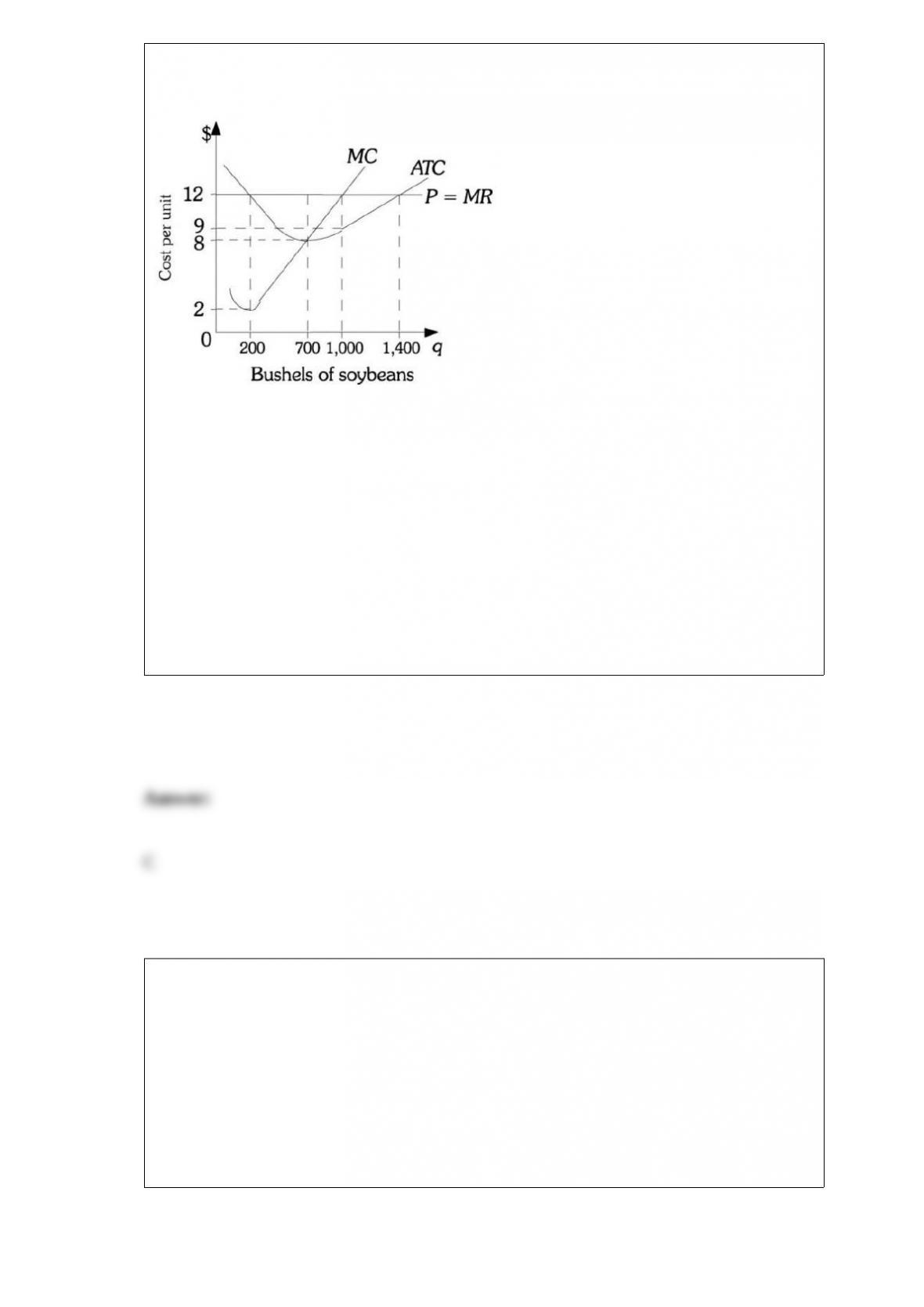
Figure 8.8
Refer to Figure 8.8. What is the total revenue from producing the profit maximizing
level of output?
A) $8,400
B) $9,000
C) $12,000
D) $16,800
The Food Stamp program is financed through ________.
A) private insurance contributions
B) general revenues
C) the income tax
D) a payroll tax
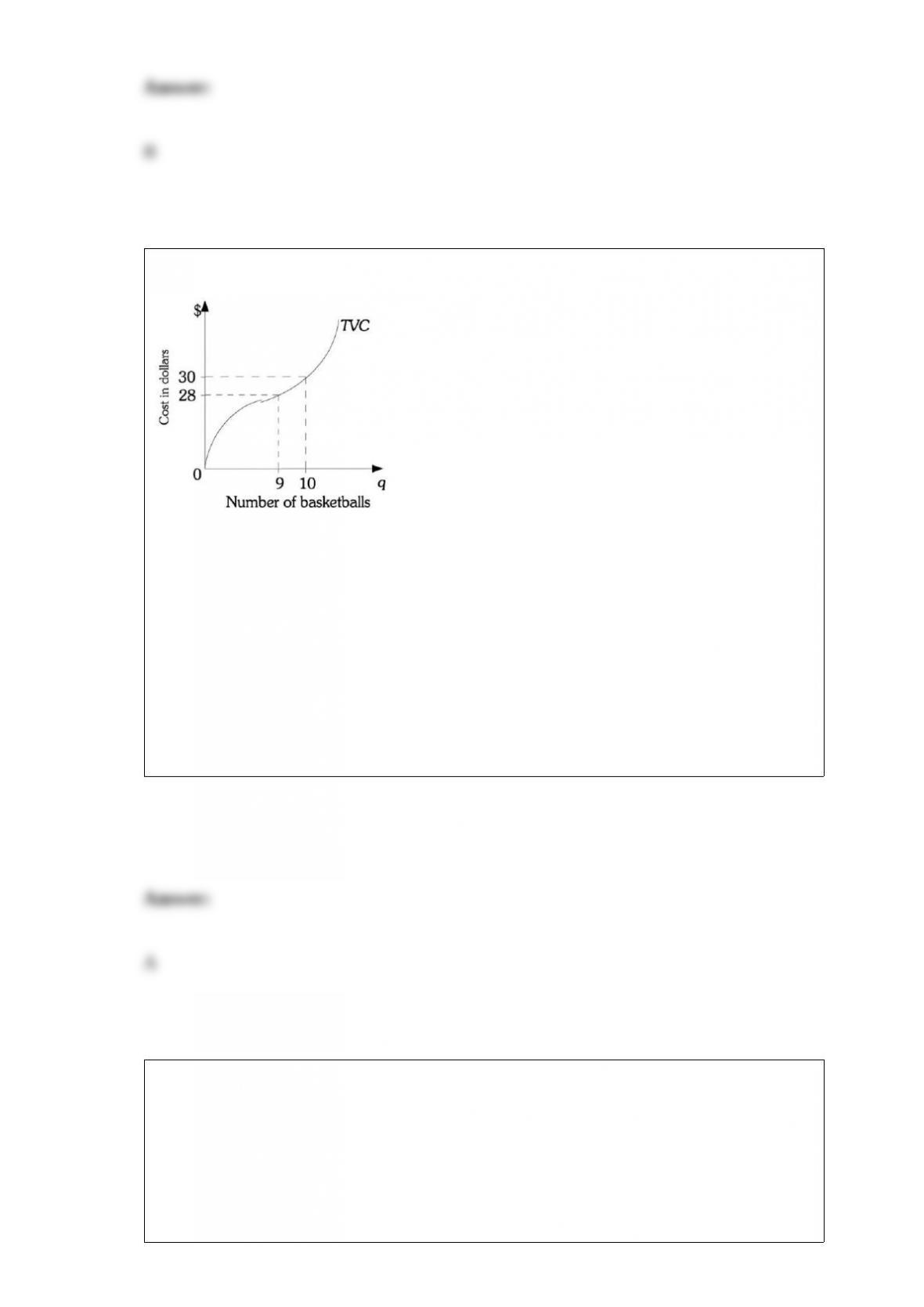
Figure 8.3
Refer to Figure 8.3. The marginal cost of the ninth basketball is
A) less than $2.
B) $2.
C) $3.
D) greater than $3.
Polar Water, a company that delivers bottled water, is considering three investment
opportunities. The expected returns for each of the projects are as follows: buying a
new delivery van, 20%; computer training for its office staff, 15%; and defensive
driving training for its drivers, 8%. If the current interest rate is 10%, the firm should
invest in
A) only the purchase of a new delivery van.

B) the purchase of a new delivery van and computer training for its office staff.
C) all of the projects because the average of the returns is greater than 10%.
D) only the office staff training project.
If an individual perfectly competitive firm charges a price below the industry
equilibrium price, it will
A) not sell anything.
B) sell part of what it produces.
C) sell all that it produces and gain more revenue than competing firms will.
D) sell all that it produces but gain less revenue than competing firms will.
Related to the Economics in Practice on page 10: Based on a study of the effects of
roommates on college grades discussed in the Economics in Practice, which of the
following is true?
A) The effects of roommates on grade point average are strong.
B) The effects of roommates on effort in school are strong.
C) The effects of roommates on fraternity membership are strong.

D) all of the above
A lawn service company has the following production possibilities. With one, two,
three, and four workers, the company can mow 4, 9, 12, and 14 lawns per day,
respectively.
The marginal product of the third worker is
A) 2
B) 3
C) 4
D) 12
Joe’s Butcher Shop is producing where MR = MC; Joe’s Butcher Shop must be
A) earning a zero economic profit.
B) incurring a loss.
C) maximizing profits.
D) maximizing revenue but not maximizing profits.
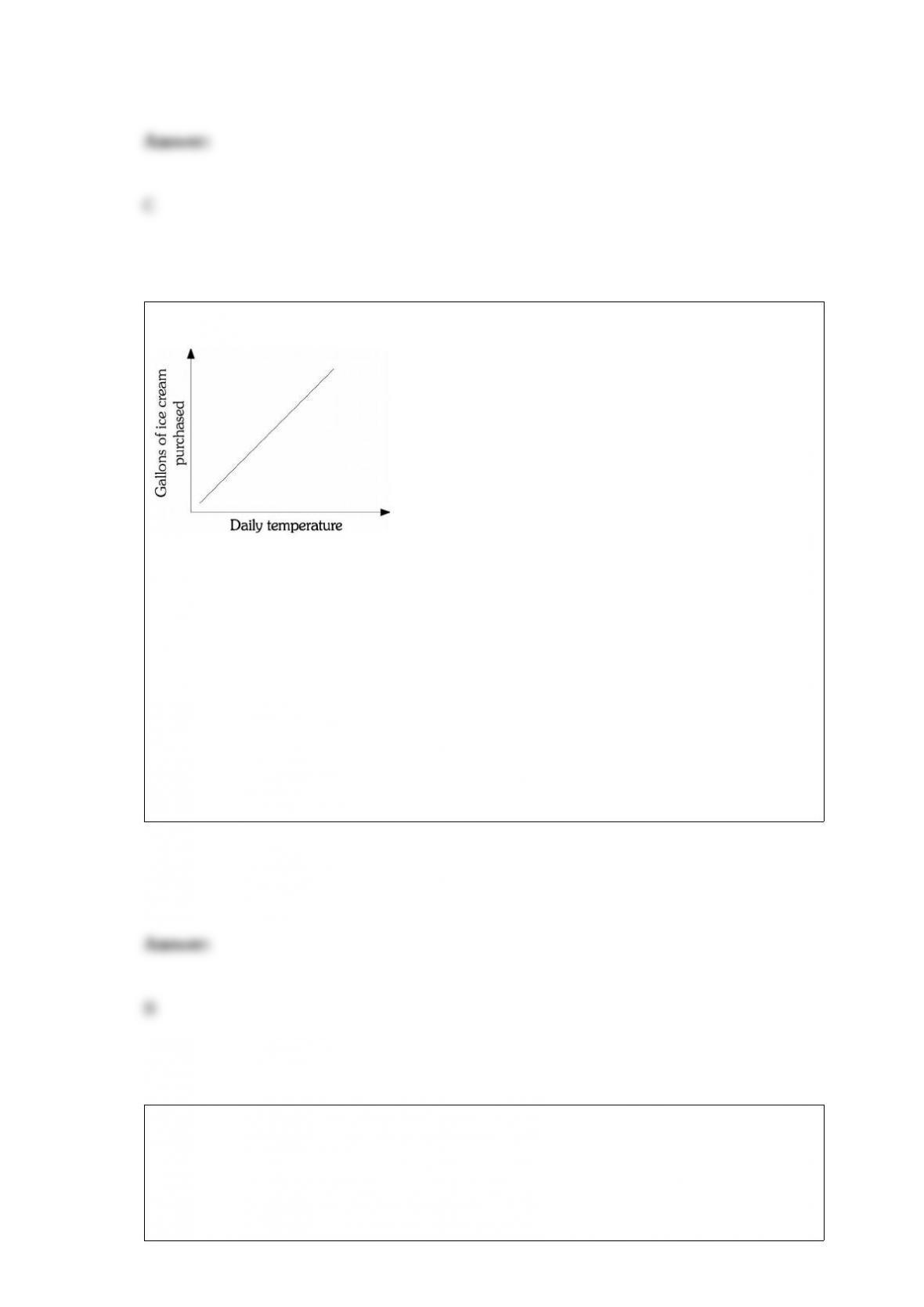
Figure 1
Refer to Figure 1.1. There is ________ relationship between the daily temperature and
the number of gallons of ice cream purchased.
A) a negative
B) a positive
C) both a negative and a positive
D) an inverse
If, at a low cost, you cannot prevent a person from benefiting from the consumption of
a good you produced, the good is
A) excludable.
B) nonexcludable.
C) rival in consumption.
D) nonrival in consumption.
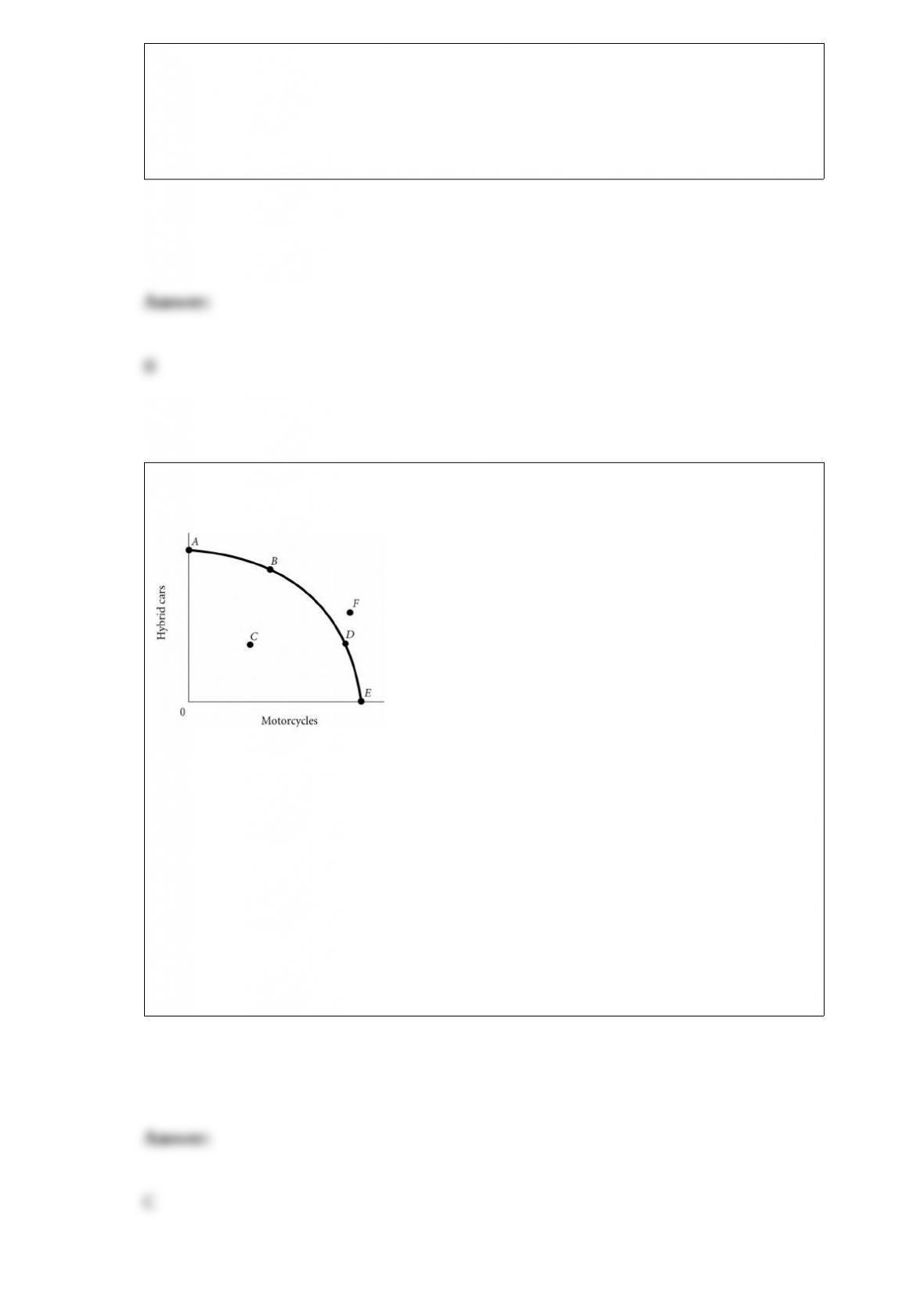
Figure 2.4
According to Figure 2.4, as the economy moves from Point B to Point D, the
opportunity cost of motorcycles, measured in terms of hybrid cars,
A) remains constant.
B) decreases.
C) increases.
D) initially increases, then decreases.

The demand for shoes will likely be price ________ while the demand for Sketchers Go
Walk walking shoes will likely be price ________.
A) elastic; elastic
B) elastic; inelastic
C) inelastic; elastic
D) inelastic; inelastic
The Reliable Auto Repair Shop has total revenue of $5,000. It has total fixed costs of
$700 and total variable costs of $2,500. The Reliable Auto Repair Shop’s profit is
A) -$3,200.
B) $1,800.
C) $2,500.
D) $4,300.