
Generally, negative externalities result in
a. too much of a good being produced.
b. the socially optimal output of a good being produced.
c. too little of a good being produced.
d. either a or c
e. any of the above
To increase the demand for union labor, a labor union might attempt to
a. increase the demand for the products produced by union labor.
b. decrease substitute factor prices.
c. decrease the marginal physical product productivity of union labor.
d. a and b
e. all of the above
Suppose that a tariff is imposed on imported cheese. This will have the effect of
__________ the price of cheese, __________ consumers’ surplus, and __________
producers’ surplus.
a. increasing; increasing; increasing
b. decreasing; decreasing; decreasing
c. increasing; increasing; decreasing
d. increasing; decreasing; increasing
e. decreasing; decreasing; increasing
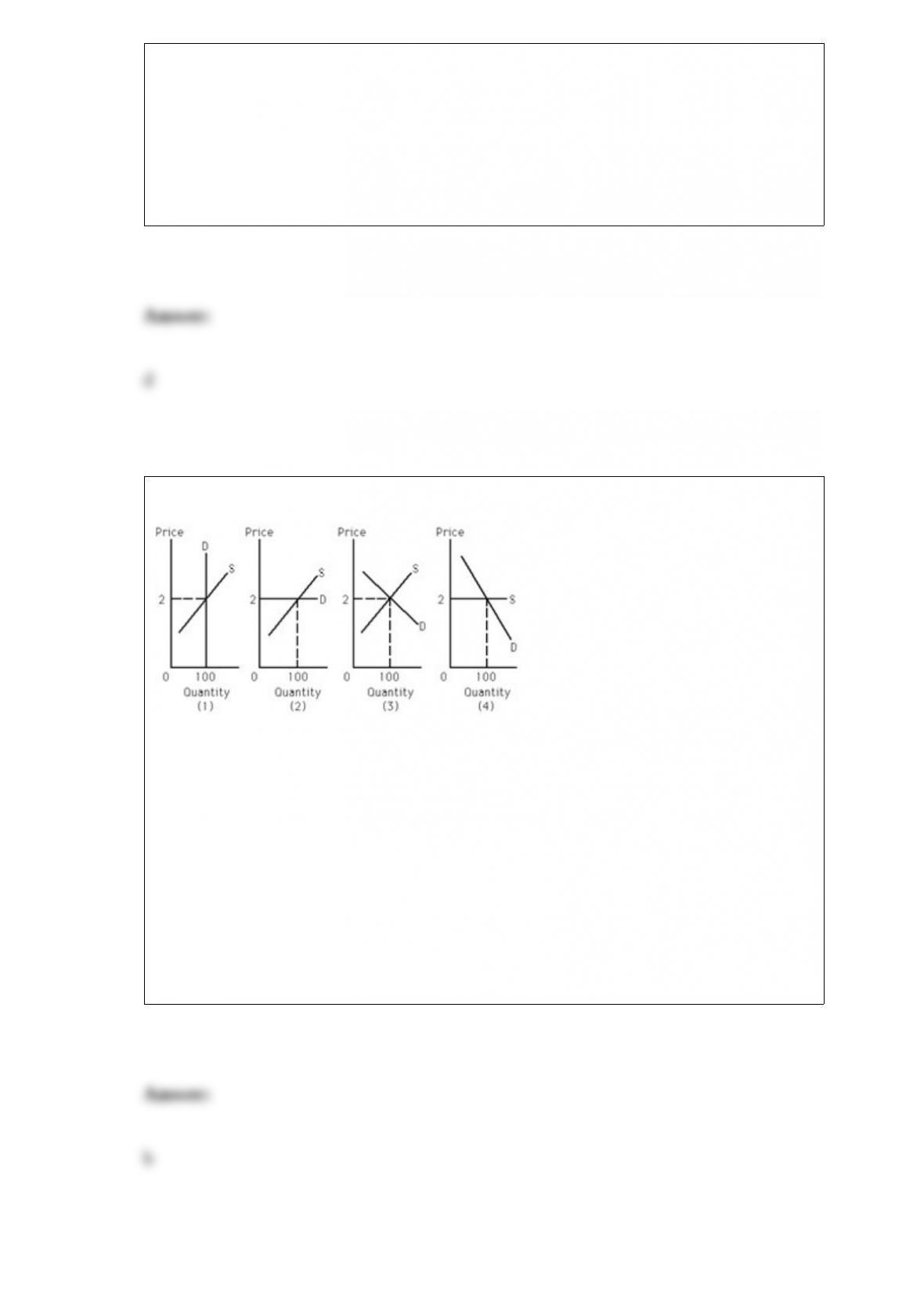
Exhibit 20-7
If the government is contemplating imposing a per-unit tax and it wants the tax to have
as small a negative effect on consumers as possible, it should choose a good for which
the market is depicted on graph
a. (1).
b. (2).
c. (3).
d. (4).
In the case of a positive externality, the entire demand curve lies
a. above the entire marginal social benefit curve.
b. below the entire marginal social benefit curve.
c. above the entire supply curve.
d. below the entire supply curve.
e. b and c
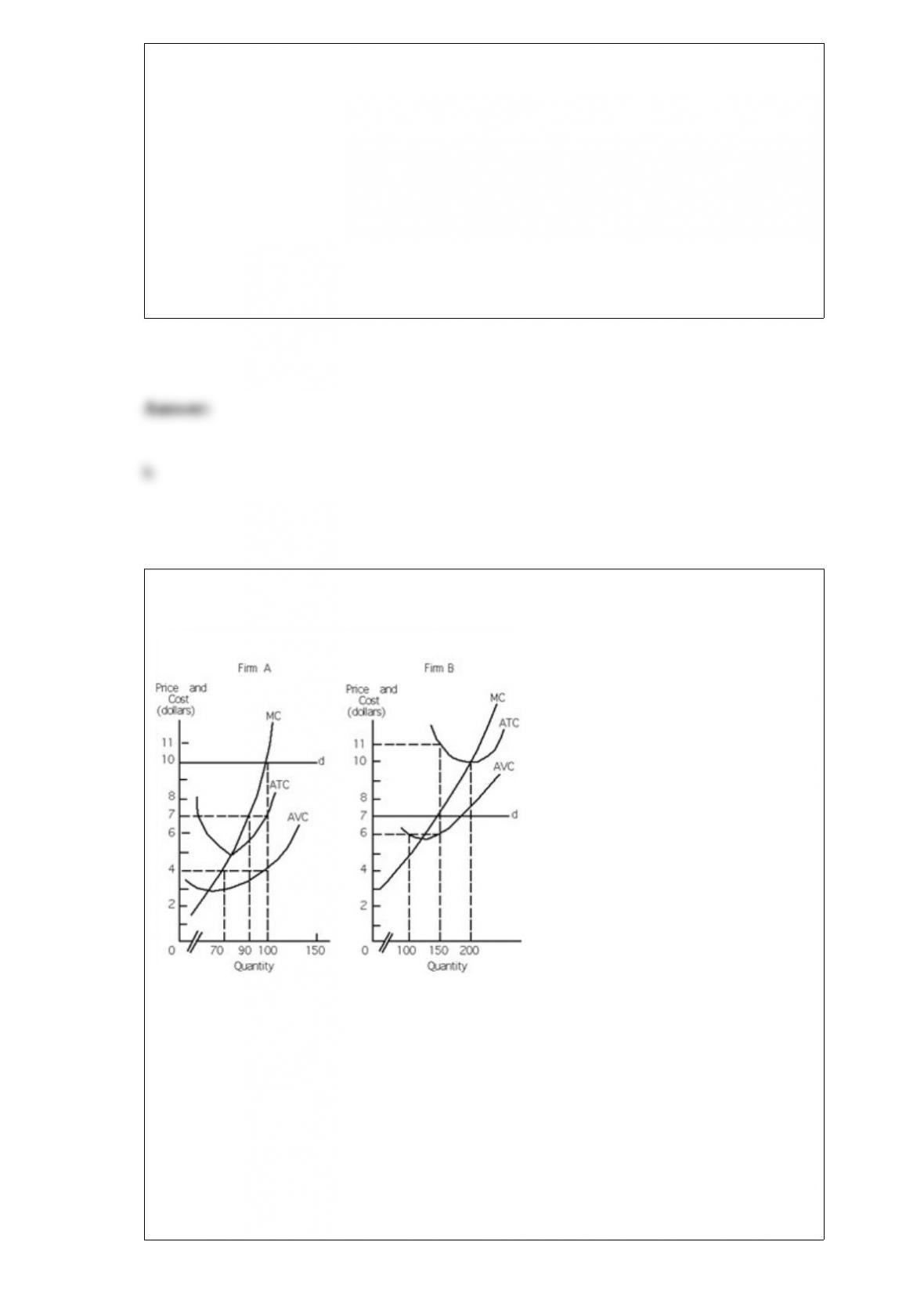
Exhibit 23-8
What is the total revenue of Firm A at the profit-maximizing (or loss-minimizing) level
of output?
a. $300
b. $700
c. $1,000
d. $400

Suppose 60 percent of all households earn 60 percent of all income. Based on this
information it follows that
a. 20 percent of all households earn 20 percent of all income.
b. 40 percent of all households earn 40 percent of all income.
c. the Lorenz curve and the line of perfect income equality are one and the same.
d. a, b, and c
e. none of the above
If the PPF for two goods is a downward-sloping straight line, the resources used to
produce those goods are equally well suited to the production of both goods.
a. True
b. False

If a demand curve shifts rightward, this means
a. quantity demanded is greater only at one particular price.
b. quantity demanded is greater at every price.
c. buyers are willing and able to purchase more of the good at every price.
d. buyers are willing and able to purchase less of the good at every price.
e. b and c
An example of an implicit cost is the foregone income that a business owner-manager
could have earned working for someone else.
a. True
b. False
Which of the following is a positive microeconomics statement?
a. The central bank should increase the nation’s money supply.
b. The increase in the nation’s money supply helped push the nation’s unemployment
rate down in the short run.
c. Ford Motor Company’s new advertising campaign ended up hurting General Motors’s
sales.
d. The local government ought to spend more on recreational activities.
Global technologies, such as electronics, have made up a significant portion of the
recent wave of manufacturing offshoring.
a. True
b. False
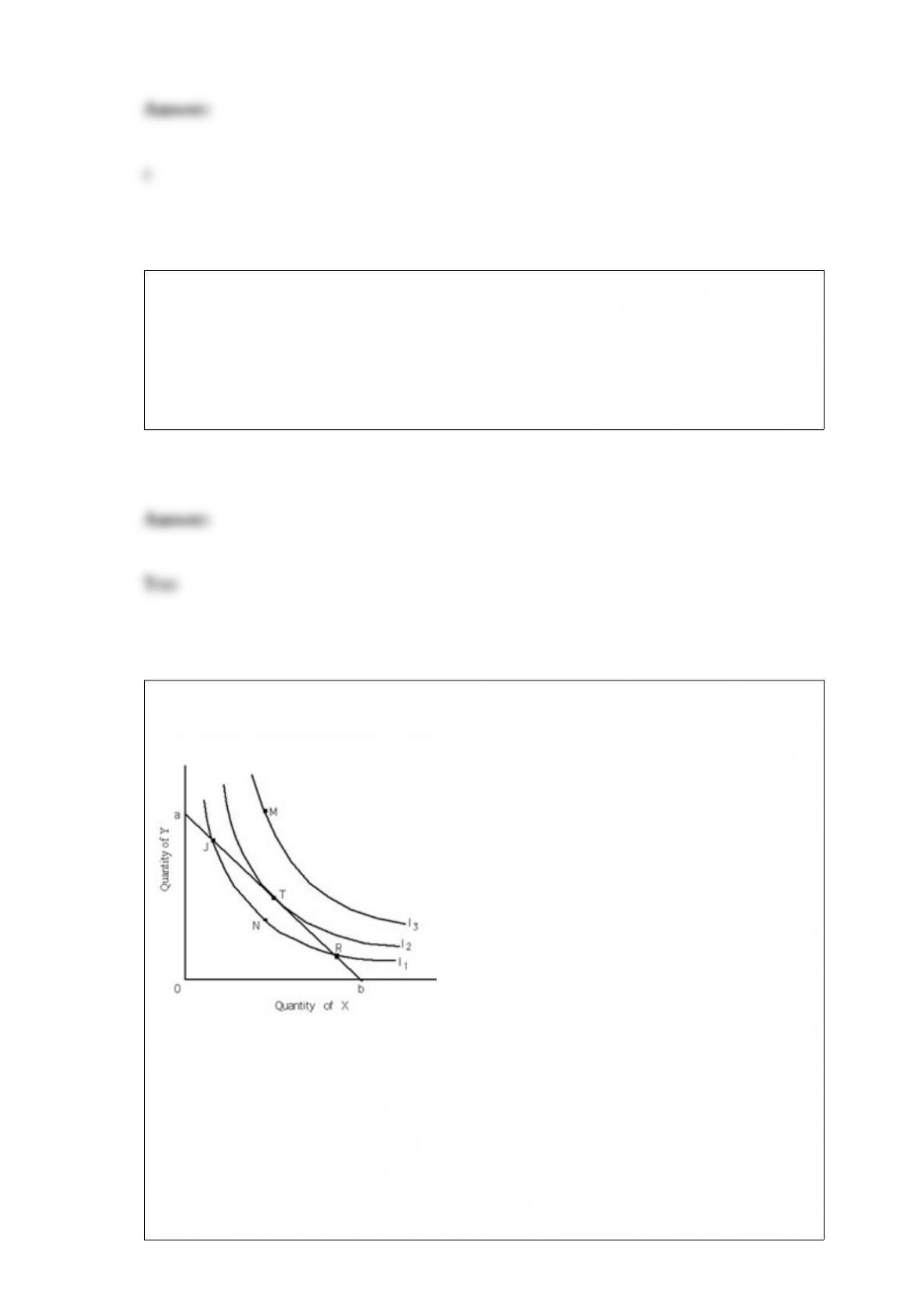
Exhibit 21-6
I1, I2 and I3 are indifference curves and line ab is the relevant budget constraint. The
equilibrium position for the consumer is at
a. any point on the budget constraint.
b. point M.
c. point J.

d. point T.
e. point R.
Which of the following statements is not an example of the use of persuasion to correct
(or adjust for) an externality?
a. Maggie asks her neighbor to keep his dog quiet at night.
b. An environmental group conducts a sit-in at a chemical factory to demand that the
firm stop polluting rivers.
c. A judicial court imposes a fine on a reckless driver.
d. All of the above are examples of the use of persuasion to correct (or adjust for) an
externality.
Exhibit 3-5
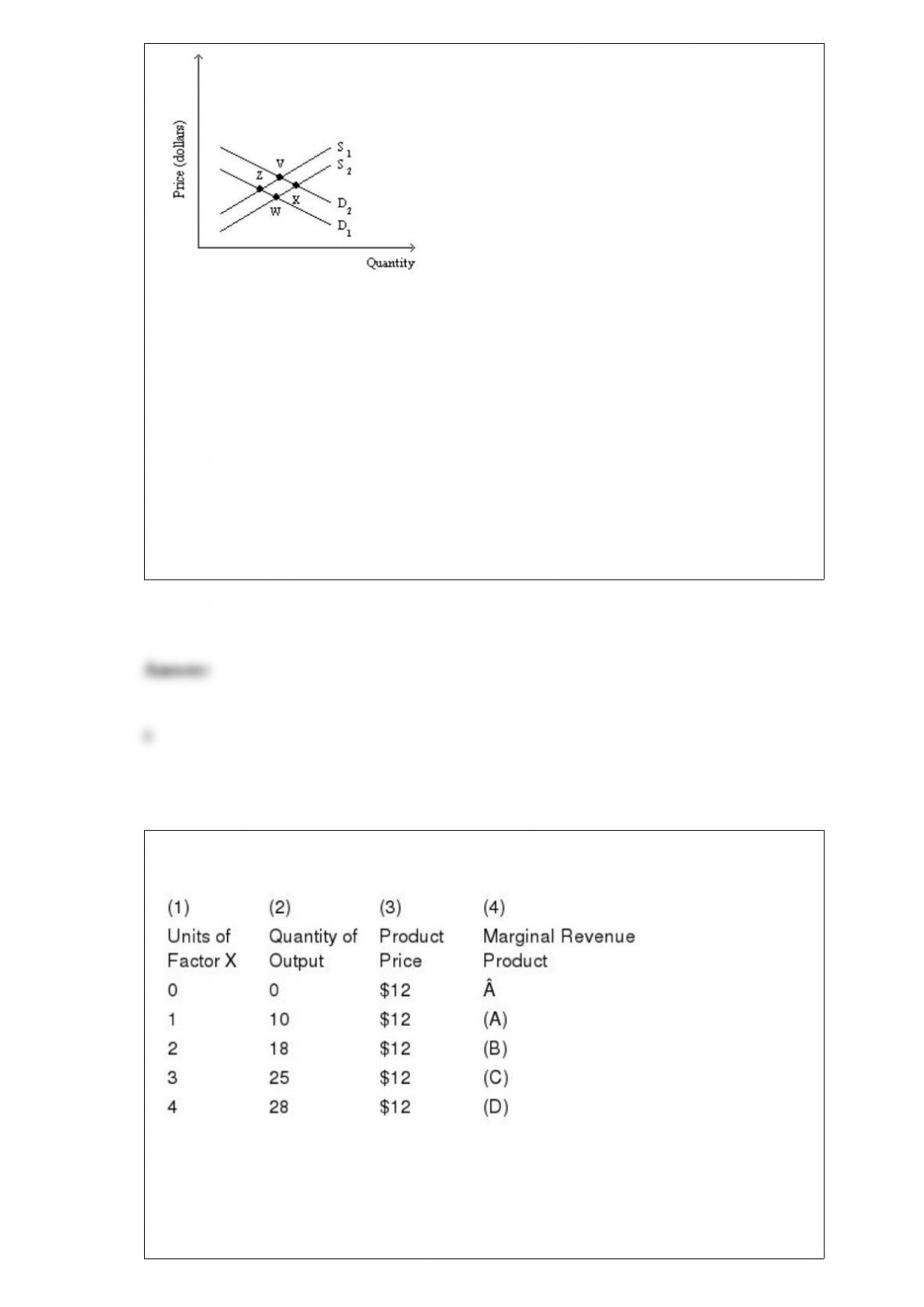
In the market shown, if equilibrium was originally at point W and is now at point X, the
new equilibrium price is __________ it was originally and the new equilibrium quantity
is ____________ it was originally.
a. greater than; greater than
b. less than; greater than
c. greater than; less than
d. less than; less than
Exhibit 27-1
What dollar value goes in blank (C)?
a. $300
b. $12
c. $30
d. $84
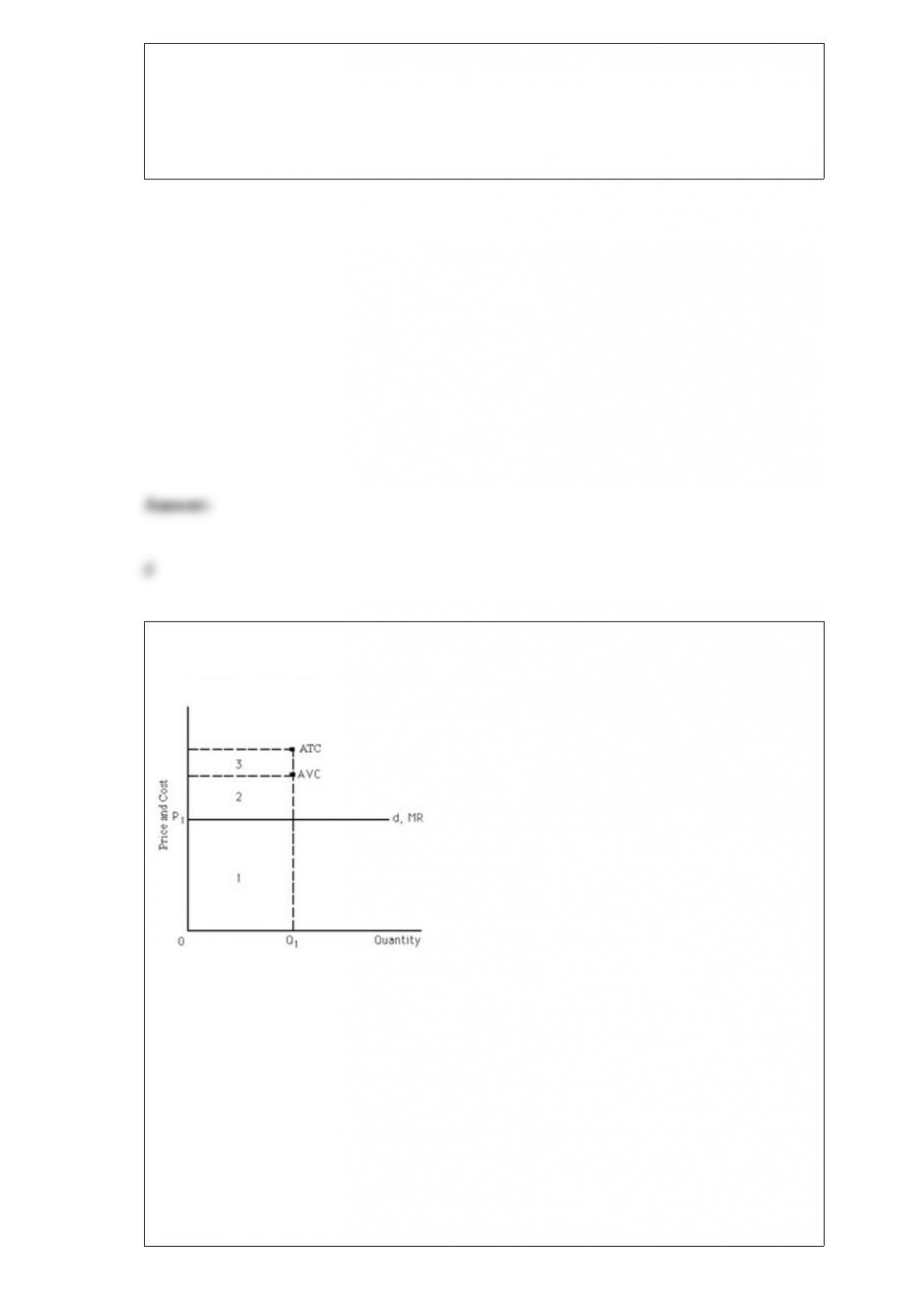
Exhibit 23-4
The firm sells its product at P1 and produces Q1. Given this situation,
a. total variable cost is equal to area 1 + area 2.
b. total revenue is equal to area 1.
c. total cost is equal to area 2 + area 3.
d. a and b
e. a, b, and c
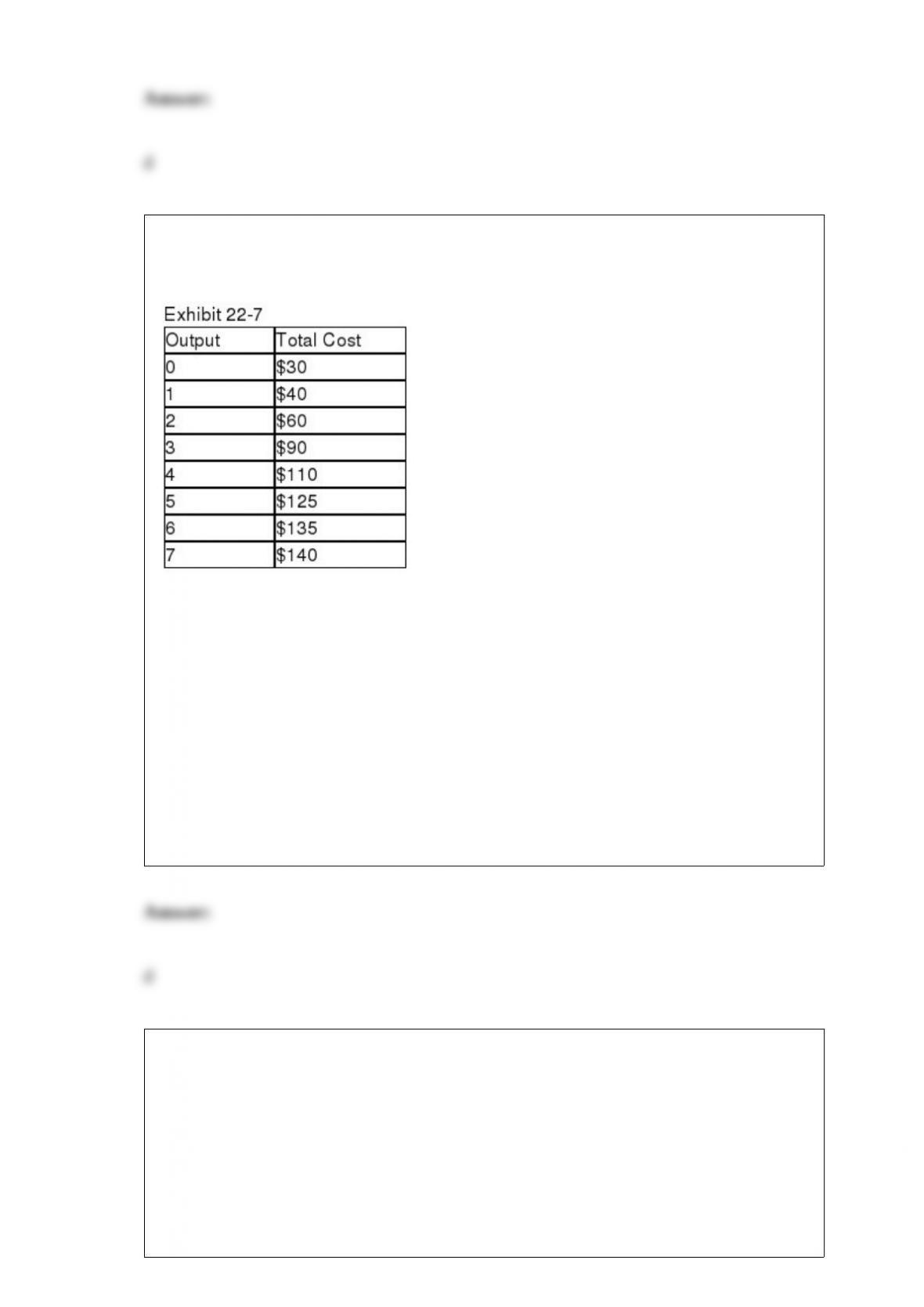
The average total cost of producing 4 units of output is
a. $11.25.
b. $5.00.
c. $3.50.
d. $27.50.
e. There is not enough information to answer this question.
A firm defending itself in an antitrust suit would prefer the market it operates in to be
defined _____________, which ______________ the firm’s market share compared to
what it might be judged otherwise.
a. narrowly; raises
b. narrowly; lowers
c. broadly; raises

d. broadly; lowers