
One difference between stocks and bonds is that
A) stocks are financial securities, while bonds are labor market securities.
B) stocks are usually issued in electronic form, while bonds are usually issued in paper
form.
C) stocks represent ownership in companies, while bonds represent ownership in banks.
D) stocks do not involve a promise to repay a purchaser of the stock, while bonds
represent a promise to repay the purchase price of the bond.
In the legal sector, some practice areas have declined in recent years. For example,
personal-injury and medical-malpractice cases have been undercut by state laws
limiting class-action suits, out-of-state plaintiffs and payouts on damages, and securities
class-action litigation has declined in part because of a buoyant stock market. How does
this affect the market for lawyers?
A) The demand for lawyers shifts to the left.
B) The supply of lawyers shifts to the left.
C) The quantity of lawyers demanded decreases, and this is represented by a movement
along the demand curve.
D) Both the demand and supply curves decrease.
The level of saving in the United States has historically been low relative to the level of
domestic investment. Based on this information, we would expect that

A) U.S. net foreign investment has been relatively high.
B) U.S. net exports have been relatively low.
C) U.S. capital inflows are negative.
D) U.S. private saving is less than its public saving.
The real interest rate equals the nominal interest rate ________ the inflation rate.
A) times
B) divided by
C) plus
D) minus
Which of the following would explain why economic profit might be less than
accounting profit?
A) A firm’s net income is less than its accounting profit.
B) A firm has only explicit costs.
C) A firm’s net income is greater than its accounting profit.
D) A firm has implicit costs as well as explicit costs.
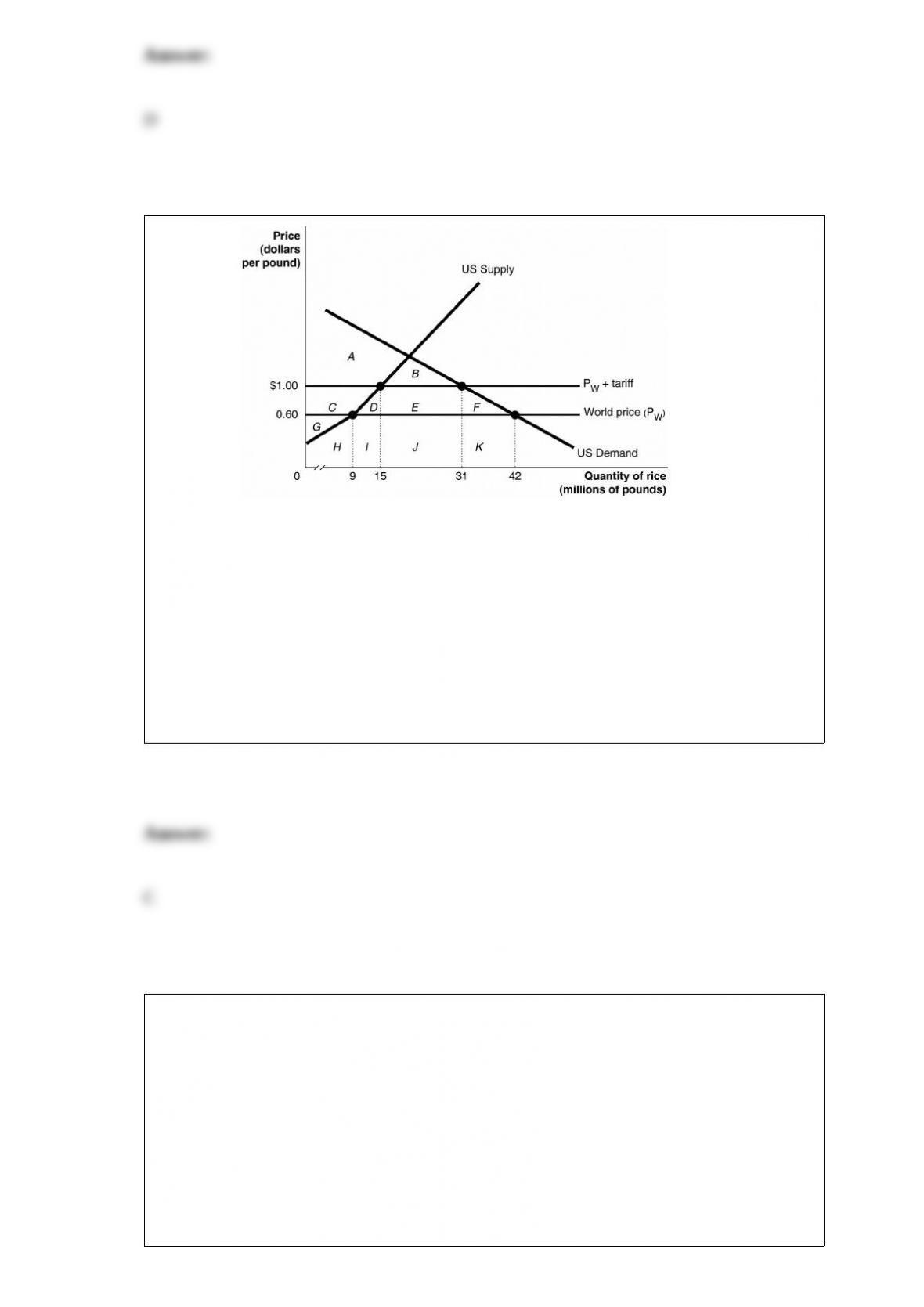
Figure 9-2 Suppose the U.S.
government imposes a $0.40 per pound tariff on rice imports. Figure 9-2 shows the
impact of this tariff. With the tariff in place, the United States consumes
A) 9 million pounds of rice.
B) 15 million pounds of rice.
C) 31 million pounds of rice.
D) 42 million pounds of rice.
Suppose that the economy is producing below potential GDP and the Fed implements
the correct change in monetary policy, but not until after the economy has passed the
trough of the recession. Then
A) the Fed’s contractionary policy will result in too large of a decrease in GDP.
B) the Fed’s contractionary policy will result in too small of a decrease in GDP.
C) the Fed’s expansionary policy will result in too small of a decrease in GDP.
D) the Fed’s expansionary policy will result in too large of an increase in GDP.
The main purpose of most tariffs and quotas is to
A) raise revenue for the government.
B) reduce the prices consumers pay for goods and services.
C) reduce the foreign competition that domestic firms face.
D) improve the quality of goods and services imported into the country.
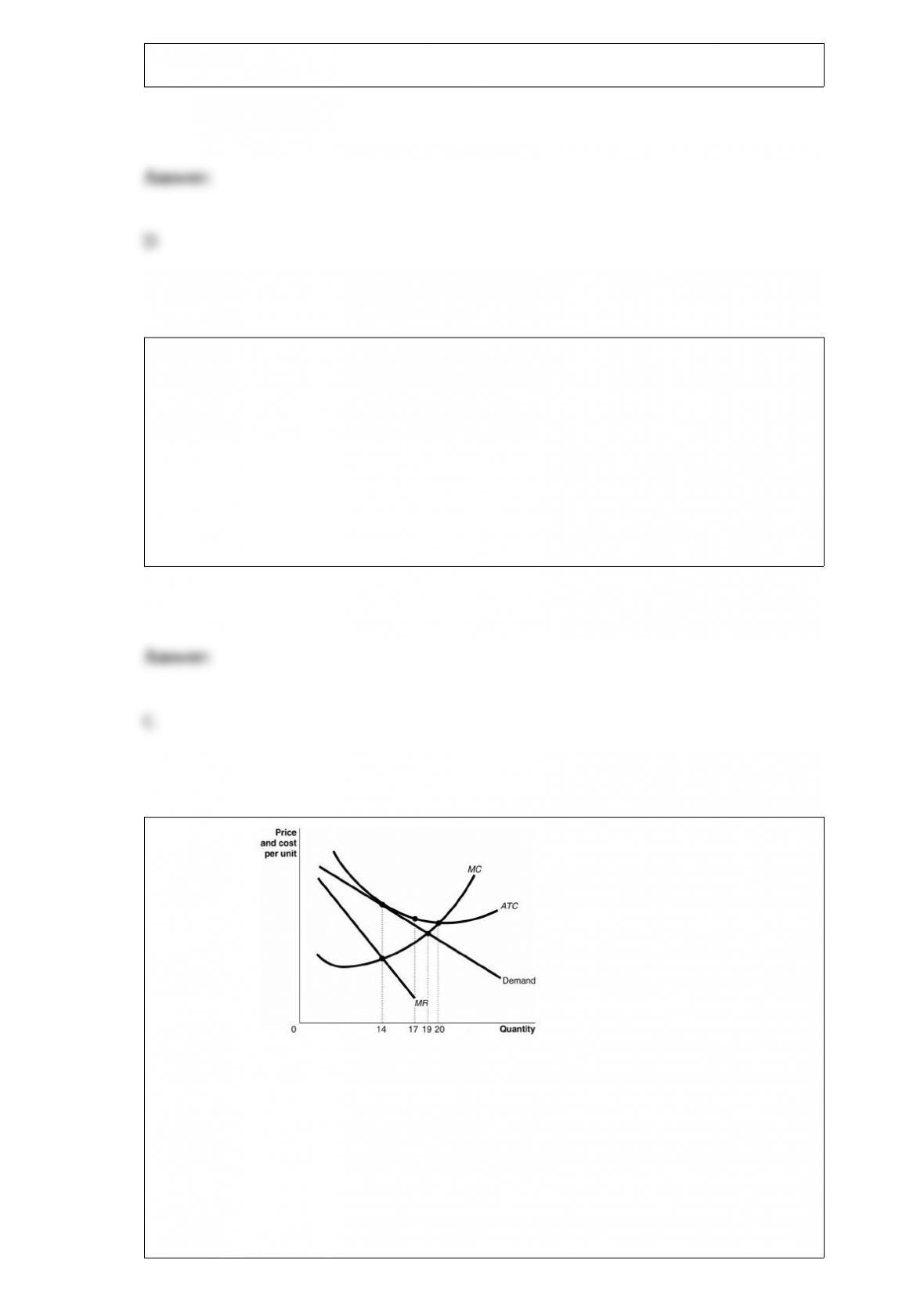
Figure 13-19
Answer the following questions.
a. What is the productively efficient output?
b. What is the allocatively efficient output?
c. What is the amount of excess capacity?
d. Suppose the firm is currently producing 14 units. What happens if it increases output

to 17 units?
The sum of the marginal propensity to consume and the marginal propensity to save is
always equal to
A) zero.
B) 0.5.
C) 1.
D) 100.
A negative externality exists if
A) there are price controls in a market.
B) there are quantity controls in a market.
C) the marginal social cost of producing a good or service exceeds the private cost.
D) the marginal private cost of producing a good or service exceeds the social cost.
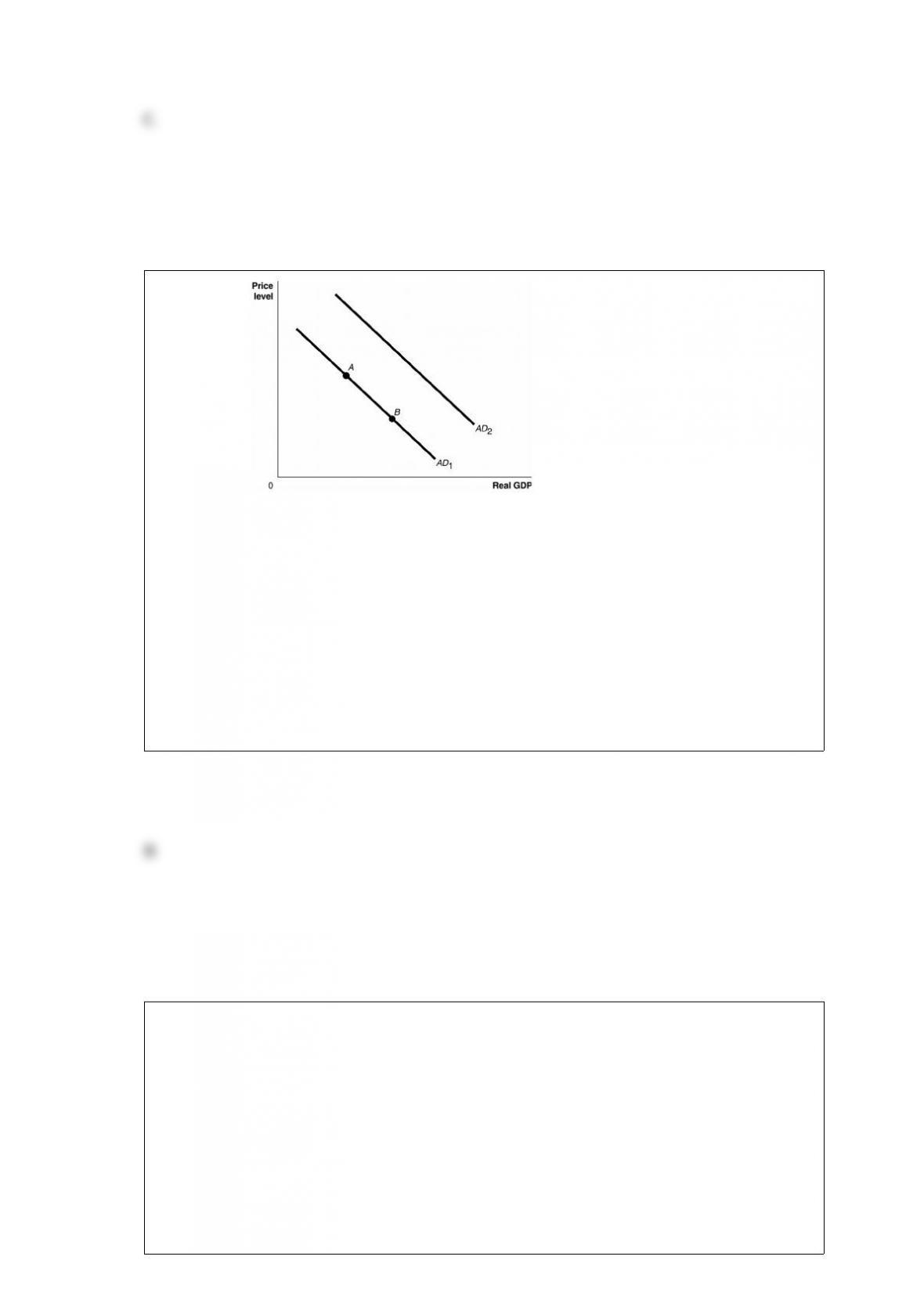
Figure 24-1
Ceteris paribus, a decrease in firms’ expectations of the future profitability of
investment spending would be represented by a movement from
A) AD1 to AD2.
B) AD2 to AD1.
C) point A to point B.
D) point B to point A.
If a bank receives a $20 million discount loan from the Federal Reserve, then the bank’s
reserves will
A) not change.
B) increase by $20 million.
C) increase by less than $20 million.
D) increase by more than $20 million.
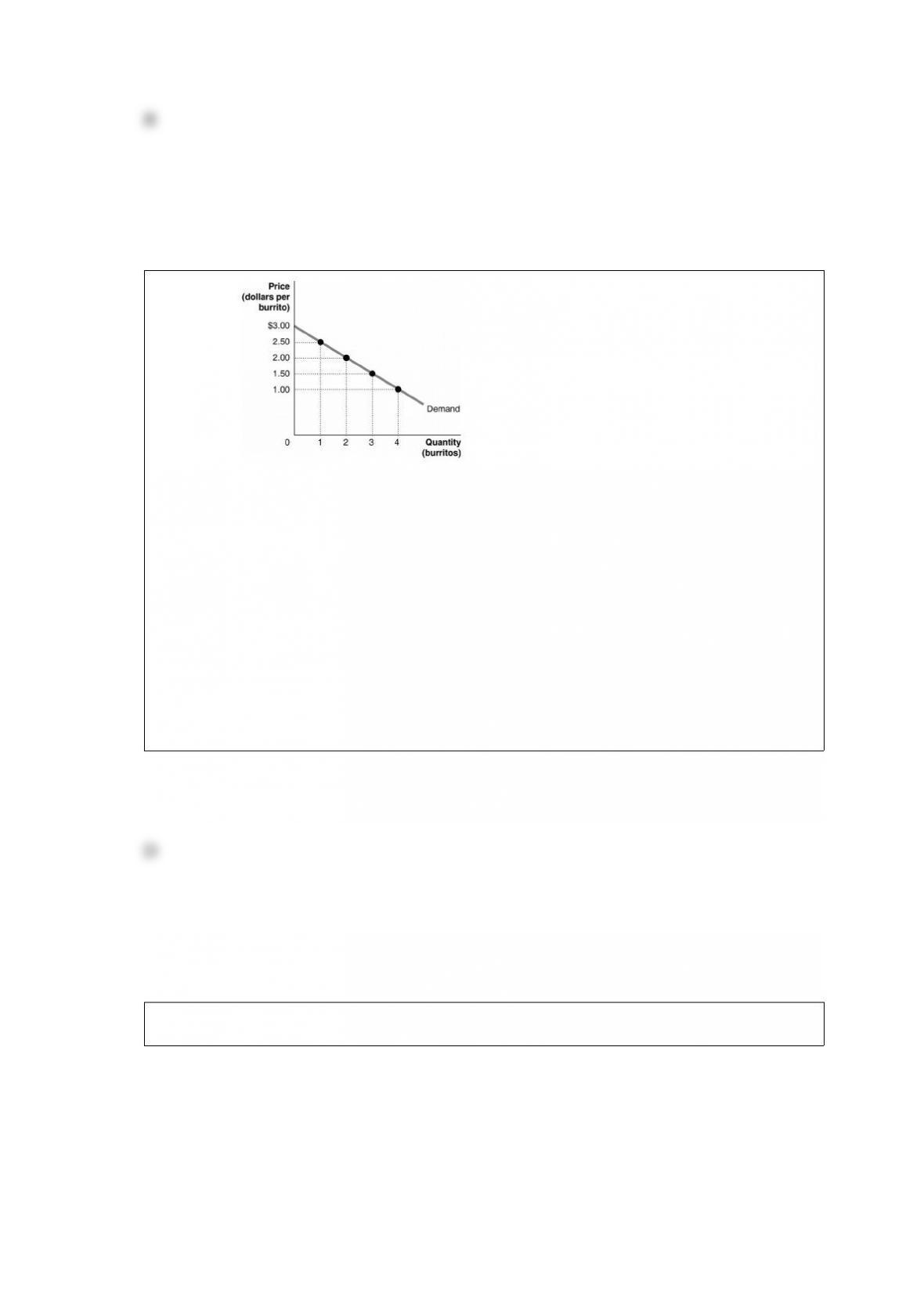
Figure 4-1 Figure 4-1 shows Arnold’s demand curve for
burritos.
If the market price is $1.00, what is the maximum number of burritos that Arnold will
buy?
A) 1
B) 2
C) 3
D) 4
Figure 10-2
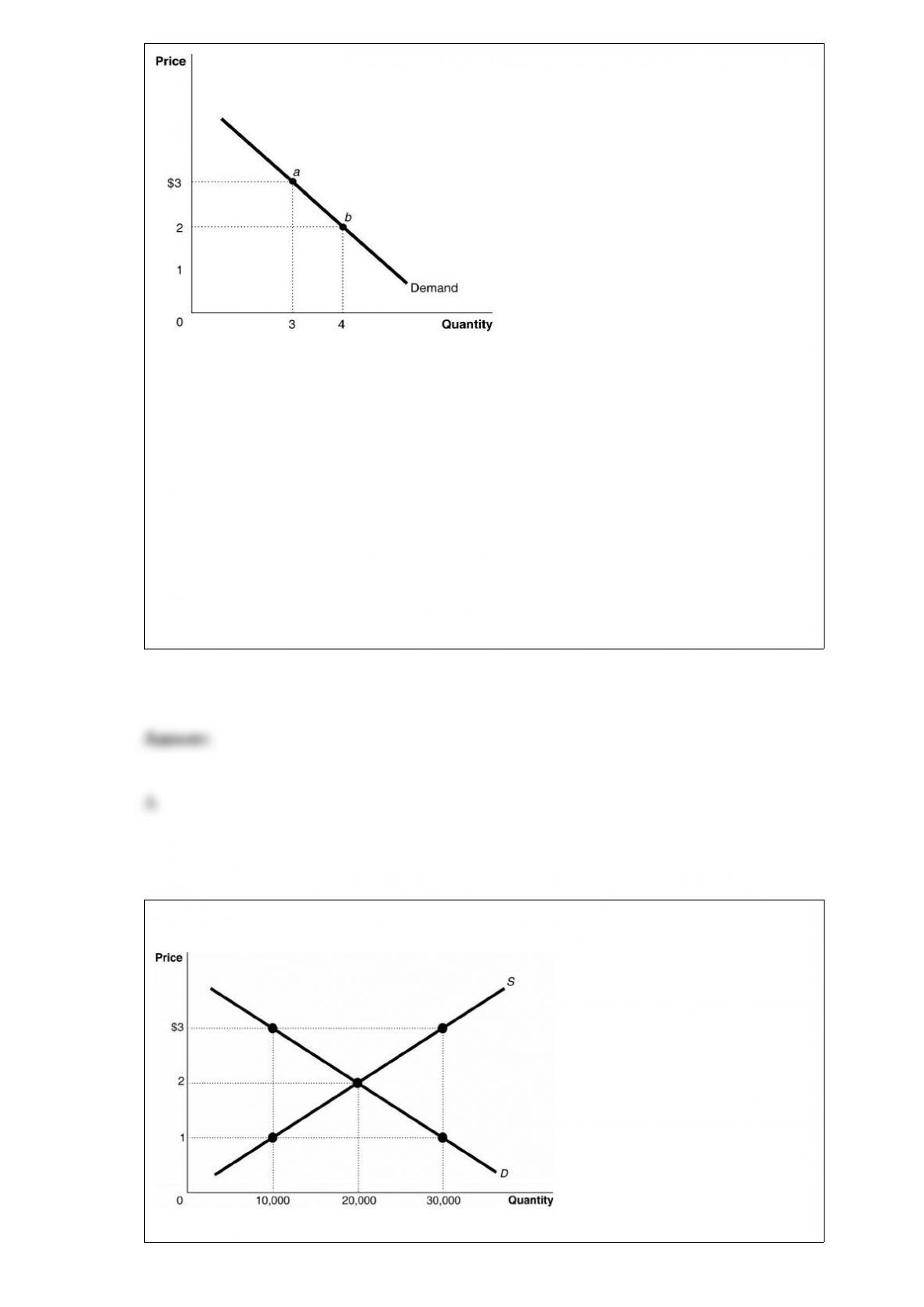
Figure 10-2 represents the demand for ice
cream cones. Which of the following statements is true?
A) Points a and are the utility-maximizing quantities of ice-cream cones at two different
prices of ice-cream.
B) Points a and may not necessarily be the utility-maximizing quantities of ice-cream
cones at two different prices because we have no information on the consumer’s budget
or the price of other goods.
C) Point a could be a utility-maximizing choice if the price is $3 but point may not be
because we have no information on the marginal utility per dollar when price changes.
D) Points a and are derived independently of the utility-maximizing model.
Figure 4-4

The figure above represents the market for iced tea. Assume that this is a competitive
market. At a price of $3
A) the marginal cost of iced tea is greater than the marginal benefit; therefore, output is
inefficiently low.
B) producers should lower the price to $1 in order to sell the quantity demanded of
10,000.
C) the marginal benefit of iced tea is greater than the marginal cost; therefore, output is
inefficiently low.
D) the marginal benefit of iced tea is greater than the marginal cost; therefore, output is
inefficiently high.
An increase in the expected inflation rate will
A) shift the short-run Phillips curve to the right.
B) shift the short-run Phillips curve to the left.
C) reduce the inflation rate.
D) reduce the unemployment rate.