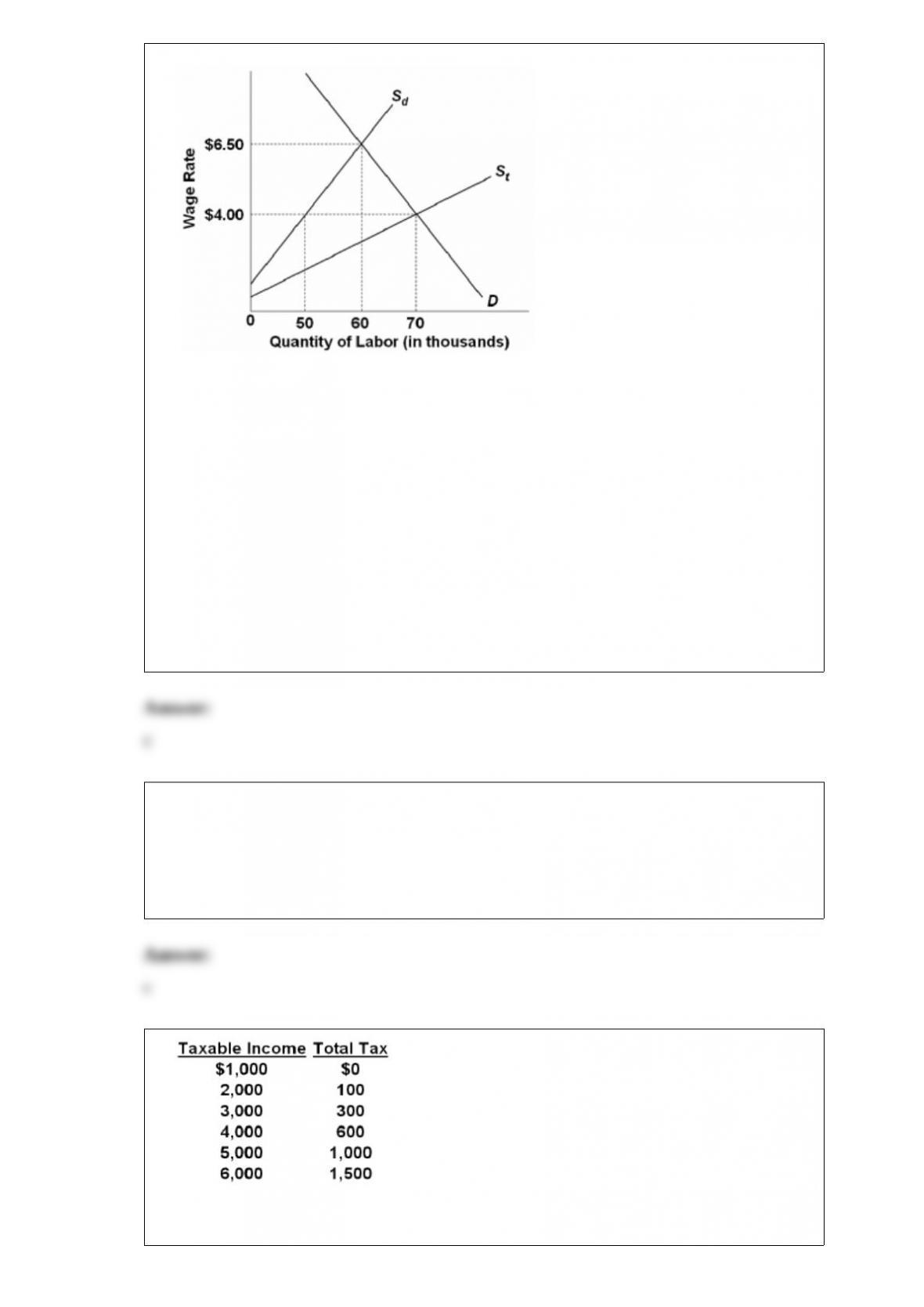
1)
assumptions: 1) employers in this market are willing and able to ignore minimum wage
laws; 2) sd represents the supply of domestically-born (and legal immigrant) workers;
3) st represents the total supply of workers in this labor market (sd plus illegal
immigrants); and 4) unless otherwise stated, illegal immigration is not effectively
blocked by the government.
refer to the above figure. if the government effectively prevents illegal immigrants from
working in this labor market, the equilibrium wage and level of employment are,
respectively:
a.$4.00 and 50,000
b.$4.00 and 60,000
c.$6.50 and 60,000
d.$4.00 and 70,000
2) nominal gdp is adjusted for price changes through the use of:
a.the consumer price index (cpi).
b.the producer price index (ppi).
c.the gdp price index.
d.exchange rates.
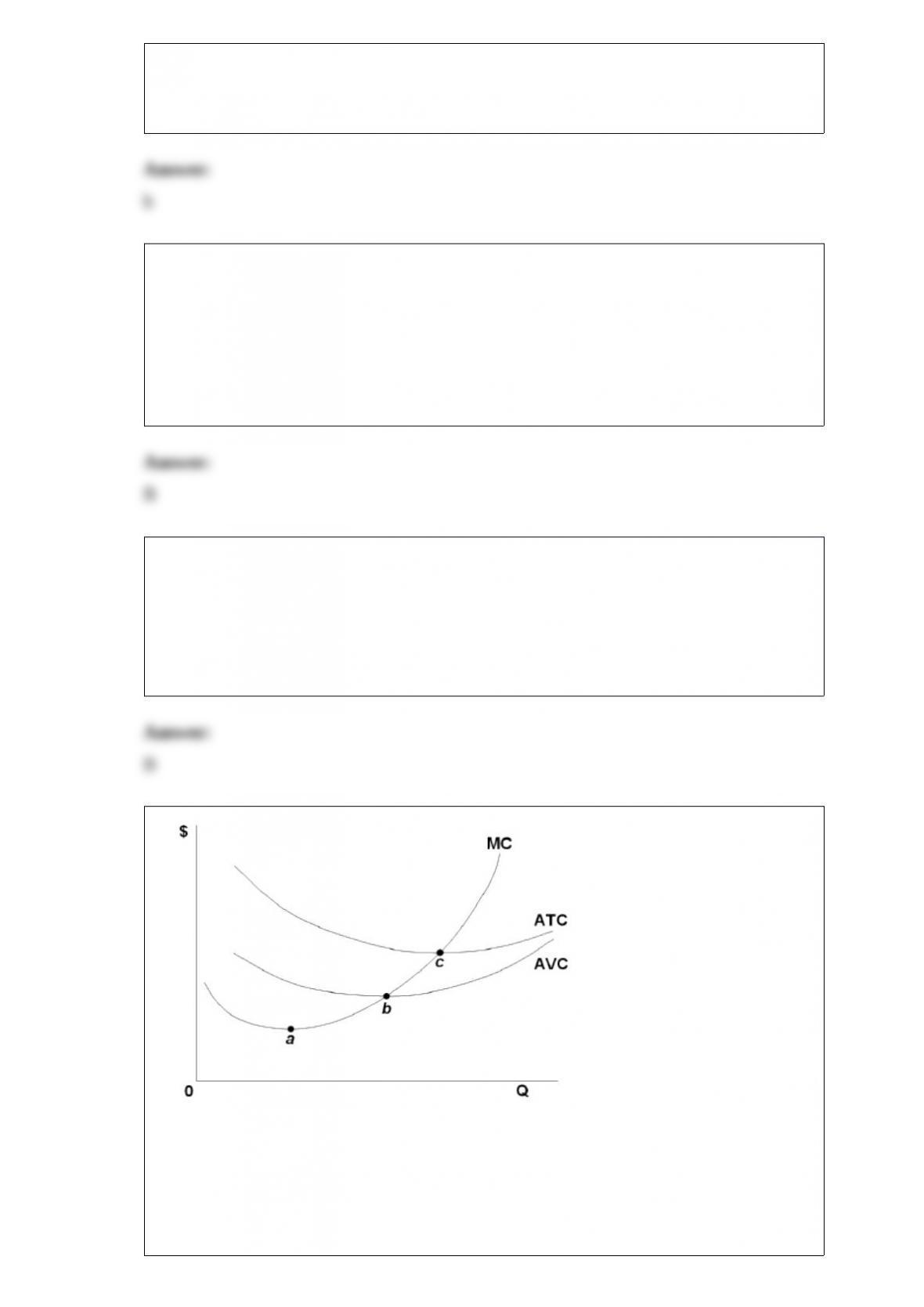
3)
refer to the above data. if your taxable income is $4000, your average tax rate will be:
a.20 percent.
b.15 percent.
c.10 percent.
d.5 percent.
4) Critics of the minimum wage argue that as an antipoverty device it is “poorly
targeted.” By this they mean that:
A.the minimum wage only applies to a small percentage of the labor force.
B.many who benefit from the minimum wage are not poor.
C.the government has been unable to enforce the minimum wage.
D.the average level of wages in the economy is considerably higher than the minimum
wage.
5) When current government expenditures exceed current tax revenues and the
economy is achieving full employment:
A.the standardized budget has neither a deficit nor a surplus.
B.the standardized budget has a deficit.
C.fiscal policy is contractionary.
D.nominal GDP and real GDP are equal.
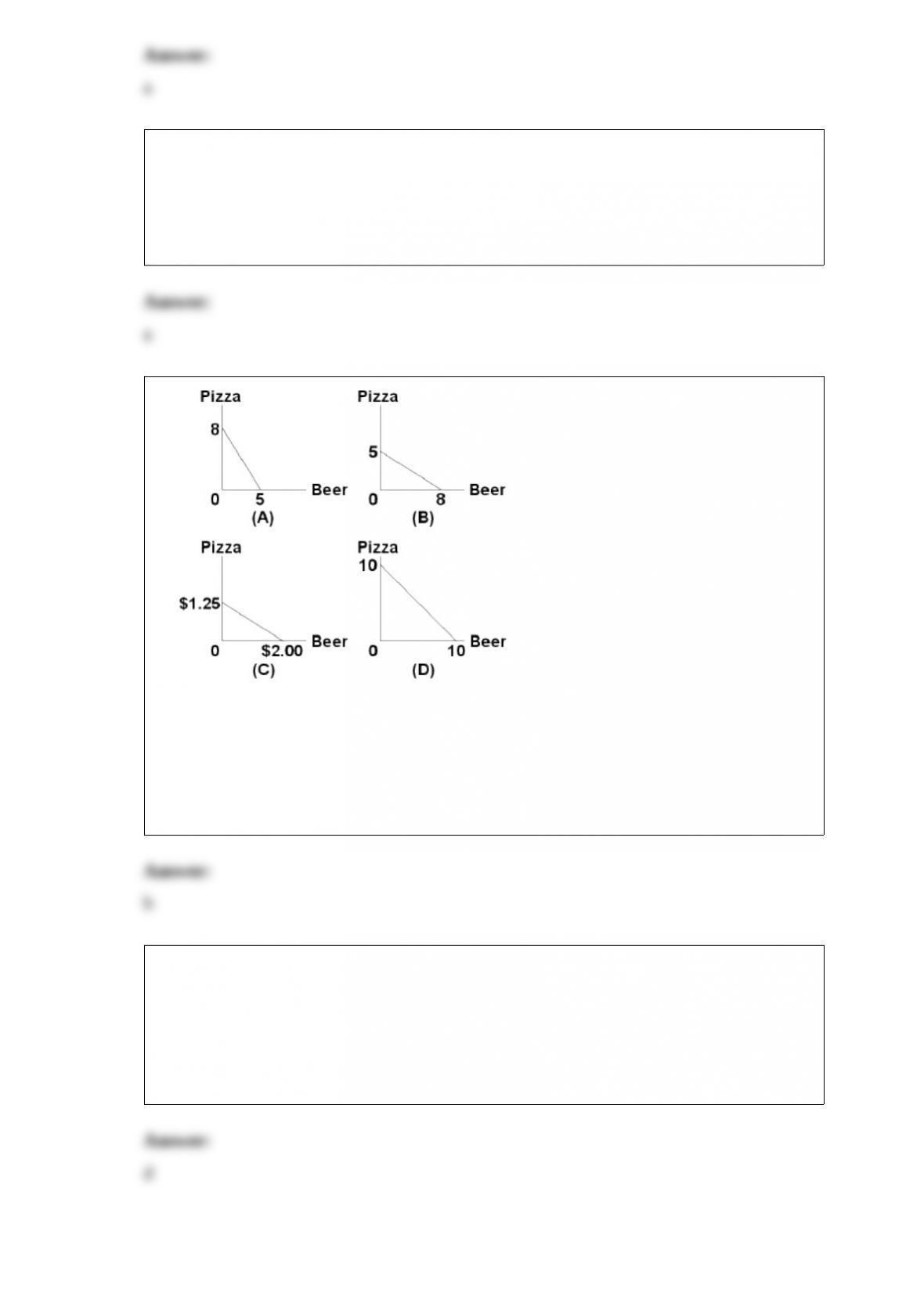
6)
refer to the above diagram. if labor is the only variable input, the marginal product of
labor is at a:
a.maximum at point a
b.minimum at point a
c.maximum at point b
d.maximum at point c
7) (last word) in 2006, massachusetts passed a law that required, as of july 1, 2007:
a.all residents of the state to have health insurance.
b.employers in the state to pay all insurance premiums for their employees.
c.all health care facilities to provide health care services at no charge to the patients.
d.the state government to provide health care to all residents.
8)
refer to the above graphs. assume that pizza is measured in slices and beer in pints. in
which of the graphs is the opportunity cost of a pint of beer the lowest?
a.graph a
b.graph b
c.graph c
d.graph d
9) suppose that an economy’s labor productivity and total worker-hours each grew by 3
percent between year 1 and year 2. we could conclude that this economy’s:
a.real gdp remained constant.
b.capital stock increased by 3 percent.
c.production possibilities curve shifted inward.
d. production possibilities curve shifted outward.
10) Which of the following allegedly understates the true size of the Federal budget
deficit?
A.inclusion of government spending on the savings and loan (S&L) bailout
B.inclusion of the Social Security surplus
C.inclusion of Federal excise tax receipts
D.inclusion of current transfer payments
11) about ________ of u.s. economic growth between 1990 and 2007 came from
improved productivity (as opposed to added inputs).
a.one-fourth.
b.one-third.
c.one-half.
d.two-thirds.
12) who is least likely to be hurt by unanticipated inflation?
a.a disabled laborer who is living off accumulated savings
b.an owner of a small business
c.a secretary
d.a pensioned steelworker
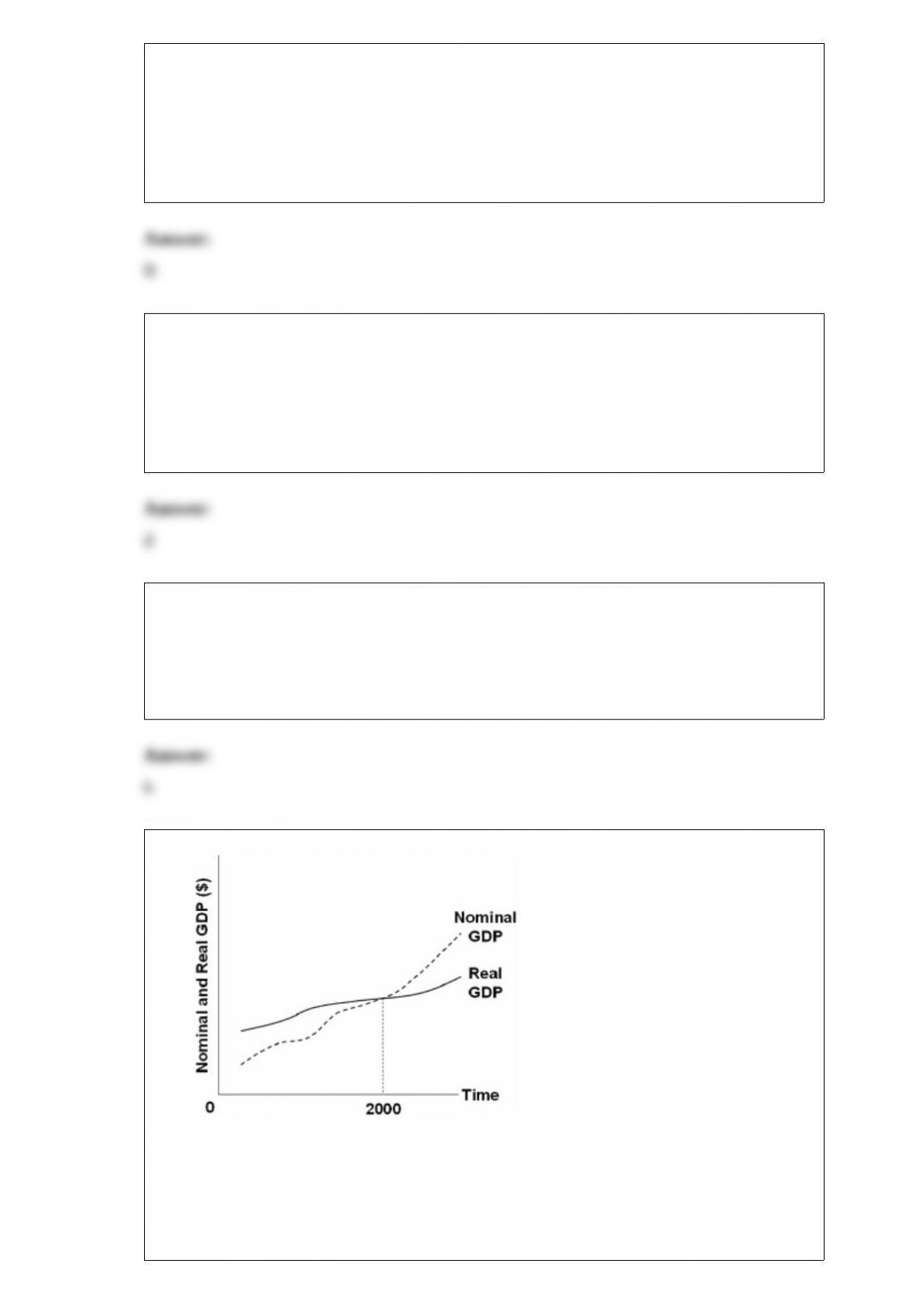
13)
refer to the above diagram. which of the following statements is correct?
a.the price index is greater than 100 for every year shown on the graph.
b.nominal gdp must be deflated in each year prior to 2000 to determine real gdp.
c.real gdp has grown in this economy, but nominal gdp has not.
d.nominal gdp must be deflated in each year since 2000 to determine real gdp.